Oil Price Forecast: WTI Surges to $96 and Brent Tops $105 as Hormuz Crisis Deepens
WTI at $96.03 (+3.30%) and Brent at $105.10 (+3.16%) as Iran fires on ships, OPEC+ hits capacity limits | That's TradingNEWS
Key Points
- WTI surges 3.30% to $96.03 and Brent jumps 3.16% to $105.10 as the Strait of Hormuz standoff deepens further.
- IEA calls it the biggest energy security threat ever; OPEC+ May hike of 206K bpd cannot fill the supply gap.
- Russia's tax price hits $100 per barrel, up from $44.60 in February; global inventories drift toward record lows.
The crude complex is pricing in a genuine supply crisis on Thursday's session, with WTI Crude (CL00) changing hands at $96.03 after adding $3.07 or 3.30% in what has become the defining session of the week. Brent Crude (BRN00) has surged to $105.10, higher by $3.22 or 3.16%, trading at levels not sustained in months and blowing through the technical barriers that had capped prior rallies. Intraday prints earlier in the session registered WTI at $95.80 and Brent at $102.47 before the afternoon bid drove the complex decisively higher as the Hormuz standoff deepened beyond anyone's comfort zone. Murban Crude — the Middle East medium-sour benchmark — sits at $104.30, up 1.13%, a reading that reflects how much of the current pricing is being driven by Gulf-specific dislocation rather than broad macro tailwinds. WTI Midland, the US shale benchmark, traded at $97.66, up 1.13%, maintaining its typical premium to the Cushing contract as export demand drains Gulf Coast supply. The OPEC Basket settled at $97.74, off 1.87%, a divergence from the front-month moves that reflects timing differentials in how member contracts price against the spot complex. The Indian Basket jumped 2.63% to $103.10, a reading that captures exactly how brutally the pass-through pressure is hitting Asian importers and feeding directly into emerging market inflation expectations.
The refined products complex is moving in lockstep. Gasoline climbed 1.87% to $3.421, Heating Oil added 1.00% to $3.977, and crack spreads have widened meaningfully as refineries struggle to match the pace of crude's advance. Natural Gas (NG00) bucked the energy rally by falling 5.07% to $2.584, a divergence that reflects region-specific inventory dynamics rather than any relief from the broader energy tightness. The intraday narrative tells a story with layers — some earlier reports had Brent closing Wednesday's session with gains above $3 supported by a larger-than-expected drop in US gasoline and distillate stockpiles, while the Singapore-morning read saw Brent futures retreat 15 cents to settle near $101.76 before the afternoon surge obliterated that consolidation. Russia's so-called "tax price" for oil — the benchmark used to calculate federal budget revenues — has now climbed to roughly $100 per barrel according to economist Yegor Susin, up from $77 in March and just $44.60 in February. That near-doubling in the course of eight weeks tells the entire story about how far the complex has repriced and why Moscow is now reopening fiscal operations that had been suspended just last month.
The Hormuz Crisis — The Single Most Important Variable in the Oil Equation
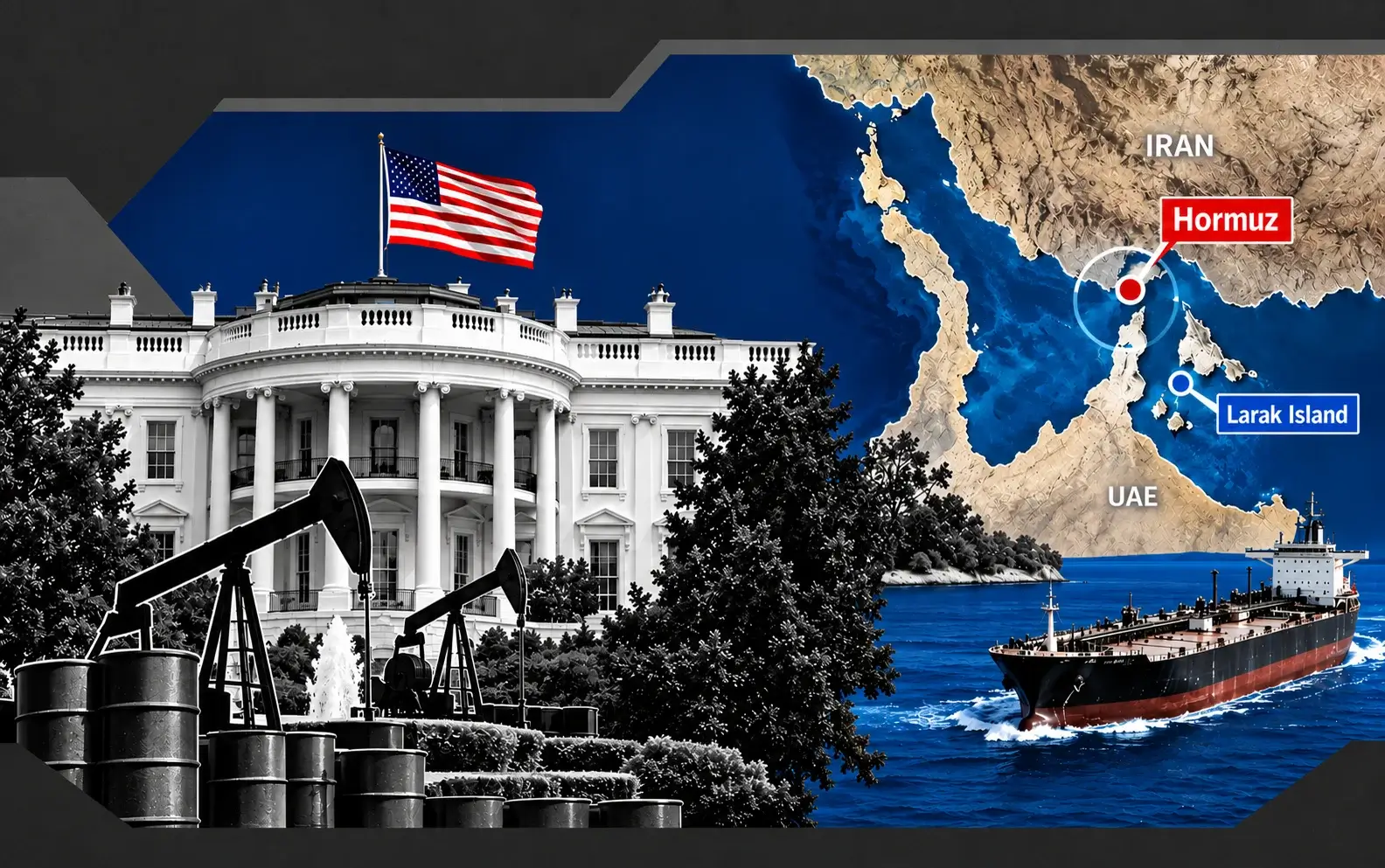
The Strait of Hormuz is functioning as the gravitational center of the current oil market, and no directional call can be made without anchoring to the status of the waterway. Roughly 20% of global seaborne crude transits the Strait, a number that captures both its strategic importance and the magnitude of the disruption currently unfolding. Traffic has ground to a halt once again as Iran has fired on passing ships, with reports of at least three Iranian oil tankers intercepted in Asian waters by US forces and two container ships seized by Iran's Islamic Revolutionary Guard Corps Navy "for violating protocols." The International Energy Agency has formally characterized the situation as "the biggest energy security threat in history" and has stripped the Strait of its status as a reliable energy route — a designation that carries weight in how institutional capital models forward production and consumption scenarios.
IEA chief Fatih Birol, speaking from Singapore, warned of "difficult days" ahead for European jet fuel supplies as the Iran conflict persists. That is not idle commentary. Aviation-grade distillate cuts are among the most inelastic portions of the refined product stack, and shortages there cascade directly into airline economics with visible consequences already appearing — Air Canada has scrapped key US routes, Lufthansa canceled unprofitable European summer routes specifically to preserve jet fuel, and long-haul flight fares have soared across every major carrier network. Tehran has maintained a hardline negotiating posture throughout the escalation. Iran's parliament speaker and lead negotiator Mohammad Bagher Ghalibaf characterized reopening the Strait as "impossible" while the US naval blockade of Iranian sea ports continues, framing the blockade as a "flagrant" breach of the ceasefire agreement.
President Trump's rhetoric has matched the intensity. He ordered the US Navy to "shoot and kill any boat putting mines in Hormuz" and declared the route "sealed up tight" until Iran delivers what he considers a coherent deal. Trump also stated that the current truce will remain in force indefinitely, with Washington awaiting a new peace proposal from Iran — a stance that effectively freezes the diplomatic process. Kuwait has declared force majeure after the US seizure of an Iranian ship escalated regional tensions, a development that immediately affected contractual oil supply obligations and added another layer of disruption to the broader Gulf flow architecture. A 30-nation military coalition led by the UK and France is now mobilizing to reopen the Strait through coordinated naval action, with Japan formally asking Saudi Arabia for more oil supply to offset the shortfall hitting its refining complex. Chinese oil tankers have attempted to exit the Strait but faced friction at the US blockade perimeter, a cat-and-mouse dynamic that adds operational risk premium to every barrel attempting passage. That configuration keeps a structural bid under crude that will not resolve until either the blockade lifts or Iranian exports find a durable alternative routing — and neither outcome looks imminent.
OPEC+ Cannot Fill the Gap — The Capacity Constraint That Defines the Ceiling
The oil market's traditional release valve has run directly into a hard structural constraint, and this is perhaps the most important analytical point for anyone trying to model where prices go from here. OPEC+ agreed earlier this month to raise output quotas by 206,000 barrels per day for May, a number that looks modest against the scale of the current disruption and looks even worse once the actual delivery capacity is examined. Multiple key producers are struggling to physically lift output as the Iran-linked conflict damages infrastructure and disrupts regional export flows. Russia has told the market it will continue exporting oil but brought no new proposals to the May 3 OPEC+ meeting in Moscow, with Kremlin spokesman Dmitry Peskov framing Russia's role as a "stabilizing force" through continuity rather than expansion. Peskov was explicit — demand is rising, available supply is declining, and Moscow has no new ideas to put on the table. That blunt assessment from the second-largest OPEC+ producer should be ringing alarm bells for any participant assuming the alliance can ride to the rescue.
Norway is pumping near full technical capacity with its spare output buffer effectively gone, leaving the North Sea region without meaningful swing capacity. The United States is set to hit record crude export levels, but that export surge is largely a function of inventory drawdowns and existing production rather than fresh capacity additions that could respond dynamically to price signals. Even the combined reach of the expanded 22-member OPEC+ alliance cannot plug the gap created by disrupted Iranian flows and Hormuz chokepoint paralysis, which is precisely why the complex has broken higher through technical levels that had capped previous rallies for months. Global oil inventories are drifting toward record lows according to IEA tracking data, adding another layer of tightness to a market already running hot on flow disruption rather than genuine excess demand. US crude oil and oil product inventories have come crashing down in recent weekly EIA reports, and China oil buying is set to return after a months-long stockpile drawdown — a development that would add another incremental demand pressure on an already tight market and would likely absorb whatever modest OPEC+ supply increase actually materializes.
The fundamental problem for OPEC+ is that the alliance spent 2025 carefully unwinding production cuts, and the natural expansion path was always going to meet capacity constraints in specific member states. Nigeria, Angola, and several smaller producers have persistent difficulty meeting even their existing quotas. Saudi Arabia could theoretically push output higher, but doing so would consume spare capacity that the global market typically keeps as insurance against exactly this kind of shock. The United Arab Emirates has been among the most capable of ramping quickly, but its incremental barrels are a fraction of what would be needed to offset the Iranian disruption. This is not a cyclical tightness that responds to a policy lever. This is a structural configuration where the flow architecture has been damaged and the swing capacity that traditionally absorbs shocks has already been deployed.
Russia's Fiscal Rule Return — The Moscow Dynamic Flowing Directly Through Crude
Russia's Finance Ministry announced Thursday that it will resume foreign currency and gold purchases under its fiscal rule starting in May, formally ending the suspension that had been in place since March. This is not a minor bureaucratic footnote — it is a direct signal that the oil price rebound has meaningfully eased pressure on the Kremlin's finances and reflects how deeply oil prices shape Russian macro policy. Oil and gas revenues halved at the start of the year when prices were soft, prompting the ministry to sell roughly 200 billion rubles ($2.64 billion) per month from the National Wealth Fund across January and February. With only about 4 trillion rubles ($52.8 billion) in liquid assets remaining in the NWF, analysts had warned the fund could have been depleted within a year at that burn rate. The ministry suspended operations in March, initially planning to keep them on hold until July, but the rebound in prices has accelerated the timeline dramatically.
The mechanics of the fiscal rule matter for understanding the market flow dynamic. Under the rule, excess oil and gas revenues are used to buy foreign currency and replenish the NWF, while shortfalls are covered by selling reserves. The mechanism is designed to reduce the Russian economy's dependence on swings in energy prices and limit volatility in the ruble itself. The ruble weakened to around 85 per dollar after the FX sales suspension but has since strengthened to about 75 — close to early 2023 levels — and analysts say the currency could have appreciated further without the now-resumed FX purchases. A stronger ruble reduces oil and gas revenues because key taxes such as the mineral extraction tax are denominated in dollars, creating a feedback loop that connects Russian currency dynamics directly to the sustainability of the oil price complex.
Analysts at consultancy Tverdye Tsifry estimate that FX purchases could total 300-400 billion rubles ($3.96-$5.28 billion) between May 8 and June 5, assuming oil prices remain near early April levels. Economist Susin gave a similar estimate, adding that such purchases would imply an effective market oil price of around $70-80 per barrel — meaningfully below current spot levels, which suggests the Kremlin has built substantial fiscal cushion at current prices. The ruble initially slipped more than 1% on the Finance Ministry's announcement, with the dollar rising from below 75 to 75.8 rubles before easing back to around 75.3. The yuan also strengthened, climbing from 10.96 to 11.09 rubles on the Moscow Exchange before settling at 11.07. Investment banker Yevgeny Kogan argued that even at the scale of operations being discussed, the FX purchases are unlikely to weaken the ruble significantly because they would largely offset increased export revenues. That currency dynamic matters because it directly affects Russian producers' breakeven economics and keeps Moscow fully engaged in sustaining the current price structure rather than pursuing any output-increase strategy that would undermine it.
The Demand-Side Read — Why Consumption Is Holding Despite Prohibitive Prices
The demand picture is unusually resilient given the magnitude of the price move, and understanding why is critical for calibrating the ceiling. Brazil's trade surplus surged to a record $14.2 billion in the latest monthly reading, supported in part by high oil export prices flowing through to the country's petroleum complex. India's manufacturing PMI rebounded in April despite elevated energy costs, suggesting the industrial engine can absorb current price levels without immediate demand destruction — though HSBC has downgraded Indian equities again as the oil shock deepens, a signal that the absorption is not painless. India's crude imports have sunk despite record Russian oil buying, reflecting the complex routing and discount dynamics that emerged after Western sanctions reshaped the Indian import mix. Japan's Japex announced plans to quadruple oil and gas production with US expansion eyed, a strategic response that acknowledges Japan's vulnerability to Gulf disruption and attempts to build domestic and allied supply redundancy.
China's oil giants have begun selling crude as refinery cuts deepen, which signals a short-term inventory rebalancing rather than any material reduction in structural demand. Chinese refinery economics have compressed as refined product demand softens faster than crude input costs, forcing processing cuts that temporarily release barrels back into the market but do not change the underlying consumption trajectory. The aviation sector is beginning to show strain beyond the canceled routes — jet fuel cracks have widened meaningfully, and carriers face a binary choice between passing costs to passengers through fare hikes or absorbing margin compression on existing bookings. Pakistan is now paying a record premium for fuel imports after Qatar's LNG blackout forced the country back to the spot market, a configuration that illustrates how tight the regional supply equation has become even for countries with established contractual relationships.
Trump is reportedly weighing extending the Jones Act waiver to ease domestic fuel prices, a policy lever that would marginally help US gasoline markets but does little to address the global crude equation. The demand elasticity at current price levels has not reached the cliff-edge levels that would trigger genuine destruction. Historical pattern analysis suggests that demand destruction in transport fuels typically begins between $130 and $150 per barrel Brent-equivalent, with real pain starting meaningfully above $120. At current levels near $105, the market is testing but not breaking consumer tolerance, which means the ceiling for crude is higher than many bearish analysts have modeled. The structural floor on demand remains firm because the global fleet does not pivot away from combustion engines on a one-year horizon, regardless of how aggressive clean-energy pivots have become at the policy level.
Read More
-
Yen Stalls at 160 Despite a 3% JGB and Tokyo Core CPI at 2.0% — Intervention Sits at 164, Friday's Payrolls Decide
02.09.2026 · TradingNEWS ArchiveEnergy
-
CHAT Fund Holds $96.37 as Korean Memory and Chip Exposure Drive a 109.73% Year — Break of $98.02 Opens $105.20
18.09.2026 · TradingNEWS ArchiveStocks
-
First-Generation XRPR and XRPI Ride XRP's Rebound to $1.386 as Spot Funds Post First Outflow — Break of $1.40 Opens $1.54
18.09.2026 · TradingNEWS ArchiveCrypto
-
NG Holds $2.9255 as Storage Surplus Narrows From 5.5% to 3.7% in 3 Weeks — Break of $3.00 Opens $3.15
18.09.2026 · TradingNEWS ArchiveCommodities
-
Dollar Surges to 157.90 as BoJ's Divided Hike Fails to Lift the Yen — Break of 158.87 Opens 159
18.09.2026 · TradingNEWS ArchiveForex
The Inventory Stress and Refinery Disruption Architecture
The physical inventory picture is genuinely alarming once examined closely. Global oil inventories are drifting toward record lows as the combination of sustained demand and disrupted supply erodes the buffer that traditionally cushions geopolitical shocks. US crude stocks came crashing down in recent weekly reports, with Cushing delivery points showing particularly sharp declines that indicate tightness at the physical settlement level rather than just in paper markets. A Ukrainian strike halted oil processing at the Novokuibyshevsk refinery, reducing Russian refined product output at a moment when every incremental barrel matters for balancing global flows. Ukrainian drone strikes on Russian oil infrastructure have been a recurring pressure point throughout this entire cycle, creating intermittent refined product dislocations even when the upstream crude flows remain nominally intact.
Chevron (CVX) has restarted its Wheatstone LNG facility amid the global gas shortage, a development that alleviates some pressure in the LNG complex but highlights how stretched production reliability has become. Activists have filed fresh emissions lawsuits against Shell (SHEL), adding another regulatory overhang to the major integrated oil companies at a moment when they should be pivoting capital toward production expansion. Freeport-McMoRan (FCX) cratered on Grasberg ramp-up delays, reminding the market that even non-oil extractive infrastructure is under strain and compounding broader commodity supply concerns. Gasoline prices at the US pump have dipped below $4 per gallon while oil prices have reversed the prior downtrend, a disconnect that reflects seasonal inventory dynamics, refinery margin compression, and lagged pass-through timing rather than any fundamental relief from the supply stress. That dislocation will resolve in the coming weeks as refined product prices catch up to crude's repricing, meaning US consumers are facing meaningful pump-price increases over a 30-to-60 day window.
The $430M Options Bet and the Positioning Read That Matters
The positioning read deserves explicit attention because it reveals how capital is deploying around the geopolitical binary. Traders placed $430 million in directional bets just minutes before Trump announced the Iran ceasefire extension, a magnitude of positioning that points to either well-informed participants or aggressive speculation on the outcome. The convergence of that positioning with the subsequent price action has set up the current configuration where any unwind in the ceasefire or further escalation in the Hormuz standoff would trigger mechanical covering that amplifies moves in both directions. Sanctioned Iranian VLCCs have been crossing the Hormuz line hours before ceasefire deadlines, adding incremental supply risk that is difficult to model from options markets alone.
Iran's covert oil trade persists despite the US blockade, meaning the effective reduction in global supply is less than headline disruption figures would suggest — but the insurance, shipping, and compliance friction adds a structural premium to barrels that clear through legitimate channels. That premium is now being embedded into the front-month futures curve, with backwardation in both WTI and Brent indicating physical market tightness that goes beyond financial positioning. The implied volatility across crude options has expanded meaningfully, and straddle and strangle pricing suggests the market expects substantial price discovery over the coming weeks rather than a quiet consolidation inside the current range.
The Cross-Commodity Read — Silver, Gold, and the Dollar Strength Complex
The cross-commodity signals are delivering information worth weighting for any oil-directional position. Silver (XAG/USD) has plunged almost 2.3% to near $76.00 as oil prices extend their winning streak for a third trading day. The white metal is trading below key moving averages — the 20-day Exponential Moving Average sits at $76.84 as immediate resistance, and the Relative Strength Index at 47.85 shows fading bullish momentum rather than outright oversold conditions. The Ascending Triangle formation on silver has a horizontal barrier at $83.00 that would need a daily close above to extend the rally toward $90.00. Downside risks target the April 13 low near $72.60 followed by the April 7 low at $68.28.
The silver weakness alongside oil strength reflects the higher-for-longer rate expectations being priced into the curve. Higher oil prices are pushing inflation expectations up, which discourages central banks from cutting rates, which in turn pressures non-yielding assets like silver and gold. The CME FedWatch tool shows a 99.5% probability that the Federal Reserve holds rates at the April 29 meeting, with a 76.8% probability of a hold at the December meeting in the current 3.50%-3.75% range. The US Dollar Index (DXY) has posted a fresh 10-day high near 98.70 on the same dynamic, adding another layer of pressure on dollar-denominated commodities priced internationally. Gold (XAU/USD) remains under pressure below $4,700 despite the risk-off environment, unable to attract buyers as the dollar strength and rate backdrop cap the traditional safe-haven flow. That combination — oil strong, dollar strong, silver weak, gold capped — is the classic profile of a supply-shock inflation regime rather than a demand-driven reflation, and it demands a different portfolio configuration than cycle traders typically deploy.
Europe's Structural Response and the Clean Energy Accelerant
The pressure from elevated crude prices is accelerating structural shifts in European energy policy that may prove lasting even if the Hormuz crisis eventually resolves. Europe's rooftop solar orders have tripled as gas prices surge, with rapid adoption being driven by households and businesses trying to insulate themselves from continued fossil fuel volatility. The UK unveiled a 10GW clean power push to break gas's grip on electricity bills, a policy move that reflects exactly the dynamic that the current crisis is catalyzing across the continent. A UK fund is targeting $20 billion for clean energy in developing economies — an explicit recognition that the fossil-fuel dependency problem is global and requires coordinated capital deployment. Australia established a $2 billion fund to support fuel imports amid the supply crisis, and Australian state governments are betting on biodiesel to reduce oil reliance.
Subnational governments across the globe — from Quebec banning oil and gas exploration outright to Scotland's Just Transition Fund to Brazilian states including Paraná, Entre Rios, and Santa Catarina restricting fracking to Uttar Pradesh's rural solar acceleration — are using the current price environment as justification for transition acceleration. East Kalimantan in Indonesia has created a Regional Consultation Forum bringing together government, workers, companies, academia, media, and civil society to shape transition planning. The G7 economies spent $314 billion subsidizing fossil fuels in 2024 even while prioritizing fossils over clean energy by a 2.5-to-1 margin, a policy configuration that arguably locked in the current vulnerability to exactly this kind of crisis. That retrospective analysis will drive policy pivots in multiple jurisdictions over the coming quarters, and those pivots will affect long-term oil demand expectations even if they do nothing to address the current acute shortage.
Russian oil has resumed flowing to Slovakia via the Druzhba pipeline after a three-month halt, with Ukraine having repaired the damaged infrastructure, clearing the way for flows to Europe. That resumption is a modest counterweight to the Hormuz disruption but does not materially change the tightness equation. The Slovak route moves measured volumes compared to the scale of what Hormuz represents, and it does nothing to relieve Asian import pressure where the bulk of the demand squeeze is concentrated.
The LNG Cross-Read and the Broader Energy Architecture
The LNG market is producing its own supply shocks that layer onto the crude picture in ways worth mapping. Qatar's $20 billion LNG blackout has forced Pakistan back to the spot market, where the country is now paying a record premium for fuel imports. Japan's JERA canceled a long-term LNG deal with Commonwealth, signaling strain across the supply contracts that typically anchor the market. These developments reinforce the global energy tightness theme even as natural gas (NG00) itself has retreated 5.07% to $2.584 on specific inventory dynamics in the US Henry Hub complex. The split between oil and gas prices is a critical analytical signal — oil is pricing supply shock while gas is digesting region-specific inventory rebalancing, which creates arbitrage opportunities for crack spread and refined product positioning but argues against treating the energy complex as a single directional trade.
The convergence of LNG stress and crude stress on the Asian end of the market is particularly acute. Pakistan, Bangladesh, India, and much of Southeast Asia face a simultaneous squeeze on both liquid fuels and natural gas, which forces substitution back into coal and heavier fuel oil — precisely the opposite of the clean-energy pivot that policy is supposed to be delivering. That substitution dynamic will show up in global emissions data and will influence the political economy around carbon pricing and climate policy over the next several quarters.
The Production Outlook — US Shale, Norwegian Capacity, and the Brazilian Upside
The production response to elevated prices deserves detailed examination because it defines whether current price levels are sustainable or whether a supply-side release is coming. US shale remains the most responsive swing producer globally, and the current price environment should in theory trigger an acceleration in drilling and completion activity. However, the rig count response has been muted relative to historical norms, reflecting capital discipline from public E&P companies, investor pressure for free cash flow over volume growth, and persistent cost inflation across oilfield services. The US is set to hit record crude export levels but is doing so primarily through existing production rather than meaningful incremental output. The shale response that arrives will likely come as a 6-to-12 month lag rather than the weeks-to-months response that characterized prior cycles.
Norway is pumping near technical capacity with essentially no spare buffer, and the mature North Sea basin cannot deliver the kind of step-change that would materially alter the global balance. Brazil's offshore production has been a bright spot, with Petrobras and partners continuing to ramp pre-salt volumes, but the new volumes arriving are largely absorbed by Asian demand rather than hitting European or US import markets in ways that would ease the immediate tightness. Guyana continues to deliver production growth from the Stabroek block, but the scale remains modest relative to global needs. Canadian heavy crude production has been steady but faces infrastructure constraints that limit how quickly volumes can reach Asian markets where demand is most acute.
The OPEC+ spare capacity question is the most important single unknown. Saudi Arabia, UAE, Kuwait, and Iraq collectively hold what remains of the world's genuine swing capacity, and that capacity is concentrated precisely in the region most affected by the Hormuz disruption. Even if Riyadh decided tomorrow to push production substantially higher, the barrels would need to transit the same disrupted shipping lanes that are currently the core problem. That is the geopolitical knot that makes this cycle structurally different from prior oil shocks. The supply response capacity exists, but the flow infrastructure to deliver it is compromised.
Key Technical Levels and the Next Directional Test
The WTI chart shows the complex testing levels that had acted as resistance for months. Reclaiming $95 on a sustained basis was the first structural move, and the follow-through to $96 confirms that the prior range ceiling has flipped to support. The path from here to $100 represents the next psychological threshold, with $102-$105 as the zone where a genuine breakout from the 2025 range would be confirmed and open the door to the $110-$115 territory that characterized the worst of the 2022 oil shock. Brent at $105.10 has already tested that level and now faces the $107-$110 cluster as the next resistance band, with $115 as the level where crisis-era pricing becomes the operating framework for the entire commodity complex.
On the downside, support for WTI sits at $92-$93 where buyers have stepped in repeatedly through April, and a break below would expose the $89 pocket and eventually $85 as the deeper structural support. For Brent, support at $100 has now flipped to tactical support rather than resistance, with $96-$97 as the deeper defensive line and $92 as the capitulation level that would signal a material change in the geopolitical narrative. The fundamental setup favors continued upside pressure unless Hormuz resolves, OPEC+ delivers unexpected capacity, or demand destruction accelerates meaningfully — and the probability of any of those three developments over the next four weeks looks modest based on the current configuration.
The Rating Call and the Probable Path Forward
The stance on crude oil is decisively Bullish with defined risk management at the key technical levels. The preferred execution framework favors long WTI exposure on pullbacks toward $93 with stops below $89, targeting $100 as the first objective and $105-$108 on the extended move. Brent exposure favors accumulation on dips toward $100 with stops below $96, targeting $110 on the extended move and $115 on a broader crisis escalation. The invalidation scenario requires a diplomatic breakthrough in Hormuz combined with an OPEC+ production surprise — both would need to materialize simultaneously to justify a meaningful reversal, and neither looks imminent given the current negotiating posture on both sides.
The medium-term trajectory remains structurally higher given the convergence of factors: global inventories drifting toward record lows, Norway pumping at capacity with no spare buffer, Russia maintaining steady flows without expansion commitments, OPEC+ spare capacity constrained and concentrated in the affected region, Iranian barrels trapped or routed through sanctioned channels that add friction premium, the IEA formally characterizing this as the biggest energy security threat ever, a 30-nation military coalition forming to reopen the Strait by force, Kuwait declaring force majeure, Russia resuming fiscal rule FX operations on the back of the price rebound, and demand proving far more resilient than bearish analysts had modeled. The path to $110 Brent and $102 WTI is plausible within the coming weeks if Hormuz stays closed. The path to $120 Brent and $115 WTI opens if any new escalation occurs, whether a direct military confrontation, a refinery strike on Gulf infrastructure, or a breakdown in the remaining diplomatic channels.
The downside cap sits at $90-$92 WTI and $96-$100 Brent barring a genuine diplomatic resolution that restores Strait passage. That downside scenario requires specific catalysts — a new Iranian negotiating team with fresh terms, a US willingness to modify the port blockade, and OPEC+ signaling a specific capacity response. The absence of any of those three developments leaves the tape firmly in the upside pressure zone. Position sizing should reflect both the structural bullish bias and the binary character of the geopolitical variable that could deliver sharp reversals on any ceasefire breakthrough headline. The combination of IEA warnings, OPEC+ capacity constraints, Russian fiscal-rule return, record-low inventories, refined product stress across aviation and industrial demand, and a structural multi-nation military coalition forming to address the root cause all point to a tape that remains structurally biased higher until the geopolitical equation fundamentally resolves. The ceiling is higher than most market participants have yet priced in, and the floor is higher than the complacency-era range from 2024 suggested. This is a crisis pricing regime, and the risk-reward asymmetry favors long exposure with disciplined stops rather than counter-trend shorts attempting to fade every rally.