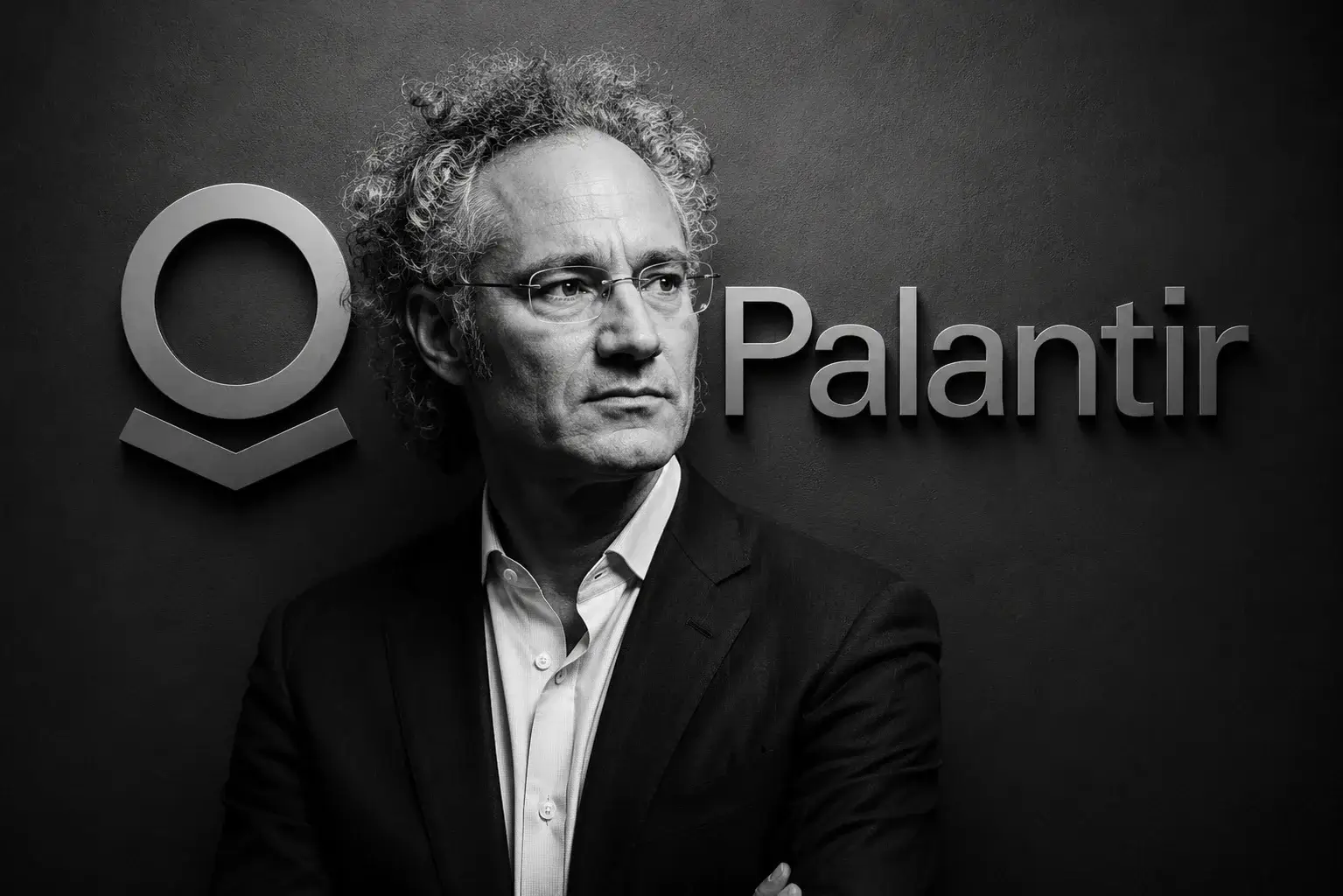
Palantir Stock Price Forecast — PLTR ($151.82) Sheds 5.5% Even After 85% Revenue Growth — $160 Reclaim Opens Path to $207
Palantir snapped 5.5% lower to near $151.82 after a wide $149.00–$159.52 session, extending a roughly 14% year-to-date decline | That's TradingNEWS
Key Points
- PLTR dropped 5.5% to near $151.82 on profit-taking, down ~14% YTD while the S&P 500 is up ~11%.
- Q1 2026 delivered 85% revenue growth to $1.633B, US commercial +133%, and $925M free cash flow at a 57% margin.
- A Rule of 40 score of 145 and a record guidance raise to a $7.656B midpoint (71% growth) anchor the bull case.
Palantir is doing something that drives growth investors crazy: the business is firing on every cylinder and the stock keeps getting sold. PLTR snapped 5.5% lower on Wednesday, dropping roughly $8.83 to trade near $151.82 after swinging through a wide $149.00 to $159.52 range and printing as low as $149.99 — a session that wiped out a chunk of a sharp recent bounce as traders locked in gains. The stock now sits about 6% below the day's peak, with the market cap holding near $365 billion on volume of 43.16 million shares, slightly above its 42.4 million average.
Here's the disconnect that defines this name. Palantir just posted what many consider the strongest quarter in enterprise software history, and the stock is down roughly 14% year-to-date while the S&P 500 has climbed about 11% over the same stretch. That's not a fundamental problem — it's a valuation problem. The business is compounding at 70%-plus while a triple-digit earnings multiple slowly compresses, and today's drop is the latest installment of that grind. The level that matters now is the $147 to $149 zone where buyers keep stepping in. Hold it and PLTR has based for another leg toward the $183 consensus target; lose it and the multiple compression isn't finished.
The Quarter That Should Have Ended the Debate
Look at what Palantir actually delivered and the selloff gets harder to explain. First-quarter 2026 revenue came in at $1.633 billion, ripping 85% year-over-year — an acceleration that almost no company of this scale can produce. Earnings landed at $0.33 per share against estimates near $0.27 to $0.28, a beat of roughly 18% to 22%, and more than double the $0.13 it earned in the same quarter a year ago. Adjusted free cash flow hit $925 million at a 57% margin, the kind of cash generation that turns a growth story into a self-funding machine.
These aren't numbers you fade. An 85% top-line growth rate at a company already doing more than $6 billion in annualized revenue is the rarest thing in software — most businesses decelerate hard as they scale, and Palantir is doing the opposite. The EPS beat wasn't a rounding-error surprise; it was a clean blowout that doubled the prior year's profitability. When a company posts this combination of growth, margin, and cash flow and the stock still trades lower on the year, the market isn't questioning the business. It's questioning the price it has to pay for the business. That's a very different problem, and a more solvable one.
Rule of 40 at 145 Is Almost Unheard Of
The single most jaw-dropping figure in the quarter was the efficiency score. The Rule of 40 — the software industry's benchmark that adds revenue growth to profit margin, where 40 is considered excellent — came in at 145 for Palantir. That's not beating the benchmark; that's shattering it by more than three times. A score of 145 means the company is growing explosively and printing fat margins at the same time, the holy grail combination that the software world spends careers chasing and rarely achieves.
This is the metric that should anchor any serious valuation conversation about PLTR. Most high-growth software names hit 40 to 60 and get rewarded with premium multiples; Palantir is operating at a level that has essentially no comparison in the public market. The bears argue the stock is too expensive, and on a raw P/E basis they have a point — but a Rule of 40 score of 145 is exactly the kind of fundamental that justifies a premium multiple in the first place. The question isn't whether Palantir deserves to trade richer than the average software stock. It does. The question is how much richer, and that's where the fight lives.
US Commercial Is the Engine Now
For years the knock on Palantir was that it was a government contractor dressed up as a software company. That argument is dead. US commercial revenue hit $595 million in the first quarter, exploding 133% year-over-year — the segment that proves Palantir's AI Platform is winning in the open enterprise market, not just inside defense and intelligence agencies with captive budgets. That's the growth vector that re-rates the entire story, because commercial demand scales in a way government contracts never could.
The AI Platform is the product doing the work. Palantir built Gotham for defense and intelligence, Foundry for data operations, and AIP to embed artificial intelligence directly into customer workflows — and AIP is the catalyst pulling commercial customers in at a pace that's accelerating, not slowing. A 133% growth rate in US commercial says the company has found genuine product-market fit for operational AI in corporate America, sitting squarely at the intersection of the two themes investors prize most: AI-native enterprise software and US defense modernization. As long as that commercial number stays above 100%, the bull case has a foundation. The moment it decelerates meaningfully, the premium multiple loses its justification. That's the number to watch every quarter.
The Guidance Raise Nobody's Pricing
Management didn't just beat — they raised the bar dramatically. Palantir lifted full-year 2026 revenue guidance to a $7.656 billion midpoint, implying a 71% growth rate and marking the largest guidance raise in company history. On the cash side, the company is guiding adjusted free cash flow to a range of $3.925 billion to $4.125 billion for the year. That's a business telling the market it expects to compound at 70%-plus and throw off roughly $4 billion in cash while doing it — a combination that's almost contradictory in normal companies.
The cash machine is the part consensus appears to be underweighting. Analysts tend to anchor on next-twelve-month earnings multiples and miss the second-derivative story: a company guiding to 71% revenue growth with $4 billion in adjusted free cash flow isn't a speculative bet on a future that may not arrive. It's a hyper-profitable growth engine being valued like a risk. When the largest guidance raise in a company's history lands and the stock trades lower on the year, the market is pricing skepticism that the guidance underweights — and that's the gap that closes violently to the upside if Palantir keeps executing. The setup rewards patience over precision here.
The Nvidia Partnership Adds Fuel
Palantir just plugged itself directly into the hottest trade in the market. At the Computex 2026 conference in Taipei, Palantir and Nvidia announced a new AI-agent product integration and partnership, marrying Palantir's operational software layer with Nvidia's AI infrastructure. That's a strategic alignment with the single most important company in the AI buildout, and it positions Palantir's platform as the application layer sitting on top of Nvidia's silicon — the place where raw compute turns into actual enterprise outcomes.
The timing matters because it ties Palantir's narrative to the AI infrastructure boom that's been driving the broader market to records. While chip names like Marvell and Nvidia capture the hardware side of the AI trade, Palantir is staking its claim to the software-and-agents layer, where the durable, high-margin revenue ultimately lives. A partnership with Nvidia gives institutional investors a cleaner reason to own PLTR as their AI-software pick, and it reinforces the commercial growth story that's already running at 133%. It's not a numbers catalyst yet — but it's the kind of strategic positioning that compounds into one over the coming quarters.
Read More
-
Yen Stalls at 160 Despite a 3% JGB and Tokyo Core CPI at 2.0% — Intervention Sits at 164, Friday's Payrolls Decide
02.09.2026 · TradingNEWS ArchiveEnergy
-
T-Rex 2X Inverse MSTR ($4.39) Rips 10.44% as Strategy Pauses Bitcoin Buys for a 2nd Week — $4.63 Close Opens $5.27
15.09.2026 · TradingNEWS ArchiveStocks
-
XRPR ($10.59) and XRPI ($7.04) Open at Highs and Close at Lows After Senate Kills CLARITY Act
15.09.2026 · TradingNEWS ArchiveCrypto
-
NG ($2.908) Holds Above $2.80 Low as LNG Feedgas Hits 18.8 Bcf and TTF Trades 9.2x Henry Hub
15.09.2026 · TradingNEWS ArchiveCommodities
-
USD/JPY (155.09) Faces 275bp Policy Gap as BOJ Prepares 31-Year-High Rate — Close Below 154 Opens 153.40
15.09.2026 · TradingNEWS ArchiveForex
The Valuation Problem Is Real
Now the other side of the ledger, because it's the whole reason the stock can't catch a sustained bid. Palantir trades at a P/E multiple around 181 — a number that prices the stock for absolute perfection and leaves zero room for a stumble. At roughly $152, against a $365 billion market cap, PLTR is one of the most expensive large-cap names in the entire market on a price-to-earnings basis. When a stock carries a multiple that rich, every quarter has to be flawless just to hold the line, and even historic results get sold because the bar was already set at the ceiling.
This is the mechanical force grinding the stock down even as the business compounds. Multiple compression — the market paying a lower multiple for the same or higher earnings — is exactly what's playing out in PLTR year-to-date. The earnings are exploding higher, but the multiple the market is willing to assign is contracting faster, and the net result is a stock that falls while the fundamentals rip. With a beta around 1.40 to 1.52, PLTR also amplifies every broad-market wobble, so on a risk-off day like today it gets hit harder than the index. The valuation is the single biggest risk to the stock, full stop. It doesn't make the business wrong; it makes the entry price treacherous.
The Year-to-Date Paradox
Step back and the paradox is striking. PLTR is down roughly 14% year-to-date while the S&P 500 is up about 11% — a gap of 25 percentage points of underperformance against the broad market, produced by a company that just delivered 85% revenue growth and the largest guidance raise in its history. Over the trailing year the stock still returned about 15%, and it touched $207.52 before sliding to current levels, but 2026 has been a story of the business winning and the stock losing.
That divergence is the opportunity and the warning rolled into one. The bull reads it as a coiled spring: a world-class growth machine whose stock has spent six months digesting an overheated valuation, setting up for a re-rating once the multiple stabilizes. The bear reads it as a stock that was simply too expensive and still is, with further to fall before the math works. Both are looking at the same chart. The recent bounce — up roughly 17% over the past week and 11% over the past month before today's pullback — shows the dip-buyers are active, but the YTD hole reflects how much air came out of the multiple. The stock is doing the hard work of growing into its valuation in real time.
The Chart: $147 Support, $207 the Ceiling
Map the levels and the trading range sharpens. Today's intraday low near $149 sits just above the more important $147 to $148 shelf, which aligns with the bear-case zone analysts have flagged and represents the line the buyers have to defend. Hold $147 and the stock has carved out a base from which it can build another leg higher. Lose it on a closing basis and the multiple-compression trade gets a fresh target lower, with little technical support until the stock fills the gap toward the low $140s.
On the upside, the path is clearly marked. The first hurdle is reclaiming the $159 to $160 area that capped today's session, then the round $165 level that several models peg as fair value. Above that, the structure opens toward the $183 to $193 analyst target band, and the real prize is a retest of the $207.52 fifty-two-week high. The stock's elevated beta means moves in both directions come fast, so the $147 floor and the $160 reclaim are the two levels that define the near-term trade. Watch which one breaks first — that's the tell on whether the multiple compression is exhausting or extending.
The Analyst Spread Tells the Whole Story
The Street's range captures the bull-bear war perfectly. Across the analysts covering PLTR, the consensus price target clusters around $183 to $194, implying roughly 20% upside from current levels, and the rating distribution leans bullish — the bulk of analysts at Buy with a smaller cluster at Hold and only a handful of bears. Bullish sentiment runs around 61%. One model frames a base case near $165, a bull case near $204, and a bear case near $148 — a spread that essentially brackets the entire fight between the growth story and the valuation.
That wide spread is itself the signal. When a stock's bear case sits right at the current price and the bull case implies a run back toward the highs, the market is telling you this is a binary that hinges on multiple direction, not business direction. Nobody serious is betting against Palantir's growth — the debate is entirely about what multiple that growth deserves. Argus recently flipped bullish, upgrading to Buy, and the institutional hype around the AI momentum keeps building. The consensus says there's roughly 20% upside on the table, but it also says the downside to the bear case is real if the multiple keeps compressing. Respect both ends of that range.
The Forecast: Growth Isn't the Question, Price Is
Pull it together and the call is clean. Palantir is the cleanest example in tech of a business winning while its stock does the painful work of digesting its own valuation. PLTR posted what may be the strongest quarter enterprise software has ever produced — 85% revenue growth, a Rule of 40 score of 145, US commercial up 133%, $925 million in quarterly free cash flow, and the largest guidance raise in company history to a $7.656 billion midpoint — and the stock is still down roughly 14% on the year and got smoked 5.5% today. The fundamentals aren't the issue. A 181x P/E is the issue, and multiple compression is the mechanism pinning the stock.
Trade it with both eyes open. The $147 to $148 zone is the line that decides the near-term path: defend it and PLTR has based for a run at $160, then the $165 fair-value area, and ultimately the $183 to $194 consensus target with the $207 high in view if the AI-software premium re-rates higher. Lose $147 on a close and the multiple compression has another leg, with the low $140s the next magnet. The catalyst that finally lets this stock work isn't more growth — Palantir is already delivering all the growth anyone could ask for. It's the market deciding the AI-software premium is worth paying again. Until that shift happens, the business keeps compounding and the stock keeps grinding through its valuation. Watch $147, watch the $160 reclaim, and remember that with PLTR you're never betting on the company — you're betting on the multiple.