Ripple ($1.07) Compresses Into a 5-Cent Range With 8 Days Left Before the Senate Recess Kills Its Only Catalyst
XRP sits 71% below its July 2025 peak of $3.66 after the Senate shelved the market-structure bill on Monday | That's TradingNEWS
Key Points
- XRP trades at $1.07, roughly 71% below the July 2025 peak of $3.66 and more than 40% lower year to date.
- The Senate shelved the CLARITY Act on Monday; recess begins around August 7 and passage needs 60 votes.
- July spot ETF inflows totalled $12.3 million against $59 million in June and $131 million in May.
XRP trades at $1.07, up roughly 0.31% over 24 hours, holding above the $1 handle while the broader crypto complex digests the Federal Reserve's hold. Market capitalisation sits near $67 billion against a total supply of 100 billion tokens. The Fear and Greed index reads 29 — the same reading Bitcoin and Ethereum carry, which tells you the sentiment problem is market-wide rather than Ripple-specific.
The drawdown is the most severe among the major digital assets. XRP peaked at $3.66 in July 2025 and is now approximately 71% below that level. Bitcoin is down roughly 49% from its record. Ethereum is down about 61%. XRP has fallen further than either, and it has done so through a period in which Ripple as a company delivered a near-uninterrupted run of commercial wins. That divergence is the central puzzle of this forecast.
The 2026 path shows how the decline happened. XRP opened the year with a brief rally, then fell to $1.11 by early February. From mid-February to mid-May it consolidated in a $1.27 to $1.67 band. June brought a 21% decline that printed a 19-month low of $1.01 on June 25. July has been a compression: the token rallied above $1.13 on legislative optimism around July 21, reached $1.1485, then slid back through $1.10 and $1.08 to touch $1.05 on July 28 before recovering. Year to date it is down more than 40%.
The near-term range is unusually tight and unusually well-defined. XRP has been consolidating between $1.06 and $1.11 — a five-cent band on a token trading near a dollar, which is roughly 4.7% of price. Trading volume has thinned alongside it: spot volume near $263 million against futures volume of $2.10 billion, with open interest around $2.40 billion and a long/short ratio close to parity at 0.9743.
That configuration — extreme drawdown, compressed range, neutral positioning, fear sentiment — is the setup that either marks a bottom or precedes a capitulation leg. Which of the two depends almost entirely on a single piece of legislation sitting on the Senate calendar with eight days before recess. Everything else in this analysis is secondary to that timeline, and it is worth stating plainly at the outset.
The Range That Has Held All Month: $1.05 Floor, $1.11 Ceiling
The technical map is precise because the range has been tested repeatedly. Immediate resistance sits at $1.11, and a sustained breakout above it opens $1.16 — the level that capped the mid-July rally attempt. Above $1.16, the next references are $1.20 and then the heavier $1.29 to $1.30 supply zone. On the downside, $1.06 is the first support, with $1.05 marking the July 28 intraday low. Below that, $1.04 offered support in late June, and $1.01 is the 19-month low from June 25.
Beneath $1.00 the structure thins out fast. Analysts watching this chart put the first meaningful downside target at $0.91, with deeper macro support at $0.86 — roughly 20% below spot — and a further zone at $0.80 to $0.90. One framework places $0.93 as the next structural support if the dollar floor gives way. The $1.00 level has held on every test this year, and it is doing more work than any moving average on the chart.
Momentum readings describe a market that has stopped moving rather than one preparing to. The relative strength index has been running between 40.9 and 48.9 depending on the timeframe — bearish territory below the neutral line but nowhere near the extremes that attract aggressive dip buyers. The average directional index has printed as low as 11.2, which is about as close to a formal reading of "no trend" as the indicator produces. Price sits below the 20, 50, 100 and 200 exponential moving averages, and a death cross remains intact.
The shorter-term structure deteriorated after the mid-July rally failed. Price broke below a rising channel having failed to hold $1.14 resistance and the 100-period exponential average, which pushed it under $1.12 and then $1.10 and weakened the setup further. A composite technical score has been running around negative 63%, with the only genuine positive being how deeply oversold the token has become.
The practical framework: a market this trendless can compress for considerably longer than most traders expect before resolving. Oversold indicators can produce a short-term bounce, but without a macro catalyst or a legislative surprise, that bounce is more likely a selling opportunity than the start of a new trend. Reclaiming $1.11 to $1.12 is the minimum requirement for anything constructive. Losing $1.08 decisively opens $0.91.
The CLARITY Act Was Shelved on Monday, and That Is the Whole Story
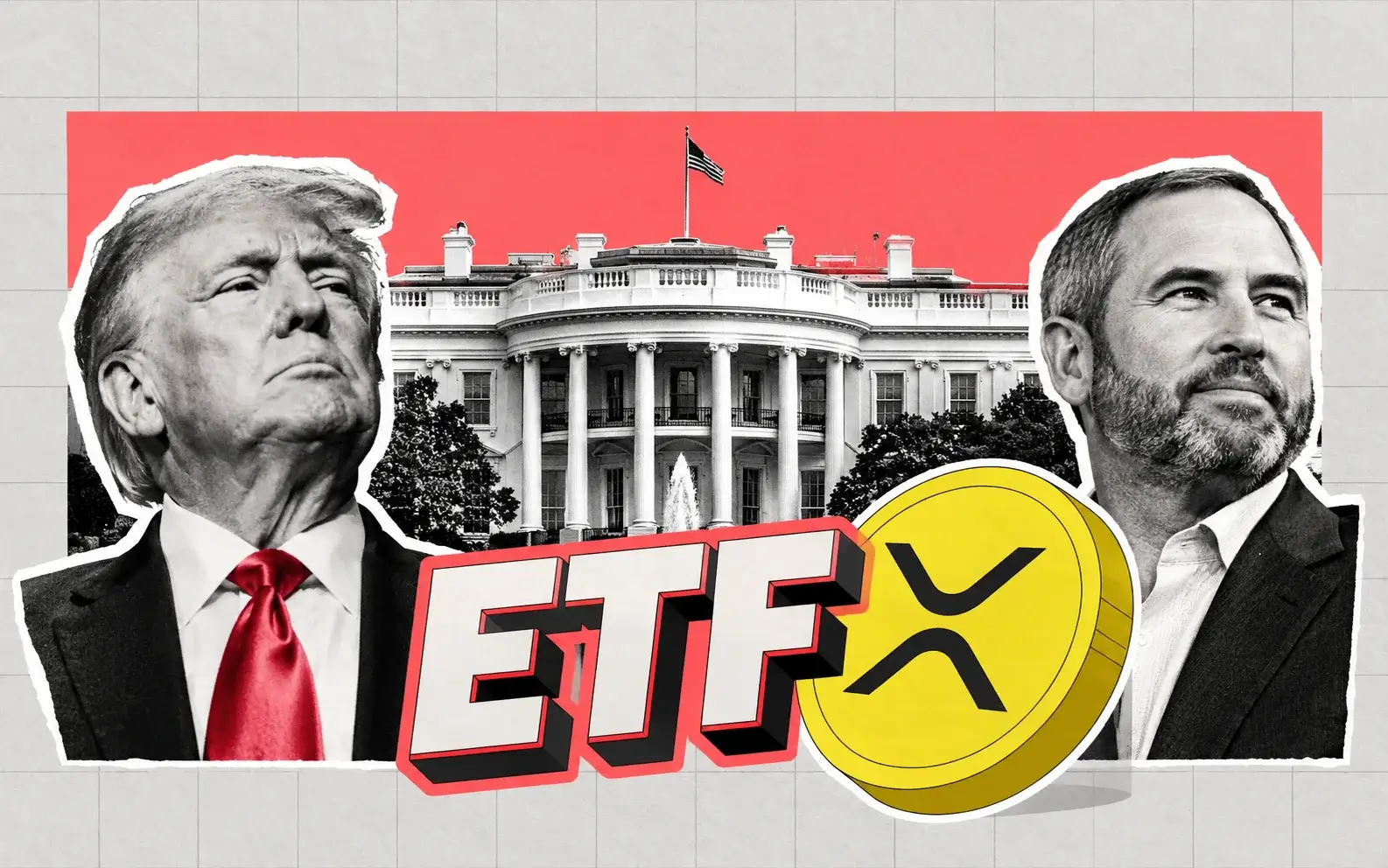
On Monday the Senate formally shelved the Digital Asset Market Clarity Act to prioritise a Russia sanctions bill and federal nominations. That single procedural decision is the most important input into XRP's price for the remainder of 2026, and it explains the slide from $1.10 on July 27 to $1.05 on July 28 more completely than the Fed meeting does.
The sequence over the preceding fortnight shows how much the token is levered to this bill. Senate Republicans circulated a new 616-page draft in mid-July. On July 21, reports that the President had agreed to the long-stalled ethics provision pushed XRP up 3.25% to $1.1485 and briefly nudged passage odds on prediction markets to 43%. Bitcoin climbed above $66,000 on the same headlines and XRP caught the wave harder than most, cracking a $1.13 ceiling that had capped every rally since late June. That entire move has now been given back.
The obstacle is the enforcement mechanism. The draft grants authority solely to a Justice Department that reports directly to the President, and Democrats have objected to leaving enforcement exclusively there. One senator called the enforcement offer unserious on exactly those grounds. The ethics provision as drafted sunsets in 2029 and gives regulators a year to implement it — concessions that have not been sufficient to secure the votes.
The calendar is now the binding constraint. The Senate's August recess begins around August 7, which leaves roughly eight days for a floor vote that has not been scheduled. The majority leader's comments suggested debate may begin before recess, but a final vote looks more likely to slip. Coinbase's chief executive returned to Capitol Hill describing the bill as at the one-yard line and predicting it could reach the floor within weeks, while conceding that the absence of confirmed Democratic support remains the major obstacle.
Probability estimates have collapsed accordingly. Prediction markets priced 2026 passage at 43% at the July peak. One research head cut his odds to 30% from 60%, citing the shrinking legislative calendar. Market watchers have put approval in current form at 39% to 43%. Miss the August window and the midterm election calendar pushes the next realistic opportunity into 2027 or beyond.
Why Commodity Classification Is Worth More to XRP Than to Anything Else
The reason this bill matters more to XRP than to any other major token is specific and it is legal rather than economic. XRP's commodity status was established through joint interpretive guidance issued by the securities and derivatives regulators in March 2026. Interpretive guidance can be reversed by the next set of regulators. A statute cannot.
That distinction is the entire institutional case. For pension funds, asset managers and bank trust desks weighing XRP exposure, a durable commodity classification removes the single largest legal overhang on the asset — an overhang that has existed since the securities regulator sued Ripple in December 2020, when major US exchanges delisted the token and the price collapsed. The 2023 court ruling that programmatic sales on public exchanges did not constitute securities transactions was a partial win. The 2025 settlement concluded the case. Neither produced a statute.
No other large-cap digital asset carries this asymmetry. Bitcoin's commodity status has never been seriously contested. Ethereum's was resolved when the securities regulator settled its own investigation on July 26 for $150,000 in fees. XRP is the only major token whose legal foundation still rests on an agency interpretation rather than legislation, and it is the only one where a bill passing converts a reversible position into a permanent one.
That is why XRP trades on legislative headlines with a beta that no other asset shows. It rose 3.25% on an ethics-provision report. It fell to $1.05 when the bill was shelved. Bitcoin and Ethereum barely registered either event. The market is correctly pricing XRP as a legislative option rather than a network asset, and options with a defined expiry decay as that expiry approaches without resolution.
The corollary matters for anyone modelling downside. If the bill passes, the re-rating is substantial and immediate, because a whole class of institutional capital becomes eligible overnight. If it fails before recess, XRP does not simply stay where it is — it loses the premium currently embedded for a 30% to 43% passage probability. That premium is worth something in the range of ten to twenty cents on the current price, and it comes out quickly.
The Senate Arithmetic: Fifty-Three Seats, Sixty Votes, and August 7
The vote count is the cleanest way to handicap this. The bill passed the House 294-134 on July 17, 2025, and cleared the Senate Banking Committee 15-9 on May 14, 2026. It has sat on the Senate calendar since June 1 with no floor vote scheduled. Passage requires 60 votes under standard cloture rules.
Republicans hold 53 seats and are expected to lose two of them — one senator on crypto-industry grounds and another on libertarian objections to the regulatory framework itself. That puts the effective Republican base at 51 and means seven to nine Democratic votes are required. Approximately two are currently secured. The gap is five to seven senators, and it has not narrowed materially in two months.
Three separate disputes are jamming the bill. The first is the President's personal crypto income, which prompted a formal disclosure request with a July 23 deadline covering earnings from January 1 through July 15. The second is decentralised finance rules. The third is stablecoin rewards. Each has its own coalition, and resolving one has repeatedly reopened another — which is how the ethics provision that appeared settled on July 21 produced no floor time by July 27.
The consequence of missing August 7 is more severe than a simple delay. The midterm election calendar dominates the remainder of 2026, and legislation of this complexity does not typically move through a Senate heading into an election. Estimates for the next realistic window range from late 2026 to 2027, with the most pessimistic assessment putting comprehensive crypto rules as far out as 2030.
For a token whose institutional thesis rests entirely on this bill, that timeline is the difference between a 2026 re-rating and a two-year holding period. It is also why the technical setup argues for patience rather than urgency: a market waiting on a binary event with a defined deadline compresses until the deadline arrives, and then it moves violently in one direction. Eight days is the window. Position sizing should reflect that the outcome is close to a coin flip and the payoff is asymmetric in both directions.
ETF Flows Collapsed to $12.3 Million in July From $131 Million in May
The institutional demand signal has deteriorated sharply, and the monthly progression is unambiguous. US spot XRP exchange-traded funds attracted $131 million in May, $59 million to $62 million in June, and just $12.3 million across July — the weakest month since April. Recent data showed the funds adding no assets across three consecutive market days.
The deceleration is more informative than the absolute level. These products launched in November 2025 and crossed $1 billion in cumulative inflows by mid-December, then passed $1.5 billion by early March 2026 before momentum slowed. Cumulative net flows have since sat around $1.47 billion to $1.48 billion for months, which means the category has effectively stopped growing. An eight-week inflow streak with no outflow day since June 3 sounded impressive when it was reported in late June; the streak was composed of increasingly small daily numbers and has since broken, with July 8 logging $7.29 million of net outflows — one of the largest single-day losses since March.
The mechanics matter for price because these funds hold XRP directly. Every dollar of inflow has to buy the token on the open market. That made the ETF complex the one genuinely price-supportive institutional channel available to XRP, distinct from every other piece of Ripple news. When inflows run at $131 million a month, that is a meaningful structural bid against thin spot volume of roughly $263 million a day. When they run at $12.3 million, the bid disappears.
The concentration of July's outflows in a single issuer suggests fund-specific redemption pressure rather than a coordinated institutional exit, which is a modest mitigant. But the aggregate reads clearly: the pace of accumulation has decelerated from a structural bid to a near-standstill inside six weeks.
Set that against the comparison. Ethereum funds took in $342.9 million in July, reversing June's $529 million of outflows and outpacing both Bitcoin and Solana. Bitcoin funds managed $205 million, their weakest month on record. XRP's $12.3 million is the smallest of the three in both absolute and relative terms, and it is the only one of the three whose monthly trend is still deteriorating.
Seven Funds, One Billion in Assets, and 978.9 Million Tokens Locked
The structural picture of the ETF complex is worth stating precisely because it is smaller than the headline inflow figure suggests. As of July 30, seven US spot XRP funds are trading with combined assets under management of approximately $1 billion and 978.9 million XRP tokens locked.
The gap between $1.47 billion of cumulative inflows and $1 billion of current assets is the price decline. Those funds bought XRP at an average cost well above $1.07, and the mark-to-market has eroded roughly a third of the capital deployed. That is a meaningful psychological overhang for allocators reviewing positions, and it is the same dynamic constraining gold's ETF complex, where roughly 298 tonnes sits underwater and functions as supply into any rally rather than support beneath one.
The token count is the more useful number for supply analysis. At 978.9 million XRP against a 100 billion total supply, the ETF complex holds just under 1% of all XRP in existence. For comparison, Ethereum's ETF complex holds roughly 4.56% of that network's market capitalisation, and Bitcoin's holds a considerably larger share of float. XRP's institutional wrapper is the least penetrated of the three by a wide margin.
That cuts both ways and the bull case runs through it. Low penetration means enormous headroom if the classification question resolves — the entire universe of pension and trust capital that cannot currently hold an asset with reversible regulatory status becomes addressable. One billion dollars of assets against a $67 billion market capitalisation is a starting position, not a saturated one.
The bear case is that the current $1 billion was raised during the launch window and the enthusiasm phase, and that the marginal allocator has already made a decision. Six weeks of near-zero flows into a product that has been available for eight months, from a category that has demonstrated it can absorb billions when the thesis is compelling, is evidence that the thesis is not currently compelling. The flow data is the market voting on the legislative odds, and it is voting the same way the prediction markets are.
Whales Kept Buying Into the Decline: 210 Million XRP in a Month
The on-chain picture diverges from the flow picture in a way that deserves attention. During June — the month XRP fell 21% and printed a 19-month low of $1.01 — whale cohorts added a combined 210 million XRP. Over the same period, the XRP Ledger recorded its strongest single-day wallet growth in more than three months, and new wallet creation reached its highest level in three months.
Exchange withdrawal data corroborates it. Transfers above 1 million XRP rose from about 10% of total outflow value on one major venue on June 16 to 25.7% by July 1. On another exchange, whale-sized withdrawals stayed near half of total outflow value and ended at 49.6%. The all-exchange whale-versus-retail spread read 50.9%, with one venue at 44.6% — pointing to strong large-holder activity while retail participation stayed cautious. Social sentiment reached a positive-to-negative ratio of 3.7:1, a three-month high.
Coins leaving exchanges do not prove accumulation — the data does not establish where they moved — but it does show large holders taking a bigger role in exchange outflows at precisely the point retail was inactive. That is the classic bottoming signature and it is genuinely constructive.
The caveat is that the signal has since weakened. A key whale indicator turned negative for the first time in four months, signalling renewed selling pressure as large holders reduced positions. Whale activity had already begun cooling during the correction, which suggests the accumulation was weaker than the headline 210 million figure implies, and it is the reason to treat this as supportive context rather than a buy signal.
The honest synthesis: XRP has a committed large-holder base that bought a 21% decline and a network showing healthy wallet growth against a falling price. That combination establishes why $1.00 has held on every test this year. It does not establish that price goes higher, because the same holders have started trimming and the retail cohort that produces upside velocity has not returned. Whales set floors. Retail and institutions set rallies, and neither is currently present.
Read More
-
Yen Stalls at 160 Despite a 3% JGB and Tokyo Core CPI at 2.0% — Intervention Sits at 164, Friday's Payrolls Decide
02.09.2026 · TradingNEWS ArchiveEnergy
-
GLD ETF Sheds Value With Bullion as North American Funds Stay $7.7B in the Red
10.09.2026 · TradingNEWS ArchiveStocks
-
XRP ETF Flows: 7 Funds Split $1.682B With the Complex at Just 1.68% of Market Cap
10.09.2026 · TradingNEWS ArchiveCrypto
-
NG Breaks $2.90 With Production at 113 Bcf/d and LNG Feedgas Capped at 18.3 Bcf/d
10.09.2026 · TradingNEWS ArchiveCommodities
-
USD/JPY Holds Below the 157.23 Average as 2 Central Banks Tighten in 48 Hours
10.09.2026 · TradingNEWS ArchiveForex
RLUSD Crossed Over: $810 Million on XRPL Against $756 Million on Ethereum
The most genuinely bullish development this week has nothing to do with the token's price and everything to do with the ledger's utility. For the first time, more of Ripple's RLUSD stablecoin now lives on the XRP Ledger than on Ethereum — $810 million representing 51.7% against $756 million at 48.3%. A month ago Ethereum led by more than $300 million.
That crossover is a real migration of settlement activity onto the chain XRP secures. RLUSD has routed more than $2.5 billion through XRP Ledger pairs since launch, with the RLUSD/XRP pair alone clearing roughly $900 million in six months. Approximately $4 billion in tokenised real-world assets now sit on the network. Native lending is coming in the ledger's next major upgrade, and an Ethereum-compatible sidechain is already live.
The ecosystem build continues alongside it. Ripple launched Ripple Mint, a unified platform for institutions to access, mint, redeem and manage RLUSD tokens, and invested in a compliance infrastructure firm to expand RLUSD utility. XRPL Commons launched a three-track grants programme funding developers, startups and existing applications, including incubator support, milestone-based grants and migration help for teams moving products onto the ledger. More than $550 million has gone into the XRPL ecosystem since 2017. Ripple has also secured a full EU licence under the bloc's crypto framework and joined a dollar stablecoin consortium backed by the two largest card networks, a major payments processor, the world's largest asset manager and more than 140 other companies.
One caution on RLUSD's own trajectory: its market capitalisation stands above $1.58 billion, down from an all-time high of $1.8 billion. Growth has stalled even as the chain-share shifted, which means the crossover reflects migration from Ethereum rather than net expansion.
This is a company executing well. It is also the exact set of facts that has failed to move the token for eighteen months, and understanding why is the subject of the next section.
The Value Accrual Gap: Ripple Wins and XRP Does Not
The structural problem with the bull case is that almost none of Ripple's commercial success creates demand for XRP. Transactions on the XRP Ledger cost fractions of a cent. Even if the entire stablecoin consortium settled on the ledger, the coin moving across it would burn only a trickle of XRP. RLUSD routing $2.5 billion in volume generates negligible token demand. Tokenised assets sitting on the chain generate negligible token demand. Developer grants generate none at all.
That is the mechanism behind a token down 71% from its peak during a period when the underlying company won its regulatory case, secured a full European licence, launched a successful stablecoin, joined a consortium with the largest payment networks in the world, and built a ledger now hosting $4 billion of tokenised assets. The company has been winning. The token has not participated, because the ledger is deliberately engineered to be cheap and XRP's role in it is as a bridge asset rather than a fee sink.
Compare the value-accrual mechanics across the three majors. Bitcoin accrues value through absolute scarcity. Ethereum accrues value through fee burn and staking yield — and even that is under pressure from Layer 2 migration, which is precisely why ETH sits 61% below its own peak. XRP has neither a burn of consequence nor a native yield. Its demand drivers are speculative positioning, ETF creation flows and cross-border settlement volume that requires holding the token only momentarily.
There is also the persistent talk of a Ripple public offering, with hints that XRP holders might eventually receive something from it. That is speculative, undated, and does nothing for the price today.
The result is that XRP's price is set almost entirely by two variables: overall crypto beta, and the probability of the classification bill passing. Neither is a network fundamental. That is an uncomfortable conclusion for holders, and it is the honest reading of eighteen months of price action against an unbroken run of corporate execution.
Technicals: Death Cross Intact, ADX at 11.2, RSI at 40.9
The technical configuration is close to uniformly negative with one redeeming feature. A death cross is confirmed and intact. The relative strength index has been reading between 40.9 and 48.9 — below the neutral line, in bearish territory, but not at the extremes that typically attract aggressive bottom-fishing. Momentum indicators are loaded with negative readings. Price trades below the 20, 50, 100 and 200 exponential moving averages on the shorter timeframes. A composite technical score has been running around negative 63%.
The average directional index at 11.2 is the reading that governs everything else. Below 20 conventionally indicates no trend; below 15 indicates a market that has genuinely stopped directional movement. At 11.2 the trend-following signal is not merely weak — it is absent. That is consistent with the five-cent range and the thin volume, and it means momentum-based approaches will generate false signals in both directions until the range breaks.
The single redeeming feature is that XRP is deeply oversold on multiple measures. Deeply oversold conditions produce bounces. They do not produce trends without a catalyst, and the specific warning from technicians watching this chart is that any bounce from here is more likely a selling opportunity than the start of a new advance absent a macro or legislative surprise.
Derivatives positioning confirms the disengagement rather than a coiled spring. Trading volume dropped 9.9% to $1.73 billion while open interest fell 2.56% to $2.40 billion in recent sessions. Both declining together means traders closed positions rather than opening new speculative bets — fewer contracts changing hands and fewer positions outstanding. That is reduced risk appetite, not accumulated leverage waiting to fire.
One longer-cycle framework offers a constructive counterpoint worth recording. XRP's bear markets have become shorter and less severe across successive cycles. At roughly 350 days of correction and 71% down from the July 2025 peak, one analyst argues the token is approaching the window in which a long-term bottom historically forms, with the territory for marking that bottom fast approaching between now and year end. That view sees an extended accumulation phase after a cycle low, eventually producing repricing toward Fibonacci extension targets of $8, $13 and $27 over multiple years. Treat that as a multi-cycle thesis, not a 2026 forecast.
The Macro Overlay: A Nine-Three Hold and a High-Beta Altcoin
XRP's second driver is straightforward crypto beta, and the macro backdrop this week was mixed at best. The Federal Reserve held at 3.50% to 3.75% on a 9–3 vote, the fifth consecutive hold and the longest pause since 2008, with three dissents favouring a hike. Thursday's data showed second-quarter GDP at 1.5% against a 1.8% consensus, core PCE easing to 3.3%, and jobless claims at 197,000. The 30-year Treasury yield hit a nineteen-year high of 5.21%.
The crypto reaction was muted across the board. Bitcoin gained 0.4% on the decision day and sits near $64,500, having posted its weakest monthly ETF inflows on record at $205 million. Ethereum trades near $1,920 with its own record staking figures. Total crypto market capitalisation is around $2.27 trillion with sentiment at 29. This is a complex that is not currently trading the rate path with any conviction.
XRP is the highest-beta of the three to that complex, and the relationship is asymmetric. The token falls more sharply than Bitcoin when the mood turns, and it has consistently underperformed the broader market on up days — one measurement showed XRP rising 1.41% while underperforming the aggregate by 1.27% in the same session. Ahead of the Fed meeting, Bitcoin briefly fell below $63,500 and Ethereum lost about 4%, triggering deleveraging across large caps. XRP's reaction was particularly sharp, sliding from roughly $1.10 to nearly $1.05 before buyers returned.
The practical implication is that XRP requires Bitcoin to hold its own support for any XRP-specific catalyst to work. Bitcoin's $63,300 hundred-day average is the relevant level. If it breaks and BTC tests $62,500 or lower, XRP loses $1.00 regardless of what happens in the Senate, because the deleveraging cascade in a thin altcoin order book overwhelms any legislative bid.
Conversely, the combination that produces the strongest XRP move is Bitcoin holding above $63,000 while the classification bill reaches a floor vote before August 7. That is the only configuration in which both drivers align, and it is the specific scenario the bull case below requires.
The Forecast: $1.20 Base, $1.45 Bull, $0.86 Bear Into the Fourth Quarter
The base case, at roughly 45% probability, is continued compression between $1.00 and $1.16 into September, resolving modestly higher toward $1.20 by the fourth quarter. This requires the classification bill to miss the August 7 window without formally dying, Bitcoin to hold above $60,000, and ETF flows to stabilise rather than turn negative. Under this path XRP reclaims $1.11, tests $1.16, fails, and grinds sideways while whales continue absorbing supply at the dollar floor. That is roughly 12% upside and it is a range trade, not a position.
The bull case, around 20%, requires the bill to reach a floor vote and pass before recess. That converts XRP's commodity classification from reversible interpretive guidance into permanent federal law and unlocks the institutional cohort that cannot currently hold it. Expect an immediate move through $1.16 to $1.20, then the $1.29 to $1.30 supply zone, with $1.45 achievable inside a quarter as ETF creation flows resume at the $131 million monthly pace last seen in May. The vote arithmetic — needing seven to nine Democratic votes with two secured and eight days remaining — is why this is weighted at one in five rather than the 30% to 43% the prediction markets carry.
The bear case, around 35%, is the bill dying into recess with the midterm calendar pushing the next window to 2027. XRP loses the passage premium currently embedded in the price, breaks $1.08, then $1.05 and $1.01, and the dollar level fails for the first time this year. First target $0.91, then $0.86 — roughly 20% below spot. If Bitcoin breaks down concurrently, $0.80 is reachable. This is the highest-probability single scenario and it deserves the weighting.
The disciplined posture at $1.07 is to wait. Eight days will resolve a binary that has governed this token for eighteen months, and the asymmetry is knowable in advance. Accumulate below $1.00 if the bill dies and the flush comes, because the multi-cycle bottoming case has genuine merit at $0.86. Do not chase $1.16 before a scheduled vote exists.