Solana Leads the Majors at $111.51 as SEC Exemption Meets Solana's Tokenized-Stock Lead — Break of $120 Opens $125
Solana cleared $100 decisively and gained 13.4% from its September 1 low | That's TradingNEWS
Key Points
- SOL-USD rose 9.73% to $111.51, nearly double bitcoin's 5.42% gain and the strongest among the large-cap majors.
- Solana's Transaction V1 upgrade raised the transaction size limit to 4,096 bytes from 1,232.
- A close above $120 opens a path to $125, a 12.1% gain, while a close below $100 targets $95.
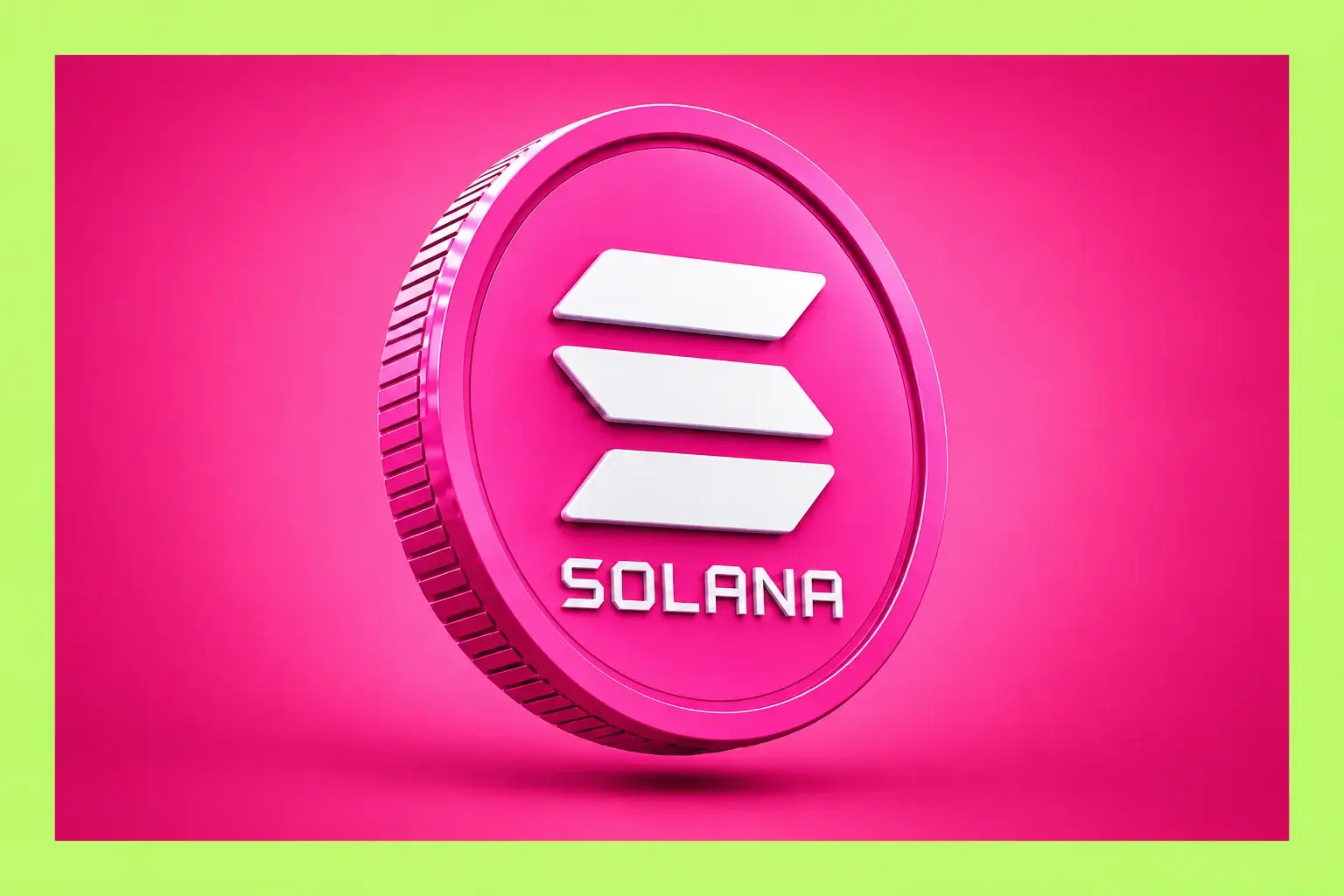
Solana is the standout among large-cap crypto assets on Friday, and the reason sits at the heart of this week's biggest regulatory story. SOL-USD traded at $111.51 by late morning in New York, up $9.88 or 9.73% on the day. That beat bitcoin's 5.42%, ether's 5.61% and XRP's 6.94%. Among the majors, only a handful of smaller DeFi tokens moved more. The rally lifts Solana's market value to $65.5 billion and pushes it back above $110 for the first time this month.
The catalyst is the SEC's five-year Innovation Exemption, issued Thursday, which lets regulated venues trade tokenized versions of U.S.-listed stocks through permissioned automated market makers and liquidity pools. For most chains, tokenized equities are a future use case. For Solana, they are already a present one. The network processes billions of dollars in weekly tokenized equity volume, a market that grew into a $3 billion boom by early September. The SEC just gave that activity a regulated U.S. pathway.
Solana added a technical upgrade to the regulatory tailwind. On Tuesday, the network's Transaction V1 update raised the transaction size limit to 4,096 bytes from 1,232, more than tripling the room for complex trades, company-wallet approvals and privacy proofs. That narrows a key gap with Ethereum for institutional use cases, which is exactly what tokenized securities require.
The move comes after a rough stretch. Solana fell to $98.30 on September 1 and spent the first half of the month hugging the $100 line. Friday's session opened in Asia with a 6% gain to just above $106, then accelerated when bitcoin broke through $80,000 at the U.S. open. From the September 1 low, SOL has gained 13.4%.
The institutional picture is mixed. Nine spot Solana ETFs held $1.41 billion in net assets in early September, and one staking product, Bitwise's BSOL, has passed $1 billion in cumulative inflows. But weekly ETF inflows collapsed 96% from $153.87 million to $6.18 million in early September after the strongest week of 2026. Friday's rally has not yet been confirmed by a return of heavy ETF buying.
The longer view keeps the move in perspective. Solana remains 62% below its January 2025 record of $293. It ranks seventh among crypto assets. Friday's 9.73% gain is a strong day inside a recovery that still has a long way to go.
The question for the next two weeks is whether the tokenization story can revive ETF inflows and carry SOL through $120, or whether the move fades back toward $100 during a historically weak week for crypto.
The Session Tape: From Just Above $106 in Asia to $111.51 in New York
Friday's move in Solana unfolded in two distinct phases, and the second one set it apart from the pack.
The first phase came overnight. The Bank of Japan raised its policy rate to 1.25%, a 31-year high, and the yen weakened rather than strengthened, removing an immediate threat to global risk assets. Altcoins led the Asian session. HYPE jumped more than 11% to nearly $89, ZEC added 8% to $1,472 and SOL gained 6% to just above $106. BNB and DOGE rose 4%, while bitcoin and ether trailed with 2% gains. Total crypto market value rose 2% to $2.66 trillion.
Solana's early outperformance was notable. It gained three times as much as bitcoin in the Asian window, a sign that traders were positioning specifically in SOL ahead of the U.S. session, likely on the tokenization angle of the SEC's Thursday order.
The European morning brought consolidation. SOL held in the $105 to $106 range as bitcoin ground toward $78,000. The token traded at $105.75 in the morning, holding most of its overnight gain.
The second phase was the breakout. When bitcoin cleared $80,000 at the U.S. equity open, crypto-linked stocks surged, with Strategy up 11% early, Coinbase up 9% and Robinhood up 7%. Solana took off with them and outran every other major token. By late morning, SOL reached $111.51, up $9.88 on the day. The move from $106 to $111.51 added another 5% on top of the overnight gain.
The breadth of the altcoin rally frames Solana's move. Cardano gained 8.85%, Bitcoin Cash 7.96%, Cosmos 7.31%, XRP 6.94% and Avalanche 6.58%. Uniswap jumped 12.40%. Solana's 9.73% placed it near the top of that group and ahead of every asset with a larger market value.
The contrast with traditional markets is sharp. The S&P 500 fell 0.13%, the Russell 2000 dropped 0.84% and the 10-year Treasury yield climbed back to 5.004%. Crypto rallied against a hostile macro tape, driven by sector-specific catalysts.
The move puts Solana above $110 and within reach of $120, the level derivatives traders have targeted since late August. It also leaves a gap between $106 and $110 that price may revisit over the weekend, when U.S. institutional flows go quiet and crypto trades on thinner liquidity.
The SEC Exemption Meets a $3 Billion Tokenized-Stock Market
The SEC's Thursday order is the single most important catalyst for Solana this quarter, and its fit with the network is closer than for any other chain.
On September 17, the SEC issued an order granting temporary, conditional relief to Tokenized Securities Venues from the definition of an exchange under the Securities Exchange Act of 1934. Those venues can trade tokenized versions of listed U.S. stocks through permissioned automated market makers and liquidity pools for five years. Liquidity providers supplying those pools received an exemption from dealer registration.
Solana is already the busiest venue for tokenized stocks. The network processes billions of dollars in weekly tokenized equity volume and led a tokenized stock boom that reached $3 billion by early September. Much of that activity has involved tokenized versions of U.S. shares offered to users outside the U.S. The SEC's order opens a regulated path for similar products inside the U.S., under strict conditions.
The guardrails will shape how Solana benefits. Venues must be permissioned, meaning participants go through identity checks. Tokenized shares must carry the same rights as the underlying stock, which separates real tokenized stock from synthetic price-tracking products. Symbol limits and volume caps are calibrated to limit-up, limit-down tiers, and issuers can object to their shares being listed. The exemption does not extend to decentralized finance.
Solana's technical profile fits the requirements. High throughput and low fees matter for stock trading, where users expect fast execution and small costs. Solana's architecture handles high transaction volumes at a fraction of a cent per trade. The Transaction V1 upgrade this week tripled transaction size, giving room for the compliance checks, multi-step approvals and permissioned logic that regulated tokenized securities require.
The regulatory recognition had already started. On September 5, the SEC approved changes to a Nasdaq rule that explicitly names Solana, alongside bitcoin, ether and XRP, as a digital asset meeting the exchange's standards for commodity-based trusts. That places Solana in the top tier of crypto assets from a U.S. regulatory perspective.
The competition is real. Ethereum dominates tokenized real-world assets and decentralized liquidity. Coinbase's Base network processes large stablecoin volumes. Robinhood has its own chain, and a Solana co-founder publicly debated its fee structure this month.
The order creates a potential new demand channel for Solana blockspace. Tokenized stock trades pay fees in SOL and bring liquidity onto the network. Friday's outperformance shows the market sees Solana as a leading beneficiary.
Transaction V1: Tripling Transaction Size to 4,096 Bytes
Solana's technical upgrades this month matter as much as the regulatory news, and they address a weakness that had held back institutional adoption.
On September 15, Solana's Transaction V1 update raised the network's transaction size limit to 4,096 bytes from 1,232, more than tripling it. The change gives developers more room for multi-step trades, company-wallet approvals and privacy proofs within a single transaction. It narrows the gap with Ethereum, where larger transactions have long been possible.
The practical impact is significant. Solana's earlier 1,232-byte limit forced developers to split complex operations into multiple transactions or use workarounds that added cost and complexity. Institutional use cases, such as a tokenized stock trade that requires identity verification, compliance checks and settlement in one step, often need more space. Transaction V1 removes that constraint.
The upgrade builds on earlier capacity gains. A 66% increase in block capacity went live earlier, raising the amount of activity each block can handle. Together, larger blocks and larger transactions expand what Solana can process without raising fees.
Two larger upgrades are in progress. Alpenglow, a rewrite of Solana's consensus mechanism, targets transaction finality of 150 milliseconds, down from 12 seconds. Near-instant finality would make Solana competitive with traditional payment and trading systems, where settlement speed matters. Firedancer, an independent validator client built by a separate team, improves client diversity and resilience, reducing the risk that a single software bug could halt the network.
Network stability has been Solana's historical weakness. The chain suffered several outages in 2021 and 2022, damaging its reputation with institutions. Firedancer addresses that directly by giving the network a second, independently built client, so a bug in one does not bring down the whole system.
The usage numbers show the network's scale. Solana processes 88 million daily transactions, handles $1.96 billion in decentralized exchange volume and hosts $15.8 billion in stablecoins. Those figures place it among the most active blockchains in the world.
For the forecast, the technical roadmap supports the bull case. Transaction V1 is live, Alpenglow and Firedancer are advancing, and each upgrade makes Solana more suitable for the institutional tokenization market the SEC just opened. Execution on Alpenglow's 150-millisecond finality would be the next major milestone. A delay or a network outage would undercut the story that is driving Friday's rally.
Spot Solana ETFs: $1.41 Billion in Assets and a 96% Inflow Slump
The ETF data is the clearest measure of institutional demand for Solana, and it shows interest that is real but cooling.
Nine U.S. spot Solana ETF products held $1.41 billion in net assets as of September 4, down slightly from $1.43 billion the week before. Cumulative net inflows reached $1.35 billion by early September. Bitwise's Solana Staking ETF, BSOL, passed $1 billion in cumulative inflows by August 25. Fidelity's FSOL can stake 100% of its holdings, passing the network's staking yield to investors.
Late August was a high point. Weekly net inflows reached $153.87 million in the week ending August 28, the strongest week of 2026, as SOL pushed above $100. Solana ETFs logged net inflows for 11 straight trading days through September 1, adding $10.9 million on the last of those sessions.
Then flows collapsed. Weekly net inflows fell 96% to $6.18 million in the week ending September 4. A $5.21 million outflow on September 4 erased much of that week's earlier inflows. The funds still took in money on net, so demand weakened rather than disappeared.
The staking feature sets Solana ETFs apart. Staking lets holders earn yield by helping secure the network. ETFs that stake their holdings pass that yield to investors, making them more attractive than non-yielding products. Staking also locks up SOL, reducing the supply available for trading, which tightens the market over time.
The composition of ETF demand is worth weighing. About 49% of identifiable U.S. spot Solana ETF assets were associated with institutions disclosing holdings through quarterly filings as of December 31. Some inflows may represent transfers from existing exposure rather than entirely new demand.
The rally now needs confirmation. For ETF flows to support a sustained move higher, weekly net inflows would need to return to levels like the $115.34 million recorded in May, with several products contributing rather than one large inflow from a single issuer. Friday's 9.73% gain came without that confirmation.
For the forecast, the ETF flow data reported over the next week is the key signal. A return to inflows above $50 million per week would show institutions see the SEC exemption as a reason to own Solana specifically. Continued weak flows would mark Friday's rally as a sentiment-driven move that depends on bitcoin and derivatives rather than steady institutional buying.
Holding $100: The Level That Defines the Recovery
The $100 mark has become Solana's most important price level, and its behavior around that line over the past month frames the forecast.
Solana spent late August pushing above $100 as ETF inflows surged. The token gained 35% over two weeks in that run, a sharp recovery from its summer lows. On September 1, it slipped to $98.30 during a mild market correction before ending the week around $101.95. A dip below $100 and a quick recovery showed buyers were defending the level.
The first half of September was a test. SOL traded between $97.38 and $100.71 at one point, oscillating around the psychological $100 mark. It held above the $95 support that has anchored the broader recovery. Holding above $100 when the broader market weakened would show buyers supporting SOL beyond ETF flows alone.
This week's shocks tested it again. When the Senate failed to advance the CLARITY Act on Tuesday, crypto sold off and tokens tied to regulatory treatment fell hardest. Solana held its ground better than XRP, which fell 10%. After the Fed's rate hike on Wednesday, Solana added 1.7% as the broader market steadied.
Friday's move clears the level decisively. At $111.51, Solana sits 11.5% above $100, the widest margin since the rally began. That turns $100 from a contested line into support.
The level matters for market structure. Round numbers attract large orders, both from buyers defending them and from sellers taking profit. Having spent weeks absorbing selling near $100, Solana has built a base that can support a move higher.
The derivatives market adds context. Options volume rose 19.30% to $15.18 million and open interest reached $135.98 million in early September, suggesting derivatives traders were building exposure around the $100 to $120 range. A breakout above $110 could pull those traders toward the $120 target.
The risk is a return below $100. If Solana fails to hold its Friday gain and falls back through $106 and then $100, it would suggest the tokenization rally was a one-day event. A daily close below $100 would break the base and open a path toward $95 and lower.
For the forecast, $100 is the line in the sand. As long as Solana holds above it, the recovery structure remains intact and the path toward $120 and $125 stays open.
The Macro Backdrop: A Fed Hike, 5% Yields and a Risk-On Crypto Tape
Solana's rally came against a macro backdrop that historically weighs on high-beta crypto assets, and that tension shapes how far the move can run.
The FOMC statement raised the federal funds target range by 25 basis points to 3.75%-4.00% on Wednesday, the first increase since July 2023, on a unanimous vote. The committee said inflation remains elevated and signaled at least one more hike this year. Futures price a 55% chance of another hike in October and three more increases by April 2027, which would take the range to 4.50%-4.75%.
Higher rates weigh on speculative assets. When the risk-free rate rises, the opportunity cost of holding tokens increases and speculative capital becomes scarcer. The 10-year Treasury yield sits at 5.004%, near its highest level since 2007. The dollar index rose to 100.48, a six-week high.
Solana is among the highest-beta major crypto assets. It tends to rise faster than bitcoin in rallies and fall harder in selloffs. In the 2022 tightening cycle, Solana fell more than 90% from its peak, far more than bitcoin. That history makes it especially sensitive to Fed policy.
The staking yield adds a rate dimension. Solana's staking yield competes with Treasury yields. When bonds pay 5%, the relative appeal of staking returns narrows, though Solana's staking yield remains competitive given the network's inflation.
Yet crypto rallied through the hike. Bitcoin barely moved on the Fed decision and has since broken above $80,000. The hike was fully priced, and the inflation behind it comes from an energy shock tied to the Iran war rather than overheating demand. Crypto is trading on sector catalysts, especially the SEC exemption.
The global tightening wave is unusual. The Fed, the European Central Bank and the Bank of Japan all raised rates within two weeks. That synchronized tightening drains liquidity worldwide. So far, crypto-specific news has outweighed it.
The Middle East is a wild card. A tanker was struck in the Strait of Hormuz on Friday, and the president is weighing a major assault on Iran ahead of a meeting with Gulf leaders next week. An escalation would spike oil, force further rate hikes and likely trigger a risk-off move that would hit Solana hard given its beta.
For the forecast, the macro backdrop caps the upside and raises volatility. Solana can rally on tokenization and technical catalysts, but a sustained push above $125 would be easier if the Fed signaled a pause in October. The high beta means any risk-off shock would hit SOL harder than bitcoin.
Relative Strength: SOL Against BTC, ETH and the Altcoin Rotation
Solana's outperformance on Friday is a sign of where capital is flowing within crypto, and the relative picture matters for the forecast.
On Friday, Solana gained 9.73%, ahead of bitcoin's 5.42%, ether's 5.61% and XRP's 6.94%. That is nearly double bitcoin's move and the strongest gain among assets with a market value above $50 billion. The SOL/BTC ratio rose to 0.00138.
That outperformance matters because of the week's earlier pattern. After the CLARITY Act failed, institutional money rotated into bitcoin, the crypto asset with the most settled regulatory status. Spot bitcoin ETFs took in $159.45 million on Thursday while ether and XRP ETFs posted outflows. Friday's strong altcoin session suggests some capital is now rotating back down the risk curve.
A rotation from bitcoin into altcoins typically marks a maturing crypto recovery. In the early phase, capital favors bitcoin as the safest asset. As confidence builds, it spreads into higher-beta tokens like Solana. Friday's move could signal the start of that shift, though one day is not a trend.
Solana's competitive position against Ethereum is improving. Transaction V1 narrowed a technical gap, and Solana leads in tokenized stock volume. Ethereum and its layer-2 network Base split on wallet standards this week, with Ethereum backing one approach and Base another, creating fragmentation for developers who build across both. That kind of friction can push activity toward single-layer chains like Solana.
Ethereum retains major advantages. It dominates tokenized real-world assets, decentralized finance and stablecoin supply. Its market value of $315 billion is nearly five times Solana's $65.5 billion. Solana's market value sits at roughly 20% of Ethereum's.
The long-term recovery gap is large. Solana trades 62% below its January 2025 record of $293. Bitcoin trades 35.9% below its peak. Solana's deeper drawdown reflects both its higher beta and the heavy supply that entered the market over the past year. Its network inflation, running near 3.7%, adds new tokens each year.
For the forecast, relative strength is a key confirmation signal. If Solana continues to outpace bitcoin over the coming week, it would confirm a rotation into altcoins and support a move toward $125. A reversal, with Solana lagging bitcoin, would suggest Friday's move was a one-day squeeze rather than the start of a sustained rotation.
Seasonality and the Week Ahead
The calendar adds a note of caution to Friday's rally, and positioning into next week matters.
September has been crypto's weakest month historically. Bitcoin has averaged a loss of roughly 3% in September since 2013, and higher-beta altcoins like Solana typically swing harder. This year the market has held up better, with bitcoin down just 1.5% for the month despite a Fed hike, the CLARITY failure and a dollar above 100.
The week ahead is statistically weak. Bitcoin has fallen an average of 2.5% in the year's 38th week, which begins Monday, recording gains in just four years. Given Solana's higher beta, a similar move in bitcoin could pull SOL down 5% or more, toward the $106 level where it traded in the Asian session.
The quarter has been stronger. Bitcoin is up 32% for the third quarter, on course for its first positive quarterly close since the third quarter of 2025. Solana gained 35% in a two-week stretch in August, participating heavily in the recovery. A positive quarterly close for the crypto market would mark a technical break in the downtrend from the 2025 peaks. The quarter ends September 30.
The fourth quarter has historically been crypto's best. October in particular has delivered some of the strongest monthly returns of the past decade. If Solana holds $100 through week 38, the seasonal tailwind arrives as the October 27-28 Fed meeting approaches.
Several events will shape the path. The president's meeting with Gulf leaders next week could swing risk sentiment. Weekly Solana ETF flow data will show whether institutions return. Progress on the Alpenglow upgrade could provide a network catalyst. The tokenized stock market's response to the SEC exemption will become clearer as venues announce plans.
Positioning adds mechanical pressure. Nearly $17 billion in bitcoin and ether options were set to expire at the end of the third quarter on the largest crypto options venue, and Friday's U.S. triple witching cleared $7 trillion in equity options. Those flows can drive volatility that has little to do with fundamentals.
For the forecast, the calendar argues for patience. A pullback toward $106 during week 38 would sit within normal ranges for a token that just gained 9.73%. A break below $100 would signal the rally has failed.
Read More
-
Yen Stalls at 160 Despite a 3% JGB and Tokyo Core CPI at 2.0% — Intervention Sits at 164, Friday's Payrolls Decide
02.09.2026 · TradingNEWS ArchiveEnergy
-
CHAT Fund Holds $96.37 as Korean Memory and Chip Exposure Drive a 109.73% Year — Break of $98.02 Opens $105.20
18.09.2026 · TradingNEWS ArchiveStocks
-
First-Generation XRPR and XRPI Ride XRP's Rebound to $1.386 as Spot Funds Post First Outflow — Break of $1.40 Opens $1.54
18.09.2026 · TradingNEWS ArchiveCrypto
-
NG Holds $2.9255 as Storage Surplus Narrows From 5.5% to 3.7% in 3 Weeks — Break of $3.00 Opens $3.15
18.09.2026 · TradingNEWS ArchiveCommodities
-
Dollar Surges to 157.90 as BoJ's Divided Hike Fails to Lift the Yen — Break of 158.87 Opens 159
18.09.2026 · TradingNEWS ArchiveForex
Supply, Inflation and the Staking Lock-Up
Solana's token economics shape its price over time, and they cut both ways for the forecast.
Solana has ongoing inflation. The network issues new SOL to reward validators who secure it, with the inflation rate running near 3.7%. That adds new tokens to supply each year, creating steady selling pressure as validators and stakers sell rewards to cover costs or take profit.
The supply has grown since the peak. Solana's prior all-time high of $293 in January 2025 would imply a market value of $171 billion today because of the expanded supply. Reclaiming the old price record would require far more capital than it did the first time, since there are more tokens outstanding.
Staking offsets part of that inflation. A large share of SOL is staked to secure the network, locking it up and reducing the supply available for trading. Stakers earn yield in new SOL, which compensates them for inflation. For long-term holders who stake, inflation is largely neutral; for non-stakers, it dilutes their share.
ETFs add to the lock-up. Staking ETFs like Bitwise's BSOL and Fidelity's FSOL, which can stake 100% of holdings, lock up SOL inside the funds. As ETF assets grow, more SOL is removed from active trading, tightening the float. With $1.41 billion in Solana ETF assets, that lock-up is modest relative to Solana's $65.5 billion market value, but it grows with each inflow.
Treasury companies are another source of demand. Solana treasury accumulation has exceeded $1 billion, with companies buying and staking SOL on their balance sheets. That mirrors the bitcoin and ether treasury model, though at smaller scale. Like the bitcoin and ether treasury companies, Solana treasuries depend on their share prices holding a premium to fund further purchases.
The balance matters for price. When demand from ETFs, treasuries and network usage exceeds new issuance, SOL rises. When demand slows, inflation creates steady pressure. The 96% drop in weekly ETF inflows in early September removed a key source of demand at a time when issuance continued.
Network fees provide the long-term counterweight. As usage grows, especially from tokenized stocks and stablecoins, the fees paid in SOL increase demand for the token. Solana's 88 million daily transactions and $1.96 billion in daily DEX volume generate steady fee demand.
For the forecast, supply dynamics favor sustained demand over short squeezes. Friday's rally needs to be followed by rising ETF inflows and growing on-chain activity to overcome inflation.
Technical Map: $120 Resistance, $100 Floor, $125 Target
The chart has clear levels, and Solana sits just above its breakout point.
Immediate resistance is $112, Friday's high area. Above that, $120 is the key target that derivatives traders have eyed since late August and the next round-number barrier. A daily close above $120 would confirm the breakout and open a path toward $125, then $130. The $150 level marks a major psychological barrier further out, and the January 2025 record of $293 sits far above.
Immediate support is $106, the level Solana reached in the Asian session and a gap that price may revisit. Below that, $100 is the key floor that Solana defended through the first half of September. A daily close below $100 would break the recovery base and open a path toward $98.30, the September 1 low, and then $95, the support level that has anchored the broader recovery.
The math on the targets is clear. From $111.51, a move to $120 is a 7.6% gain, $125 is 12.1% and $150 is 34.5%. On the downside, $106 is 4.9% below, $100 is 10.3% below and $95 is 14.8% below. Using $100 as invalidation and $125 as the target, the risk-reward runs close to 1.2 to 1.
Momentum is strongly bullish in the short term. Solana gained 9.73% on Friday and is up 13.4% from its September 1 low. The structure since the summer shows a rising trend, with the $95 to $100 zone holding as support through the month's volatility.
The weakness is flow confirmation. The August rally was driven by ETF inflows, and those have slowed sharply. A breakout without institutional flow support is more fragile and more likely to fade.
The key level is $120. A clean break would clear the level derivatives traders targeted in late August and would likely trigger additional buying from traders positioned for the move. A rejection at $120 would suggest the rally has run its course for now and set up a retest of $106.
The confirmation to watch is a weekly close above $110 alongside a return of Solana ETF inflows. Both together would signal that the tokenization story is pulling institutional capital into Solana and set up a push toward $125.
Solana Price Forecast Verdict: Bullish Toward $125, Invalidation Below $100
Solana's 9.73% jump to $111.51 on Friday makes it the best-performing major crypto asset on a day of broad gains, and the catalyst fits the network more closely than any rival. The SEC's five-year Innovation Exemption authorized regulated venues to trade tokenized U.S. stocks, and Solana already processes billions of dollars in weekly tokenized equity volume.
The bull case is strong. Solana leads the tokenized stock market and just tripled its transaction size to 4,096 bytes with Transaction V1, giving it room for the compliance logic regulated securities require. The SEC recognized Solana alongside bitcoin, ether and XRP as meeting commodity-based trust standards. Nine spot ETFs hold $1.41 billion, and Bitwise's staking product has passed $1 billion in inflows. Alpenglow targets 150-millisecond finality. Solana cleared $100 decisively and outpaced bitcoin, a sign of rotation into altcoins.
The bear case is also real. Weekly ETF inflows fell 96% to $6.18 million in early September after the strongest week of 2026. Network inflation near 3.7% adds steady supply. Solana remains 62% below its record and trades at 20% of Ethereum's market value. The Fed is still hiking, the 10-year sits at 5.004% and Solana's high beta makes it vulnerable to any risk-off shock. A historically weak week lies ahead.
Weighing both, the forecast is bullish. The base case is a push through $120 in the coming sessions and a move toward $125 by early October, a 12.1% gain from Friday's level. That path requires bitcoin to hold above $80,000, Solana ETF inflows to return above $50 million a week and tokenized stock activity to grow on the back of the SEC order. A pullback toward $106 during week 38 would sit within normal ranges and would not damage the structure.
The invalidation level is $100. A daily close below it would break the recovery base and open a path toward $95.
Solana Price Forecast verdict: bullish, with $125 as the target, $120 as the breakout trigger and $100 as the level where the thesis fails.