Solana SOL-USD Rebounds to $65.63 From a 3-Year Low After 8 Red Months — Bulls Need $76 Back to Confirm Recovery
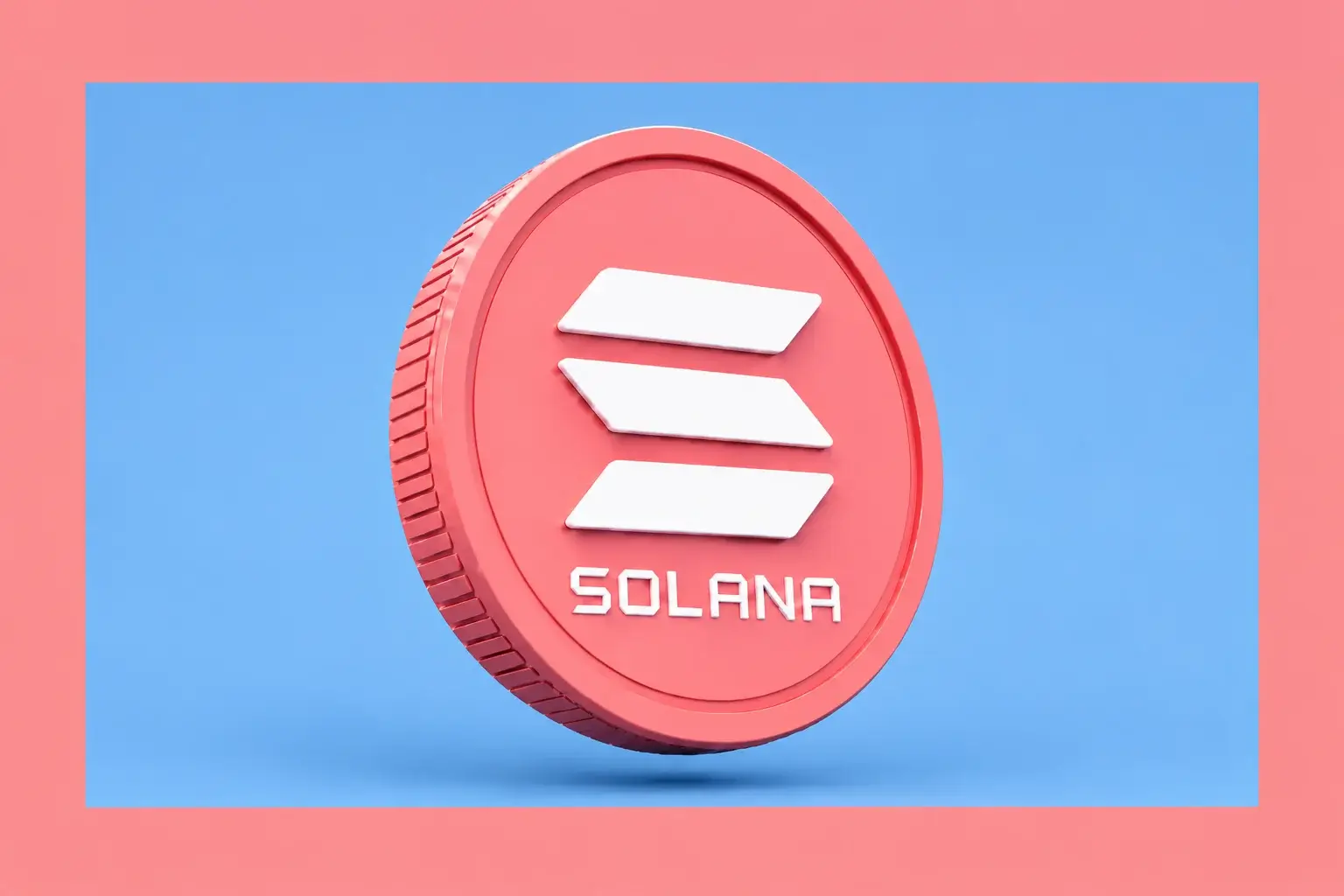
Solana (SOL) bounced ~5.4% to $65.63 from a three-year low near $60, but remains down more than 80% from its $293 record | That's TradingNEWS
Key Points
- Solana (SOL) bounced ~5.4% to $65.63 from a three-year low near $60, but remains down more than 80% from its $293 record after eig
- Goldman Sachs fully exited its Solana ETF position and Pump.fun sold 100,000+ SOL, while cooling on-chain activity
- $60 is the key support (below it exposes $55-$58); reclaiming $70-$76 is needed to confirm recovery
Solana is clawing back ground Monday, trading around $65.63 after a relief rally lifted SOL roughly 5.4% over the past 24 hours. The bounce comes off a brutal bottom — SOL recently hit a three-year low near $60, the kind of washout level that draws in dip-buyers, and it's tracking the same risk-on reversal lifting Bitcoin, Ethereum, and the broader crypto complex. But the context is grim, arguably the grimmest of any major asset. Solana is down more than 80% from its all-time high near $293, has printed eight consecutive red monthly candles, and carries a market capitalization that has shrunk to roughly $38 billion on a circulating supply exceeding 578 million SOL. The $60 level has become the first major psychological support zone, and whether buyers can defend it determines whether this is the start of a reset or just a pause before the next leg lower. The 5% pop is real, but it's happening inside one of the deepest downtrends in crypto. SOL is the high-beta proxy for the entire risk trade — it falls hardest when crypto sells off and bounces hardest when it recovers, and right now it's bouncing off a multi-year floor.
The Brutal Collapse: Eight Red Months and Counting
Solana's decline has been relentless and historic. The token peaked near $293 in early 2025 and has been bleeding ever since, printing eight straight red monthly candles — an extraordinary losing streak that few major assets have matched. The recent leg was savage: SOL traded around $81 on June 1, then collapsed through the early-June crypto rout to roughly $62 by June 6, and touched a three-year low near $60 before Monday's bounce. That's a decline of more than 25% in a single week, on top of a multi-year grind that has erased over 80% of the token's value from its peak. The eight-month losing streak is the kind of capitulation that, paradoxically, often precedes major bottoms — when an asset has fallen this far for this long, the selling tends to exhaust itself. But the streak also reflects genuine deterioration in Solana's fundamentals and sentiment, not just a broad crypto bear market. SOL has underperformed Bitcoin and even Ethereum on the way down, a sign that the selling has been specific to Solana as much as systemic. The collapse from $293 to $60 is the worst drawdown among the majors, and it frames every bounce as suspect until proven otherwise.
Why SOL Fell Harder: High Beta and Specific Selling
Solana fell harder than its peers for two reasons: its high beta and a series of asset-specific blows. As the dominant high-throughput Layer 1, SOL trades as a leveraged bet on crypto risk appetite — when Bitcoin drops, SOL typically falls harder given its high-beta nature, and the early-June rout hit it accordingly. On top of that systemic pressure came specific selling. Goldman Sachs fully liquidated its Solana-related ETF exposure, a move interpreted as a negative signal for institutional demand that dented sentiment badly. Concurrently, the memecoin platform Pump.fun sold over 100,000 SOL — worth roughly $8.5 million — around $84.50, adding direct sell pressure to an already weak market. Hanging over everything is the FTX estate, which holds tens of millions of SOL acquired before its 2022 collapse and represents a persistent overhang of potential supply as those tokens unlock. The combination of high beta, a marquee institution exiting, platform selling, and the FTX unlock cloud created a perfect storm that drove SOL to its three-year low. These weren't abstract macro forces — they were concrete sellers hitting a thin bid, and they explain why Solana underperformed.
The On-Chain Problem: Softer TVL and Cooling Memecoins
Beneath the price action sits a genuine fundamental concern: Solana's on-chain activity has softened. Declining on-chain metrics — slower growth in daily active wallets, transaction volume, and total value locked — are among the clearest bearish indicators for SOL, because the network's value proposition rests on real usage. Early 2026 saw exactly that kind of activity decline, and it has weighed on the price. The memecoin dynamic is central here: Solana is the dominant chain for memecoin speculation via platforms like Pump.fun, and memecoin boom cycles drive massive fee revenue and SOL demand. When that speculation cools — as it has — activity and price follow. The memecoin engine that powered Solana's 2024-2025 surge has sputtered, removing a key source of organic demand and fee generation. This is the structural problem that distinguishes Solana's decline from a simple beta-driven selloff: the network's most active use case has cooled, and until on-chain activity reaccelerates, the fundamental floor under SOL is weaker than the bulls would like. The softer TVL and cooling memecoin volumes are the real bear case, beyond the broad crypto downturn.
Extreme Fear and the Oversold Setup
Sentiment has hit rock bottom, which is the contrarian's signal. The Crypto Fear & Greed Index reads 12, deep in extreme-fear territory — the same washout level seen across Bitcoin, Ethereum, and XRP. Over the trailing 30 days, Solana posted just 10 green days out of 30, with price volatility running near 9.43%, and the eight consecutive red monthly candles represent an extreme that historically marks exhaustion zones. The Relative Strength Index has fallen into oversold territory, signaling that the selling pressure may be starting to deplete. This is a market that has been beaten into submission, and beaten-down markets bounce — which is precisely what's happening Monday. The honest read is that the oversold extremes support a tactical recovery, but the bounce is likely corrective rather than the start of a new bull leg unless confirmed by a genuine shift in on-chain activity and a stabilizing Bitcoin. Eight red months and an 80% drawdown create the conditions for a sharp relief rally, but extreme fear can persist and deepen. The sentiment readings tell you a bounce was overdue; they don't tell you the bottom is in. For now, the oversold setup is the strongest argument the bulls have.
The Technical Map: $60 Is the Line
The levels are clearly defined around the current price. The $60 region is now the first major psychological support zone and the three-year low — if buyers continue defending it, SOL could attempt a stronger move higher; if it breaks, the token risks revisiting the $55-$58 retest zone where bulls would need to make a final stand. On the upside, the immediate recovery test is the $70-$76 region, which has become very important — reclaiming it is the price of admission for any sustained recovery, and failing there risks another rejection back toward $55-$58. Above $76, resistance stacks at the $80-$81 area, then the $87-$89 cluster, and the $95-$97 breakout pivot that would open a path toward $116 and the $110-$120 zone. Solana trades below all of its key exponential moving averages — the 20-, 50-, 100-, and 200-day — which all sit overhead as resistance and confirm the bearish structure. The technical message is unambiguous: the trend is down, every moving average is a ceiling, and $60 is the line that separates a reset zone from a deeper collapse. Defend $60 and reclaim $70-$76, or the downtrend continues.
The ETF Story: Mixed Signals
The spot Solana ETF story is a tale of two signals. The funds launched in October 2025 and structurally shifted SOL's investor base by giving traditional-finance participants a regulated way to hold Solana exposure. By the first quarter of 2026, the market had around eight sponsoring firms, with one issuer's product emerging as the largest holder, and the funds collectively held net assets in the range of $812 million — roughly 1.68% of Solana's total market capitalization — with cumulative net inflows since listing reaching approximately $974.68 million. That's the bullish side: nearly a billion dollars of structural institutional demand has flowed into SOL through the ETF wrapper. But the bearish counter-signal landed recently when Goldman Sachs fully exited its Solana ETF position, a high-profile institutional retreat that contradicted the inflow narrative and spooked the market. The ETF flows are the key indicator to watch — sustained inflows from traditional participants who can't hold crypto directly make weekly ETF flow data a critical price driver. Right now the signals are mixed: a solid cumulative inflow base, but a marquee institution heading for the exit. Whether the ETFs resume net buying or see continued redemptions will heavily influence SOL's recovery prospects.
Institutional Footholds: Apollo, Interactive Brokers
Despite the price collapse, Solana has been quietly building institutional credibility. Securitize brought Apollo Global Management's $1.3 billion ACRED diversified credit fund on-chain to Solana — an institutional private-credit product now settling on a public blockchain, a meaningful validation of Solana's infrastructure for real-world asset tokenization. On the access side, Interactive Brokers expanded its offerings to launch Solana trading for eligible European investors through a partnership with a crypto-settlement provider, integrating SOL alongside traditional stocks, options, and bonds on a single platform. Treasury accumulation of SOL has also exceeded $1 billion, signaling that some institutions are positioning for the long term even as the price falls. These footholds matter because they represent structural, sticky demand that doesn't depend on memecoin speculation or retail risk appetite — the kind of institutional adoption that underpins the long-term bull case. The disconnect between Solana's collapsing price and its expanding institutional integration is the crux of the SOL debate: the network is being adopted by serious players for serious use cases, even as the token trades at a three-year low. The bulls point to these footholds as evidence SOL is undervalued; the bears note they haven't been enough to stop the slide.
The Alpenglow Upgrade and the Ethereum Share Grab
Two structural tailwinds offer the bulls hope. The Alpenglow upgrade is the key near-term network catalyst — a successful mainnet activation would improve Solana's performance and could spark a relief rally from oversold levels, while validating the technical roadmap that underpins the long-term thesis. More broadly, Solana has been the chain taking market share from Ethereum, leveraging its higher throughput, lower transaction costs, and expanding DeFi activity to attract developers and users migrating from the more expensive, slower incumbent. That competitive dynamic is the structural story that could drive Solana's next phase — SOL may outperform Ethereum on shorter timeframes precisely because of these advantages, and its rapid ecosystem growth supports the view that it can deliver stronger percentage gains if key resistance levels give way. The combination of the Alpenglow upgrade and the ongoing share grab from Ethereum is what separates Solana's long-term case from a simple beaten-down altcoin. The network is winning the technical and competitive battle even as the token loses the price battle. If Alpenglow lands and the Ethereum migration continues, the fundamental backdrop for SOL improves materially regardless of near-term price.
The Long-Term Bull Case vs. Reality
The gap between Solana's current price and its long-term targets is enormous. One major bank places SOL at $250 for 2026 — roughly 4x from current levels — and $2,000 by 2030, which would put it among the largest assets in the market, while other models target $134 for 2026 and $150 with strong risk appetite. The bull case rests on the structural drivers: high network throughput, low fees, the Ethereum share grab, ETF inflows, institutional tokenization deals like the Apollo fund, and treasury accumulation exceeding $1 billion. But with SOL at $65.63, down 80% from its peak and printing eight red months, those targets read as aspirational rather than imminent. The disconnect captures the entire Solana debate — the long-term thesis is genuinely compelling, anchored in real adoption and superior technology, while the near-term reality is a token in freefall with cooling on-chain activity and institutional sellers. More conservative near-term forecasts see SOL in a $75-$150 range for 2026, which still implies recovery from current levels but is far from the 4x bank targets. The structural buyers are building positions; they just haven't been able to stem the price decline. The bull case is a multi-quarter story; the near-term tape is an oversold bounce.
Read More
-
Yen Stalls at 160 Despite a 3% JGB and Tokyo Core CPI at 2.0% — Intervention Sits at 164, Friday's Payrolls Decide
02.09.2026 · TradingNEWS ArchiveEnergy
-
GLD ETF Sheds Value With Bullion as North American Funds Stay $7.7B in the Red
10.09.2026 · TradingNEWS ArchiveStocks
-
XRP ETF Flows: 7 Funds Split $1.682B With the Complex at Just 1.68% of Market Cap
10.09.2026 · TradingNEWS ArchiveCrypto
-
NG Breaks $2.90 With Production at 113 Bcf/d and LNG Feedgas Capped at 18.3 Bcf/d
10.09.2026 · TradingNEWS ArchiveCommodities
-
USD/JPY Holds Below the 157.23 Average as 2 Central Banks Tighten in 48 Hours
10.09.2026 · TradingNEWS ArchiveForex
Price Forecast: Base, Bull, Bear
The base case for June is an oversold bounce that needs confirmation to become a recovery. Holding the $60 support and reclaiming $70-$76 keeps the recovery alive, with near-term models pointing to a $64-$91 range depending on whether SOL can reclaim the $80 level and the EMA cluster. The bull case requires several things to line up: a successful Alpenglow upgrade, stabilizing Bitcoin, resumed ETF inflows, and reaccelerating on-chain activity — a combination that could carry SOL through $76 toward $87-$89 and the $95-$97 breakout pivot, with the longer-term $150 and even $250 bank targets as aspirations if the structural drivers fully engage. The bear case is conditional but credible: a break below $60, then $55-$58, would signal the downtrend is extending, with deeper support levels in play if the broad crypto market rolls over again. The swing factors are Bitcoin's direction, the Alpenglow timing, the ETF flow trend, and Wednesday's CPI as a macro catalyst. With SOL oversold and institutional footholds expanding, the near-term risk-reward improves for a tactical bounce, but the cooling on-chain activity and the bearish EMA structure keep the bias bearish until $76 is reclaimed.
The Verdict
The most beaten-down major, bouncing from a three-year low, with a genuine bull case buried under a brutal chart. Solana's 5.4% recovery to $65.63 is backed by extreme oversold conditions — a Fear & Greed reading of 12, an oversold RSI, and eight consecutive red months — and a broad risk-on reversal. The structural story is real and arguably the strongest among the altcoins: SOL is taking market share from Ethereum on throughput and fees, the Alpenglow upgrade looms as a catalyst, and institutions keep building footholds, from Apollo's $1.3 billion credit fund settling on Solana to Interactive Brokers offering SOL to European investors and over $1 billion in treasury accumulation. The line is clean: defend $60 and reclaim $70-$76, and the recovery thesis gets real toward $87-$95; lose $60, and the next stop is $55-$58. The bearish overhang is equally real — cooling on-chain activity, a softening memecoin engine, Goldman's ETF exit, and the FTX unlock cloud. This is a tradeable oversold bounce within a deep downtrend, not a confirmed bottom, and the next move hinges on Bitcoin, the Alpenglow upgrade, and whether the ETF flows turn back positive. The long-term targets stretching to $250 and beyond remain a believer's story; for June, Solana is a washed-out high-beta bet bouncing off a multi-year floor, and $60 is the line that decides everything.