Stock Market Today – Nasdaq Reclaims Leadership As AI, Metals And Energy Outrun A Record Dow
U.S. Indices Snapshot: DJIA, S&P 500, Nasdaq, Russell 2000 At Diverging Highs
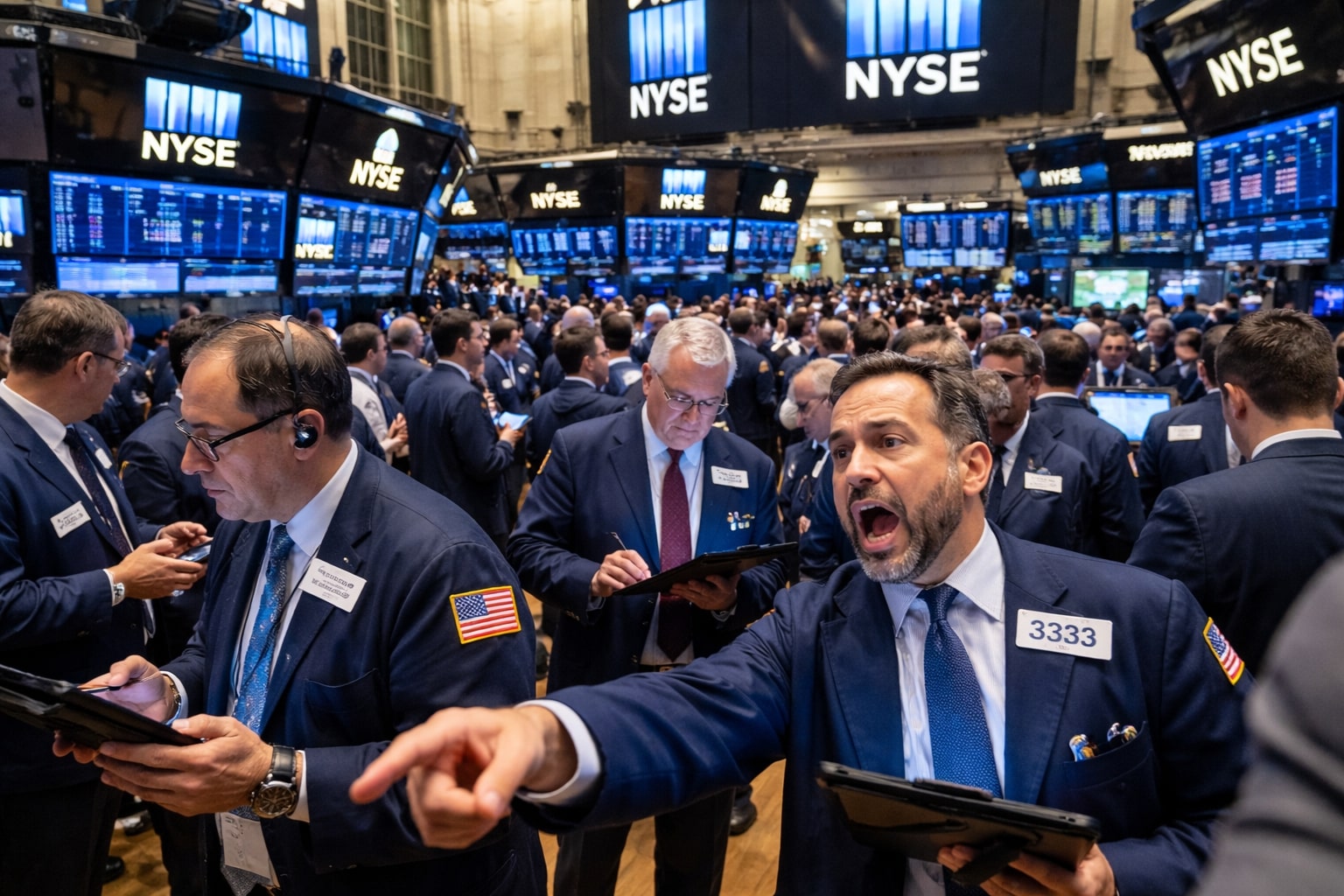
The Dow Jones Industrial Average (DJIA) is trading around 49,120, up roughly 0.3% after Monday’s jump of almost 600 points that pushed it to fresh intraday and closing records near 49,000. The S&P 500 (SPX) trades around 6,930, gaining about 0.4%. The Nasdaq Composite (COMP) is the outperformer near 23,500, up roughly 0.4%–0.5%, with money rotating back into semiconductors and AI platforms. The Russell 2000 (RUT) lags near 2,545, down around 0.1%, showing that small caps are still not confirming the big-cap breakout. The VIX sits near 14.7, down about 1.4%, while the 10-year Treasury yield edges up toward 4.17%–4.18% as year-end repo stress fades. The message: this is a record market driven by global winners and hard assets, not by broad small-cap participation.
AI And Chip Complex: NVDA, AMD, MU, MCHP, MSFT, PLTR Drive Nasdaq Outperformance
The Nasdaq is outperforming because the AI spine of the market has taken control again. Nvidia (NVDA) is up roughly 1%–2% after unveiling its Rubin next-generation data-centre AI processor at CES 2026 and signalling renewed ability to ship compliant AI chips into China. The stock is battling around its 50-day moving average; holding that line turns it into a fresh entry area instead of a breakdown zone, with the Street still modelling heavy 2026 capex from hyperscalers and sovereign AI builds.
Advanced Micro Devices (AMD) is riding the same secular wave. New accelerators and server parts showcased at CES position AMD as the primary challenger in AI compute. Hyperscalers seeking to avoid single-supplier risk continue to open the door for AMD in both GPU and CPU workloads. At current levels AMD remains a high-beta expression of conviction in the data-centre AI build-out.
On the memory and embedded side, Micron Technology (MU) gains around 4%–6%, supported by stronger HBM and AI-linked DRAM pricing and a shift in narrative toward an AI-driven memory up-cycle. Microchip Technology (MCHP) jumps more than 7% after lifting fiscal Q3 revenue guidance to about $1.185 billion, above the prior $1.109–$1.149 billion range. That revision signals faster-than-expected inventory cleanup in industrial and auto end markets and restores Microchip’s pricing leverage.
Data and software names tied directly to AI analytics follow through. Palantir Technologies (PLTR) is up close to 2% as defence and intelligence contracts remain firm and commercial customers deepen adoption of its AI platforms. By contrast, high-multiple application software such as Atlassian (TEAM) and AppLovin (APP) trades 1%–2% lower on rotation away from expensive growth without direct AI-infrastructure leverage.
In megacap tech, Microsoft (MSFT) has added roughly 12% over the past year and is being framed as entering a “golden year” for AI monetisation in 2026. Copilot, Azure AI workloads and enterprise automation are expected to dominate incremental cloud revenue even if headline growth rates slow. Taking all of this together, the AI and semiconductor block — NVDA, AMD, MU, MCHP, MSFT, PLTR — justifies a Buy / Bullish stance, with position building focused around pullbacks to key moving averages instead of chasing intraday spikes.
Energy, Venezuela And Realpolitik: CVX, XOM, SLB, HAL, VST, WTI, Brent
The U.S. capture of Venezuelan President Nicolás Maduro has hit energy equities far harder than the oil curve. The S&P 500 energy sector had its strongest one-day gain since July on Monday; today that move is extending. Chevron (CVX) — the only U.S. major with current activity in Venezuela — surged more than 5% yesterday and adds roughly 0.8% today, keeping it among the leading DJIA components. Exxon Mobil (XOM) is higher by about 0.5%, SLB (SLB) advances roughly 2.2%, and Halliburton (HAL) edges around 0.2% higher.
Venezuela holds more than 300 billion barrels of proven reserves, roughly 17%–20% of global oil, but output is below 1 million barrels per day, versus around 3.5 million barrels per day in the late 1990s. Sanctions, corruption and chronic under-investment have destroyed capacity. Trump’s promise that U.S. majors will “spend billions of dollars” to rebuild the sector implies multi-year projects and high-margin work for CVX, XOM, SLB and HAL, rather than a rapid flood of cheap supply.
Crude prices reflect that nuance. West Texas Intermediate (WTI) trades around $58.60–$58.75 per barrel, up roughly 0.5%, while Brent sits near $61.40, down modestly after Monday’s gains. The curve is discounting Venezuelan barrels as a long-term option, not a near-term glut.
In power, Vistra (VST) climbs about 4.7% after agreeing to acquire Cogentrix Energy for roughly $4 billion, expanding its generation footprint just as AI-driven data-centre demand ramps. That positions VST as a hybrid power and AI-infrastructure play at a time when copper, AI chips and data centres all point to structurally higher electricity consumption.
Given sub-$60 WTI, Venezuela’s rebuild optionality and disciplined capital policies, the stance is Buy / Bullish on energy and power leaders — CVX, XOM, SLB, HAL, VST — and Hold on the commodity itself in the $58–$61 range until there is more clarity on Caracas policy and OPEC+ strategy.
Single-Name Standouts: SHAK, AIG, OS, TEAM, APP, JPM, V
In consumer, Shake Shack (SHAK) rallies over 6% to around $88.75 after a major upgrade from Hold to Buy. The 12-month price target was trimmed from $115 to $105, but that still signals about 26% upside from Monday’s close. The thesis leans on sustained unit growth, improving store-level profitability and event-driven catalysts like the World Cup. Even with a premium multiple, the growth profile and catalysts justify a Bullish / Buy tag for investors who accept restaurant-sector volatility.
In insurance, American International Group (AIG) sells off for leadership reasons, not capital stress. The stock falls about 7.4% to roughly $78.11 after CEO Peter Zaffino announced he will step down by mid-2026 and move to executive chair, with Eric Andersen becoming president and CEO-elect from mid-February. The magnitude of the drop reflects uncertainty around future strategy and capital allocation. Until Andersen lays out a clear framework, AIG fits Neutral / Hold rather than a buy-the-dip setup.
Financial software name OneStream (OS) spikes around 20%–30% after reports that private-equity firm Hg is close to a deal to take it private. The stock was priced at $20 in its July 2024 IPO, ran above $35, then slid about 35% over the last year to near $18.39 and a market cap around $4.5 billion before today’s move. At this point OS trades mainly on M&A expectations; that makes it Speculative Hold-to-Sell into strength, not a fresh fundamental long.
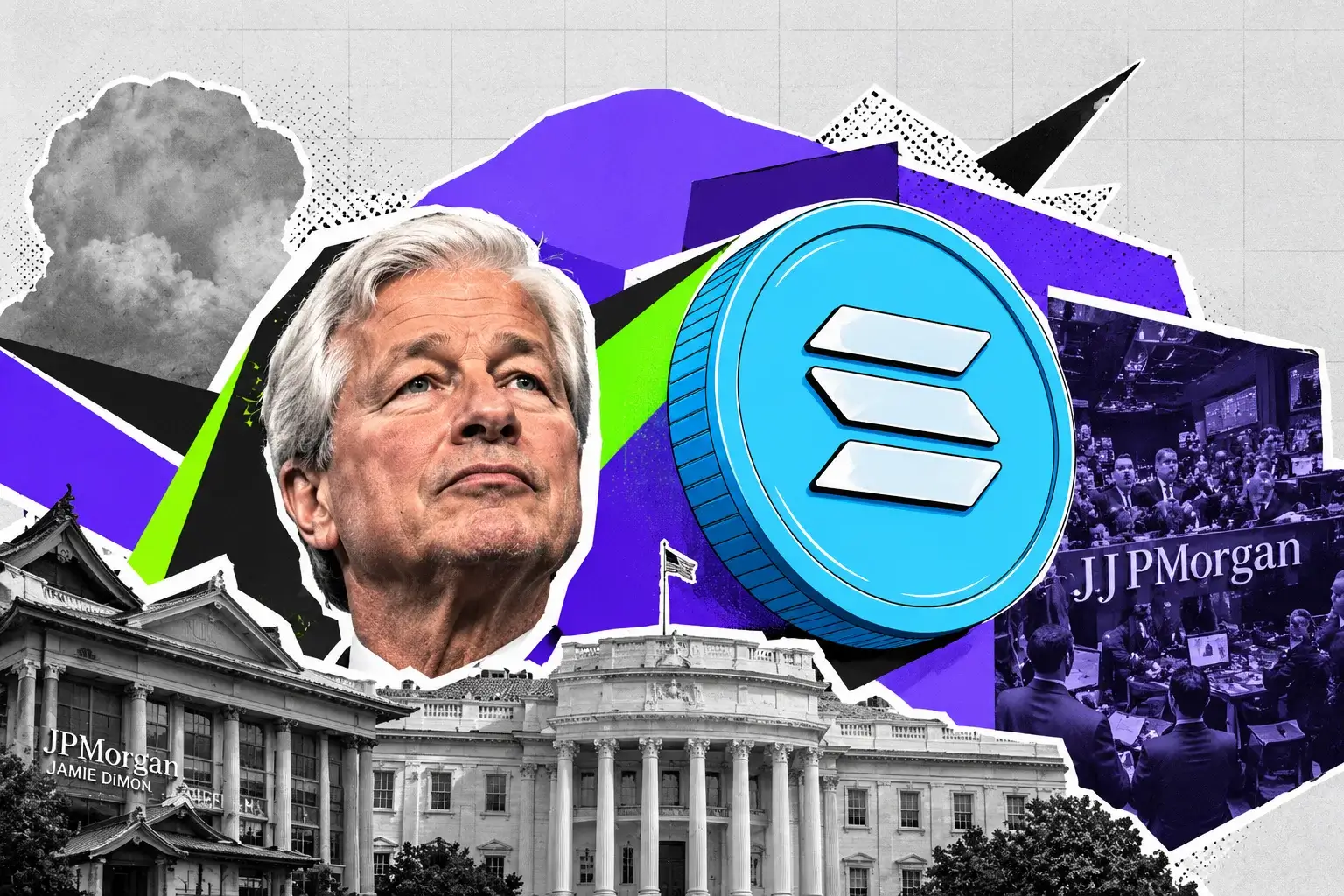
Inside the Dow, JPMorgan Chase (JPM) consolidates after hitting new highs on Monday, and Visa (V) trades slightly lower even as it approaches a technical breakout level near $356.73 from a cup-with-handle pattern. High-multiple names TEAM and APP remain roughly 1%–2% lower, fitting the pattern of investors favouring hard-asset and AI-infrastructure stories over expensive software where cash-flow visibility is less immediate.
Macro And Policy Framework: Services PMI, Yields, Repo, DXY, Trump Tariffs And Rebate Checks
The macro data show deceleration, not collapse. December services PMI fell to 52.5 from 54.1 in November, below the 53.0 consensus. Readings above 50 still indicate expansion, but the direction is negative: new business inflows dropped to their weakest level in about 18 months, sentiment eased and services hiring was flat. The U.S. enters 2026 with future output expectations clearly below where they were at the start of 2025, which raises the risk that softer labour dynamics begin to hit consumption if the trend extends. ADP tomorrow and nonfarm payrolls on Friday become critical for confirming or rejecting this slowdown.
On funding and rates, stress is fading. The 10-year Treasury yield edges up to around 4.18% from roughly 4.17%, while tri-party repo has normalised from year-end tightness. Late last week about a quarter of repo volume traded between roughly 3.71% and 3.88%; the latest print around 3.66%, with limited volume above 3.75%, signals that the year-end squeeze is over. That lets equities trade off earnings and macro instead of plumbing concerns.
The U.S. Dollar Index (DXY) trades near 98.3–98.4, modestly stronger, but structural questions are intensifying. An interventionist U.S. stance — aggressive tariffs, direct commodity involvement and renewed talk about territories like Greenland — has pushed European leaders to reaffirm that Denmark, including Greenland, is part of NATO and that Arctic security will be handled collectively. Such frictions accelerate the debate about diversifying reserves away from the dollar and feed long-term demand for gold and industrial metals as alternative stores of value.
Tariff policy is morphing into a quasi-dividend scheme. Trump’s proposal for $2,000 per-person tariff rebate checks would, according to modelling, reduce the tax burden of the lowest 40% of U.S. households by more than $2,300, while the top fifth sees little net benefit. That combination — border taxes plus progressive cash transfers — supports nominal growth, bolsters metals demand and helps explain why risk assets can rally alongside gold and silver.
Global Risk Tone: Nikkei 225, Kospi, Hang Seng, Shanghai Composite Back U.S. Rally
Overseas markets are validating the U.S. rally. In Japan, the Nikkei 225 gains about 1.3% to a record near 52,518, driven by financials and cyclicals as investors price in better net-interest margins and a more durable exit from ultra-easy policy. Japan is shifting from a short-term trade into a strategic allocation for global portfolios.
In Korea, the Kospi advances around 1.5% toward 4,526, helped by autos and electronics as the country leverages both AI and traditional export cycles. Hong Kong’s Hang Seng climbs about 1.5% toward 26,749, while the Shanghai Composite trades near 4,082, a four-year high, on expectations of targeted domestic easing and continued support for EVs, renewables and advanced manufacturing. Global equity risk is clearly on, as long as U.S. services and labour data do not break sharply lower.
Real Assets And Crypto: Gold (XAU/USD), Silver, Copper, BTC-USD As Dollar Hedges
The largest asset-allocation shift is toward metals. Gold (XAU/USD) futures trade around $4,479–$4,480 per ounce, up about 0.7% today after a roughly 3% rally on Monday that brought prices back toward the $4,550 high zone. Silver extends its surge with another 3% move to around $79 per ounce after jumping 7% in the previous session. The Venezuela shock is a visible trigger, but the deeper driver is the mix of tariff risk, activist fiscal policy and a gradual questioning of the dollar’s long-term dominance in reserves.
Copper has broken above $13,000 per metric ton for the first time, with gains north of 20% over roughly two months. Strikes at key Chilean operations and other disruptions are squeezing supply just as traders move metal into the U.S. ahead of potential copper tariffs of about 15% in 2027 and 30% in 2028. LME inventories are tight and U.S. stocks have more than quadrupled to above 450,000 tons, underscoring how policy and logistics are driving price action. Copper-linked equities such as Freeport-McMoRan (FCX), Southern Copper (SCCO) and regional names like Hindustan Copper are posting 3%–4% daily gains, giving leveraged exposure to this squeeze.
Bitcoin (BTC-USD) trades around $94,000–$94,200, down roughly 0.4% on the day but still near record territory. It initially rallied with gold on the Maduro headlines, but incremental safe-haven demand is now flowing more into metals, which combine monetary-hedge characteristics with direct exposure to the physical bottlenecks of the energy transition and AI build-out. BTC remains a structural alternative asset, but, on current pricing, the risk-reward looks cleaner in gold, silver and copper.
Sector And ETF Read-Across: QQQ, SPY, Financials, Energy, Small Caps
For ETFs, the Invesco QQQ Trust (QQQ), tracking the Nasdaq-100, is up about 0.3%, in line with the leadership from NVDA, AMD, MU, MCHP, MSFT and PLTR. The SPDR S&P 500 ETF (SPY) is only slightly higher, reflecting more uneven breadth. Over the last two sessions, energy, AI and metals have clearly outperformed, with value baskets overweight energy beating broader beta.
Financials show regional divergence. In the U.S., money-centre banks like JPM are pausing after strong runs and V is stalling just below a key breakout point despite healthy fundamentals. In Japan, banks and brokers are leading the Nikkei 225 to records as the market starts to price in more normal rate structures. The message: financials require name-by-name selection rather than a blanket overweight.
Small caps via the Russell 2000 (RUT) stay weak at around 2,545, pressured by higher funding costs, thinner pricing power and relatively low exposure to the AI capex wave. Until services and labour data stabilise and credit spreads tighten further, RUT is a Hold, not a primary risk vehicle.
Buy, Sell Or Hold: Indices, Sectors And Key Assets
For indices, the Nasdaq Composite and QQQ around current levels deserve a Buy / Bullish stance, with new risk added on pullbacks toward the 50-day area rather than at intraday highs. The S&P 500 (SPX) near 6,930 is Constructive / Buy on dips, benefiting from AI and energy tailwinds but already reflecting a strong run. The DJIA near 49,120 is Neutral to Hold, with selective Buy bias in names like CVX, UNH and quality industrials rather than via the index as a whole. The Russell 2000 remains Hold, with optional upside torque only if macro and policy data turn more supportive.
By sector and asset: AI and semiconductors — NVDA, AMD, MU, MCHP, MSFT, PLTR — are Buy / Bullish; energy and power — CVX, XOM, SLB, HAL, VST — are Buy / Bullish; metals — gold, silver, copper and their leading miners — are Buy / Bullish given tariff dynamics, reserve-currency risk and supply constraints. BTC-USD around $94,000 sits at Hold / Neutral relative to those metal opportunities. SHAK is Buy on growth and catalysts, AIG is Hold pending clarity from new leadership, and OS is Speculative Hold-to-Sell into strength with pricing now dominated by deal speculation.
That's TraidngNEWS