
Stock Market Today: Nvidia NVDA +32% on Huang Return Lifts S&P 500 SPX, Nasdaq IXIC, Dow DJI; 7,550 Next
Huang’s return snaps a 7-day slide; holding 7,000 opens the S&P 500 path to 7,550 | That’s TradingNEWS
Key Points
- Nvidia NVDA ripped 32% to $165.90 after its board unanimously reinstated Jensen Huang as CEO.
- S&P 500 SPX jumped 4.94% to 7,251.73, snapping its longest losing streak since February 2020.
- VIX collapsed 24% to 27.42 from Friday’s 40-plus spike, while the 10-year yield held at 4.94%.
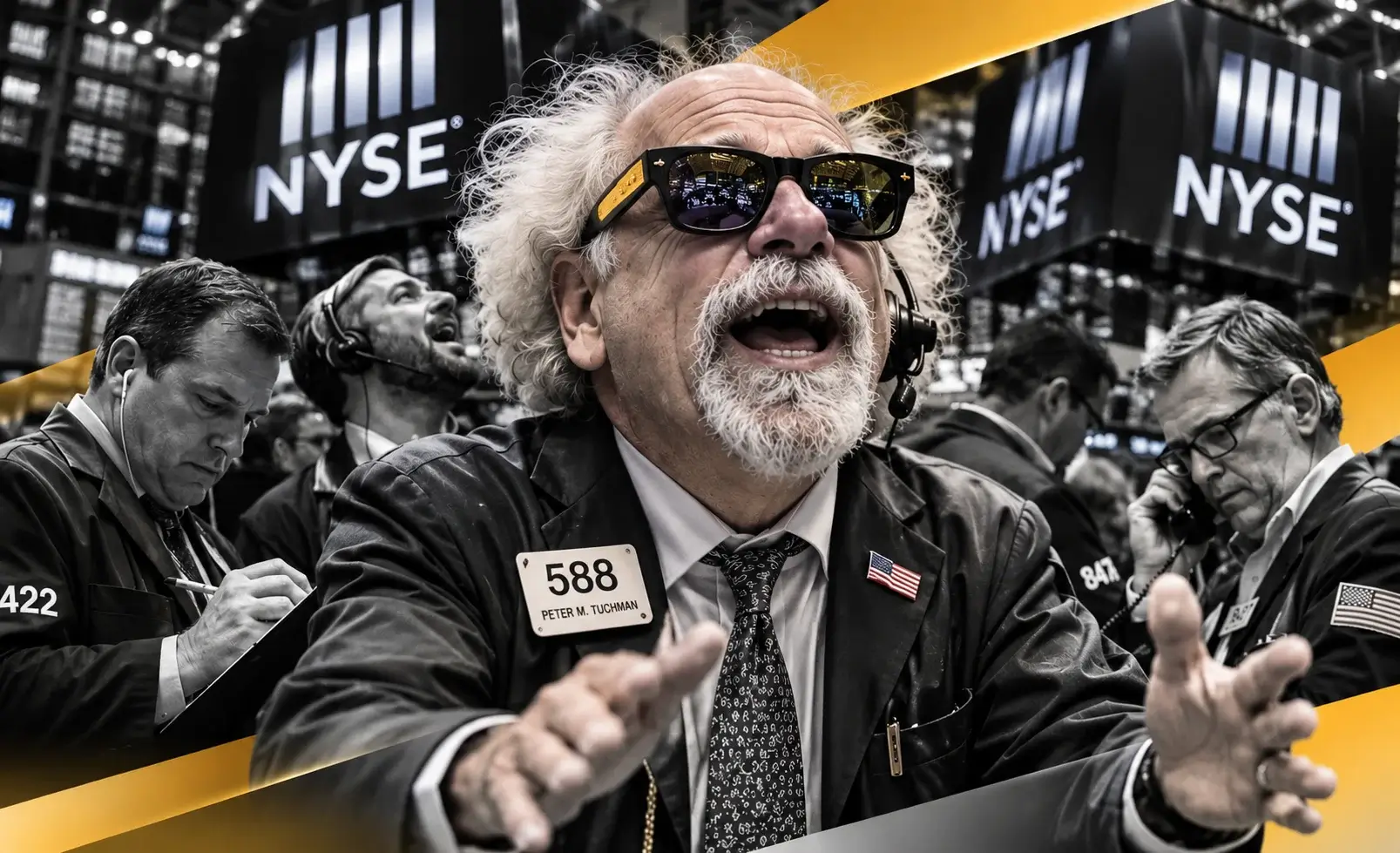
Wall Street opened the Thanksgiving week with its most violent upside session in more than nineteen months, and nearly all of it came from one decision in Santa Clara. By 11:32 a.m. ET the S&P 500 traded at 7,251.73, up 341.34 points or 4.94%. The Nasdaq Composite was at 24,135.53, up 1,517.80 points or 6.71%. The Dow Jones Industrial Average stood at 49,691.55, up 1,544.22 points or 3.21%, and the Russell 2000 was at 2,662.71, up 80.92 points or 3.13%. All three major averages were tracking for their best day since April 2025, when the White House pulled back most of the “Liberation Day” tariffs and the tape went straight up.
The catalyst was Nvidia’s 8-K, filed before the bell, saying its board had unanimously reinstated Jensen Huang as president, chief executive and director, effective immediately. Eleven days earlier Huang had resigned. Six days earlier the same board said on its earnings call that it would not bring him back. Monday’s reversal hit a market that was already set up for a bounce, and the bounce turned into a squeeze.
The setup did the rest. Last Friday the S&P 500 lost 3.70% to close at 6,910.39, its seventh straight decline and the longest losing streak since February 2020. That close put the index more than 10% below its October record, which is correction territory. The Nasdaq Composite fell 1,261.47 points, or 5.28%, to 22,617.73 on Friday, and that wiped out its entire 2026 gain. The Dow dropped 949.73 points, or 1.93%, to 48,147.33. Positioning was as one-sided as it gets, so when the single biggest source of fear was removed, shorts had to cover and underweight managers had to chase.
Monday’s 4.94% gain cut into an 8.6% weekly loss, so the S&P 500 has now recovered more than half of last week’s damage in one session. It also lifted the index back out of correction. That reclaim is the line bulls need to defend into Wednesday’s inflation print. The Nasdaq-100 is a different story. Even after Monday’s gain it sits 15% below its record, and that gap is still big enough to keep growth managers defensive.
The thesis for today is simple. This was a single-catalyst relief rally built on AI leadership, and it ran into an unchanged macro backdrop. The Fed is priced for a December hike, the 10-year yield is near 4.94%, and the dollar index sits at a 19-month high. Nvidia removed the governance shock, but it did not remove the rate shock.
How Last Week’s $8 Trillion Drawdown Set Up Monday’s Squeeze
Monday only makes sense against the damage that came before it. Since the October 6 peak, U.S. equities had lost $8 trillion of market value. Last week was the worst week for the Nasdaq Composite and the Dow in more than six years. The Nasdaq Composite fell 10.0% over five sessions to 22,617.73, and by Friday’s close it was down 2.7% for 2026. The S&P 500 had fallen 8.6% for the week, its biggest weekly loss since April 2025, though it still held a 0.9% gain for the year. The Dow was up just 0.2% year to date after its worst week since the COVID collapse in 2020. The Russell 2000 dropped 73.32 points on Friday alone, or 2.76%, to 2,581.79.
The fear had several layers, and they compounded. Nvidia, the largest weight in every major growth benchmark, lost 14% on Friday and 23% for the week. Reports that the SEC had opened a civil probe into whether the company’s disclosures misled investors arrived on top of Huang’s November 12 resignation and an interim CEO handover to CFO Colette Kress. The Nasdaq-100 fell 5.6% on Friday and was flirting with bear-market territory. The chip complex was in the middle of a forced unwind, and every AI-adjacent name, from neoclouds to optical suppliers, got sold as collateral.
Anthropic’s record IPO fed into it too. The Claude maker priced 956 million shares at $83 on Wednesday, above its $70–$78 range, and raised $81 billion, the largest offering on record. ANT opened Thursday at $111.50, 34% above the offer price, then closed that first session at $95.05. Friday it fell another 9%. A fresh trillion-dollar supply of AI equity hitting the market while the AI leader was in a leadership crisis drained liquidity from the rest of the trade.
Volatility made the forced selling worse. The VIX printed above 40 at Friday’s highs, its highest level since April 2025. A VIX that high triggers volatility-targeting and risk-parity funds to mechanically cut equity exposure. That selling was done by Friday’s close, so on Monday the marginal seller was gone and buying power was building.
Futures confirmed it before Nvidia said a word. At the early read, Dow futures were up 1,033 points, or 2.14%, at 49,249. S&P 500 futures were up 199.25 points, or 2.88%, at 7,134, and Nasdaq futures were up 881.50 points, or 3.51%, at 26,008. Asian markets did not get the same relief: the Sensex dropped 1,483.72 points, or 1.77%, to 82,435.99. Wall Street was always going to bounce. The Huang filing turned that bounce into a near-5% day.
Nvidia NVDA Rips 32% to $165.90 as the Board Reverses Itself
Nvidia was the session. As of 11:32 a.m. ET the stock traded at $165.90, up $40.37 or 32.16% from Friday’s $125.53 close. At its intraday high it was up 34.4% near $167, which put it on track for its best day since 2000. It had already been up 27% before the open, and earlier in the premarket, before the filing, it was up 9% with the broad chip bounce. At current prices the move restores close to $1 trillion of market value in a single session. That is the main reason the S&P 500 is outperforming the Dow by more than 170 basis points, since Nvidia’s index weight dwarfs its price-weighted footprint in the Dow.
The filing is specific, and the details explain why the market treated it as more than a CEO swap. The board said it voted unanimously after a series of meetings with Huang. It said it was satisfied with his candor and his ability to lead the company. It also said it had taken input from senior levels of the U.S. government and was confident his reinstatement poses no national security risk. Chair Harvey C. Jones called Huang the right person to lead Nvidia and said the move was in the best interests of stockholders, employees, partners and customers. Jones stays on as chair, and Colette Kress goes back to being full-time CFO. The President praised the decision publicly within the hour.
The speed of the reversal is what made the move so explosive. On November 12, Nvidia announced that Huang had resigned as president, CEO and director. It named Kress interim chief executive and Jones the company’s first-ever board chair. On November 17, opening the third-quarter call, Jones said the board had unanimously accepted the resignation and did not intend to reinstate Huang, even though Huang had said hours earlier that he would be honored to come back. Kress raised the growth outlook on that call, and the stock still fell. The market cared more about who runs the company than about the numbers.
Even after Monday’s move, Nvidia sits $20.50 below the $186.40 level it traded at before the scandal broke. So Monday restored the governance premium without fully pricing back the pre-crisis multiple. That leaves a gap traders can target if the stock holds above $160 into the close.
How it closes matters. Nvidia had dropped seven sessions in a row, the same streak as the S&P 500, so a close above $160 would snap both. A fade back toward $150 would tell the market that buyers who chased the open are already taking profits. With Nasdaq-100 futures briefly halted for volatility in the premarket after a 7%-plus jump, the opening auction was a liquidity event. The afternoon will show whether real money keeps buying.
The Governance Overhang Nvidia Still Carries
Reinstating Huang ended the leadership vacuum. It did not end the investigations, and the filing says so plainly. An independent-director committee is still investigating reports that Huang was targeted by a foreign intelligence effort, and that inquiry will run to its conclusion. The board also formed a new National Security and Export Control Committee of independent directors to oversee trade compliance and national security risk. Nvidia is now searching for a Chief Compliance Officer who will report to the Nominating and Corporate Governance Committee. The company said it will keep cooperating with ongoing government investigations and inquiries.
Each of those lines refers to a real open file. The SEC’s civil probe, reported on November 17, covers in part whether Nvidia’s disclosures misled investors. Separately, the Commerce and Justice Departments have confirmed that a 2024 export-control probe into Singapore-based Megaspeed has become a criminal investigation. Huang’s resignation followed revelations of extramarital relationships, including with Megaspeed’s former CEO, whom U.S. intelligence officials have tied to China’s spy agency. The Treasury Secretary asked publicly whether Nvidia knowingly sold advanced chips into China to lift earnings, and gave the board and outside counsel a 10-day window to answer. California’s attorney general also said his office was looking at the matter.
Before the reversal, Nvidia had already confirmed it was not shipping Hopper data-center products, including H200 processors, to China. The Commerce Department has also issued new rules to close the remote-access loophole that may have let Chinese companies reach advanced chips through overseas data centers. Those are lasting headwinds for China revenue no matter who is CEO.
For the index, the point is that headline risk has moved from existential to procedural. Last week the question was whether Nvidia had a leader and a strategy. This week the question is how big a possible SEC settlement or export-control penalty would be. The market can price a fine. It could not price a company with no founder and an interim CEO pulled from finance. Nvidia has dealt with the SEC before: in May 2022 it paid $5.5 million to settle charges over crypto-mining disclosures. A penalty several orders of magnitude larger would still be a rounding error against a company worth more than $4 trillion at today’s price.
The risk that remains is a fresh disclosure that ties revenue directly to export-control violations. That would reopen the accounting question, and the governance premium recovered on Monday would disappear quickly. Until the independent committee reports, Nvidia trades at a discount to its own pre-scandal level for a reason, and $186.40 is the ceiling that confirms the overhang is gone.
Semiconductors Blow Through Resistance as the SOX Rips 15%
The chip complex delivered the session’s most extreme move. The Philadelphia Semiconductor Index was up 15%, and the VanEck Semiconductor ETF (SMH) jumped more than 16%, on pace for its best day in more than a year. Memory names did even better, with parts of the group up more than 20% at the peak. Last week the SOX was being compared with the eight-session losing streak of October 2008, when Lehman had collapsed less than a month earlier. Monday’s tape reads like the reversal day from that kind of washout.
Advanced Micro Devices and Broadcom (AVGO) each rose about 4% early, which was modest next to Nvidia but came after double-digit losses for both last week. Later in the morning the AMD and Marvell (MRVL) bid widened as semiconductor ETFs pulled the whole group higher. Micron (MU) traded at $923.93, up 5.13%. Sandisk (SNDK) was at $1,397.55, up 7.56%, with the Roundhill Memory ETF (DRAM) and Tema Memory ETF (DISK) both lifted by the two names. Last week’s selling in memory came from doubts about how long the AI-driven pricing cycle can last. Monday’s buying doesn’t settle that question. It is a positioning reset. In Korea, SK Hynix rose 9% before the U.S. open, a move that pointed to the global memory trade turning first.
Arm Holdings (ARM) added a catalyst of its own and rose 16%. CEO Rene Haas confirmed his long-term commitment to the company with a new agreement through 2033, which removed a governance question that had been building since the board proposed his $800 million performance plan. That plan ties 425,000 shares to market-cap milestones of $1 trillion, $1.5 trillion and $2 trillion, with tranches vesting through April 1, 2033. Coming on the same morning as the Nvidia filing, it settled two leadership questions in the semiconductor space at once.
Opticals and hardware moved with the chips. Applied Optoelectronics (AAOI), Lumentum (LITE) and Coherent (COHR) all surged, along with server and infrastructure names Dell (DELL), Hewlett Packard Enterprise (HPE), Eaton (ETN) and Vertiv (VRT). HPE reports after today’s close, and on a day like this that report will be a direct test of AI server demand.
What gives the chip move credibility is that it reaches beyond Nvidia. Memory, logic, IP licensing, optics and power equipment all rallied together. In a pure single-stock squeeze, Nvidia would rip and the rest of the group would lag. Instead the whole AI supply chain rallied, which tells you capital is coming back to the theme itself and not just covering one name.
Neoclouds and Data Centers: CoreWeave, Nebius, Applied Digital and Oracle Snap Back
The most leveraged part of the AI trade bounced hardest, as it usually does. CoreWeave (CRWV) and Nebius (NBIS) were each up as much as 30% in the first hour, and CoreWeave was still up 23.3% later in the morning. Even after that move, CoreWeave remains down about 30% for the year. That shows how badly the neocloud trade had been hit by worries about funding costs, customer concentration and how long hyperscaler capex can keep growing. Bitcoin miners that have turned into AI hosts, Hut 8 (HUT), IREN (IREN) and TeraWulf (WULF), also surged as data-center capacity got repriced.
Applied Digital (APLD) had its own news and rose 25%. The company leased 150 megawatts of critical IT capacity to an investment-grade hyperscaler, a deal expected to bring in $5.4 billion of contracted revenue over an 18-year base term. That comes to $36 million per megawatt over the life of the lease, which is the kind of long-duration, investment-grade cash flow investors want to see after a week when every AI infrastructure model was questioned. Earlier this year the company signed a 15-year, $7.5 billion lease for 300 MW at Delta Forge 1, which took total contracted lease revenue above $23 billion. Monday’s deal adds to that base.
Oracle (ORCL) was the large-cap headline in this group and rose 12%. The company said it has secured all the funding needed for its OpenAI contract and called itself the first hyperscaler fully funded for this investment cycle. That addresses the biggest bear argument against the stock: Oracle’s remaining performance obligations depend heavily on the $300 billion five-year OpenAI agreement, and building the data centers behind it has required heavy borrowing. Taking financing risk off the table removes the funding-gap discount that had built into the shares.
Soluna and similar power-plus-compute plays rose too. Fermi (FRMI) gained 19% after saying its customer prepay obligations were met and the funds received, following the earlier revival of its Amazon anchor-tenant arrangement. As a group, today’s data-center stocks are trading on contract news, not hope, which is a better footing than last month’s speculative rally.
The risk in this group is its beta. Names that rally 25% to 30% in one session on a relief catalyst can fall 10% just as fast if Wednesday’s PCE number comes in hot and yields push toward 5%. Their exposure to funding costs is the direct link between the AI trade and the Fed. A December hike that is already priced is manageable. A hawkish surprise on the path into 2027 would hit this group first.
CrowdStrike Buys Zscaler: CRWD Slides 10% While ZS Rips 17%
The biggest M&A story of the day ran against the rally. CrowdStrike (CRWD) fell as much as 10%, and was down 9.6% later in the morning, after announcing a definitive agreement to acquire Zscaler in an all-stock deal that values the target at $43.9 billion. Zscaler holders will receive 1.135 CrowdStrike shares for each share they own. Based on CrowdStrike’s pre-announcement price, that implies $260.41 per Zscaler share, a 34% premium. Zscaler (ZS) traded up 17% at the high and held a 13% gain later, so the market is pricing a real but not guaranteed chance the deal closes.
CrowdStrike’s case is about addressable market. Adding Zscaler’s Zero Trust Exchange moves CrowdStrike into network security, the largest single segment of cybersecurity spending. Management says the deal expands total addressable market by more than $185 billion, and the combined company starts with more than $10 billion of annual recurring revenue. The Falcon platform plus Zscaler’s inline SSE would give one vendor control of both endpoint and network, which is the consolidation enterprise buyers keep asking for.
CrowdStrike released third-quarter fiscal 2027 results at the same time, and the quarter was very strong. Revenue was $1.58 billion, up 28% from $1.23 billion. Subscription revenue was $1.50 billion, up 29%. Ending ARR reached $6.26 billion, up 27%, the fifth straight quarter of accelerating growth. Net new ARR set a record at $419.2 million, up 58% from a year earlier. Operating cash flow was a record $665 million and free cash flow a record $474.4 million, a 30% margin. Non-GAAP EPS was $0.34 against GAAP EPS of $0.02.
Guidance went up too. CrowdStrike now expects fourth-quarter revenue of $1,638.1 million to $1,644.1 million and non-GAAP EPS of $0.36. Full-year revenue guidance is $6,078.1 million to $6,084.1 million, with non-GAAP EPS of $1.28. The company raised its full-year net new ARR growth guidance by 1,060 basis points, to 45% at the midpoint.
So the stock is down on a record quarter, and the reason is the classic acquirer discount. CrowdStrike shareholders are being diluted to pay a 34% premium for a business that rivals their own in scale, with integration risk across two large sales organizations. In a market that just spent a week punishing uncertainty, an all-stock mega-deal is exactly what gets sold first. Zscaler’s discount to the implied $260.41 price is the arbitrage spread, and it shows real doubt about whether regulators and shareholders will sign off.
Anthropic ANT Slips Below $88 While the AI Complex Rallies
One AI stock did not join the party. Anthropic (ANT) fell 1.7% and was trading below $88 at 11:00 a.m. ET, after swinging in both directions in the first ninety minutes. In the premarket the shares had pushed higher after Friday’s 8.5% drop. That bid faded once the cash session opened and money rushed into Nvidia and the chip names. On the busiest AI-rebound day of the year, the newest and largest AI listing went the other way.
Here’s the IPO math. Anthropic priced at $83, sold 956 million shares and raised $81 billion, the largest initial public offering in U.S. history, ahead of SpaceX’s June debut. The stock opened Thursday at $111.50, which valued the company at $2.01 trillion at the first trade. It closed that day at $95.05, rose 17% on day one, then fell 9% on Friday. At $88 the stock still holds a 6% premium to the offer price, but it has given back 21% from the opening print.
Supply explains a lot of the weakness. Anthropic let some existing holders sell when trading began, and up to 315 million shares held by non-founder executives, directors, employees and consultants became eligible for sale on day one. The seven founders also sold more than 23 million shares in the offering. Unlike a traditional IPO with a six-month lockup, there is a steady supply of stock available to anyone who wants out.
The company’s spending commitments are the other overhang. Anthropic has committed to about $900 billion in computing and infrastructure spending over two decades, and investors are bracing for a high-yield debt rating, though none has been announced. On a day when the market rewarded companies that sell AI capacity, it gave no premium to the company buying that capacity on long-term contracts. Today’s split reflects that: Nvidia, Oracle and Applied Digital benefit from AI spending, while Anthropic carries it.
There is a technical catalyst on the calendar. ANT could join the Russell 1000 after the close on December 11, subject to eligibility and confirmation, which would bring mechanical index buying. That date gives traders a reason to hold the $83 IPO price as support. A break below $83 would turn the offer price from support into resistance and would hurt sentiment toward the rest of 2026’s AI IPOs. With OpenAI’s listing pushed into next year and SpaceX trading near its $135 IPO price, Anthropic’s chart has become the market’s real-time read on how much new AI equity it can absorb.
Breadth Check: Russell 2000 Up 3.1% but Healthcare and Managed Care Lag
On the surface the rally looks broad. Every major index is up more than 3%, and the Russell 2000’s 3.13% gain to 2,662.71 shows small caps joining in. The spread between the indexes tells a different story. The Nasdaq Composite at +6.71% is beating the Russell 2000 by more than 350 basis points and the Dow by 350 basis points. This is a growth-led, AI-led session in which value and defensive groups are participating without leading.
Healthcare is where breadth falls apart. Managed care fell on a Medicare Advantage regulatory shock: UnitedHealth (UNH) was down 1%, and Humana (HUM), Elevance (ELV), Cigna (CI) and Centene (CNC) all moved lower. The Centers for Medicare & Medicaid Services issued its second proposed rule for Contract Year 2028. It creates a mandatory Medicare Advantage model, ADVaNCE MA, starting in 2029 in randomly selected states, which tests new risk-adjustment and “Diamond Ratings” alternatives to the current star system. CMS estimates the industry would lose $11.50 billion in quality-bonus payments in 2031 and $18.88 billion in 2037. That is a structural cut to insurer economics that a 5% index rally can’t fix.
In medtech, Insulet (PODD) was downgraded to Neutral with its target cut to $135 from $170 on expected share losses as new competitors launch next year. Movano and smaller device names moved in both directions on rating changes. Capricor (CAPR) collapsed 76% after the FDA rejected its deramiocel cell therapy for Duchenne muscular dystrophy for a second time. The agency said the resubmission did not meet the evidentiary standard and cited serious data-integrity violations in the phase 3 study.
Biotech produced the other side of that trade. Kymera Therapeutics (KYMR) rallied 26% after its oral drug KT-621 met primary and secondary endpoints in the mid-stage BROADEN2 eczema study, with a 45% placebo-adjusted mean EASI reduction and a 40% placebo-adjusted EASI-75 rate at Week 16. That’s a clean result in a crowded inflammation market.
The rest of the losers had their own stories. Monro (MNRO) dropped 13% after suspending its quarterly dividend during a strategic review. Vectrus parent V2X (VVX) fell 6% after a double-downgrade to Underperform with the target cut to $73 from $93, citing 2027 headwinds from reduced Kuwait task orders and a National Security mission ending in the first half of 2027. On the deal side, EagleRock (EROK) gained 9% after Texas Pacific Land (TPL) agreed to buy it in an all-stock transaction worth $3.0 billion, or $23.56 per Class A share. Breadth is positive, but the gains are concentrated where the catalyst was.
VIX Collapses From Above 40 to 27.42 as the Fear Trade Unwinds
The volatility market moved even harder than the stock market. The CBOE Volatility Index fell 8.47 points, or 23.59%, to 27.42. At the morning low it was down as much as 25% near 26.75, after topping 40 at Friday’s highs. A 13-point drop in implied volatility in one session is a full reset in hedging demand. Puts bought into Friday’s close for protection were dumped at the open. As dealers unwound their hedges, they had to buy index futures, which added fuel to the cash rally.
That feedback loop helps explain why the Nasdaq-100 jumped more than 7% in the premarket and triggered a volatility halt in futures. When implied volatility is near 40 and dealers are short gamma, moves in either direction accelerate. When the catalyst is bullish, the squeeze is especially violent because short-dated puts lose value quickly and dealers’ short-futures hedges have to be bought back. Monday’s open was a textbook gamma squeeze on top of a fundamental catalyst.
The level still matters more than the drop. A VIX of 27.42 is still in high-fear territory and well above its long-term average in the mid-teens. It is pricing daily S&P 500 moves of 1.7% on average. That is not a calm market. It is a market that has stopped panicking and is still expensive to hedge. Volatility-targeting funds that cut exposure as the VIX passed 30 and 40 will not buy back fully at 27; they need it to settle closer to 20 before their models allow larger equity allocations. That creates a slow, systematic bid that can carry the rally for days if volatility keeps falling.
The calendar makes it hard for volatility to keep falling. A hike-priced FOMC meeting on December 9, Wednesday’s PCE inflation report and GDP revision, and a holiday-thinned Friday session all keep a floor under implied volatility. Thanksgiving week usually brings low volume and drifting prices, which tends to compress the VIX. This year the data calendar is front-loaded into a two-and-a-half-day trading week, so the usual holiday calm may not show up.
For traders, the key level on the VIX is 25. A close below 25 this week would signal that the market has truly moved from crisis to correction and that systematic buyers are returning. A bounce back above 30 on a hot PCE print would mean Monday was a short-covering event inside a downtrend that hasn’t ended. With the S&P 500 back above 7,000 and the VIX below 30, the market has the first ingredients of a bottom. It still needs a calm week to confirm it.
Rates, Dollar and the December Hike: 10-Year at 4.94%, DXY at 104.30
Bonds did not join the rally, and that is the biggest crack in Monday’s bull case. The 10-year Treasury yield rose 2.4 basis points to 4.936%, and other quotes put it at 4.95% later in the morning. In a real risk-on reversal driven by easier financial conditions, yields usually fall and equities rise. Today both are rising, which means the rally is coming from equity risk premium compression and not from lower rates. The rate problem is still there.
The Fed is priced to hike. Fed funds futures assign about 92% odds to a quarter-point increase at the December 9 meeting, and prediction-market odds are at 91%. That is down from 98% on November 12, but a hike is still the base case. Over the past month, rate markets have priced a December move as anywhere from 77% to 100%, depending on the latest inflation and jobs data. A central bank tightening into an equity correction rarely sets up a durable bottom, and that’s the main reason this rebound needs Wednesday’s data to cooperate.
The dollar is also tightening conditions. The U.S. Dollar Index hit a fresh 19-month high at 104.30. EUR/USD fell 0.0056 to 1.0913. USD/JPY rose to 159.35, back near the levels that have triggered Japanese intervention warnings. Sterling dropped to a one-year low at $1.3064. A stronger dollar cuts into overseas earnings for the large multinationals that dominate the S&P 500, and it pressures emerging-market assets, as Monday’s 1.77% fall in the Sensex showed.
Today’s S&P Global flash PMIs gave the rate market a little help. November manufacturing came in at 54.5, matching the 54.5 forecast and slightly below October’s 54.9. Services slowed to 54.7, below the 55.7 forecast and October’s 56.1. The composite fell to 54.6 from 55.9. S&P Global said activity is still growing and price pressures are still elevated, though both are showing signs of cooling. A 130-basis-point drop in the composite is the kind of moderation the Fed wants. It is not enough to cancel a December hike, but it gives doves something to point to.
The October Chicago Fed National Activity Index came in after a 0.07 prior reading, which kept the growth picture steady. The real test comes Wednesday at 8:30 a.m. ET, when the Bureau of Economic Analysis releases October personal income and spending, including the PCE price index, alongside the second estimate of third-quarter GDP. Core PCE has risen from 2.7% in October 2025 to 3.3% by April 2026. Any upside surprise pushes the 10-year toward 5%, and at that level equity valuations are under real strain.
Commodities and Crypto: WTI at $80.10, Brent at $87.37, Gold Rips 4.4%, Bitcoin Reclaims $62,500
Crude went the opposite way from stocks. The January WTI contract fell $3.31, or 3.97%, to $80.10, extending a three-week losing streak. Brent fell $2.58 to $87.37. Both benchmarks have been under steady pressure in November: Brent was down 20% for the month and WTI down 16% as of last week’s Tuesday settlement. Middle East supply has come back faster than expected, and the risk premium built into tanker rates has unwound. Gulf shipping attacks are still happening and kept Monday’s losses from going further, but traders have largely stopped reacting to them after nine months of repeated flare-ups.
Falling oil helps equities in the near term because it eases headline inflation and gives the Fed room to stop after one more hike. It also weighs on energy stocks, which helps explain why the Dow and the equal-weight indexes are lagging the cap-weighted Nasdaq. Refiners and integrated producers are sitting out a rally that has no room for them.
Gold had one of its biggest single-day moves of the year. Spot gold rose $155.50, or 4.42%, to $3,670.90, and one print reached $3,671.20, up $156.80. It moved above $3,669 at the cash open. Gold rising alongside a 19-month dollar high and a 4.94% 10-year is unusual. It points to strong haven and central-bank demand that doesn’t depend on real yields, and to a short squeeze in futures after a heavy November drawdown. Silver and the miners rallied with it.
Bitcoin bounced along with risk assets. It traded at $62,526.42, up $1,358.75 or 2.22%, after briefly topping $63,000 in the morning. That is 13% above Saturday’s low of $55,149, but bitcoin is still down more than 18% since early November, and the crypto trade remains one of the weakest parts of the risk complex. Crypto-linked equities did better than the coin. MARA Holdings (MARA) rose 7.6% and Strategy (MSTR) gained 8.5% in the premarket, and Riot Platforms (RIOT) and Cipher Mining (CIFR) joined in as their AI-hosting businesses got pulled into the data-center bid.
Taken together, cross-asset pricing describes a market that has repriced AI leadership risk but not macro risk. Gold up 4.4% and the dollar at a 19-month high on a 5% equity rally means global investors are still hedging. A clean risk-on regime would show oil, yields and the dollar all falling with gold flat. Monday delivered only one of those, falling oil, and that is the gap the rally still has to close.
Read More
-
Yen Stalls at 160 Despite a 3% JGB and Tokyo Core CPI at 2.0% — Intervention Sits at 164, Friday's Payrolls Decide
02.09.2026 · TradingNEWS ArchiveEnergy
-
MSTY ETF Sinks to a Record-Low $8.05 as MSTR’s mNAV Falls to 0.97; $8.95 Upside Target in Play
20.11.2026 · TradingNEWS ArchiveStocks
-
Bitcoin Bounces 13% Off $55,130 Low to $62,526 as Shorts Burn; $73,200 Back in Play
23.11.2026 · TradingNEWS ArchiveCrypto
-
Natural Gas Forecast: December NG Rebounds to $3.325 on 21 Bcf/d LNG Pull; $3.38 Break Opens $3.45 Target
20.11.2026 · TradingNEWS ArchiveCommodities
-
USD/JPY Forecast: Dollar Slips to 158.86 From the 160 Ceiling as Yen Leads G10; 160.00 Upside Target Capped
20.11.2026 · TradingNEWS ArchiveForex
Thanksgiving Week Gauntlet: PCE, GDP, Earnings and a Half-Day Friday
The rest of the week packs a lot of risk into very little trading time. U.S. markets close on Thursday for Thanksgiving and shut early on Friday, so Tuesday and Wednesday carry most of the week’s volume. Wednesday is the pivot: at 8:30 a.m. ET, the October PCE price index, personal income and spending, and the second estimate of third-quarter GDP all hit at once. Initial jobless claims, normally a Thursday release, also move to Wednesday. Four major releases at the same minute, on thin pre-holiday liquidity, is a setup for outsized moves either way.
Earnings follow tonight. Hewlett Packard Enterprise (HPE), Agilent Technologies (A) and Zoom Communications (ZM) all report after today’s close. HPE is the one that matters for today’s rally. Its AI server backlog and margins on Nvidia-based systems will show whether the hardware demand being priced back into the chip stocks today holds up through the end of the year. A strong HPE guide would extend Tuesday’s bid into the infrastructure names. A margin miss would hit Dell, Super Micro and the optical suppliers that rallied today.
Seasonality favors bulls. Since 1945, the S&P 500 has posted a median gain of 0.76% in Thanksgiving week. This year, Monday alone delivered more than six times that median. The rest of the week can now pull back and still finish well ahead of the seasonal norm. That gives bulls a cushion, and it gives bears a clear opening to fade an overbought tape into the data.
The Fed is in its pre-meeting blackout, so no officials will be talking up or down the December hike. Rate expectations will move on data alone. A soft PCE reading combined with a downward GDP revision would cut the 92% hike odds and could push the 10-year back toward the 4.82% low of November 5. A hot core reading near or above the 3.3% pace would make a December hike certain, raise the odds of another in early 2027, and pressure every long-duration growth stock that rallied today.
The second-order risk is supply. Treasury auctions, the expected run of investment-grade issuance after the holiday, and Anthropic’s ongoing secondary supply all compete for the same capital. In a week that may average below-normal volume, any forced seller will move prices more than usual. Traders who chase Monday’s move into Wednesday’s print are taking on event risk with a smaller liquidity cushion than usual.
Key Levels, Upside Target and the Session Verdict
The S&P 500’s map is clear after Monday. Support is 7,000, the round number the index reclaimed today and the line that separates correction from recovery. Below that sits Friday’s close at 6,910.39, where the seven-day streak ended. Above, the first resistance is today’s 7,251.73 to 7,260 zone. Past that, the upside target is 7,550, the area where the index closed at 7,549.94 on November 9 after its last major relief rally. A move back to 7,550 would retrace most of the drawdown from the October record and give the market a lower-volatility setup heading into the December 9 decision.
For the Nasdaq Composite, the test is holding 24,000. Today’s 24,135.53 print got the index back above that level, and holding it on a closing basis would confirm that the 22,617.73 Friday close was a washout low. Upside resistance sits near 25,253, the November 9 close, which is the matching target to the S&P’s 7,550. The Dow’s next reference is 50,000 after today’s high at 49,708.98. The Russell 2000 needs to clear 2,700 to show that small caps are leading and not just following.
For single stocks, Nvidia’s line is $160 on the downside and $186.40, the pre-scandal level, on the upside. CrowdStrike’s merger arbitrage spread against the implied $260.41 Zscaler price will track deal confidence day by day. Anthropic has to hold $83. Applied Digital and Oracle now trade on contracted cash flow, so they should hold their gains better than the neoclouds, which rallied 23% to 30% without company-specific news.
The macro checklist for a lasting bottom is still only half done. A falling VIX, falling oil and a governance overhang resolved at the largest company in the market are all in place. Falling yields, a weaker dollar and a softer inflation print are not. Gold up 4.4% beside a 4.94% 10-year and a 104.30 dollar index shows that global capital is still hedging against the Fed, and Wednesday’s PCE report is the next deciding event.
The verdict on November 23 is a decisively bullish session with narrow leadership. The S&P 500’s 4.94% gain, the Nasdaq’s 6.71% surge and the Dow’s 1,544-point jump erased more than half of last week’s 8.6% loss. The VIX fell 24% to 27.42, and the S&P 500 moved back out of correction. But the move was driven by one stock, Nvidia’s 32% gain to $165.90, and by a single sector, semiconductors up 15%, while managed care, energy and Anthropic lagged. Holding 7,000 through Wednesday’s PCE and GDP releases opens the path to 7,550. Losing it would turn Monday into a relief rally that has already peaked.