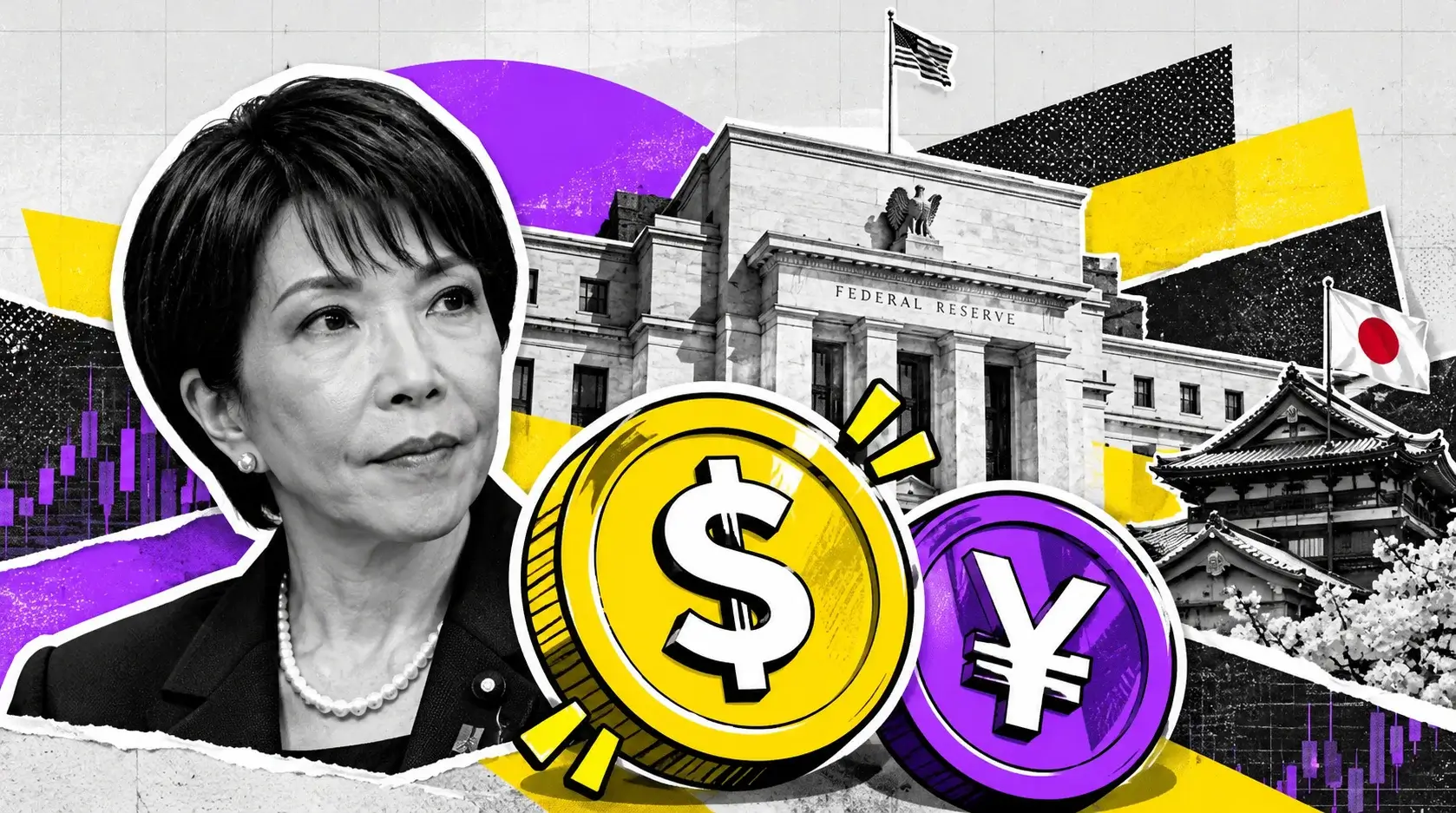
USD/JPY Price Forecast: Dollar-Yen at 159.10 as 160.22-160.74 Intervention Zone Caps the Bullish Setup
USD/JPY (Dollar-Yen) holds at 159.10 above the 20-day EMA at 158.44 as Japan's CPI cools to 1.4%, U.S. CPI runs at 3.8% | That's TradingNEWS
Key Points
- USD/JPY trades at 159.10 in a 158.65-159.35 box, above the 20-day EMA at 158.44, with RSI at 56.
- Japan CPI ex-fresh food cooled to 1.4% vs 1.7% expected; U.S. CPI runs at 3.8%, the highest in nearly 3 years.
- Key resistance at 160.22-160.74 with intervention risk; support at 158.55, then 157.70 with 156.60 invalidating bulls.
USD/JPY (Dollar-Yen) is changing hands at 159.10 in late Friday trade, May 22, 2026, fractionally higher on the session as the U.S. Dollar Index (DXY) at 99.30 delivers a marginal 0.1% gain against the broader G10 complex. The pair has spent the past three trading sessions consolidating in a tight 158.65 to 159.35 band, which represents one of the narrowest weekly ranges of 2026 and the kind of compression that historically precedes meaningful volatility expansion. The structural framing matters more than the spot price. USD/JPY sits roughly 3% below the April 30 yearly high at 160.73, the level where Japanese officials intervened in late April to trigger a massive outside-day reversal that took the pair down more than 3.5% from the peak. The asset has subsequently rebounded 2.7% off the May 6 low in the 154.79 to 155.40 zone, which marked the yearly low-week close and aligned with the 61.8% Fibonacci retracement of the January rally. The chart structure has now built a near-textbook ascending pitchfork off the monthly low, and the pair is pressing against the cluster of moving averages and Fibonacci references that defines whether the next leg targets fresh yearly highs or whether the late-April intervention dynamic re-asserts itself with renewed force. The setup walking into the long Memorial Day weekend carries unusual asymmetry, with the constructive technical structure pointing one direction and the intervention risk overlay capping the other, leaving the pair at the kind of inflection point where the next decisive move tends to overshoot its measured target.
The Technical Cluster Between 158.44 and 159.51 Is Compressing the Tape and the Pivot Above Is 160.22
The chart structure on the daily timeframe captures a coiled compression pattern that has been building since the May 6 base. USD/JPY trades above the 20-day Exponential Moving Average at 158.44, which is the first meaningful support that determines whether the near-term constructive read remains intact. The 14-day Relative Strength Index sits at 56, signaling moderate bullish momentum without yet flashing the overbought conditions that would suggest the rally has exhausted itself. The 78.6% Fibonacci retracement of the April decline at 159.51 sits as the immediate resistance, and a clean break above that line activates the next layer toward the key resistance zone at 160.22 to 160.74 that has defined the structural ceiling since early 2024. The 160.22/74 band is the most heavily watched cluster on the entire chart for one specific reason. It is defined by the April 2024 swing high, the March 2026 high, and the 2024 high-week close, which is the kind of multi-decade technical convergence that historically attracts both speculative buying interest and the largest concentrations of resting orders. Above 160.74 with a confirmed daily close, the path opens toward the 2024 high and high-day close at 161.69 to 161.95, and the LiteFinance Elliott Wave roadmap projects further extension toward 163.10 and ultimately 165.00 if the breakout consolidates. The bullish technical structure is intact and the momentum is moderately constructive. The complication sits in the fact that 160.22 to 160.74 is the exact zone where Japanese officials chose to intervene in April.
The Intervention Risk Layer Defines the Single Largest Tactical Variable for the Next Two Weeks of Trade
The most consequential overlay on the entire USD/JPY (Dollar-Yen) chart is the threat of renewed Japanese intervention as the price approaches the levels where Tokyo previously stepped in to defend the Yen. The April 30 intervention episode produced a brief intraday spike to 160.73 before officials intervened to mark a massive outside-day reversal off the yearly high. The decline extended more than 3.5% off the high before the pair stabilized in the 154.79 to 155.40 zone and began the current rebound. The structural read on intervention risk is that the Ministry of Finance under the current administration has demonstrated willingness to act unilaterally when the pair approaches levels that threaten broader policy objectives around energy import costs and inflation expectations. Multiple verbal interventions have occurred at successively higher levels throughout 2025 and the first half of 2026, with the actual market-impact actions concentrated at the 160.00 to 160.75 band. The implication for tactical positioning is that any long exposure into the 160.22 to 160.74 zone carries asymmetric downside risk because a single intervention event can deliver a 2% to 4% adverse move within a single session. That risk is what argues for reducing position size or taking partial profits on any push into the resistance band rather than chasing the breakout, and it is the structural reason multiple technicians have flagged stop levels below 157.70 to give long positions room to breathe through the inevitable intervention-driven volatility.
The Downside Support Lattice Begins at 158.55 and Builds Through 157.70 and Ultimately 156.60
The bearish ladder on USD/JPY needs to be drawn precisely because the intervention risk overlay makes the support-side levels the operationally relevant ones for risk management. The 61.8% Fibonacci retracement of the April decline at 158.55 is the first meaningful support that determines whether the near-term uptrend remains intact. A break below that level would threaten a larger pullback within the ascending pitchfork structure and put the 2025 high-day close and the November high at 157.70 to 157.90 in focus as the next demand zone. The 157.70/90 cluster is the textbook structural support that historically attracts dip-buying, and the configuration argues for a strong reaction at that level if it gets tested. Beyond that, the broader bullish invalidation sits at the monthly and yearly open at 156.60 to 156.67, which is the level a confirmed close beneath would shift the entire structural framework from corrective-uptrend to confirmed reversal. The Elliott Wave framework projects a deeper corrective target into the 152.10 to 145.50 zone if the bearish wave-4 thesis plays out, which is the kind of move that would require either a major intervention episode, a significant Fed dovish pivot, or a fresh wave of safe-haven Yen demand to fully materialize. The full lattice from current price down to 152.10 captures roughly 4.5% of downside risk in the bearish scenario, against the 1.0% to 1.5% upside room to the intervention zone before the asymmetric risk dynamic dominates.
Japan's CPI Print Came in Below Expectations at 1.4% and Removed the Most Immediate BoJ Hike Catalyst
The fundamental data flow has tilted in a way that supports continued Yen weakness rather than reversal, and the most consequential print of the week came from the Japanese National CPI release published Thursday evening. National CPI excluding fresh food decelerated to 1.4% year on year for April, undershooting the 1.7% consensus by a meaningful margin and falling sharply from the prior reading of 1.8%. The print is structurally negative for the Bank of Japan's path to additional rate hikes because it removes the immediate inflation-overshoot argument that has anchored the hawkish framing through the first quarter. A reading below the 2.0% policy target with a decelerating trajectory gives the BoJ committee a clear rationale to extend the current gradualist approach rather than push forward with another rate hike, which mechanically widens the U.S.-Japan rate differential at the front of the curve and provides additional fuel for the carry trade that has been the structural driver of USD/JPY through the past eighteen months. The constructive caveat for the Yen is that the BoJ has repeatedly signaled its willingness to tighten policy when financial conditions warrant, but the operational reality is that a CPI print well below consensus removes the urgency from the policy framework and gives the U.S. Dollar room to extend gains. Next week's Tokyo CPI release for May is the next major fundamental catalyst, and any continuation of the disinflationary trajectory would compound the current pressure on the Yen.
The U.S. Inflation Backdrop Is the Engine Behind the Sustained Dollar Strength
The U.S. side of the USD/JPY equation is delivering the kind of inflation-driven Dollar support that has historically powered sustained trend moves in the pair. The U.S. Consumer Price Index for April registered headline inflation at 3.8% year on year, the highest reading in nearly three years and a meaningful acceleration that has effectively eliminated the prospect of Fed rate cuts through 2026. The market is now pricing the Federal Reserve to hold rates steady at the current band through the year, with the forward strip incorporating possible rate hikes as early as 2027 on the back of the persistent inflation overshoot. The acceleration is being driven by elevated energy prices tied to the Iran war, which has kept Brent crude near $103 and WTI near $97, and the imported-inflation pass-through is feeding into the broader U.S. price level with a multi-month lag. Kevin Warsh was sworn in as the 17th Fed Chair on Friday morning at the White House, the first chair to take the oath at the executive mansion since Greenspan in 1987, and the early framing of his tenure has been priced as decidedly non-dovish by the rates market. Governor Christopher Waller delivered hawkish comments earlier in the session, including the framing that the central bank should "hold rates steady for the near term" and that the next rate move could be a hike if inflation continues to surprise to the upside. U.S. Baker Hughes oil rig count came in at 425 against expectations of 416, signaling that domestic energy production is responding to the higher price environment, which marginally pressures Brent and WTI on the supply side but does not yet provide enough relief to flip the inflation trajectory. The combination of elevated U.S. inflation, a hawkish Fed, and accelerating yield differentials against Japan is the structural setup that has anchored the USD/JPY rally and continues to operate in the bull case's favor.
The Yield Differential Story Is the Structural Driver and It Is Widening in the Dollar's Favor
The cleanest single explanation for why USD/JPY (Dollar-Yen) is operating with a constructive bias despite the proximity to intervention zones sits in the U.S.-Japan rate differential. U.S. 10-year Treasury yields at 4.584% sit against Japanese 10-year JGB yields that remain meaningfully lower despite recent BoJ tightening, producing a carry profile that mechanically pulls capital toward Dollar-denominated assets. The U.S. 2-year yield at approximately 4.10% versus Japanese 2-year yields in the lower-single-digit range produces the kind of front-end spread that supports sustained Yen weakness through the carry trade architecture. The structural read on the spread is that it widens further every time the Fed signals reluctance to cut while the BoJ signals reluctance to hike, which is precisely the configuration that has emerged following the April U.S. CPI print and the May Japan CPI miss. The hawkish FOMC minutes from the April meeting confirmed that a majority of Fed officials would support rate hikes if inflation runs persistently above the 2% target, and the second consecutive meeting where more policymakers leaned hawkish on conditional hikes than on cuts marks a regime change in the policy framework that the carry-trade architecture is mechanically pricing. The connection back to USD/JPY is direct: every basis point of incremental spread widening pulls capital into Dollar assets at the margin, and the cumulative weight of that flow is what powers sustained trend moves in the pair even when intervention risk is elevated.
The Iran Story Is the Single Most Consequential Variable That Could Reverse the Bullish Setup
The geopolitical overlay deserves careful treatment because the Iran peace negotiations carry asymmetric implications for USD/JPY through the energy-price transmission channel. Iranian sources have indicated that the final draft of the peace proposal with the United States has been finalized, though Tehran remains adamant about preserving uranium stockpiles and the recognition of Iran's authority over the Strait of Hormuz. Iranian Labour News Agency has reported the framework details, and Pakistan's army chief has reportedly traveled to Tehran for further talks while Qatar has dispatched a negotiating team. The structural read on the deal probability is that the framework is in place but the verification mechanisms around uranium and the operational authority over Hormuz remain the principal sticking points. The transmission channel back to USD/JPY operates through energy prices. Japan imports virtually all of its energy, and every escalation in the Iran story has been a structural negative for the Yen because it lifts the cost of imported oil and natural gas, widens Japan's trade deficit, and amplifies the imported-inflation problem that the BoJ cannot easily address through monetary policy alone. A genuine de-escalation that pushes Brent below $100 would mechanically relieve some of the pressure on the Yen and could provide tactical support for any pullback in the pair. An escalation that drives Brent back through $115 would extend the structural Yen-weakness thesis and put the 160.74 resistance under sustained pressure. The proximity to a resolution argues for elevated volatility around the spot rate through the Memorial Day weekend, particularly if any framework announcement lands during the thin liquidity window.
Read More
-
Yen Stalls at 160 Despite a 3% JGB and Tokyo Core CPI at 2.0% — Intervention Sits at 164, Friday's Payrolls Decide
02.09.2026 · TradingNEWS ArchiveEnergy
-
QQQ ETF ($706.22) Slides 7.4% Below Its High as the Market Reprices the AI Capex Bill — $686.57 Target if $700 Breaks
22.10.2026 · TradingNEWS ArchiveStocks
-
XRPI ($7.00) and XRPR ($10.74) Slide Toward 52-Week Lows as Spot XRP ETF Flows Stall at $708,510
22.10.2026 · TradingNEWS ArchiveCrypto
-
NG ($2.775) Decoupled From Europe’s €88 Gas Crisis as LNG Feedgas Hits 18.9 Bcf/d — $3.30 Upside on Cold Weather
22.10.2026 · TradingNEWS ArchiveCommodities
-
Dollar-Yen (157.35) Loses 157.65 as the Yen Rallies on Haven Demand — 155 Target if 156 Breaks
22.10.2026 · TradingNEWS ArchiveForex
The Tactical Range Compression Tells the Story of Indecision Ahead of the Major Data Catalysts
The price action over the past three sessions captures a market that is waiting for the next meaningful catalyst rather than making a directional decision. USD/JPY has traded in a 158.65 to 159.35 band for the last three trading days, which is roughly half the average daily range of the past three months and the kind of compression that historically precedes volatility expansion. The constructive interpretation of the consolidation is that the pair is building a base above the 20-day EMA at 158.44 in preparation for the next push toward the 160.22 to 160.74 intervention zone. The bearish interpretation is that the lack of follow-through on multiple attempts to clear 159.35 signals exhaustion at the higher end of the recent range and increases the probability of a corrective pullback toward 158.55 and ultimately 157.70. The U.S. PCE inflation report scheduled for next week is the dominant near-term variable that will determine which interpretation proves correct. A hot PCE print would compound the Fed-hawkish narrative, push the U.S. 10-year yield back toward 4.69%, and likely deliver the catalyst that breaks the consolidation to the upside through 159.51. A soft PCE print would partially unwind the December hike pricing, compress the rate differential, and likely trigger the pullback toward 158.55 that the bearish technicals have been positioning around. The RBNZ rate decision and the Japan Tokyo CPI release are the secondary catalysts on the calendar, with the BoJ-related Tokyo CPI carrying the larger asymmetric risk because a continuation of the disinflationary trajectory would extend the bearish Yen thesis materially.
The Cross-Currency Picture Confirms Broad Dollar Strength Across the G10 Complex
The cross-asset context for USD/JPY (Dollar-Yen) confirms that the move is being powered by Dollar strength rather than by an isolated Yen story. EUR/USD sits at 1.1611, up 0.13% but still close to the May lows after rejecting from the 1.1660 zone. GBP/USD trades at 1.3446, up 0.18% but still pinned beneath the $1.3490 consolidation ceiling that has framed Sterling's recent action. USD/CHF is firmer at the higher end of its recent range. The Dollar Index at 99.30 is consolidating just below the 99.41 Fibonacci extension target, with the ascending channel structure intact and the DXY 50-day moving average at 98.90 providing the immediate support. The broad Dollar strength is being driven by the same combination of factors operating on USD/JPY — hawkish Fed pricing, widening yield differentials, sticky inflation, and the geopolitical risk premium tied to the Iran war. The connection back to the Yen pair is that the move is unlikely to reverse cleanly without a parallel break in the broader Dollar story, which means any tactical bearish positioning on USD/JPY needs to be sized against the possibility that the Dollar Index extends toward its yearly highs at 99.73 and pulls the entire G10 complex with it. The relative-strength picture inside the Dollar block puts the Yen in the middle of the pack rather than at either extreme, which is itself diagnostic about the asset-specific dynamics — the Yen is not the weakest currency under pressure, but it carries the additional asymmetric risk from intervention that other G10 currencies do not face.
The BoJ Policy Trajectory Is the Structural Variable That Eventually Caps the Pair
The longer-horizon framework for USD/JPY rests heavily on the eventual trajectory of Bank of Japan policy normalization, and the data has shifted in a way that pushes back the timing of the next significant policy move. The April CPI print at 1.4% removes the immediate inflation overshoot, which is the variable the hawkish BoJ committee members had been anchoring on. Governor Kazuo Ueda has repeatedly emphasized the data-dependent nature of the policy framework, and the persistent shortfall against the 2.0% policy target gives the doves on the committee a clean argument to extend the gradualist approach. The complication is that Japan's structural wage growth has been running at multi-decade highs, with shunto wage negotiations producing sustained increases above 5% in some sectors, and that wage-driven inflationary force is the structural pressure that eventually forces the BoJ's hand. The current setup is that headline CPI is decelerating while the underlying wage and services inflation remains structurally elevated, which is the precise configuration that has produced the policy ambiguity throughout the cycle. The market interpretation is that the BoJ will eventually deliver another rate hike, but the timing has been repeatedly pushed back and the most likely window now extends into the autumn of 2026 at the earliest. The connection back to spot USD/JPY is that the carry trade architecture remains intact as long as the BoJ delays, and every delay extends the runway for additional Yen weakness against the Dollar. A surprise hawkish pivot from the BoJ would be the single most consequential bearish catalyst for the pair, but the conditions that would trigger that pivot are not currently visible in the data.
The Speculative Positioning Has Stayed Long Despite the Intervention Risk and That Is the Setup for Volatility
The futures positioning data underneath the price action carries information that the spot rate alone does not communicate. Speculative long positioning on the Yen carry trade has remained elevated despite the April intervention episode, with hedge funds and macro accounts continuing to maintain meaningful long-USD exposure against the Yen on the basis of the rate differential and the inflation backdrop. The CFTC commitment-of-traders data has shown short-Yen positioning at historically extreme levels through much of 2026, which captures the consensus carry trade that has been the dominant structural flow in the pair. The risk embedded in that positioning is that a sudden BoJ hawkish surprise, an intervention episode, or a sharp Fed dovish pivot can trigger forced position unwinds that produce moves multiple times the magnitude of the underlying catalyst. The fact that positioning has remained long despite the prior intervention is itself diagnostic — it tells you that the carry-trade architecture is operating on the assumption that the rate differential is the dominant variable and that any intervention-driven pullback represents a tactical opportunity rather than a structural reversal. That positioning bias supports the continued grind higher in the pair through normal market conditions, but it amplifies the downside risk if a genuine catalyst forces the unwind. The June Bank of Japan policy meeting and the next Tokyo CPI release are the principal events that could trigger a positioning reset, and the size of the move on either side of those releases will likely overshoot the fundamental implication.
What Invalidates the Bullish Case and What Invalidates the Bearish Case
The risk parameters need to be drawn with precision because the chart sits at a structural decision zone and the catalyst stack is heavily front-loaded into the next two-week window. The bullish case on USD/JPY breaks on a confirmed daily close below 158.55, which loses the 61.8% Fibonacci retracement of the April decline and threatens the ascending pitchfork structure. A break of 157.70 to 157.90 activates the next layer of weakness toward the 156.60 to 156.67 zone that marks the broader bullish invalidation point, and a clean close beneath 156.60 opens the LiteFinance Elliott Wave projection toward 152.10 and ultimately 145.50. It breaks if the next U.S. PCE release prints below consensus and triggers a partial unwind of the December hold pricing, particularly if it pulls the U.S. 10-year yield back beneath 4.40%. It breaks if Tokyo CPI delivers an upside surprise that revives the BoJ hike pricing. It breaks if Japanese authorities intervene in the 160.22 to 160.74 zone with sufficient firepower to drive a sustained reversal rather than a short-lived bounce. It breaks if the Iran negotiations produce a credible peace framework that pushes Brent below $100 and removes the energy-driven imported-inflation pressure on the Yen. It breaks if a global risk-off event triggers safe-haven Yen demand on a scale that overwhelms the carry-trade architecture. The bearish case on USD/JPY breaks on a confirmed daily close above 160.74 with confirming volume, which clears the multi-year resistance cluster and activates the path toward the 2024 high at 161.69 to 161.95 as the next measured-move target. It breaks if the Fed delivers explicit hawkish signaling at the next FOMC meeting that pushes hike pricing further into the curve. It breaks if Tokyo CPI confirms the disinflationary trajectory and removes the remaining BoJ hike speculation. It breaks if the Iran situation escalates with crude pushing back through $115 on Brent, compounding the Yen-weakness thesis. It breaks if no intervention materializes around the 160 to 161 zone, which would signal that Japanese officials have effectively conceded the structural level and freed the pair to attempt the 163 to 165 zone that the longer-term roadmap targets.
The Decision: Bullish Bias on USD/JPY With Tactical Caution at 160.22 to 160.74 — Hold Longs Above 158.55, Trim Into the Intervention Zone, Reload on Pullbacks
The honest read on USD/JPY (Dollar-Yen) at 159.10 is that the pair carries a constructive bullish bias on the tactical horizon with elevated intervention risk capping the immediate upside, which produces a hold-long posture above 158.55 combined with disciplined profit-taking into the 160.22 to 160.74 resistance band. The bull thesis is built on a convergence of evidence pointing in the same structural direction. The technical structure is constructive with the price above the 20-day EMA at 158.44, the RSI at 56 signaling moderate momentum, the 61.8% Fibonacci retracement of the April decline at 158.55 holding cleanly, and the ascending pitchfork off the May 6 low intact. The U.S. inflation backdrop continues to deliver the 3.8% April CPI print, the highest in nearly three years, which has structurally repriced Fed cut expectations out to 2027 at the earliest and supports continued Dollar strength. Kevin Warsh's swearing-in as the 17th Fed Chair with hawkish framing reinforces the policy bias. Governor Waller's hawkish comments explicitly flag the possibility of rate hikes if inflation continues to surprise. The Japan National CPI miss to 1.4% versus 1.7% expected removes the immediate BoJ hike catalyst and extends the runway for sustained Yen weakness via the carry trade. The U.S.-Japan yield differential at the front of the curve favors the Dollar and continues to widen as the divergent policy paths unfold. The Iran energy-shock channel keeps imported inflation pressure on Japan even as the diplomatic resolution remains uncertain. Set against the constructive setup, the intervention risk is the single largest tactical variable. Japanese officials intervened decisively in the 160.22 to 160.74 zone on April 30 to produce a 3.5% reversal, and a return to that level without changed policy fundamentals raises the probability of a repeat episode. The asymmetric risk profile argues for trimming long exposure into the 160 zone rather than chasing the breakout. The tactical position is to hold core long exposure above 158.55 with disciplined sizing, reduce position size meaningfully on any push into the 160.22 to 160.74 band, reload on pullbacks toward the 158.55 to 159.00 support zone with stops below 157.70, and step size up aggressively only on a confirmed daily close above 160.74 with U.S. yields supporting the move and no immediate intervention signal from Japanese officials. The structural target above 160.74 runs to the 161.69 to 161.95 zone as the first leg and ultimately to the 163.10 to 165.00 zone if the carry trade and the rate differential remain supportive through the summer. Tactical short entries make sense only on confirmed rejection from the 160.22 to 160.74 intervention zone with stops above 161.20 and initial targets at 158.55 and 157.70. The structural call on USD/JPY is that the Dollar maintains the upper hand through the second half of 2026 as long as the Fed remains restrictive, the BoJ remains gradualist, and the Iran energy shock continues to pressure the Yen via the imported-inflation channel, but the tactical horizon over the next two-to-four weeks is defined by the binary outcome at the intervention zone rather than by the longer-term carry-trade dynamics. The trade right now is patience and discipline rather than aggressive conviction. That is the read as the calendar walks into the long Memorial Day weekend with Dollar-Yen at 159.10, the DXY at 99.30, the three-day 158.65 to 159.35 consolidation intact, the U.S. PCE release positioned as the next macro catalyst, the Tokyo CPI print queued behind it, and every variable still pulling the structure between the constructive carry-trade bull thesis and the intervention-driven tactical bear catalysts that will define the next critical phase of trade.