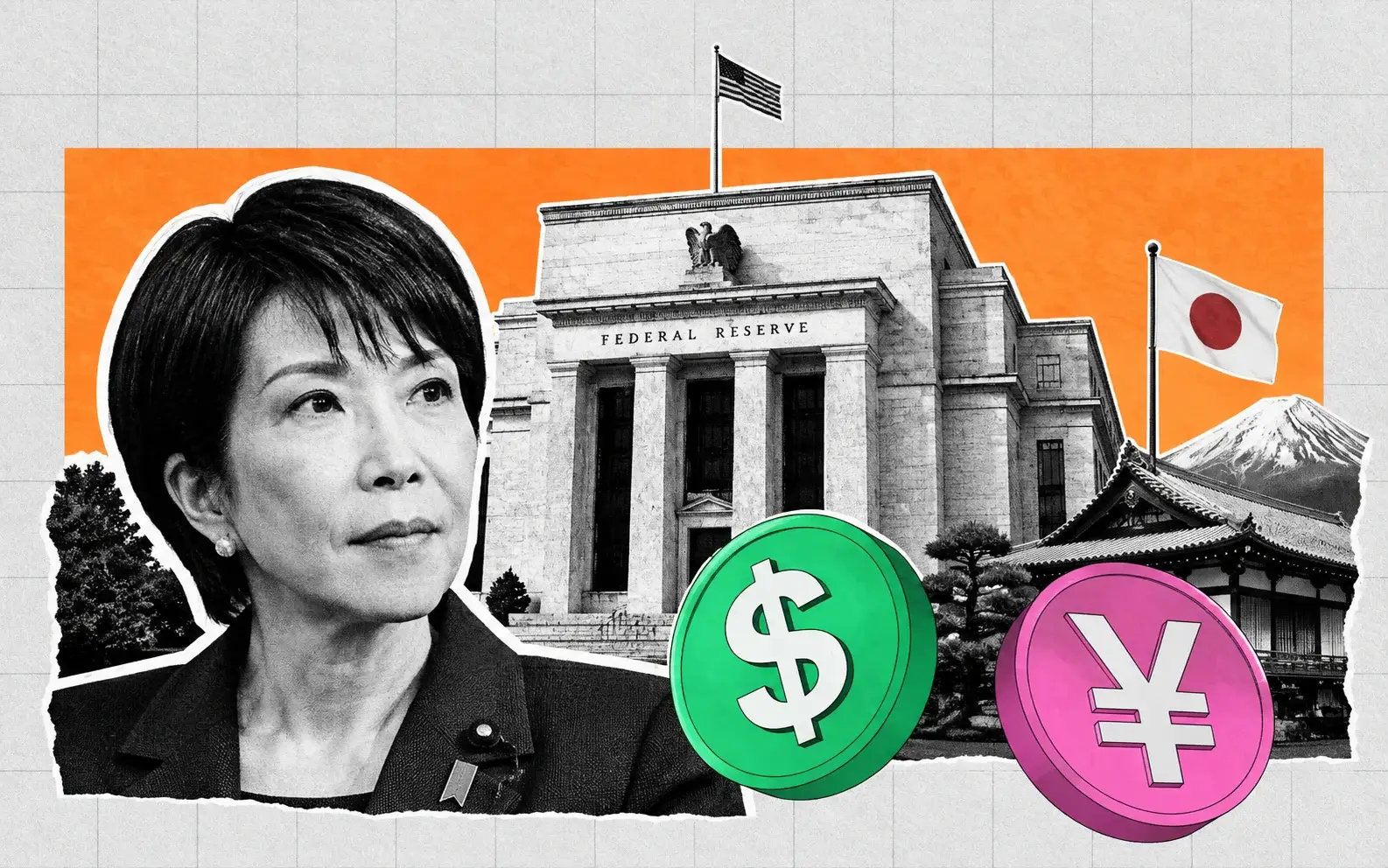

USD/JPY Price Forecast — Dollar Yen Climbs to 159 at 1-Month Highs as BoJ Governor Ueda Defies Hawkish Pricing
USD/JPY just below the 160 intervention zone that prompted Tokyo's late-April action | That's TradingNEWS
Key Points
- USD/JPY at 159.36 hits one-month highs near 160 intervention line; April core CPI at 1.4% softens BoJ urgency
- BoJ June 15 hike priced 80% on Ueda hawkish second-round concerns; Warsh-Fed sustains dollar bid
- Bull case 161-164 on Ueda dovish surprise; bear case 156-153 on hot Tokyo CPI plus intervention
USD/JPY (FX:USDJPY) is trading at 159.36 on Wednesday, May 27, sitting at its weakest yen level since late April and just shy of the critical 160 intervention threshold that prompted Tokyo's reported yen-buying intervention operations during the late-April and early-May currency stress phase. The current spot price represents a 0.29% gain from the previous session's close of 158.99, the second consecutive day of yen weakening, and brings the cumulative pair appreciation since the May 22 close at 159.21 to approximately 15 pips while continuing the broader uptrend that has carried USD/JPY from the early-May lows near 156.50 to the current one-month highs in a measured 280-pip advance. The yen has lost approximately 10.42% over the trailing twelve months, one of the worst-performing G10 currency configurations against the dollar over the period, reflecting the cumulative impact of the dovish-to-hawkish Bank of Japan transition that has lagged the broader G10 central bank tightening cycle, the structural carry-trade flows that continue to favor higher-yielding alternatives, and the broader dollar strength driven by the Federal Reserve transition to Chair Kevin Warsh. The structural read for traders sitting in front of the tape is that USD/JPY has decisively broken through the 158.50 resistance that had capped the late-April recovery attempt and is now testing the upper end of the multi-month consolidation range with the 160 psychological barrier and the implied Ministry of Finance intervention line representing the next decisive technical and policy-defined ceiling. The decisive question for the next 72 hours is whether Friday's Tokyo Consumer Prices Index print combined with the May 27 BoJ Governor Ueda communications and the broader U.S. Personal Consumption Expenditures inflation data create the catalyst for either an intervention-driven pullback toward 156-157 or a sustained break above 160 that would force the broader G10 dollar repricing to extend through the June FOMC meeting on June 17-18. The cleanest framing for tactical positioning is that USD/JPY is currently pinned at a binary decision level where the next 200 pips of price action will be determined by the interaction between three concurrent catalysts: the Tokyo CPI print, the Friday PCE inflation, and any Tokyo Ministry of Finance intervention action triggered by a clean break of the 160 level that the market has been positioning around for the past several weeks.
BoJ Governor Ueda — Hawkish Words, Cautious Action
The single most important domestic variable pressing on USD/JPY through the back half of May has been the communications strategy of Bank of Japan Governor Kazuo Ueda, whose words have shifted decisively hawkish while the actual policy path remains constrained by Japan's structural conditions and the complex interaction between the energy-driven inflation pulse and the underlying deflationary pressures. Governor Ueda's May 27 communications to the BoJ committee reiterated central bank concerns about the second-round effects of inflation, with the BoJ chief explicitly noting that the energy shock could threaten wage growth, inflation expectations, and price-setting behavior if energy prices remain elevated for an extended period. The hawkish messaging supports the broader market expectation that the BoJ will raise interest rates at its June 15 meeting, with approximately 80% probability now priced in money market expectations and the broader institutional consensus aligning around a 25-basis-point hike that would bring the policy rate from the current 0.75% to 1.00%. The market reaction to the hawkish communications has been notably muted with USD/JPY actually appreciating to 159.36 despite the directionally yen-supportive messaging, demonstrating that the broader dollar strength driven by the Warsh-led Fed transition and the structural Japanese carry-trade flows are overwhelming the BoJ's communications channel. The structural complication for Governor Ueda's hawkish posture is the underlying inflation picture: Japan's core inflation rate slowed to 1.4% in April from 1.8% in March, marking the lowest reading in four years and remaining below the BoJ's 2% target for the third consecutive month, creating a fundamental mismatch between the hawkish forward guidance and the actual inflation trajectory that would justify continued tightening. The April BoJ meeting nonetheless sharply raised its core inflation forecast to 2.8% from 1.9%, explicitly citing elevated crude oil prices tied to the Middle East conflict and continued cost pass-through by businesses to consumers as the primary drivers of the upward revision, suggesting that the central bank is positioning around a forward-looking inflation pulse rather than the trailing data. The Deputy Governor Ryozo Himino has reinforced the broader hawkish posture, stating explicitly that the central bank remains committed to further interest-rate hikes, though the timing and pace would depend on how the Middle East conflict affects Japan's economy and inflation outlook. The single most important Ueda signal to monitor over the next eighteen days is the precise tone and content of the June 15 BoJ policy statement and the subsequent press conference, with any explicit pre-commitment to additional hikes beyond June being the catalyst that would force a meaningful yen recovery through the rate differential channel.
Warsh-Led Fed and the Dollar Bid
The Federal Reserve transition to Chair Kevin Warsh represents the dominant external variable pressing on USD/JPY over the next six months and has fundamentally reset the dollar's reaction function in a way that the yen market has been particularly exposed to given the underlying carry-trade dynamics. Warsh was sworn in to replace Jerome Powell after a fraught confirmation process completed on May 15, and his historically hawkish posture has collided head-on with a rates market that had been positioned for sustained Fed easing through 2026, forcing a violent repositioning across the U.S. curve and supporting the dollar against the broader G10 complex including the yen. The December rate hike probability now sits at approximately 80% in money market pricing, the highest level reached all year and a dramatic reversal from earlier expectations of two 25-basis-point cuts in 2026, and the structural effect on the dollar has been firmness across the broader G10 complex that has driven USD/JPY back toward the 160 intervention threshold despite the BoJ's hawkish communications. The Fed funds rate currently sits at 3.50% to 3.75% after three 25-basis-point cuts in 2025, creating a 275 to 300 basis point rate gap against the current BoJ rate of 0.75% that mechanically supports continued yen weakness through the carry-trade transmission channel. The historical relationship between the U.S.-Japan policy rate differential and USD/JPY is robust and well-quantified: each 100 basis points of rate gap compression in favor of the yen has historically been worth approximately 5 to 8 yen of USD/JPY downside on a rolling six-month basis, which means a sustained narrowing of the differential to 250 basis points (assuming both a Fed pause and a BoJ June hike) would mathematically support 5 to 8 yen of USD/JPY downside toward the 152 to 155 zone. The opposite scenario is equally important: a December Fed hike that takes the Fed funds rate to 3.75%-4.00% combined with a delayed BoJ tightening cycle would actually widen the differential to 300 basis points and would mechanically support continued yen weakness toward 161-164. Friday's PCE inflation print is the immediate macro pivot and will define the trading bias for the next two weeks: a soft PCE that walks back the December hike pricing toward 50% would force dollar weakness across the G10 and pull USD/JPY back toward the 156-157 support cluster, while a hot print that locks in the December hike trade would push USD/JPY through 160 toward the 161-164 bull-case targets.
Rate Differential Math — 300 Basis Point Gap Drives Carry Flows
The mechanical driver of USD/JPY over the next six months is the absolute and relative path of the policy rate differential between the Bank of Japan and the Federal Reserve, and the current configuration represents one of the widest sustained rate gaps in modern history that continues to drive structural carry-trade flows from yen-funded positions into higher-yielding dollar alternatives. The Fed funds rate at 3.50% to 3.75% combined with the BoJ rate at 0.75% creates an effective rate differential of approximately 275 to 300 basis points in favor of the dollar, a configuration that historically would be associated with sustained yen weakness even in the absence of additional Fed hawkish action. The carry-trade dynamics that have characterized the JPY pair through the post-2022 period have been remarkably persistent: investors continue to fund positions in low-yielding yen and deploy capital into higher-yielding dollar assets, generating both directional yen weakness and the structural demand for dollar holdings that supports the broader dollar firmness. The bull case for the yen assumes the BoJ delivers a 25-basis-point hike at the June 15 meeting that takes the policy rate to 1.00%, the Fed holds at 3.50%-3.75% through the back half of 2026, and the rate differential compresses to approximately 250 basis points by year-end, which would mechanically support 5 to 8 yen of USD/JPY downside toward the 151-154 zone according to the standard rate differential transmission mechanism. The bear case for the yen assumes the BoJ delays the June 15 hike to either July or September while the Fed delivers a December hike that takes the Fed funds rate to 3.75%-4.00%, which would actually widen the differential to 300-325 basis points and would mechanically support continued yen weakness toward 161-164. The base case currently priced in money markets sits between these scenarios with approximately 80% probability of a BoJ June hike against modest Fed hike pricing, implying a net narrowing of the rate gap to approximately 250-275 basis points by year-end that would support USD/JPY trading in the 155-158 range. The structural complication is that the rate differential transmission mechanism has been only partially functional through 2026 due to the J.P. Morgan-identified structural dollar demand from Japanese corporates and persistent carry flows that have offset some of the rate differential narrowing, which means the realized USD/JPY pullback from any rate gap compression could be materially smaller than the historical models suggest. The single most important rate differential signal to monitor through the back half of May is the SONIA-equivalent Japanese OIS rate combined with fed funds futures positioning, with any meaningful divergence in expectations between the two central banks providing the cleanest forward-looking signal for the pair's directional bias.
Technical Levels — 160 Intervention Line, 156 Support, 164 Bull Target
The technical structure for USD/JPY going into the back half of this week is exceptionally well-defined and provides traders with a precise framework for sizing positions around the binary intervention-line dynamic that has defined the pair's price action through the past several weeks. The current spot price at 159.36 sits just below the critical 160 psychological barrier and the implied Ministry of Finance intervention threshold, with the immediate resistance cluster at 159.50 to 160.00 representing the convergence of prior pivot highs, the round-number psychological level, and the historical Japanese intervention trigger zone that has prompted MoF action in 2022, 2024, and most recently in late April 2026. Above 160, the next meaningful technical resistance is at 160.50 to 161.00 representing the early-2025 highs and the broader bull-case target identified by institutional positioning, with the structural resistance extending into the 162-164 zone that aligns with the most aggressive J.P. Morgan target of 164 and that would represent the most aggressive bull case if Fed-led dollar strength accelerates through the back half of 2026. To the downside, the immediate support is the cluster at 158.50 to 159.00 that has acted as previous resistance through May and that has now flipped to provide structural support, followed by the more meaningful 157.50 zone representing the early-May consolidation base. Below 157.50, the next significant technical floor sits at 156.00 to 156.50 representing the multi-week intraday lows that defined the post-intervention rebound base, with the structural support extending into the 153-155 zone that aligns with the broader institutional bullish-yen targets for mid-2026 if the rate differential compresses meaningfully. The chart structure shows USD/JPY has confirmed a sustained uptrend with the 21-day exponential moving average above the 50-day, the 50-day above the 100-day, and the 200-day trending higher, creating a clean bullish moving-average alignment that supports continued dollar strength absent a major intervention or Fed dovish surprise. The 14-day Relative Strength Index reading in the mid-60s sits in moderately overbought territory but has not yet reached the 70+ extreme overbought zone that historically marks tactical reversal points, suggesting room for further upside before the technical exhaustion would force a tactical pullback. The single most important short-term technical signal is the relationship between the spot price and the 160 intervention line, with any clean break above being the catalyst for either the intervention-driven sharp reversal toward 156 or the failed intervention that would force the pair to extend toward 161-164.
Tokyo Intervention Risk — MoF Defends 160 Line
The single most important policy variable pressing on USD/JPY pricing over the next two weeks is the implied threat of Bank of Japan and Ministry of Finance currency intervention to defend the yen against further depreciation, and the current spot price at 159.36 sits within the historical intervention trigger zone that has prompted Tokyo action multiple times since the 2022 yen crisis. Traders have remained cautious about the possibility of currency intervention with the yen trading near the 160-per-dollar level that reportedly prompted Tokyo's intervention efforts in late April and early May, and the broader institutional positioning has been sizing for the binary outcome where either a clean break above 160 triggers immediate intervention or where the implied intervention threat prevents the breakout altogether. The historical base rate for Japanese intervention actions is well-documented: the Ministry of Finance has historically intervened when USD/JPY approached or breached 160 in 2022 (June and October), 2024 (April and July), and most recently in April-May 2026, with each intervention action typically generating 200-400 pips of immediate yen appreciation but with the longer-term effect being constrained by the underlying fundamental drivers. The current Japanese FX reserves of approximately $1.2 trillion provide substantial ammunition for sustained intervention if the MoF chooses to deploy it, with the historical pattern of single-session interventions typically costing $40-60 billion of dollar selling and yen buying. The political dimensions of intervention are complex: Japanese Prime Minister Takaichi's broader monetary policy preferences and the underlying Sanaenomics stimulus framework have created tension with the BoJ's hawkish trajectory, with the government potentially favoring a weaker yen to support export competitiveness even as the central bank moves toward tightening. The intervention transmission channel works through three primary mechanisms: the direct dollar-yen flow impact, the signaling effect that changes speculative positioning, and the broader risk-asset reaction that often accompanies major Japanese policy actions. The single most important intervention signal to monitor over the next ten sessions is the precise verbal communications from Japanese officials including Vice Finance Minister for International Affairs and the broader MoF leadership, with any explicit reference to "intervention" or "decisive action" being the strongest hint that physical market action is imminent. The risk asymmetry around the 160 level is sharp: any clean break above with no immediate intervention would force the broader speculative community to reposition for an extended yen weakness scenario toward 161-164, while any explicit intervention action would generate 200-400 pips of immediate yen appreciation toward 155-156.
Japanese Inflation Picture — April Core CPI at 1.4%, Tokyo CPI Friday
The Japanese inflation picture is the structural foundation underlying the BoJ's hawkish communications and represents the single most important domestic variable that will determine the path of the yen through the back half of 2026. Japan's core inflation rate slowed to 1.4% in April from 1.8% in March, marking the lowest reading in four years and remaining below the BoJ's 2% target for the third consecutive month, creating a fundamental mismatch between the hawkish forward guidance and the actual inflation trajectory. The April CPI deceleration reflects several converging factors: the broader global energy price decline as the Iran-driven oil shock has unwound, the strong yen during the late-April intervention period that mechanically reduced import-driven inflation, and the base effects from the early-2025 inflation peak that have made the year-over-year comparisons more challenging. The structural counterweight to the headline disinflation is the BoJ's April meeting decision to sharply raise its core inflation forecast to 2.8% from 1.9%, an unusually large upward revision that explicitly cited elevated crude oil prices tied to the Middle East conflict and continued cost pass-through by businesses to consumers as the primary drivers. The Tokyo Consumer Prices Index print due Friday represents the next critical data point for the BoJ's June 15 decision, with consensus expectations for core inflation to remain growing at a steady pace in May and any meaningful upside surprise potentially forcing additional hawkish positioning ahead of the policy meeting. The unemployment rate is expected to remain unchanged in the supporting data release, while retail sales are expected to have eased in April, providing a mixed broader macroeconomic backdrop that the BoJ will need to weigh against the inflation trajectory in making its June decision. The wage growth picture remains favorable for the hawkish case, with the spring shunto wage negotiations having delivered above-3% nominal wage increases for the second consecutive year and creating the conditions for the BoJ's targeted second-round inflation effects to potentially materialize as the year progresses. The single most important inflation signal to monitor over the next eighteen days is the Friday Tokyo CPI print combined with the BoJ's response in subsequent communications, with any explicit pre-commitment to the June 15 hike following a hot CPI reading being the cleanest catalyst for a sustained yen recovery toward 156-157.
Iran Ceasefire and the Energy-Inflation Channel
The U.S.-Iran ceasefire framework agreement is the dominant geopolitical variable pressing on USD/JPY through multiple cross-asset channels that simultaneously support and weigh on the yen depending on which transmission mechanism dominates on a given session. The bullish channel for the yen runs through oil and inflation: the collapse of Brent crude from the April peak above $138 to barely above $99 today removes the energy-driven inflation overhang that had been pushing Japanese CPI toward 2% in some forecast scenarios, reduces the import bill that has structurally weakened Japan's terms of trade, and creates the conditions for the BoJ to remain on its hawkish path while reducing the recession risk for the energy-import-dependent Japanese economy. The Japanese economy is structurally short energy with significant net import dependency on Middle Eastern crude and LNG that has been disrupted by the broader geopolitical landscape, making the yen particularly sensitive to oil price moves through the terms-of-trade channel. The historical sensitivity is approximately 1.5 to 2.5 yen of USD/JPY move per $10-per-barrel change in Brent crude prices on a six-week rolling basis, meaning the collapse of Brent from $138 to $99 should mechanically translate into roughly 5 to 10 yen of yen strengthening through the terms-of-trade channel alone — but this has not materialized due to the offsetting dollar strength from the Warsh-led Fed transition. The yen has appreciated past 159 per dollar on Monday rebounding from three-week lows as declining oil prices and a softer U.S. dollar supported the currency amid signs that the U.S. and Iran were moving closer to a deal that could reopen the Strait of Hormuz, demonstrating that the energy-yen transmission channel is active but partially offset by other factors. The bearish channel for the yen that has dominated through the past two weeks is the dollar safe-haven bid combined with the Warsh-led Fed hawkish bias, with the dollar's risk premium unwind slower than the energy-driven yen tailwind. The single most important geopolitical signal to monitor over the next two weeks is whether Iran follows through on early steps to permit commercial transit through the Strait of Hormuz, with any visible tanker traffic increase being the decisive catalyst that would push oil prices lower and support the yen through the terms-of-trade channel while simultaneously reducing the dollar's safe-haven premium.
Read More
-
Yen Stalls at 160 Despite a 3% JGB and Tokyo Core CPI at 2.0% — Intervention Sits at 164, Friday's Payrolls Decide
02.09.2026 · TradingNEWS ArchiveEnergy
-
GLD ETF Sheds Value With Bullion as North American Funds Stay $7.7B in the Red
10.09.2026 · TradingNEWS ArchiveStocks
-
XRP ETF Flows: 7 Funds Split $1.682B With the Complex at Just 1.68% of Market Cap
10.09.2026 · TradingNEWS ArchiveCrypto
-
NG Breaks $2.90 With Production at 113 Bcf/d and LNG Feedgas Capped at 18.3 Bcf/d
10.09.2026 · TradingNEWS ArchiveCommodities
-
USD/JPY Holds Below the 157.23 Average as 2 Central Banks Tighten in 48 Hours
10.09.2026 · TradingNEWS ArchiveForex
Moving Averages and Momentum — Bullish Alignment Confirms Trend
The moving average configuration on USD/JPY tells a story of confirmed bullish trend that has been progressively strengthening through the past several weeks, and the current setup is one of the cleaner examples of trending currency pair price action in the G10 complex. The 21-day exponential moving average sits near 158.20, the 50-day moving average is positioned around 156.80, the 100-day moving average is at approximately 155.40, and the 200-day moving average anchors the entire structure at approximately 152.50 — a configuration in which all four major moving averages are aligned in the standard bullish hierarchy with the shorter-term averages above the longer-term averages and all four trending higher. This kind of moving average alignment is the textbook signature of a confirmed uptrend and historically supports continued price appreciation until either a major catalyst disrupts the underlying drivers or the moving averages begin to compress toward each other. The current spot price at 159.36 sits well above all four moving averages, providing the dynamic support cluster that should hold any tactical pullbacks unless a major intervention or macro surprise overwhelms the trend structure. The 14-day Relative Strength Index reading in the mid-60s sits in moderately overbought territory but has not yet reached the 70+ extreme overbought zone that historically marks tactical reversal points. The broader oscillator dashboard shows balance tilted modestly toward continued bullish bias with the daily MACD positive and the histogram expanding upward. The weekly timeframe configuration is unambiguously bullish with the price near multi-month highs and all moving averages aligned for continued upside, providing structural support for the broader directional bias even during periods of intraday volatility. The volume profile through the May uptrend has been notably consistent with steady institutional engagement at each successive higher high, suggesting that the move is being driven by genuine positioning rather than thin-volume technical noise. The cleanest momentum interpretation is that USD/JPY is in a confirmed bullish trend that historically supports continued upside until a major catalyst disrupts the structure, with the most likely catalyst being either Japanese intervention or a Fed dovish surprise that would force the broader dollar to retreat. The single most important momentum signal to monitor over the next ten sessions is the relationship between price and the 21-day EMA at 158.20, with any decisive break below being the cleanest signal that the trend structure is weakening and that the tactical pullback has begun.
Cross-Pair Dynamics — EUR/JPY, GBP/JPY, AUD/JPY
The broader yen cross-pair complex provides important triangulation signal for understanding USD/JPY positioning and helps identify whether the current yen weakness is primarily driven by yen-specific factors or by the broader dollar strength against the entire G10 complex. EUR/JPY has been trading near 185-186 with the euro relatively stable against the yen despite the broader EUR/USD weakness, suggesting that the yen weakness is broad-based rather than purely a dollar story. GBP/JPY has been trading near 214-215 reflecting both the GBP/USD weakness and the underlying yen depreciation, with the cross having appreciated approximately 4-5 yen from the early-May lows in a parallel move to USD/JPY. AUD/JPY has been trading near 103-104 reflecting the combination of modest commodity currency strength on the broader Iran ceasefire relief and the persistent yen weakness, providing additional confirmation that the yen is the weak side of the broader cross-currency configuration. The structural implication of the broad-based yen weakness is meaningful: when the yen weakens against multiple currencies simultaneously, the underlying driver is typically Japanese-specific factors including BoJ policy expectations, structural carry-trade flows, and the broader Japanese terms-of-trade dynamics rather than purely dollar-driven factors. The triangulation for USD/JPY operates through the EUR/USD relationship: if the ECB delivers a hawkish June 11 hike that lifts EUR/USD through 1.17, the cross-asset transmission to USD/JPY would be modestly negative through the broader dollar weakness but partially offset by the parallel EUR/JPY appreciation. The carry-trade dimension of the cross-pair dynamics is particularly important for understanding the broader yen positioning: the yen-funded carry trades historically extend across multiple high-yielding currencies simultaneously, creating systematic yen weakness that requires either a major Japanese policy shift or a broader risk-off event to unwind cleanly. The single most important cross-pair signal to monitor through the next three weeks is the relationship between EUR/JPY and USD/JPY: any sustained EUR/JPY divergence from USD/JPY would suggest that the yen weakness is being driven primarily by dollar factors and would provide cleaner positioning signals for trading the pair directly.
Positioning and CFTC Data — Yen Bears Return
The futures positioning data through the Commodity Futures Trading Commission Commitments of Traders report and through CME Japanese Yen futures (CME:6J1!) provides important context for understanding the speculative landscape on USD/JPY and helps identify whether the current uptrend has produced sufficient positioning extension to support a tactical reversal or whether further yen weakness remains the path of least resistance. Managed money net short positions in CME Japanese Yen futures had compressed through the late-April intervention period as the broader dollar weakness forced significant short-covering, but the most recent CFTC data shows that yen bears have returned with renewed conviction as USD/JPY broke through the 158 resistance and approached the 160 intervention threshold. The current positioning data suggests speculative net short yen exposure is at moderately elevated levels but has not yet reached the extreme bearish positioning that historically precedes sharp short-covering rallies, providing room for further yen weakness through positioning extension before the speculative crowd becomes the contrarian indicator. The CME futures activity through the May rally has shown continued institutional engagement with the yen-short trade, suggesting that the bullish USD/JPY thesis remains the dominant positioning view across the broader speculative community. The Invesco CurrencyShares Japanese Yen Trust (AMEX:FXY) has shown modest outflows through May, consistent with the broader institutional reduction in yen-long exposure that has accompanied the price action. The cleanest positioning signal for the next two weeks is the relationship between price and open interest: rising price with rising open interest suggests new conviction in the bullish USD/JPY trade and is consistent with continued trend extension, while rising price with declining open interest would indicate short-covering that often marks the late stages of trending moves. The current data is more consistent with the former than the latter, which supports continued tactical bias toward the bullish USD/JPY trade until either intervention or a major Fed dovish surprise forces the broader positioning to unwind. The single most actionable positioning takeaway is that the speculative yen-short crowd is committed but not yet at extreme levels, providing room for the trend to extend toward 161-164 before positioning constraints would force a tactical reversal.
Scenarios for the Next 7 to 14 Days — Three Paths Out of 158.50-160.00
The directional resolution out of the current 158.50 to 160.00 USD/JPY trading range will be determined by three discrete catalysts unfolding in tight sequence over the next two weeks, and each path implies a materially different price target that traders should be positioning around with precision. Scenario one is the bull breakout path, triggered by a soft Tokyo CPI print on Friday that reduces the BoJ June hike conviction combined with a hot U.S. PCE print that locks in the December Fed hike trade and any indication that Japanese MoF is not yet ready to intervene at 160, which would mechanically lift USD/JPY through the 160 psychological barrier into the 160.50-161.00 zone with potential extension toward the 162-164 J.P. Morgan target by mid-June; this scenario implies approximately 100 to 290 pips of upside from current spot levels and aligns with the bullish end-2026 forecasts targeting 164 and higher. Scenario two is the range-bound consolidation path, defined by mixed Tokyo CPI and PCE prints, the BoJ delivering a 25-basis-point hike on June 15 as priced, and USD/JPY oscillating between 158.00 and 160.00 through the June Fed meeting on June 17-18, ultimately resolving once the FOMC delivers its first dot plot under the new Warsh-led regime; this scenario implies modest two-way returns and would be the most challenging tape for directional positioning given the binary intervention risk. Scenario three is the bear break path, triggered by a hot Tokyo CPI print that locks in the BoJ June hike with hawkish forward guidance, a soft PCE print that walks back the December Fed hike pricing, and any explicit Japanese MoF intervention at or just above 160, which would force USD/JPY through the 158 support and trigger a cascade toward 156 immediate support and ultimately the 153-155 zone that defines the most aggressive yen-bull targets; this scenario implies 200 to 600 pips of downside from current levels and would test the structural support cluster that has held the broader uptrend. The probability-weighted blend favors scenario two slightly with scenarios one and three roughly balanced but scenario one carrying marginally higher probability given the persistent dollar strength and the BoJ's communications constraints, which mathematically supports a tactical stance of fading any 160+ breach with intervention-driven targets at 156-157 while maintaining baseline long-dollar bias around 158-159 absent the intervention catalyst.
Final Read — 160 Decides Everything, Three Central Banks Define the Outcome
The complete USD/JPY picture as Wednesday's session unfolds reduces to a small handful of decisive levels and catalysts that traders should be positioning around with precision over the next three weeks. The 160 psychological barrier combined with the implied Japanese Ministry of Finance intervention threshold is the single most important price in the entire structure — it sits within striking distance of the current 159.36 spot, defines the entire bull-bear matrix for the post-intervention price action, and the resolution of the 160 test will mechanically determine whether USD/JPY extends toward 161-164 or reverses sharply toward 156-157. The 158.50 immediate support is the structural floor that has held the recent uptrend, and a confirmed daily close below that level would mechanically open the path toward 157.50 and ultimately the 156 zone that has been the multi-week consolidation base. The Bank of Japan's June 15 rate decision is the most important domestic catalyst on the horizon, with the central bank widely expected to deliver a 25-basis-point hike with approximately 80% probability priced in money markets, but with the precise pre-commitment language for future hikes carrying real weight for yen positioning given Ueda's recent hawkish communications. The Federal Reserve's June 17-18 meeting under new Chair Kevin Warsh is the parallel catalyst that will define the dollar's reaction function, with the first dot plot under the new regime potentially producing a hawkish surprise that would press the yen lower through the rate differential channel. Friday's PCE inflation print combined with the Tokyo CPI release represents the binary macro pivot, with the parallel outcomes — soft Tokyo CPI plus hot PCE drives USD/JPY higher; hot Tokyo CPI plus soft PCE drives USD/JPY lower — providing the cleanest near-term framework for tactical positioning. The macro backdrop is genuinely two-sided with the Iran ceasefire framework progress providing a yen-positive impulse through the terms-of-trade channel that is being partially offset by the Warsh-led Fed hawkish bias and the structural 275-300 basis point rate differential that continues to drive carry-trade flows. The single most actionable takeaway for portfolio construction is that USD/JPY is currently trading at a clean technical decision level with asymmetric risk-reward that depends on the 160 line: a tactical short position from 159.80-160.20 with a stop above 160.50 targeting 156-157 offers attractive risk-reward if the intervention thesis holds, while a tactical long position from 158.20-158.50 with a stop below 157.80 targeting 161-164 offers attractive risk-reward if the broader dollar strength extends and Japanese intervention is delayed. Any clean break above 160 without immediate intervention should be treated as confirmation of the bull breakout thesis and should be sized for an extended move toward 162-164, while any explicit MoF intervention action would generate 200-400 pips of immediate yen appreciation that should be sized as a tactical buying opportunity for the broader directional move toward 156. The exposure through the major futures contract (CME:6J1!) and the spot pair (FX:USDJPY, OANDA:USDJPY) provides direct directional exposure, while the dollar index (TVC:DXY) offers an alternative way to express the broader dollar thesis that overlaps materially with USD/JPY through the underlying currency correlations. The next 72 hours through Friday's Tokyo CPI and U.S. PCE prints will define whether USD/JPY remains in the bullish uptrend that extends toward 161-164 or whether the combination of hot Japanese inflation, soft U.S. inflation, and Japanese intervention forces the broader pair to retest 156. The structural fundamental case for USD/JPY depends critically on whether the BoJ can credibly deliver the hawkish trajectory that Governor Ueda has been signaling while the Fed under Warsh maintains its hawkish bias, and the realized rate differential trajectory through the back half of 2026 will be the dominant medium-term variable that defines whether the yen recovery thesis or the continued yen weakness thesis ultimately prevails.