USD/JPY Price Forecast - USDJPY=X Comeback From 159 High Turns 150 Zone Into the Next Big Test
USD/JPY hovers near 153 after a 4% reversal from 159, with BoJ intervention talk, Fed pause and equity sell-off keeping upside limited below 155 and 150 back in focus | That's TradingNEWS
USD/JPY: Volatility Returns As The Pair Drops From 159 To The 153 Zone
USD/JPY is trading around 153.0–153.3 after a violent month that took the pair from roughly 139 in April last year to the 159–160 area, then slammed it lower by about 4% from this year’s peak. The move reintroduced genuine FX volatility after a long quiet period. The spike back above 159.0 on 23 January and the instant collapse toward 154.0 and then 152.1 was not random price noise; it was a policy message aimed straight at leveraged longs who had treated the yen as a one-way funding currency.
Intervention Signals, US Support Rumors, And Why 160 Became A Ceiling For USD/JPY
Price action around 23–26 January points to heavy official selling of USD/JPY. The pair briefly pushed above 159.0 again on 23 January before being hit with an aggressive wave of selling that drove it down to the 154.0 region by 26 January and on to a 152.10 low this week. DailyForex notes substantial market chatter that the Bank of Japan was in the market selling dollars and buying yen, with additional speculation that US authorities backed the move. US Treasury Secretary Bessent has not denied those reports, which reinforces the idea that 159–160 is now a politically sensitive zone. Japan does not want another speculative stampede higher in USD/JPY, and the US has no interest in being blamed for disorderly moves against a key ally’s currency.
Takaichi’s Fiscal Push, China Stance, And The Fundamental Yen Story Behind 139–160
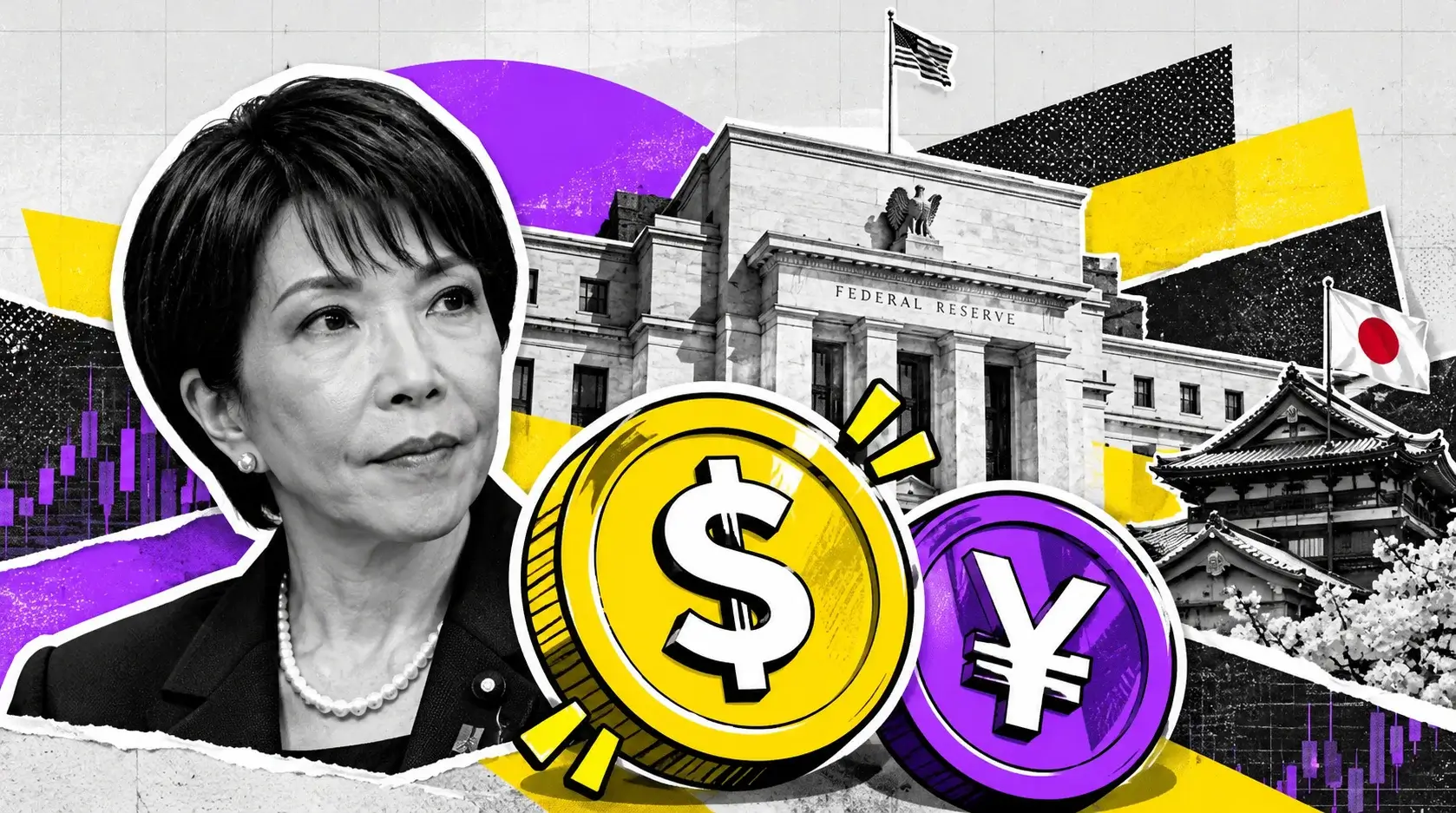
The explosive climb in USD/JPY from 139 to 160 over the past year sits on a domestic Japanese backdrop that remains highly unusual. Under Prime Minister Sanae Takaichi, Tokyo has embraced another large stimulus program and is openly planning further fiscal support, including tax cuts if she wins the February election. That adds to concerns about long-term debt sustainability and keeps downward pressure on the yen. At the same time, her tougher stance on China, including a pledge to help defend Taiwan in the event of an attack, adds geopolitical risk to a country that still relies heavily on imported energy and trade with Beijing. The combination of aggressive fiscal easing, political tension with a major trading partner, and a legacy of ultra-loose policy is what pushed the market to test 160 in the first place.
BoJ Versus Fed: Rate Differentials, Policy Shifts, And The Driver Of The Trend
Structurally, the BoJ has shifted but not enough to erase the rate gap. The bank has lifted policy rates to their highest level in roughly 30 years and is signalling a willingness to tighten further, which is a sharp break from the old yield-curve-control regime. By contrast, the Federal Reserve has just held the funds rate steady around the 3.50–3.75% range and made it clear that inflation remains elevated but the labour market has cooled enough to justify cuts later in the year. Powell’s tone keeps June as the more credible first-cut window rather than April. That means the interest-rate spread that supported USD/JPY on the way up is no longer widening and may start to narrow as US cuts appear while Japan edges rates higher from the floor. In the medium term that favours a lower USD/JPY than 160, even without intervention.
Global Risk Mood: US Equities, Tech Earnings, And Why Risk-Off Helps The Yen
Short-term flows are being driven as much by risk sentiment as by rates. IG notes that the Nasdaq 100 rose only 0.17% while the S&P 500 and Dow were flat after the Fed decision, and later in the week tech led a sharp sell-off when Microsoft dropped close to 12%. That kind of equity volatility pushes investors out of crowded growth trades and into defensive positions. Historically, the yen benefits from those de-risking waves even when Japanese fundamentals are weak. The same session saw gold up about 2.7% to fresh highs, silver pushing to around $120.47 with a target near $125, and oil at four-month peaks. That tells you capital is rotating into hedges and hard assets while the US dollar index stabilises rather than surges. In that context, a stronger yen and a USD/JPY slide from 159 toward the low-150s fits the broader macro picture.
Spot Picture: From 159.40 High To The 152.10–153.32 Support Zone
Technically, USD/JPY has undergone a clean downside reversal. The Invezz piece highlights a drop from about 159.40 to 153, roughly a 4% correction that has taken the pair below a key horizontal level at 154.3, which was the December low. DailyForex adds that the pair is now oscillating near 153.325 after the intervention shock. IG points to this week’s 152.10 low as the first important support, with 151.54, the late-October trough, as the next step down if that level breaks. FXStreet’s live coverage places intraday trading around 152.70–153.00, with the pair down roughly 0.3% on the day as US equities sold off and safe-haven demand lifted the yen. The core message from all of this: the market has shifted from relentlessly buying dips to questioning how much upside is left above 155–156.
Key Technical Markers On USD/JPY: Fibonacci Levels, Moving Averages, And Resistance Bands
The daily chart structure is now decisively less supportive for bulls. Invezz notes that USD/JPY has fallen through the 23.6% Fibonacci retracement from the 139–160 advance and is now pointing toward the 50% retracement around 150 as a logical downside magnet. The pair has also slipped under both its 50-day and 100-day exponential moving averages, removing the trend-following support that carried it through the fourth quarter. IG flags the 154.05–154.95 band as the key resistance area on the way back up; as long as spot stays below roughly 154.95, their short-term bias is bearish. On the medium-term horizon they describe the structure as toppish while USD/JPY trades under the 159.45 region that capped the last spike. DailyForex builds a February speculative range between roughly 150.01 on the downside and 156.60 on the upside, consistent with this idea of a broad but lower trading corridor versus the recent 160 extreme.
Read More
-
Yen Stalls at 160 Despite a 3% JGB and Tokyo Core CPI at 2.0% — Intervention Sits at 164, Friday's Payrolls Decide
02.09.2026 · TradingNEWS ArchiveEnergy
-
AMD ($560.68) Rebounds 10% From Its October Low on the Meta Helios Win — November 3 Report Holds the Key to $649
27.10.2026 · TradingNEWS ArchiveStocks
-
Ethereum ($2,312) Lags Bitcoin and AI Stocks as BitMine Nears Its 5% Cap — Break of $2,295 Opens $2,200
27.10.2026 · TradingNEWS ArchiveCrypto
-
Brent ($113.88) Trades a $2.35 Range as Houthi Strikes Meet Saudi-Iran Diplomacy — Break of $117 Unlocks $120
27.10.2026 · TradingNEWS ArchiveCommodities
-
Nasdaq Rips 1.3%, S&P 500 Hits 7,728, Dow Stalls as BA Drops to $171
27.10.2026 · TradingNEWS ArchiveMarkets
-
GBP/USD (1.3310) Can’t Cash In on 5.43% Gilt Yields as Budget Risk Meets a Firm Dollar — Break of 1.3274 Opens 1.3200
27.10.2026 · TradingNEWS ArchiveForex
Pattern Clash: Bearish Flag Versus Bullish Harami Around The 152–155 Band
There is a genuine technical tension in the current tape. Invezz describes USD/JPY as forming a bearish flag or pennant after breaking lower, which typically resolves with another leg down toward the next Fibonacci level near 150 if resistance holds. At the same time, FXStreet’s intraday read points out that the pair is printing back-to-back bullish harami candles on the daily chart, a pattern that often appears at the end of a downward phase and hints at a potential rebound if confirmed. For that bullish pattern to matter, USD/JPY needs to reclaim and hold above about 155.00. FXStreet lays out a roadmap where a move through 155.00 opens a retest of the January 23 high near 159.22 and, in an extreme extension, another run at the 160.00 psychological barrier, with fresh intervention risk hanging over that zone. On the downside, both FXStreet and IG converge around 152.09–152.10 as the trigger; a clean break there would negate the bullish harami idea and puts 150.00 back in play quickly.
Intervention Overhang: Why 153 Can Look Cheap And Still Be A Trap
From a pure valuation and rate-spread perspective, many macro traders will argue that USD/JPY around 153.0 looks low relative to the fiscal stance in Tokyo and the lingering rate advantage in favour of the dollar. DailyForex explicitly calls the current level “oversold” versus fundamentals, pointing to upside targets above 154.0 and even 155.0 as realistic if markets stabilise. But the events of late January changed the risk-reward profile. The joint-intervention narrative, plus Bessent’s silence on rumours of US involvement, is designed to make speculators think twice before rebuilding large long positions above 155.0. The message is clear: authorities are willing to act when USD/JPY trades in the 159–160 band and sentiment becomes one-way. That threat of another coordinated hit from 159 back toward 154 is enough to cap bullish conviction even when the carry still favours the dollar.
Fed Path, Trump Pressure On Powell, And Medium-Term Direction For USD/JPY
Medium term, the US policy path argues against a sustained return to 160. The Fed has just paused, left rates unchanged, and reinforced a data-dependent stance while acknowledging that labour-market risks have eased and inflation is still above target but improving. Market consensus now leans toward a first cut around June rather than April, but the direction of travel is lower rates, not higher. On the political side, Trump has been explicit that any Powell replacement must be comfortable with more aggressive cuts. If that scenario materialises, the dollar’s yield edge will shrink faster and USD/JPY will face structural downside pressure, especially if the BoJ continues to normalise and abandons emergency-era tools. In that environment, the 150.0 region, aligned with the 50% retracement, becomes a credible medium-term anchor rather than just a flash-crash print.
February Trading Map For USD/JPY: Volatile Range Between 150.01 And 156.60
Short-term traders should think in terms of a broad, violent range rather than a clean trend. DailyForex’s projected band of 150.01–156.60 for February reflects the reality that intervention, Fed repricing, and global risk swings can all deliver two- to three-yen moves in a matter of sessions. Above 154.05–154.95, the market will test how serious official sellers are about capping USD/JPY; any daily close near 156 with light headlines on intervention will tempt momentum accounts back into the trade. Below 152.09–152.10, the technical break argues for a fast extension lower, with 151.54 and 150.00 the obvious supports. Given how quickly the pair fell from above 159.0 to just over 152.0 in the space of days, traders should assume slippage and gapping risk on both sides of that range.
Verdict On USD/JPY: Bearish Bias, Sell Rallies Toward 155 With 150 As A Realistic Target
Putting all of the data together, the balance of evidence leans bearish on USD/JPY from here. The pair has dropped roughly 4% from this year’s high near 159–160 to the 153 area, broken below the 23.6% retracement, slipped under its 50- and 100-day EMAs, and is trading under a clearly defined 154.05–154.95 resistance cap. Official intervention has been signalled near 160 and, based on recent price behaviour, markets now respect that line. The Fed is on hold with a path skewed toward cuts in 2026, while the BoJ is finally tightening from historically low levels. Equity volatility, especially the 12% slide in Microsoft and mixed reactions in the “Magnificent Seven,” is supporting defensive flows into the yen whenever risk sentiment sours. The bullish harami pattern is the one argument for a short-term bounce, but unless USD/JPY can clear and hold above roughly 155.0, that signal is secondary to the larger bearish flag structure pointing toward 150.0. On that basis, the clean stance is bearish: treat USD/JPY as a sell on rallies into the 154–155 zone with 150 as the primary downside objective for this phase, while recognising that any new push toward 159–160 is likely to meet policy resistance again.