XRP ETF Inflows Hit a Record $1.35B and Funds Surge 7% — But JPMorgan Just Walked Away
XRPI jumped to $8.49 and leveraged XRP funds rose 13%+ on the CLARITY Act catalyst | That's TradingNEWS
Key Points
- Cumulative XRP ETF inflows hit an all-time high near $1.35B, with the fund complex up 7% and leveraged versions up 13%+.
- JPMorgan fully exited its Bitwise XRP ETF position while Marex built a new top-three $9.4M stake behind Goldman's $152M.
- XRP stays capped below $1.45–$1.50; a clean close above $1.50 opens $1.90, while daily flows have cooled to $0.
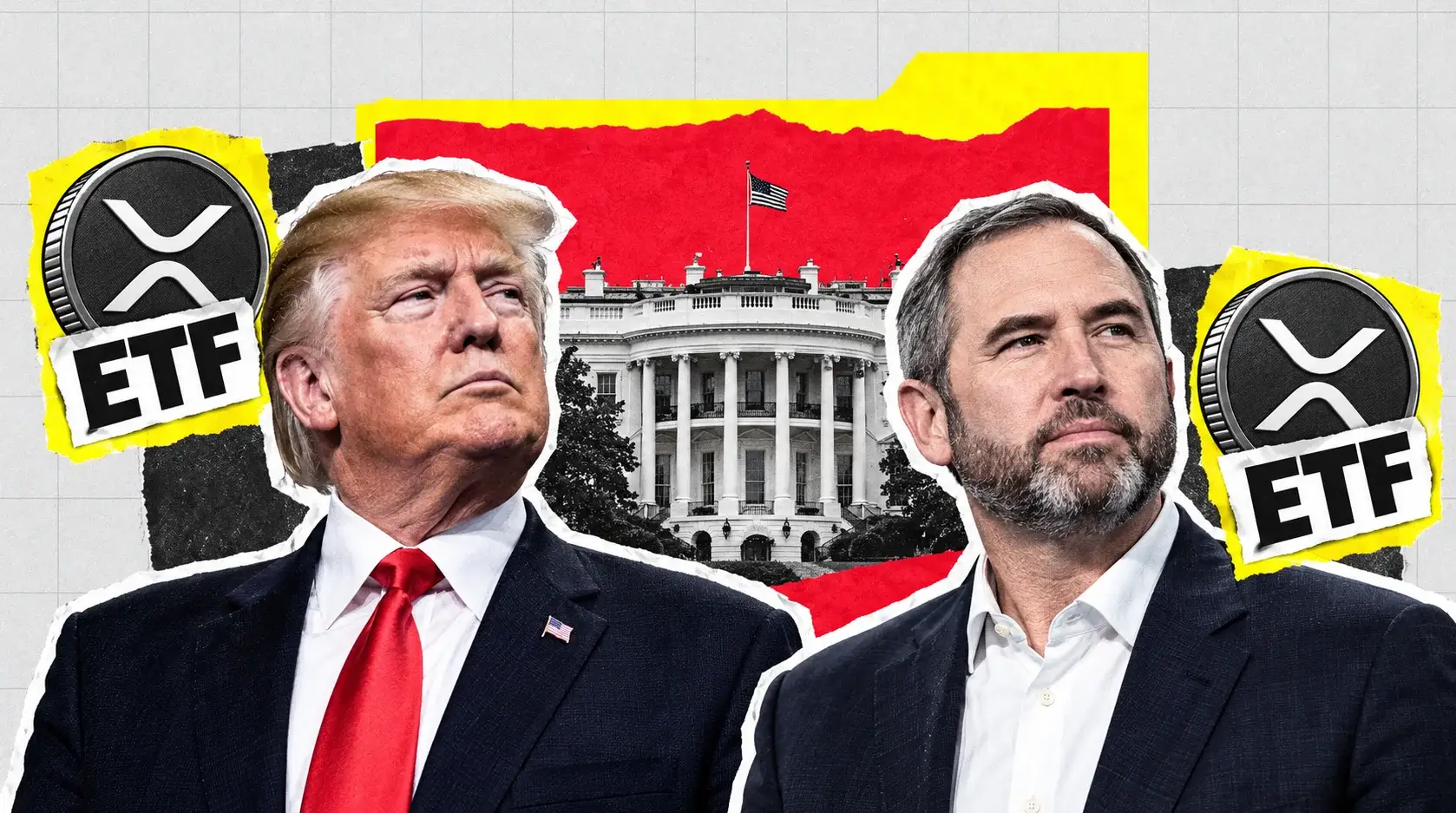
The XRP ETF story is being pulled in two directions at once, and untangling them is the whole exercise. On the cumulative scoreboard, XRP ETF inflows have climbed to an all-time high near $1.35 to $1.36 billion — a genuine institutional footprint that did not exist a year ago. Yet on the day-to-day tape, the momentum has visibly cooled, with net flows printing $0 on May 13 and total net assets across the spot complex slipping from $1.16 billion to $1.14 billion. Layer on a major bank quietly exiting its position entirely, and what looks like a triumphant headline becomes something far more nuanced. Meanwhile the funds themselves ripped higher Thursday — the spot XRPI surged 6.93% to $8.49, XRPR jumped 6.71% to $12.41, and the leveraged products like XRPT and UXRP exploded 13% to 14% — a regulatory-catalyst move that the underlying flow data does not yet corroborate. That gap is the entire analysis.
The Cumulative Inflow Picture Versus the Daily Reality
Start with the tension head-on. The $1.35 billion all-time-high figure for cumulative XRP ETF inflows is real and worth respecting — it represents capital that committed to a regulated XRP wrapper and has, in aggregate, stayed. But the recent cadence tells a cooling story. Daily net inflows registered $0 on May 13, immediately after a modest $5.31 million on May 12. Back up two more sessions and the contrast sharpens: U.S. spot XRP ETFs pulled in $25.8 million in combined net inflows on May 11 — the strongest single day since January 5 — led by Franklin Templeton's XRPZ at $13.6 million, with Bitwise and Grayscale filling in behind it. So the trajectory inside a single week ran from a multi-month high straight down to zero. That is not a collapse, but it is a deceleration, and the slide in total net assets from $1.16 billion to $1.14 billion confirms the complex lost a little ground rather than holding it. Inflows that go quiet at exactly the moment price approaches resistance are a caution flag, not a green light.
JPMorgan Closed the Door on XRP Entirely
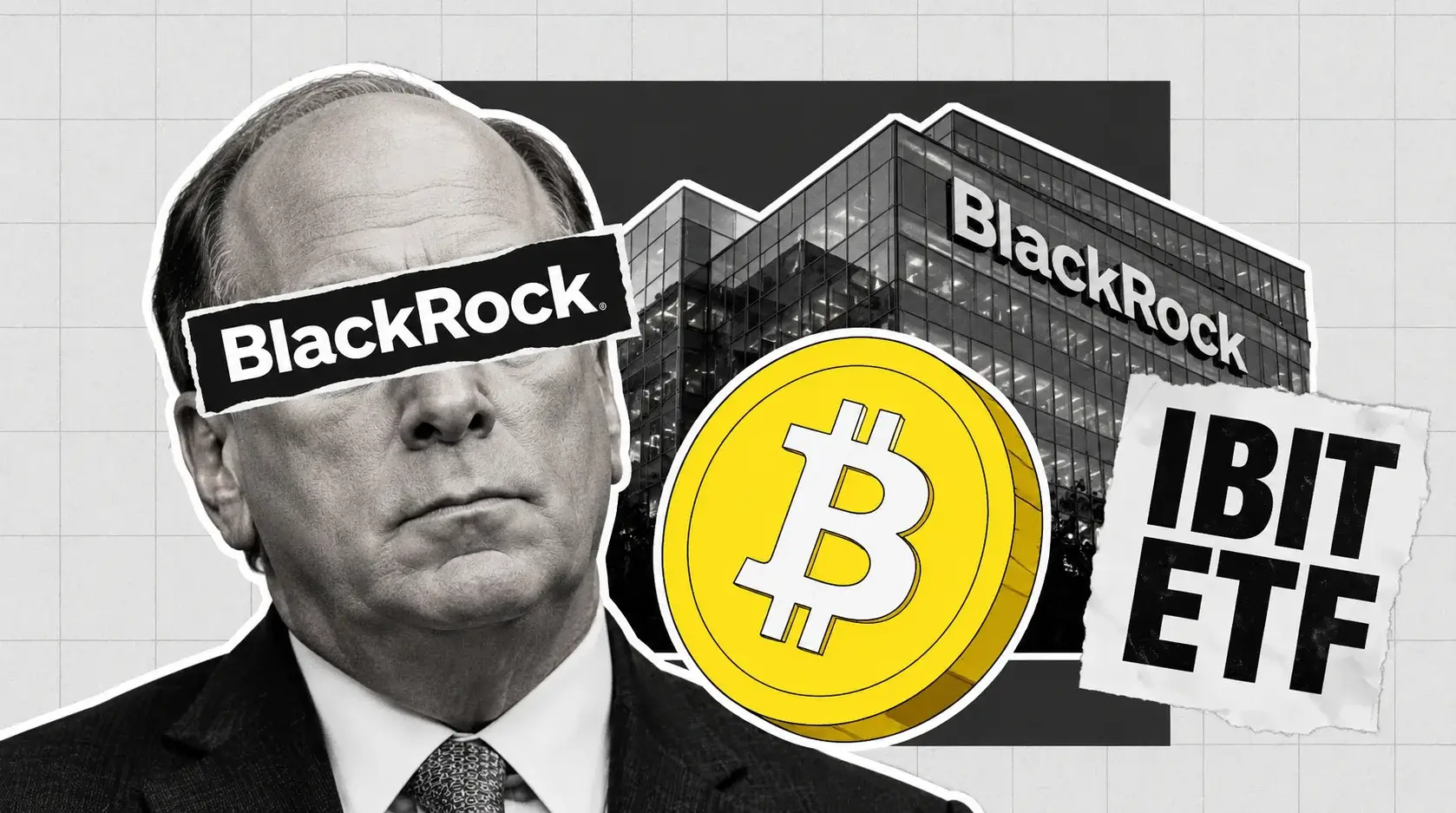
The most pointed institutional signal of the week came from a 13F filing that should not be glossed over. JPMorgan fully liquidated its Bitwise XRP ETF position, taking it from 3,870 shares down to zero. This was not a trim — it was a complete exit. And the contrast within the same filing makes it sharper: in the very quarter JPMorgan abandoned XRP, it increased its stake in BlackRock's IBIT by 174%, lifting the position from roughly 3 million to 8.3 million shares and adding about $162 million in reported value — and it did so despite Bitcoin falling more than 22% during Q1. The bank also boosted FBTC by roughly 450%, BITB by nearly 900% (from 4,872 to 48,258 shares), and BITO by more than 3,000%, while initiating a fresh position in the Bitwise Solana Staking ETF (BSOL) worth around $523,000 and lifting its iShares Ethereum Trust (ETHA) holding by 36%. The message embedded in that allocation pattern is unambiguous: when a major institution was actively rotating into Bitcoin, Ethereum and Solana exposure, it chose to rotate entirely out of XRP. For a token whose investment thesis leans heavily on institutional adoption, one of the most-watched institutions just voted against the XRP ETF product with its feet.
But Other Institutions Are Still Buying — and That Complicates the Bear Case
The counterweight is that JPMorgan's exit is not the consensus. Marex Group, a Nasdaq-listed diversified financial services firm, just disclosed $9.4 million in total XRP ETF holdings and vaulted into position as the third-largest institutional XRP ETF holder. The breakdown: 356,865 shares of the Canary XRP ETF (XRPC) worth $5.10 million — a 51% increase from the 173,298 shares held the prior quarter — plus 286,021 newly purchased shares of the Bitwise XRP ETF worth roughly $4.30 million. Marex now sits behind only Goldman Sachs, with $152.16 million across multiple spot XRP ETFs, and Millennium Management at over $27 million. So the institutional picture is genuinely split — one large bank exited completely while a financial services firm aggressively built a new top-three stake, and the category's two biggest holders remain deeply committed. That divergence is itself the honest read: institutional conviction in the XRP ETF is real but contested, not unanimous.
Leverage Is Returning to the Futures Market
Beneath the spot flows, the derivatives positioning has been rebuilding. XRP open interest on Binance climbed to roughly $475.4 million, sitting above its 30-day average near $440.7 million, with the Z-Score pushing up to about 1.65 — a reading that signals speculative leverage moving back into the futures market at an above-normal pace. That cuts both ways for XRP. Returning leverage can fuel a sharper move if price breaks resistance with conviction, amplifying a breakout. But elevated open interest into an unresolved technical zone is also the raw material for a liquidation cascade if the move fails — the same dynamic that has whipsawed every leveraged crypto setup this cycle. A Z-Score of 1.65 is not extreme, but it is a market leaning, and a leaning market into resistance is a market that can snap.
The Wallet Data Says Accumulation Is Quietly Compounding
One of the more durable bullish signals sits on-chain rather than in the flow tables. Santiment data shows XRP Ledger wallets holding at least 10,000 XRP reached a record 332,230 — a trend that has been building steadily since June 2024, even through a 2026 in which XRP spent most of its time well below earlier highs. Record mid-tier wallet counts are the fingerprint of patient accumulation: holders adding through weakness rather than chasing strength. Santiment did flag a wallet drop back in February but explicitly declined to tie it to any XRP-specific event, instead linking the timing to the broader market crash and liquidations. Net of that noise, the structural wallet trend points one direction — more addresses building meaningful XRP positions, not fewer.
The Price Is Pinned Beneath the Levels That Actually Matter
For all the flow and wallet narrative, XRP itself has not confirmed anything on the chart. The token traded near $1.43 to $1.45 on May 14, having moved in a tight $1.41 to $1.47 band on roughly $2.0 to $2.2 billion of daily volume, with a market capitalization around $89 billion. That leaves it parked directly under the $1.45 and $1.50 resistance zone that traders have been watching for weeks. The setup is specific: a confirmed breakout above $1.45 would validate a triangle structure and open a path toward $1.90, with $2.00 as the next key level, while a broader consensus is treating $1.50 as the line that needs a clean close above it for confirmation. Until that happens, this is a coiled chart, not a breakout — and the XRP ETF products are simply a leveraged read on whether XRP clears that ceiling. It is worth noting the spot XRPI fund trades at $8.49 against a 52-week range of $6.50 to $23.53, which means even after Thursday's 7% pop, the product sits closer to the floor of its yearly range than the middle. The regulatory-driven rally has lifted price; it has not yet repaired the longer-term damage.
The Ecosystem Catalysts Are Building — and They Are Not Trivial
The fundamental case for XRP is not standing still while the chart consolidates. The XRP Ledger has native lending pools and programmable escrow tools planned for on-chain credit markets, which would extend the network well beyond simple payments. More consequentially, Ripple is running a pilot with JPMorgan, Mastercard, and Ondo Finance for a tokenized Treasury settlement workflow built on XRPL infrastructure — a notable detail given that the same JPMorgan just exited the XRP ETF, underscoring the distinction between betting on the token's price and using the rail's technology. CME Group is also adding XRP to its forthcoming Nasdaq CME Crypto Index futures, slated for June 8 alongside Bitcoin, Ethereum and Solana, which broadens XRP's institutional derivatives footprint. And Brad Garlinghouse continues to frame XRP on utility terms — settlement speeds of 3 to 5 seconds, low costs, and more than 4 billion completed transactions. The tokenization runway is the long-term prize: McKinsey estimates the tradeable tokenized asset market could expand to $2 trillion by 2030 from $31.7 billion today, and XRP's network already holds about $428.1 million in tradeable tokenized assets, making it the 11th-largest network by that measure. A foot in the door of a market projected to grow roughly 60-fold is a real, if unproven, optionality.
The Honest Counterpoint: Utilization Has Never Reliably Driven Price
The bear case deserves equal airtime, because it is grounded in history rather than sentiment. XRP's price is up only about 11% over the past five years — a stretch during which Ripple added capabilities, onboarded capital, and expanded the network's reach. That is the uncomfortable core of the skeptical view: the link between XRPL utilization and XRP token appreciation has historically been weak. Because on-chain fees are minuscule, even flawless execution by Ripple — closing institutional deals, winning in tokenization, fending off stablecoin and infrastructure rivals — does not mechanically translate into token price gains the way a halving-driven supply squeeze does for Bitcoin. Buying an XRP ETF is, in effect, a bet on a coin and on a company's ability to keep executing, which is a fundamentally different and more conditional proposition than owning a fixed-supply bearer asset. The Bitwise XRP ETF itself, launched in November 2025 at a 0.34% expense ratio, has gathered roughly $354 million in assets — broadly successful, but a fraction of the scale of the Bitcoin ETF complex, whose cumulative inflows have topped $58 billion.
Read More
-
Yen Stalls at 160 Despite a 3% JGB and Tokyo Core CPI at 2.0% — Intervention Sits at 164, Friday's Payrolls Decide
02.09.2026 · TradingNEWS ArchiveEnergy
-
QQQ ETF ($739) Fades From an Early Tech Rally as a 77.9 ISM Prices Index Meets Micron's $61.5B Guide — $760 Record Test Ahead
01.10.2026 · TradingNEWS ArchiveStocks
-
XRPR and XRPI Follow XRP's $1.49 Test as Spot Funds Hold 1.16B XRP and a 1 Billion Token Escrow Release Lands — $1.70 in Play
01.10.2026 · TradingNEWS ArchiveCrypto
-
November NG Slips Below $3 as Decade-High Storage Meets Capped LNG Exports — $2.75 in Sight
01.10.2026 · TradingNEWS ArchiveCommodities
-
Dollar-Yen at 158 Presses Toward 160 as a 363 bp Carry Gap Meets Katayama-Bessent Intervention Risk — 159 in Sight
01.10.2026 · TradingNEWS ArchiveForex
The Macro Backdrop Is Not Helping Risk Assets
The environment the XRP ETF complex is operating in is genuinely unfriendly. U.S. CPI rose 3.8% year over year in April — the fastest pace since May 2023 — which hardens the case for the Federal Reserve keeping policy restrictive for longer. Kevin Warsh was just confirmed as Fed chair in a narrow 54-45 vote, and while he is notably the first Fed chair to publicly hold crypto, the inflation data constrains how dovish anyone in that seat can afford to be. High inflation, firm yields and tighter liquidity are a headwind for every speculative asset, and XRP — a high-beta token still searching for a price-utilization link — sits squarely in the crosshairs of that backdrop. Thursday's 7% rally across the XRP ETF complex was a regulatory-catalyst event, almost certainly tied to the CLARITY Act's progress through the Senate Banking Committee; it was not a macro-driven move, and catalyst rallies that run ahead of both the flow data and the chart are the ones most prone to fading.
The Verdict on the XRP ETF Complex
Weigh both sides honestly. The constructive ledger: cumulative XRP ETF inflows at an all-time high near $1.35 billion, the entire fund complex up 7% (leveraged versions up 13%+) on the regulatory catalyst, Goldman Sachs holding $152 million and Marex building a new top-three $9.4 million stake, a record 332,230 wallets holding 10,000+ XRP, CME index inclusion ahead on June 8, and a tokenization runway McKinsey sizes at $2 trillion by 2030. The cautionary ledger: daily flows cooled to $0 on May 13, total net assets slipped to $1.14 billion, JPMorgan fully exited its position while piling into Bitcoin and Solana, XRP remains capped beneath $1.45–$1.50, the token is up just 11% in five years with a historically weak utilization-to-price link, XRPI trades near the bottom of a $6.50–$23.53 yearly range, and CPI at 3.8% keeps the macro tape hostile.
The defensible call is Hold, with the upside gated on a confirmed breakout — this becomes a Buy on a clean daily close above $1.50, not before. The flow data and the institutional split say accumulation is real but contested; the chart says nothing has been resolved yet. Buying the XRP ETF complex into the $1.45–$1.50 ceiling, with leverage rebuilding via a 1.65 Z-Score and daily inflows already cooling to zero, is paying up for a breakout that has not happened. The high-probability approach is to let XRP prove itself: a decisive close above $1.50 validates the triangle, opens $1.90 and then $2.00, and turns the cooling-flow problem into a momentum story — at which point the regulatory tailwind, the CME inclusion, and the tokenization optionality all start working together. The thesis turns clearly bearish on a break below the $1.41 range floor, which would expose the lower end of the yearly range and confirm that JPMorgan's exit was the smarter read. Until XRP clears $1.50, the XRP ETF is a catalyst trade running ahead of its own fundamentals — worth holding for the optionality, not worth chasing at resistance.