XRP Price Forecast: XRP-USD Holds $1.46 as the CLARITY Act Markup and Record Whale Accumulation Stack Up
XRP defies a sub-$80K Bitcoin and a $635M ETF outflow as committee passage looks locked
XRP is doing something genuinely notable on Thursday, and it deserves to be the lead observation: it is holding its ground while almost everything around it sells off hard. The token is changing hands somewhere in the $1.42 to $1.49 corridor depending on which feed is consulted, with one read placing it at $1.45 and up roughly 1.2% on the day, another marking it near $1.4863 and up 0.95%, and a third catching it at $1.489 and up a sharper 4.19%. That relative strength is the entire story of the session, and it is not a small thing. Bitcoin slipped below the psychologically critical $80,000 mark on Wednesday and U.S. spot Bitcoin ETFs hemorrhaged $635 million in a single day — the largest outflow recorded since January — while Ether slid toward the $2,255 area, with both major assets pressured by hotter-than-expected inflation data that pushed Federal Reserve rate-cut expectations all the way out into 2027. Set against that genuinely hostile backdrop, XRP simply refusing to break down is a meaningful tell about where conviction sits. It is the single asset most directly tied to Thursday's CLARITY Act markup in the Senate Banking Committee, and it is trading like a market that is deliberately positioning ahead of a known catalyst rather than one that is fleeing risk indiscriminately. The 52-week range underneath the token tells you exactly how much territory this asset has historically been capable of covering — from a low of $0.3865 to a high of $3.6556 — and the current consolidation near $1.46 sits in the lower-middle of that band, with the cycle peak of $3.36 from June 2025 having since retraced to $1.11 before the climb back to current levels.
The CLARITY Act Markup That Is Functioning as XRP's Primary Catalyst
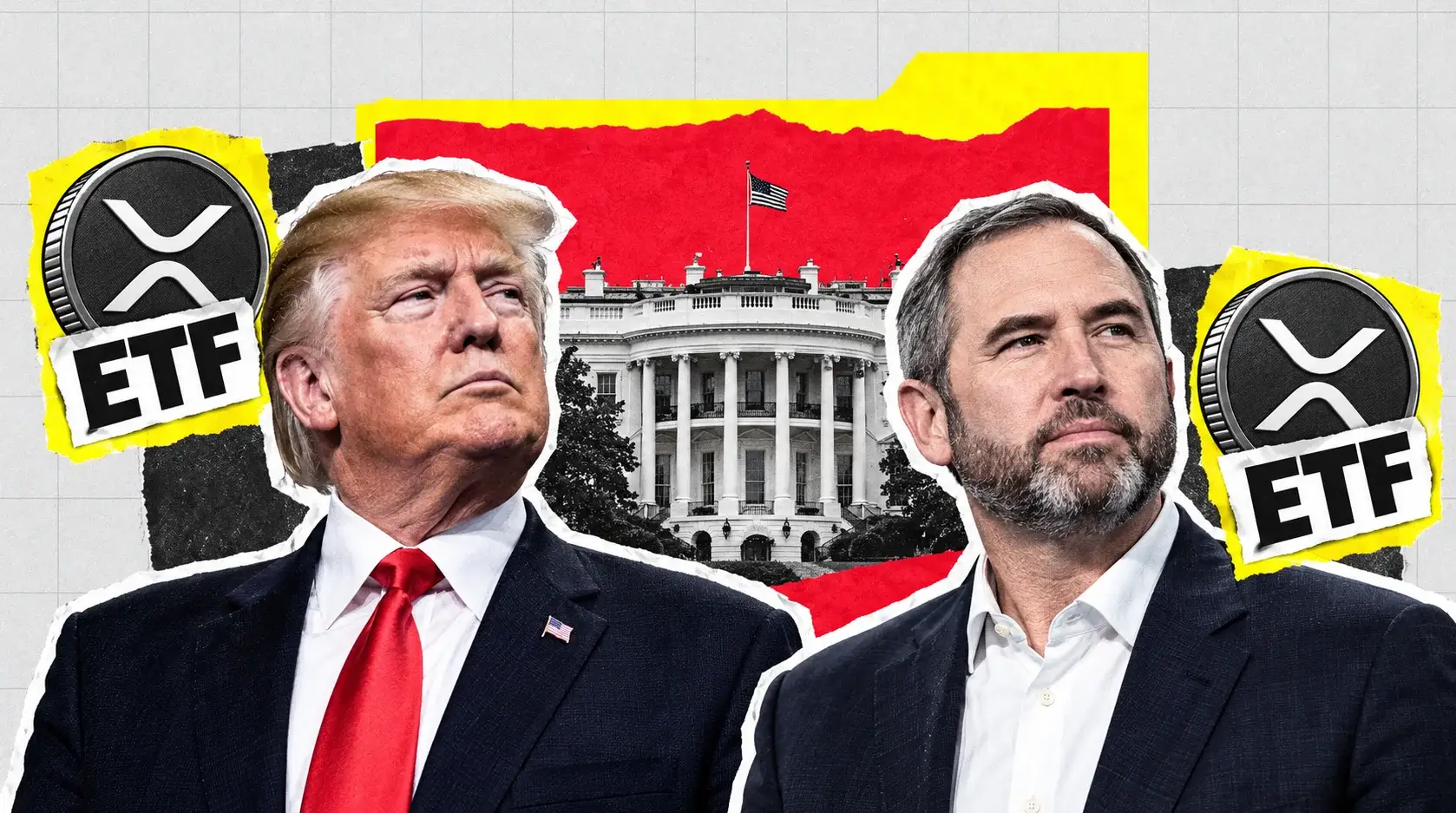
The reason XRP-USD is decoupling from the broader crypto weakness traces directly to a single legislative event. The Senate Banking Committee convened at 10:30 AM EST on Thursday to mark up the CLARITY Act — the bill that would codify XRP's commodity classification into federal law, permanently removing the regulatory ambiguity that has shadowed the token for years. The committee math has effectively been settled in advance. Senator John Kennedy of Louisiana, who had been the lone Republican holdout for months, committed his support on Wednesday after cutting a deal with Chairman Tim Scott to bundle two of his own amendments into the package — a fiduciary duty provision requiring crypto industry participants to act in clients' best interest, and Section 904, the Build Now Act housing bill he co-sponsored with Senator Elizabeth Warren. That deal locked in all 13 Republican votes, and the market reaction was immediate: Polymarket odds for 2026 CLARITY passage jumped from 62% to 73% on the Kennedy news. But locking committee passage is emphatically not the same as locking final passage. The bill still requires 60 votes on the full Senate floor to clear the filibuster, which means at least seven Democrats must cross over — and the Build Now Act bundle is a calculated piece of engineering on exactly that front, since Warren's name on the housing component gives Democrats bipartisan cover that makes a "no" vote also a vote against housing money for their states. A clean, unanimous Republican vote is what XRP needs to build momentum heading into the June floor fight, and it is the difference between the token pushing through the $1.45 and $1.50 resistance or stalling beneath it.
The Stablecoin Yield Fight That Could Break the Bipartisan Deal
The single most dangerous variable inside the markup is the stablecoin yield question — and it matters to XRP because it is the precise issue that killed the January markup attempt and stalled the entire bill for four months. Back then, Coinbase CEO Brian Armstrong pulled support hours before the original session with $1.35 billion in annual stablecoin revenue on the line. The deadlock was eventually broken on May 1 when Senators Thom Tillis and Angela Alsobrooks engineered a compromise that bans passive yield but permits activity-based rewards tied to actual transactions, and Armstrong reversed course publicly the same day with a three-word post: "Mark it up." But the compromise is now under siege. On May 9, five major banking trade groups led by the American Bankers Association formally rejected it, with the ABA alone reportedly contacting Senate offices more than 8,000 times since that Friday, pushing for amendments to gut the deal. Senator Jack Reed filed 18 amendments by himself, including one that rewrites the stablecoin rewards language to mirror traditional bank interest rules, and more than 130 amendments are queued in total. The read for XRP is mechanical and sharp: if Reed's stablecoin amendment fails narrowly, at something like 12-11 or 13-10, the bipartisan compromise holds and the token's footing stays intact. But if it fails by a wider margin like 14-9, or worse, actually passes, the bipartisan deal breaks down, Coinbase could pull support a second time the way it did in January, and XRP could head straight back below $1.40 the same day, with the $1.30 support range coming back into live play.
Whether Any Democrats Cross the Aisle — and the Ethics Standoff Blocking Them
Committee passage clears the first gate, but the full Senate needs 60 votes, and that means the XRP-USD outlook over the medium term hinges on whether any Democrats are willing to cross over. A strictly party-line 13-11 vote on Thursday starts the June floor fight from zero, whereas two or three Democrats backing the bill in committee would put it on genuine bipartisan footing. For comparison, last year's GENIUS Act stablecoin bill cleared the Senate 68-30 with 18 Democrats crossing — that is the kind of margin CLARITY advocates are hoping to replicate. Galaxy Digital's analysis flagged seven Banking Committee Democrats as potential crossover votes: Ruben Gallego of Arizona, Angela Alsobrooks of Maryland, Mark Warner of Virginia, Catherine Cortez Masto of Nevada, Andy Kim of New Jersey, Raphael Warnock of Georgia, and Lisa Blunt Rochester of Delaware, with Gallego seen as the most likely given his moderate platform and crypto industry support — though he has not committed publicly. The obstacle keeping all of them in the "no" column is the ethics standoff. The 309-page bill contains zero conflict-of-interest provisions to stop government officials from profiting off crypto, and a Bloomberg estimate from January put the Trump family's crypto-related gains since inauguration at $1.4 billion. Senator Kirsten Gillibrand has drawn a hard line, and Chairman Scott has refused to add ethics provisions on jurisdictional grounds. Late-night talks produced "meaningful progress" but no final deal, and the Capitol Hill expectation as of Thursday morning was that the vote would be partisan — which would cap XRP's rally above $1.45 and make the June math considerably steeper.
The ETF Flow Story: Institutional Demand Is Quietly Rebuilding
Underneath the legislative drama, the XRP institutional flow picture is telling a clean recovery story that the price action has not yet fully reflected. U.S.-listed spot XRP ETFs pulled in $25.8 million on Monday — the largest single-day haul since January — and the products have now attracted roughly $1.35 billion in total since launching in November. The weekly cadence reinforces the trend: after a small $35,210 outflow in the first week of May, SoSoValue data shows $34.21 million of net inflows for the week ending May 8, followed by $31.11 million for the current week. Two consecutive weeks of inflows above $30 million, landing precisely as XRP consolidates, suggests institutional positioning sees the same setup the chart does. The broader digital-asset fund picture supports it — CoinShares reported $857.9 million in inflows across digital-asset investment products last week, a sixth consecutive week of inflows, with XRP contributing $39.6 million and the firm's research chief describing the Solana and XRP inflows as "notable accelerations." There is a caveat worth stating plainly: ETF inflows alone may end up functioning as mild support rather than the driving force bulls want, particularly with the Fed's stance staying tight. But Standard Chartered's projection frames the upside — a move past $2 would put $4 billion to $8 billion in ETF inflows in play, roughly three to six times what XRP ETFs have absorbed since launch.
Whale Accumulation, Smart Money, and Collapsing Exchange Selling Pressure
The on-chain data stacks three distinct signals behind XRP-USD, and together they sketch the demand backdrop a breakout needs. First, whale accumulation has reached a record peak — Santiment data shows XRP Ledger addresses holding a minimum of 10,000 XRP have climbed to an unprecedented 332,230 wallets, a metric on a consistent upward path since June 2024 and one that briefly contracted by more than 4,500 wallets during the early-February market downturn before rebounding past prior records. Second, the Smart Money Index, which tracks how informed traders position relative to retail flow, has rebounded from a local bottom near 2.40 and now reads 2.42 against its signal line — a setup that mirrors the move on April 19, when smart money positioning began rising before price followed. Third, and most concrete, exchange-bound selling pressure has collapsed: Glassnode Exchange Net Position Change data shows inflows dropping from 38,088,506 XRP on May 12 to 14,067,566 XRP on May 13, a 63% reduction in exchange-bound supply inside a single day. The derivatives picture rounds it out — open interest climbed 4.19% over 24 hours to roughly $2.90 billion while funding rates hold steady at just 0.0083%, and the long/short ratio among top traders sits at 3.0016, meaning institutional accounts are running 75% long exposure against retail at 72.9% long. That is controlled accumulation, not speculative heat.
Read More
-
Yen Stalls at 160 Despite a 3% JGB and Tokyo Core CPI at 2.0% — Intervention Sits at 164, Friday's Payrolls Decide
02.09.2026 · TradingNEWS ArchiveEnergy
-
QQQ ETF ($739) Fades From an Early Tech Rally as a 77.9 ISM Prices Index Meets Micron's $61.5B Guide — $760 Record Test Ahead
01.10.2026 · TradingNEWS ArchiveStocks
-
XRPR and XRPI Follow XRP's $1.49 Test as Spot Funds Hold 1.16B XRP and a 1 Billion Token Escrow Release Lands — $1.70 in Play
01.10.2026 · TradingNEWS ArchiveCrypto
-
November NG Slips Below $3 as Decade-High Storage Meets Capped LNG Exports — $2.75 in Sight
01.10.2026 · TradingNEWS ArchiveCommodities
-
Dollar-Yen at 158 Presses Toward 160 as a 363 bp Carry Gap Meets Katayama-Bessent Intervention Risk — 159 in Sight
01.10.2026 · TradingNEWS ArchiveForex
The Technical Map: A Cup and Handle With a 12% Breakout Target
From a chart-structure standpoint, XRP has built a cup and handle pattern between April 17 and May 10 — the cup carved out over three weeks, with a falling channel acting as the handle since May 10. The cup measures roughly 12% from rim to bottom, projecting a matching upside if the neckline breaks. The token trades around $1.42 to $1.46, sitting above both its 20-day SMA near $1.41 and its 50-day SMA near $1.39, a structure that signals accumulation rather than distribution. The level map is precise: a clean daily close above $1.44 signals the first handle breakout by taking out the falling channel resistance, while a convincing daily close above the $1.50 to $1.51 neckline cluster confirms the cup breakout and opens the path toward the 12% projected target at $1.68, which aligns with the 1.618 Fibonacci extension at $1.67. Intermediate resistance stacks at $1.47 and $1.49. Traders are also watching for a pending bullish crossover where the 50-day SMA rises above the 100-day SMA, with the RSI registering around 58 — buying pressure exceeding selling pressure without being overheated. The caveat is real and worth stating: previous XRP cup formations have failed to deliver, a daily close below $1.41 weakens the structure and exposes $1.38, and a daily close beneath $1.34 fully invalidates the pattern and removes the breakout thesis entirely. At the present $1.46 valuation, XRP trades roughly 8.15% above that $1.35 support threshold.
The Macro Headwind That Refuses to Go Away
Every bullish signal on XRP-USD has to be weighed against a macro backdrop that is actively working against it. Hotter-than-expected U.S. inflation forced Fed futures traders to scrap expectations for any rate cuts this year, putting long-dated Treasury yields on the defensive — and crypto, which offers no yield of its own, faces a structural headwind in that environment because capital can simply sit in cash or bonds instead. The prediction markets capture how firmly that door has shut: a DeFi Rate roundup of Kalshi, Polymarket, and Gemini data put the probability of the Fed staying put at the June meeting at roughly 97.5%, with Polymarket's separate 2026 contract pricing the odds of no rate cuts at all this year at 69%. UBS Global Wealth Management has pushed its forecast for the first Fed cut all the way out to December, abandoning its earlier September call. Minneapolis Fed President Neel Kashkari offered no comfort, describing the labor market as "a bit better" but saying inflation had deteriorated and that the Fed is "dead serious" about getting it back down. The legal backdrop, at least, is cleaner than it has been — the SEC wrapped its case against Ripple in August 2025 with a $125 million penalty and restrictions on certain institutional sales, and Judge Analisa Torres had previously established that XRP traded on public exchanges does not fall under securities law. That removed compliance ceiling is precisely what gives the CLARITY Act its potency, but it cannot fully offset a Fed that is not playing along.
Where the Weight of the Evidence Ultimately Points
Pulling every thread into a single consolidated view, XRP (XRP-USD) is a token caught between a genuinely strong, present-tense demand setup and a macro environment plus a legislative process that both still carry real downside risk — and the honest characterization is a Hold with a constructive bias, leaning toward Buy on a confirmed breakout. The bullish case is concrete and stacking: record whale accumulation at 332,230 large wallets, two straight weeks of $30 million-plus ETF inflows, a 63% single-day collapse in exchange selling pressure, smart money rebuilding, institutional accounts running 75% long, a cup and handle projecting $1.68, and a CLARITY Act markup with committee passage effectively locked. The bearish case is equally real and cannot be dismissed: a Fed that has priced out 2026 rate cuts entirely, a Bitcoin that just lost $80,000 and could drag the whole complex lower, a stablecoin amendment fight that could shatter the bipartisan deal and send XRP back below $1.40, an ethics standoff keeping Democrats in the "no" column, and a history of failed cup formations on this exact token. The disciplined posture is to let the levels and the legislative signals do the deciding. The $1.50 to $1.51 neckline is the line that separates a 12% run toward $1.68 — and beyond that the $1.91 consensus and Standard Chartered's $2.70 to $4-plus scenarios — from a slow grind back toward the $1.34 invalidation zone. The cleanest bullish trigger is a daily close above $1.51 paired with a clean unanimous Republican committee vote and at least one or two Democrats crossing; the clearest bearish trigger is a banking-aligned amendment slipping through or a daily close below $1.41. Until Thursday's markup resolves into something concrete, XRP holding $1.45 against a bleeding crypto tape is the most bullish thing on the screen — but it is conviction waiting for confirmation, not confirmation itself.