XRP Price Forecast - XRP-USD at $1.37 With $1.50 Target as Rakuten Onboards 44M Users
XRP (XRP-USD) trades at $1.37 after rejection from $1.50, but Rakuten's $23B loyalty integration | That's TradingNEWS
Key Points
- Ripple (XRP-USD) trades at $1.37, off 2.30% on the day, with session range between $1.3591 and $1.40 highs.
- XRP sits 62% below the July all-time high of $3.65 and roughly 10% beneath the April peak at $1.51 zone.
- Rakuten integrated XRP into Wallet ecosystem; 44M accounts and 3T loyalty points worth $23B can convert into XRP.
Ripple's XRP (XRP-USD) is closing out April pinned to the $1.37 zone after a brutal rejection at the upper boundary of its multi-week trading channel, but underneath the daily candle the structural setup is genuinely getting more bullish rather than less. The token traded as low as $1.3591 during the session and as high as $1.40, currently sitting at $1.3669 to $1.3677 depending on the exchange feed, off -2.30% for the day on TradersUnion data while fractionally green at +0.2% versus the prior 24-hour close on CoinGecko. The market cap stands near $84.42 billion with roughly 62 billion tokens in circulation, and the price is now nearly 10% below the April high of $1.51 and still a staggering 62% beneath the all-time peak of $3.65 printed last July. Despite the underwhelming spot action, the fundamental developments stacking up underneath the price are genuinely impressive — Rakuten just integrated XRP into its 44 million-account ecosystem with $23 billion in convertible loyalty points, NYSE Arca filed a proposed rule change on April 27 placing XRP alongside Bitcoin, Ethereum, and Solana for commodity-based trust shares under Rule 8.201-E, whale wallets accumulated 1.15 billion XRP over an 11-day stretch, and the 30-day average funding rate on Binance hit 0.0002 — the highest level since early February after months of negative readings. The macro backdrop remains hostile with the Fed sidelined and oil shocks compressing risk appetite, but the structural foundation underneath XRP is being built brick by brick by exactly the kind of institutional and retail catalysts that historically precede meaningful upside resolution. This is a market caught in a transition phase between speculative trading regimes, and the patient capital that has been accumulating through the spring is sitting on exactly the kind of asymmetric setup that XRP delivers when it finally breaks out.
The Two Forces Capping XRP — Macro Noise and Flow Quality
The simplest explanation for why XRP (XRP-USD) has been unable to break out of its current range is structural rather than fundamental. According to Louis De Backer, crypto trading analyst at Marex, the token is being held back by two forces that have capped most large-cap altcoins in the current regime — macro noise and flow quality. With Brent crude (BZ=F) trading above $114 per barrel, the Federal Reserve sidelined with the most divided FOMC vote since 1992 (an 8-4 split with rate-cut odds collapsing from 18.4% to just 3.3%), and the US-Iran war stretching into Day 63 with the Strait of Hormuz still effectively closed, risk budgets across institutional desks are genuinely tight. In that environment, capital defaults to Bitcoin (BTC-USD) first, then Ethereum (ETH-USD), and altcoins like XRP behave as beta — moving in sympathy with the broader complex but struggling to attract the standalone demand needed for sustained breakouts. The second constraint is positioning versus spot depth — when liquidity is thin and derivatives flows dominate, the moves in XRP can be sharp but they tend to fade because the spot market lacks the conviction buying necessary to convert pushes into trends. For the bull case to validate, XRP needs to break above the $1.35 to $1.45 trading range and hold the new higher level for multiple sessions rather than spike and reverse. The structural argument is that XRP is not broken — it is simply stuck in a market that is trading macro first and rewarding the deepest, most liquid exposures first. When the macro pressure eases and spot flows show up, XRP has the historical track record of moving extremely quickly to the upside.
The Rakuten Integration Is the Sleeper Catalyst Nobody Is Pricing
The piece of the XRP story that is being dramatically underappreciated by the typical chart-watching crowd is the Rakuten integration that surfaced over the past week. Santiment data shows XRP's social sentiment has reached its second-highest level in two years, and the firm explicitly linked the surge to Rakuten's rollout of XRP into the Rakuten Wallet ecosystem. The mechanics are genuinely powerful — users of Rakuten Wallet can now convert loyalty points into XRP and spend the asset across more than 5 million merchant locations through QR-based payments. The reach is massive — Rakuten Pay's user base sits at approximately 44 million accounts, placing XRP in front of one of Japan's largest consumer networks. The convertibility math is even more compelling: more than 3 trillion loyalty points, valued at roughly $23 billion, can now flow into XRP through conversions within the app. RippleX described the rollout as one of the largest retail-facing deployments of XRP to date, and the implications for sustained demand pressure are genuinely meaningful. Loyalty point conversion is a recurring, low-friction onramp that creates structural buy-side flow rather than one-time speculative spikes. Santiment's own analysis flagged that strong positive sentiment after adoption news does not usually translate to instant price breakouts — the impact tends to materialize once early excitement settles and structural flow takes over. That setup is exactly what is currently in play.
NYSE Arca Filing Places XRP Inside the ETF Eligibility Framework
The other major institutional catalyst that surfaced this week was the NYSE Arca filing on April 27, which proposed including XRP among eligible assets for commodity-based trust shares under Rule 8.201-E, alongside Bitcoin, Ethereum, and Solana. The amendment was further refined on April 29 with NYSE Arca submitting language to explicitly include XRP among digital assets eligible for commodity-based trust products under newly defined portfolio concentration thresholds, prompting a formal SEC public review process. The framework requires at least 85% of a trust's holdings to meet qualifying criteria, and the SEC confirmed that its revised 85% rule leaves existing spot XRP ETFs unaffected — those products continue trading without interruption. The 3x leveraged XRP ETF products from GraniteShares have been postponed pending further SEC approval, but the broader directional read is unmistakably constructive. Spot XRP ETFs that launched in November 2025 have continued to attract net positive inflows, with SoSoValue data showing nearly $90 million in inflows over the past three weeks and zero negative days recorded since April 10. The combination of regulatory framework refinement, institutional product expansion, and sustained ETF demand is the structural foundation underneath the next leg of the XRP thesis. This is the kind of regulatory progress that translates into multi-quarter capital allocation decisions rather than single-day price spikes, and the patient capital that recognizes this is being mechanically rewarded as the timeline plays out.
Ripple's $50 Billion Valuation and the Strategic Wins Stack
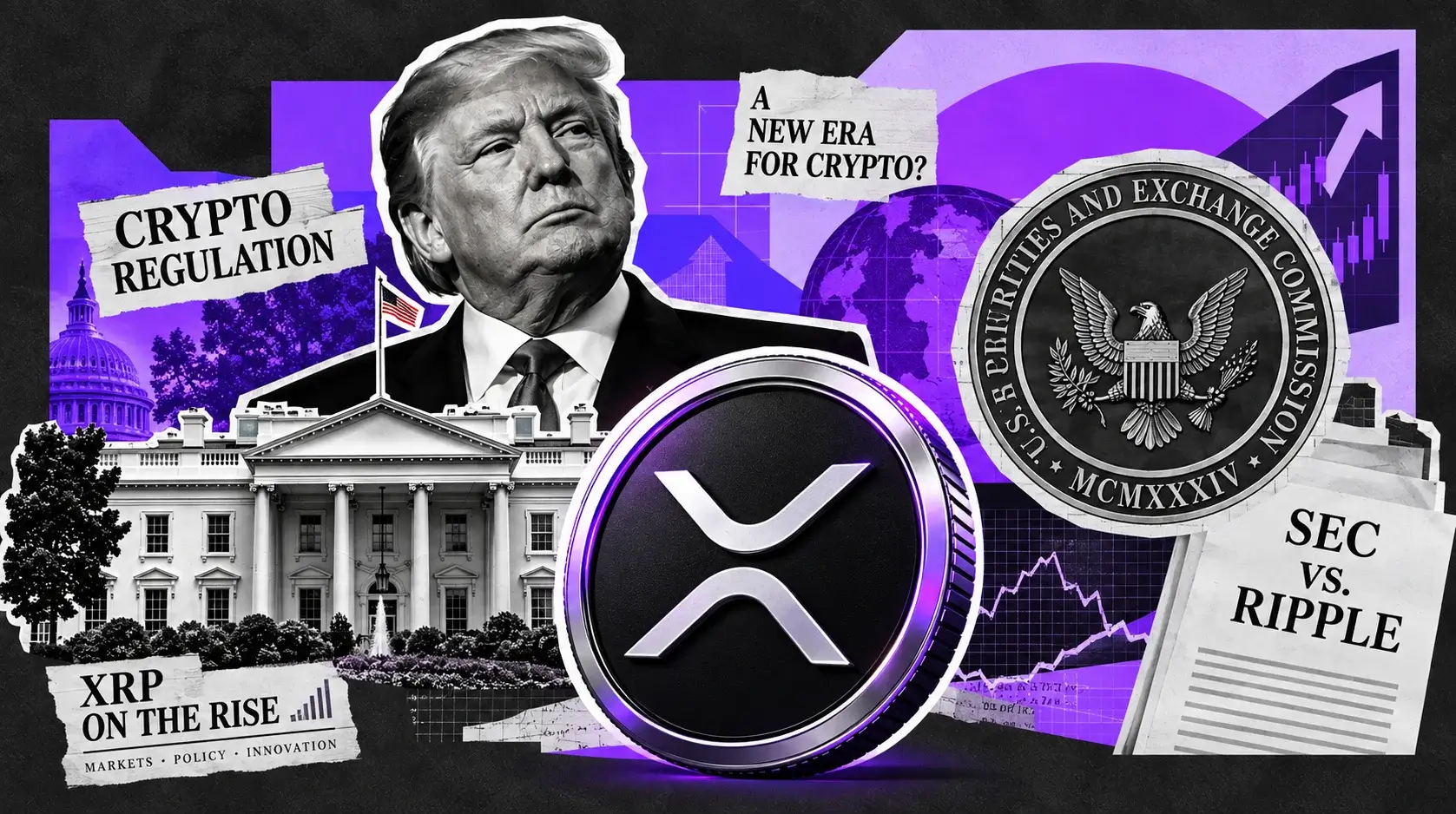
Ripple Labs, the company behind XRP-USD, has been on a streak of strategic wins that fundamentally changes the institutional perception of the asset. The company achieved a $50 billion valuation in March 2026 — more than double the market capitalization of stablecoin giant Circle — placing it among the most valuable private fintech companies globally. Ripple ended its long-running legal feud with the US Securities and Exchange Commission, removing the regulatory overhang that had been suppressing institutional adoption for years. President Donald Trump included XRP in his proposed strategic digital reserve, signaling explicit federal recognition of the asset's role in the broader US crypto framework. Ripple signed a deal with one of South Korea's largest insurance companies, expanding its institutional client base into Asia. The company has been on an aggressive M&A campaign, acquiring multiple businesses to expand its payment infrastructure and treasury management capabilities. The Ripple Treasury dashboard launched on April 1 enables treasury teams to manage liquidity across multiple asset types, while RLUSD — Ripple's stablecoin — recently scored an OKX listing alongside its existing integration into Ripple Payments with institutional clients including BKK Forex and iSend. Brad Garlinghouse has been explicit that XRP remains Ripple's "North Star," reinforcing the asset's central role in the company's payment strategy. Ripple just opened a Dubai headquarters as part of its global expansion, and the company is positioning aggressively for the regulatory clarity that the CLARITY Act is expected to deliver if Senator Cynthia Lummis can get the legislation across the line before the political window closes.
The $59 Million RLUSD Settlement That Proves the Use Case
The single cleanest piece of evidence that Ripple's payment infrastructure is genuinely production-ready surfaced this week with a $59 million RLUSD settlement processed on the XRP Ledger at a transaction fee of just $0.000188 — a sub-penny cost on a notional value that would mechanically incur fees of 0.5% to 1.0% on traditional SWIFT rails, alongside settlement times of two to three days. On-chain researcher Ripple Bull Winkle highlighted the transaction as live production use of Ripple's payment infrastructure for large-scale cross-border settlements. RLUSD was specifically designed for enterprise treasury operations and settlement flows, and the integration into Ripple Payments alongside existing institutional clients gives the asset the kind of recurring transaction volume that traditional payment rails cannot match on cost or speed. This is the use case that has been the structural argument for XRP since the company's founding, and the $59 million settlement is the kind of proof point that converts skeptical institutional treasurers from observers to participants. The math is genuinely compelling — a financial institution moving $59 million through SWIFT pays anywhere from $295,000 to $590,000 in fees and waits two to three business days for settlement; the same transaction on XRPL costs $0.000188 and settles near-instantly. That is not a marginal improvement — it is a structural change in the economics of cross-border money movement, and as enterprise adoption compounds, the transaction volume on XRPL becomes a structural demand driver for XRP.
Whale Accumulation — 1.15 Billion XRP Bought in 11 Days
The on-chain footprint underneath XRP-USD is genuinely constructive despite the unimpressive spot price action. According to CryptoQuant analyst Arab Chain, wallets holding between 10 million and 100 million XRP accumulated 420 million tokens over an 11-day stretch, while addresses with at least 1 billion XRP added another 730 million tokens, bringing total whale purchases to 1.15 billion XRP during the same window. That is genuinely massive accumulation by the largest cohort of holders, and historically this kind of sustained whale buying tends to precede meaningful upside resolution by several weeks rather than days. The 30-day average funding rate on Binance has climbed to 0.0002 — the highest level since early February — after months of negative readings that dropped as low as -0.0007 during periods dominated by short positioning. The shift in funding rate posture from negative to positive signals that traders are increasingly opening long positions, suggesting growing appetite for upside exposure in derivatives markets. Open interest on XRP futures rose meaningfully in the past 24 hours, showing fresh activity in derivatives even as spot volume softened. Whale flow has improved, exchange supply signals suggest some holders are moving tokens away from trading venues into cold storage, and the cumulative footprint paints a picture of a market quietly accumulating ahead of the expected breakout rather than distributing into weakness.
Read More
-
Yen Stalls at 160 Despite a 3% JGB and Tokyo Core CPI at 2.0% — Intervention Sits at 164, Friday's Payrolls Decide
02.09.2026 · TradingNEWS ArchiveEnergy
-
Semtech ($158) Holds $153 as Data Center Revenue Hits $100M and EPS Guide Jumps to $1.05 — 12% Path to Record High
16.09.2026 · TradingNEWS ArchiveStocks
-
XRP ($1.28) Tests $1.25 Support as Commodity Status Survives Senate Defeat — 16.4% Upside to $1.49
16.09.2026 · TradingNEWS ArchiveCrypto
-
WTI ($103.20), Brent ($107.60) Hold Above $100 as 10M Barrels a Day Stay Shut In — 9.7% Upside to $118
16.09.2026 · TradingNEWS ArchiveCommodities
-
S&P 500 SPX Rises to 7,624, Nasdaq IXIC Gains 234 Points, Dow DJI Stalls as INTC Rips 4% Into Fed Decision
16.09.2026 · TradingNEWS ArchiveMarkets
-
GBP/USD (1.3480) Loses 1.3500 as Fed Hike Flips Rate Gap Against Bank Rate at 3.75% — 80 Pips to August Low at 1.3400
16.09.2026 · TradingNEWS ArchiveForex
The Technical Setup — XRP/USDT and the $1.50 Ceiling
The technical structure for XRP (XRP-USD) on the USDT pair tells a clear story of rejection followed by potential base building. The setup that looked constructive in mid-April played out as a clean rejection rather than a breakout, with the token failing to post a sustained close above the channel ceiling and the 100-day moving average before sliding back from the $1.50 area to the current $1.37 zone. The RSI has faded below 50 into no-man's land, neither oversold nor overbought, telegraphing a market in genuine equilibrium awaiting a catalyst. The 100-day MA at roughly $1.50 and the 200-day MA converging with the $1.80 supply zone remain the structural ceilings that need to be reclaimed for the bullish thesis to validate. On the downside, the February wick low at $1.20 acts as the hard floor, and a daily close beneath that level would suggest XRP is tracking toward the lower channel boundary rather than building for another breakout attempt — a scenario that would put the critical $1.00 support zone back into active focus heading into May. The proprietary modeling on the asset maps the most likely behavior over the next week to a band between $1.31 and $1.40, with persistent bearish signals from RSI, ADX, MACD, and major moving averages limiting the upside scenario in the immediate term. The Ichimoku Kijun at $1.3944 is the immediate technical pivot the market is fighting around, and a sustained move above that level would mark the first genuine bullish unlock.
The XRP/BTC Cross — The Real Tell on Relative Weakness
The technical picture against Bitcoin (BTC-USD) is genuinely worse than the dollar pair and deserves serious attention from traders thinking about positioning. XRP/BTC has slipped to 1,800 sats, sitting directly on horizontal support and slightly above the descending channel's lower boundary at 1,600 sats. The RSI on this pair has weakened below the 40 mark, the softest reading in several weeks, and unlike the USDT pair which at least reached neutral 50, the BTC ratio has shown zero meaningful recovery attempt during April. A breach of the 1,800 sats support on a closing basis would represent a full channel breakdown and open the path toward the lower trendline and potentially the 1,500 sats support zone if selling pressure accelerates. The 100-day MA at roughly 2,000 sats and the 200-day MA near 2,100 sats both sit far overhead and continue declining, confirming that XRP is bleeding relative to Bitcoin regardless of what happens in dollar terms. A genuine ratio recovery requires at minimum a reclaim of the 2,000 sat level, and there is no current technical evidence on the BTC-pair chart suggesting such a move is imminent. That is a meaningful headwind because crypto rotation cycles historically begin with relative-strength shifts on the BTC pair, and until XRP/BTC shows signs of bottoming, the broader breakout thesis on the USDT pair stays constrained.
Polymarket Odds, Edelman Skepticism, and the Bear Case
The honest engagement with the bear case on XRP-USD requires acknowledging the data that suggests the recovery may take longer than bulls hope. Polymarket prediction market odds give XRP a 13% probability of hitting $3.60 before year-end, while assigning a 61% probability of the token hitting $1.00 before January 1, 2027. Those are genuinely bearish odds, and they reflect real concerns about whether XRP can reclaim its former stature in the current regulatory and macro environment. Ric Edelman, founder of Edelman Financial Engines, has been openly skeptical that XRP can return to its prior glory, calling the situation "sad and unfortunate" but acknowledging the structural challenges. The persistent bearish signals across RSI, ADX, MACD, and major moving averages on the daily chart reinforce the case for continued range-bound trading rather than imminent breakout. The macro environment remains hostile with the Fed locked into higher-for-longer policy, the energy shock from Iran feeding inflation, and risk appetite for altcoins genuinely compressed. None of these factors changes the structural bull case over the medium term, but they explain why the patient capital position needs to be sized appropriately and why the entry zone matters more than the exit target for total return outcomes.
The Forward Forecast Math — From $1.37 to $3.26
The longer-term forecast architecture on XRP (XRP-USD) is meaningfully more constructive than the daily candle suggests. The 24-hour forward projection sits at $1.3809 (+1.02%), the 7-day target points to $1.3157 (-3.75%) reflecting near-term consolidation pressure, the 1-month forecast climbs to $1.416 (+3.58%), the 3-month projection accelerates to $1.815 (+32.77%), the 6-month outlook explodes to $3.2636 (+138.74%), and the 12-month target lands at $1.8818 (+37.66%). The wide divergence between the 6-month projection and the 12-month projection captures exactly the kind of multi-month volatility that XRP historically produces — sharp acceleration phases interspersed with extended consolidation periods. The structural bull case relies on the fundamental developments — Rakuten adoption, NYSE Arca framework expansion, RLUSD enterprise traction, whale accumulation, ETF inflows, regulatory clarity through the CLARITY Act — finally translating into sustained spot demand that breaks XRP out of the current range. If that transition materializes, the path toward $1.815 by Q3 and $3.26 by Q4 becomes mechanically achievable rather than aspirational. The bear case requires the macro environment to deteriorate further, the regulatory progress to stall, and the institutional adoption to fail to translate into spot flow, which is a possible but increasingly low-probability scenario given the trajectory of catalysts already in motion.
The CLARITY Act and the Regulatory Window
The single most important policy variable for XRP-USD is the progress of the CLARITY Act, which is being championed by Senator Cynthia Lummis and would draw cleaner lines between digital asset securities and commodities. That distinction has direct implications for exchange listings, custody rules, and how institutions handle crypto exposure — all of which matter enormously for XRP given its central role in payment infrastructure and tokenized markets. Lummis has explicitly warned that the current political alignment between the House, Senate, and White House on crypto policy is rare, and if the CLARITY Act is delayed beyond this Congress, the next legislative window may not open until 2030. Senator Tillis has urged markup of the legislation as the stablecoin debate nears resolution, and the broader US regulatory framework is finally moving toward the kind of clarity that institutional capital has been demanding for years. For XRP specifically, the implications are clean — regulatory certainty would address the lingering classification questions that have suppressed institutional adoption, would make listed products easier to structure (especially when exchanges cite XRP in rule filings like NYSE Arca's), and would unlock the fund issuer, bank, and market maker flows that the asset depends on for its next leg higher. The market has not priced this outcome with confidence yet, which is exactly why the asymmetric setup remains attractive for patient capital willing to position ahead of the policy resolution.
Comparative Crypto Tape — XRP Relative to BTC and the Majors
For positioning context across the broader complex, Bitcoin (BTC-USD) trades at $76,100, up +0.32%, with Ethereum (ETH-USD) at $2,253, off -0.69%, BNB at $615.90, down -0.48%, Solana (SOL-USD) at $82.89, fractionally green at +0.03%, Tron at $0.3258, up +0.78%, and Dogecoin (DOGE-USD) at $0.1056, up +3.13% — the standout gainer in the majors complex. XRP at $1.36 to $1.37 is essentially flat on the day, sitting in the middle of the relative-performance pack rather than leading or lagging meaningfully. The DEX volume across the broader DeFi tape sits at $6.03 billion, off -4.62% on the day, while total DeFi TVL holds at $83.72 billion, fractionally green at +0.52%. Lido dominates with $20.68 billion in TVL, SSV Network at $16.69 billion, Aave at $14.31 billion. The relative performance picture shows XRP underperforming most of the majors today, which is the precise relative-weakness pattern that capital allocators look for when scanning for asymmetric setups — currencies that lag during consolidation phases tend to lead during breakout phases, and XRP fits that template historically.
The Trade Setup, the Levels, and the Final Call on XRP-USD
The probability map heading into the next two to three weeks points squarely toward continued range trade between $1.31 on the floor and $1.42 on the ceiling, with directional resolution dependent on the broader macro tape and whether the Rakuten and NYSE Arca catalysts translate into sustained spot flow. The bullish unlock is a confirmed daily close above $1.42, after which $1.45 comes into play, then $1.50 to $1.51 at the 100-day moving average, and ultimately $1.80 at the 200-day MA convergence with the prior supply zone. Beyond that, the path toward $1.815 in three months and $3.26 in six months becomes mechanically supported by the fundamental flow stack that is already in motion. The bearish unlock is a daily close beneath $1.31, which would expose the $1.20 February wick low and ultimately the $1.00 psychological support that Polymarket punters have flagged as the most likely scenario by year-end. Position-wise, the call is HOLD with a tactical bias to accumulate weakness toward $1.31 to $1.34, where the support stack is densest, the whale accumulation has been most aggressive, and the on-chain footprint provides the strongest justification for stepping in against the daily-tape pressure. BUY becomes the appropriate posture only on a confirmed daily close above $1.42, because that combination is what unlocks the technical setup and clears the immediate Ichimoku Kijun resistance at $1.3944 with momentum behind the move. SELL or trim is appropriate exclusively on a daily close beneath $1.31, which would invalidate the constructive consolidation thesis and shift focus toward the deeper $1.20 and ultimately $1.00 support zones. The bias is constructively bullish above $1.34 on a daily-close basis, aggressively bullish on a confirmed reclaim of $1.42, and structurally cautious only beneath $1.31 — and the trade only becomes the screaming-buy setup on a confirmed break of $1.50 with the BTC pair reclaiming 2,000 sats simultaneously to confirm relative-strength rotation. The single most important variable to monitor over the next thirty days is whether the Rakuten integration translates into sustained loyalty-point conversion flow that creates structural buy-side demand, combined with whether the NYSE Arca rule change progresses through SEC review without delays. If both catalysts materialize and the macro tape eases at all on the central bank side, the breakout becomes mechanical rather than discretionary. If the macro stays hostile and the regulatory progress stalls, XRP grinds lower toward the $1.20 retest with the cycle of accumulation continuing through the consolidation phase. The bigger picture for capital allocators thinking in months rather than days is that XRP (XRP-USD) combines the strongest enterprise payment infrastructure narrative in crypto, a $50 billion private valuation for the parent company, a Rakuten integration touching 44 million accounts and $23 billion in convertible loyalty points, NYSE Arca placing the asset alongside Bitcoin and Ethereum in commodity-trust frameworks, whale accumulation of 1.15 billion tokens in 11 days, sustained spot ETF inflows of $90 million over three weeks, derivatives funding rates flipping positive for the first time in months, and a regulatory pathway through the CLARITY Act that could deliver the institutional clarity the asset has been awaiting for half a decade. That combination is genuinely supportive even as the daily candle paints something less impressive, and the path higher is the dominant scenario rather than the optimistic one. The market is currently underpricing how durable the institutional footprint underneath XRP has become, and that underpricing is exactly the gap that disciplined accumulators are mechanically configured to capture as the breakout above $1.42 materializes over the coming weeks. The runway for further appreciation in XRP-USD remains genuinely substantial, the asymmetry favors patient longs willing to size positions through the consolidation noise, and the trade for serious capital is to lean into the structural bull case rather than fade it. The market is currently mispricing the duration of the institutional accumulation phase, and that mispricing is exactly the gift — not the warning — that defines the entry opportunity for serious capital willing to think in quarters rather than days.