Oil Price Forecast: Brent (BZ=F) Tags $126 With $150 Target as Trump Iran Strike Briefing Rocks the Energy Tape
Brent (BZ=F) ripped 7% to a 4-year high of $126.31 before fading to $114 on futures roll mechanics | That's TradingNEWS
Key Points
- Brent crude (BZ=F) spiked 7% to $126.31, the highest since 2022, before fading to $114 on June contract expiry.
- WTI crude (CL=F) topped $110 intraday before settling at $104.46, down 2.26% as front-month roll absorbed.
- Brent has surged 37% from the $90.38 April 17 baseline and nearly doubled since the war began February 28.
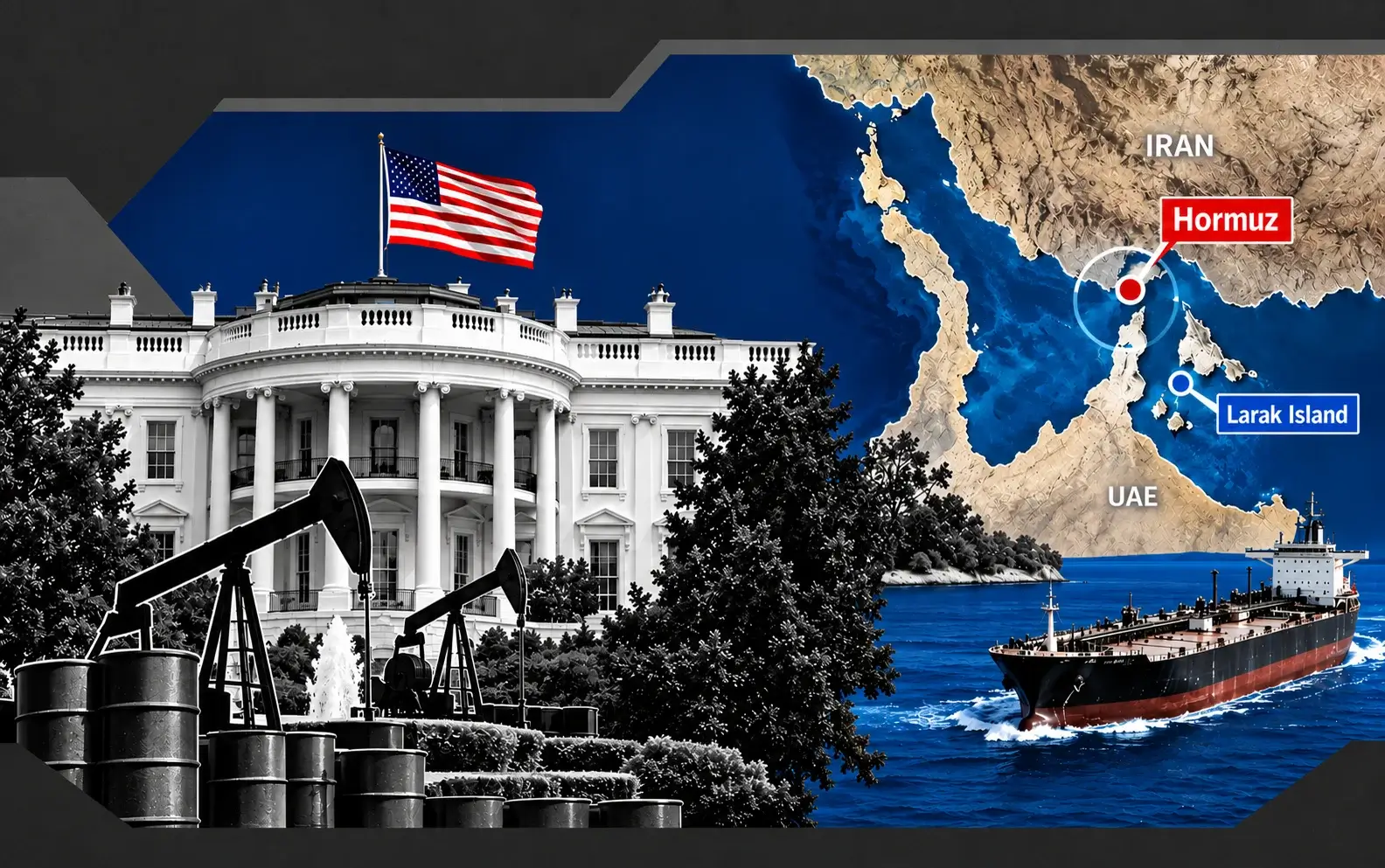
Brent crude (BZ=F) ripped almost +7% to a session high of $126.31 per barrel on Thursday morning before mean-reverting sharply back to roughly $114 by the European afternoon, a violent intraday round-trip that printed the highest single-tick energy reading since the early days of Russia's invasion of Ukraine in 2022. WTI crude (CL=F) punched above $110 during the same window before settling between $104.46 and $104.59, off -2.14% to -2.45% on the day after the front-month spike absorbed itself into the curve. The catalyst behind the violent reprice was an Axios report that President Donald Trump is being briefed by US Central Command under Admiral Brad Cooper on a fresh wave of "short and powerful" military strike options against Iran, with infrastructure targets reportedly central to the proposed plan and a separate scenario covering a partial ground takeover of the Strait of Hormuz to physically reopen it for commercial shipping. Day 63 of the US-Israel war on Iran is unfolding inside an environment where the Strait of Hormuz remains effectively closed, the American naval blockade of Iranian ports continues without any negotiating window, and the broader peace process has been frozen for the ninth consecutive day with Tehran refusing to come to the table until the blockade is lifted. The single most important framing point for anyone trading this complex right now is the supply-side math — roughly 20% of the world's daily oil and liquefied natural gas flow typically transits through the Strait, and a meaningful share of that volume has been offline for two months. The price tape is finally beginning to reflect the supply shortage, and the move from $90.38 on April 17 to today's $126 spike represents a +37% rally in less than two weeks — the kind of price action that fundamentally rewrites every macro forecast the major banks published at the start of the year. This is no longer a tactical scare cycle. This is a structural supply repricing that traders need to size for accordingly.
The Pullback Is Futures Roll Mechanics, Not De-escalation
The intraday reversal on Brent (BZ=F) from $126.31 to $114 is being read by the daily-news crowd as a sign that escalation risk has cooled, and that interpretation is fundamentally wrong on the mechanics. The current Brent futures contract for June delivery expired on Thursday, which mechanically inflated the front-month price as institutional desks rolled positions forward — a phenomenon that happens predictably on every contract expiry day and has zero relationship to the underlying geopolitical situation. The more active July contract was trading lower at around $110 per barrel, and that figure is the cleaner read on where the market actually sees the supply situation pricing in over the next four to six weeks. Naveen Das at Kpler explicitly attributed the sharp daily swing to the futures-rollover dynamic, with the additional pressure from companies executing their final day of June-delivery purchases compounding the front-month spike before the curve mean-reverted. Strip away the contract-expiry noise and the underlying picture is unchanged in every meaningful direction — the war is escalating rather than cooling, peace talks are frozen rather than progressing, the Strait is still closed rather than reopening, and the supply-demand math is structurally tightening rather than easing. Treating today's fade as a topping signal is exactly the kind of recency-bias trap that punishes traders who confuse mechanical price action with fundamental shifts.
The 37% Rally That Caught the Bears Completely Flat-Footed
Pulling the lens back to the war timeline reveals the magnitude of what has actually happened to oil prices since the start of the conflict on February 28. Brent (BZ=F) has nearly doubled from its pre-war baseline, and the move from $90.38 on April 17 alone represents a +37% surge in roughly two weeks — the kind of price action that historically only occurs during full supply shocks rather than tactical conflicts. The shorter trip from yesterday's close to today's spike was another +5% in a single session before the rollover fade kicked in. Brent peaked above $119 per barrel on March 19 during Iran's retaliatory strikes on Gulf state energy facilities, then collapsed two weeks ago on hopes that ceasefire talks would unlock the Strait, and has now blown right past that prior peak to print $126.31 — telling the floor that the market is repricing escalation risk in real time and structurally rather than tactically. Pre-war institutional scenario analysis pegged the $150 to $200 per barrel range as the prolonged-Hormuz-closure base case, and the move from $90 to $126 in under two weeks is consistent with the market beginning to price that scenario rather than dismissing it as a tail risk. The capital allocators positioned long energy at the start of the year are sitting on what may turn out to be the trade of the decade, and the bears who were calling for $70 oil are quietly closing positions and rebuilding their books at significantly worse cost basis.
Iran's 73.5% Hyperinflation and the Domestic Cost of the War
The piece of this story that gets dramatically underweighted by the price-only desks is Iran's domestic economic situation, and the numbers from Tehran this week are genuinely catastrophic. Iran's consumer prices rose 73.5% in the month of Farvardin (March 21 to April 20) compared to the same month in 2025, per the Statistical Center of Iran's Thursday release. The CPI rose +5% from the previous month alone, and average inflation in the twelve months ending in April is up +53.7% from the year-prior period. That is hyperinflationary territory by any global benchmark, and it tells the floor that the Iranian regime is operating under intense domestic economic pressure even before factoring in the cost of sustaining its blockade posture and military activity. The structural risk for Brent (BZ=F) here cuts both ways. An economically cornered Tehran has every incentive to escalate the conflict in a desperate bid for negotiating leverage, which would push prices materially higher. On the other hand, the same economic desperation could eventually force a capitulation at the negotiating table that would rapidly reopen the Strait and unleash a sharp downward repricing. Neither scenario is currently being priced cleanly into the curve, and the binary nature of the resolution path is exactly why options volatility on energy contracts has spiked across the term structure to multi-year highs.
The American Inflation Story — Pump Prices at $4.23 and Trump at 26% Approval
The energy shock is feeding directly into the US inflation tape and the consumer pain numbers are now at politically explosive levels. Headline US CPI hit 3.3% in March, the highest read in close to a year, and the average price of unleaded gasoline has rocketed from $2.98 to $4.23 per gallon — the worst at-the-pump price since April 2022 in the immediate aftermath of Russia's invasion of Ukraine. Trump's approval rating on the inflation issue has cratered to just 26%, and the political pressure on the White House to find a circuit breaker that brings energy prices down without backing off the Iran posture is becoming genuinely untenable. The states absorbing the worst pump-price increases — Indiana, Michigan, Ohio, Wisconsin, and Iowa — were all 2024 Trump wins, which means the political math on this is hostile to continued escalation in ways that go far beyond standard partisan pressure. Energy and trading executives met with Trump on Tuesday to discuss steps the administration could take to "continue the current blockade for months if needed" while attempting to limit the impact on US consumers, and the blunt truth from that meeting is that there is no clean way to maintain the blockade without continuing to absorb the at-the-pump price pain. The runway for political tolerance of this dynamic is genuinely narrow, and that is the single most important political variable underneath the energy curve over the next thirty days.
UK Pump Prices, European Energy, and the Global Spillover
The UK has been wearing the secondary cost of the Brent (BZ=F) spike with brutal clarity. UK petrol prices average 157p per liter, up 24p from pre-war levels, while diesel sits at 188.5p per liter, up a staggering 46p compared with pre-war pricing. Wholesale petrol costs for retailers are now at the highest level since the war began, meaning the recent slight decline at the pumps is not durable and another rise is mechanically baked into the cost curve over the coming weeks. The UK government has already warned consumers about higher energy, food, and flight ticket prices flowing through, with airlines beginning to either hike fares or cut capacity outright. Fertilizer costs have started to increase — urea shipments have been blocked by the Hormuz situation, and farmers globally who failed to lock in inventory at pre-war pricing are now absorbing input costs that will mechanically translate into food inflation later this year and into 2027. Susannah Streeter at Wealth Club specifically flagged that costs could remain elevated well into next year as supply-chain pass-through dynamics work through the system. European stock markets defied the bearish energy implications today, with the FTSE 100 up +1.6%, Germany's DAX up +1%, and France's CAC 40 edging higher by +0.1%, while Asia traded lower with Japan's Nikkei down -1.1% and South Korea's KOSPI off -1.4% as the regional energy-import dependence weighed on sentiment. The split tells traders that the energy shock is asymmetric in its regional impact — energy-producing economies and refining-heavy markets are absorbing the upside, while energy-importing emerging Asia is wearing the cost.
Read More
-
Yen Stalls at 160 Despite a 3% JGB and Tokyo Core CPI at 2.0% — Intervention Sits at 164, Friday's Payrolls Decide
02.09.2026 · TradingNEWS ArchiveEnergy
-
CHAT Fund Holds $96.37 as Korean Memory and Chip Exposure Drive a 109.73% Year — Break of $98.02 Opens $105.20
18.09.2026 · TradingNEWS ArchiveStocks
-
First-Generation XRPR and XRPI Ride XRP's Rebound to $1.386 as Spot Funds Post First Outflow — Break of $1.40 Opens $1.54
18.09.2026 · TradingNEWS ArchiveCrypto
-
NG Holds $2.9255 as Storage Surplus Narrows From 5.5% to 3.7% in 3 Weeks — Break of $3.00 Opens $3.15
18.09.2026 · TradingNEWS ArchiveCommodities
-
Dollar Surges to 157.90 as BoJ's Divided Hike Fails to Lift the Yen — Break of 158.87 Opens 159
18.09.2026 · TradingNEWS ArchiveForex
Repsol's 154% Profit Surge Captures the European Oil Major Trade
The corporate-side beneficiary of the oil price spike is showing up clearly in earnings reports, and Repsol — Spain's leading integrated oil company — delivered Q1 2026 numbers that capture the magnitude of what the war has done to the energy producer P&L. The company posted €929 million in profits for Q1 2026, a +154% increase versus the same period in 2025, primarily driven by a €593 million positive equity effect from the revaluation of its inventories as crude prices ripped higher. Adjusted net result, which strips out one-time items and measures underlying business performance, hit €873 million for the quarter, up +57% year-over-year. Adjusted EBITDA reached €2.613 billion, up +110% from the €1.244 billion in the prior-year period. Repsol is now committing €1.2 billion to increase crude oil and refined product reserves in Spain to ensure security of supply, and the company is increasing kerosene production specifically by 15% to 20% to meet expected demand pressures. CEO Josu Jon Imaz framed the strategy around disciplined operations and security of supply in what he called an "increasingly complex and volatile geopolitical environment." Repsol carries zero direct asset exposure to the Middle East, which means the company is capturing the full upside of the price move without absorbing the operational risk of the conflict zone — a configuration that is producing exactly the kind of outsized cash generation that historically drives multi-quarter outperformance for European oil majors. The same dynamic is playing out across Shell, BP, TotalEnergies, and the global integrated oil complex, with refining margins also expanding sharply as crack spreads widen on the back of refined-product supply disruption.
The Strait of Hormuz Math — A Seventh of Global Supply Offline
The single number that determines the entire price path here is the share of global oil and LNG flow that runs through the Strait of Hormuz. The Economist's energy desk put the math at roughly one-seventh of the world's oil supply offline for two months, while broader industry estimates peg the regular Hormuz transit volume at closer to 20% of global oil and LNG combined. Either framing produces the same conclusion — the supply disruption is structural rather than tactical, the duration is now stretching toward sixty-three days with no negotiating window in sight, and the longer the closure persists, the harder the macro pricing math gets to ignore. Pre-war analyst scenarios for prolonged closure pegged the upside risk at $150 to $200 per barrel, and the current path from $90 to $126 is consistent with the market beginning to price that scenario into the front of the curve while the back end still trades at a more conservative discount on the assumption that some resolution eventually arrives. The yield curve on oil futures is the cleanest single read on how much resolution probability the market is assigning to the next ninety days, and the steepness of the contango versus backwardation dynamics is shifting in real time as each headline lands. The market is currently pricing a probability-weighted outcome that includes both a continued blockade and a negotiated resolution, and the pricing math on either tail produces dramatically different outcomes for spot.
Khamenei's "New Chapter" Framing and the Iranian Counter-Move
A statement attributed to Iran's Supreme Leader Mojtaba Khamenei explicitly declared on Thursday that Tehran would secure the Strait of Hormuz and "eliminate the enemy's abuses of the waterway" — language that is genuinely hostile and inconsistent with any near-term de-escalation pathway. Khamenei also framed the conflict as the start of a "new chapter" for the region since the start of the US-Israeli war on February 28, signaling that the Iranian leadership sees this as a structural realignment rather than a tactical confrontation. US Central Command has reportedly requested the deployment of hypersonic missiles to the Middle East theater for the first time in American military history, which if confirmed would represent a meaningful escalation of the conventional military posture beyond the current operational tempo. The combination of Iranian rhetorical hardening, requested escalation of US strike capability, and the continued blockade creates exactly the kind of compounding-risk environment that historically produces further upside in oil prices rather than mean-reverting consolidation. The lack of a credible off-ramp is the variable that makes the current setup genuinely different from the typical Middle East scare cycle — there is no obvious negotiating table that both sides can credibly approach without one of them losing significant face, and the longer that stalemate persists, the more the supply shortage compounds.
Lebanon, Civilian Casualties, and the Widening War Footprint
The conflict footprint is widening beyond just the Iran-US-Israel triangle. Lebanon's President Joseph Aoun explicitly called this morning for international pressure on Israel to respect international law and stop targeting civilians, paramedics, civil defense, and humanitarian organizations, noting that at least 17 paramedics from the Lebanese Red Cross and other humanitarian organizations have been killed alongside journalists in southern Lebanon. At least nine people have been killed and residential buildings reduced to rubble across southern Lebanon by Israeli attacks today despite a supposed ceasefire. The widening of the regional engagement raises the structural risk that the conflict spreads further, drags additional regional players into direct involvement, and extends the timeline on any plausible negotiated resolution. Each additional day of regional escalation feeds the supply-disruption thesis underneath Brent (BZ=F) and WTI (CL=F) and reinforces the structural bull case for energy prices. The war is no longer geographically contained, and that expansion is precisely what historically pushes the geopolitical premium in oil from temporary to durable.
The Speculative Curve Math and the $150 to $200 Scenario
The pre-war institutional scenario analysis for a prolonged Hormuz closure pegged the upside path at $150 to $200 per barrel, and the question now is how much of that scenario is being priced versus how much remains optionality. The current spot near $114 on Brent (BZ=F) and $104 on WTI (CL=F) captures a meaningful portion of the disruption premium, but the market is still discounting some probability of resolution at the back end of the curve. If the war stretches into June or July and the Strait remains effectively closed, the path higher is mechanical rather than speculative — refinery inventories deplete, the strategic petroleum reserve in major consuming nations gets drawn down, and the back end of the curve repaints higher to reflect the structural shortage rather than the tactical disruption. The single biggest tail risk to the bull case is a sudden negotiated resolution that physically reopens Hormuz overnight, in which case the unwind would be violent and prices could retrace toward the $80 to $90 zone within a matter of days. That binary outcome is the entire reason options-implied volatility on energy contracts is at multi-year highs, and the cost of hedging in either direction is currently elevated relative to historical norms. The asymmetry of the setup actually favors continuing to hold long exposure with downside hedges in place, because the upside scenario delivers significantly more capital appreciation than the downside scenario costs to insure against.
The Energy Equity Tape — TechnipFMC, CRAK, and the Best-in-Class Beneficiaries
The equity-side beneficiaries of the oil price move are showing up loud and clear on the daily tape. TechnipFMC (FTI) is at fresh intraday records as the offshore-services and subsea-infrastructure play absorbs the structural capex tailwind from rising prices and renewed exploration economics. The Oil Refiners ETF (CRAK) also tagged an intraday high as the refining margin expansion drives the cracker-economics story across the integrated complex. Caterpillar (CAT) is up +9.92% to $890.37 with the energy industrial buildout adding to the broader infrastructure thesis. The contrast with the broader equity tape is genuinely stark — the megacap tech crowd is bleeding capex anxiety while the energy and energy-infrastructure complex is printing fresh records on real cash flow generation. That rotation from growth into value-energy is the cleanest single sector dynamic the equity market has produced in months, and the structural setup for energy equities depends on Brent (BZ=F) holding above the $95 to $100 zone over the medium term — a threshold the current curve is comfortably clearing with significant room to spare even after today's mechanical fade.
The OPEC+ Variable and the Global Supply Response
The supply-side dynamic worth tracking that compounds the war premium is the OPEC+ response, or rather the lack of one. The cartel has signaled limited willingness to ramp production materially even with prices at multi-year highs, partly because spare capacity outside Saudi Arabia is genuinely thin, partly because internal political dynamics are constraining coordinated output increases, and partly because individual member states are benefiting too much from the price spike to accept aggressive intervention. The UAE quitting OPEC — a development that's been rolling through the energy news cycle — adds another layer of structural fragmentation that historically reduces the cartel's ability to act as a swing producer in supply-shock scenarios. US shale producers are responding with incremental production increases, but the multi-month lag between drilling activity and meaningful flow additions means the supply response will not fully arrive until the back half of 2026 at the earliest. The mechanical conclusion: the market does not have a credible near-term supply offset to the Hormuz closure, and that absence is the foundation underneath the structurally higher price floor.
The Trade Setup, the Levels, and the Final Call on Brent and WTI
The probability map heading into the next two to three weeks points squarely toward continued elevated pricing with directional resolution dependent on the Iran-US negotiating dynamic. The bullish unlock is straightforward — any confirmed military action against Iranian targets, particularly infrastructure strikes, would mechanically push Brent (BZ=F) through the $130 zone and unlock a path toward the $140 to $150 range, with the pre-war institutional scenario pegging $150 to $200 as the prolonged-closure ceiling. The bearish unlock requires either a credible breakthrough at the negotiating table that delivers an actual reopening of the Strait, or a significant draw-down of strategic petroleum reserves by major consumers that creates near-term supply relief. Neither catalyst is currently visible on the immediate horizon. Resistance stack on Brent: $120, $126.31 (today's high), $130, $140, $150. Support stack on Brent: $114 (current), $110, $104, $100, $90.38 (April 17 baseline). On WTI (CL=F), immediate resistance sits at $110, with $115 and $120 above. Support reads $104, $100, $95, and $90. The professional posture is unambiguously constructive: BUY on weakness toward the $108 to $110 zone on Brent and $100 to $102 on WTI, where the structural floor of the war premium is densest and the supply-disruption math justifies stepping in even against the daily volatility. HOLD is appropriate for traders already long the energy complex who want to let the war timeline play out without overcommitting to additional risk, particularly given the binary tail-risk of a sudden resolution that nobody can perfectly time. SELL or trim is appropriate exclusively on a confirmed daily close beneath $100 on Brent and $92 on WTI, which would signal that the supply shock is being absorbed faster than the bull case anticipates and the war premium is unwinding ahead of expectations. The bias is aggressively bullish above $110 on Brent on a daily-close basis, constructive between $100 and $110 as the structural buying band, and only structurally cautious below $95 if a credible negotiating breakthrough materializes — a scenario that is currently not visible on the horizon. The single most important variable to watch over the next ten days is the Trump-Iran posture and whether US Central Command actually executes any of the strike options being briefed to the President. If escalation arrives, Brent (BZ=F) prints fresh four-year highs and the energy complex reprices significantly higher across both spot and the entire forward curve, with the $140 to $150 band coming into play as the next major target zone. If a surprise diplomatic breakthrough lands, the unwind is violent and the trade flips to the short side within hours rather than days. The trade for serious capital is to hold the long position on weakness, hedge the binary downside risk via short-dated put protection, and let the war timeline drive the structural appreciation that the supply-disruption math demands. The bull case for energy is not built on speculation — it rests on a Strait that has been effectively closed for sixty-three days, an Iranian regime running 73.5% inflation, an American president sitting at 26% inflation approval, peace talks frozen for nine consecutive days, military escalation reportedly being prepared rather than wound down, and a global supply-demand math that does not balance without the Hormuz volumes restored. The fundamentals are doing the heavy lifting on this trade, and the price tape is finally catching up to the reality that the rest of the macro complex has been ignoring. For capital allocators thinking in months rather than days, the structural setup for Brent (BZ=F) and WTI (CL=F) is the cleanest asymmetric long the commodity complex has produced in years, and the runway for further appreciation remains genuinely substantial as long as the geopolitical situation continues to compound rather than resolve. The bigger picture is straightforward: the world economy has been remarkably resilient through this energy shock so far, but the longer it persists, the harder that resilience gets to maintain — and the harder that resilience gets to maintain, the more upward pressure builds underneath the curve. The market is currently underpricing the duration risk on the conflict, and that underpricing is exactly the gap that patient long energy positions are mechanically configured to capture.