
XRP Price Forecast: XRP-USD Drops to $1.20, Down 7% in Three Days, as the Broad Selloff Bites
XRP fell from $1.33 to around $1.20 in three days, shedding $8 billion in market cap as Bitcoin and Ethereum cratered | That's TradingNEWS
Key Points
- XRP slid from $1.33 (May 31) to around $1.20 on June 5, down roughly 7% in three days and $8 billion in market cap as the broad crypto market sold off.
- The token trades below its 7-, 14-, and 30-day moving averages and all key EMAs, in a descending channel, with RSI near oversold at 29.55.
- The CLARITY Act, which would permanently classify XRP as a commodity, was placed on the Senate floor calendar (Calendar No. 423) on June 1; passage odds hit 73%.
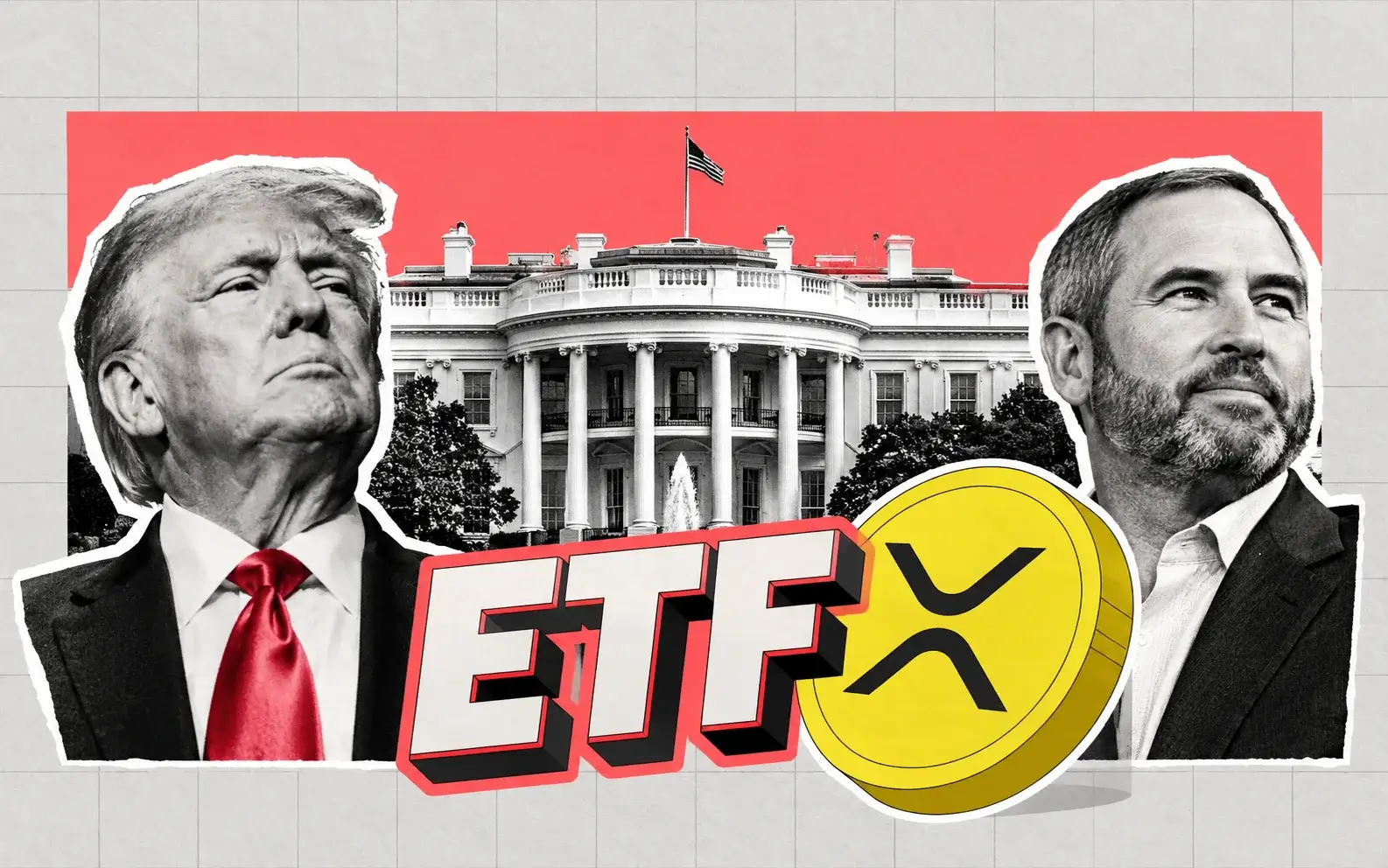
XRP has spent all of 2026 as a coiled bet on a single piece of legislation, and now that bet is reaching its moment of truth at the worst possible time. The CLARITY Act — the bill that would permanently classify XRP as a commodity — just landed on the Senate floor calendar, the closest it has ever come to a vote. But the broad crypto crash has dragged XRP from $1.33 to roughly $1.20 in a matter of days, wiping out $8 billion in market cap as Bitcoin and Ethereum crater. The chart says breakdown; the record ETF inflows and whale accumulation underneath say someone is loading the spring. The Senate floor vote decides which read is right.
A Coiled Binary On One Senate Vote
XRP isn't trading on its technicals or even on the broad crypto tape, not really. It's trading on Washington. The token has churned between $1 and $2 for nearly the entire year, waiting on the CLARITY Act, and every meaningful move has tracked the bill's progress through Congress rather than any on-chain or macro development. That makes XRP the market's purest binary catalyst play: the downside and upside aren't a function of momentum, they're a function of a yes-or-no vote whose timing nobody can pin down.
That framing is why the current selloff is misleading if you read it in isolation. Yes, XRP is breaking down with the rest of crypto, below every moving average and pressing critical support. But the thing that actually determines where XRP trades six months from now is whether the Senate passes CLARITY, and on that front the news has been getting better even as the price falls. The coin is caught between a macro crash pulling it toward $1.00 and a legislative catalyst that could re-rate it toward $5 — and those two forces have nothing to do with each other. The vote breaks the tie.
Where XRP Trades Now
Put numbers on the slide. XRP closed May at $1.33, dropped to $1.29 on June 1, fell to $1.21, and has been trading around $1.20 to $1.24 since — a roughly 7% slide in three days that shed about $8 billion from its market cap. The drop tracked the broader crypto market lower as Bitcoin cratered and Ethereum hit a two-year low. XRP is now wrestling with the $1.20 level, which has become the line in the sand: a daily close below it opens the door toward $1.14 first, then the psychologically critical $1.00 if the selling keeps building.
The technical structure is broken across every timeframe. XRP trades below its 7-day, 14-day, and 30-day moving averages, and below all its key exponential moving averages, with the price locked in a structured descending channel of lower highs and lower lows that began from the $1.41 swing high. The one technical glimmer is the RSI, which has dropped near 29.55 — squarely in oversold territory, the kind of reading that can spark a short-term rebound. But oversold in a downtrend is a setup for a bounce, not a bottom, and XRP needs to reclaim the $1.32 to $1.37 zone to even argue the selloff is a bear trap rather than a breakdown.
The Crypto Crash Dragged It Down
The immediate cause of XRP's slide is contagion, not anything specific to Ripple. The entire crypto complex is in a synchronized selloff — Bitcoin has cratered toward $62,000 on a record ETF outflow streak, Ethereum has crashed to a two-year low near $1,735, and when the majors bleed, XRP and the rest of the altcoins bleed harder. The macro backdrop turned hostile all at once: a blowout U.S. jobs report drove Treasury yields to 4.54%, repriced the Fed toward higher-for-longer, and pushed risk capital out of crypto and into the AI-stock trade. Risk-off macro is poison for the highest-beta corner of the market, and XRP sits in it.
That contagion is why XRP's $8 billion market-cap loss in three days looks scarier than the underlying story warrants. The token didn't fall on bad Ripple news, a hack, or a legal setback — it fell because the whole asset class is being de-risked at once. When the macro current turns back, or when XRP's own catalyst arrives, the coin has the potential to decouple from the crash. But for now it's a passenger on a sinking tape, and the broad selloff is the dominant short-term force overriding everything constructive happening underneath.
The CLARITY Act Is The Whole Game
The single biggest driver of XRP's price this year is the Digital Asset Market Clarity Act, the bill that would make XRP's commodity classification permanent and remove the regulatory ambiguity that has haunted Ripple since 2020. The bill cleared its biggest procedural hurdle yet: after passing the Senate Banking Committee on May 14 with all 13 Republicans voting yes, it was reported out of committee on June 1 and placed on the Senate Legislative Calendar under General Orders, Calendar No. 423. That makes it formally eligible for full Senate consideration — the furthest it has ever advanced.
This is the catalyst the entire XRP thesis hinges on. A permanent commodity classification would lock in XRP's legal status, clear the path for institutional adoption, and likely accelerate the pending spot ETF approvals. Prediction-market odds for 2026 passage jumped to 73% after a key Republican senator committed his support. The timing of the floor vote will likely decide whether June ends as a recovery month or extends the slide — if the Senate schedules and passes the vote, XRP has its trigger; if it stalls, the token keeps drifting with the broad market. Everything else in this forecast is secondary to that one event.
What Passage Would Mean
The upside scenario is dramatic because the catalyst is binary. If the CLARITY Act clears the Senate floor and ETF inflows stay strong, most analysts forecast XRP could reach $5 to $10 by late 2026 — a multiple of the current $1.20 price. The mechanism runs through institutional capital: a permanent commodity classification removes the last barrier to large allocators and supercharges the spot ETF flows. Standard Chartered projected $4 billion to $8 billion in cumulative XRP ETF inflows by year-end if the bill passes, the kind of volume that would tighten the float and force a repricing.
The technical path on passage is well-mapped. XRP would most likely break the resistance that has capped every rally this year, retest its 200-day moving average, and have the runway to push toward $3 to $5 as the cycle plays out. A successful CLARITY rollout combined with even one spot ETF approval could re-rate XRP back toward its prior cycle high near $2.20 in the near term, with a stretch target at $3.00 if institutional inflows mirror the early Bitcoin ETF pace. The more aggressive long-term models reach $5.00 and beyond. None of that happens without the vote — but if the vote lands, the move could be violent, because the coin has been compressed in a tight range for a year waiting for exactly this.
The Shelving Risk
The bear case on the catalyst is that it stalls, and the risk is real. Even with the bill on the floor calendar, Senate leadership still needs to schedule the actual vote and merge the Banking Committee text with the Senate Agriculture Committee version before debate can begin — procedural steps that can drag. A key senator warned earlier in the cycle that if the bill didn't clear by a certain window, it could be shelved until 2030, and the legislative calendar is crowded. After nearly a year of "weeks away" predictions, XRP holders have learned that proximity to a vote is not the same as a vote.
That shelving risk is what keeps XRP capped even on good news. Every time the bill advances, the token rallies — it pushed above $1.55 after the May committee markup — and every time the timeline slips, the bid fades and the price rolls back into its range. The market has been burned enough times that it now demands an actual floor vote before pricing in passage. If the Senate adjourns or punts without scheduling CLARITY, XRP likely extends its slide with the broad market, because the one thing holding up its long-term case would be deferred again. The catalyst is close, but "close" has been the story all year.
ETF Inflows Defy The Tape
Here's the divergence the bears are ignoring: while the broad crypto market hemorrhaged capital, XRP's ETFs kept attracting it. Spot XRP exchange-traded funds, which launched in November 2025, set a monthly inflow record of $131.94 million in May and have pulled in over $1.55 billion in cumulative net inflows since launch. The standout detail is the timing — XRP attracted fresh institutional capital even during weeks when larger coins like Bitcoin and Ethereum saw outflows. That's relative strength in the one metric that matters most in the ETF era: flows.
That divergence is a structural tell. When Bitcoin and Ethereum ETFs are bleeding and XRP's are setting records, it says institutional allocators are treating XRP as a distinct bet rather than a generic crypto position — a bet on the CLARITY catalyst and the cross-border utility story. Sustained inflows tighten the available float, which sets up a supply squeeze if demand accelerates on a favorable vote. The price is falling with the market, but the institutional bid underneath XRP is doing the opposite of what it's doing for the majors. That's the foundation any durable XRP bottom would be built on, and it's quietly getting stronger while the price drops.
Whales Are Loading
The on-chain data reinforces the accumulation story. Whale wallets holding at least 10,000 XRP have climbed to a record 332,230 addresses, even as the price slid — a clear signal that large holders are using the weakness to add rather than dump. Over 25 million XRP have moved off exchanges in the recent stretch, which typically indicates coins moving into cold storage for longer-term holding rather than being positioned for sale. When whale accumulation rises into a falling price, it's the classic divergence between weak-handed sellers and strong-handed buyers.
This matters because it mirrors the ETF flow signal from a different angle. Retail and momentum traders are selling the macro crash; whales and institutions are accumulating beneath the bearish price action. Both cohorts that tend to be right over longer horizons — large on-chain holders and ETF allocators — are leaning the same direction, and it's the opposite of what the chart shows. It doesn't override the broken technicals in the near term, because accumulation can run for weeks while price grinds lower. But it's the structural evidence that smart money sees the sub-$1.25 zone as value ahead of the catalyst, not as the start of a deeper collapse.
Read More
-
Yen Stalls at 160 Despite a 3% JGB and Tokyo Core CPI at 2.0% — Intervention Sits at 164, Friday's Payrolls Decide
02.09.2026 · TradingNEWS ArchiveEnergy
-
GLD ETF Sheds Value With Bullion as North American Funds Stay $7.7B in the Red
10.09.2026 · TradingNEWS ArchiveStocks
-
XRP ETF Flows: 7 Funds Split $1.682B With the Complex at Just 1.68% of Market Cap
10.09.2026 · TradingNEWS ArchiveCrypto
-
NG Breaks $2.90 With Production at 113 Bcf/d and LNG Feedgas Capped at 18.3 Bcf/d
10.09.2026 · TradingNEWS ArchiveCommodities
-
USD/JPY Holds Below the 157.23 Average as 2 Central Banks Tighten in 48 Hours
10.09.2026 · TradingNEWS ArchiveForex
The Escrow Overhang
The recurring bear talking point is Ripple's escrow, and it deserves a clear-eyed look. Ripple programmatically releases up to 1 billion XRP per month from its escrow account, then re-locks the unused portion back into multi-year contracts, and a fresh batch hit the market on June 1, adding supply pressure right into the selloff. The headline 1-billion figure is what traders price in, and it's a genuine supply overhang that active traders watch closely.
In practice, though, the escrow releases have historically been absorbed without triggering any major breakdown, because only a fraction of the released XRP actually enters circulation each month and the schedule is fully transparent. The market knows the releases are coming and prices them in advance, which mutes their impact. The bigger question for 2026 is whether Ripple shifts to a more transparent release schedule following the CLARITY developments, which would further reduce the overhang's psychological weight. The escrow is a real factor, but it's a known, predictable one — not the kind of surprise supply shock that causes sustained crashes. It's noise layered on top of the macro selloff, not the cause of it.
The Utility Layer
Underneath the price and the politics, Ripple's actual business keeps building. The company's native stablecoin, RLUSD, is expanding usage across institutional and corporate payments, driving transactional velocity across the XRP Ledger and giving the network real economic activity beyond speculation. Ripple has also secured conditional approval from the Office of the Comptroller of the Currency to establish the Ripple National Trust Bank, a step toward embedding XRP infrastructure directly into the regulated banking system.
The bigger prize is Ripple's application for a Federal Reserve master account, which — if granted — would let banks settle directly in XRP, a structural utility catalyst that goes beyond even the CLARITY Act. XRP is increasingly positioned as the U.S. crypto play, with Ripple based in San Francisco and tied into the domestic regulatory and banking framework in a way few other tokens are. That utility layer is what separates the bull case from pure speculation: if the cross-border settlement and stablecoin businesses scale, XRP has a fundamental demand driver independent of trading sentiment. It's the slow-building foundation under the fast-moving catalyst.
The Levels That Matter
Map the battlefield. On the downside, $1.20 is the immediate critical support, and it's being tested now — a daily close below it opens $1.14, then the round $1.00 psychological level if the broad selloff deepens. Those are the bear targets, and with the chart in a descending channel below every moving average, the path of least resistance points there unless the catalyst or the macro turns.
On the upside, the recovery map is steep. XRP first needs to reclaim the $1.26 to $1.37 zone to neutralize the immediate bearish setup and argue for a bear trap. Above that, the 200-day moving average around $1.45 is the key bull/bear line — a sustained hold above it would target $1.80. The $1.55 level marks the high of the May CLARITY rally, and the prior-cycle resistance near $2.20 is the bigger target that a successful vote would unlock, with $3 to $5 beyond on full institutional re-rating. A Monte Carlo base case puts June between $1.26 and $1.46 in roughly 60% of scenarios — sideways remains the most probable outcome — rising to a median of $1.56 if CLARITY clears the Senate floor this month. The coin is trading the bottom of that range, coiled, waiting for the vote.
The Forecast
The base case is range-bound chop with a downward bias, most likely between $1.20 and $1.46, as the broad crypto selloff keeps pressure on while the CLARITY catalyst keeps a floor of hope under the price. With XRP below every moving average, RSI oversold, and the macro hostile, the near-term path points lower unless the Senate acts or the crypto crash exhausts itself — but the record ETF inflows and whale accumulation argue against a clean collapse. Sideways-to-lower is the honest base case until the vote.
The bear case triggers on a daily close below $1.20 paired with a stalled or shelved CLARITY vote, which opens $1.14 and the round $1.00 if Bitcoin and Ethereum keep cratering and risk capital keeps fleeing to AI stocks. The bull case is the catalyst landing: a Senate floor vote passing CLARITY, which would re-rate XRP back toward $1.55, the $1.80 zone above the 200-day, and the $2.20 prior-cycle high, with $3 to $5 and even $5 to $10 in play by late 2026 if the projected $4 billion to $8 billion in ETF inflows materializes. The single variable that decides everything is the timing and outcome of the Senate floor vote, with ETF flows and the broad crypto tape as the secondary drivers. For now, XRP is a coiled binary at $1.20 — broken chart and macro crash on one side, record accumulation and a game-changing catalyst on the other — and the trade is to respect the $1.20 line while watching Washington, because the vote is what snaps the spring.