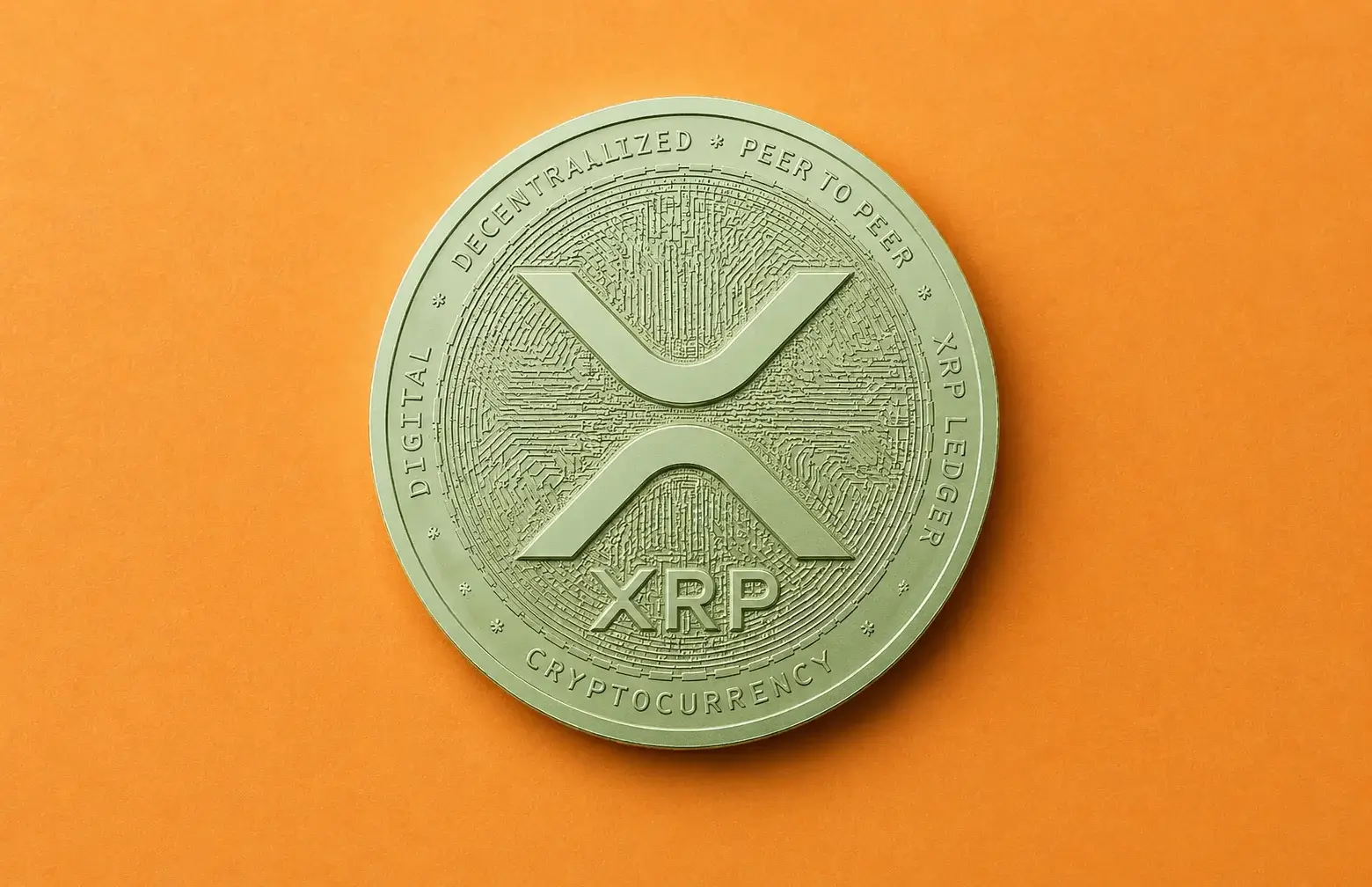
XRP Snaps Back to $1.12 off the $1.007 Floor — but Ripple's Winning Year Still Isn't Lifting the Token
XRP bounced nearly 10% off its $1.007 June low to $1.12 as the 57,000 US jobs print rotated capital back into crypto | That's TradingNEWs
Key Points
- XRP-USD trades near $1.12, up 2% and 10% off its $1.007 low, still down 70% from its $3.65 2025 peak.
- Spot XRP ETFs hold $1.49B in cumulative inflows, but 1 billion in monthly escrow unlocks caps the token near $1.
- The $1.00 floor is critical; reclaiming the $1.1366 200-day average and $1.20 targets $1.52, with the CLARITY Act the key catalyst.
XRP is trading near $1.12 into the July 4 weekend, up about 2% on the day and roughly 10% off the $1.007 low it printed on June 26. That bounce rode the same NFP-driven crypto rotation that lifted Bitcoin toward $62,000 and Ethereum off its floor — the soft 57,000 US jobs print cooled Fed hike fears and pulled risk appetite back into the complex. But the bounce is survival, not confirmation. XRP sits down roughly 70% from its 2025 peak above $3.65, and it is caught in one of the strangest setups in crypto: a token whose company is winning while the coin keeps losing.
The thesis is a flow-price gap. Ripple, the company, has had a banner year — the SEC case is resolved, its RLUSD stablecoin is booming, it has struck partnerships with Visa, Mastercard, and BlackRock, and spot XRP ETFs launched with $1.49 billion in cumulative inflows. Yet the XRP token has collapsed, because the good news accrues to Ripple and the XRP Ledger rather than to direct XRP token demand, while 1 billion XRP in monthly escrow unlocks adds relentless supply pressure and the token's high correlation to Bitcoin drags it down in every broad selloff. The catalysts keep coming; the price keeps falling.
That disconnect is the whole story. XRP started June around $1.30 and ended it near $1.04 — its weakest level since late 2024 — despite a busy, mostly positive month for Ripple. The decline came not from bad news but from a broad crypto selloff that pulled almost everything lower, amplified by XRP's tendency to fall harder than Bitcoin when the mood turns. The bullish Ripple headlines could not create enough token demand to overcome the escrow supply and the market beta. That is the flow-price gap in one sentence.
XRP at $1.12 sits at a genuine inflection. The $1.00 level is the must-hold floor that decides whether the bounce holds or the token breaks toward $0.85. Above, the $1.1366 200-day moving average and the $1.20 50-day are the resistance the recovery must clear. The one catalyst that could actually re-rate the token is the CLARITY Act, which would permanently classify XRP as a commodity — but it is about to miss the deadline the market was watching. Everything below builds that out.
The 70% Collapse From $3.65
To size the setup, XRP's collapse needs its full arc. The token reached a cycle high near $3.65 in July 2025, driven by the resolution of the SEC case, the launch of spot ETFs, and the broad 2025 crypto rally. It closed 2025 near $1.90, already well off the peak, and then slid relentlessly through 2026. XRP started June 2026 around $1.30, lost ground almost the entire month, and bottomed at $1.007 on June 26 — its weakest level since late 2024 and a decline of roughly 70% from the 2025 high.
The collapse is notable for what did not cause it. June 2026 was a busy, mostly positive month for Ripple and the XRP Ledger — RLUSD grew, partnerships advanced, the network shipped upgrades — yet the token fell the whole month. The decline came from a broad crypto selloff that pulled Bitcoin below $59,000 and dragged Ethereum, Solana, and BNB lower alongside XRP. When the largest coins slide together, the selling is about the whole market rather than any single token, and XRP, as a high-beta altcoin, fell harder than most.
The supply dynamic amplified the drop. Ripple releases 1 billion XRP from escrow every month, and June 2026 saw another major token release that added fresh supply into a weak market. Even though part of the monthly unlock typically returns to locked reserves, the market often reacts negatively to the headline supply increase, and the June release added pressure that pushed prices lower. The combination of broad market weakness and the escrow overhang produced the slide to $1.007.
The context reframes the bounce to $1.12. A token that fell 70% from its peak and bottomed at $1.007 on a supply-driven, market-wide selloff is deeply oversold, and the RSI bouncing from 18.16 — a severe oversold reading — to the mid-40s confirms the washout. The bounce off $1.007 is the market working off that extreme, helped by the NFP-driven risk-on turn. Whether it becomes a durable recovery depends on the token overcoming the flow-price gap that drove the collapse, and that gap has not closed.
The Flow-Price Gap: Good News, Falling Token
The defining feature of XRP in 2026 is the disconnect between Ripple's success and the token's price. Ripple has stacked up wins — its long-running SEC fight ended, RLUSD has grown, its banking ambitions have advanced, and it has secured major institutional partnerships — yet the XRP token has kept falling. This flow-price gap, where positive developments and even positive ETF inflows fail to lift the price, is the puzzle at the center of the XRP story, and understanding it is essential to the forecast.
The mechanism is that most of Ripple's good news does not create direct XRP token demand. RLUSD growth helps the XRP Ledger narrative, but the stablecoin's transactions burn only a trickle of XRP in fees. Partnerships with Visa and Mastercard boost Ripple's corporate standing but do not force buying of the token. Even a settlement deal or an AI-payments integration advances Ripple's business without requiring allocators to buy XRP. The value accrues to Ripple the company and the XRPL the network, but the XRP token captures little of it directly.
The ETF flows are the one exception that proves the rule. Spot XRP ETFs hold the token directly, so every dollar of inflow must buy XRP on the open market — genuine token demand. Those ETFs pulled in about $1.49 billion cumulatively, yet the price still fell, because the escrow supply and the broad-market selling overwhelmed the ETF buying. When even direct-demand ETF inflows can't lift the price, the flow-price gap is at its starkest — the buying exists but is being swamped by the selling.
For the forecast, the flow-price gap is the core challenge XRP must overcome. The bull case requires the token to reach a point where the demand — ETF inflows, whale accumulation, genuine utility — overpowers the escrow supply and the market beta, closing the gap. The bear case is that the gap persists, with Ripple's success continuing to accrue to the company and the network while the token languishes near $1. The gap closing is what turns the bounce into a recovery, and it has not happened yet.
The Escrow Overhang: 1 Billion XRP a Month
The single biggest structural weight on XRP is the escrow supply. Ripple holds a large reserve of XRP in escrow and releases 1 billion tokens every month — a mechanism designed to provide predictable supply, but one that creates a persistent overhang. Even though a portion of each monthly release typically returns to locked reserves, the headline of 1 billion new tokens entering the market monthly generates fear of selling pressure, and the market often reacts negatively regardless of how much is actually sold.
The escrow dynamic is a structural headwind that direct-demand sources have to fight through. XRP has a hard cap of 100 billion tokens, a far larger supply than Bitcoin's 21 million or the effective floats of many peers, and the monthly escrow releases keep adding to the circulating supply. For the price to rise, demand must not only exist but must exceed the escrow supply plus any other selling. That is a higher bar than tokens without a comparable monthly supply schedule face, and it is a core reason the flow-price gap exists.
The June 2026 release illustrated the pressure. The month's escrow unlock added fresh supply just as the broad crypto market weakened, and many holders responded by selling, pushing prices toward the $1.007 low. Escrow events are periodically covered in Ripple news and short-term price discussions precisely because they represent recurring supply pressure that the market has to absorb. The escrow is not a one-time event — it is a monthly overhang that recurs indefinitely.
For the forecast, the escrow supply is the structural weight the bulls must overcome. The bull case requires demand — ETF inflows, utility-driven buying, institutional accumulation — to consistently exceed the monthly escrow supply, tightening the effective float and lifting the price. The bear case is that the escrow supply keeps overwhelming demand, capping the token near $1. The escrow is the reason XRP's demand catalysts have to be larger than a comparable token's to move the price, and it is a permanent feature of the XRP investment case that long-term holders must factor in.
The ETF Story: $1.49 Billion Inflows but Cooling
The spot XRP ETFs are the one bullish signal that creates genuine token demand, and their story is mixed. Since launching, the funds have pulled in about $1.49 billion cumulatively, adding $4.68 million this month and $275 million over the past few months, and they now hold roughly $987 million in assets. Because these ETFs hold XRP directly, every dollar of inflow forces buying of the token on the open market — the one channel that translates institutional interest into direct XRP demand.
The recent cooling is the concern. On June 30, as the second quarter closed, the XRP ETFs saw their first net outflow in weeks — a pause in the buying that had been supporting the token. The inflows had been consistently positive even as the price fell, creating the flow-price gap, but the June 30 outflow signals the demand channel may be weakening just as the token needs it most. If the ETF inflows fade, the bullish case loses its one source of direct token demand, and the escrow supply dominates.
The ETF launch context tempers expectations. Spot XRP ETFs launched with initial optimism, but the expected developments have moved more slowly throughout 2026, and the institutional interest has not translated into the immediate, large-scale buying some anticipated. The discrepancy between the expectation of ETF-driven demand and the reality of a falling price became part of the XRP narrative, and some holders reduced their positions as the ETF impact underwhelmed. The ETFs are a genuine demand source, but they have not been the game-changer bulls hoped.
For the forecast, the ETF flows are the highest-frequency signal of whether direct XRP demand is returning. A reacceleration of inflows would provide the token demand needed to overcome the escrow supply and close the flow-price gap — the bull case. A continuation of the June 30 outflow trend would remove the one direct-demand channel and leave XRP dependent on broad-market sentiment and the fading catalysts. The ETF flow prints are the tell on whether the institutional bid is coming back or cooling further.
RLUSD and the XRPL Utility Narrative
Ripple's stablecoin, RLUSD, is the strongest utility story for the XRP Ledger, and it is growing fast. RLUSD reached approximately $1.3 billion in market capitalization within its first year, and it drove $2.5 billion in XRPL settlement volume as of July 1, demonstrating growing on-chain transaction demand. The XRP Ledger has moved ahead of Ethereum as the largest host chain for the RLUSD stablecoin, a genuine milestone that validates the XRPL as serious payment infrastructure.
The RLUSD growth strengthens the XRPL narrative but does little for the XRP token directly. Transactions on the XRP Ledger require small XRP-denominated fees, linking network activity to token utility, but those fees remain minimal relative to the token's supply. RLUSD moving $2.5 billion in settlement volume burns only a trickle of XRP, so the stablecoin's success boosts the ledger's relevance without creating meaningful direct demand for the XRP token. This is the flow-price gap in miniature — utility grows, token demand barely moves.
The distinction matters for how to read Ripple's headlines. RLUSD ahead of Ethereum as the largest host chain is a bullish signal for the XRP Ledger's adoption and Ripple's stablecoin strategy, and it reinforces the long-term case that XRPL is becoming critical payment infrastructure. But XRP holders need to separate Ripple's corporate and network progress from direct XRP token demand — the RLUSD growth helps the narrative and the ecosystem, but it does not automatically mean the XRP price must rise. That separation is why XRP has not rallied despite the positive RLUSD headlines.
For the forecast, the RLUSD and XRPL utility story is the long-term foundation that could eventually drive token demand if network activity grows large enough that the XRP fees become material. The bull case is that as XRPL adoption deepens — RLUSD, institutional lending, tokenization — the cumulative fee demand and the ecosystem's reliance on XRP tighten the token's effective supply. The bear case is that the utility remains too small relative to the 100-billion supply to move the price. The XRPL's growth is real, but its translation to token demand is the open question.
Ripple's Corporate Wins Versus XRP Token Demand
Ripple's corporate momentum has been striking, and it deepens the flow-price gap. The company joined Open USD, a new dollar stablecoin consortium backed by Visa, Mastercard, Stripe, BlackRock, and more than 140 other companies — a major validation of Ripple's standing in payments. Mastercard named Ripple a settlement partner in its new AI-payments network, and Ripple's x402 protocol lets AI agents pay with XRP and RLUSD. These are significant wins for Ripple as a company.
But the corporate wins create little direct XRP demand. Joining Open USD is a clear win for Ripple, but even if the consortium's stablecoin settles on the XRP Ledger, transactions there cost fractions of a cent, so the coin moving across it would burn only a trickle of XRP — nothing that pushes new demand toward the token. The Mastercard settlement partnership advances Ripple's business without requiring XRP buying. The pattern is consistent: Ripple wins, the XRP Ledger gains relevance, but the XRP token captures minimal direct demand.
The Ripple IPO talk is a further example. There is on-and-off discussion of a Ripple IPO, with hints that XRP holders might eventually get something out of it, but that is far down the road and does nothing for the XRP price today. The corporate developments that would benefit Ripple shareholders — an IPO, banking charter, institutional partnerships — do not translate directly into XRP token demand, reinforcing the separation between Ripple the company and XRP the asset. Holders betting on Ripple's success are not automatically betting on XRP's price.
For the forecast, the corporate wins are the reason the flow-price gap persists despite the constant positive headlines. The bull case requires Ripple's success to eventually create structural XRP demand — through utility, custody, ETF holdings tightening the float, or a regulatory change that re-rates the token. The bear case is that Ripple keeps winning while XRP keeps lagging, because the corporate value never flows to the token. The gap between Ripple's headlines and XRP's price is the central frustration for holders, and closing it requires a catalyst that directly benefits the token.
The CLARITY Act: The One True Catalyst
The single development that could genuinely re-rate XRP is the CLARITY Act — the pending US legislation that would permanently classify XRP as a commodity under law rather than leaving its status to regulators. That classification would remove the residual regulatory uncertainty, open the token to broader institutional adoption, and provide the kind of structural demand catalyst that Ripple's corporate wins cannot. The CLARITY Act is the most-watched fundamental catalyst that could flip sentiment, and it is the one thing that could close the flow-price gap.
The significance is that the CLARITY Act would create direct token demand in a way the other catalysts do not. A permanent commodity classification would give institutions the regulatory certainty to hold XRP, potentially accelerate ETF adoption, and remove the overhang that has kept some allocators on the sidelines despite the SEC case's resolution. It addresses the token directly rather than benefiting only Ripple or the XRPL, which is why it is the catalyst that matters most for the price.
The timing is the problem. The bill is about to miss the deadline the market had been watching, and its path through Congress is uncertain. Lawmakers are taking the CLARITY Act to New York for a hearing in July, keeping it in the news, but a clearer Senate vote timeline is what the market needs to price a genuine re-rating. The delay is part of why XRP has struggled — the catalyst that could lift the token keeps slipping, leaving the price stuck while the market waits for legislative clarity that has not arrived.
For the forecast, the CLARITY Act is the catalyst that could break XRP out of its range, but its timing is uncertain. A clearer Senate vote timeline or passage would provide the structural demand re-rating that could send XRP toward the higher targets — the scenario where the market starts pricing a move toward Standard Chartered's $2.80. Continued delay leaves the token dependent on ETF flows and broad-market sentiment, stuck near $1. The CLARITY Act's legislative progress is the fundamental swing factor, and its delay is the reason the bull case remains unconfirmed.
Read More
-
Yen Stalls at 160 Despite a 3% JGB and Tokyo Core CPI at 2.0% — Intervention Sits at 164, Friday's Payrolls Decide
02.09.2026 · TradingNEWS ArchiveEnergy
-
QQQ ETF ($706.22) Slides 7.4% Below Its High as the Market Reprices the AI Capex Bill — $686.57 Target if $700 Breaks
22.10.2026 · TradingNEWS ArchiveStocks
-
XRPI ($7.00) and XRPR ($10.74) Slide Toward 52-Week Lows as Spot XRP ETF Flows Stall at $708,510
22.10.2026 · TradingNEWS ArchiveCrypto
-
NG ($2.775) Decoupled From Europe’s €88 Gas Crisis as LNG Feedgas Hits 18.9 Bcf/d — $3.30 Upside on Cold Weather
22.10.2026 · TradingNEWS ArchiveCommodities
-
Dollar-Yen (157.35) Loses 157.65 as the Yen Rallies on Haven Demand — 155 Target if 156 Breaks
22.10.2026 · TradingNEWS ArchiveForex
The Technical Map: $1.00 Floor, $1.1366 and $1.20 Resistance
The chart frames XRP's trade around a critical floor and a stacked resistance. The floor is $1.00 — the absolute must-hold support that decides whether the token recovers or breaks lower, backed by the $1.007 June 26 low. Below $1.00, the token could tumble toward $0.90 and then $0.85. The resistance starts at the $1.1366 200-day moving average, the key bull/bear line, then steps up to the 50-day moving average near $1.1855-$1.20. XRP at $1.12 sits just below the 200-day average, testing whether the bounce can clear it.
The near-term levels are well-defined. The token bottomed at $1.007 on June 26 and bounced nearly 10% to the $1.11 area, moving above the $1.0510 resistance in the process. The immediate test is the $1.13-$1.14 zone where the 200-day moving average sits — a major resistance wall. Clearing it opens the path toward the $1.1855-$1.20 50-day moving average, and a close above $1.20 would confirm bullish momentum and point toward $1.29, the June 15 high, then $1.40 and $1.52.
The momentum picture is recovering from oversold. The RSI bounced from a deeply oversold 18.16 to around 47, and other oscillators have rebounded, signaling the selling pressure has eased. A TD Sequential monthly buy signal flashed on July 1, a potential macro reversal indicator that fired alongside Bitcoin and Ethereum. But the token remains below the 50-day moving average, so the medium-term structure is still bearish — the bounce is a recovery from oversold, not a confirmed trend reversal. Reclaiming the 50-day is what would flip the structure.
For the forecast, the technical map is unambiguous about the levels. Hold $1.00 and clear the $1.1366 200-day average, and the bounce extends toward the $1.20 50-day; close above $1.20 and the token targets $1.29, $1.40, and $1.52. Lose $1.00, and the token slides toward $0.90 and $0.85. The $1.00 floor is the line that separates survival from a deeper breakdown, and the $1.1366-$1.20 resistance is what the recovery must clear to confirm. XRP at $1.12 is squarely in the battle zone.
The Bitcoin Correlation and High Beta
XRP's price is heavily influenced by Bitcoin, and the correlation is a core driver of its weakness. Like most large-cap altcoins, XRP moves with Bitcoin — when BTC breaks down from key support levels, money flows out of riskier cryptocurrencies, and XRP falls. The token's 7-day correlation with the top-10 coins runs above 0.5, and its tendency to fall more sharply than Bitcoin when the mood turns makes it a high-beta play on crypto risk appetite. That beta is why a rough month for crypto hits XRP harder than most.
The June selloff demonstrated the correlation. XRP fell about 20% over the month, but it was far from alone — Bitcoin fell roughly as much and slipped below $59,000, while Ethereum, Solana, and BNB dropped too. When the biggest coins slide together, the selling is about the whole market rather than singling out XRP, and the token's high beta meant it participated fully in the downside. The pressure on XRP came not from anything bad on the Ripple network but from the broad crypto selloff dragging everything lower.
The beta cuts both ways, which matters for the bounce. XRP's tendency to amplify Bitcoin's moves means that when BTC bounced toward $62,000 on the NFP-driven risk-on turn, XRP bounced too — up 10% off its low. If Bitcoin sustains its recovery and risk appetite returns, XRP's high beta means it could outperform on the upside just as it underperformed on the downside. The token's fate is tied to Bitcoin's direction, and BTC breaking above key resistance would pull XRP higher.
For the forecast, the Bitcoin correlation is the macro variable that overrides XRP's company-specific story. The bull case requires Bitcoin to sustain its recovery, pulling XRP up with it as risk appetite returns — the beta working in XRP's favor. The bear case is that Bitcoin's downtrend resumes, dragging XRP below $1 regardless of Ripple's progress. XRP's correlation to Bitcoin means the token's near-term direction depends as much on BTC's move as on any XRP-specific catalyst, and Bitcoin's own $58,115 floor is a level XRP holders must watch.
The NFP Bounce and the Macro Read
The current bounce rode a macro shift, and understanding it is key to judging its durability. XRP rose for two consecutive days to the $1.11 area as market participants rotated back into crypto following the soft US non-farm payrolls data. The report showed the labor market weaker than expected, with the economy adding just 57,000 jobs, which suggested the Fed will not hike interest rates as some had feared. That dovish repricing lifted risk appetite across crypto, and XRP, as a high-beta token, caught the updraft.
The macro mechanism is the same one that lifted Bitcoin and Ethereum. The soft jobs print cooled Fed hike bets, dropped Treasury yields, and improved the risk backdrop for speculative assets. XRP's bounce is part of that broad crypto risk-on turn rather than an XRP-specific catalyst — the token rose because the whole complex rose, not because of anything new from Ripple. That distinction matters, because a macro-driven bounce can reverse if the macro turns, whereas a fundamentally-driven move has more staying power.
The macro calendar is the near-term swing factor. The July 28-29 FOMC meeting is the next major event — a hawkish rate signal could pressure crypto prices and pull XRP back below $1, while a softer tone could help risk assets recover and support the token. The July 8 FOMC minutes are the earlier preview. XRP's bounce is levered to the Fed path staying dovish, and any shift toward hawkishness would remove the macro tailwind that produced the move off $1.007.
For the forecast, the macro read is the external variable that either sustains or aborts the bounce. If the dovish Fed path holds and risk appetite stays constructive, XRP has the backdrop to reclaim the $1.1366 200-day average and press toward $1.20. If the macro turns hawkish at the July FOMC, XRP loses the updraft and faces its escrow supply and bearish structure alone. As a high-beta token, XRP is highly sensitive to the macro risk backdrop, and the Fed path is the swing factor for whether the bounce extends.
Bull and Bear Scenarios Into Mid-July
The two paths from $1.12 are defined by the $1.00 floor and the resistance cluster. The bull case: XRP holds $1.00, ETF inflows reaccelerate, Bitcoin sustains its recovery, and the token reclaims the $1.1366 200-day average and then the $1.20 50-day. A close above $1.20 opens $1.29, then $1.40 and $1.52, and if the CLARITY Act timeline improves, the market may start pricing a move toward Standard Chartered's $2.80 year-end target. This scenario requires the flow-price gap to begin closing through renewed demand and regulatory progress.
The bear case: XRP loses $1.00 as Bitcoin weakens, the ETF outflows continue, and the escrow supply overwhelms demand. A break below $1.00 slides the token toward $0.90 and then $0.85, with the possibility of testing lower if the Fed stays hawkish and the broad crypto market turns down. This scenario is the flow-price gap persisting — Ripple's good news failing to create token demand while the escrow supply and market beta drag the price below its critical support. The token's high beta means it would fall hard in a broad selloff.
The forecast dispersion is wide. Near-term July projections cluster XRP in the $1.05-$1.25 range, with $1.15-$1.25 by month-end if the market stabilizes. Standard Chartered's revised 2026 target of $2.80 and the broader $2.50-$5.00 forecasts represent the bull case if a full market re-rating occurs, while conservative models like CoinCodex project $1.70-$2.00. The $3 target remains alive for 2026 but requires the CLARITY Act, sustained ETF demand, and improved market sentiment to align. The bearish scenarios see $0.85-$0.90 if $1.00 breaks.
The base case the evidence supports is consolidation near $1, with the bounce holding $1.00 but struggling to break decisively higher until a genuine catalyst — the CLARITY Act, reaccelerating ETF flows, or a Bitcoin breakout — closes the flow-price gap. The oversold bounce, the ETF inflows, the RLUSD growth, and the TD Sequential buy signal lean the near-term probabilities toward holding $1.00. The escrow supply, the ETF cooling, and the Bitcoin correlation are the weights against it. July is about survival first, recovery second.
The Forecast and the Levels That Decide It
XRP heads into mid-July at $1.12, bounced off the $1.007 low on the NFP-driven risk-on turn but still trapped in the flow-price gap that drove its 70% collapse from $3.65. The forecast is cautiously constructive near-term but structurally challenged. The weight of evidence — an oversold bounce, $1.49 billion in cumulative ETF inflows, RLUSD driving $2.5 billion in XRPL settlement, whale accumulation, and a TD Sequential buy signal — leans toward XRP holding $1.00 and consolidating, conditional on the token overcoming the escrow supply and the Bitcoin correlation.
The levels that decide it are clear. On the upside, reclaiming the $1.1366 200-day average opens the $1.20 50-day; a close above $1.20 targets $1.29, $1.40, and $1.52, with $2.80 the year-end bull target if the CLARITY Act and ETF demand align. On the downside, losing the $1.00 floor slides the token toward $0.90 and $0.85. The $1.00 level is the must-hold line that separates survival from a deeper breakdown, and the $1.20 50-day is the level that would confirm a genuine recovery.
The catalysts to track are specific. The CLARITY Act is the one true re-rating catalyst — a clearer Senate vote timeline could flip sentiment, while continued delay keeps the token capped. The daily ETF flow prints are the direct-demand signal, with a reacceleration bullish and continued outflows bearish. The July 28-29 FOMC meeting is the macro pivot — dovish supports the bounce, hawkish pressures it. And Bitcoin's direction is the beta driver — a BTC breakout pulls XRP higher, a breakdown drags it below $1.
The one-thesis read holds from top to bottom: XRP is trapped in a flow-price gap where Ripple's banner year and $1.49 billion in ETF inflows can't overcome the 1-billion-monthly escrow supply and the token's Bitcoin correlation — and the bounce to $1.12 off the $1.007 low is survival, hinging on holding $1.00 and the CLARITY Act. The token's problem is not Ripple, which keeps winning; it is that the winning accrues to the company and the network while the token captures little direct demand. The confirmation of a recovery is a reclaim of $1.20 with the CLARITY Act providing a re-rating catalyst. Until then, XRP holds near $1, and the flow-price gap is the trade.