XRP-USD Fights to Hold $1.11 After Falling Less Than Bitcoin and Ethereum, yet Down 70% From $3.66 the Bear Channel Persists
XRP is the rare major token with its regulatory status resolved and over $1 billion of ETF inflows since November | That's TradingNEWS
Key Points
- XRP near $1.11, +1.3% on the day and down just 3% on the week, falling less than Bitcoin, Ethereum, and Solana.
- Resolved SEC case and $1B+ in spot ETF inflows give XRP a firmer floor; the escrow unlock of 1B/month weighs on it.
- Down 70% from its $3.66 high and below the 200-week SMA; $1.05 is support, $1.25 the wall, $0.90 the bear target.
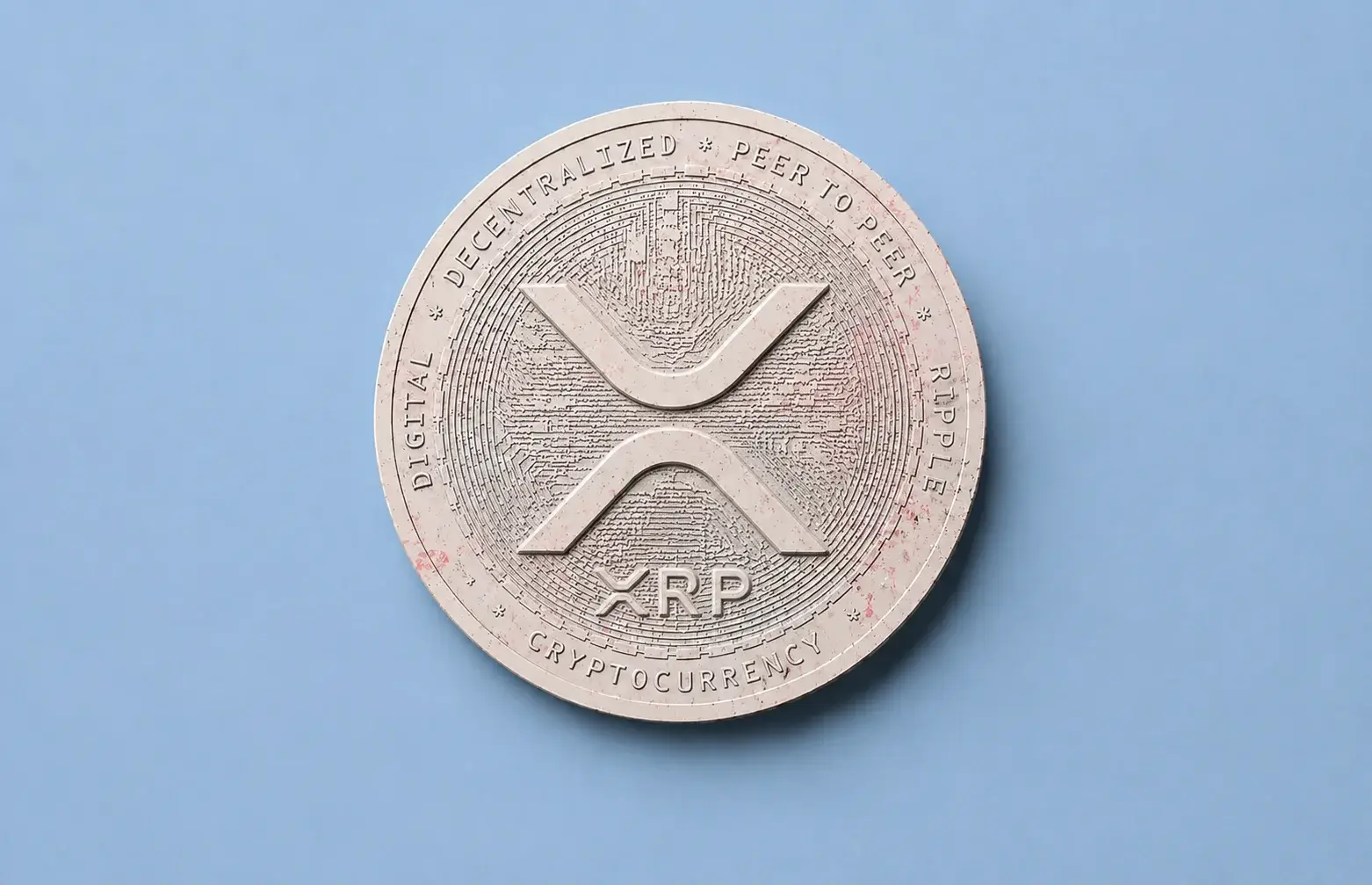
XRP is winning a contest no one wants to be in: the race to fall the least. The token traded near $1.11 on Thursday, up roughly 1.3% over 24 hours as the broader crypto complex bounced, and down only about 3% on the week, a stretch in which it fell less than Bitcoin, Ethereum, and Solana. That relative strength is not luck. While the majors got hammered by ETF outflows, a hawkish Fed, and the risk-off wave from the Iran conflict, XRP held its ground better than every other large-cap token, and the reasons are structural.
The thesis is that XRP carries advantages its peers do not, which explains the outperformance in the falling market. It is the one major token with its regulatory status fully resolved, after the multi-year enforcement action against Ripple concluded in 2025. It has a spot ETF channel that has pulled in over $1 billion since launching in November 2025. And it has a real-world payments utility and a growing stablecoin behind it. Those structural pillars gave XRP a firmer floor when the selling hit.
But relative strength in a bear market is still a bear market. XRP sits about 70% below the $3.66 high it reached in July 2025, it has broken below its 200-week moving average, and it trades inside a multi-year bear channel that some chart as targeting $0.90. The monthly release of a billion XRP from escrow is a persistent supply overhang, and a sharp contraction in network fees raises questions about value capture. XRP at $1.11 is the best house on a bad block, and the block is the macro.
The Tape: $1.11, Up With the Bounce but Below the 200-Week Line
Thursday's price action put XRP in line with the crypto-wide relief bounce. The token traded near $1.11, up about 1.3% on the day with a 24-hour volume near $1.7 billion and a market capitalization of roughly $69 billion, holding a top-three position among digital assets. The move tracked Bitcoin's recovery off its lows and Ethereum's lift, confirming that the day's strength was a market-wide oversold reflex rather than an XRP-specific catalyst.
The relative performance is where XRP stands out. Down only about 3% on the week against far steeper declines in the other majors, XRP demonstrated the firmer footing that has characterized it through the recent selloff. Where Bitcoin shed value on heavy ETF redemptions and Ethereum bled on its value-capture problem, XRP's decline was shallower, a sign that its holder base and demand drivers held up better under pressure. The token has been the steadiest of the large-caps in a turbulent stretch.
The caveat sits on the long-term chart. XRP has fallen below its 200-week moving average, a significant technical breakdown that signals the multi-year uptrend has been compromised. A token can outperform its peers on a weekly basis while still sitting in a damaged long-term structure, and that is XRP's position: tactically resilient, structurally wounded. The bounce to $1.11 is constructive in the short term, but the break of the 200-week line is a warning that the relative strength is being measured against a falling baseline.
Why XRP Fell Less: the Regulatory Clarity Advantage
The single biggest reason XRP has outperformed is regulatory clarity, and it is an advantage no other major token can claim to the same degree. The multi-year enforcement action that the SEC brought against Ripple in December 2020, which questioned whether XRP was an unregistered security, concluded in 2025 when the agency agreed to drop its appeals. That resolution removed a regulatory overhang that had weighed on institutional participation in XRP for nearly five years, and the token surged more than 23% on the news, climbing toward $3.38 in the days that followed.
The significance of that clarity cannot be overstated in the current environment. Institutions allocating to crypto need to know the legal status of what they are buying, and XRP is now the rare major token with that question definitively answered in its favor. While other assets carry lingering regulatory ambiguity, XRP can be held by institutions without the cloud that once hung over it. That structural advantage is part of why the token attracted the demand that cushioned its recent decline.
The clarity is a double-edged consideration for the forecast. On one hand, it is a durable positive that differentiates XRP and supports the institutional adoption thesis. On the other, it means the major catalyst that drove the 2025 rally has already played out, so the regulatory tailwind is now in the price rather than ahead of it. Any renewed classification dispute would trigger a sharp negative reaction, but the base case is that the resolved status remains a quiet, structural support rather than a fresh upside catalyst. The clarity helped XRP fall less; it is not by itself a reason for the token to rally.
The ETF Channel: $1 Billion In Since November
XRP's second structural advantage is its spot ETF channel, which launched in November 2025 and has generated over $1 billion in net inflows since. The funds, listed on major exchanges and offered by a roster of established issuers, gave XRP a regulated, brokerage-accessible demand channel of the same type that transformed Bitcoin's market structure. ETF activity now serves as a measurable demand indicator for the token, with sustained inflows tightening available supply and outflows creating pressure.
The $1 billion of cumulative inflows is meaningful for an asset of XRP's size, and it represents a new, sticky source of demand that did not exist before late 2025. Where Bitcoin's ETF complex has been in a redemption phase, bleeding billions over recent weeks, XRP's newer ETF channel has continued to attract net inflows, which is part of the demand differential that explains the relative outperformance. The ETF bid has been a marginal buyer for XRP at a time when it turned into a marginal seller for Bitcoin.
The ETF channel is also the cleanest forward indicator for the token. Because the funds publish their flows, the market can track institutional demand for XRP in near real time, and the direction of those flows will be a key tell for the price. Sustained inflows would tighten the liquid supply and support the price against the escrow overhang and the macro pressure. A reversal into outflows, as happened to Bitcoin's funds, would remove a key pillar of the relative-strength story. For now, the ETF channel is a net positive, and it is one of the concrete reasons XRP has held up better than its peers.
From $3.66 to $1.11: the Cycle That Still Cut Deep
The relative-strength narrative should not obscure how much XRP has fallen on a longer view. The token reached an all-time high of $3.66 in July 2025 on the wave of regulatory resolution, then began a long descent. By the end of last year it had retreated to $1.87, climbed back to $2.34 in January 2026 on positive crypto sentiment and ETF interest, then rolled over through the spring, dropping to the $1.38 to $1.48 area by May and now to $1.11. From peak to current, that is a decline of roughly 70%, a brutal drawdown by any measure.
The trajectory matters because it frames the relative-strength story correctly. XRP outperforming Bitcoin, Ethereum, and Solana over the recent rough stretch is a statement about the past few weeks, not the full cycle. Over the longer arc, XRP has suffered a cycle drawdown comparable to its peers, falling from a euphoric high to a fraction of that level as the broad crypto bear market ground on. The token is steadier than its peers right now, but it is steadier at a deeply depressed level.
That distinction is central to the forecast. A 70% drawdown from the high means XRP has already absorbed enormous damage, which is partly why its recent declines have been shallower, much of the selling has already happened. The token consolidating near $1.11 after falling from $3.66 could mark a base if demand returns, or a way station to lower levels if the macro and the structural overhangs win. The relative strength suggests the former is possible; the broken long-term chart warns the latter is live.
The Escrow Overhang: a Billion XRP a Month
The persistent structural weight on XRP is its supply schedule. Ripple releases 1 billion XRP from escrow each month, a predictable, programmatic unlock that adds to the circulating supply on a regular cadence. While a substantial portion of each release is typically re-escrowed rather than sold, the schedule remains a structural factor the market monitors closely, because it represents a steady potential source of new supply hitting a token with a fixed 100 billion cap and roughly 62 billion already circulating.
The escrow mechanism is a feature of XRP's design, intended to provide predictable, managed supply releases rather than a sudden flood, but it functions as a recurring overhang in a weak market. When demand is strong, the monthly unlock is absorbed without issue. When demand softens, as it has during the broad crypto selloff, the steady supply release becomes a headwind that the price has to overcome each month. The escrow schedule is a reason XRP's rallies can stall, because new supply is always on the horizon.
For the forecast, the escrow overhang is a structural counterweight to the bullish ETF and regulatory stories. The ETF inflows tighten supply on the demand side, while the escrow releases loosen it on the supply side, and the net effect on the price depends on which dominates in a given period. In a strong market, ETF demand overwhelms the escrow supply and the price rises. In a weak market, the escrow supply weighs on a token already under pressure. The monthly billion-XRP release is the structural reason XRP needs sustained demand just to hold its level, let alone advance.
Utility, RLUSD, and the Value-Capture Question
XRP's fundamental case rests on its utility as a payments network, often described as a faster, cheaper alternative to traditional cross-border settlement rails. The XRP Ledger uses trusted validator nodes rather than energy-intensive mining, enabling quick, low-cost transactions, and XRP functions as a bridge currency for moving value across different fiat currencies. That payments utility is a real-world use case that differentiates XRP from purely speculative tokens, and it underpins the long-term institutional adoption thesis.
The ecosystem has expanded with Ripple's dollar-backed stablecoin, RLUSD, which grew to approximately $1.3 billion in market capitalization within its first year. Transactions on the XRP Ledger require small XRP-denominated fees, linking network activity to token utility, and the stablecoin's growth is a sign of expanding usage of the broader Ripple ecosystem. The long-term bull case ties XRP's value to the growth of this payments and settlement infrastructure, with the most optimistic multi-year scenarios contingent on Ripple's banking ambitions becoming fully operational.
The value-capture question is the fundamental wrinkle. Network transaction fees have contracted sharply, with 90-day average fees dropping roughly 91.5%, which means the XRP consumed by network activity has fallen dramatically even as the ecosystem expands. That fee contraction echoes the value-capture concern that weighs on other tokens: usage can grow while the amount of the token actually consumed by that usage shrinks, weakening the direct link between network activity and token demand. The utility is real, but how much of that utility translates into XRP demand is the open question that limits the fundamental case.
The Broken Long-Term Chart: Below the 200-Week SMA
The most concerning technical development for XRP is its position relative to the 200-week moving average, a long-term trend indicator that the token has fallen below. A break beneath the 200-week line is a significant structural signal, because that moving average typically marks the boundary between a long-term bull market and a long-term bear market. XRP trading under it indicates the multi-year uptrend has been compromised, and the token has entered the kind of extended bear phase that can persist for many months.
The longer-term chart shows a multi-year consolidation that some analysts frame as a symmetrical triangle stretching back nearly a decade, with the recent action resolving to the downside. One bearish framework that flagged a sell signal at $2.20 in late 2025 has been targeting $0.90, drawing a parallel to the bear-cycle channel that played out in the 2021 to 2022 downturn. The break below the 200-week average lends credence to that bearish structural read, suggesting the path of least resistance over the longer term points lower until the token can reclaim its key long-term levels.
The on-chain data reinforces the caution. A 90-day realized profit-and-loss ratio that fell to its lowest since 2024 indicates holders are sitting on diminished or negative returns, the kind of capitulation backdrop that accompanies bear-market troughs. The contrarian reading is that such washed-out conditions often precede recoveries, and some momentum indicators show XRP as oversold across major timeframes. But the broken 200-week structure is the dominant long-term signal, and it argues that XRP's relative strength is occurring within a damaged longer-term framework.
Read More
-
Yen Stalls at 160 Despite a 3% JGB and Tokyo Core CPI at 2.0% — Intervention Sits at 164, Friday's Payrolls Decide
02.09.2026 · TradingNEWS ArchiveEnergy
-
Nasdaq Extends Record at 27,222, S&P 500 Holds 7,767, Dow Slides 0.40% as SCHW Drops 5.70%
22.09.2026 · TradingNEWS ArchiveStocks
-
Ethereum Tests $2,786–$2,800 Liquidation Wall as OI Hits $36.47B — $3,520 Flag Target in Play
22.09.2026 · TradingNEWS ArchiveCrypto
-
On Holding ($30.52) Gaps Above $29 as Investor Day Sets 22% EBITDA Margin Goal — $38.63 in Play
22.09.2026 · TradingNEWS ArchiveCommodities
-
EURUSD Bear Flag Tightens Between 1.1450 and 1.1500 as DXY Holds 100.40 — 1.1365 in Sight
22.09.2026 · TradingNEWS ArchiveForex
The Technical Map: $1.05 Floor, $1.25 Wall, $1.41 and $1.62 Above
The near-term chart frames a clear set of levels. Immediate support sits near $1.05, with the psychological $1.00 level below it as the next floor, and those are the zones the recent relative strength has been defending. As long as XRP holds above $1.05, the consolidation near $1.11 can be read as basing rather than breaking down. A loss of $1.00 would open the door to the deeper bear-channel targets that the long-term structure implies.
Overhead, the first resistance is $1.25, the near-term ceiling the token has to clear to signal the bounce has legs. Above that, a daily close above $1.25 would open targets near the 100-day exponential moving average around $1.41 and the 200-day exponential moving average around $1.62. Those moving averages are the levels XRP needs to reclaim to repair the medium-term technical damage, and they sit well above the current price, underscoring how much ground the token has to recover even to neutralize the downtrend.
The structure leaves XRP coiled between $1.05 support and $1.25 resistance in the near term, inside a broader bear framework defined by the break of the 200-week average. The token has held its near-term support better than its peers, which is the relative-strength story in technical terms, but it has not come close to reclaiming the moving averages that would signal a genuine trend change. The setup is a token basing at a low level, with the burden on the bulls to reclaim $1.25 and then the EMAs above. Until then, the bounce is a bounce, not a reversal.
The Macro Anvil: a Hawkish Fed and a $62,880 Bitcoin
XRP cannot escape the macro crushing all of crypto. Consumer inflation at 4.2% and a wholesale print at 6.5% over the year have locked the Federal Reserve into a hawkish stance, with a December rate increase fully priced and the 10-year Treasury at 4.52%. For speculative risk assets, that is a hostile backdrop: high real yields raise the opportunity cost of holding non-yielding tokens, and the dollar near 100 pressures everything priced against it. The risk-off wave from the second day of U.S. strikes on Iran, which drove nearly $1 billion in crypto liquidations, hit the entire complex.
The link to Bitcoin is the dominant near-term driver. XRP trades as part of the broad crypto risk basket, so as long as Bitcoin is pinned near $62,880 by ETF outflows and a hawkish Fed, the altcoins including XRP are pinned with it. The relative strength XRP has shown is a story of falling less than Bitcoin, not of decoupling from it. When Bitcoin bounces, XRP bounces; when Bitcoin breaks lower, XRP follows, even if by a smaller magnitude. The macro tide that is running out for Bitcoin is running out for XRP too.
The one nuance is that XRP's structural advantages, the resolved regulation, the ETF inflows, and the payments utility, give it a firmer floor within the broad selloff. Those factors are why it has fallen less, and they could allow it to recover faster if the macro turns. But the macro has to turn first. For XRP to mount a sustained advance, the crypto complex needs Bitcoin to stabilize and the Fed to soften, and neither is in the current data. The structural pillars cushion the downside; they do not override the macro.
The Forecast: What Decides XRP From $1.11
The path runs through two levels and the broader crypto tape. The bullish scenario requires XRP to hold $1.05 support and the complex to stabilize, which would let the relative-strength story extend toward the $1.25 resistance. A daily close above $1.25 would open the medium-term targets at the 100-day EMA near $1.41 and the 200-day EMA near $1.62, and the optimistic 2026 forecasts in the $1.90 to $2.21 range would come back into view. That scenario leans on the ETF inflows continuing, the regulatory clarity supporting institutional demand, and the macro turning less hostile.
The bearish scenario is a break of support. A loss of $1.00 would confirm the breakdown implied by the move below the 200-week moving average, open the bear-channel target near $0.90, and align with the most cautious forecasts that see XRP drifting toward $0.44 in a deep downside case. The catalysts are all live: another leg lower in Bitcoin, a hawkish Fed surprise, a reversal of the ETF inflows into outflows, or the escrow supply overwhelming softening demand. In that case, the relative strength fades and XRP follows the complex lower.
The variable that decides it is whether XRP's structural advantages can outrun the macro and the supply overhang. The token has the cleanest regulatory status, a growing ETF channel, and a real payments utility, which is why it has fallen the least. But it sits below its 200-week average in a damaged long-term structure, with a billion XRP a month flowing from escrow and a macro hostile to risk. The verdict is relatively constructive but macro-bound: at $1.11, XRP is the steadiest of the crypto majors, holding $1.05 support better than its peers held theirs, but it cannot mount a real recovery until Bitcoin stabilizes and it reclaims $1.25. The structural pillars are real; the macro is the ceiling. XRP falls the least, but it still falls with the tape.