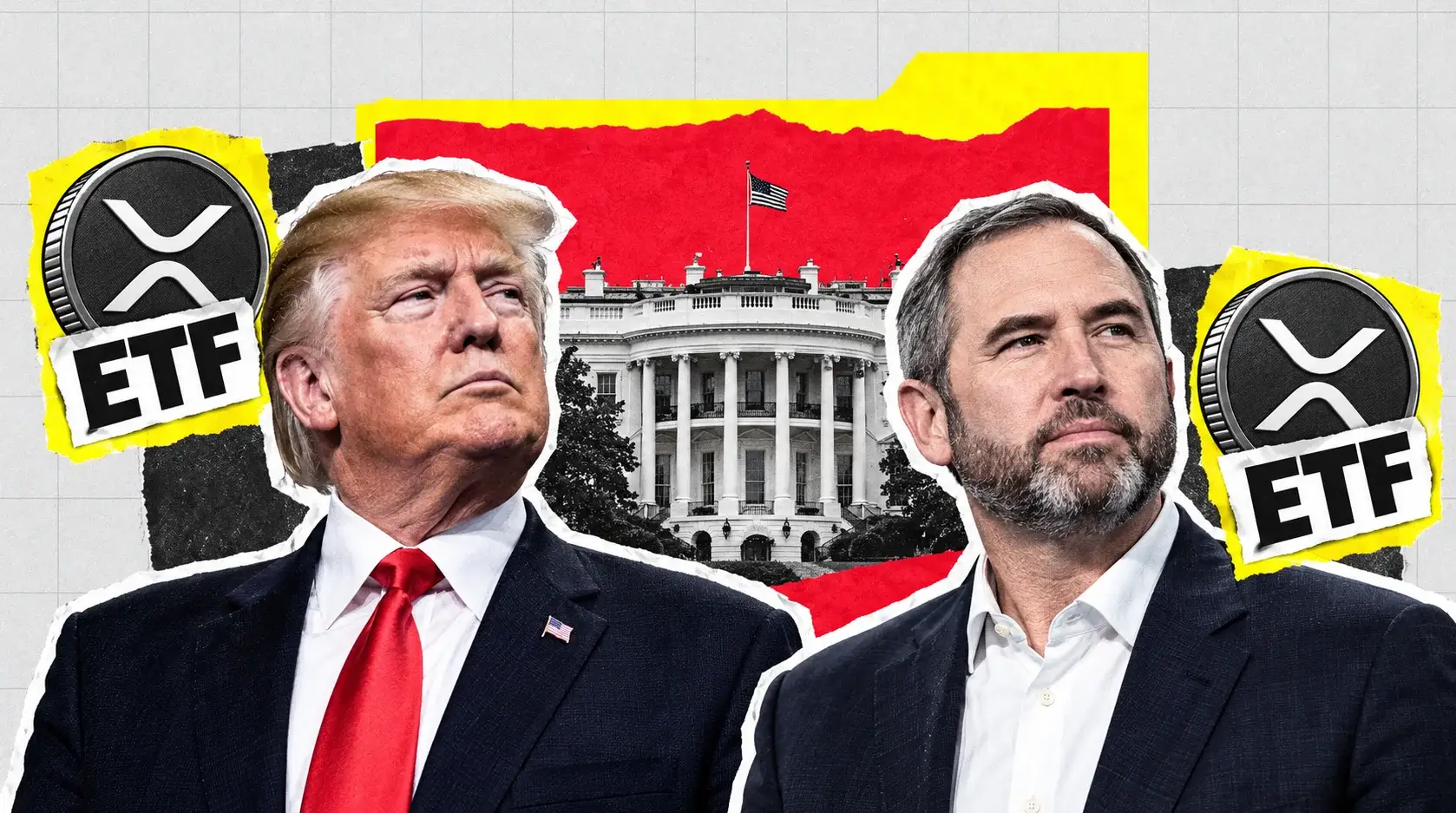
XRPI Closes at $8.29 and XRPR at $12.13 as Spot XRP ETF Inflows Hit $1.32B Ahead of CLARITY Markup
XRP-USD at $1.4748 (+1.92%); seven listed spot XRP ETFs hold $1.53B AUM, April inflows hit $81.59M as Senate Banking schedules Thursday vote | That's TradingNEWS
Ripple's spot ETF complex caught a violent bid through Monday's session as institutional capital crowded into regulated XRP exposure vehicles ahead of Thursday's Senate Banking Committee markup of the CLARITY Act, with the Volatility Shares XRP ETF (NASDAQ:XRPI) closing at $8.29 — up $0.35 or 4.41% on the day — and the REX Osprey XRP ETF (BATS:XRPR) printing $12.13, up $0.55 or 4.75% on the session. Both products meaningfully outpaced the underlying XRP-USD spot move of 1.92% on the day, telegraphing the kind of front-running positioning that consistently appears across single-asset crypto ETF complexes when a binary regulatory catalyst sits inside the immediate trading horizon. XRPI traded between $8.14 at the floor and $8.34 at the ceiling, closed at the upper end of the band, and printed $8.28 in the after-hours tape — a modest 0.12% give-back that reflects measured profit-taking rather than meaningful institutional distribution. XRPR stretched between $11.94 and $12.13 on the session, closing at the absolute high of the day in a session-ending buying surge that captures the front-running dynamic that has been compressing positioning across both products ahead of Thursday. The 52-week ranges across both ETFs deliver the cleanest single picture of how far the complex has corrected from peak levels — XRPI runs from $6.50 at the floor to $23.53 at the ceiling, placing the $8.29 close approximately 65% below the cycle high but 27% above the cycle floor, while XRPR runs from $9.50 to $25.99, with the $12.13 close sitting roughly 53% below the all-time high and 28% above the structural floor. Average daily volume runs 184,120 shares for XRPI and 19,780 shares for XRPR — telegraphing that XRPI functions as the primary institutional vehicle for spot XRP exposure across US wirehouse and registered investment advisor channels while XRPR captures the secondary flow that prefers the BATS execution venue or specific routing requirements. The underlying XRP (XRP-USD) spot tape closed at $1.4748 on the major venues with intraday peaks reaching $1.5072 and dips into $1.4177, with market capitalization at $90.65 billion and 24-hour turnover across centralized exchanges crossing $3.77 billion. Sunday's 6%+ one-day advance — the largest single-session move for XRP in roughly two months — anchored the rally that pulled both ETF products higher into the Thursday catalyst window, with the technical inverse head-and-shoulders pattern that fired on the 4-hour chart providing the chart-level confirmation that the institutional flow architecture had been building underneath the surface.
The XRPI Architecture and the Volatility Shares Capture Mechanism
The structural framework that drives the XRPI ETF (NASDAQ:XRPI) performance sits in the Volatility Shares product methodology that delivers spot XRP price exposure through a registered investment company wrapper accessible across US brokerage and retirement account channels. The 4.41% Monday gain delivered substantial relative-strength outperformance against the underlying XRP-USD spot move of 1.92%, capturing the kind of premium expansion against net asset value that frequently appears when institutional buying pressure overwhelms the underlying creation/redemption arbitrage mechanism. The $8.29 closing price sits inside an intraday range that compressed from $8.14 at the low to $8.34 at the high — a 2.45% intraday volatility band that telegraphs the kind of two-sided positioning that historically anchors front-running flow ahead of binary regulatory events. The $7.94 previous close anchored a session that opened with measured buying intensity and accelerated through the afternoon tape as institutional positioning desks pulled forward exposure ahead of Thursday's markup. The 184,120 average daily volume profile places XRPI among the most liquid single-asset crypto ETF products on US exchanges, providing the execution depth that allows pension funds, endowments, and family offices to scale positions without dragging the tape against their entry. The 52-week range running from $6.50 at the floor to $23.53 at the ceiling captures both the magnitude of the post-launch rerating that XRPI delivered through its first six months and the subsequent correction that compressed the share price during the legislative uncertainty phase that defined the bottling of the CLARITY Act in Senate Banking through February, March, and April. The current $8.29 print sits in the structural lower-half of the 52-week trading band — a positioning that telegraphs meaningful upside room if Thursday's vote clears the legislative procedural hurdle and unlocks the institutional flow architecture that has been waiting on the regulatory sidelines through the consolidation phase.
The XRPR Differentiation and the REX Osprey Listing Mechanics
The XRPR ETF (BATS:XRPR) at $12.13 represents the parallel institutional XRP exposure vehicle that competes with XRPI across the regulated spot XRP ETF complex, and the comparative session performance tells a meaningful story about positioning dynamics underneath the surface. The 4.75% Monday gain meaningfully exceeded XRPI's 4.41% advance and outpaced the underlying XRP-USD spot move by a factor of approximately 2.5x — telegraphing aggressive institutional positioning that prefers the REX Osprey wrapper for specific routing or distribution reasons. The intraday range stretched between $11.94 at the floor and $12.13 at the ceiling, with the product closing at the absolute high of the day in a session-ending buying surge that reflected the kind of front-running positioning that consistently precedes binary regulatory catalysts. The $11.58 previous close anchored a session where the buying intensity built progressively through the afternoon, with the closing tape reflecting the institutional positioning desks crowding into XRPR exposure ahead of the May 14 markup. The 19,780 average daily volume profile places XRPR firmly in the secondary institutional liquidity tier — meaningfully below XRPI's 184,120 shares but still sufficient for most institutional positioning needs. The 52-week range running from $9.50 to $25.99 captures the broader cyclical pattern that has defined the XRP ETF complex since launch, with the current price sitting approximately 28% above the cycle floor and 53% below the all-time high. The structural differentiation between XRPI and XRPR runs through the listing venue (NASDAQ versus BATS), the issuer brand (Volatility Shares versus REX Osprey), and the institutional distribution networks that route flow toward each product — meaning capital allocators with specific routing preferences or wirehouse relationships may favor one product over the other regardless of the underlying XRP exposure equivalence.
The Cumulative Flow Architecture and the $1.32 Billion Capture
The aggregate institutional positioning across the spot XRP ETF complex tells the cleanest single story about the structural demand profile that has been building underneath the underlying XRP-USD tape. Cumulative net inflows across the seven listed spot XRP ETF products since the November 2025 launch now sit near $1.32 billion, with combined assets under management reaching $1.53 billion across the complete product complex. The April monthly inflow run-rate of $81.59 million captured the strongest single-month flow capture since December 2025, providing the kind of acceleration signal that confirms the institutional positioning architecture has been ramping rather than fading. The $28.1 million in net inflows captured between May 4 and May 6 — across a tight three-day window — anchored the institutional bid that supported Sunday's 6%+ rally and Monday's continued upside push through both XRPI and XRPR. The Mason Versluis citation of DigiToolBuilder data confirms that XRP recorded its strongest week of 2026 for ETF net inflows with 24.2 million XRP added across the complex, validating the institutional flow architecture independently of the daily price action. The weekly flow profile across the broader XRP ETF complex has been positive in approximately 77% of weeks since the November 2025 launch — a hit-rate that telegraphs the kind of structural rather than tactical institutional positioning that creates durable demand support for the underlying XRP-USD price. The mechanical implication of every dollar entering the XRPI, XRPR, and competing spot XRP ETF products is that the issuers must purchase physical XRP to back the newly created shares, meaning the inflow capital flows directly into spot XRP purchases that reduce available exchange supply and compress the float available for speculative trading. The pending SEC proposal that would allow XRP to be included inside multi-asset crypto trust listings alongside Bitcoin and Ethereum represents a structural demand catalyst that would mechanically expand the institutional buyer universe by adding every diversified "crypto index" product as a forced buyer of XRP in proportion to its market-cap weight.
The CLARITY Act Markup and the Thursday Binary Catalyst Window
The legislative architecture defining the next leg for XRPI, XRPR, and the underlying XRP (XRP-USD) spot tape has tightened dramatically over the past 72 hours as Senate Banking Committee Chairman Tim Scott scheduled the long-delayed CLARITY Act markup for Thursday, May 14 at 10:30 AM Eastern. The bill would codify into federal law the digital commodity classification that the SEC and CFTC jointly granted XRP on March 17 — locking in a regulatory framework that no future agency could unilaterally reverse through enforcement action or rulemaking changes. The political calendar is unforgiving — Scott must move the bill through Senate Banking, then through the full Senate floor vote, and ultimately reconcile with the House before the May 21 Memorial Day recess for the 2026 passage probability to remain intact. If the bill stalls at any point in that legislative gauntlet before Memorial Day, the next viable window slides into 2030 when a new Congress would have to restart the entire process from procedural origin. Polymarket prices the probability of CLARITY Act passage in 2026 at 62%, with the remaining 38% probability allocated to scenarios where banking-sector opposition stalls the markup, where stablecoin compromise language breaks down inside the bill text, or where competing legislative priorities pull Senate floor time away from the CLARITY framework. Banking-sector representatives have already publicly rejected the stablecoin compromise language positioned days before the May 14 vote, telegraphing that the legislative path is genuinely contested rather than procedurally automatic. The asymmetric impact on the XRP ETF complex is precisely why both XRPI and XRPR have been carrying elevated implied volatility heading into Thursday — passage would mechanically eliminate the legal overhang that has compressed XRP's multiple for years and unlock the institutional flow architecture that has been waiting on the regulatory sidelines, while failure would push the structural catalyst out to 2030 and likely trigger a sharp downside leg toward the structural support levels.
The Inverse Head-and-Shoulders and the $1.58 Measured Move Target
The technical architecture underneath the underlying XRP-USD spot tape has been printing one of the cleanest single bullish reversal setups across the entire crypto complex, with the 4-hour chart delivering a textbook inverse head-and-shoulders pattern that fired on Sunday's break through the neckline resistance near the $1.45 zone. The geometry of the pattern consists of a lower "head" between two higher lows that act as the structural shoulders, with the breakout above the neckline confirming the bullish reversal that traders had been mapping for weeks before Sunday's session. The measured-move target derived from the height of the formation projects upside to approximately $1.58 — a level that aligns with prior resistance visible on the daily chart and that would constitute the first meaningful break above the $1.51-$1.57 supply zone that has rejected price four discrete times since February. The momentum architecture stacking behind the breakout adds conviction to the technical read — the MACD has completed a bullish crossover on the 4-hour timeframe with the histogram printing expanding green bars, the Aroon Up line is holding firmly above 70 while the Aroon Down line remains subdued, and the RSI at 63 reflects bullish momentum without entering overbought territory. The SMA stack confirms the directional bias underneath the surface — spot at $1.4486 sits above the SMA-20 at $1.4102 and the SMA-50 at $1.3845, while the SMA-200 at $1.7594 remains the longer-term overhead target that defines the broader bullish-versus-bearish trend separator. The Ichimoku Kijun at $1.4279 serves as immediate dynamic support, and the Money Flow Index at 59.92 is rising but not overheated — a momentum profile that supports continuation toward the measured-move target without yet signaling exhaustion.
The Counter-Narrative and the $1.51-$1.57 Supply Zone That Has Held Four Times
The bearish thesis on XRP (XRP-USD) runs through the same chart pattern that the bulls are pointing to but reaches the opposite conclusion through a structural rather than tactical reading. The token has traded inside a tight consolidation box since early February, with the upper boundary at $1.51-$1.57 and the lower boundary near $1.30 — and every test of the upper edge has been rejected with mechanical reliability across four discrete attempts. Sunday's rally pushed price toward the $1.45 supply zone before fading back below it Monday, and the pin-bar style rejection at $1.45 on the Monday open confirms the same pattern that has defined the consolidation regime for three months. The structural argument is that the biggest one-day moves often come at the worst time for trend continuation — at the upper boundary of a range, just before the rejection candle — and Sunday's bounce fits that pattern textbook. Even if XRP-USD were to break the $1.57 ceiling on a daily closing basis, the next overhead wall sits at the 200-day moving average near $1.72, followed by the late-2024 swing lows around $1.80 — both levels having rejected price multiple times in prior cycles. Below the consolidation box, the floor at $1.30 has held since February, and a daily close below that level would reopen the path toward $1.13 — the November 2024 print — and ultimately toward $0.53 if the structural support cracks completely. The bearish thesis stays operative as long as the $1.30 floor remains the line of last defense, and that level represents the single most consequential price point for XRPI and XRPR holders heading into Thursday's vote.
The Standard Chartered $8 Target and the Analyst Forecast Distribution
The 2026 price target distribution for XRP (XRP-USD) spans a wider range than any other major cryptocurrency, reflecting the binary nature of the CLARITY Act outcome and the asymmetric upside that legislative passage would unlock for both spot price and the XRPI and XRPR ETF complex. Standard Chartered's Geoff Kendrick bull case targets $8.00 by end-2026 contingent on both CLARITY passage and $10 billion in cumulative ETF inflows — neither of which is guaranteed but both of which sit inside the plausible scenario set if the legislative path clears Memorial Day. The Standard Chartered base case sits at $2.80, a target that becomes credible given the actual ETF run-rate of $81.59 million per month even if CLARITY passage slips into 2030. Bitrue Research Labs targets $2.25-$2.50 by year-end conditional on breaking the $1.57 ceiling first — a precondition that requires the technical breakout to actually fire rather than reject. 24/7 Wall St. maps a $1.70-$2.00 range on committee passage that aligns with the 200-day moving average at $1.72 and the prior swing low resistance at $1.80, while the same source pegs $1.00-$1.30 if the markup fails entirely. The bearish thesis from market chartists targets $0.53 if the $1.30 floor cracks and CLARITY shelves to 2030 — a scenario that would map to the November 2024 lows and represent a 64% drawdown from current levels. The composite read across analyst targets places the modal 2026 outcome in the $1.70-$2.80 range, with binary upside to $8.00 and binary downside to $0.53 on extreme scenarios. The asymmetry favors the long side from current levels because the magnitude of the upside scenarios materially exceeds the downside, but the path to those upside targets runs through Thursday's procedural vote and the broader legislative calendar through Memorial Day.
The XRP Ledger Upgrades and the $3 Billion Tokenized RWA Milestone
The fundamental architecture underneath XRP (XRP-USD) beyond the regulatory and ETF catalysts sits in the structural upgrades being deployed across the XRP Ledger itself, with tokenized real-world assets on the XRPL crossing $3 billion in total value — a milestone that places the network among the leading non-Ethereum chains for institutional tokenization use cases. The XRPL has been rolling out compliance, privacy, lending, and permissioned DEX features alongside native liquidity tools that target institutional adoption — upgrades designed to address the historical friction points that prevented banks and asset managers from deploying production workloads on the chain. Ripple's expansion of financial services in Brazil has broadened the addressable market for payments and settlement solutions across Latin America, complementing the existing institutional infrastructure footprint in Asia and the Middle East. The wrapped XRP on Solana initiative has opened a new DeFi addressable market by allowing XRP holders to deploy capital into the Solana ecosystem while maintaining underlying XRP exposure — a cross-chain mechanic that expands the utility surface area of the token meaningfully and creates additional supply-removal pressure as wrapped representations get minted against locked native XRP. Ripple CEO Brad Garlinghouse has hinted at special perks for holders following the planned Ripple IPO, with market participants reading the comments as a possible loyalty structure tied to XRP holdings — a dynamic that would create additional structural demand if formalized. Parallel reporting suggests XRP holders could soon earn up to 10% passive returns through XRPL-native yield products and on-ramp liquidity provisioning, providing the kind of cash-flow yield that has historically been absent from the XRP holding thesis.
The Goldman Sachs Position and the Institutional Holder Architecture
The institutional positioning architecture underneath the XRPI and XRPR ETF complex has been getting fresh validation through SEC disclosures showing major financial institutions building XRP ETF positions during the regulatory uncertainty phase that defined the early-2026 market. Ripple's ETF commentary points to major institutional participation including a disclosed Goldman Sachs position in spot XRP ETF shares disclosed earlier this year — a signal that telegraphs the kind of tier-one bank validation that historically anchors broader institutional flow. The disclosure pattern across the XRP ETF complex mirrors what unfolded across the Bitcoin spot ETF complex during the first year of trading, where progressive institutional disclosures validated the structural demand thesis and pulled additional flow into the products. The XRPI 184,120 share daily volume and XRPR 19,780 share daily volume telegraphs that institutional positioning is currently concentrated in the primary product, but Goldman Sachs and other tier-one institutional disclosures could rebalance flow toward XRPR if the REX Osprey wrapper offers structural advantages around tax treatment, distribution policy, or fee structure. The combined $1.53 billion in assets under management across the seven listed spot XRP ETF products represents meaningful institutional capital deployment but remains substantially below the corresponding Bitcoin and Ethereum ETF complexes — a positioning gap that the CLARITY Act passage would mechanically compress as the regulatory clarity unlocks the institutional buyer universe that has been waiting on the legislative sidelines.
Read More
-
Yen Stalls at 160 Despite a 3% JGB and Tokyo Core CPI at 2.0% — Intervention Sits at 164, Friday's Payrolls Decide
02.09.2026 · TradingNEWS ArchiveEnergy
-
QQQ ETF ($739) Fades From an Early Tech Rally as a 77.9 ISM Prices Index Meets Micron's $61.5B Guide — $760 Record Test Ahead
01.10.2026 · TradingNEWS ArchiveStocks
-
XRPR and XRPI Follow XRP's $1.49 Test as Spot Funds Hold 1.16B XRP and a 1 Billion Token Escrow Release Lands — $1.70 in Play
01.10.2026 · TradingNEWS ArchiveCrypto
-
November NG Slips Below $3 as Decade-High Storage Meets Capped LNG Exports — $2.75 in Sight
01.10.2026 · TradingNEWS ArchiveCommodities
-
Dollar-Yen at 158 Presses Toward 160 as a 363 bp Carry Gap Meets Katayama-Bessent Intervention Risk — 159 in Sight
01.10.2026 · TradingNEWS ArchiveForex
The XRPR Differentiation and the REX Osprey Listing Mechanics
The XRPR ETF (BATS:XRPR) at $12.13 represents the parallel institutional XRP exposure vehicle that competes with XRPI across the regulated spot XRP ETF complex, and the comparative session performance tells a meaningful story about positioning dynamics underneath the surface. The 4.75% Monday gain meaningfully exceeded XRPI's 4.41% advance and outpaced the underlying XRP-USD spot move by a factor of approximately 2.5x — telegraphing aggressive institutional positioning that prefers the REX Osprey wrapper for specific routing or distribution reasons. The intraday range stretched between $11.94 at the floor and $12.13 at the ceiling, with the product closing at the absolute high of the day in a session-ending buying surge that reflected the kind of front-running positioning that consistently precedes binary regulatory catalysts. The $11.58 previous close anchored a session where the buying intensity built progressively through the afternoon, with the closing tape reflecting the institutional positioning desks crowding into XRPR exposure ahead of the May 14 markup. The 19,780 average daily volume profile places XRPR firmly in the secondary institutional liquidity tier — meaningfully below XRPI's 184,120 shares but still sufficient for most institutional positioning needs. The 52-week range running from $9.50 to $25.99 captures the broader cyclical pattern that has defined the XRP ETF complex since launch, with the current price sitting approximately 28% above the cycle floor and 53% below the all-time high. The structural differentiation between XRPI and XRPR runs through the listing venue (NASDAQ versus BATS), the issuer brand (Volatility Shares versus REX Osprey), and the institutional distribution networks that route flow toward each product — meaning capital allocators with specific routing preferences or wirehouse relationships may favor one product over the other regardless of the underlying XRP exposure equivalence.
The Cumulative Flow Architecture and the $1.32 Billion Capture
The aggregate institutional positioning across the spot XRP ETF complex tells the cleanest single story about the structural demand profile that has been building underneath the underlying XRP-USD tape. Cumulative net inflows across the seven listed spot XRP ETF products since the November 2025 launch now sit near $1.32 billion, with combined assets under management reaching $1.53 billion across the complete product complex. The April monthly inflow run-rate of $81.59 million captured the strongest single-month flow capture since December 2025, providing the kind of acceleration signal that confirms the institutional positioning architecture has been ramping rather than fading. The $28.1 million in net inflows captured between May 4 and May 6 — across a tight three-day window — anchored the institutional bid that supported Sunday's 6%+ rally and Monday's continued upside push through both XRPI and XRPR. The Mason Versluis citation of DigiToolBuilder data confirms that XRP recorded its strongest week of 2026 for ETF net inflows with 24.2 million XRP added across the complex, validating the institutional flow architecture independently of the daily price action. The weekly flow profile across the broader XRP ETF complex has been positive in approximately 77% of weeks since the November 2025 launch — a hit-rate that telegraphs the kind of structural rather than tactical institutional positioning that creates durable demand support for the underlying XRP-USD price. The mechanical implication of every dollar entering the XRPI, XRPR, and competing spot XRP ETF products is that the issuers must purchase physical XRP to back the newly created shares, meaning the inflow capital flows directly into spot XRP purchases that reduce available exchange supply and compress the float available for speculative trading. The pending SEC proposal that would allow XRP to be included inside multi-asset crypto trust listings alongside Bitcoin and Ethereum represents a structural demand catalyst that would mechanically expand the institutional buyer universe by adding every diversified "crypto index" product as a forced buyer of XRP in proportion to its market-cap weight.
The CLARITY Act Markup and the Thursday Binary Catalyst Window
The legislative architecture defining the next leg for XRPI, XRPR, and the underlying XRP (XRP-USD) spot tape has tightened dramatically over the past 72 hours as Senate Banking Committee Chairman Tim Scott scheduled the long-delayed CLARITY Act markup for Thursday, May 14 at 10:30 AM Eastern. The bill would codify into federal law the digital commodity classification that the SEC and CFTC jointly granted XRP on March 17 — locking in a regulatory framework that no future agency could unilaterally reverse through enforcement action or rulemaking changes. The political calendar is unforgiving — Scott must move the bill through Senate Banking, then through the full Senate floor vote, and ultimately reconcile with the House before the May 21 Memorial Day recess for the 2026 passage probability to remain intact. If the bill stalls at any point in that legislative gauntlet before Memorial Day, the next viable window slides into 2030 when a new Congress would have to restart the entire process from procedural origin. Polymarket prices the probability of CLARITY Act passage in 2026 at 62%, with the remaining 38% probability allocated to scenarios where banking-sector opposition stalls the markup, where stablecoin compromise language breaks down inside the bill text, or where competing legislative priorities pull Senate floor time away from the CLARITY framework. Banking-sector representatives have already publicly rejected the stablecoin compromise language positioned days before the May 14 vote, telegraphing that the legislative path is genuinely contested rather than procedurally automatic. The asymmetric impact on the XRP ETF complex is precisely why both XRPI and XRPR have been carrying elevated implied volatility heading into Thursday — passage would mechanically eliminate the legal overhang that has compressed XRP's multiple for years and unlock the institutional flow architecture that has been waiting on the regulatory sidelines, while failure would push the structural catalyst out to 2030 and likely trigger a sharp downside leg toward the structural support levels.
The Inverse Head-and-Shoulders and the $1.58 Measured Move Target
The technical architecture underneath the underlying XRP-USD spot tape has been printing one of the cleanest single bullish reversal setups across the entire crypto complex, with the 4-hour chart delivering a textbook inverse head-and-shoulders pattern that fired on Sunday's break through the neckline resistance near the $1.45 zone. The geometry of the pattern consists of a lower "head" between two higher lows that act as the structural shoulders, with the breakout above the neckline confirming the bullish reversal that traders had been mapping for weeks before Sunday's session. The measured-move target derived from the height of the formation projects upside to approximately $1.58 — a level that aligns with prior resistance visible on the daily chart and that would constitute the first meaningful break above the $1.51-$1.57 supply zone that has rejected price four discrete times since February. The momentum architecture stacking behind the breakout adds conviction to the technical read — the MACD has completed a bullish crossover on the 4-hour timeframe with the histogram printing expanding green bars, the Aroon Up line is holding firmly above 70 while the Aroon Down line remains subdued, and the RSI at 63 reflects bullish momentum without entering overbought territory. The SMA stack confirms the directional bias underneath the surface — spot at $1.4486 sits above the SMA-20 at $1.4102 and the SMA-50 at $1.3845, while the SMA-200 at $1.7594 remains the longer-term overhead target that defines the broader bullish-versus-bearish trend separator. The Ichimoku Kijun at $1.4279 serves as immediate dynamic support, and the Money Flow Index at 59.92 is rising but not overheated — a momentum profile that supports continuation toward the measured-move target without yet signaling exhaustion.
The Counter-Narrative and the $1.51-$1.57 Supply Zone That Has Held Four Times
The bearish thesis on XRP (XRP-USD) runs through the same chart pattern that the bulls are pointing to but reaches the opposite conclusion through a structural rather than tactical reading. The token has traded inside a tight consolidation box since early February, with the upper boundary at $1.51-$1.57 and the lower boundary near $1.30 — and every test of the upper edge has been rejected with mechanical reliability across four discrete attempts. Sunday's rally pushed price toward the $1.45 supply zone before fading back below it Monday, and the pin-bar style rejection at $1.45 on the Monday open confirms the same pattern that has defined the consolidation regime for three months. The structural argument is that the biggest one-day moves often come at the worst time for trend continuation — at the upper boundary of a range, just before the rejection candle — and Sunday's bounce fits that pattern textbook. Even if XRP-USD were to break the $1.57 ceiling on a daily closing basis, the next overhead wall sits at the 200-day moving average near $1.72, followed by the late-2024 swing lows around $1.80 — both levels having rejected price multiple times in prior cycles. Below the consolidation box, the floor at $1.30 has held since February, and a daily close below that level would reopen the path toward $1.13 — the November 2024 print — and ultimately toward $0.53 if the structural support cracks completely. The bearish thesis stays operative as long as the $1.30 floor remains the line of last defense, and that level represents the single most consequential price point for XRPI and XRPR holders heading into Thursday's vote.
The Standard Chartered $8 Target and the Analyst Forecast Distribution
The 2026 price target distribution for XRP (XRP-USD) spans a wider range than any other major cryptocurrency, reflecting the binary nature of the CLARITY Act outcome and the asymmetric upside that legislative passage would unlock for both spot price and the XRPI and XRPR ETF complex. Standard Chartered's Geoff Kendrick bull case targets $8.00 by end-2026 contingent on both CLARITY passage and $10 billion in cumulative ETF inflows — neither of which is guaranteed but both of which sit inside the plausible scenario set if the legislative path clears Memorial Day. The Standard Chartered base case sits at $2.80, a target that becomes credible given the actual ETF run-rate of $81.59 million per month even if CLARITY passage slips into 2030. Bitrue Research Labs targets $2.25-$2.50 by year-end conditional on breaking the $1.57 ceiling first — a precondition that requires the technical breakout to actually fire rather than reject. 24/7 Wall St. maps a $1.70-$2.00 range on committee passage that aligns with the 200-day moving average at $1.72 and the prior swing low resistance at $1.80, while the same source pegs $1.00-$1.30 if the markup fails entirely. The bearish thesis from market chartists targets $0.53 if the $1.30 floor cracks and CLARITY shelves to 2030 — a scenario that would map to the November 2024 lows and represent a 64% drawdown from current levels. The composite read across analyst targets places the modal 2026 outcome in the $1.70-$2.80 range, with binary upside to $8.00 and binary downside to $0.53 on extreme scenarios. The asymmetry favors the long side from current levels because the magnitude of the upside scenarios materially exceeds the downside, but the path to those upside targets runs through Thursday's procedural vote and the broader legislative calendar through Memorial Day.
The XRP Ledger Upgrades and the $3 Billion Tokenized RWA Milestone
The fundamental architecture underneath XRP (XRP-USD) beyond the regulatory and ETF catalysts sits in the structural upgrades being deployed across the XRP Ledger itself, with tokenized real-world assets on the XRPL crossing $3 billion in total value — a milestone that places the network among the leading non-Ethereum chains for institutional tokenization use cases. The XRPL has been rolling out compliance, privacy, lending, and permissioned DEX features alongside native liquidity tools that target institutional adoption — upgrades designed to address the historical friction points that prevented banks and asset managers from deploying production workloads on the chain. Ripple's expansion of financial services in Brazil has broadened the addressable market for payments and settlement solutions across Latin America, complementing the existing institutional infrastructure footprint in Asia and the Middle East. The wrapped XRP on Solana initiative has opened a new DeFi addressable market by allowing XRP holders to deploy capital into the Solana ecosystem while maintaining underlying XRP exposure — a cross-chain mechanic that expands the utility surface area of the token meaningfully and creates additional supply-removal pressure as wrapped representations get minted against locked native XRP. Ripple CEO Brad Garlinghouse has hinted at special perks for holders following the planned Ripple IPO, with market participants reading the comments as a possible loyalty structure tied to XRP holdings — a dynamic that would create additional structural demand if formalized. Parallel reporting suggests XRP holders could soon earn up to 10% passive returns through XRPL-native yield products and on-ramp liquidity provisioning, providing the kind of cash-flow yield that has historically been absent from the XRP holding thesis.
The Goldman Sachs Position and the Institutional Holder Architecture
The institutional positioning architecture underneath the XRPI and XRPR ETF complex has been getting fresh validation through SEC disclosures showing major financial institutions building XRP ETF positions during the regulatory uncertainty phase that defined the early-2026 market. Ripple's ETF commentary points to major institutional participation including a disclosed Goldman Sachs position in spot XRP ETF shares disclosed earlier this year — a signal that telegraphs the kind of tier-one bank validation that historically anchors broader institutional flow. The disclosure pattern across the XRP ETF complex mirrors what unfolded across the Bitcoin spot ETF complex during the first year of trading, where progressive institutional disclosures validated the structural demand thesis and pulled additional flow into the products. The XRPI 184,120 share daily volume and XRPR 19,780 share daily volume telegraphs that institutional positioning is currently concentrated in the primary product, but Goldman Sachs and other tier-one institutional disclosures could rebalance flow toward XRPR if the REX Osprey wrapper offers structural advantages around tax treatment, distribution policy, or fee structure. The combined $1.53 billion in assets under management across the seven listed spot XRP ETF products represents meaningful institutional capital deployment but remains substantially below the corresponding Bitcoin and Ethereum ETF complexes — a positioning gap that the CLARITY Act passage would mechanically compress as the regulatory clarity unlocks the institutional buyer universe that has been waiting on the legislative sidelines.
The Supply Dynamics and the 100 Billion XRP Maximum Architecture
The supply-side picture for XRP (XRP-USD) is one of the cleanest structural setups in the crypto complex once the escrow mechanics are properly understood. Maximum supply is fixed at 100 billion XRP at genesis, with circulating supply as of April 2026 sitting at approximately 59.8 billion XRP. Ripple holds the remainder in monthly-released escrow capped at 1 billion XRP per release — a mechanism that creates predictable supply expansion rather than the unpredictable issuance dynamics that plague many proof-of-stake assets. The actual circulating supply trends down at the margin because XRP is deflationary at the network level through transaction fee burns that exceed the new issuance rate from escrow releases that get partially used and partially returned to escrow each month. The XRPI and XRPR ETF complex absorbing $1.32 billion in cumulative inflows pulls float off centralized exchanges, tightening XRP liquid supply on top trading venues and creating the kind of supply compression that historically amplifies upside moves once a directional catalyst fires. The wrapped XRP on Solana mechanic adds another supply-removal vector by locking native XRP tokens to mint wrapped representations on Solana, further reducing the float available for spot trading. The combined effect of escrow predictability, ETF accumulation through XRPI and XRPR, wrapped-asset locking, and transaction fee burns creates a supply profile that becomes meaningfully tighter the longer the structural demand drivers continue to develop — and that compounding supply tightness is the cleanest structural argument behind the Standard Chartered $8 target for end-2026.
The BlackRock XRP ETF Speculation and the Forthcoming Filing Path
The broader institutional flow architecture for the XRP ETF complex sits in the BlackRock filing speculation that has been building across the analytical community for months. Crypto researcher SMQKE recently revisited the structural framework for why BlackRock has not yet filed for an XRP ETF — pointing to three discrete reasons that align with the current state of the regulatory and market architecture. The first reason runs through regulatory conditions — although the SEC and CFTC jointly classified XRP as a digital commodity through their March 17 final rule, BlackRock typically waits for the kind of clear federal-law codification that the CLARITY Act would deliver before launching new ETF products. The second reason sits in the institutional-grade derivatives market — XRP CME futures launched on May 19, 2025 and generated $19 million in volume on the first day, but the futures market remains relatively new compared to Bitcoin and Ethereum, with BlackRock typically preferring deeper derivatives liquidity before introducing spot products. The third reason runs through BlackRock's current strategic priorities — the firm has been concentrating its institutional positioning on expanding the Bitcoin and Ethereum ETF dominance through products like IBIT and ETHA rather than fragmenting attention across additional asset classes. The implication for XRPI, XRPR, and the broader XRP ETF complex is that BlackRock's eventual entry — likely contingent on CLARITY Act passage — would mechanically reshape the competitive dynamics by concentrating institutional flow toward the BlackRock brand and forcing existing issuers to defend their market share through fee compression and product differentiation. The current $1.32 billion cumulative inflow capture across seven existing products would likely accelerate dramatically if BlackRock entered the market with the same institutional distribution power that drove IBIT to 70% of Bitcoin spot ETF flows during its first year.
The Comparative Crypto ETF Flow Architecture and the Bitcoin Read-Across
The institutional positioning across the broader crypto ETF complex has been delivering supportive signals that complement the XRP-specific demand picture. Bitcoin's hold above $80,000 has been supported by six consecutive weeks of net inflows into US spot Bitcoin ETFs totaling approximately $3.4 billion, with the same institutional plumbing carrying capital into BTC products doing the same for XRP on a smaller scale. Total assets under management across the global crypto ETF complex have crossed $160 billion, with US-listed products capturing the dominant share of weekly net inflows. The most recent weekly flow capture across the broader complex delivered $857.9 million in net inflows, with Bitcoin taking $706.1 million, Ethereum capturing $77.1 million, Solana adding $47.6 million, and XRP recording $39.6 million in inflows. Short Bitcoin ETF products saw $14.4 million in outflows — the largest weekly short outflow of 2026 — telegraphing that traders are actively closing hedges as institutional confidence improves across the entire crypto complex. The geographic flow distribution across the global ETF infrastructure has been heavily concentrated in the US at $776.6 million, followed by Germany at $50.6 million, Switzerland at $21.1 million, and the Netherlands at $5.0 million. The composite read across the comparative flow data telegraphs that institutional capital has been progressively rotating back into crypto-related products throughout the regulatory clarity push, with XRPI and XRPR positioned to capture an outsized share of incremental institutional flow if Thursday's CLARITY Act markup clears the procedural hurdle.
The Macro Overlay and the Iran-Driven Volatility
The macro overlay on the XRP ETF complex through Monday's session captured the same two-sided geopolitical risk dynamic that has been defining the broader crypto and risk-asset complex throughout 2026. Trump's flat rejection of Iran's revised peace framework as "TOTALLY UNACCEPTABLE" on Truth Social Sunday evening reintroduced risk-off positioning that temporarily compressed crypto buying intensity earlier in the Monday session before the front-running flow into the XRP ETF complex overrode the geopolitical headwind. The Strait of Hormuz disruption that has lasted more than two months adds a structural inflation pressure that historically supports the broader crypto thesis as a hedge against fiscal-deficit-driven currency debasement, though the immediate price reaction has been more muted than the structural argument would suggest. The Trump-Xi summit scheduled for May 14-15 in Beijing — the same window as the CLARITY Act markup — adds a parallel macro catalyst that could disrupt or amplify the binary regulatory event depending on how the bilateral negotiations unfold. The catalyst stacking across Tuesday's CPI release, Wednesday's PPI release, Thursday's CLARITY Act markup, and the May 14-15 Trump-Xi summit creates a 96-hour window where multiple binary events sequentially calibrate the directional resolution of the consolidation regime that has been compressing the XRP ETF complex through April and early May.
Where the XRPI and XRPR Trade Sits Heading Into Thursday
The composite positioning around XRP ETF (NASDAQ:XRPI) at $8.29 and XRP ETF (BATS:XRPR) at $12.13 occupies precisely the kind of binary catalyst window that delivers outsized directional resolutions rather than continued consolidation drift. The constructive setup runs through the 4.41% XRPI and 4.75% XRPR session gains, the meaningful relative-strength outperformance of both products against the underlying 1.92% XRP-USD spot advance, the cumulative $1.32 billion in XRP ETF inflows since the November 2025 launch, the $81.59 million April monthly inflow run-rate, the $28.1 million in inflows captured between May 4-6, the 77% positive weekly flow hit-rate since launch, the $1.53 billion in combined assets under management across the seven listed products, the textbook inverse head-and-shoulders pattern on the XRP-USD 4-hour chart with a $1.58 measured-move target, the MACD bullish crossover with expanding green histogram bars, the RSI at 63 reflecting strong momentum without overbought exhaustion, the SMA stack confirming directional bias with spot above SMA-20 at $1.4102 and SMA-50 at $1.3845, the $3 billion in tokenized RWA on the XRPL providing fundamental utility demand, the wrapped XRP on Solana initiative expanding cross-chain DeFi addressable market, the SEC-CFTC March 17 commodity classification ruling that already established the regulatory framework that CLARITY would codify, the 62% Polymarket probability on CLARITY passage in 2026, the Goldman Sachs disclosed XRPI position validating institutional adoption, and the Standard Chartered $8 bull case target that bookends the binary upside scenario. The defensive setup runs through the $1.51-$1.57 supply zone that has rejected price four discrete times since February, the pin-bar rejection at $1.45 on the Monday open, the SMA-200 at $1.7594 representing the longer-term trend separator that remains overhead, the 200-day moving average at $1.72 capping any breakout attempt, the structural $1.30 consolidation floor that defines the bearish invalidation point, the deeper $1.13 November 2024 support that activates if $1.30 breaks, the $0.53 ultimate bearish target if CLARITY shelves to 2030, the 38% Polymarket-implied probability of CLARITY failure, the banking-sector pushback that has bottled the bill for months and could resurface at the markup, the Trump-Xi summit overlay adding macro uncertainty during the same catalyst window, the elevated implied volatility across both XRPI and XRPR that prices in substantial two-way risk, and the May 21 Memorial Day recess that functions as the hard legislative deadline beyond which the structural catalyst slides to 2030. The near-term bias leans constructive given the institutional flow architecture combined with the technical breakout setup, with XRPI targets staged at $8.50, $9.25, and ultimately $12-$14 if CLARITY passes and the underlying XRP-USD spot tape clears $1.57 toward the $2.25-$2.80 analyst target cluster, while XRPR targets stage at $12.50, $13.75, and ultimately $18-$20 on the same trajectory. The medium-term posture remains materially bullish on a CLARITY passage scenario given the $1.32 billion cumulative ETF inflows already deployed, the BlackRock filing speculation that would mechanically expand the institutional buyer universe, the supply-side compression dynamics through escrow predictability and ETF accumulation, and the broader $700+ billion hyperscaler capex commitment supporting risk-asset positioning. The verdict for active capital allocators is BUY/HOLD on both XRPI and XRPR with strict stops below the $7.50 XRPI level and the $11.00 XRPR level that map to the structural invalidation scenarios, tactical patience to scale into positions on any pullback toward the $7.80-$8.10 XRPI zone or $11.40-$11.80 XRPR zone rather than chasing strength at the session highs, willingness to accelerate position-building if the CLARITY markup clears Thursday and the underlying XRP-USD breaks decisively through $1.57, and explicit acknowledgment that Thursday's vote represents the single most consequential near-term binary catalyst for both products. The Tuesday US CPI print, the Wednesday US PPI release, the Thursday Senate Banking CLARITY Act markup at 10:30 AM Eastern, the May 14-15 Trump-Xi summit in Beijing, the broader Iran kinetic situation, the continued ETF flow trajectory through XRPI and XRPR, and the potential BlackRock filing announcement will sequentially calibrate whether XRP ETF (NASDAQ:XRPI) breaks through $9.00 toward the $12-$14 zone or fades back toward the $7.00-$7.50 structural support range, while XRP ETF (BATS:XRPR) completes the parallel trajectory toward $18-$20 on the bullish scenario or $10.50-$11.00 on the bearish scenario through the binary catalyst window that defines the next two weeks for the XRP institutional positioning complex.