Alibaba Stock Price Forecast - BABA at $132, $185 Target as Cloud Hits 36.4% Growth
BABA holds $132.53 with $185 12-month target and $250 multi-year target | That's TradingNEWS
Key Points
- Alibaba (NYSE:BABA) trades at $132.53 with $185 12-month target and $250 multi-year target, implying up to 89% upside.
- Cloud Intelligence Group grew 36.4% YoY to RMB 43.28B, with AI-related revenue growing triple digits for 10 consecutive quarters.
- $80.1B cash funds $100B combined cloud and AI revenue target in 5 years, while T-Head shipped 470K AI chips with IPO potential.
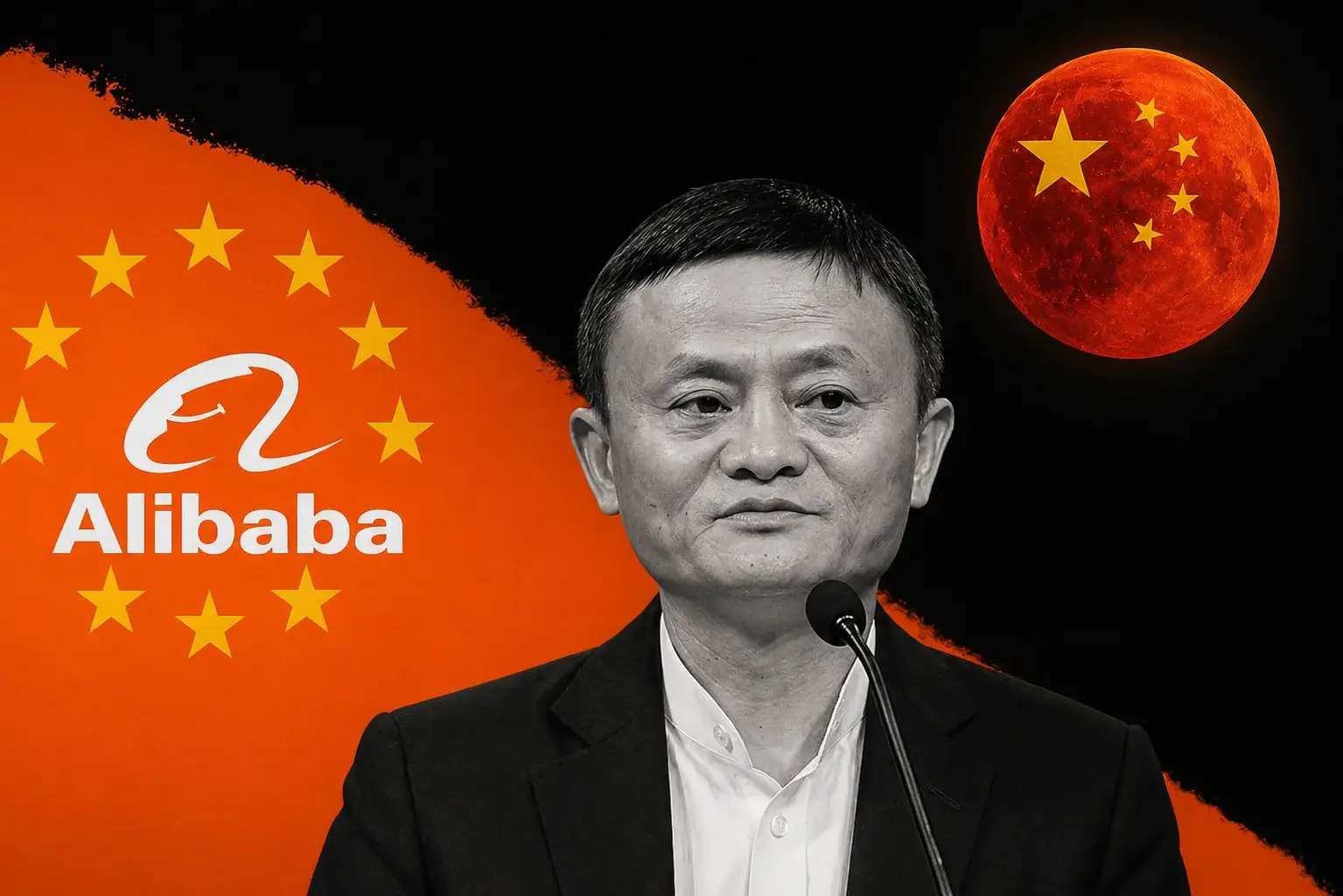
Alibaba Group Holding (NYSE:BABA) is changing hands at $132.53 per share as of 1:56 PM Eastern on Monday, April 27, 2026, registering a 2.42% session loss with the stock down $3.29 on the day. The intraday range between $132.09 and $133.41 captures the modest selling pressure that has gripped the name even as the broader narrative around Chinese AI infrastructure continues to develop in the company's favor. The 52-week range from $103.71 to $192.67 frames the genuine battlefield for serious capital — current pricing puts BABA approximately 31% below its cycle high while sitting roughly 28% above the year's lows. The market capitalization sits at HK$189.71 billion equivalent against a trailing price-to-earnings ratio of 23.40 and a dividend yield of 0.79%, with average daily volume of 11.31 million shares providing the liquidity profile that institutional capital requires.
The structural setup for Alibaba right now is genuinely complex and deserves careful unpacking rather than the sloppy bull-versus-bear framing that dominates retail commentary. The stock has dropped approximately 37% from its previous high to the early-April low below $120, which created the kind of sentiment dislocation that historically has produced asymmetric upside for patient capital. Discounted cash flow modeling produces an intrinsic value range of $147 to $250 per share depending on the growth assumptions used, suggesting the market is pricing the equity well below even the conservative case. Yet the fundamental picture is being reshaped by a massive AI investment cycle that has temporarily collapsed reported profitability, and traders need to understand exactly what's happening to the income statement before sizing exposure. For deeper context on the institutional positioning and recent fundamentals, the Alibaba stock profile provides the comprehensive framework that any serious capital allocator should review before adding to positions.
Q3 FY2026 Print: The 74% Operating Income Drop Tells Half the Story
The quarterly print released March 19, 2026 looked genuinely ugly on the surface. Consolidated revenue grew just 1.7% year-over-year from RMB 280.15 billion in Q3 FY2025 to RMB 284.84 billion in Q3 FY2026 — a deceleration that would normally trigger immediate downgrades from the sell-side community. Income from operations collapsed 74.2% year-over-year, dropping from RMB 41.21 billion in the year-earlier quarter to just RMB 10.65 billion in the most recent period. Diluted earnings per share fell 71.0% year-over-year from RMB 2.55 to RMB 0.74. Free cash flow over the trailing four quarters came in at $12.98 billion, generating a free cash flow margin of just 9.2% — well below Alibaba's long-term average of 34.4% since the company's IPO.
These headline numbers look catastrophic until traders start adjusting for the actual business dynamics underneath the reported figures. Sales and marketing expenses surged from RMB 42.7 billion in the prior year to RMB 72.0 billion in the most recent quarter — a roughly 69% jump driven primarily by user-experience investments inside the Alibaba China E-commerce Group. The company also disposed of Intime in December 2024 and Sun Art in January 2025, both of which still generated negative impacts on the consolidated income statement during the third quarter despite no longer being part of the core business. When stripping out those divestitures, total revenue actually grew 9% year-over-year — a number that reframes the entire growth narrative.
The underlying truth is that Alibaba is going through the same investment cycle that hit Microsoft (MSFT), Amazon (AMZN), Alphabet (GOOGL), and Meta Platforms (META) over the past two years as those US hyperscalers built out their AI infrastructure. The reported margin compression is the cost of building competitive AI capability, and the market's instinct to punish the stock for that spending pattern is exactly the same instinct that produced the 2023-to-2025 buying opportunities in the US mega-caps that have since rallied 50% to 200%. Alibaba is not facing a fundamental business deterioration; it is paying the upfront cost of an AI build-out that should generate years of compounding returns once monetization curves catch up to the spending curve. The market's failure to distinguish between cyclical investment-driven margin compression and structural business deterioration is precisely what creates the asymmetric opportunity for patient allocators.
Cloud Intelligence Group: 36.4% Revenue Growth Confirms the AI Pivot
The single most important segment of the Alibaba (NYSE:BABA) earnings package is the Cloud Intelligence Group, which delivered 36.4% year-over-year revenue growth in Q3 FY2026 — accelerating from RMB 31.74 billion in the prior year to RMB 43.28 billion in the most recent quarter. Adjusted EBITDA in the segment expanded 24.6% year-over-year from RMB 3.14 billion to RMB 3.91 billion, demonstrating that the cloud business is becoming structurally more profitable even as overall company-level margins compress under the weight of AI capital expenditures. Revenue from AI-related products has grown at triple-digit year-over-year rates for the tenth consecutive quarter, a streak that confirms the AI monetization curve is genuinely accelerating rather than plateauing.
Management has set an explicit target of surpassing $100 billion in combined external cloud and AI revenue over the next five years, including the model-as-a-service framework. The framework rests on three identifiable growth pillars that deserve separate examination. The first is the model-as-a-service business itself, where Alibaba monetizes its Qwen family of models on a per-token basis as enterprise customers and developers integrate large language model capabilities into their applications. The second is the demand for enterprise-level internal inference and training capacity, which functions as an emerging marketplace where companies prefer privately deployed solutions for security or business-model reasons rather than relying on public application programming interface services. The third is the traditional CPU-centric cloud computing business, which still has significant room for expansion in the AI-enabled era because the operating environment for AI agents requires substantial support from conventional compute, databases, storage, and memory.
The competitive positioning for Alibaba's cloud unit is structurally favorable inside China specifically because of the supply-chain implications of US sanctions on Western chip exports. Management has noted that global AI computing power will be in extremely short supply over the next three to five years, especially in the Chinese market — and Alibaba's T-Head subsidiary is the only cloud compute company in China with proprietary chip development capabilities. That status provides a meaningful moat for the cloud business that competitors like Tencent and Baidu cannot replicate without building equivalent silicon design capability from scratch.
T-Head Semiconductor Bet: 470,000 AI Chips Shipped, IPO Pending
The T-Head subsidiary deserves particular attention from any trader trying to size the long-term Alibaba thesis correctly. Founded in 2018 as a wholly owned semiconductor business, T-Head has now shipped approximately 470,000 AI chips in total and is generating annual revenue of around RMB 10 billion. Over 60% of those chips are being deployed by external commercial customers across industries including internet finance, autonomous driving, and intelligent manufacturing — meaning T-Head is genuinely competing for design wins outside Alibaba's own internal compute requirements. The remaining 40% of chip output supports Alibaba's own cloud infrastructure, with the proprietary silicon helping the company optimize performance for its specific workloads in ways that off-the-shelf chips from Nvidia (NVDA) or Advanced Micro Devices (AMD) cannot match.
The Zhenwu 810E GPU is the most notable product in the T-Head portfolio because it delivers performance roughly equivalent to Nvidia's H20 chip for inference workloads — a benchmark that establishes T-Head as a credible alternative for Chinese hyperscalers and enterprises facing US export restrictions on advanced semiconductors. Reports surfaced in January 2026 indicating that Alibaba is planning an initial public offering for the T-Head subsidiary, with an initial restructuring step that would have the unit partly owned by employees. Management has not committed to a specific IPO timeline but has confirmed the option remains on the table — a structural catalyst that could unlock meaningful sum-of-the-parts value for Alibaba shareholders if executed during a favorable market window.
The strategic significance of T-Head extends beyond the semiconductor revenue line. By controlling its own chip design pipeline, Alibaba reduces its exposure to US sanctions and supply-chain disruption risks that have constrained competitors. The Aegaoun scheduling and memory management technology has achieved an 82% reduction in GPU resource requirements for inferencing workloads involving multiple models — a software optimization that allows a single GPU to run tens of models simultaneously by offloading data to host memory and bypassing physical memory constraints. That kind of proprietary optimization stack creates a defensible moat that competing cloud providers cannot easily replicate.
The Wukong AI Platform and the Agentic Cloud Thesis
Alibaba launched Wukong, its AI-native platform built specifically for the enterprise market, as one of the cornerstone products in the AI strategy. Unlike consumer-facing personal assistant products, Wukong functions as an orchestration layer that coordinates multiple specialized agents to handle complex multi-step workflows across enterprise applications. Management views this agentic shift as the key to expanding the total addressable market for cloud services, with the expectation that as AI agents begin to handle mainstream work tasks, the proportion of corporate revenue spent on cloud and software should expand by several multiples over the coming years.
The agentic cloud thesis is genuinely powerful for traders thinking about long-term competitive positioning. If billions of agents emerge from large AI models over the coming three to five years, the operating environment for those agents will require massive support from traditional CPU-centric cloud computing alongside specialized AI accelerators. Alibaba's full-stack positioning across the AI value chain — from chip design through cloud infrastructure through model development through application platforms like Wukong — gives the company an integrated offering that resembles Google's vertical AI stack more closely than any other Chinese alternative. That integration is what makes the $100 billion combined cloud and AI revenue target genuinely credible rather than speculative.
The Happy Horse AI model that Alibaba rolled out in beta has gone viral inside China, demonstrating consumer-facing traction for the company's model development capabilities. Combined with reports that Alibaba and Tencent may invest in DeepSeek at a $20 billion valuation and the launch of the AI model designed for games and video to challenge Tencent's positioning, the company's product velocity in the AI space has been genuinely impressive over the past two quarters. These product launches build the brand credibility that supports long-term enterprise customer acquisition.
Read More
-
Yen Stalls at 160 Despite a 3% JGB and Tokyo Core CPI at 2.0% — Intervention Sits at 164, Friday's Payrolls Decide
02.09.2026 · TradingNEWS ArchiveEnergy
-
QQQ ETF ($739) Fades From an Early Tech Rally as a 77.9 ISM Prices Index Meets Micron's $61.5B Guide — $760 Record Test Ahead
01.10.2026 · TradingNEWS ArchiveStocks
-
XRPR and XRPI Follow XRP's $1.49 Test as Spot Funds Hold 1.16B XRP and a 1 Billion Token Escrow Release Lands — $1.70 in Play
01.10.2026 · TradingNEWS ArchiveCrypto
-
November NG Slips Below $3 as Decade-High Storage Meets Capped LNG Exports — $2.75 in Sight
01.10.2026 · TradingNEWS ArchiveCommodities
-
Dollar-Yen at 158 Presses Toward 160 as a 363 bp Carry Gap Meets Katayama-Bessent Intervention Risk — 159 in Sight
01.10.2026 · TradingNEWS ArchiveForex
The Core E-Commerce Reality: 5.8% Growth With Margin Pressure
The Alibaba China E-commerce Group remains the largest revenue contributor to consolidated results despite all the AI focus, and the segment's performance deserves clear-eyed examination. Revenue grew 5.8% year-over-year in Q3 FY2026, climbing from RMB 150.59 billion to RMB 159.35 billion. Adjusted EBITDA in the segment, however, declined 43% year-over-year to RMB 34.61 billion as the company invested aggressively in user experience improvements to defend market share against domestic competitors Pinduoduo (PDD) and Douyin. The China retail sales backdrop has been challenging, with March 2026 retail sales growth at just 1.7% — solid by absolute standards but disappointing relative to historical Chinese growth rates.
The quick commerce business is the bright spot inside the e-commerce segment, surging 56% year-over-year to RMB 20.83 billion in the most recent quarter. The rebranding of Ele.me to Taobao Instant Commerce was a strategically pivotal move that integrated local services more closely with the flagship shopping app, with the combined Taobao Instant and Ele.me platforms reportedly reaching 80 million daily orders by early 2026. The 88VIP membership program — covering Alibaba's highest-spending customers — surpassed 59 million members and continues to grow at double-digit year-over-year rates. The Taobao app saw monthly active customers expand at double-digit rates as well, demonstrating that user engagement is strengthening even as monetization remains pressured.
Customer management revenue, which represents the largest single line within the e-commerce segment, grew just 0.8% year-over-year to RMB 102.66 billion. The weak growth reflects softer transaction activity and the phase-out of the impact from the company's software service fee implementation cycle. The segment is genuinely caught in a difficult competitive environment where Pinduoduo's aggressive low-price strategy and Douyin's social-commerce model have eroded margins across the entire Chinese e-commerce industry. Targets for positive cash flow in the quick commerce push are not expected until fiscal year 2028, meaning traders should expect continued profitability pressure in the consumption segment over the near-to-medium term.
International Digital Commerce: Trendyol's European Expansion
The Alibaba International Digital Commerce Group grew revenue 3.8% year-over-year to RMB 39.20 billion in Q3 FY2026, with adjusted EBITDA improving to a negative RMB 2.02 billion compared to a negative RMB 4.95 billion in the year-earlier period. The narrowing operating losses confirm that the international business is moving toward profitability even as growth has decelerated. Trendyol, the majority-owned Turkish e-commerce platform, has been the standout success story across the international portfolio. The platform has transformed into Europe's fastest-growing e-commerce ecosystem and is aggressively expanding in Romania with a target of 4 million active shoppers by late 2026. The Trendyol app saw over 7 million downloads in the Central and Eastern European region during 2024 alone, demonstrating strong consumer traction outside the core Chinese market.
The international platforms are increasingly pivoting toward operational efficiency and regional scaling rather than pure growth-at-any-cost expansion. Alibaba has been moving toward a unified data platform with technologies like Holgres that can handle the entire data lifecycle in a single environment — a structural improvement that should drive higher operating leverage as international revenue scales. The combination of Trendyol's success in Europe, AliExpress's continued international reach, and Lazada's positioning across Southeast Asia gives Alibaba meaningful exposure to growth markets outside of mainland China that mitigates some of the country-specific risk that has plagued the stock over the past three years.
The $80 Billion Cash Position: Why Alibaba Can Outspend Competitors
One of the most underappreciated factors in the bullish thesis for Alibaba (NYSE:BABA) is the sheer size of the company's cash and liquid investments position, which sat at approximately $80.1 billion as of the last fiscal quarter. That balance sheet strength gives Alibaba the financial flexibility to sustain the heavy AI investment commitment without relying on debt markets that have grown notably less hospitable to capital-intensive Chinese growth stories. The cash position alone represents roughly 42% of the current market capitalization, meaning the enterprise value of the operating business is dramatically lower than the headline market cap suggests when adjusted for the net cash position.
The contrast with US hyperscaler peers is meaningful. Microsoft, Alphabet, Amazon, and Meta all generate substantial operating cash flow that funds their AI infrastructure investments, but Alibaba is funding its build-out from a smaller absolute revenue base while still maintaining one of the largest net cash positions in the global technology sector. The $80 billion liquidity buffer also provides downside protection against extended margin compression — the company can sustain its current investment pace for multiple years without breaching prudent leverage levels, which is a luxury that many competing Chinese technology companies do not enjoy.
The cash position also enables ongoing buyback activity, with the current buyback yield at 0.2% supplementing the 0.79% dividend yield to provide a combined capital return profile of just under 1%. While neither metric is particularly impressive on a standalone basis, they reflect the company's deliberate choice to prioritize AI investment over capital return during this transition period — a choice that historically has been rewarded handsomely by markets when the underlying investment thesis plays out.
Valuation Framework: The $147-$250 Intrinsic Value Range
The valuation case for Alibaba (NYSE:BABA) requires building a discounted cash flow model that adjusts for the temporary nature of the current capital expenditure cycle. Using a 10% discount rate as the required annual return target, 2,414 million ADRs outstanding (calculated from 19,310 million diluted shares at the 8:1 exchange ratio), and starting with $20 billion in normalized free cash flow, the conservative case at 5% growth for the next ten years followed by 4% growth in perpetuity produces an intrinsic value of $147.53 per share — implying the stock is roughly fairly valued at current levels.
The more aggressive case using 8% annual growth for the next decade — consistent with sell-side analyst expectations — followed by 4% growth in perpetuity produces an intrinsic value of $180.12 per share, suggesting BABA is meaningfully undervalued at the current $132.53 print. The most bullish case extends the growth rate to 5% to 6% in perpetuity, which is reasonable given Chinese GDP growth projections in the low-to-mid single digits, and produces an intrinsic value range of $200 to $250 per share. That range would imply upside potential of 50% to 89% from current levels over a multi-year horizon.
Comparing valuation multiples against US peers reinforces the undervaluation thesis. Alibaba's price-to-earnings ratio of 23.35 sits in the middle of its peer group, with Amazon (AMZN) at 33.25 and Microsoft (MSFT) at 24.11. On an enterprise-value-to-EBITDA basis, BABA trades at 14.49 — a meaningful discount to US comparables given Alibaba's higher revenue growth trajectory in the cloud segment. The free cash flow yield has been depressed to 2.9% by the elevated capital expenditure cycle, but this metric is structurally misleading because it captures peak investment spending rather than normalized cash generation capacity. Once capital expenditures normalize as the AI build-out matures, free cash flow conversion should improve materially.
The Michael Burry Catalyst and Institutional Positioning
The institutional positioning around Alibaba has been notably influenced by Michael Burry's continued accumulation of Chinese stocks, with public reports confirming his ongoing buying activity in both BABA and JD.com (JD). Burry's reputation for spotting deeply contrarian value opportunities — most famously the 2008 housing market short and the 2020-to-2021 GameStop position before the meme-stock cycle — gives his Chinese stock thesis particular weight with both retail and institutional capital. The Burry framework on Alibaba focuses specifically on the disconnect between the company's underlying business value and the market's discount for Chinese geopolitical risk — a disconnect that he believes will narrow as US-China relations stabilize and Chinese regulatory risk diminishes.
The Wall Street consensus rating on Alibaba sits at Strong Buy with a score of 4.65, while Seeking Alpha analysts maintain a Buy rating at 3.76. The Quant rating is more neutral at Hold (3.09), which reflects the mixed momentum picture given the recent earnings disappointment. The dispersion across rating systems is itself a tell that the market has not yet reached consensus on the equity, and that lack of consensus is precisely what creates opportunity for traders willing to take a directional view ahead of the broader institutional flow. For traders monitoring management activity that often precedes major strategic announcements, the Alibaba insider transactions page provides the institutional framework for tracking executive buying and selling patterns.
The Risk Inventory: Where the Bullish Thesis Could Break
The risks to the Alibaba long thesis are real and deserve sober treatment rather than dismissal. The competitive pressure from Pinduoduo (PDD) and Douyin in the core Chinese e-commerce market continues to erode margins, and the quick commerce subsidy war has triggered an intense unprofitable expansion phase that will not generate positive cash flow until fiscal year 2028 at the earliest. The aggressive AI infrastructure investments have caused dramatic profit declines, with the 67% drop in net income during fiscal Q3 highlighting just how severe the near-term reported earnings pressure has become. There is also genuine uncertainty about whether the AI capital expenditure will translate into recurring revenue at the scale management is projecting.
The Chinese macro environment introduces additional variables that traders cannot fully control. The country is being affected by the oil shortage caused by the closed Strait of Hormuz, which is putting pressure on the broader Chinese economy and could weigh on consumer spending across the e-commerce platforms. China retail sales growth at just 1.7% in March 2026 is meaningfully below historical norms, and any further deterioration in the consumer spending picture would compound the pressure on the Alibaba China E-commerce Group's margins. The geopolitical risk overlay — including potential additional US sanctions on Chinese technology companies and the ongoing US-China trade frictions — remains a structural overhang that has historically caused Chinese equities to trade at persistent valuation discounts to US comparables.
The technical overhang from the elevated capital expenditure cycle deserves particular attention. Free cash flow margins have collapsed from the long-term average of 34.4% to just 9.2% over the trailing four quarters, and that compression will likely persist for several more quarters as the AI infrastructure build-out continues. Traders building positions need to be prepared for the possibility that earnings revisions continue downward through the next two-to-three quarters before the inflection point on profitability arrives.
Stock Price Trajectory and Recent Action
The Alibaba (NYSE:BABA) stock price action over the past several months has been challenging for long holders. The stock was trading at approximately $180 in early reference periods before dropping to around $140 and ultimately falling below $120 in early April — a peak-to-trough decline of approximately 37% from the cycle high. The recent rebound to the current $132.53 print has provided some relief, but the stock remains well below institutional cost basis levels for many funds that established positions during the late 2025 strength.
The current technical setup shows the stock attempting to establish a base above the $130 level with the 52-week low of $103.71 providing the structural floor for any extended pullback scenario. The intraday range from $132.09 to $133.41 on Monday's session captures the modest selling pressure but also confirms that buyers are showing interest near the $130 round number. The previous close at $135.79 to $135.82 establishes the immediate resistance that bulls need to reclaim before the next leg higher can develop. The combination of valuation support from the $147 conservative intrinsic value, the $80 billion cash buffer, and the cloud segment's 36% growth rate creates a fundamental floor that should limit downside in the absence of a major adverse event.
The Trade Decision: Tactical Buy at Current Levels With $147-$250 Multi-Year Target
The honest read on Alibaba (NYSE:BABA) at $132.53 is a tactical buy on the equity with the recognition that the immediate 30-to-60 day window may remain choppy as the market digests continued profit pressure from the AI investment cycle. The structural setup is constructive: the cloud segment is growing 36.4% year-over-year with triple-digit AI revenue growth for ten consecutive quarters, the $80.1 billion cash position provides exceptional balance sheet flexibility, the T-Head semiconductor business is shipping at a meaningful 470,000-unit annual run rate with potential IPO upside, and the discounted cash flow framework supports an intrinsic value range of $147 to $250 per share that implies 11% to 89% upside from current levels.
The tactical risk is that continued margin compression from the AI capital expenditure cycle generates additional negative earnings revisions over the next two-to-three quarters, which could pressure the stock toward the early-April low below $120 before the next leg higher develops. That scenario warrants holding fire on aggressive long entries above $140 and waiting for either a confirmed move above the $147 conservative fair value print or a clean retest of the $120 zone before adding meaningfully to positions.
For position expression, direct BABA equity exposure remains the cleanest tactical approach for active traders, with the ADR providing seamless trading on the New York Stock Exchange. For those preferring options-based exposure, long-dated call spreads expiring in the second half of 2026 capture the upside catalyst from the T-Head IPO timeline and the cloud monetization curve while limiting downside to the premium paid. The KraneShares CSI China Internet ETF (KWEB) provides diversified exposure across the broader Chinese internet sector for traders who want Alibaba-adjacent exposure without single-stock concentration risk. Pinduoduo (PDD), JD.com (JD), and Tencent ADR exposure provide alternative ways to play the Chinese consumer and technology theme.
The medium-term verdict on Alibaba (NYSE:BABA) is bullish with a 12-month target zone of $165 to $185 and a multi-year target zone of $200 to $250 based on the combination of conservative discounted cash flow valuation, cloud segment momentum, and potential T-Head IPO catalyst. The bear case requires either sustained Chinese macroeconomic deterioration, additional US sanctions on Chinese technology companies, or a complete failure of the AI investment thesis to generate adequate returns — none of which is currently the base case. The Wall Street Strong Buy consensus rating and the Michael Burry accumulation pattern provide additional confirmation that institutional capital is positioning for the eventual upside resolution.
Hold existing long positions, buy weakness toward $120 to $125, take partial profits on strength above $160, and respect the volatility around continued capital expenditure-driven earnings pressure. The single biggest catalyst over the next 90 to 120 days will be the next quarterly earnings print, which will reveal whether the cloud segment can sustain its 36% growth rate and whether margin pressure has stabilized. A break above $147 with volume expansion is the trigger to scale long exposure higher with targets at $180 and ultimately the $192.67 52-week high. A break below $120 is the trigger to flatten tactical longs and wait for confirmation that the $103.71 structural floor remains intact before reloading. The asymmetric setup — where downside is limited by the $80 billion cash position and conservative valuation while upside is supported by the $100 billion AI revenue target — fundamentally favors patient accumulation over short-term trading of the volatility.