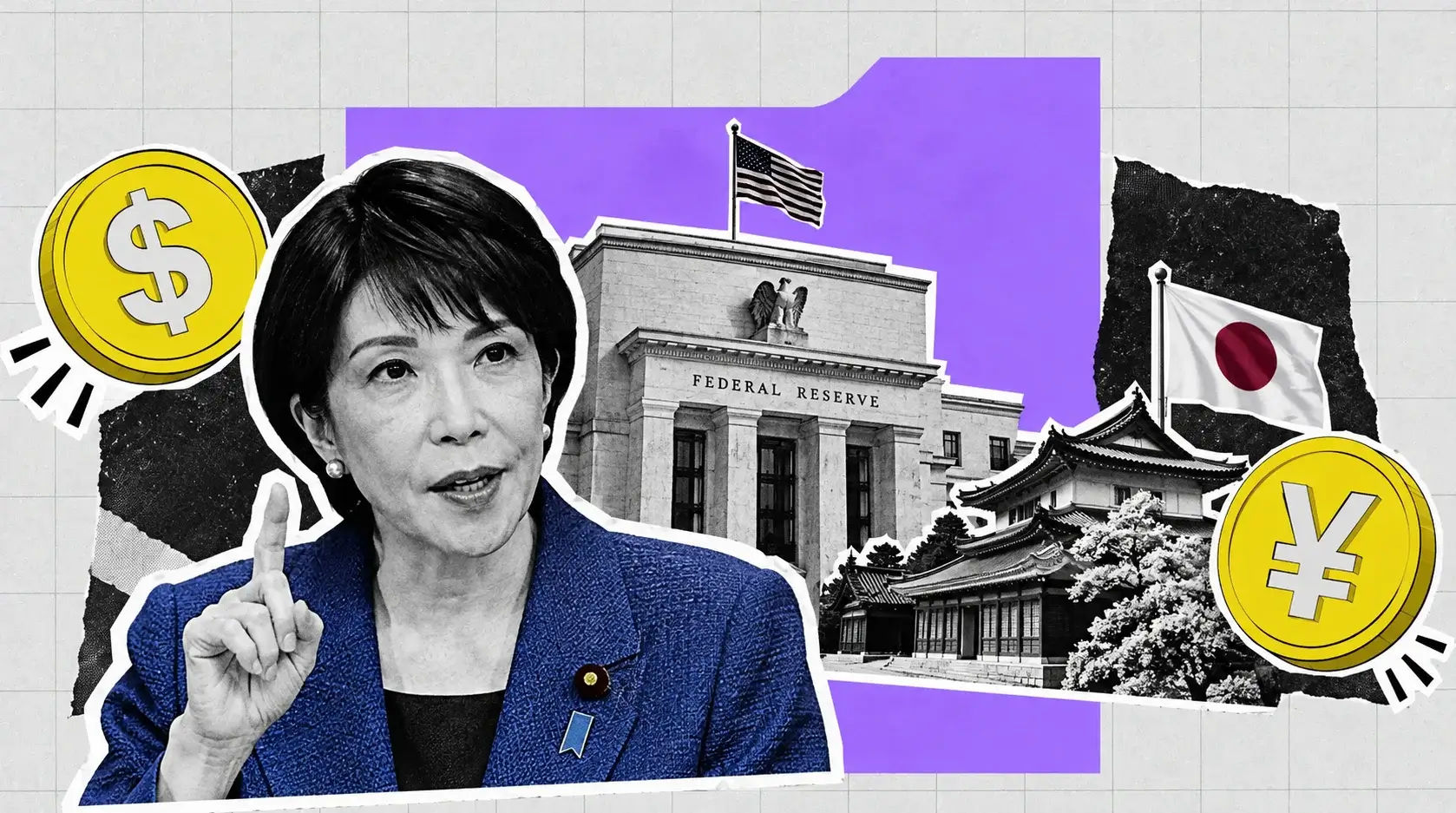
USD/JPY Price Forecast: Yen Holds 159.30 With BoJ-Fed Cluster Setting Up Binary Move
USD/JPY trades at 159.30 with 160.00 intervention cap and 158.00 support as BoJ Tuesday | That's TradingNEWS
Key Points
- USD/JPY trades at 159.30 with 160.00 acting as intervention cap and 158.00 as immediate support ahead of BoJ-Fed cluster.
- BoJ expected to hold at 0.75% Tuesday with hawkish hold, while Fed holds 3.50%-3.75% Wednesday with 300bp yield gap intact.
- HSBC sees USD/JPY at 145 by year-end, with GBP/JPY at 17-year high above 215 confirming structural yen weakness.
The dollar-yen pair (USD/JPY) is changing hands near 159.30 as of late Monday, April 27, 2026, retreating modestly from earlier session strength after the Asian morning push toward 159.85 ran into resistance and prompted profit-taking ahead of one of the most consequential central bank weeks of the entire second quarter. The pair surrendered its early gains as the US Dollar Index (DXY) softened to 98.45 with Iran-related uncertainty pressuring the safe-haven bid that had been driving the greenback higher into the weekend. The intraday tape between 159.20 and 159.85 captures the structural standoff that has defined trading throughout April, with yield differentials providing the persistent upward pull and intervention risk capping the upside near the psychologically critical 160.00 line. Spot pricing currently sits roughly 4.2% above the 152.50 reference of three months ago and approximately 11.8% above the 142.45 level of one year ago, confirming that the medium-term trend remains structurally bullish even as the immediate session shows compression rather than directional clarity.
Where USD/JPY Trades Right Now: 159.30 Caught Between Yield Pull and Intervention Cap
The current 159.30 print on USD/JPY sits directly above the 20-day exponential moving average at 159.14 and just above the descending triangle breakout boundary at 159.20 — a confluence of dynamic support that has caught every recent dip and provides the immediate floor for any pullback scenarios. The four-hour chart shows the pair hovering above the 100-period simple moving average at 159.21 while remaining capped by the 20-period SMA at 159.47 and the broader resistance cluster running through 159.85 and 160.00. The Relative Strength Index reading near 47 to 52 across multiple timeframes signals neutral-to-slightly positive momentum rather than the kind of overstretched extension that typically precedes mean-reversion moves, which means the consolidation pattern can persist for longer than directional traders might expect.
The longer-cycle context for USD/JPY positioning matters meaningfully here. The pair has broken decisively above the 158.00 zone that capped the prior consolidation phase and is now testing the breakout retest against the descending triangle boundary that defined the late-March compression. The March 30 high at 160.46 represents the immediate upside target if buyers can clear the 160.00 round number with conviction, while the structural intervention zone running between 158.00 and 160.00 provides the price band where Japanese authorities have historically deployed actual yen-buying operations. Below the immediate 159.20 support lies the horizontal floor near 157.60 that aligns with the descending triangle's secondary boundary, and a sustained break below that level would meaningfully damage the bullish structure that has carried the pair to current levels.
The Bank of Japan Tuesday Decision: Hawkish Hold Versus Outright Tightening
The single most important catalyst for USD/JPY over the next 48 hours is the Bank of Japan policy announcement on Tuesday, April 28. Market positioning is increasingly skewed toward expectations of a hawkish hold from Governor Kazuo Ueda's committee, with the benchmark policy rate widely expected to remain unchanged at 0.75% while the statement language signals a willingness to tighten further if energy-driven inflation persists. The shift in expectations has helped the yen recover modestly even as the broader policy divergence between Japan and the United States continues to favor dollar exposure on a structural basis.
The hawkish-hold framing is what makes Tuesday's announcement potentially binary for tactical positioning. If Ueda delivers language explicitly committing to additional rate hikes within a defined timeline — particularly if the statement frames intervention concerns as a meaningful policy variable rather than a separate Ministry of Finance issue — the yen could strengthen sharply with USD/JPY potentially testing the 158.00 to 157.60 support zone within hours. Conversely, if the BoJ delivers a more dovish hold that emphasizes growth concerns over inflation discipline, the yen would weaken further and USD/JPY could push through 160.00 toward the March 30 high at 160.46 and potentially the 161.00 zone where intervention risk dramatically intensifies.
The structural challenges facing the BoJ are genuine and complicate the policy decision. Japanese yield curve control adjustments throughout 2025 and into 2026 have not yet closed the gap with US yields, and the differential between US and Japanese 10-year yields remains above 300 basis points — a structural carry advantage that continues to support short-yen positioning across institutional portfolios. Japan's persistent trade deficits add additional downward pressure on the yen through the current account channel, while the carry trade dynamic where global investors borrow yen cheaply to fund higher-yielding investments creates ongoing structural demand for selling pressure on the currency. These macro forces resist convergence and require either a US rate cut or a meaningful BoJ tightening cycle to materially shift, neither of which appears imminent based on current central bank guidance.
The Federal Reserve Wednesday Decision: Powell's Penultimate FOMC
The Federal Reserve announces on Wednesday, April 29, with the policy rate widely expected to hold at the current 3.50% to 3.75% range. Futures markets are pricing essentially zero probability of a rate move at this meeting, with only an 8% chance of a hike priced in by year-end 2026. The mechanical decision is not the variable; the language Chair Jerome Powell uses around the energy shock, inflation expectations, and the path forward will determine whether USD/JPY breaks above 160.00 or compresses toward 158.00.
This is widely expected to be Powell's second-to-last FOMC meeting before the leadership transition to Kevin Warsh, with Warsh's confirmation vote imminent following the Department of Justice's recent decision to close its criminal probe of Powell. The procedural clearance for Warsh's confirmation introduces additional uncertainty about the forward US policy trajectory because Warsh is perceived by markets as modestly more dovish than Powell on the politically sensitive variables despite his historically hawkish reputation. For USD/JPY positioning specifically, any signal of dovish drift in Wednesday's statement would mechanically weaken the dollar and provide the catalyst for a pullback toward the 158.00 to 157.60 support zone, while a hawkish hold that emphasizes the Iran-driven inflation pulse would extend the structural upward pressure that has carried the pair to current levels.
The combined BoJ-Fed cluster on Tuesday and Wednesday creates a four-quadrant outcome matrix for USD/JPY positioning. The most yen-bullish scenario combines hawkish BoJ language with dovish Fed framing, which would compress the pair toward 157.60 and potentially the 156.00 zone within sessions. The most dollar-bullish scenario combines dovish BoJ messaging with hawkish Fed positioning, which could send USD/JPY through 160.00 toward 161.00 and trigger immediate intervention concerns. The two intermediate scenarios — both central banks hawkish or both dovish — would produce more modest directional moves with the pair likely remaining within the 158.00 to 160.00 range.
The Intervention Reality: Why 160.00 Is the Critical Line
The intervention threat from the Japanese Ministry of Finance represents the single most important structural cap on USD/JPY upside, and traders running real money cannot ignore the asymmetric risk it creates. Past interventions in 2022 and 2024 demonstrated Japan's willingness to act when officials view the pace of yen depreciation as destabilizing for the broader economy. The Bank of Japan sold dollars and bought yen directly during those episodes in operations that were large enough to produce sharp short-term reversals — moves of 5% to 10% within hours that punished leveraged short-yen positions and forced rapid unwind cascades across the speculative community.
The market currently prices in approximately a 5% to 10% premium for intervention risk according to HSBC's quantitative framework, which means the spot price contains a meaningful policy-risk component above what pure fundamentals would suggest. The mechanical implication is that any move toward 160.00 carries materially elevated downside risk from a sudden intervention spike, while moves toward 161.00 or higher would essentially guarantee Ministry of Finance action within 24 to 48 hours. This creates a defined ceiling that traders can use for risk management — long positions above 159.50 should carry tighter stops than longs initiated near 158.00, while options-based hedging using out-of-the-money yen calls becomes increasingly attractive as spot pushes toward 160.00.
The political pressure on Japanese authorities has been building throughout 2026 as elevated energy prices from the Iran-Hormuz situation drive imported inflation higher and squeeze household budgets. Rising fuel costs, elevated electricity bills, and the broader cost-of-living pressure on consumers and small businesses create the kind of political environment where intervention becomes politically attractive even when the economic case is mixed. Officials have repeatedly warned against excessive yen weakness, and the cumulative pattern of public commentary suggests the bar for actual intervention has dropped meaningfully relative to the 2024 experience.
The Iran-Hormuz Macro Overlay
The geopolitical layer affecting USD/JPY positioning runs through the dollar's safe-haven function and the energy-driven inflation channel. President Donald Trump cancelled the planned trip by special envoys Steve Witkoff and Jared Kushner to Pakistan over the weekend, killing the second round of US-Iran negotiations after Iranian Foreign Minister Abbas Araghchi departed Islamabad. The diplomatic stalemate has kept the Strait of Hormuz functionally closed, with traffic dropping to 19 vessels Saturday compared to the pre-war daily average of 129 transits. Brent crude (BZ=F) at $109.70 is up 44.1% since the conflict began on February 28, and West Texas Intermediate (CL=F) sits at $97.54.
For USD/JPY specifically, the energy shock cuts in a meaningfully different way than for other major pairs. Japan is one of the largest net energy importers globally, with the country dependent on Middle Eastern oil and Asian LNG flows that have been disrupted by the Hormuz closure. Higher oil prices translate directly into Japanese trade deficit deterioration, current account pressure, and imported inflation that weakens the underlying fundamentals supporting the yen. The same dynamic also creates the political pressure for BoJ tightening that supports the hawkish-hold framing — a circular dynamic where energy-driven inflation forces policy normalization while simultaneously weakening the currency through the trade balance channel.
The dollar's safe-haven response to the Iran situation has been more muted than historical precedent would suggest, with the DXY at 98.45 sitting well below the 99.35 peak briefly tested over the weekend on the headlines. The dollar's structural weakening trajectory throughout 2025 and into 2026 — driven by foreign central banks reducing US Treasury holdings and gold accumulating record official-sector demand — has dampened the typical safe-haven response and limited the upside push for USD/JPY that would normally accompany a major Middle East crisis.
The Yield Differential Engine Driving the Pair
The mechanical engine driving USD/JPY pricing is the interest rate differential between US Treasury yields and Japanese government bond yields. The US 10-year Treasury yield sits well above 4% while the Japanese 10-year yield holds below 1.5%, producing the 300-plus basis point spread that has supported the structural carry trade throughout 2025 and into 2026. The Federal Reserve's higher-for-longer stance — with rates above 5% through much of 2025 and the current 3.50% to 3.75% range — has continued to attract capital flows into dollar-denominated assets at the expense of yen exposure.
The Bank of Japan's gradual normalization path has proven insufficient to materially compress the differential. Governor Ueda's measured approach to rate hikes — small and infrequent rather than aggressive — has kept Japanese yields anchored at low levels even as inflation has trended above the 2% target. The mechanical implication is that as long as the Fed maintains restrictive policy and the BoJ continues its gradual approach, the yield differential will continue to support USD/JPY at elevated levels through both the carry trade channel and the broader capital allocation dynamic. Convergence trades that bet on yen strength require either a US rate cut or accelerated BoJ tightening to materialize, and neither catalyst appears imminent based on current central bank communication.
The US data calendar around Wednesday's FOMC adds additional variables. Consumer confidence, the core PCE deflator (the Fed's preferred inflation gauge), the first estimate of Q1 GDP (expected to rebound to roughly 2.2% annualized after a subdued 0.5% prior quarter), housing starts, and building permits all release in the window around the policy decision. Any combination of weak confidence and hot core PCE would produce maximum volatility for USD/JPY because it would describe a stagflationary US economy that complicates the Fed's path forward and introduces unusual uncertainty into dollar pricing.
Technical Configuration: Descending Triangle Breakout in Play
The USD/JPY daily chart shows the pair testing the breakout retest of a descending triangle formation that built through March and early April. The pattern resolved bullishly with price clearing the downward-sloping border at 159.20, and the current consolidation just above that level represents a textbook breakout-retest dynamic that often precedes an extension toward the pattern's measured-move target. The 20-day exponential moving average at 159.14 provides additional dynamic support beneath the immediate price level, and the convergence between the pattern boundary and the moving average creates a high-conviction support cluster.
The Relative Strength Index reading near 52 on the daily timeframe sits in neutral territory, which is unusual for a pair that has rallied as hard as USD/JPY over the past several months. The neutral RSI is itself a tell that the move higher has not been driven by speculative momentum but rather by structural fundamentals — yield differentials, carry trade flows, and Japanese trade deficit dynamics — that compound over time without producing the overstretched conditions typically associated with parabolic rallies. The Bollinger Bands on the daily chart show widening volatility, which aligns with the central bank cluster ahead and confirms that traders should expect larger directional moves in the coming sessions.
The four-hour chart adds tactical detail. Immediate support emerges at 159.27, followed by 159.20 horizontal support that aligns with the 100-period simple moving average at 159.21. A break below 159.10 would suggest a clearer bearish extension and expose the descending triangle's secondary horizontal boundary near 157.60. On the upside, 159.30 represents the immediate resistance, followed by 159.47 (the 20-period SMA), 159.85, and the 160.00 round number. A sustained break above 160.00 with volume expansion would open the path toward the March 30 high at 160.46 and potentially the 161.00 zone where intervention risk becomes acute.
The MACD on the daily timeframe shows positive momentum with the histogram running into expansion territory, while the Stochastic indicators have eased back from overbought conditions and now sit in middle ranges. The 14-day Average Directional Index reading suggests trending conditions are firming, consistent with the breakout structure visible across multiple timeframes.
GBP/JPY at 17-Year High: Cross-Currency Validation
The GBP/JPY cross at fresh 17-year highs above 215.00 provides important validation for the broader yen weakness thesis that affects USD/JPY positioning. The cross has cleared the 215.00 line that capped earlier advances and is now testing the 215.83 resistance that has reference back to 2008. The strength in GBP/JPY confirms that the yen weakness is structural rather than US-specific, with sterling benefiting from the Bank of England's hawkish stance and the broader divergence between BoE policy and BoJ policy.
The mechanical implication for USD/JPY traders is that any USD-specific weakness following a dovish Fed would not necessarily produce significant yen strength because the cross-currency dynamics would simply shift the dollar weakness into other major-versus-yen pairs rather than triggering coordinated yen buying. The structural yen weakness across multiple cross pairs — GBP/JPY, EUR/JPY, AUD/JPY all at multi-year or multi-decade highs — confirms that the yen's underperformance reflects fundamental rather than purely cyclical dynamics.
The 215.38 level on GBP/JPY represents the immediate higher-low support if Tuesday's BoJ decision triggers any pullback, with the broader 215.00 line serving as the structural support that bulls cannot afford to cede. A break below 215.00 — particularly if it occurs after the BoJ but before the BoE on Thursday — would suggest something is shifting around yen themes that traders need to interpret carefully.
Read More
-
Yen Stalls at 160 Despite a 3% JGB and Tokyo Core CPI at 2.0% — Intervention Sits at 164, Friday's Payrolls Decide
02.09.2026 · TradingNEWS ArchiveEnergy
-
QQQ ETF ($739) Fades From an Early Tech Rally as a 77.9 ISM Prices Index Meets Micron's $61.5B Guide — $760 Record Test Ahead
01.10.2026 · TradingNEWS ArchiveStocks
-
XRPR and XRPI Follow XRP's $1.49 Test as Spot Funds Hold 1.16B XRP and a 1 Billion Token Escrow Release Lands — $1.70 in Play
01.10.2026 · TradingNEWS ArchiveCrypto
-
November NG Slips Below $3 as Decade-High Storage Meets Capped LNG Exports — $2.75 in Sight
01.10.2026 · TradingNEWS ArchiveCommodities
-
Dollar-Yen at 158 Presses Toward 160 as a 363 bp Carry Gap Meets Katayama-Bessent Intervention Risk — 159 in Sight
01.10.2026 · TradingNEWS ArchiveForex
Trade Decision: Tactical Sell Above 160.00 With 156.00 Target
The honest read on USD/JPY at 159.30 is a tactical sell on confirmed strength above 160.00 with stops above 161.50 and primary downside targets at 158.00, 157.60, and ultimately 156.00. The structural setup is genuinely binary heading into the central bank cluster: the yield differential continues to support the upside, but the intervention cap creates asymmetric risk on extended advances. The expected hawkish BoJ hold combined with the elevated energy-driven inflation pulse argues for continued yen weakness over a multi-quarter horizon, but the immediate 48-hour window contains the highest binary catalyst risk of any major-pair trade currently available.
The tactical risk is meaningful and deserves clear-eyed treatment. A surprise BoJ tightening that goes beyond the hawkish-hold framework could send USD/JPY sharply lower toward 156.00 or even 155.00 within sessions. A coordinated dovish Fed message combined with dovish BoJ language would extend the upward trend toward 161.00 and trigger immediate intervention concerns. The combination of central bank uncertainty, intervention risk, and the geopolitical overlay makes outright directional positioning particularly dangerous heading into the announcements, with options-based exposure offering meaningfully better risk-reward profiles than spot positioning.
For position expression, direct USD/JPY spot or futures exposure provides the cleanest tactical access for sophisticated traders willing to absorb the binary catalyst risk. The bullish view setup targets 160.46 with stops at 158.00, capturing the breakout-retest dynamic with defined parameters. The bearish view setup targets 156.00 with stops at 160.50, betting on either the hawkish BoJ surprise or eventual intervention. For traders preferring options exposure, out-of-the-money yen calls (USD/JPY puts) with strikes at 158.00 expiring after the BoJ and Fed decisions offer asymmetric upside if intervention materializes or the BoJ surprises hawkish. The Currency Hedged Japan ETF (DXJ) and the unhedged iShares MSCI Japan ETF (EWJ) provide equity-side exposure to the broader yen-related theme.
The medium-term verdict on USD/JPY is neutral-to-bearish with a 12-month target zone of 152.00 to 156.00 based on the combination of eventual BoJ normalization, expected Fed easing in late 2025 and 2026, and continued convergence pressure from intervention risk. The bear case for further upside requires the BoJ remaining dovish indefinitely while the Fed maintains restrictive policy and the Iran-Hormuz situation persists — a scenario that becomes increasingly unsustainable as Japanese political pressure builds and US growth indicators soften. The structural fair value sits well below current pricing, and patient capital that can absorb time risk should ultimately benefit from the convergence dynamic.
Hold short tactical positions above 160.00 with stops above 161.50, take partial profits on weakness toward 158.00 and 157.60, and respect the binary catalyst risk into the BoJ Tuesday and Fed Wednesday decisions. The single biggest variable for the next 48 hours is the combined central bank outcome — a hawkish BoJ combined with a dovish Fed would compress the pair toward 156.00 within sessions, while a dovish BoJ combined with hawkish Fed framing could push USD/JPY through 160.00 and trigger intervention. The asymmetry currently favors the bearish setup given the intervention cap and the structural convergence framework, but risk-managed positioning with options-based hedges remains essential given the catalyst density. A break below 158.00 with volume expansion is the trigger to scale short exposure with targets at 157.60, 156.00, and ultimately 152.50. A break above 160.46 is the trigger to flatten tactical shorts and either reverse to long with tight stops or move to the sidelines and wait for the intervention spike to develop. The realistic 12-month outlook places USD/JPY in the 145.00 to 156.00 range rather than the 162.00-plus zone that pure trend extrapolation might suggest, with the convergence dynamic ultimately outweighing the carry trade momentum once central bank policies align