Bitcoin Price Forecast: BTC-USD Holds $90K With +15% Upside as Fed Rate Cut Nears
Bitcoin hovers at $90,118 with traders eyeing a break above $95,000. Whales accumulate quietly as dovish Fed expectations fuel a possible push toward $104,000 | That's TradingNEWS
Bitcoin (BTC-USD) Price Analysis — December 9, 2025: Fed Anticipation Keeps BTC Hovering Near $90,000
Bitcoin Stabilizes Near $90,000 as Markets Brace for the Fed
Bitcoin (BTC-USD) remains locked around the $90,118 level, struggling to reclaim the momentum lost since its record peak of $126,000 earlier in 2025. After months of heavy volatility, the asset now trades in a narrow corridor between $89,000 and $93,000, reflecting indecision among traders ahead of the Federal Reserve’s final policy meeting of the year. In recent sessions, BTC’s intraday range stretched from $89,599 to $92,291, while its year-to-date performance still shows an 11.3% gain, a muted figure considering its previous parabolic rise.
Fed Policy Dominates Market Psychology
The Federal Reserve has become the sole driver of short-term sentiment across risk assets, including Bitcoin. Futures imply an 87% probability of a 25-basis-point rate cut, which could set the tone for liquidity-sensitive markets through early 2026. Historically, Bitcoin thrives when monetary policy loosens, but this time enthusiasm is restrained. Investors remain cautious, recognizing that a minor rate reduction without sustained liquidity expansion may not spark a full-scale rally. With the 10-year Treasury yield at 4.15% and the 2-year at 3.58%, the yield curve remains inverted but stable, supporting a mild risk-on narrative as the dollar softens. The market’s focus now rests entirely on Chair Powell’s tone—whether he signals continuation of easing or a temporary pause.
Institutional Activity and ETF Flows Lose Steam
Institutional participation has faded from the highs seen earlier in the year. Bitcoin ETF inflows have fallen sharply to around 50,000 BTC per quarter, the weakest since 2024. That slowdown has left the market vulnerable to short-term speculative activity, with liquidity driven more by retail traders than large funds. Even so, blockchain data shows steady whale accumulation, as large holders absorbed approximately 48,000 BTC in early December, equivalent to 240% of the network’s monthly issuance. This quiet buying suggests long-term confidence remains intact, but the lack of ETF demand limits broad price acceleration. The market’s depth is thinner, making rallies more prone to quick reversals and corrections.
Technical Picture: Testing the $90,400 Threshold
From a technical standpoint, BTC-USD continues to oscillate under its descending trendline formed in late October. The crucial level to reclaim remains $90,400, which would confirm the first structural reversal since the multi-week correction began. A clean break above $95,000 would open the way toward the $100,000–$105,000 zone, while any rejection could drag BTC back toward $86,800, where prior support formed in November. The RSI at 42.9 indicates subdued momentum, while the ADX near 42.6 signals a weakening but defined trend. Volatility bands show potential expansion, with the upper boundary around $101,300, meaning a decisive macro shift could spark a sudden breakout.
Standard Chartered Revises Its Bitcoin Outlook
Standard Chartered Bank has sharply reduced its expectations, cutting its 2025 target to $100,000 from a previous forecast of $200,000 and extending its long-term horizon for $500,000 to 2030. Analysts attributed this downgrade to the slowdown in corporate treasury accumulation and weaker-than-expected ETF flows. According to their assessment, institutional buying by entities like MicroStrategy has largely run its course, leaving ETFs as the main incremental driver for price growth. Despite this moderation, the bank still maintains a structurally bullish view, emphasizing that the age of deep “crypto winters” is likely over. The downgrade, however, underscores the difference between optimism and tangible capital inflows—Bitcoin’s price will depend on actual participation, not sentiment alone.
Short-Term Holders Drive Market Volatility
On-chain data reveals a growing influence from speculative accounts. The Short-Term Holder to Long-Term Holder Supply Ratio rose from 18.3% to 18.5%, surpassing the 17.6% ceiling observed in previous cycles. This increase indicates that short-term traders now hold a greater portion of circulating supply, making Bitcoin more reactive to intraday volatility. Meanwhile, the Percent Supply in Profit advanced slightly from 66.5% to 67.3%, far below the euphoric 98% readings typical of bull market tops. This mix of cautious optimism and low conviction defines the current phase—an accumulation environment with frequent profit-taking. Sustaining any rally will require these fast-moving participants to transition into medium-term holders, providing price stability instead of resistance.
Global and Political Undercurrents Complicate the Landscape
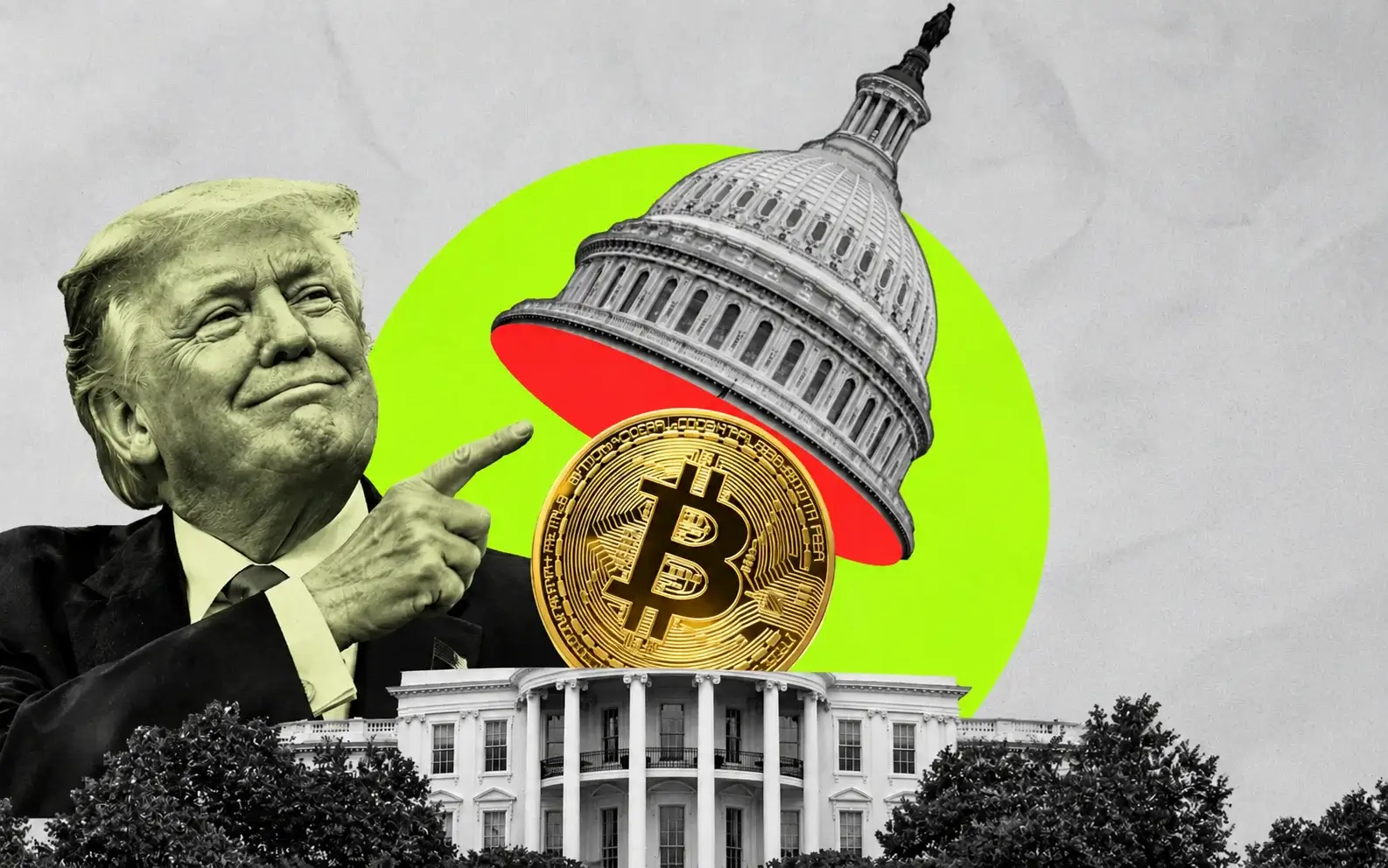
Political influence over U.S. monetary policy is increasingly visible. President Trump has made clear that his next Federal Reserve Chair nominee—most likely Kevin Hassett—must commit to lower rates immediately, a statement that has already affected futures pricing. The prospect of political steering within the Fed introduces uncertainty, as traders weigh whether future decisions will prioritize growth over inflation discipline. Internationally, China’s renewed restrictions on AI chips and crypto-linked capital outflows have limited liquidity in Asian exchanges, while European bond yields mirror U.S. softness. Bitcoin continues to serve a dual role as both a liquidity asset and a geopolitical hedge, reacting to macro tone more than on-chain fundamentals.
Read More
-
Yen Stalls at 160 Despite a 3% JGB and Tokyo Core CPI at 2.0% — Intervention Sits at 164, Friday's Payrolls Decide
02.09.2026 · TradingNEWS ArchiveEnergy
-
Dell Rebounds to $565.86 as a $95 Billion AI Backlog Meets 22x Forward Earnings — $595 High in Sight
25.09.2026 · TradingNEWS ArchiveStocks
-
XRP-USD ($1.53) Outperforms as ETF Inflows Return, but August Buyers Guard $1.60 — $1.70 Upside vs. $1.25 Floor
25.09.2026 · TradingNEWS ArchiveCrypto
-
Brent Holds $105 While WTI Heads for a 7% Weekly Loss as a 3M-Barrel Build and a Diesel Ban Threat Split the Market
25.09.2026 · TradingNEWS ArchiveCommodities
-
S&P 500 Gains 0.22%, Nasdaq Tops 27,000, Dow Up 0.40% on MSFT Launch and AKAM Deal
25.09.2026 · TradingNEWS ArchiveMarkets
-
Sterling Slides to 1.3216 as a Divided Bank of England Trails the Fed — 1.3424 Upside vs. 1.3000 Risk
25.09.2026 · TradingNEWS ArchiveForex
Cross-Market Sentiment and Crypto Sector Overview
The broader crypto market mirrors Bitcoin’s indecision. Ethereum (ETH-USD) trades near $3,145, maintaining stability in staking flows, while XRP (XRP-USD) stands at $2.07, reflecting subdued trading volumes. Total digital-asset market capitalization has slipped to $3.47 trillion, with modest outflows from DeFi platforms. Despite the weakness, sentiment metrics show early signs of opportunity—the Fear and Greed Index has dropped to multi-year lows, historically aligning with accumulation phases. The contrast between widespread caution and improving macro liquidity is typical of cycle bottoms, where institutional buyers quietly re-enter as retail traders exit.
Short-Term Outlook and Trading Bias
Bitcoin’s immediate path remains confined to the $90,000–$95,000 zone, with volatility expected to spike following the Fed’s announcement. A dovish message paired with a confirmed rate cut could accelerate BTC toward $100,000, while a hawkish stance could push prices back to $85,000–$86,000. Market structure favors patience over aggression—leverage has decreased, funding rates are balanced, and order-book depth supports gradual accumulation rather than speculative chases. The next breakout will likely coincide with macro catalysts rather than technical triggers alone, making Powell’s commentary and ETF data critical for near-term direction.
Verdict on BTC-USD
The overall setup suggests a neutral-to-bullish bias. Institutional accumulation persists beneath the surface, macro policy is turning favorable, and volatility compression hints at a larger move approaching. However, momentum lacks conviction and ETF participation remains the missing ingredient for a sustained advance. Bitcoin appears to be transitioning from correction to accumulation, with $90,400 as the tactical pivot for traders and $85,000 as the structural stop zone.
Final Verdict: BTC-USD — Hold / Gradual Accumulation.
Bias: Cautiously Bullish toward $100,000–$105,000, pending confirmation from the Federal Reserve and consistent institutional support.