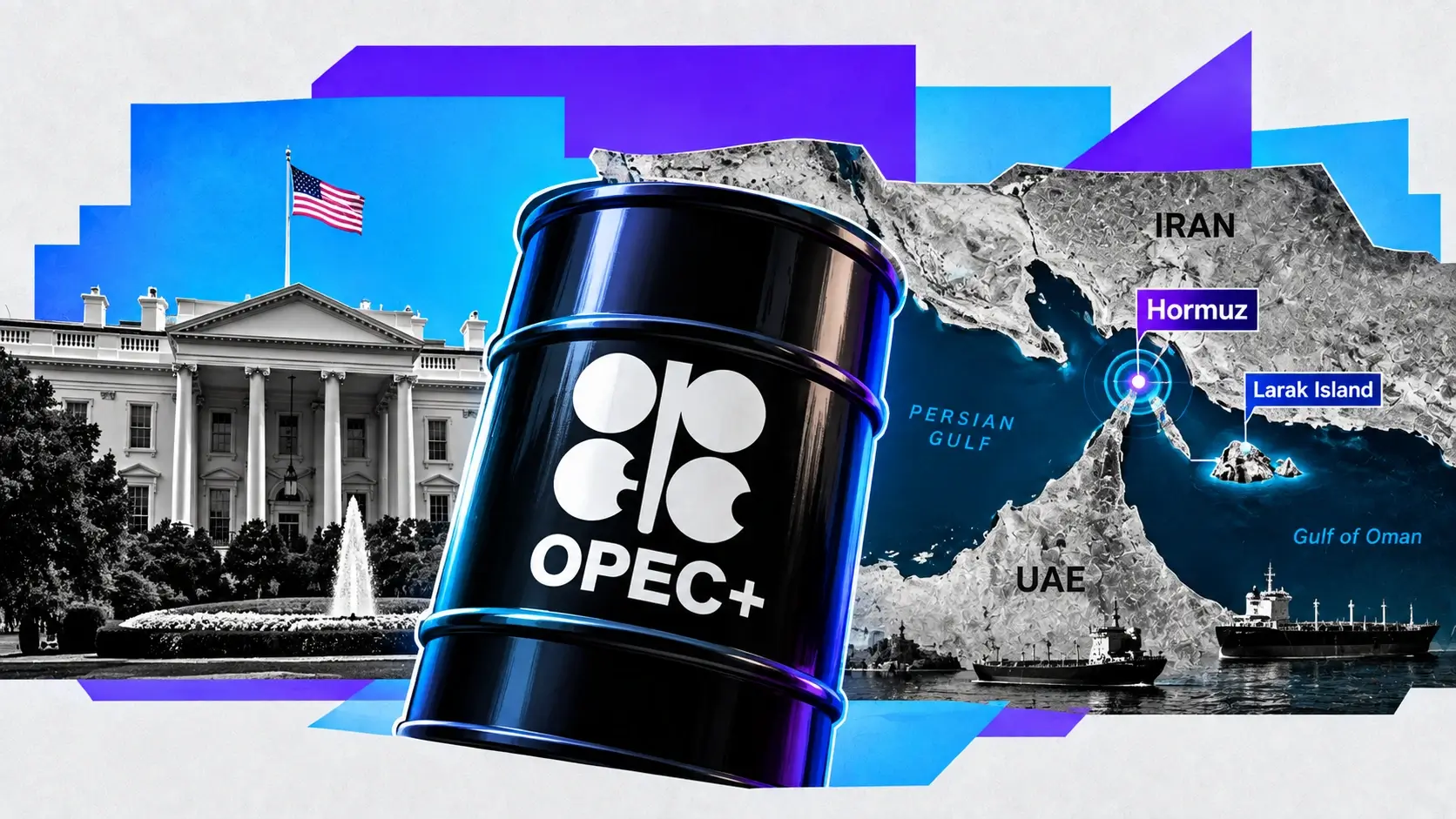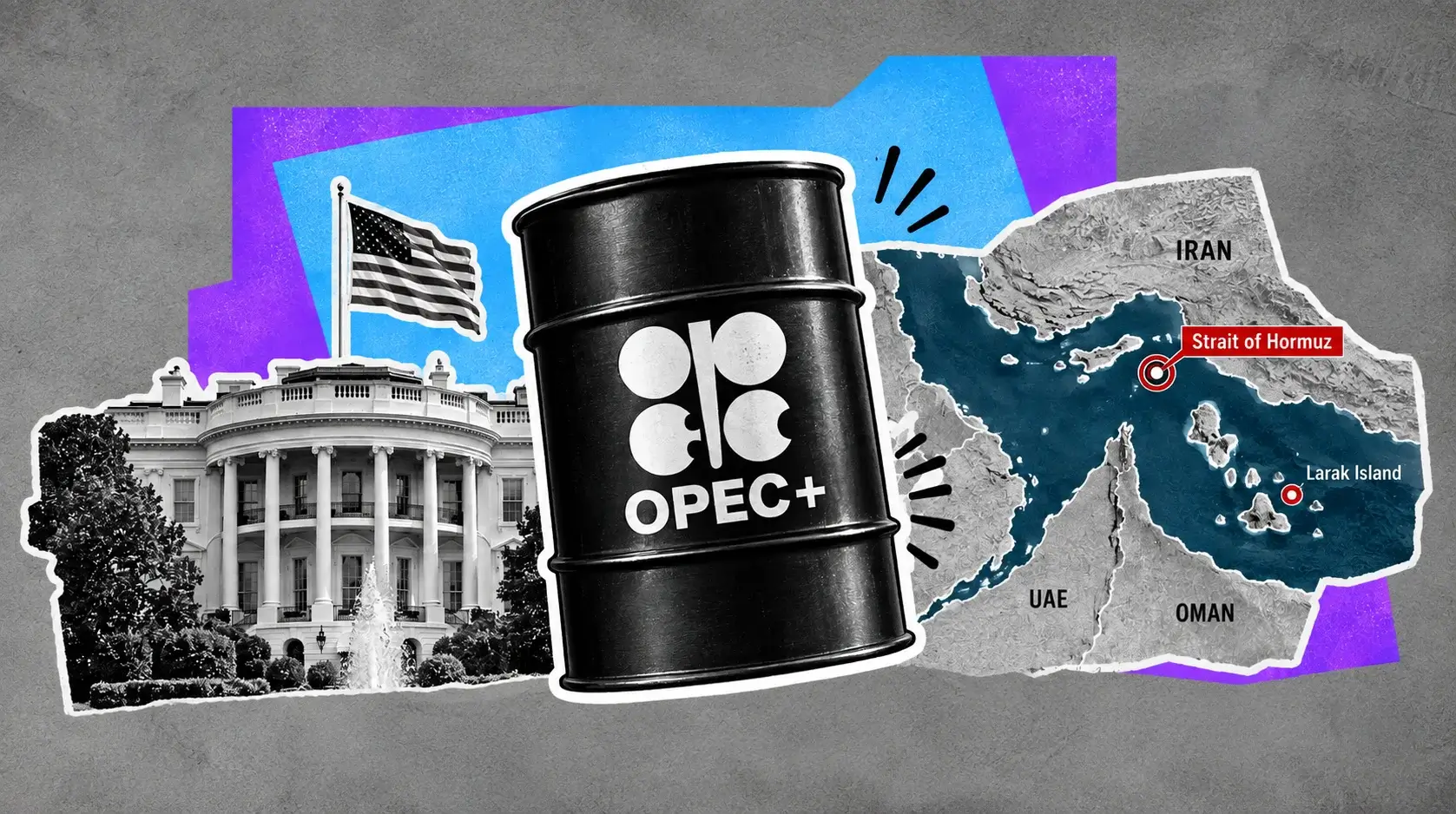
Brent Crude Reclaims $100 on China's Fuel Export Halt as Gulf Crude Hits 16.5M Barrels a Day — $107 in Sight
A product squeeze is overriding the crude supply recovery as PetroChina cancels October cargoes and U.S. diesel futures jump 4.5% | That's TradingNEWS
Key Points
- Brent crude for December rose 2.2% to $100.15 after falling as low as $96.76 earlier in the session.
- U.S. distillate inventories fell 2.3 million barrels to 105.2 million, against a 190,000-barrel expected draw.
- Gulf crude exports excluding Iran recovered to 16.5 million barrels a day in September.
Oil reversed hard on Thursday. Brent crude for December delivery was trading at $100.15 a barrel, up 2.2% from Wednesday's $98.03 settlement, after earlier falling 1% to a session low of $96.76. U.S. West Texas Intermediate for November delivery rose 1.5% to $91.74. The swing from Brent's low to its high was $3.39, or 3.5%, in a single morning. The Brent-WTI spread now sits at $8.41.
The catalyst was China. Chinese refiners have suspended oil product exports to all destinations outside Hong Kong and Macau until further notice from Beijing. State oil major PetroChina cancelled most of the gasoline and jet fuel shipments it had planned for October, deals it had committed to in the past two weeks. Privately held Zhejiang Petrochemical scheduled no product shipments during the Golden Week holiday, which runs from Oct. 1 through Oct. 7. It is not clear whether Beijing will allow exports to resume after the holiday.
Before the China headline, crude was falling on supply relief. Crude exports from the Gulf, excluding Iran, recovered to pre-war levels of 16.5 million barrels per day in September, seven months after the Strait of Hormuz closed. Saudi Arabia resumed tanker loadings at its Red Sea port of Yanbu after restarting its East-West Pipeline. Iran said it received a U.S. response to its proposal for a seven-day ceasefire. That combination had Brent sliding toward $96.70 in Asian trading.
The thesis for this forecast is that the oil market has split into two separate stories. Crude supply is recovering as Gulf producers reroute exports. Refined products, especially diesel and jet fuel, are getting tighter. China's export halt removes one of the few sources of spare product supply in Asia. U.S. distillate inventories fell 2.3 million barrels last week, nine times the expected draw. U.S. diesel futures jumped 4.5% to $5.1175 a gallon on Wednesday. Product tightness is now driving crude prices higher, overriding the crude supply recovery.
That split favors higher prices in the near term. Refiners need crude to make the products the market is short of, and strong refining margins support crude demand even as crude supply improves. Brent's return above $100 is a sign that the market is pricing product scarcity, not crude abundance.
The levels are clear. Brent needs to hold $100 on a closing basis to confirm the reversal. Below that, $96.76 is the session low and the line separating a product-driven rally from a crude-driven decline. Above $100, the next resistance is $109.96, the level where Brent stalled during its last major rally.
China's Export Halt: What Leaves the Market
The scale of China's suspension explains the price reaction. In September, Chinese refiners shipped 1.4 million metric tons of diesel, 500,000 tons of gasoline and at least 2 million tons of jet fuel. In August, total product exports reached 6.01 million tons, up 12.7% from a year earlier. Those volumes are now on hold, at least through the Golden Week holiday ending Oct. 7, and possibly longer.
China is the world's largest refining hub, and its export decisions move Asian product markets directly. Asian diesel swap spreads for October and November traded at a two-week peak on Thursday as traders priced in the absence of Chinese supply. Buyers in Southeast Asia, Australia and other Asian markets that rely on Chinese diesel and jet fuel will need to find replacement cargoes, most likely from India, South Korea or the Middle East.
Beijing has been managing product exports tightly all year. It restricted fuel exports in March after the Iran war disrupted Middle Eastern crude supplies. It relaxed those curbs in July and began managing diesel, gasoline and jet fuel shipments on a monthly basis. Exports surged between July and September as refiners took advantage of the reopening. Now the restrictions are back.
The reasoning is domestic supply security. Chinese gasoline and diesel inventories have fallen to multi-year lows. Beijing has made exports contingent on local stocks returning to pre-war levels. Uncertainty over crude availability and declining local fuel inventories led authorities to prioritize domestic supply. Until Chinese inventories rebuild, exports are likely to stay restricted.
The timing adds a political dimension. The suspension follows Chinese President Xi Jinping's trip to Washington, during which President Donald Trump pressed Xi to help bring global fuel supplies under control. China's move to cut exports runs directly against that request. That may reflect domestic necessity overriding diplomatic pressure, or it may be a negotiating position. Either way, it signals that China will prioritize its own fuel security over global supply.
For the forecast, the duration of the halt is the key variable. If Beijing authorizes exports after Oct. 7, the product squeeze eases and Brent likely gives back part of today's gain. If the halt extends through October or beyond, diesel and jet fuel cracks will widen further, refiners will bid more aggressively for crude, and Brent has room to push toward $105 to $110. The market will get its first answer when the holiday ends next Thursday.
Gulf Crude Back at 16.5 Million Barrels a Day
The crude side of the market is in better shape than at any point since the Iran war began. Crude exports from the Gulf, excluding Iran, recovered to at least 16.5 million barrels per day in September, back to pre-war levels. That recovery happened despite the Strait of Hormuz remaining closed for a seventh month. Around 40% of crude now leaves the region through alternative routes rather than the strait.
Saudi Arabia is driving the recovery. The kingdom resumed tanker loadings from its Red Sea port of Yanbu after restarting operations on the East-West Pipeline, which carries crude from the eastern oil fields to the Red Sea coast, bypassing Hormuz. That pipeline gives Saudi Arabia a route to market that doesn't depend on the strait. Other Gulf producers have found their own workarounds, including pipelines to the Gulf of Oman and Red Sea ports.
Total Gulf oil exports, including products, have recovered to 23.3 million barrels per day, in line with their 2025 average, after doubling in September. That is a remarkable rebound from the depths of the disruption earlier in the year. The crude supply shock that sent prices sharply higher has largely been absorbed by rerouting.
The U.S. Energy Information Administration's September Short-Term Energy Outlook expects Middle East oil production to keep rising in the coming months on gradually increasing flows through the Strait of Hormuz and alternative export routes. The EIA assumes some export constraints will persist through the end of the year, keeping Middle East production below pre-conflict averages until the second quarter of 2027. The EIA estimated that global oil inventories have fallen by 400 million barrels so far in 2026 and expects them to keep falling through year-end.
The crude recovery has a limit. Rerouted exports carry higher freight and insurance costs, which keeps delivered crude prices elevated even when volumes recover. Product supply has lagged crude, with gasoline in particular falling short. Refining capacity in the region has not fully recovered, so even with crude flowing, the products the market needs most remain scarce.
For the forecast, the crude recovery caps the upside for Brent in a scenario without new disruptions. Absent the China headline, Brent was heading toward $96 on Thursday as the market priced Gulf supply returning to normal. That tells you where crude would trade on fundamentals alone. The China export halt and product tightness are adding a premium of $4 or more on top of that.
U.S. Inventories: Crude Builds, Distillates Drain
The U.S. Energy Information Administration's weekly report on Wednesday confirmed the split between crude and products. Commercial crude inventories rose by 922,000 barrels to 427.3 million barrels in the week ending Sept. 25. Analysts had expected a 264,000-barrel draw. That followed a 2.969-million-barrel build the prior week. Stocks at Cushing, Oklahoma, the WTI delivery hub, rose by 553,000 barrels.
The product numbers told the opposite story. Distillate inventories, which include diesel and heating oil, fell by 2.3 million barrels to 105.2 million barrels. The expected draw was 190,000 barrels, so the actual decline was more than 12 times consensus. Gasoline stocks fell by 1.7 million barrels to 204.4 million barrels, against an expected 485,000-barrel draw, more than three times the forecast.
U.S. diesel futures reacted immediately, rising 4.5% to $5.1175 a gallon. Distillate inventories were already 14% below their five-year average at the end of August. Another 2.3-million-barrel draw heading into the heating season puts the U.S. in a tight position for diesel and heating oil this winter.
Refining activity fell during the week. Refinery crude runs dropped by 554,000 barrels per day, and utilization fell 1.5 percentage points to 92.5%. That partly explains the crude build: refiners processed less crude, so more stayed in storage. Lower refinery runs combined with large product draws mean the U.S. is consuming and exporting products faster than it is producing them. That pattern can't last, and refiners will need to increase runs, which will draw down crude stocks.
Net U.S. crude imports fell by 468,000 barrels per day during the week. The Strategic Petroleum Reserve held 286.6 million barrels at the end of August, well below the 404.7 million barrels a year earlier, after releases during the supply crisis. A depleted SPR limits the government's ability to cushion another supply shock.
The physical market shows the tightness more clearly than futures. EIA spot price data shows the Brent spot price averaged $114.89 in its most recent weekly reading, well above where Brent futures trade. WTI at Cushing averaged $96.41. Mars sour crude traded at $110.94 this week. Those physical premiums over futures show that prompt barrels are scarcer than the futures curve suggests. When physical prices sit this far above futures, the futures price typically rises to close the gap.
Diesel at $5.12: The Product Squeeze Hits Europe Hardest
Diesel is the tightest part of the oil market, and the squeeze is global. U.S. diesel futures rose 4.5% to $5.1175 a gallon after the EIA report. Asian diesel spreads hit a two-week high on the China export news. In Europe, the situation is more serious.
Europe depends heavily on diesel imports, particularly since cutting off Russian product supply in 2023. The Iran war disrupted Middle Eastern refined product exports, and Ukrainian drone attacks on Russian refining infrastructure have further cut global supply. Euro-area energy inflation hit 14.3% in August, its highest since January 2023. Spain's inflation rate reached 4.9% in September, driven largely by fuel prices.
The White House has urged the European Union to release emergency diesel inventories to lower global prices. EU emergency diesel stocks are held mainly in Germany and France. Releasing those stocks would ease the squeeze in the near term but would leave Europe more exposed going into winter. President Trump has played down the impact of a U.S. diesel export ban on other fuels, a sign that Washington is considering restricting U.S. product exports to protect domestic supply.
A U.S. diesel export ban would be a significant escalation. The U.S. is the world's largest product exporter. Restricting diesel exports would lower U.S. prices but push global prices sharply higher, particularly in Europe and Latin America. Combined with China's export halt, a U.S. ban would remove two of the largest sources of global product supply at the same time.
The product squeeze feeds back into crude prices through refining margins. When diesel prices rise faster than crude, refiners earn wider margins and have every incentive to buy more crude and run their plants harder. That increases crude demand even when crude supply is improving. It is the mechanism through which today's China headline turned a crude-negative morning into a crude-positive one.
For the forecast, diesel prices are the leading indicator for Brent. Diesel above $5 a gallon in the U.S. and elevated Asian diesel spreads point to continued support for crude. A collapse in diesel cracks, which would happen if China resumes exports or Europe releases emergency stocks, would signal that the product squeeze is easing and Brent would likely fall back toward $96.
Read More
-
Yen Stalls at 160 Despite a 3% JGB and Tokyo Core CPI at 2.0% — Intervention Sits at 164, Friday's Payrolls Decide
02.09.2026 · TradingNEWS ArchiveEnergy
-
Microsoft Consolidates Below $520 With Azure Guided to 45% Growth — $553.72 Record in Reach
01.10.2026 · TradingNEWS ArchiveStocks
-
XRP-USD Holds $1.46 Support After 1B Token Escrow Release as ETF Holdings Reach 1.16B XRP — $1.70 in Sight
01.10.2026 · TradingNEWS ArchiveCrypto
-
Gold Rebounds 0.6% as Record Central Bank Demand Meets 4-Year-High Real Yields — $4,450 in Sight
01.10.2026 · TradingNEWS ArchiveCommodities
-
S&P 500 , Nasdaq and Dow Jones Futures Rise as ACN Rips 17% and MU Forecasts $61.5B
01.10.2026 · TradingNEWS ArchiveMarkets
-
Pound at 1.3230 Tests 1.3200 as 6.03% 30-Year Gilts and a 6-3 BoE Hold Meet a 5.34% Treasury Yield — 1.3150 in Sight
01.10.2026 · TradingNEWS ArchiveForex
Iran: Ceasefire Talks and Seven Months of a Closed Strait
The Iran conflict remains the largest single risk for oil in both directions. The Strait of Hormuz, through which roughly a fifth of global oil passed before the war, has been closed for seven months. Diplomacy has been active but inconclusive. Iran said overnight that it received a U.S. response to its latest proposal for a seven-day ceasefire.
The signals from Tehran are mixed. A spokesperson for Iran's Revolutionary Guard Corps said Tuesday that the war will continue until the U.S. admits defeat and withdraws from the region. The Iranian military published a letter urging Americans to protest against President Trump. At the same time, Iranian officials said they were considering the U.S. counterproposal. Qatar has said it hopes shuttle diplomacy can produce a breakthrough.
Washington's position is equally unclear. President Trump denied reports that he was willing to provide Iran with sanctions relief and release frozen Iranian funds in exchange for concrete steps on its nuclear program. That denial pushed oil higher on Wednesday. Each round of diplomatic news has moved oil by $2 to $4, and the market is highly sensitive to any sign of progress or setback.
The shipping risk is ongoing. Unknown projectiles struck three ships in the Strait of Hormuz on Tuesday: a crude oil tanker, an LNG tanker and a third vessel. Attacks on shipping in and near the strait raise insurance costs and keep freight rates elevated even for vessels using alternative routes. Higher shipping costs add to the delivered cost of crude and products everywhere.
A ceasefire would be the most bearish development for oil. If the strait reopened, crude and product flows through Hormuz would resume, freight and insurance costs would fall, and the war premium in oil prices would disappear. In April, a temporary U.S.-Iran ceasefire triggered a sharp drop in oil. A durable ceasefire now would likely send Brent toward $85 to $90 within weeks.
An escalation would be the most bullish. Further attacks on shipping, a strike on Gulf production facilities, or a breakdown in talks would push Brent sharply higher. Some forecasters expect Iran to escalate ahead of the U.S. midterm elections in early November, aiming to use oil prices as leverage. In that scenario, Brent could test $110 to $120.
September: Brent Up 8% as Diplomacy Stalled
September was a strong month for oil, and the path shows how geopolitics drives the market. Brent gained more than 8% for the month, finishing September near $98. WTI rose more than 5% and closed the month above $90. Both benchmarks are roughly 50% higher than a year ago: Brent is up 50.8% year over year, and WTI 49%.
The monthly gains came from repeated diplomatic setbacks. Each time talks between Washington and Tehran appeared to stall, oil rose. Trump's Sept. 28 rejection of an Iran peace deal pushed oil higher. His Sept. 30 denial of sanctions relief reports did the same. The Revolutionary Guard's statements reinforced the view that a quick resolution was unlikely.
Oil spent most of September above $90 for WTI and in the high $90s for Brent. That kept inflation pressure elevated across the global economy and fed directly into higher Treasury yields. The U.S. 10-year yield rose 54 basis points in September and touched 5.34% Thursday, its highest since 2002. Oil's role in pushing yields higher has been one of the most important cross-market dynamics of the quarter.
August set the base. Global oil prices averaged $91 a barrel in August, $7 higher than July, according to the EIA. Prices rose as global inventories continued to fall. The EIA estimated that global inventories had dropped 400 million barrels through August and expects them to keep falling through year-end, which it said would keep prices near the August average. The EIA forecast Brent to average $90 in the second half of 2026 and $91 for the full year, falling to $74 in 2027 as Middle East supply normalizes.
The late-September reversal came as Gulf crude flows recovered. Brent fell from the high $90s toward $96 as the market priced the supply recovery. Thursday's China headline interrupted that decline. Without it, Brent was on track to start October with a 1% to 2% loss.
The September pattern suggests oil is trading in a wide range driven by headlines rather than trending steadily in one direction. Brent has moved between $94 and $104 over the past several weeks, depending on the day's diplomatic and supply news. That range is likely to hold until either a ceasefire or an escalation changes the fundamental picture.
The Macro Link: Oil, Yields and a Hawkish Fed
Oil is not just a commodity story in 2026. It is the main driver of inflation expectations, and inflation expectations are driving global bond yields. That makes oil prices a direct input into Federal Reserve policy, Treasury yields, the dollar and every asset priced off them.
The Fed raised rates on Sept. 16 for the first time since 2023, citing persistent energy-driven inflation. Markets now price at least three more hikes by mid-2027. The August PCE report showed headline inflation at 3.4% and core at 3.0%, both below forecasts, but the Fed has made clear that energy costs remain a concern. Minneapolis Fed President Neel Kashkari said overnight that inflation is "still too high."
Higher oil keeps the Fed hawkish, which keeps yields high, which strengthens the dollar. The Dollar Index is pushing toward 102.00, its highest since April 2025. A stronger dollar normally weighs on oil, since oil is priced in dollars and becomes more expensive for non-U.S. buyers. In 2026, that relationship has broken down because supply disruptions overwhelm the currency effect. Oil and the dollar have risen together.
The demand side shows some strain. U.S. consumer confidence fell to a 12-year low in September. Mortgage rates hit 7.30%, their highest since November 2023. Over the four weeks to late August, total U.S. product supplied averaged 20.4 million barrels per day, down 4% year over year. Gasoline demand fell 2% year over year, and distillate demand fell 6%. High prices are reducing consumption, which is the market's natural mechanism for balancing a supply shortage.
The U.S. economy is still strong overall. Third-quarter GDP is tracking near 4%. Jobless claims came in at 197,000 this week, below forecasts. Strong growth supports oil demand even as high prices trim consumption at the margin. Friday's payrolls report will provide the next read on the economy.
For the forecast, the macro feedback loop works in oil's favor in the near term. Strong growth supports demand. Supply disruptions keep prices elevated. The Fed's response to inflation strengthens the dollar but hasn't been enough to bring oil down. The loop breaks only if the economy slows sharply, which would cut demand, or if a ceasefire ends the supply disruption.
Physical Premiums and the Futures Curve
The structure of the oil market offers important signals beyond the headline price. The gap between physical crude prices and futures prices is unusually wide, and that gap points to tightness in prompt supply.
EIA spot price data shows Brent spot averaging $114.89 in its latest weekly reading, against December Brent futures at $100.15. That is a premium of $14.74 for physical barrels over futures. WTI at Cushing averaged $96.41, above the $91.74 November futures price. Mars, a U.S. Gulf Coast sour crude, traded at $110.94. Murban, the Abu Dhabi benchmark, traded at $102.25.
When physical prices sit this far above futures, it means buyers are paying heavily for barrels available now rather than later. That is a sign of steep backwardation, a futures curve where near-term contracts trade at a premium to longer-dated ones. Backwardation reflects current scarcity and expectations that supply will improve over time. It also rewards holders of physical crude and penalizes those who are short prompt barrels.
The backwardation fits the EIA's outlook. The agency expects Brent to average $91 in 2026 and fall to $74 in 2027 as Middle East supply normalizes. That implies the market expects today's scarcity to ease over the next year. The futures curve is pricing a gradual return to normal, while physical buyers are paying for scarcity now.
The Brent-WTI spread has also widened. At $8.41, the spread is well above its historical average and reflects how the supply disruption has hit international markets harder than the U.S. The U.S. is a net petroleum exporter, so domestic crude is less exposed to Middle East disruption. Earlier in the conflict, the Brent-WTI spread exceeded $15, the most since 2012, before narrowing as U.S. exports increased to fill the gap.
For the forecast, physical premiums support the futures price. If physical crude keeps trading at a $10 or more premium to futures, futures prices will tend to rise to close the gap. The premium would narrow quickly in a ceasefire scenario as prompt supply improved. As long as the strait stays closed and product markets stay tight, physical premiums will keep putting upward pressure on Brent and WTI futures.
Technical Map: Brent $96.76 Floor, $109.96 Ceiling
Brent's chart shows a wide trading range with clearly defined boundaries. The immediate support is Thursday's session low of $96.76. That level held as the low point of the morning's decline before the China headline triggered the reversal. A daily close below $96.76 would suggest the product squeeze is fading and crude supply recovery is taking control.
Below $96.76, the next support is $94 to $95, the bottom of Brent's recent trading range. A move to that level would likely require a ceasefire announcement or China resuming fuel exports. Further below, $90 is a key support level and roughly where the EIA expects Brent to average in the second half of 2026.
On the upside, $100 is the psychological level Brent needs to hold. A daily close above $100 would confirm the reversal and set up a run toward $104 to $105, the top of the recent range. The major resistance is $109.96, the level where Brent stalled during its last significant rally. A break above $109.96 would require a major escalation in the Iran conflict or an extended Chinese export ban combined with further product shortages.
Brent's technical structure is constructive. The contract is holding above its rising trendline support and its 50-day exponential moving average. A falling wedge pattern on the daily chart, which formed during the late-September decline, typically resolves to the upside. Thursday's reversal from $96.76 to $100.15 fits a breakout from that pattern.
For WTI, the immediate support is $88.59, Wednesday's session low. The pivot level is $92.50, and resistance sits at $95.48. A close above $92.50 would confirm WTI's participation in the rally. WTI has been lagging Brent, since U.S. crude inventories rose for two straight weeks while international markets tightened.
The setup for traders is defined. A long Brent position in the $97 to $100 range with a stop below $95 targets $105 to $110. The risk is a ceasefire headline, which could trigger a $5 to $8 drop in a single session. Position sizing should reflect that headline risk. Traders should treat oil in 2026 as a geopolitical market where single headlines can override technical patterns.
Energy Stocks and Oil-Linked Assets
Oil's reversal is likely to lift energy stocks at the U.S. open. The Energy Select Sector SPDR Fund (AMEX: XLE), Exxon Mobil (NYSE: XOM) and Chevron (NYSE: CVX) track crude prices and should benefit from Brent's return above $100. Energy was one of the few sectors gaining on Wednesday as technology carried the S&P 500, and Thursday's crude move gives it another lift.
Refiners are the more interesting trade. With diesel futures at $5.1175 and product inventories falling, refining margins are wide. Refiners earn the gap between what they pay for crude and what they sell products for. China's export halt and U.S. distillate draws both widen that gap. Refiners with large diesel and jet fuel output stand to benefit the most from the product squeeze.
Oil-linked ETFs offer direct exposure. The United States Oil Fund (AMEX: USO) tracks front-month WTI futures and will move with the crude price. Investors should be aware that the steep backwardation in the futures curve affects USO returns. In backwardation, rolling from an expiring contract to the next one generates a gain, which adds to returns when the curve stays inverted.
Airlines are on the other side of the trade. United Airlines, Delta Air Lines and American Airlines all rose 2% earlier this year when oil fell. Jet fuel is their largest variable cost after labor. China's suspension of jet fuel exports, combined with Brent above $100, pushes jet fuel costs higher. Airline stocks are likely to trade lower on Thursday's oil move.
Utilities and nuclear operators benefit indirectly. Constellation Energy rose 3% premarket on a 20-year power purchase agreement with Amazon. High oil and natural gas prices make nuclear and renewable power more competitive, which supports long-term contracts like Constellation's. Energy security has become a central theme across markets, and assets that offer supply independence command a premium.
The broader equity market faces a mixed effect. Higher oil supports energy stocks but adds to inflation pressure and keeps yields high, which weighs on growth stocks. The S&P 500's late-session reversal on Wednesday came as yields rose. If Brent holds above $100 into the U.S. session, the bond market is likely to react, and that could cap gains in technology even as energy rallies.
Scenarios and Targets: Brent $107 Base Case, $90 Downside
The base case, with a 50% probability, is a move to $107 within three weeks. In this scenario, China extends its fuel export restrictions past the Oct. 7 holiday as domestic inventories remain low. U.S. distillate stocks keep falling into the heating season. Iran talks continue without a breakthrough or major escalation. Brent holds $100, pushes through $104 and reaches $107, a 6.8% gain from $100.15. WTI follows to $97 to $98. Product tightness and physical premiums drive the move, with crude supply recovery capping it below $110.
The bull case, with a 20% probability, requires escalation. Iran attacks Gulf production or shipping more aggressively, or talks break down entirely. The U.S. imposes a diesel export ban. China's export halt extends through November. Brent breaks $109.96 and moves to $115 to $120, a gain of 15% to 20%. That scenario would push the U.S. 10-year yield higher and likely trigger a broader equity selloff as inflation fears return.
The bear case, with a 30% probability, is a ceasefire or a reversal in China's policy. Iran and the U.S. agree on the seven-day ceasefire, and markets price a path to reopening the Strait of Hormuz. China authorizes exports after Oct. 7. Europe releases emergency diesel stocks. Brent falls below $96.76, then $94, and drops to $90, a 10.1% decline. WTI would fall toward $83 to $85. The war premium would come out of the market quickly, as it did during April's temporary ceasefire.
The risk-reward is balanced with a modest upside tilt. From $100.15, the base-case target of $107 offers 6.8% upside, while the bear-case target of $90 carries 10.1% downside. The higher probability of the base case and the potential for a larger bull-case move offset the larger downside. The expected value is modestly positive.
Headline risk dominates position management. A single ceasefire announcement could move Brent $5 to $8 in one session. Traders should use tighter stops than technical levels alone suggest, and should consider options strategies that limit downside exposure. A long Brent position at $98 to $100 with a stop below $95 risks 5%, against a base-case target offering 7% to 9% upside.
Verdict: Bullish Near Term, $107 Target, $96.76 Must Hold
Oil enters October with the product market overriding the crude market. Crude supply has recovered remarkably: Gulf exports excluding Iran are back at 16.5 million barrels per day, Saudi Arabia is loading at Yanbu again, and 40% of Gulf crude now bypasses the closed Strait of Hormuz. On crude fundamentals alone, Brent was heading toward $96 Thursday morning.
Products tell a different story. China has suspended fuel exports outside Hong Kong and Macau, removing a supply source that shipped 1.4 million tons of diesel and more than 2 million tons of jet fuel in September. U.S. distillate inventories fell 2.3 million barrels, more than 12 times the expected draw. U.S. diesel futures jumped 4.5% to $5.1175. Physical crude premiums are running $10 to $15 above futures. Refiners are bidding for crude to make the products the world is short of, and that demand pushed Brent from $96.76 to $100.15 in a single morning.
The macro backdrop reinforces the support. Global inventories have fallen 400 million barrels this year and are expected to keep falling. The SPR is at 286.6 million barrels, down from 404.7 million a year ago. The Iran conflict continues, with three ships struck in the strait Tuesday and no ceasefire agreed. The Fed is hiking, yields are at two-decade highs, and oil remains the main driver of inflation expectations.
The verdict is bullish in the near term with high headline risk. The base-case target for Brent is $107 within three weeks, a 6.8% gain from $100.15, with a 50% probability. The bull case of $115 to $120 requires escalation in the Iran conflict. The bear case of $90 requires a ceasefire or a reversal of China's export halt. Brent must hold $96.76 to keep the bullish case intact. Buy Brent in the $97 to $100 range with a stop below $95, targeting $105 to $107. The duration of China's export suspension after Oct. 7 and the next turn in Iran diplomacy will decide whether the product squeeze carries Brent through $110 or gives way to a crude-led decline toward $90.