Crude Collapses as Hormuz Reopens — WTI Breaks $80, Brent Hits $83, and the $117 War Premium Unwinds Toward $70
Oil is down 23.5% on the month as the Iran deal lifts the naval blockade and returns roughly 14 million barrels a day to the market | That's TradingNEWS
Key Points
- WTI crashed 5.9% to $79.85, below $80 for the first time since March; Brent fell ~4.8% to $83.16.
- The Iran deal reopens Hormuz, reversing a 14M-barrel-a-day supply shock; crude is down 23.5% this month.
- The premium unwinds toward the $70-75 pre-war zone, but a 30-day restart lag floors the near-term downside.
Crude got cut hard Monday, with West Texas Intermediate falling to $79.85 — down about 5.9% on the day and below $80 for the first time since March — after President Trump declared the U.S.-Iran war over and ordered the Strait of Hormuz reopened. Brent, the international benchmark, slid roughly 4.5% to 4.8% toward $83.16, breaking under $83.40 at the lows. The move extends a brutal monthly slide that has crude down about 23.5% over the past 30 days, unwinding four months of war premium in a matter of weeks.
The thesis is direction without certainty on distance: the war premium is collapsing toward the pre-war level, but the unwind isn't clean and it isn't done. Crude traded near $70 before the conflict erupted in late February, spiked toward $117 at the height of the Hormuz standoff, and is now retracing as the chokepoint reopens. The question isn't whether oil falls further — it's how far and how fast. The deal gets signed Friday, physical flows don't fully normalize for roughly 30 days, and the route back faces mines, idled fields, and damaged infrastructure that slow the return of barrels. That restart lag is the floor that keeps crude from collapsing straight to $70, even as the premium that drove it to $117 evaporates.
From $117 to $80: The Round-Trip
The magnitude of the move is the story. Crude carried a fat geopolitical premium through four months of war — at the peak, WTI briefly hit $117.63 and Brent settled as high as $113.52, with the international benchmark rallying more than 50% from the late-February start of hostilities. The driver was the Strait of Hormuz, the chokepoint through which roughly a fifth of seaborne oil flows, and the threat of its closure put a fear premium into every barrel on the planet.
That premium is what's bleeding out now. WTI's drop to $79.85 puts it down about 23.5% on the month alone, even as it still sits roughly 13.7% above where it traded a year ago. Friday's close at $84.88 was already softening as peace hopes built, and the weekend confirmation detonated the remaining premium on Monday's open. The round-trip math is straightforward: pre-war crude was near $70, the war drove it toward $117, and the peace deal is dragging it back toward the starting line. The selling in crude is the inverse of the buying in everything else — stocks, crypto, and even gold rallied on the same catalyst that crushed the barrel, because the war premium that lifted oil was the same risk premium weighing on risk assets.
The Deal: Hormuz Reopens, But Not Overnight
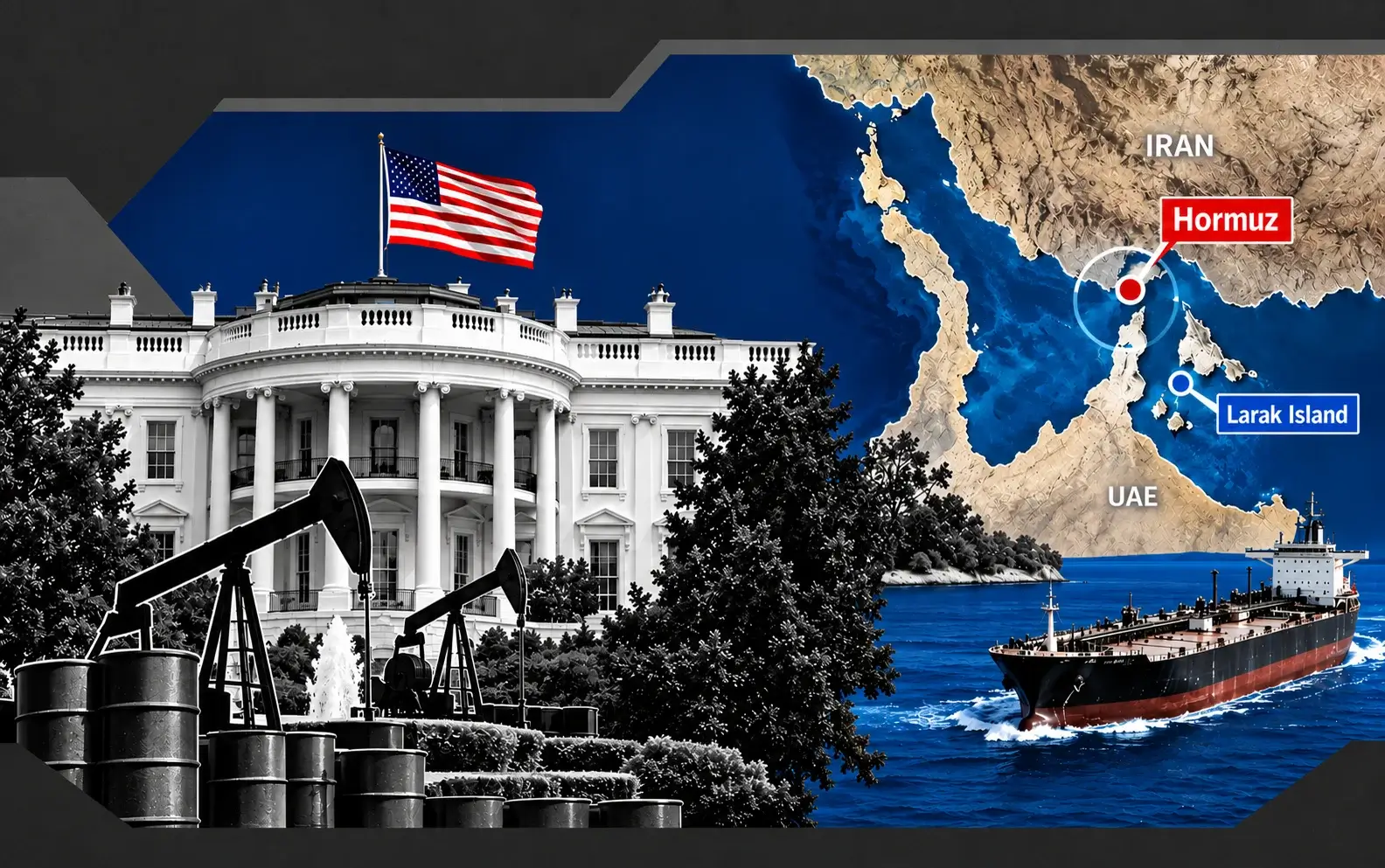
The catalyst is concrete. Trump announced the deal with Iran is complete, that the Strait of Hormuz reopens, and that the U.S. naval blockade of Iranian ports ends, with Persian Gulf oil shipments set to resume. Iranian Deputy Foreign Minister Kazem Gharibabadi confirmed the agreement, with the full text to be released after a signing ceremony in Switzerland. The reporting points to a 14-point draft that includes lifting oil sanctions and an Iranian commitment to reopen Hormuz within 30 days, alongside provisions to dismantle Iran's nuclear program and economic incentives if Tehran complies. The framework takes effect Friday, June 19.
The structure of the deal is what shapes the price path. A toll-free reopening with the blockade lifted removes the threat that drove the premium, which is why crude gapped lower the moment the news crossed. But the 30-day reopening window built into the draft tells the market that barrels don't flow back instantly — there's a lag between the signature and the supply, and that lag is what separates a controlled unwind from a freefall. Trump also attached a condition that matters: he warned he'd resume strikes if Iran fails to reach a final nuclear accord, which leaves a residual tail risk in the price. The deal removes the acute premium. It doesn't fully erase the geopolitical discount the market will demand until the flows actually normalize.
The Physical Catch: Mines, Idled Fields, and Damaged Infrastructure
This is the piece keeping crude from collapsing straight to $70. A deal on paper isn't oil in tankers, and the market knows it. Even with the strait declared open, the physical normalization faces real obstacles — clearing mines from the Strait of Hormuz, restarting idled production fields that were shut during the conflict, and repairing energy facilities damaged by months of drone and missile attacks. Each of those is a process measured in weeks, not hours.
The caution is visible in how crude traded after the initial gap. WTI came off its lows through European hours, trading down about 4% rather than holding the full 5.9% drop, as the desk weighed the difference between a signed agreement and restored supply. The barrels that were disrupted don't all return at once — the mine-clearing has to come first, the fields have to be brought back online, and the damaged infrastructure across the region has to be rebuilt. That sequence is the floor under the price. A market pricing instant normalization would already be at $70; a market pricing a messy, multi-week restart with tail risk attached holds in the high-$70s to low-$80s while it waits for proof the oil actually flows.
14 Million Barrels a Day Coming Back
The supply shock that's reversing is enormous. Before the war, roughly 20 million barrels a day of oil moved through the Strait of Hormuz. After accounting for the diversion of some crude via pipelines and the trickle of tankers that still made it through, around 14 million barrels a day of supply was disrupted at the peak of the blockade — a shortfall the International Energy Agency compared to both 1970s oil shocks occurring simultaneously. That's the scale of the premium that's now unwinding.
Reversing a 14-million-barrel-a-day disruption is the single most bearish force in the oil market, and it's why the downside has room to run. As the strait reopens and flows return toward the pre-war 20 million barrels a day, the global supply picture shifts from acute scarcity to renewed abundance, and the price has to reprice for a world that isn't short oil anymore. The catch is the same restart lag — that 14 million barrels doesn't come back in a single week, it returns in stages as the logistics clear. The supply wall is coming. The timing of its arrival is what determines whether crude grinds lower in an orderly unwind or gaps down again once the tankers visibly start moving.
OPEC+ and the Demand Picture
The supply-and-demand backdrop beyond the war adds to the bearish tilt. OPEC+ had cut output by around 1.74 million barrels a day in April as the cartel managed the disrupted market, and it has been weighing a potential output increase — a move that would add barrels on top of the returning Hormuz flows. More supply from the cartel into a market that's no longer short is a double dose of bearish pressure.
The demand side isn't helping the bulls either. OPEC's own monthly report cut its 2026 global demand growth forecast to 1.17 million barrels a day, down from 1.38 million previously, citing the conflict's drag on trade flows. Softer demand growth meeting returning supply is the textbook setup for lower prices — the war had masked a fundamentally looser balance by removing barrels from the market, and as those barrels return, the underlying softness reasserts itself. The question for OPEC+ is whether it holds back the planned output increase to defend prices as the premium unwinds, or adds barrels and accelerates the decline. That decision becomes the swing factor once the Hormuz flows normalize and the geopolitical story fades.
The Brent-WTI Spread and the US Inventory Overhang
The relationship between the two benchmarks tells its own story about where the pressure sits. The Brent-WTI spread had widened to an average of $12 a barrel during the disruption, as Hormuz-related shipping problems and elevated U.S. inventory levels capped WTI's gains relative to the international grade. Brent, more exposed to the seaborne supply choked by the strait, carried the larger premium; WTI, weighed by domestic stockpiles, lagged on the way up.
That dynamic flips on the way down. As the strait reopens and the international supply fear eases, the Brent premium that the disruption inflated should compress back toward normal, narrowing the spread. The elevated U.S. inventory overhang that capped WTI during the war now becomes an additional weight on the downside — domestic crude already sitting in storage, with returning global supply on top of it. The spread's behavior over the coming sessions is a useful tell: a rapidly narrowing Brent-WTI gap would confirm the market believes the seaborne disruption is genuinely over, while a sticky spread would signal lingering doubt about how fast Hormuz actually normalizes.
Technical Picture: $80 Broken, $70-75 in Play
The chart frames the unwind in clear levels. WTI breaking below $80 for the first time since March is a meaningful technical event — that's a two-month low, and the break opens the path toward the pre-war zone. The first downside magnet is the $75 area, the level a rapid-de-escalation scenario had long flagged as where crude retraces to unwind the geopolitical premium. Below that, the structural target is the $70 pre-war handle, with the 12-month moving average near $69.46 sitting as dynamic long-term support and the 23.6% Fibonacci level at $71.71 as a waypoint.
The upside is now resistance rather than support. Friday's $84.88 close and the $85-plus zone that crude held during the war become the ceiling the barrel has to climb back through, and with the premium unwinding, there's little reason for it to. The structure has flipped from a bull market defending support to a bear move hunting lower levels. The restart lag is what could put a temporary floor in the high-$70s — if the physical normalization drags, crude could base around $78-$80 before the next leg down once the tankers visibly start flowing. But the path of least resistance is lower, with $75 the near-term target and $70 the structural objective as the 14-million-barrel supply wall returns.
The Forecasts Are Now Stale
The Street's price targets were built for a different world, and they're about to get revised hard. The U.S. Energy Information Administration had raised its full-year 2026 Brent forecast to $96 a barrel in its April outlook, up sharply from $78.84, with WTI lifted to $87.41 from $73.61 — revisions explicitly tied to the effective closure of the Strait of Hormuz. Goldman Sachs had pushed its Q4 2026 Brent forecast to $90 and WTI to $83, while ING modeled Brent averaging $104 in the second quarter and $92 in the fourth.
Every one of those numbers assumed a closed or disrupted strait. The peace deal pulls the rug from under them. A forecast built on a 14-million-barrel-a-day shortfall has to be torn up when that shortfall reverses, and the coming weeks will bring a wave of downward revisions as the desks reprice for an open Hormuz and returning supply. The pre-war forecasts are the better guide now — the EIA's March numbers of $78.84 Brent and $73.61 WTI, and Goldman's pre-escalation $77 Brent, capture roughly where crude trades in a world without the war premium. The gap between the war-era targets near $90-$104 and the pre-war levels near $73-$78 is the premium that's unwinding in real time.
Energy Equities Get the Reverse Trade
The crude collapse flows straight into the equity complex, and it's the mirror image of the war trade. Energy was the standout sector winner through the conflict, as producers and oilfield-services names rode the rising barrel and the fat margins it delivered. Monday flipped that — energy was the laggard sector on the broad tape, the one group bleeding red on a day the major indexes ripped, as the crude crash pulled the producers down with it.
The leverage cuts in reverse now. The same operating leverage that amplified producer earnings on the way up amplifies the pain on the way down — when the barrel falls from $117 toward $80, the realized prices that fed record cash flows compress, and the equities give back the gains they booked during the war. The integrated majors, the exploration-and-production names, and the broad energy baskets all face the same headwind as long as crude keeps sliding. The flip side is the demand-side relief across the rest of the market: every sector that burns fuel as a cost line gets a tailwind from cheaper crude, which is part of why the broad tape could rip while energy was the lone drag.
Read More
-
Yen Stalls at 160 Despite a 3% JGB and Tokyo Core CPI at 2.0% — Intervention Sits at 164, Friday's Payrolls Decide
02.09.2026 · TradingNEWS ArchiveEnergy
-
CHAT Fund Holds $96.37 as Korean Memory and Chip Exposure Drive a 109.73% Year — Break of $98.02 Opens $105.20
18.09.2026 · TradingNEWS ArchiveStocks
-
First-Generation XRPR and XRPI Ride XRP's Rebound to $1.386 as Spot Funds Post First Outflow — Break of $1.40 Opens $1.54
18.09.2026 · TradingNEWS ArchiveCrypto
-
NG Holds $2.9255 as Storage Surplus Narrows From 5.5% to 3.7% in 3 Weeks — Break of $3.00 Opens $3.15
18.09.2026 · TradingNEWS ArchiveCommodities
-
Dollar Surges to 157.90 as BoJ's Divided Hike Fails to Lift the Yen — Break of 158.87 Opens 159
18.09.2026 · TradingNEWS ArchiveForex
The Fed Cross-Current
The oil crash carries a macro feedback loop that matters beyond the energy pit. Crude was the single biggest driver of the hot inflation prints that had the market pricing a potential Fed rate hike, so a barrel collapsing this fast is a disinflationary hammer landing right before the FOMC convenes June 16-17 for Kevin Warsh's first meeting as chair. Cheaper oil resets the inflation outlook lower and hands the Fed room it didn't have a week ago.
That cross-current is why the oil move is being watched well outside the commodity desks. A sustained crude decline pulls inflation expectations down, eases the higher-for-longer rate fear, and feeds the risk-on rotation lifting equities and crypto. The feedback runs both ways — if Warsh acknowledges the disinflationary impulse and leans dovish Wednesday, it reinforces the risk-on backdrop that's pressuring the dollar and supporting everything except energy. The barrel's collapse isn't just an oil story; it's the input that could reshape the rate path, which is why the timing of the crude crash two days before the Fed decision amplifies its significance.
Forecast: The Premium Unwinds Toward $70-75, With a Restart-Lag Floor
The verdict is bearish on crude, with the caveat that the path down is staged rather than straight. The war premium is collapsing — WTI cracked below $80 for the first time since March, down about 23.5% on the month, and the reopening of Hormuz reverses a 14-million-barrel-a-day supply shock that drove the barrel to $117. The structural pull is toward the pre-war zone of $70 to $75, with the war-era forecasts of $90-plus now stale and due for sharp downward revisions.
The restart lag keeps the fall from being a freefall. The deal signs Friday, flows don't fully normalize for 30 days, and the physical route back faces mine-clearing, idled-field restarts, and damaged-infrastructure repairs that put a temporary floor in the high-$70s to low-$80s. The base case is a staged decline: crude grinds toward $75 as the premium unwinds, with $70 and the 12-month moving average near $69.46 the structural objective once the tankers visibly start flowing. The bear path accelerates if OPEC+ adds its planned output increase on top of returning Hormuz supply, dragging crude through $70. The bull path — a relative one — is a slower decline if the physical restart drags or Trump's tail-risk threat to resume strikes reinjects a premium. Either way, the direction is lower; the war that drove oil to $117 is over, and the barrel is heading back toward where it started.