Crude Detonates as Iran Walks From the Table — WTI Tags $94, Brent $97, and the Hormuz Premium Takes Control
Oil ripped more than 7% to start June as the ceasefire collapsed | That's TradingNEWS
Key Points
- WTI rips 7%+ to $94 and Brent to $97 after Iran suspends talks and Israel widens its Lebanon offensive.
- Oil is one giant Hormuz option — the war premium keeps it bid, but a confirmed ceasefire crashes it fast.
- Fundamentals are bearish: EIA, Goldman and JPMorgan all see $60–$89 once Hormuz reopens and supply floods back.
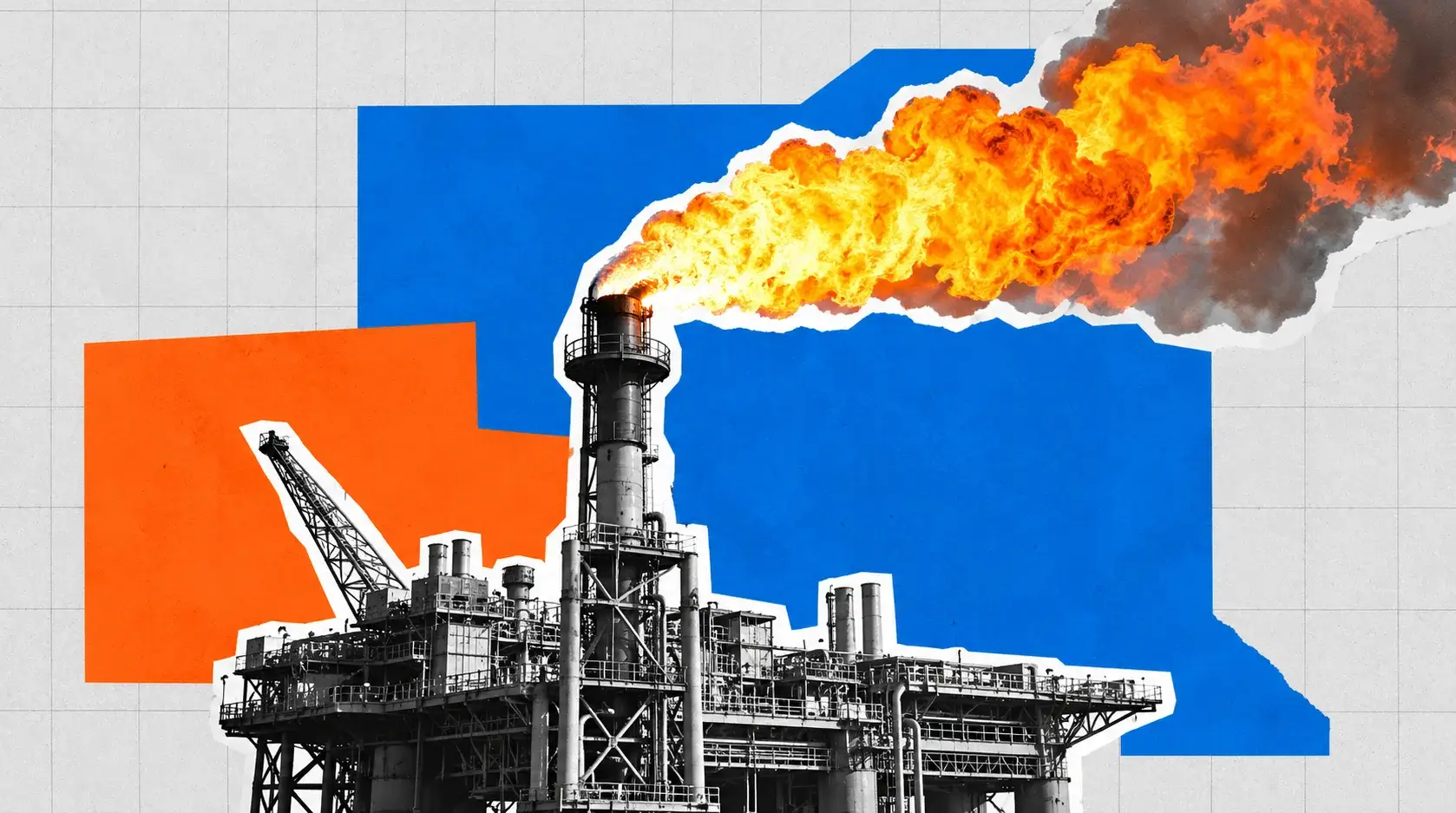
Crude opened June with a violent reminder of who's holding the steering wheel. West Texas Intermediate ripped more than 7% to trade above $94 a barrel, and Brent surged close to 7% toward $97, after Iran's negotiating team said it would suspend the exchange of messages and documents with Washington through mediators, accusing the U.S. of sending mixed signals and dragging out the process. The breakdown landed as Israel escalated its military operations in Lebanon against Hezbollah, blowing apart the fragile optimism that had dragged oil to six-week lows just days earlier. The single most important thing to understand about this market is that it trades almost entirely on the Strait of Hormuz, and the moment the deal that was supposed to reopen it fell apart, the geopolitical premium came roaring back into the price. The bid that lifted crude 7% in a session isn't about demand or inventories — it's about a waterway that carries a fifth of the world's oil suddenly looking like it'll stay shut. That's the tape, and it's the whole forecast in miniature.
Where crude trades right now
The price action is a study in whiplash. WTI is changing hands above $94, recovering a chunk of last week's brutal selloff, while Brent sits near $97 — but both benchmarks remain roughly 30% above where they traded before the conflict began on February 28. That's the round trip worth absorbing: oil exploded higher when the war started, with Brent peaking at $138 a barrel on April 7 and averaging $117 in April, the highest monthly reading since the aftermath of Russia's invasion of Ukraine in 2022. Then May happened — Brent collapsed nearly 17% on the month, its worst monthly drop since 2020, as the market priced in a ceasefire that hadn't been signed. Crude fell below $91 on Brent and tagged six-week lows before today's reversal. So the current $94 WTI print sits in a strange middle ground: far below the April panic highs, far above the pre-war base near $72, and entirely at the mercy of the next Hormuz headline. The volatility itself is the asset class right now.
The whole price is a Hormuz option
To forecast oil, you forecast one chokepoint. The Strait of Hormuz handled nearly 20% of global oil and LNG flows before the war, and it's been effectively closed to shipping traffic since late February — an unprecedented disruption to global energy supply. Every dollar of the premium sitting in crude above its pre-conflict level is a bet on how long that closure lasts. When the market believes a reopening is imminent, oil dumps; when it believes the closure will drag on, oil spikes. Today it spiked because Iran walked from the table and the reopening timeline evaporated. The structural problem is that even a reopening doesn't flip a switch — the waterway is mined, infrastructure is damaged, and shut-in production has to be restarted, so flows would recover slowly even under a best-case agreement. That's why the price can stay elevated on the mere uncertainty: the option premium doesn't fully drain until ships are actually moving through the Strait. Until then, crude is less a commodity than a leveraged bet on Middle East de-escalation, and that bet just got more expensive.
The headline whipsaw: every deal rumor crashes it, every escalation rips it
This market has trained itself to trade headlines, and the pattern is brutally consistent. Through May, every report of progress toward a ceasefire knocked crude lower — the 17% monthly Brent collapse was built almost entirely on optimism that Washington and Tehran would reach a durable agreement. Every escalation has done the opposite, snapping prices higher in single sessions. Today's 7% surge is the escalation trade; last week's slide to six-week lows was the peace trade. The asymmetry that makes this dangerous is that the peace headlines keep proving premature. Traders have been repeatedly handed reports of imminent deals that dissolved within days, leaving the market to chase the move in both directions. The practical implication is that crude's realized volatility is enormous and its direction is dictated by diplomacy rather than by barrels — a setup where positioning gets violently punished on every fresh headline and where the fundamental supply-demand picture is temporarily irrelevant to the daily print.
What actually happened to the ceasefire
The deal that crashed oil in May and whose collapse is lifting it today had real substance, which is why its failure matters. The reported framework was a 60-day ceasefire extension that would have allowed formal talks, with Iran agreeing to clear all mines from the Strait within 30 days and potentially permit unrestricted shipping through Hormuz. That's the package that sent Brent below $91. The problem was always the fine print: President Trump never approved the proposed terms, Iranian state media said the agreement wasn't finalized, and senior U.S. officials cautioned it was uncertain whether or when a deal could close. Trump has reaffirmed his demand that Iran halt its nuclear program and fully restore the Strait as an open shipping route — conditions Tehran has resisted. Now Iran has halted the message exchange entirely in response to Israel's Lebanon offensive, which means the framework that priced into crude is effectively dead for the moment. The market spent May pricing a deal; June is opening by pricing its collapse.
The supply shock no one's pricing for the long run
Beneath the geopolitics sits a supply picture that's been scrambled in ways that will outlast the headlines. At the peak of the disruption, Iraq, Saudi Arabia, Kuwait, the UAE, Qatar, and Bahrain collectively shut in 10.5 million barrels per day of crude production — a staggering removal of supply that tightened global balances and drove the April spike. The structural landscape shifted further when the UAE announced its departure from OPEC effective May 1, a move that cuts the cartel's spare capacity cushion, with estimates now putting OPEC spare capacity around 2.5 million barrels per day in 2027 versus a prior projection of 3.8 million. Less spare capacity means less ability to absorb the next shock. Add the secondary fronts — Ukraine intensifying attacks on Russian refineries and Moscow banning jet fuel exports through November to prevent domestic shortages — and the supply side is fractured across multiple theaters. Global inventories are projected to fall by an average of 8.5 million barrels per day through the second quarter. The supply shock is real, and it's the reason the floor under oil is higher than the bears' models suggest.
The bearish structural call the whole Street shares
Here's the tension that defines the medium-term forecast: once you look past the war, nearly every major outlook is bearish. The U.S. energy agency's modeling keeps Brent around $106 through May and June on the Hormuz-closed assumption, then sees it falling to an average of $89 in the fourth quarter and $79 in 2027 as Middle East production comes back online. Goldman Sachs pegs fourth-quarter Brent at $90 and WTI at $83 with two-sided risks. The most aggressive bear, JPMorgan, sees Brent averaging just $60 for 2026, arguing that soft supply-demand fundamentals point lower and that any military action would likely be targeted to avoid Iran's oil infrastructure. The common thread across all three is that the underlying market is oversupplied — world demand growth is modest while supply growth outpaces it — and the entire premium in crude is a war distortion that mean-reverts once the Strait clears. That's the strategic backdrop: a structurally bearish market wearing a fat geopolitical premium, with the establishment betting the premium eventually bleeds out.
The demand side is quietly soft
The piece of the puzzle that gets drowned out by war headlines is that demand is wobbling. Weak April retail data from China and Western Europe together implied around 2 million barrels per day of downside risk to already subdued global demand forecasts — a meaningful signal that high prices and a sluggish global economy are eating into consumption. That soft demand is the foundation of the bearish structural case, and it's why the banks are comfortable calling for $79 to $89 even with Hormuz in play. High oil is self-correcting: $94 crude slows industrial activity, crimps discretionary fuel use, and accelerates the demand destruction that eventually caps prices. The geopolitical bid can override this in the short run, but it can't override it forever. If the Strait reopens into a market where Chinese and European demand is already faltering, the combination of returning supply and soft consumption is exactly the recipe for the sharp reversion the forecasters are modeling. The demand cracks are the bears' insurance policy.
The charts and levels: $90 floor, $100 ceiling
The technical map is straightforward once you frame it around the war premium. WTI's near-term floor sits at $90, the level it defended on last week's selloff and the line that's now firmed up on today's reversal. Below that, the pivot zone runs $84 to $87, and a clean break there opens the path toward the $79 the energy agency models for 2027. On the upside, $100 is the psychological wall and the magnet if the conflict escalates further, with the April Brent peak near $138 the extreme tail in a full Hormuz-shutdown scenario. The recent forecast pivots have been climbing steadily through the war, tracking the geopolitical premium higher. The structure to watch is binary: as long as talks are dead and Hormuz stays shut, the bias points toward $100, and momentum is firmly with the bulls after a 7% session. The moment a credible ceasefire is signed, the floor at $90 fails and the $84 to $79 zone becomes the target in a hurry. The chart is a coiled spring wired directly to the diplomatic wire.
The voices: a frozen conflict and a 2027 normalization
The people closest to the energy market are bracing for a long grind rather than a clean resolution. The read from a former senior U.S. energy advisor captures it: a "no war, no oil, no straits" frozen conflict in which oil stays elevated in a $90 to $100 range through the rest of the year and into 2027 even if Hormuz reopens early. Saudi Aramco's chief executive warned that the market would take until 2027 to normalize if the Strait stays blocked beyond mid-June, and that even an immediate reopening would require months to rebalance as production restarts and tanker logistics untangle. Citi flagged that prices can rise further if U.S.-Iran dealmaking remains thorny — which, as of today, it emphatically does. The consensus among the operators and the strategists is that the upside risk is live and immediate while the downside is a slower, structural reversion. That split — tactical upside, strategic downside — is the entire forecast distilled into the views of the people who move the physical barrels.
Read More
-
Yen Stalls at 160 Despite a 3% JGB and Tokyo Core CPI at 2.0% — Intervention Sits at 164, Friday's Payrolls Decide
02.09.2026 · TradingNEWS ArchiveEnergy
-
FDVV ETF ($61.42) Balances Nvidia, Apple and Microsoft Against Rate-Sensitive Income Holdings — $64.54 High in Reach if Yields Ease
19.10.2026 · TradingNEWS ArchiveStocks
-
XRPI ($6.98) and XRPR ($10.61) Trade 56% and 52% Below Their Highs as First-Mover Funds Lose the Fee Battle to 0.19% Spot Products
19.10.2026 · TradingNEWS ArchiveCrypto
-
NG Holds Its $3.00–$3.30 Range as Light Storage Builds Meet Record 112.2 Bcf/d Output — $3.50 Above $3.26
19.10.2026 · TradingNEWS ArchiveCommodities
-
Dollar-Yen (158.43) Stuck in a 1.39-Yen Box as Carry Meets the Intervention Line — 156.65 Below 157.55, Tokyo Waits at 160
19.10.2026 · TradingNEWS ArchiveForex
Oil's reach extends far beyond the pit, and the feedback loop is why it matters to every other market. The integrated majors catch a direct bid when crude spikes, with the largest producers' margins expanding as the price climbs, and the energy sector has been one of the few corners offering shelter from the broader macro stress. But the more consequential channel is inflation. Crude above $90 feeds straight into headline prices, hardens the case for higher-for-longer interest rates, and strengthens the dollar — the exact mechanism that's been crushing gold and pinning the euro at six-week lows. Today's 7% oil surge isn't just an energy story; it's an inflation story that tightens financial conditions across every asset class and gives the new Warsh-led Fed another reason to stay hawkish into Friday's jobs report. The oil price has become a macro linchpin, and as long as it's rising, it's exporting inflation pressure into bonds, currencies, and central-bank policy. That ripple effect is why the whole market watches the Strait.
Forecast and verdict
The verdict splits cleanly by timeframe, and getting both halves right is the whole game. Tactically, the bias is higher — crude is bid, the ceasefire is dead, Hormuz is shut, Iran has walked from the table, and momentum is screaming after a 7% session, which points WTI toward $100 and Brent back toward the triple digits while the escalation runs. This is a market to respect on the long side as long as the diplomatic wire stays hostile. Strategically, it's a sell — the underlying balance is oversupplied, demand is cracking in China and Europe, OPEC and non-OPEC barrels are waiting to return, and the entire forecasting establishment from the energy agency to Goldman to JPMorgan sees crude reverting toward $79 to $89, with the most bearish call pointing all the way to $60 once the Strait reopens. The trade is to ride the war premium but never marry it: every confirmed step toward a real ceasefire is a sell signal, with $90 the first domino and $84 then $79 the targets on a genuine reopening. What invalidates the bullish spike is a signed deal that clears the mines; what invalidates the bearish structural call is a full, prolonged Hormuz shutdown that drags into 2027 and forces the $100-to-$138 scenario. For now the war owns the tape and the bias is up — but this is a geopolitical spike sitting on a bearish foundation, and foundations win in the end.