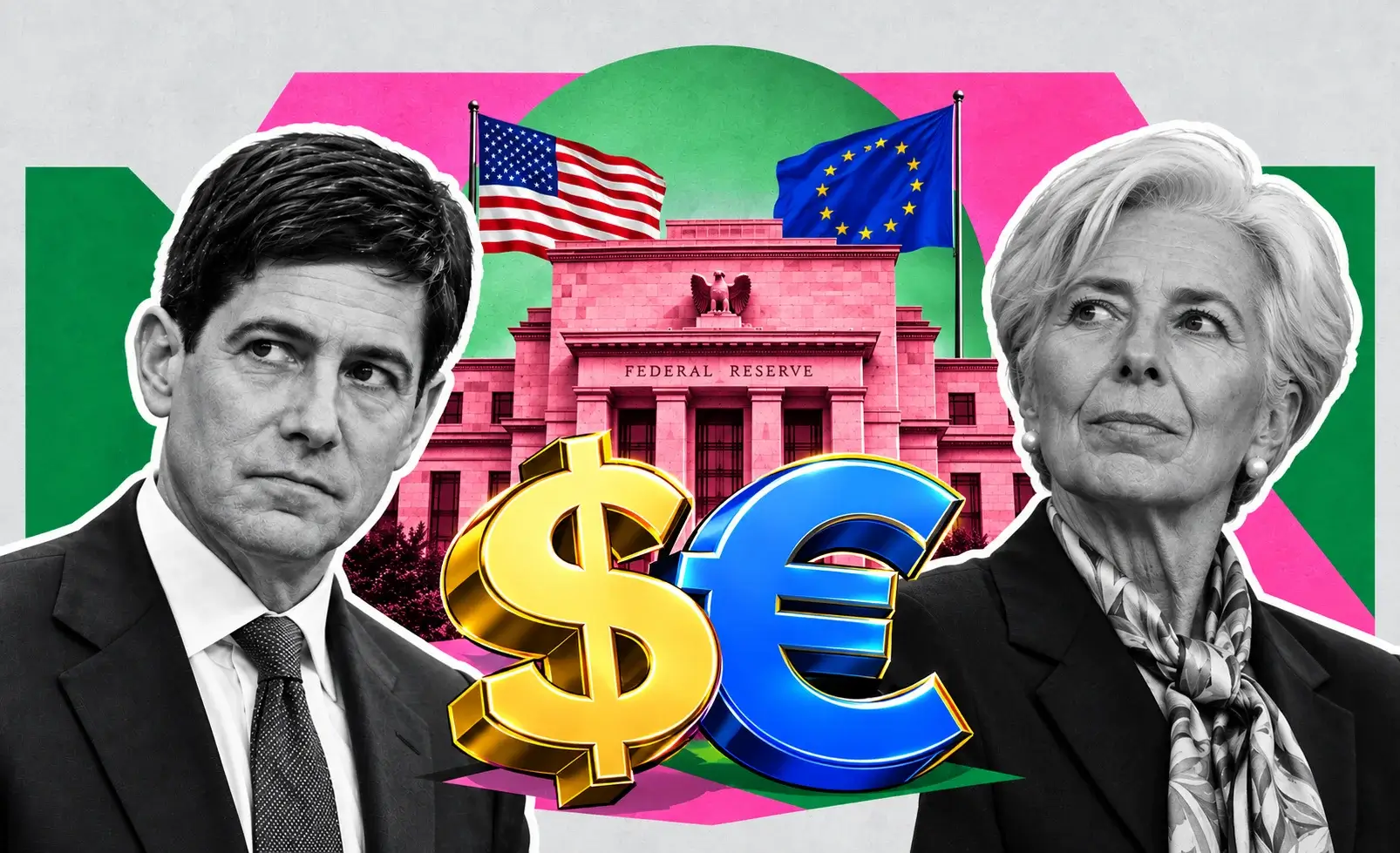
EUR/USD Price Forecast - EUR Holds 1.1690 Ahead of CPI and ECB Signals
Euro-dollar tests 1.1690 as inflation, jobless claims, and central bank moves dictate direction | That's TradingNEWS
EUR/USD Trades Near 1.1690 as Markets Position for Inflation and ECB Signals
Read More
-
Yen Stalls at 160 Despite a 3% JGB and Tokyo Core CPI at 2.0% — Intervention Sits at 164, Friday's Payrolls Decide
02.09.2026 · TradingNEWS ArchiveEnergy
-
OKLO ($37) Trades at 2.35x Cash After $1B Share Sale Hit — Upside Toward $43.99 September High
17.09.2026 · TradingNEWS ArchiveStocks
-
XRP-USD ($1.2983) Defends $1.256 100-Day EMA as ETFs Hold 1.07B XRP — Upside Toward $1.40 Range Top
17.09.2026 · TradingNEWS ArchiveCrypto
-
WTI ($100) Drops 5% From $105 High as Hormuz Transfers Hit 2.7M bpd — Downside Toward Brent $95.63
17.09.2026 · TradingNEWS ArchiveCommodities
-
Nasdaq Rips 1.7%, S&P 500 Adds 1%, Dow Climbs 268 After Fed Hike; Fluence FLNC Plunges 22%
17.09.2026 · TradingNEWS ArchiveMarkets
-
GBP/USD (1.3381) Loses Rate Edge as Fed Hike Puts Bank Rate 12.5 bps Below — Downside Toward 1.33
17.09.2026 · TradingNEWS ArchiveForex
Rate Differentials Suggest EUR/USD Fair Value Near 1.18–1.20
Despite near-term weakness, Deutsche Bank and other institutional desks calculate that rate differentials imply a fair value for EUR/USD between 1.18 and 1.20. The narrowing spread between U.S. and European yields is undermining the dollar’s cyclical support, which has deteriorated since mid-2024. However, traders remain hesitant to bid the euro aggressively until they see whether the Fed delivers more than one cut this year and whether the ECB hints at further easing. ING maintains that the pair will stay anchored near 1.1700, with potential dips toward 1.1630–1.1650 but no sustained break lower unless macro data diverges sharply.
Labor Market Strain and Fed Politics Shape Dollar Bias
U.S. politics also play a role in the dollar’s trajectory. A federal judge temporarily blocked Trump from removing Fed Governor Lisa Cook, while economic advisor Stephen Miran is moving toward Senate confirmation as a dovish replacement for a hawkish member. A Miran appointment strengthens the argument for faster Fed cuts, which would weigh on the dollar and support EUR/USD. At the same time, labor softness—nonfarm payrolls added just 22,000 jobs in August with unemployment climbing to 4.3%—feeds the case for monetary easing. If confirmed, these developments could accelerate dollar losses and shift EUR/USD back toward its fair-value band.