EUR/USD Price Forecast - Eur Holds Above 1.1700 as ECB 2.0% and US CPI 2.7% Support Bullish Bias
With EUR/USD pinned near 1.1750, softer US inflation and a steady ECB keep dips to 1.1700–1.1650 in focus while bulls eye 1.1804 and 1.1919 into 2026 | That's TradingNEWS
EUR/USD: Bulls Defend 1.1700 As ECB 2.0% Meets US CPI 2.7%
Macro backdrop for EUR/USD: ECB at 2.0% vs Fed after 2.7% US CPI
The core setup in EUR/USD is a 2.0% ECB deposit rate on hold against a Fed that just saw headline CPI fall to 2.7% year-on-year versus a 3.1% consensus. That combination weakens the USD narrative just as the ECB is signalling that current policy is already restrictive enough and likely to stay there. The pair trading around 1.1740–1.1750 reflects exactly this balance: Euro policy is tight, US inflation is cooling, and there is no immediate catalyst for a broad dollar squeeze higher. Markets see the Fed still roughly 50 to 100 basis points above neutral, but without urgency to cut in January, while the ECB is comfortable at 2.0% and pushing the message that rates can stay put into 2026.
ECB stance and the EUR leg of EUR/USD around the 1.1700–1.1900 band
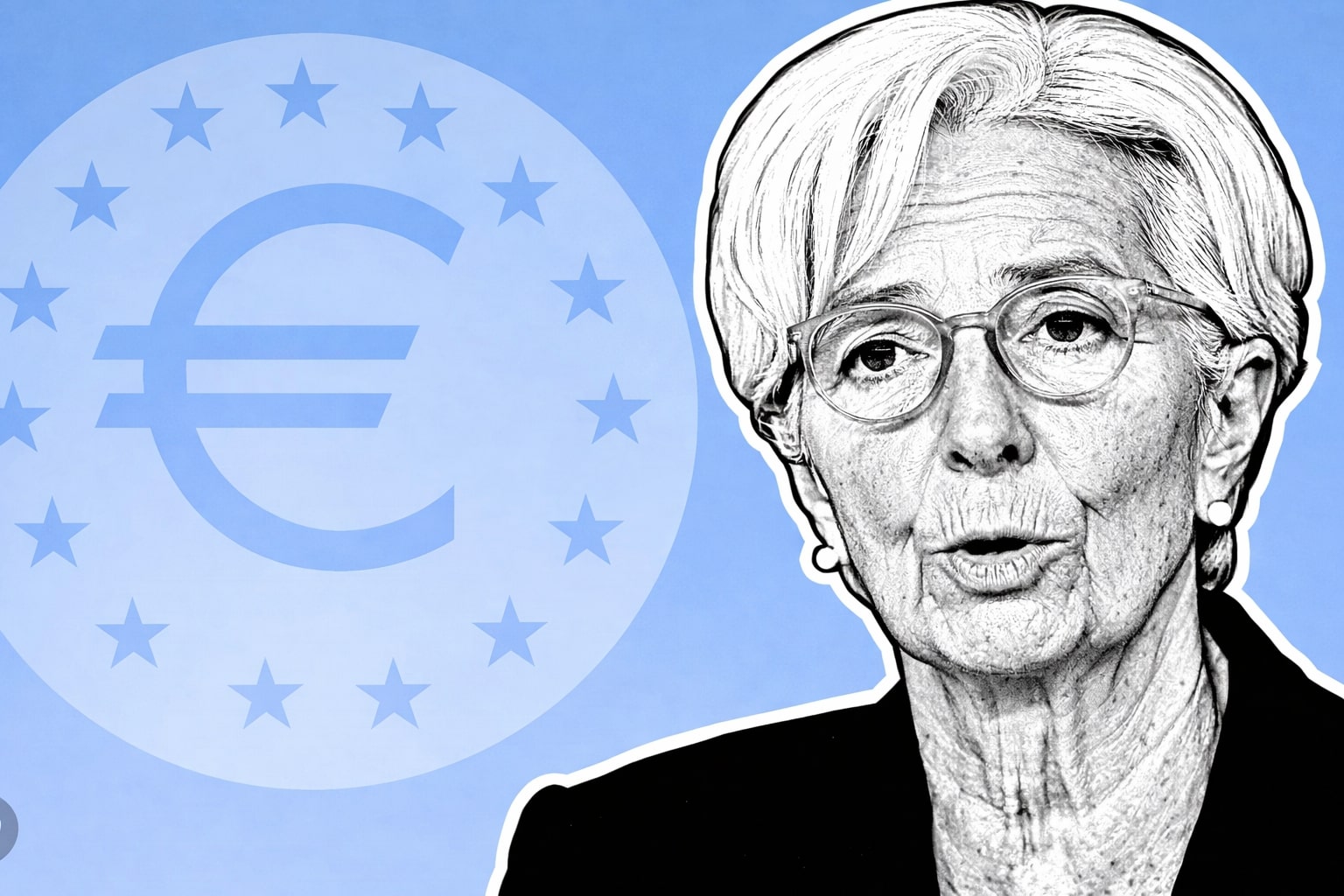
On the EUR side, the European Central Bank is widely expected to keep the deposit rate at 2.0%, with almost no serious pricing for a move at the current meeting. Updated projections show inflation drifting toward roughly 1.7% in 2026 and 2027, which supports doves arguing that cuts will eventually be needed, but the same forecasts show inflation above target by 2028 due to delayed carbon pricing and structural pressures. Growth running a little over 1% in 2025 gives hawks cover to argue that the Eurozone can live with restrictive rates longer. If Christine Lagarde leans into resilience and repeats that policy is in a “good place” with no rush to cut, that combination justifies EUR/USD staying above 1.1700 and targeting 1.1800 first, then the 1.1919 high from September 2025 and even the 1.2000 round number if US data keep under-delivering like the 2.7% CPI print.
US CPI at 2.7%, DXY under 98.50 and the USD side of EUR/USD
For the USD leg in EUR/USD, the last CPI release is decisive. Headline inflation at 2.7% year-on-year versus 3.0% previously and 3.1% expected confirms cooling price pressure, not re-acceleration. Core CPI near 3.0% is still too high for the Fed’s taste but offers no upside shock. The government shutdown distortion means October CPI was skipped and November data are stripped down to annual rates, so nobody at the Fed will overreact to a single print. Yet for markets, the direction matters: a softer 2.7% number pulls the Dollar Index back below roughly 98.50 and undercuts the argument for a stronger USD into year-end. Fed officials like Christopher Waller acknowledge that rates are still above neutral and the labour market is softening, but with only modest odds for a January cut and March seen as the realistic starting point for easing, the dollar loses the “policy panic” premium it held earlier in the year.
Short-term EUR/USD flow and price behaviour: 1.1700 as pivot, 1.1750–1.1800 as ceiling
Across the intraday tapes, EUR/USD flow tells the same story: aggressive demand around 1.1700, controlled supply close to 1.1800. The pair has already tested the 1.1700 handle several times, including a sharp dip earlier in the week, and each time buyers stepped in and dragged price back toward 1.1740–1.1750 by the US session close. That behaviour signals consolidation, not topping. Dealers treat 1.1700 as the main short-term pivot, with 1.1750–1.1800 acting as the working resistance band ahead of the 1.1804 two-month high. As long as spot continues to close above 1.1700 and rebounds from every probe into the low-1.17s, the flow backdrop favours buy-the-dip strategies rather than breakout shorts.
Technical structure for EUR/USD: ascending channel with 1.1650–1.1685 as structural support
Technically, EUR/USD trades in an ascending channel on the four-hour and daily charts, with a clear pattern of higher highs and higher lows since the last meaningful low near 1.1589. Spot around 1.1740–1.1750 sits above a rising 9-day exponential moving average at roughly 1.1715 and well above the 50-day EMA near 1.1644. The wider support zone between 1.1650 and 1.1685 is where the 21-day EMA, the short-term bullish trendline, and prior resistance all converge, making it the critical structural floor for the trend. The 14-day relative strength index near 67–68 indicates strong upside momentum, still shy of a formal overbought trigger at 70. On the upside, immediate resistance is 1.1750–1.1800, then 1.1804, then the channel top near 1.1820, followed by the 1.1918–1.1919 highs and the 1.2000 psychological barrier. A clean daily close above 1.1804 opens the door for a run at 1.1919 and then 1.20. Conversely, a decisive break below 1.1650, with follow-through toward 1.1610 and 1.1589, would be the first serious signal that the bullish structure is failing.
Read More
-
Yen Stalls at 160 Despite a 3% JGB and Tokyo Core CPI at 2.0% — Intervention Sits at 164, Friday's Payrolls Decide
02.09.2026 · TradingNEWS ArchiveEnergy
-
QQQI ($53.80) Turns Nasdaq Volatility Into a 14.2% Monthly Yield as Assets Top $15B — Big Tech Earnings Set November
27.10.2026 · TradingNEWS ArchiveStocks
-
XRPI ($7.09) Rises 2.46% as Spot XRP Funds Hold $1.47B but Flows Stall Near Zero — $1.35 Breakout Sets the Next Leg
27.10.2026 · TradingNEWS ArchiveCrypto
-
NG($3.002) Takes the Front Month Near a Multi-Month Low as Record Production Meets Mild Weather — Break of $2.945 Opens $2.80
27.10.2026 · TradingNEWS ArchiveCommodities
-
USD/JPY (157.86) Squeezed Between a 2.8-Point Carry Edge and Tokyo’s 160 Line — BoJ Hawkish Hold Friday Sets the Break
27.10.2026 · TradingNEWS ArchiveForex
Eurozone data drag and German IFO weakness: why EUR/USD is capped under 1.1800
The EUR side is not unchallenged, which is why EUR/USD stalls under 1.1800 instead of sprinting to 1.20 immediately. Softer Eurozone inflation data and a second monthly decline in the German IFO business climate index highlight that growth in the bloc’s largest economy remains fragile. Sentiment surveys point to persistent uncertainty around investment and hiring, especially in German industry. That backdrop caps the enthusiasm for a sustained Euro breakout and explains the repeated appearance of bearish pin bars and rejection wicks just below 1.1800 on four-hour charts. The pair’s behaviour still fits a consolidation phase in an up-trend: Euro data prevent a straight-line move to 1.1919, but as long as 1.1700 and, more importantly, 1.1650 hold, sellers cannot generate the kind of follow-through you see in genuine distribution phases.
Event path for EUR/USD into 2026: ECB communication, US CPI after 2.7% and 1.1919–1.2000 risk
Looking forward, the path for EUR/USD into 2026 is defined by three levers: ECB communication, the quality of US data after the 2.7% CPI print, and whether markets keep rewarding carry into the Euro. If Lagarde downplays medium-term inflation risk and leans harder on weak growth, the market will drag forward rate-cut expectations and EUR/USD could slip back toward 1.1685 and 1.1650, especially if US jobless claims or subsequent inflation readings surprise on the upside. If instead the ECB leans hawkish at 2.0%, US data stay benign around 2.5–2.7% inflation, and the Fed keeps delaying cuts beyond March, then spreads work against the dollar and the pair can push above 1.1804, take out 1.1919, and begin trading against the 1.2000 level as the next logical target. In that bullish case, pullbacks into the 1.1700–1.1720 region are opportunities to reload longs rather than signs of a reversal.
Trading stance on EUR/USD: bullish bias, buy-the-dip above 1.1650 rather than sell-the-rally
Putting all the data together, the verdict for EUR/USD is bullish rather than neutral. Price around 1.1740–1.1750 is supported by a rising channel, a 9-day EMA at 1.1715, a structural floor at 1.1650–1.1685, and a macro mix where the ECB sits at 2.0% and the US just printed 2.7% headline CPI with no strong Fed urgency to hike or even keep cuts off the table. As long as daily closes hold above 1.1650, the pair is a Buy on dips, not a Sell, with a tactical upside path toward 1.1804, then 1.1919, and potentially 1.2000 if ECB communication stays hawkish-hold and US data continue to lean soft. A sustained break below 1.1650 with momentum down into 1.1610 and 1.1589 would invalidate that bullish stance and flip the pair back to Hold at best, but the current structure and flows do not support that scenario yet.