EUR/USD Price Today: Pair Cracks 1.1700 Toward 1.1684 as Brent Hits $115, US Durable Goods Surge 3.3%
Dollar Index hits 98.85 as 10-year yield jumps to 4.40% | That's TradingNEWS
Key Points
- EUR/USD slides to 1.1684, down 0.22% as Brent hits $115 and US Core Durable Goods surge 3.3% vs 0.6% est.
- Fed seen holding at 3.50%-3.75% with 99.5% probability; DXY climbs to 98.85 as 10-year yield jumps to 4.40%.
- Key levels: 1.1665 support, 1.1745 resistance; break below opens path to 1.1500, German HICP misses at 2.9%.
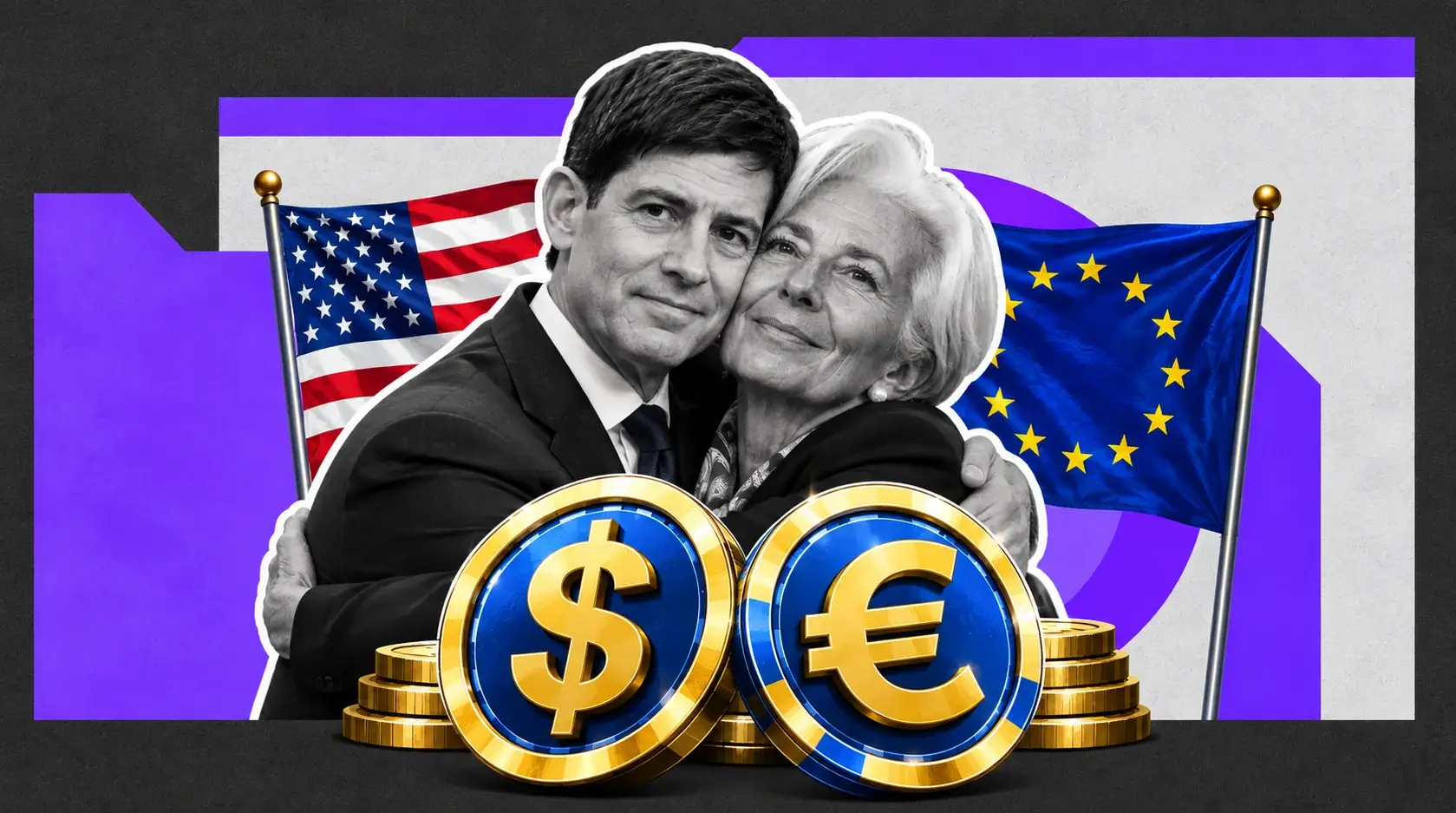
EUR/USD is bleeding through the 1.1700 floor and trading at 1.1684 with a 0.17% to 0.22% intraday loss, falling back from a daily high near 1.1720 after a brutal sequence of macro catalysts stacked the deck firmly in favor of the dollar. The pair is sitting on a knife edge ahead of a binary 24-hour catalyst window that delivers Jerome Powell's final FOMC press conference at 14:30 ET today, the Q1 GDP print and initial jobless claims Thursday morning, and the European Central Bank rate decision the same day with Christine Lagarde at the podium. The macro setup is uncomfortably one-sided. Brent crude (BZ=F) is up for an eighth consecutive session, testing $115 a barrel and pushing the U.S. Dollar Index (DXY) to 98.66 to 98.85 with a 0.27% gain on the day. WTI crude (CL=F) sits at $103 to $105.25 with a 5% one-day rip on the extended Iran blockade story. The 10-year Treasury yield (^TNX) jumped 5 basis points to 4.398%, pushing toward the 4.40% breakout level that historically marks a regime shift in fixed income. U.S. Core Durable Goods Orders for March exploded 3.3% versus the 0.6% consensus, with headline orders at +0.8% versus -1.2% prior, signaling that AI-driven business spending is accelerating rather than rolling over. March CPI printed at 3.3% year-over-year, up sharply from 2.4% prior, with energy costs surging 12.5% on the month. German HICP missed badly at 2.9% versus the 3.0% consensus, with monthly inflation collapsing from 1.2% to 0.5% versus 0.8% expected — a print that gutted any near-term hawkish narrative the European Central Bank could lean on. The combination is poison for the euro: a U.S. economy printing strong activity data and rising inflation, a euro-zone economy printing softer prices and weakening growth indicators, and a geopolitical backdrop that hits oil-importing Europe far harder than the energy-exporting United States.
Why the Dollar Is the Cleanest Long Trade in G10 Right Now
The dollar's strength here is not narrative — it is mechanical. The United States is a net energy exporter and the marginal beneficiary of higher crude prices through trade-balance channels, while the euro zone runs structural energy deficits and absorbs the inflation shock through import costs that compress household disposable income. The DXY at 98.66 to 98.85 has rejected the 99.00 zone repeatedly across recent sessions but has refused to break beneath 98.20 to 97.80, which forms the lower band of the multi-week consolidation. Any clean break above 99.20 unlocks a path to 100.00, which would coincide with EUR/USD testing 1.1500 and below. The interest-rate differential channel adds the second leg. CME FedWatch prices today's Fed hold at 99.5%, with the central bank expected to keep the federal funds target band at 3.50% to 3.75% through year-end. Kalshi prediction markets show only a 50% probability of any Fed rate cut before 2027, collapsed from 80% to 90% earlier in the year. Compare that against the ECB, which sits at 2.00% and is expected to hold Thursday with Lagarde likely framing higher energy as a temporary supply shock rather than a demand-driven inflation trend that demands tightening. The 150-basis-point policy spread between the Fed and the ECB is the cleanest fundamental driver pulling EUR/USD lower, and that spread is structurally locked in for at least the next two quarters because neither central bank can pivot meaningfully without harming its mandate. Money markets are now pricing roughly 3 basis points of ECB rate hikes by year-end via Prime Terminal's implied forward rate curve, but that pricing assumes the ECB prioritizes inflation over growth — a stance that would crush eurozone activity and drag the euro lower through the recession-risk channel rather than supporting it through the rate-differential channel.
The Strait of Hormuz Story Is the Real Killer for the Euro
Crude oil is the upstream variable strangling EUR/USD in the short run, and the framing of the Iran standoff has shifted in ways that materially extend the pressure window. Brent (BZ=F) at $115 with eight consecutive up sessions is the cleanest tell that the energy market is pricing the Strait of Hormuz disruption as durable rather than transitory. Donald Trump has reportedly briefed aides to prepare for an extended naval blockade rather than walk away from the war or pivot to direct conflict, and the rhetoric over the past 48 hours has hardened around the position that the U.S. will squeeze the Iranian economy through the energy channel for as long as it takes to force a deal. The Wall Street Journal reporting that surfaced midweek made clear that the White House sees the blockade as the preferred policy tool rather than military escalation, which means the inflation pressure feeding through to the euro zone will likely persist into the summer. The Strait of Hormuz carries roughly 20% of global energy supply on any given day, and a sustained closure resets inflation expectations across every major developed economy. The euro zone is structurally more exposed than the U.S. because Germany — the bloc's industrial anchor — depends on imported energy to run its manufacturing base. Germany's GfK consumer sentiment index has fallen sharply, the Ifo business survey has weakened, and the European Commission sentiment survey points to slowing economic momentum across the bloc. That stagflationary cocktail — weakening growth alongside rising inflation expectations — is the worst possible setup for a currency facing a strong dollar across both rate and risk channels. The United Arab Emirates exiting OPEC on May 1 layers another structural complication onto the energy backdrop. The fragmentation of cartel coordination during a Hormuz closure means crude supply discipline is breaking precisely when the world needs it most, which keeps the energy premium underneath the dollar bid.
Technical Map: 1.1665 Floor, 1.1745 Wall, 1.1500 the Trapdoor
The chart structure has compressed into a setup that resolves violently in either direction within days. EUR/USD at 1.1684 to 1.1700 is sitting just above the 200-day moving average and the prior support/resistance confluence in the 1.1665 to 1.1680 zone, which represents the cleanest multi-month support level on the daily chart. The triple simple moving average cluster around 1.1649 reinforces that floor and is the first level any sustained dollar rally has to break to open the deeper downside path. The Relative Strength Index (RSI) at roughly 50.4 hovers around neutral, which signals a loss of directional conviction after the recent recovery from mid-1.15s territory but does not yet flag the kind of momentum exhaustion that triggers a snap-back rally. The 20-day exponential moving average at 1.1698 is acting as a magnet, with price stuck to that line as the market waits for Powell to deliver the binary catalyst. A daily close beneath 1.1665 to 1.1680 cracks the structure and exposes deeper supports at 1.1600, then the 1.1567 zone tied to the 23.6% Fibonacci retracement, with 1.1500 as the next major psychological level and 1.1408 as the structural floor below it. To the upside, immediate resistance sits at 1.1745 to 1.1750 (the 50.0% Fibonacci retracement), followed by 1.1800 (the 20-day broader downward resistance trend confluence), with extended targets at 1.1825 (the 61.8% retracement), 1.1850, 1.1938, and the cycle high near 1.2082 acting as the upper band. A clean break above 1.1750 with volume confirmation would shift the bias back to the bulls, but the current setup makes that break unlikely without a dovish surprise from Powell or a Hormuz de-escalation headline that flips oil lower. The 1.1665 to 1.1680 floor is doing the heavy lifting on the long side of the trade, and a daily close beneath it accelerates the unwind toward 1.1500 fast.
The Powell Wildcard: His Last Press Conference Could Be the One That Matters Most
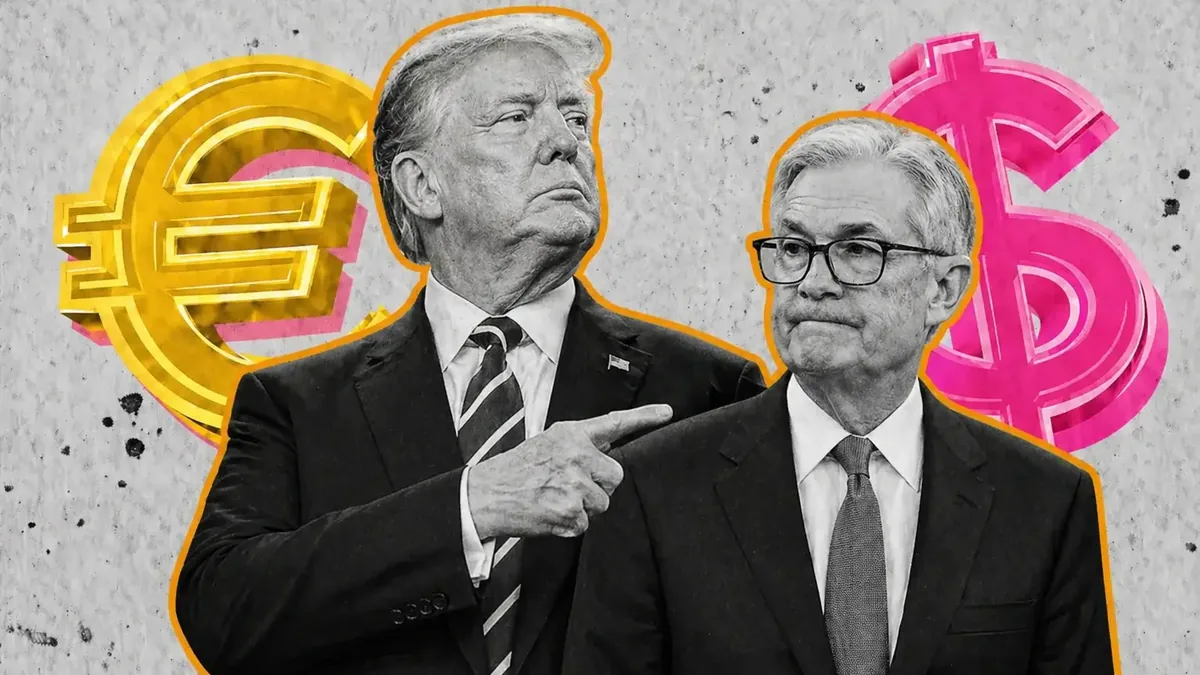
Today's FOMC decision is functionally a non-event for direction — the Fed holds at 3.50% to 3.75% with 99.5% probability priced. The press conference is where the trade gets made or broken. Powell's 14:30 ET appearance is almost certainly his final at the helm before his term ends in May, with Kevin Warsh clearing the Senate Banking Committee 13-11 along party lines and heading to a full Senate confirmation vote that the Republican majority effectively guarantees. The wrinkle that nobody has fully priced in: Powell could choose to remain on the Board of Governors after his term as chair ends, which would keep one of his allies on the committee and limit Trump's ability to stack the FOMC with rate-cut doves. If Powell signals he is leaving the Board entirely, the dollar could rally further on the assumption that Warsh plus additional Trump nominees deliver a more dovish committee composition that the market has not yet priced. If Powell signals he is staying on the Board through 2028, the dollar could face a tactical pullback because the FOMC composition becomes structurally less dovish than the consensus currently expects. Beyond the personnel question, Powell's framing of the energy-driven inflation shock matters enormously. The Fed has consistently described rising inflation as supply-driven and temporary, which gives the committee room to hold rather than hike. If Powell maintains that framing, it caps any dollar upside because the rate-hike path stays off the table. If he hardens the language around inflation expectations becoming unanchored — referencing the New York Fed's consumer survey showing 9.4% year-ahead gas-price expectations, the highest since March 2022 — the market starts pricing tail-risk hikes and the dollar rips through 99.20 toward 100.00. EUR/USD trades inversely to that scenario in real-time, and 1.1500 becomes the 7-day target.
ECB Walks the Stagflation Tightrope With No Good Options
The euro-zone outlook is becoming structurally uncertain in a way that limits EUR/USD upside even if the ECB turns hawkish at Thursday's meeting. The ECB is expected to leave rates unchanged at 2.00% on April 30, with money markets pricing roughly 3 basis points of cumulative hikes by year-end. The dynamic is poisonous for the euro: tightening policy in a stagflationary environment risks accelerating the growth slowdown that Germany's sentiment data is already flagging, while looking through the inflation pressure invites criticism that the ECB is letting prices spiral. Lagarde's communication challenge at Thursday's press conference is to thread a needle between acknowledging the Hormuz-driven supply shock and signaling that the ECB will not allow second-round inflation effects to take hold. Eurozone growth is forecast at 1.1% to 1.3% for 2026, while inflation has stayed sticky at 2.0% to 2.2% despite the energy shock. The German CPI miss this week — 2.9% versus 3.0% consensus, with monthly inflation dropping from 1.2% to 0.5% — signals that price pressure may already be peaking in the bloc's largest economy, which removes the urgency for ECB action and weakens the rate-differential argument that euro bulls have been leaning on. The ECB keeping the door open to a June move via guidance language would normally support the euro through the rate channel, but in the current stagflation backdrop, a hawkish ECB could actually weaken EUR/USD because the market would price in higher recession risk that overwhelms the rate-differential boost. Germany is the cleanest read on whether the euro can stabilize. As Germany goes, so goes the euro, and Germany is currently looking shaky with industrial activity facing both the Hormuz shock and the structural challenges that have been weighing on its manufacturing base for two years.
Read More
-
Yen Stalls at 160 Despite a 3% JGB and Tokyo Core CPI at 2.0% — Intervention Sits at 164, Friday's Payrolls Decide
02.09.2026 · TradingNEWS ArchiveEnergy
-
Semtech ($158) Holds $153 as Data Center Revenue Hits $100M and EPS Guide Jumps to $1.05 — 12% Path to Record High
16.09.2026 · TradingNEWS ArchiveStocks
-
XRP ($1.28) Tests $1.25 Support as Commodity Status Survives Senate Defeat — 16.4% Upside to $1.49
16.09.2026 · TradingNEWS ArchiveCrypto
-
WTI ($103.20), Brent ($107.60) Hold Above $100 as 10M Barrels a Day Stay Shut In — 9.7% Upside to $118
16.09.2026 · TradingNEWS ArchiveCommodities
-
S&P 500 SPX Rises to 7,624, Nasdaq IXIC Gains 234 Points, Dow DJI Stalls as INTC Rips 4% Into Fed Decision
16.09.2026 · TradingNEWS ArchiveMarkets
-
GBP/USD (1.3480) Loses 1.3500 as Fed Hike Flips Rate Gap Against Bank Rate at 3.75% — 80 Pips to August Low at 1.3400
16.09.2026 · TradingNEWS ArchiveForex
The Cross-Currency Picture: USD Strength Is Pulling Everyone Lower
The dollar's strength is showing up cleanly across the G10 complex. GBP/USD is bunched up at 1.3500 to 1.3520 with a 0.20% loss, struggling to hold above the 1.3500 handle as the Bank of England is expected to keep rates at 3.75% on May 1. UK March inflation came in at 3.3% year-over-year with core at 3.1%, while unemployment is slowly easing to 4.9% — a slightly more resilient setup than the eurozone but not enough to break the dollar's grip. The technical setup on GBP/USD has the trendline support at 1.3485 as the cleanest floor, with resistance at 1.3550 to 1.3580 capping rallies. A break beneath 1.3480 exposes 1.3430 then 1.3380. USD/JPY has bulls eyeing the yearly high as the Bank of Japan held at 0.75% with a split vote that materially raised the odds of a June hike, but the yen is being punished by the same oil-shock dynamic that is hitting the euro because Japan is one of the most energy-import-dependent economies in the developed world. USD/CAD is steady after the Bank of Canada held at 2.25% with Tiff Macklem explicitly citing Iran-driven inflation as a risk vector. The Australian and New Zealand dollars are giving up ground against the U.S. dollar despite their commodity-export exposure, which tells the trader that the safe-haven dollar bid is overwhelming the commodity-currency rate-differential support. The euro is the strongest against the Swiss Franc this week (+0.42%) but is being beaten by the dollar (-0.05%) and is essentially flat against the pound. The cross-currency math says the euro is not losing because of euro-specific weakness alone — it is losing because the dollar is winning across the entire G10 board, and that broader dollar dominance does not unwind without a meaningful Fed dovish signal or a Hormuz de-escalation that flips oil lower.
Big Tech Earnings Tonight Add Another Wildcard Layer
Tonight's after-the-bell earnings from Alphabet (GOOGL), Amazon (AMZN), Meta Platforms (META), and Microsoft (MSFT) could inject a fresh wave of dollar volatility that ripples directly into EUR/USD. The mechanism: if hyperscaler earnings disappoint on AI capex monetization or trigger a tech-led equity selloff, the safe-haven dollar bid intensifies and EUR/USD breaks 1.1665 toward 1.1500. If results beat cleanly and equity sentiment stays risk-on through Thursday's open, the dollar's safe-haven premium fades modestly and EUR/USD has room to test 1.1745 to 1.1800 on relief flow. The earnings tape is essentially a lever that amplifies whatever directional bias Powell establishes at 14:30 ET. The combined hyperscaler capex pool runs $650 billion for 2026, with Amazon alone at $200 billion, and any sign that AI investment is failing to drive proportional revenue growth feeds directly into the OpenAI weakness narrative that the Wall Street Journal flagged Tuesday. A cautious tone from any of the four CFOs about 2026 capex visibility unlocks tech-led equity selling that translates to dollar buying through the risk-off channel. Watch the CME E-mini S&P 500 futures at 16:30 ET as the cleanest read on whether the equity branch of the trade supports or undermines the next EUR/USD move overnight.
Insider Positioning and Real-Money Flow Reads
Real-money positioning across EUR/USD has been bleeding euro length for two consecutive weeks as the macro backdrop has deteriorated. CFTC speculative euro positioning has shifted from net long to balanced, with leveraged funds reducing exposure ahead of the binary catalyst window. The DXY rejection beneath 99.00 has produced repeated false breakdowns that have trapped dollar bears, which sets up the asymmetric squeeze setup if Powell delivers a hawkish lean. Cross-asset signals reinforce the dollar bid: gold (XAU/USD) is bleeding toward $4,500, the 30-year Treasury yield (^TYX) at 4.979% is one print from breaking 5%, and the VIX at 18.18 is climbing on equity uncertainty. None of those signals support a euro rally. The cleanest contrarian setup that euro bulls can lean on is the possibility that Powell's tone is slightly more dovish than the market expects and that hyperscaler earnings beat, which would unlock a tactical bounce to 1.1745 to 1.1800. That bounce remains a sell into resistance unless 1.1800 is reclaimed on volume confirmation, which would shift the bias back to the bulls structurally for the first time since the pair stalled around 1.1850. Until that level is reclaimed cleanly, every rally is a fade.
The Verdict: Sell EUR/USD Rallies, Buy Only on a 1.1500 Flush With RSI Capitulation
The macro setup heading into the next 48 hours is structurally bearish for EUR/USD and the data backs it. Brent at $115 with eight consecutive up sessions is the cleanest signal that the inflation channel will keep the Fed on hold and the dollar bid through the summer. The DXY at 98.66 to 98.85 has rejected 99.00 repeatedly but the failure to break beneath 98.20 to 97.80 says the consolidation is bullish rather than corrective — the next clean break is more likely higher than lower. U.S. Core Durable Goods at +3.3% versus 0.6% consensus is the kind of activity surprise that locks in the rate-differential argument for the dollar. March CPI at 3.3% year-over-year with energy up 12.5% kills any dovish Fed narrative. German HICP at 2.9% versus 3.0% consensus removes the ECB's urgency and weakens the euro side of the rate-differential trade. The 10-year Treasury at 4.398% pressing 4.40% and the 30-year Treasury at 4.979% pressing 5% mean U.S. yields are doing the work of pulling capital toward the dollar regardless of what Powell says today. The level map for the trade: holding 1.1665 to 1.1680 with a reclaim of 1.1745 to 1.1750 sets up a counter-trend rally to 1.1800 to 1.1825. Losing 1.1665 cracks the structure and exposes 1.1600 fast, with 1.1567 then 1.1500 as the deeper liquidity grabs and 1.1408 as the structural floor below it. The trade for this tape: Sell rallies into 1.1745 to 1.1800 with stops above 1.1825. Hold short bias below 1.1700 across the next 30 days as long as Brent stays above $100 and the Fed holds rates steady. Buy only on a 1.1500 flush combined with RSI capitulation beneath 30 and a clean Hormuz de-escalation headline that flips oil lower — that combination is the only setup that justifies tactical long exposure. The euro is structurally overvalued at 1.1700 given the rate differential, the energy-shock asymmetry, and the stagflation backdrop in Germany. The dollar is structurally underpriced relative to the activity data and the inflation backdrop in the U.S. The path of least resistance is lower EUR/USD until either oil rolls over or the Fed signals a dovish pivot that the current macro backdrop makes effectively impossible. Anyone trading the four-hour chart should respect the bearish setup and wait for either a clean break beneath 1.1665 with volume to add to shorts, or a daily close above 1.1750 to flip tactical long. Anyone running a multi-week book should treat 1.1745 to 1.1800 as the optimal short entry zone with 1.1825 as the stop and 1.1500 as the first target. The conviction trade is patient distribution into strength, not the chase into weakness — and EUR/USD at 1.1684 with Brent at $115 and U.S. yields ripping higher looks worse than it did at 1.1850 even though the price has already moved meaningfully lower. The asset trading at the intersection of an oil shock that hits Europe harder than the U.S., a rate differential that favors the dollar by 150 basis points, and a stagflation profile in Germany that limits ECB flexibility is not a buy at 1.1700. It is a sell on rallies, a hold short below the trend, and a structurally pressured pair trading at a discount to where the macro backdrop says it should be — which in this case means the discount widens further before it narrows.