USD/JPY Price Forecast: Pair Holds 159.70 as Hawkish 6-3 BoJ Split Collides With $110 Brent Crude Ahead of FOMC
Yen tests 160.00 ceiling as BoJ raises FY26 CPI forecast to 2.8% | That's TradingNEWS
Key Points
- USD/JPY holds 159.70 as BoJ keeps rate at 0.75% with 6-3 vote split; 3 dissenters back hike to 1.0% in June or July
- BoJ raises FY26 core CPI forecast to 2.8% from 1.9%; Brent above $110 keeps oil-driven dollar bid intact
- 160.00 is bull trigger toward 161.95 multi-decade peak; close below 158.30 invalidates and opens 157.50 floor
The yen cross that has defined the entire 2026 carry-trade complex is now sitting at one of the most consequential inflection points of the cycle, with USD/JPY trading at 159.70 by midday Tuesday — gaining 0.16% to 0.17% on the session as the U.S. Dollar Index (DXY) climbs 0.25% to 98.75 and the pair builds pressure into the upper boundary of the multi-month consolidation zone. The session has been defined by two violent counter-currents that left the pair almost exactly where it started: the Bank of Japan's surprisingly hawkish 6-3 vote split that briefly drove USD/JPY below the 159.00 handle, and the Brent crude breakout above $110 that immediately pulled the pair back toward the 160.00 ceiling. The current spot sits below the 2026 year-to-date high of 160.46 from late March and roughly 230 pips below the multi-decade peak of 161.95 set in 2024, but the structural setup heading into Wednesday's FOMC decision and the rest of this week's central-bank cluster is now skewed clearly to the upside. Realized 20-day volatility on the pair sits in the 10th percentile of every 20-session period going back to 1971 — historically extreme volatility compression that has typically preceded explosive directional moves, and the convergence of the BoJ hawkish-hold framework, the Brent-driven dollar bid, the Fed's expected hold at 3.50% to 3.75%, and the Japanese FX intervention threat above 160.00 makes the next 72 hours the binary window that decides whether USD/JPY breaks decisively higher or finally cracks the 158.30 to 157.50 support floor.
Where USD/JPY Sits on the Tape Right Now
The intraday price action captures the tug-of-war between the BoJ hawkish signal and the oil-driven dollar bid in real time. USD/JPY opened the European session under pressure following the BoJ announcement, briefly plunging below the 159.00 psychological floor as markets digested the 6-3 vote split with three board members — Hajime Takata, Naoki Tamura, and Junko Nakagawa — dissenting in favor of an immediate 25-basis-point hike to 1.00%. That dissenter count represents the widest division within the BoJ Policy Board since Kazuo Ueda became governor in April 2023, and the initial yen rally was a clean response to the structurally hawkish vote architecture that any disciplined macro desk would have read as a precursor to a June or July tightening move.
The rally faded almost immediately as Governor Ueda's press conference struck a measurably softer tone than the underlying vote suggested, and as Brent crude punched through the $110 barrier on the same tape — reigniting the inflation-driven dollar bid that has dominated the entire 2026 yen-cross story. The pair recovered through the 159.00 handle within minutes of Ueda's opening remarks, climbed back through the 159.30 pivot during the European afternoon, and printed 159.70 by the New York morning session — a textbook bullish reversal that validated the descending-triangle breakout setup and confirmed that the path of least resistance remains higher heading into the Fed decision Wednesday.
The technical structure on the daily chart is constructive without being overheated. The 14-day Relative Strength Index sits near 57, holding in positive territory without flashing overbought conditions, while the 20-period Exponential Moving Average at roughly 159.22 is now functioning as immediate support rather than resistance — a clear shift from the consolidation pattern that defined the entire April tape. The 50-day simple moving average at 158.39 sits as the deeper structural floor, with the descending-triangle breakout zone near 157.50 to 157.57 representing the absolute line in the sand for the bullish setup. A daily close below 157.50 would invalidate the breakout structure entirely and open the path to a much deeper correction toward the 156.00 zone.
The BoJ's Hawkish Hold: A 6-3 Vote That Reset the Rate-Hike Clock
The Bank of Japan held its policy rate unchanged at 0.75% as universally expected, but the underlying detail of the decision was materially more hawkish than the headline outcome suggested. The 6-3 vote split with three dissenters backing an immediate hike to 1.00% is the cleanest signal that the Board is preparing markets for a June or July tightening move — historically, multiple BoJ Board members breaking ranks ahead of a tightening cycle has been the leading indicator that the institutional consensus is shifting decisively toward action. The pattern is well-established: when the BoJ's hawkish minority grows from one or two voices into a coordinated three-vote bloc, the next meeting almost always delivers the policy move that the dissenters were pushing for.
Each of the dissenters articulated a distinct hawkish framework that deserves close attention. Hajime Takata flagged that the price-stability target had been more or less achieved and that second-round effects from overseas price increases were already pushing risks higher — language that effectively claims the BoJ has already met its mandate and should now move toward neutral. Naoki Tamura — the most hawkish member of the entire Board — argued that with upside risks becoming significantly skewed higher, policy rates should be moved as close to the neutral level as possible without delay. Junko Nakagawa emphasized that upside risks to prices remain skewed higher despite the uncertainty around the Middle East war, framing the inflation problem as structural rather than merely cyclical. The combined messaging across all three dissenters captures the institutional pivot: this is no longer a Board debating whether to hike, but a Board debating when.
The Outlook Report revisions reinforce the hawkish pivot in ways that matter for the multi-quarter rate-differential trade. The BoJ revised its core CPI forecast for fiscal 2026 sharply higher to 2.8% year-over-year from the prior 1.9% projection — a 90-basis-point upward revision that captures the magnitude of the inflation reassessment. Fiscal 2027 was lifted to 2.3% and fiscal 2028 to 2.0%, with each successive year sitting at or above the 2.0% mandate target. More critically, the core-core CPI forecast — which strips out fresh food and energy and is treated as the cleanest read on domestic price pressure — was raised to 2.6% for both FY26 and FY27 and 2.2% for FY28. That places the BoJ's preferred underlying inflation gauge at or above the 2.0% target throughout the entire updated forecast horizon, which is the structural condition the Bank has historically required before committing to sustained tightening.
The growth picture was simultaneously revised lower, with the median fiscal 2026 GDP forecast halved to 0.5% from 1.0% as the Iran war's drag on Japanese growth materialized in the projection. But the Board does not expect the slowdown to persist, with median growth forecasts of 0.7% for FY27 and 0.8% for FY28 — both consistent with the Bank's estimate of Japan's potential growth rate. That combination of softer near-term growth and firmer multi-year inflation is the textbook setup for a measured tightening cycle that proceeds despite the cyclical headwinds rather than waiting for them to clear. The BoJ has effectively signaled that it is willing to tolerate the Iran-war growth hit as a transitory disruption while staying focused on the structural inflation thesis.
The added language flagging FX-related inflation sensitivity is the detail that institutional desks will be parsing for weeks. The BoJ stated that "compared with the past, fluctuations in foreign exchange rates are more likely to affect prices" — a notable addition to the Outlook framework at a time when many yen pairs are probing multi-decade or record highs. That language directly increases the policy responsiveness to yen weakness, meaning that any sustained move above 160.00 in USD/JPY now carries a higher probability of triggering not just government FX intervention but also accelerated BoJ rate-hike action.
Ueda's Softer Press Conference: The Communication Gap That Saved the USD/JPY Rally
The press conference is where the hawkish hold lost some of its bite, and the price action across USD/JPY tells the story with surgical precision. Governor Ueda opened on a strong note, stating that the risks of rising inflation outweigh those of an economic slowdown and that the BoJ could raise rates provided the economy avoids recession amid the price pressures. The market's initial response was to extend the yen rally, with USD/JPY pressing below 159.00 and challenging the lower edge of the recent consolidation range.
But his subsequent remarks softened the framework materially. He emphasized that the situation in the Middle East remains highly fluid, that the Bank would prefer to avoid committing to a firm timetable for the next move, and that Bank of Japan policy may struggle to manage its economic forecasts given the geopolitical uncertainty. That last comment was the structural admission that broke the hawkish narrative — previously, the BoJ had tied any resumption of monetary tightening to achieving its inflation and growth projections. By acknowledging that the projections themselves are now harder to manage, Ueda effectively gave himself political cover to delay the next hike if conditions deteriorate.
The communication gap between the Board's vote architecture and Ueda's verbal guidance is the structural reason the yen rally faded. Markets had positioned for either an outright hawkish hold with clear forward guidance toward a June hike, or for an actual surprise hike given the inflation-data acceleration and the wage-negotiation strength that has dominated the spring cycle. Ueda delivered neither — the hold was confirmed, the dissents were noted, but the forward guidance left the timing of the next move genuinely ambiguous. That ambiguity is functionally dovish for the yen cross because it preserves the rate-differential advantage of the dollar against the yen for at least another two months, and the carry-trade infrastructure that has powered USD/JPY higher throughout 2026 remains intact.
Implied June hike odds have nonetheless climbed to roughly 60% to 73% across the major swap-rate curves, depending on which institution's pricing model is referenced — up from 62% before the meeting per Societe Generale's read. Late-July odds are pricing approximately 90% probability of a 1.00% rate, and more than 1.5 hikes remain priced through year-end across the broader curve. The base case across most desks is now a June hike followed by potentially one more in the fourth quarter, which would lift the policy rate to 1.25% by December and represent the most aggressive BoJ tightening cycle in over a decade. But the path is conditional on oil prices easing and Middle East peace talks making material progress — neither of which is currently visible on the horizon.
The $110 Brent Breakout: Why Oil Just Defended USD/JPY Above 159.00
The Brent crude breakout above $110 per barrel is the structural reason USD/JPY recovered so quickly from the post-BoJ slide, and the mechanics of the trade matter for understanding the current setup. Japan imports virtually all of its crude oil — over 95% of total domestic consumption — meaning every dollar of higher oil price translates directly into a deteriorating Japanese trade balance and increased structural demand for dollar-denominated payments. The Strait of Hormuz remains shut into the second month of the U.S.-Iran war, with no resolution in sight, and the persistent supply destruction has forced energy prices to multi-year highs that flow through to Japan's import-cost framework with unusual speed.
The BoJ's baseline assumption for fiscal 2026 sees oil prices returning to approximately $70 per barrel — but with crude printing above $110, the gap between the modeled scenario and the reality is enormous. That 57% premium versus the BoJ's modeling assumption translates into materially higher imported inflation than the Bank has currently penciled into its 2.8% CPI forecast, suggesting that the actual print could land closer to 3.0% or higher if oil stays at current levels through the summer. The implication for monetary policy is that the BoJ's framework is genuinely caught between conflicting forces: the inflation case for hiking is strengthening as oil compounds the import-cost shock, but the growth case for delaying is also building as the same oil-price shock destroys real household income and corporate profits.
The structural argument for tolerating above-forecast inflation while delaying further rate moves is becoming the default policy posture, and the markets are pricing exactly that outcome. Selling the yen against the dollar captures both the relative-rate dynamic (Fed hold at 3.50% to 3.75% versus BoJ hold at 0.75%) and the relative-import-vulnerability dynamic (Japan's energy dependency versus U.S. energy independence). The combination is structurally bullish for USD/JPY until either the war ends, oil collapses, or the BoJ delivers an actual hike rather than further telegraphed dissent.
Read More
-
Yen Stalls at 160 Despite a 3% JGB and Tokyo Core CPI at 2.0% — Intervention Sits at 164, Friday's Payrolls Decide
02.09.2026 · TradingNEWS ArchiveEnergy
-
QQQ ETF ($739) Fades From an Early Tech Rally as a 77.9 ISM Prices Index Meets Micron's $61.5B Guide — $760 Record Test Ahead
01.10.2026 · TradingNEWS ArchiveStocks
-
XRPR and XRPI Follow XRP's $1.49 Test as Spot Funds Hold 1.16B XRP and a 1 Billion Token Escrow Release Lands — $1.70 in Play
01.10.2026 · TradingNEWS ArchiveCrypto
-
November NG Slips Below $3 as Decade-High Storage Meets Capped LNG Exports — $2.75 in Sight
01.10.2026 · TradingNEWS ArchiveCommodities
-
Dollar-Yen at 158 Presses Toward 160 as a 363 bp Carry Gap Meets Katayama-Bessent Intervention Risk — 159 in Sight
01.10.2026 · TradingNEWS ArchiveForex
The Fed Decision: Why Wednesday Is the Real Catalyst
The Federal Reserve decision Wednesday at 17:45 GMT is the genuine catalyst for the next directional leg in USD/JPY, and the framing of the hold matters more than the headline outcome. The CME FedWatch tool prices a 99.5% probability of an unchanged outcome at the 3.50% to 3.75% policy band, leaving essentially zero room for a dovish surprise. Powell is expected to emphasize a wait-and-see approach, balancing rising inflation from energy costs against the growth and employment risks generated by the war's spillovers — and the language around that trade-off is where the dollar tape will be made or broken.
The hawkish-hold scenario activates if Powell signals that rate cuts are off the table for the remainder of 2026 or that further hikes are now under active consideration. That outcome would extend the dollar bid mechanically and push USD/JPY through the 160.00 ceiling toward the 160.46 year-to-date high and ultimately the 161.95 multi-decade peak from 2024. The dovish-tilted hold scenario activates if Powell maintains optionality for a 2026 cut and emphasizes the growth-risk side of the policy trade-off. That outcome would compress real yields, weaken DXY, and trigger a USD/JPY pullback toward the 158.30 to 157.50 support cluster.
The asymmetry of the setup matters. Markets have already priced the hawkish-hold outcome heavily, meaning the surprise factor on a hawkish print is limited. But a genuinely dovish surprise — particularly one that flags downside growth risks more aggressively than the current framework suggests — would create the conditions for a sharp dollar correction that drags USD/JPY decisively lower. Position-sizing into Wednesday should reflect the binary nature of the outcome rather than the directional bias of the consensus call. The Fed leadership transition is also part of the dollar's term-premium story, with Powell's term as Chair ending May 15 and the Kevin Warsh succession process progressing through Senate confirmation. An orderly handoff is dollar-supportive; any contested transition would inject volatility that spills directly into the USD/JPY tape.
The Intervention Threat: Why 160.00 Is the Line in the Sand
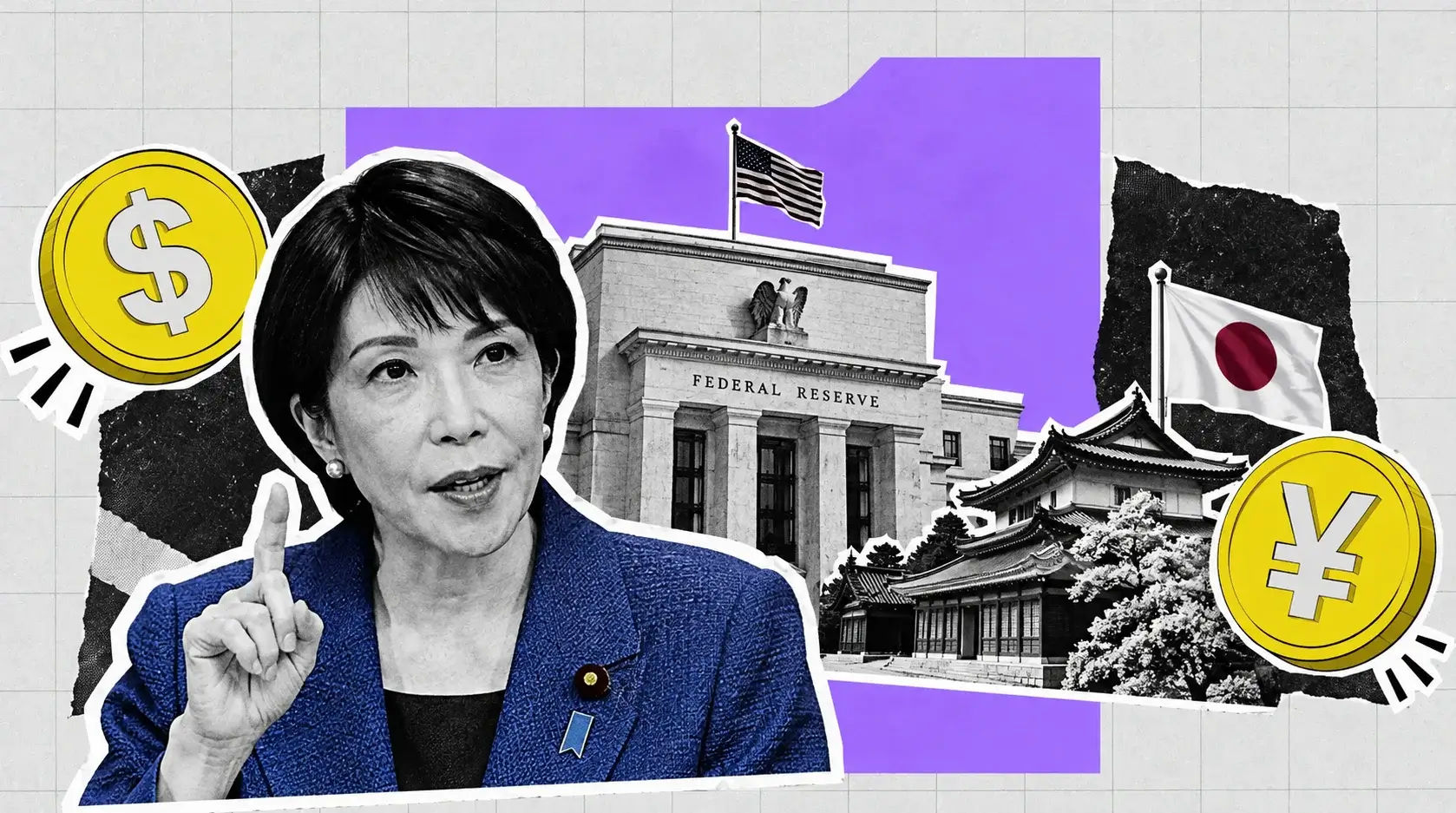
The Japanese government's FX intervention threat sits in the background of every USD/JPY trade above the 159.00 handle, and the political-economic mechanics matter for understanding the upside ceiling. Finance Minister Satsuki Katayama issued a preemptive warning ahead of the BoJ meeting, stating that her ministry was ready to intervene in the foreign-exchange market at any time and that it was working closely with U.S. counterparts to prevent speculators from driving USD/JPY through the roof. That kind of explicit verbal signal from the Finance Ministry has historically functioned as the soft-power tool that compresses upside before any hard-power action is required.
The hard-power threshold sits in the 161 to 162 zone based on prior intervention patterns. Japan's official sector intervened aggressively above the 160.00 handle in 2024, with the multi-decade peak at 161.95 representing the upper boundary that triggered the most intense Ministry of Finance buying. The current setup suggests a similar pattern would apply — speculators are willing to test the 160.00 level given the rate-differential math and the oil-driven dollar bid, but they remain wary of triggering coordinated intervention from the Ministry of Finance and potentially the U.S. Treasury. The political coordination between Tokyo and Washington is the variable that distinguishes a quiet intervention threat from a credible one, and Katayama's explicit reference to working with the Americans is the signal that the bilateral coordination is in place.
For the active book, the implication is that any move above 160.00 should be sized to accommodate intervention risk. A 100 to 200 pip flash crash on intervention is the realistic scenario, and stops should be placed wide enough to avoid premature exits while tight enough to limit downside damage if the intervention scenario materializes. The asymmetric risk-reward around 160.00 is precisely why the pair has struggled to break through despite the structural rate-differential and oil-driven tailwinds — the market knows that the upside is capped by political action even if the fundamental framework supports continued depreciation.
Realized Volatility at Historic Lows: The Compression Before the Move
The single most striking technical feature of the current USD/JPY setup is the realized 20-day volatility reading, which sits in the 10th percentile of every 20-session period going back to 1971. That places the current consolidation among the quietest periods in the entire 55-year history of the floating yen, and the implications for the next directional move are structurally important. Volatility compression of this magnitude has historically preceded explosive directional resolutions — the longer the pair coils inside a tight range, the more energy builds for the eventual breakout, and the violent the resulting move tends to be.
The MACD reading on the daily chart is flatlining just above the signal line, holding marginally in positive territory but providing no clear directional signal. The RSI has eased toward 50 from earlier readings near 60, suggesting that the buying pressure has moderated even as the pair has held its bullish structure. The combination of compressed volatility, neutral momentum oscillators, and a clearly defined consolidation band between 158.30 and 160.50 is the textbook setup for a violent breakout in either direction once the catalyst arrives.
The most likely trigger for the breakout is the Fed decision Wednesday, followed by the Bank of England decision Thursday, the European Central Bank decision Thursday, and the cluster of U.S. tech earnings (Microsoft, Meta, Alphabet, Amazon) that will drive risk-sentiment positioning through the back half of the week. Any one of those events could provide the directional catalyst, but the combination of all four within a 72-hour window virtually guarantees that the volatility compression breaks decisively before the weekend.
Technical Map: 158.30 Support, 160.00 Ceiling, 161.95 Multi-Decade Peak
The actionable technical framework for USD/JPY is well-defined heading into the central-bank cluster. Immediate resistance sits at the 159.50 to 160.00 zone, where the pair has been rejected on multiple occasions throughout April. A confirmed daily close above 160.00 with volume opens the path to 160.46 — the year-to-date high — and ultimately the 161.95 multi-decade peak from 2024. Beyond 161.95, the pair would enter genuine price discovery for the first time since the post-Plaza Accord era, with no meaningful technical resistance until the 165.00 zone that would coincide almost certainly with hard intervention.
The downside levels are equally clear. Immediate support sits at the 20-period EMA at 159.22, followed by the 50-day simple moving average at 158.39 and the descending-triangle breakout floor at 158.30. A break below 158.30 would expose 157.70 as the next pivot, then 157.50 to 157.57 as the structural breakout zone from the prior consolidation. A daily close below 157.50 would invalidate the bullish setup entirely and open the path to a deeper correction toward 156.00 and ultimately the 50-day EMA cluster lower in the chart.
The long downside wicks on recent moves below 158.50 are worth flagging. Each test of that zone has been bought aggressively, suggesting that institutional bidders are positioned at the 158.00 to 158.50 range and are providing the structural floor that has prevented a deeper correction throughout April. That institutional bid pattern is the technical reason the descending-triangle breakout has held despite the multiple challenges to the lower edge.
The Carry-Trade Math: Why Selling the Yen Still Pays
The carry-trade fundamentals have been the structural anchor for USD/JPY throughout the 2026 cycle, and the math hasn't changed despite the BoJ's incremental hawkish pivot. The Fed funds target at 3.50% to 3.75% versus the BoJ policy rate at 0.75% creates a 275 to 300 basis-point yield differential that pays roughly 3% per year for being long dollars against yen. Even if the BoJ delivers the expected June hike to 1.00%, the differential would compress to 250 to 275 basis points — still meaningfully positive for the carry trade and structurally supportive of further USD/JPY upside.
The math becomes more interesting if the Fed actually cuts rates later in 2026 while the BoJ delivers two hikes. A Fed rate of 3.25% to 3.50% paired with a BoJ rate of 1.25% would compress the differential to 200 to 225 basis points — still positive but substantially less attractive for carry positioning. That convergence scenario is what the most aggressive yen bulls are pricing for late 2026 and early 2027, and it represents the genuine downside risk for USD/JPY beyond the current cycle. But for the next two to three quarters, the carry math remains supportive of further appreciation.
The realized return on the long USD/JPY carry trade in 2026 has been substantial. The pair has traded between roughly 156.00 and 160.46 throughout the year, with the typical institutional carry position generating roll income of 3% annualized on top of any directional profit. That combination is structurally hard to fade unless the Fed pivots dovishly or the BoJ delivers a surprise tightening that compresses the differential dramatically.
The U.S.-Iran Stalemate: The Wild Card That Sits Outside the Framework
The geopolitical layer is the variable that sits outside the central-bank framework and could deliver the directional catalyst that overrides everything else. Negotiations between the United States and Iran have stalled, with President Trump cancelling the planned dispatch of U.S. delegates Steve Witkoff and Jared Kushner to Pakistan over the weekend and pivoting to phone-based discussions. Iranian Foreign Ministry spokesperson Esmaeil Baqaei has confirmed no meetings are currently scheduled between Tehran and Washington, and Iranian President Masoud Pezeshkian has stated his nation will not enter "imposed negotiations under threats or blockade."
For USD/JPY, the implication runs through the oil-price channel and the safe-haven channel simultaneously. Continued Hormuz closure and elevated oil prices keep the import-cost pressure on Japan structural, supporting USD/JPY through the trade-balance and inflation-passthrough channels. A sudden de-escalation or Iran-U.S. deal would simultaneously crash oil prices and unwind the safe-haven dollar bid, providing the conditions for a sharp USD/JPY correction toward 158.00 and potentially below. The probability of either outcome inside the next 30 days is meaningful, and traders running directional length should size positions to accommodate the binary geopolitical risk that sits permanently in the background.
The UAE's announcement that it is leaving OPEC and OPEC+ effective May 1 — after 59 years of membership — adds another layer of geopolitical complexity. The exit reflects deepening internal divisions within the cartel and removes a major Gulf producer from the coordinated supply-management framework, potentially supporting oil prices structurally even if Hormuz reopens. That development is unambiguously bullish for USD/JPY through the inflation-passthrough channel.
Cross-Currency Read: Yen Is the Strongest Currency on the Day
The FXStreet currency heat map provides a clean read on relative-flow positioning that captures the post-BoJ dynamic. The yen is actually the strongest performer on the day across the G10 complex, gaining 0.18% versus the U.S. dollar despite the late-session USD/JPY recovery, and outperforming all other major crosses including EUR/JPY (+0.04%), GBP/JPY (flat), and AUD/JPY (+0.07%). The yen's relative strength reflects the hawkish vote architecture from the BoJ even as the absolute USD/JPY rate climbs higher.
The cross-rate dynamics matter for understanding the structural setup. If the yen is broadly bid against the rest of G10 but USD/JPY is still climbing, the message is that the dollar is even stronger than the yen — and that narrative is exactly what the Fed-decision setup priced for the rest of the week is reinforcing. The carry-trade infrastructure remains intact because the relative-rate math favors the dollar across the entire G10 framework, not just against the yen specifically.
Trade Decision: Buy, Sell, or Hold USD/JPY Right Here
The honest read is that USD/JPY sits at one of the most binary inflection points of the year, and the trade decision depends materially on the timeframe. For active traders working a one to three day window into the FOMC decision, the path of least resistance is higher toward the 160.00 ceiling, with the breakout setup conditional on a hawkish-tilted Fed outcome and continued oil strength. Stance for the active book: cautiously bullish into Wednesday, with conviction shifting to bullish on a confirmed daily close above 160.00 paired with rising DXY and to bearish on any close below 158.30 that invalidates the descending-triangle breakout. Long positions on sharp pullbacks toward 159.00 to 159.20 represent the cleanest entries with stops below 158.30.
For positional traders working a one to three week horizon, the discipline is to scale into the 158.50 to 159.20 zone with a clear stop on a daily close below 157.50. The combination of the BoJ's structurally hawkish pivot (which reduces multi-quarter upside but supports near-term carry), the Fed's expected hold at 3.50% to 3.75%, the oil-driven dollar bid, and the continued yen vulnerability through the import-cost channel all support a constructive multi-week setup. Stance for the positional book: cautiously bullish, with sizing scaled to accommodate the intervention risk above 160.00.
For strategic accounts working a six to twelve month horizon, the structural picture is genuinely two-sided. The BoJ's tightening trajectory toward 1.25% by year-end combined with potential Fed easing in late 2026 creates the conditions for meaningful rate-differential compression that would weigh on USD/JPY structurally. The base case for late 2026 and early 2027 is for the pair to grind lower toward 155.00 and ultimately 150.00 as the differential narrows. Stance for the strategic book: neutral with a bearish skew on the multi-quarter horizon, conditional on the BoJ delivering the June hike and the Fed signaling cuts later in 2026.
The bear scenario activates on a confirmed daily close below 157.50 paired with the BoJ delivering a surprise hike or the Fed pivoting dovishly. That outcome would invalidate the bullish channel structure and expose the path to 156.00 and ultimately the 50-day EMA cluster. The bull scenario activates on a confirmed daily close above 160.46 paired with continued oil strength and a hawkish Fed outcome, opening the path to 161.95 and potentially triggering hard intervention near 162.00. Aggressive new shorts at 159.70 are betting against the carry-trade infrastructure that has dominated the entire 2026 cycle. Aggressive new longs without the discipline to size around the 160.00 intervention threat are exposed to the 100 to 200 pip flash crash that hard intervention typically delivers.
The disciplined posture is to scale into the 158.50 to 159.20 zone for tactical accumulation, to wait for Wednesday's FOMC outcome before committing fresh strategic capital, and to recognize that the 160.00 ceiling is the binary level that determines whether the next leg is a breakout to 161.95 or a reversal back into the 158.30 floor. Cautiously bullish on the one to three day tactical window, cautiously bullish on the one to three week positional window, neutral with bearish skew on the six to twelve month strategic window — and the FOMC decision Wednesday paired with the BoE decision Thursday and the ECB decision Thursday are the three catalysts that determine which side of the consolidation prints first. BUY on dips into the 158.50 to 159.20 zone with disciplined stops below 158.30, hold existing tactical positions through the Fed decision, and resist the urge to chase the breakout above 160.00 before the intervention math has been tested. The carry-trade math still pays, the oil-driven dollar bid is structural, and the BoJ's softer-than-expected guidance under Ueda preserves the rate-differential advantage for at least one more quarter — but the binary nature of the 160.00 ceiling demands tactical discipline rather than directional aggression heading into the most consequential central-bank week of the second quarter.