Gold Price Forecast: XAU/USD Holds $4,198, Global Buying Signal $5,000 Target
Gold steadies below $4,200 ahead of the Fed’s rate cut, with balance-sheet expansion, global central bank demand, and ETF accumulation pointing toward a multi-year rally toward $5,000 | That's TradingNEWS
Gold Price (XAU/USD) Steadies Near $4,200 as Fed Cut, Trump Pressure, and ETF Flows Drive the Market
Monetary Shifts And Trump’s Influence On The Gold Market
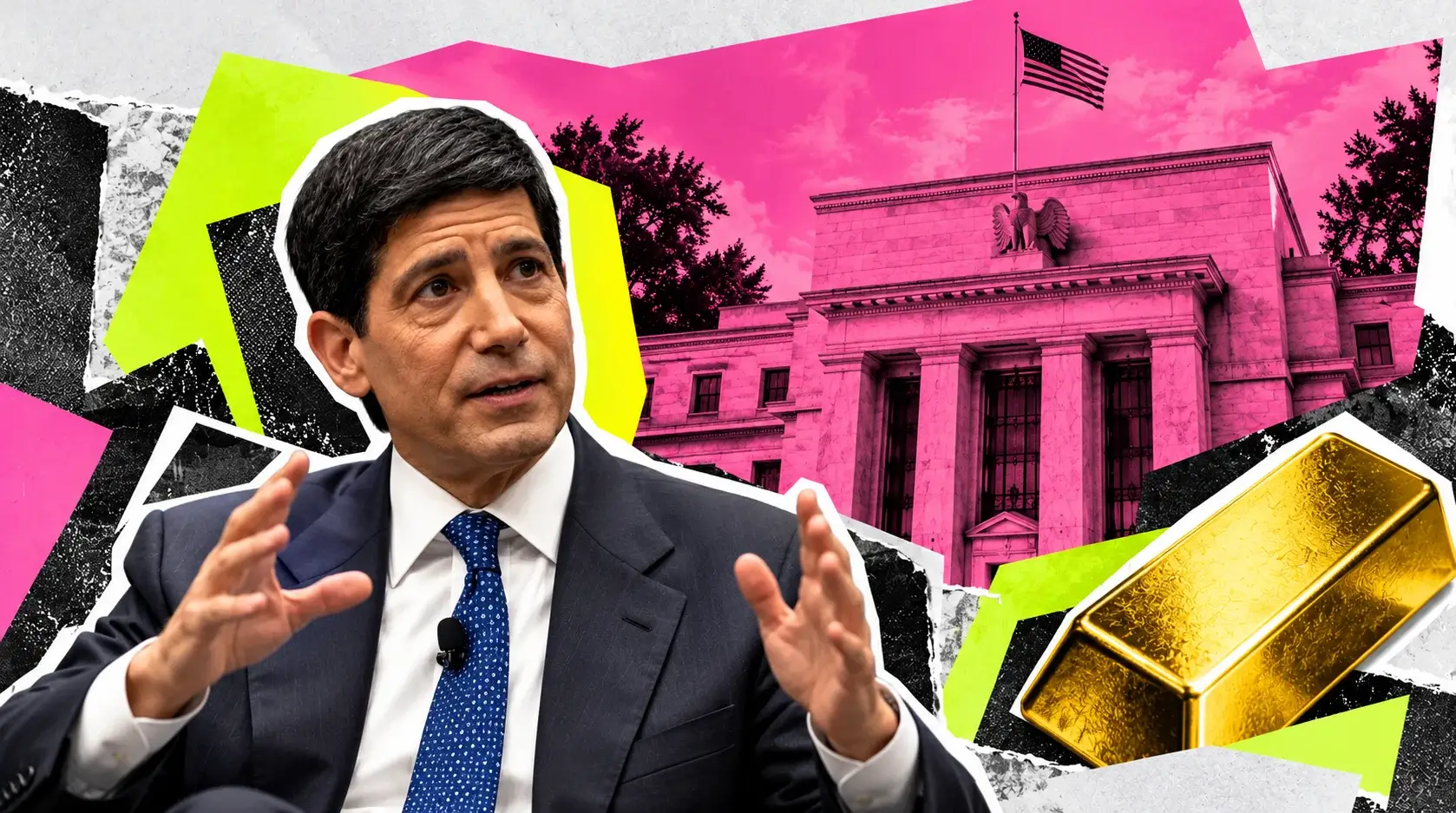
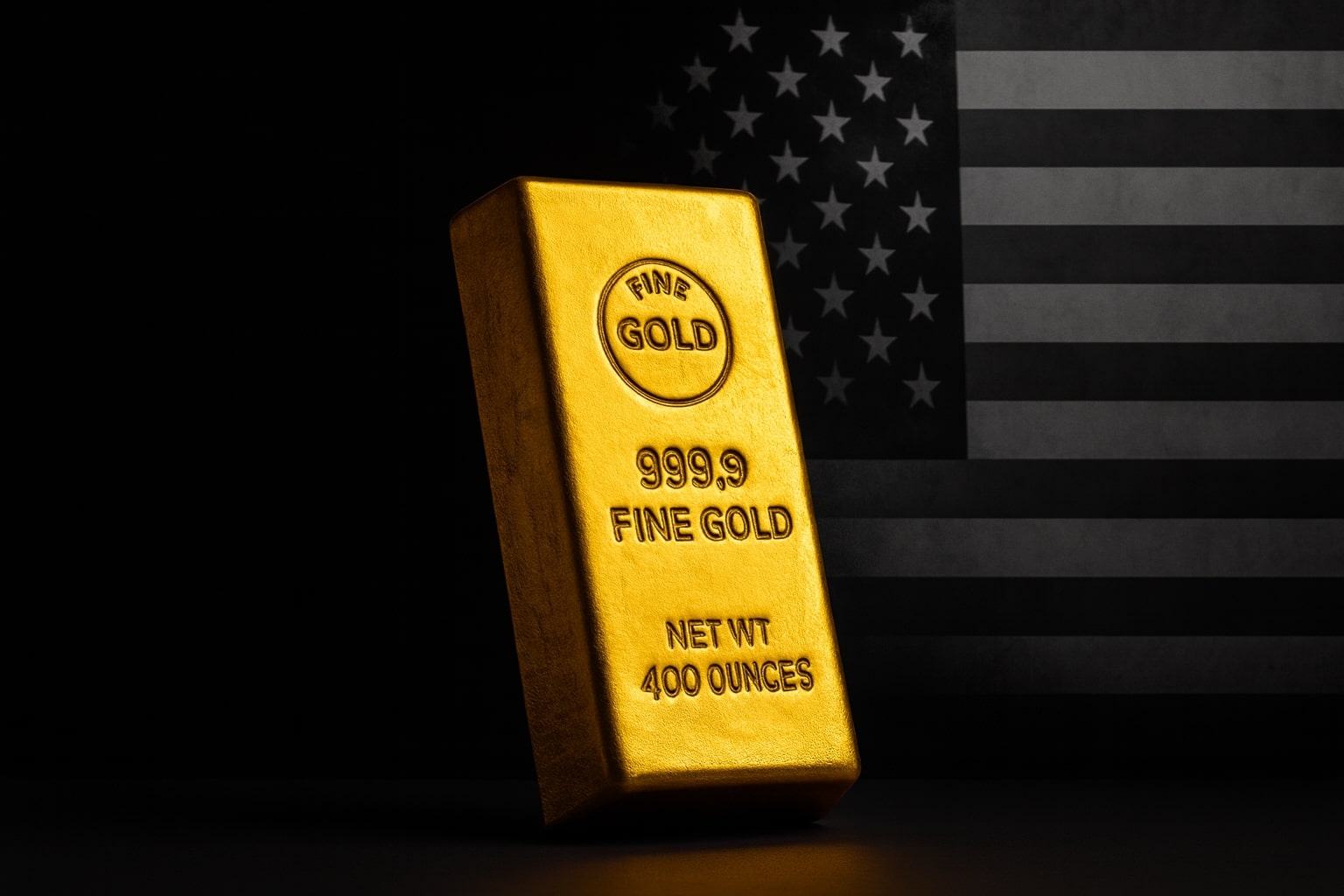
Gold (XAU/USD) is trading around $4,198 per ounce, down 0.3%, as investors brace for the Federal Reserve’s final 2025 policy decision. The Fed funds rate is widely expected to drop by 25 basis points to 3.50%–3.75%, marking the third consecutive cut. Market tension has reached its peak with Chair Jerome Powell’s post-meeting tone now seen as pivotal for 2026 guidance.
The atmosphere is politically charged after President Donald Trump publicly stated that the next Fed chair must be “ready to cut rates immediately.” His intervention has reshaped bond and currency dynamics, pushing 10-year Treasury yields down to 4.17% and providing gold with a strong floor above $4,150.
This dynamic, combining policy uncertainty and political interference, reinforces gold’s strategic role as a macro hedge against currency instability and fiscal expansion risk.
Fed Liquidity Expansion And Structural Tailwinds For Gold (XAU/USD)
Analysts at Bank of America forecast that the Federal Reserve could start expanding its $6.5 trillion balance sheet as early as January 2026, adding as much as $45 billion monthly, with $20 billion in organic balance-sheet growth and $25 billion for reserve stabilization. This would mark the most significant monetary reversal since 2020, setting a powerful backdrop for gold’s long-term rally.
Deutsche Bank projects additional 25bps cuts in both 2026 and 2027, expecting the median terminal rate to stabilize around 3.25%, further lowering real yields.
The U.S. 10-year real yield has already slipped toward 1.35%, signaling improving conditions for non-yielding assets like gold. Meanwhile, central banks have been net buyers for 11 straight months, accumulating over 1,050 tons YTD, led by China, Turkey, and India—a clear diversification strategy against dollar exposure and Western financial sanctions.
Technical Framework And Gold Price Behavior
Gold futures (February contracts) hover at $4,227.40, while spot gold stands near $4,198.28, showing tight range-bound trading beneath the October all-time high of $4,358. The $4,200 level has evolved into a critical inflection point, acting as both psychological resistance and institutional entry zone.
Momentum indicators confirm consolidation strength, with the RSI near 54 and both 50-day SMA ($4,040) and 200-day SMA ($3,740) rising steadily—evidence of a maintained bullish structure. Short-term profit-taking has appeared, but the market’s behavior signals ongoing institutional absorption of dips below $4,180.
Analysts from High Ridge Futures describe the current activity as “orderly rotation rather than liquidation,” emphasizing that each retracement is quickly met with renewed buying, primarily from ETFs and Asian reserve managers.
ETF Flows And Institutional Positioning Strengthen Long-Term Momentum
The resilience of XAU/USD continues to be supported by ETF inflows and institutional hedging. Combined, SPDR Gold Shares (NYSEARCA:GLD) and iShares Gold Trust (NYSEARCA:IAU) added $3.4 billion in new inflows since September, despite mild outflows this week ahead of the Fed announcement.
Institutional sentiment has rotated from high-risk equities to commodities, driven by contracting corporate margins and increased credit risk in corporate debt. The shift reaffirms gold’s dominance as a safe-haven store of value amid volatile equity valuations.
Bank of America remains among the most bullish, reaffirming its $5,000 per ounce 2026 target, arguing that liquidity expansion, central bank buying, and fiscal spending cycles will collectively anchor gold’s next secular uptrend. However, they caution that a hawkish Fed reversal or core inflation re-acceleration above 3.2% could create temporary resistance in the $4,300–$4,400 range.
Read More
-
Yen Stalls at 160 Despite a 3% JGB and Tokyo Core CPI at 2.0% — Intervention Sits at 164, Friday's Payrolls Decide
02.09.2026 · TradingNEWS ArchiveEnergy
-
SOFI ($16.71) Posts Its Best Day of the Quarter as Profit Guidance Finally Rises — Holding $15.70 Unlocks $20
27.10.2026 · TradingNEWS ArchiveStocks
-
XRP-USD ($1.30) Defends a $1.27 Double Bottom as Whales Hold 68.5% of Supply — Break of $1.31 Opens $1.35 and $1.40
27.10.2026 · TradingNEWS ArchiveCrypto
-
Brent ($113.88) Trades a $2.35 Range as Houthi Strikes Meet Saudi-Iran Diplomacy — Break of $117 Unlocks $120
27.10.2026 · TradingNEWS ArchiveCommodities
-
Nasdaq Rips 1.3%, S&P 500 Hits 7,728, Dow Stalls as BA Drops to $171
27.10.2026 · TradingNEWS ArchiveMarkets
-
GBP/USD (1.3310) Can’t Cash In on 5.43% Gilt Yields as Budget Risk Meets a Firm Dollar — Break of 1.3274 Opens 1.3200
27.10.2026 · TradingNEWS ArchiveForex
Historical Performance And Comparative Return Metrics
From 1971 to 2024, gold’s average annual return stood at 7.9%, below equities’ 10.7%, yet with higher stability during inflationary cycles. The metal has gained 25.7% YTD, adding $1,069 per ounce in the past twelve months.
On September 12, 2025, gold was priced at $3,648, marking a 15% increase in under 90 days. Over the past year, price appreciation has outpaced inflation by a wide margin, proving the metal’s defensive efficiency.
The gold-silver ratio—once stretched to 82 in October—has compressed to 69, reflecting stronger relative performance across precious metals. Silver’s 110% YTD surge reinforces this trend, typically a bullish precursor for the broader metals complex.
Market Sentiment, Yield Dynamics, And Policy Sensitivity
The CME FedWatch Tool shows traders expecting three rate cuts by mid-2026, pushing the U.S. Dollar Index (DXY) down to 99.08, its lowest since July. The 2-year Treasury yield has declined to 3.87%, compressing real yields and maintaining a favorable backdrop for gold.
Market uncertainty over the next Fed chair—with Kevin Hassett and Kevin Warsh viewed as frontrunners—adds volatility to the dollar trajectory. Both are considered dovish candidates, implying a softer rate environment into 2026 and thus further support for XAU/USD.
Sentiment indicators reflect a sideways-to-up bias, with well-defined levels: support at $4,150–$4,180, and resistance near $4,250–$4,300. Trading volume on COMEX remains concentrated around $4,200, reinforcing it as the tactical equilibrium price.
Strategic Outlook And Investment Bias For Gold (XAU/USD)
Gold remains in a consolidation phase, but the broader structure continues to favor the bulls. The convergence of Fed easing, Trump’s political pressure on monetary policy, and accelerating global reserve diversification form the foundation for another major cycle.
Short-term, the key trading corridor stands between $4,150 support and $4,300 resistance. A decisive breakout above $4,300 could open the path toward $4,500, while sustained momentum backed by ETF and central bank buying could push XAU/USD to $5,000 by late 2026.
Should sentiment weaken or a temporary dollar rebound occur, downside risk is limited to $3,950, aligning with the 200-day SMA—a level that would likely trigger renewed institutional bids.
Final Rating: Gold (XAU/USD) — BUY
The macro landscape remains dominated by liquidity expansion, declining real yields, and aggressive reserve accumulation. With the Fed’s dovish pivot confirmed and global monetary policy trending softer, gold’s long-term bullish narrative remains intact.
Rating: BUY
Short-term Range: $4,150 – $4,300
Next Breakout Target: $4,500 – $5,000 (2026 projection)
Support: $3,950 (200-day SMA)
Resistance: $4,300 (major pivot)
Bias: Bullish with structural upside momentum into 2026