USD/JPY Price Forecast - USDJPY=X Near ¥153 After 159.45 Peak as BoJ Shift, Election Shock and Fed Repricing Bite
With USD/JPY stuck below ¥153 and capped in the ¥154–155 band, a hawkish BoJ, Takaichi’s win, Fed cut bets and rising intervention risk now pull the medium-term focus toward the ¥145 zone instead of new highs | That's TradingNEWS
USD/JPY – election shock, BoJ shift and Fed repricing hit the pair
USD/JPY – current price action, range and weekly damage
USD/JPY is trading just under the 153.00 handle after a violent four-day slide that has erased a big chunk of January’s gains. Spot has retreated about 2.7% this week to roughly ¥152.8–¥153.0, after whipping in a wide intraday band between the high-152s and high-154s when stronger-than-expected U.S. jobs data briefly pushed the pair toward the high-154s before offers capped the move. Earlier in the month, price carved out a year-to-date high near ¥159.45 and then sank toward the ¥152.10 area, which is the current 2026 low from January 27. The bounce back to around ¥153.00 is consolidation inside a clearly negative weekly structure, not a confirmed reversal.
USD/JPY – Japan election, policy expectations and the end of the easy “carry” narrative
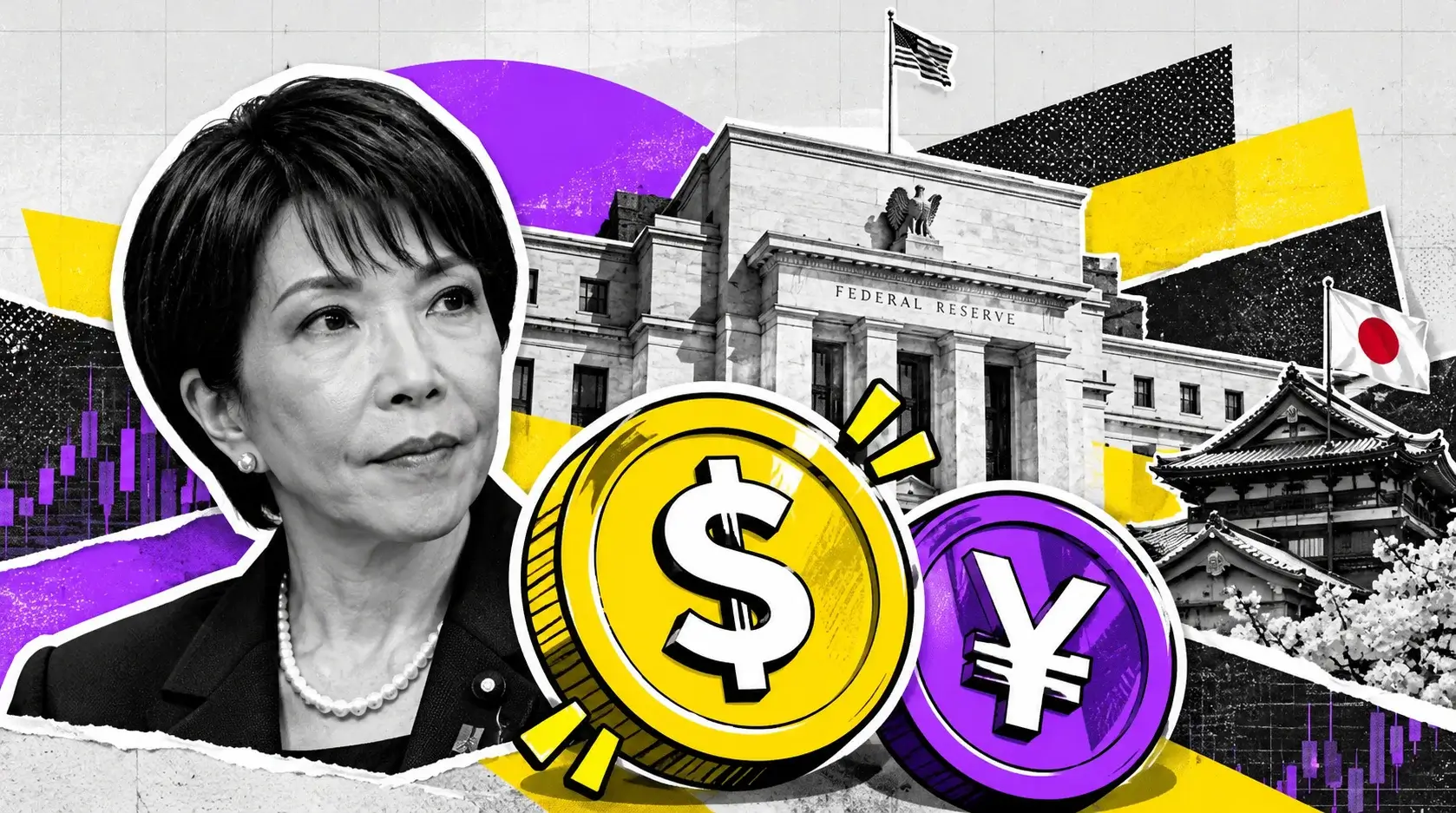
The landslide victory of Prime Minister Sanae Takaichi has changed how markets frame Japan’s policy mix. Previously, many positioned for a long-running “easy yen” regime, assuming aggressive fiscal expansion and continued pressure on the Bank of Japan to stay ultra-dovish, keeping USD/JPY elevated as a funding currency pair. That narrative is being dismantled. The election outcome is seen as supportive for domestic demand but also more fiscally disciplined than feared, which reduces the argument for locking Japan into permanent negative-real-yield territory. As that conviction fades, so does the comfort with structurally short yen positions, especially after the BoJ already delivered a rate hike and flagged a willingness to normalize policy further.
USD/JPY – BoJ normalization, JGB yields and why the yen is finally fighting back
The Bank of Japan Bank of Japan has shifted from pure yield-curve control toward a more conventional framework centered on short-term rates, while letting long-term yields adjust gradually. Since March 2024, policy has focused on the overnight rate and a steady reduction of JGB purchases, with a plan to cut monthly buying by about ¥400 billion each quarter as conditions allow. Rising Japanese Government Bond yields and the prospect of additional hikes in 2026 mean rate differentials are no longer a one-way U.S. dollar story. This is exactly the environment where a pair sitting near ¥159 in mid-January can unwind rapidly toward the low-150s once confidence in the old regime cracks. The current slide below 153.00 reflects those shifting expectations more than any single headline.
USD/JPY – U.S. data, Fed cut pricing and why the dollar side is losing momentum
On the U.S. side, labour data have been solid but not strong enough to rescue USD/JPY. Nonfarm payrolls rose by about 130,000 in January versus consensus around 70,000, while the unemployment rate edged down to 4.3% from 4.4%. Weekly initial jobless claims slipped to roughly 227,000, slightly above the 222,000 expected, and continuing claims climbed to about 1.862 million from 1.841 million. The U.S. Dollar Index trades just under 97, near two-week lows, as markets still look for roughly 50 basis points of Fed easing by year-end rather than a prolonged hold. A stronger dollar spike on the jobs report briefly pushed USD/JPY into the high-154s, but that strength faded quickly, showing how sensitive the pair is to any shift back toward lower U.S. real yields. With CPI due on Friday and the Fed under political pressure over the pace of cuts, upside in the dollar leg remains fragile.
USD/JPY – election, BoJ path and the 12-month 145 target
Research desks now openly question the original assumptions behind the “Takaichi trade.” When she first secured party leadership, USD/JPY gapped from around 147.70 to above 149.00, then rallied steadily into the 159s as markets bet she would reinforce ultra-easy BoJ settings and keep yen funding attractive. That thesis has weakened. BoJ Governor Ueda has kept a hawkish tone, the balance sheet is slowly shrinking, and the long end of the curve is being allowed to rise. Against that backdrop, Rabobank maintains a 12-month forecast of USD/JPY at 145, implying further yen appreciation from current levels. A move from around 153.00 today down to 145.00 over a year would represent roughly a 5% decline in the pair and is fully consistent with an environment where BoJ delivers incremental hikes while the Fed is cutting.
USD/JPY – intervention risk and why the 153–155 zone is politically sensitive
Japanese authorities are again signaling discomfort with rapid moves. Top currency officials have stressed they are “on high alert” for excessive volatility and are in close contact with U.S. counterparts. That rhetoric matters with USD/JPY still not far below the upper-150s where past interventions were suspected. The current 153–155 band is a gray zone: not yet at the scream-level of the last spike, but close enough that another surge toward the mid-150s could invite actual action rather than just words. The recent whipsaw between the high-152s and high-154s, amplified by thin liquidity on a Tokyo holiday, shows how quickly price can overshoot when order books are light. Short-dated options reflect that risk, with demand for downside yen hedges increasing and risk reversals favoring dollar calls at higher strikes but with richer premia, consistent with elevated intervention fear.
USD/JPY – technical structure: 159.45 top, 152.10 floor and the 200-day EMA
Technically, USD/JPY is in a corrective downswing after topping near ¥159.45 on January 14. Price has already broken back under 153.00 and is hovering just above the 200-day exponential moving average around ¥152.50. That moving average is still sloping higher, but the pair sitting on top of it for a fourth straight negative day is a warning sign. Below the 200-day line, the next key area is the 38.2% retracement of the 140.02–159.35 rally, clustered around ¥152.00–¥151.95. Just above that, the year-to-date low at roughly ¥152.10 has emerged as a critical pivot. A daily close below that ¥152.10–¥152.00 shelf would confirm that the 159.45 region was a meaningful top, not just a pause, and put the 50% retracement around ¥149.68 firmly on the radar.
USD/JPY – support, resistance and Fibonacci levels that matter now
The short-term map around USD/JPY is tight but clear. On the downside, first support sits at the 153.00 area, which is now acting more as intraday congestion than real protection. Below that, the ¥152.10 region is “line in the sand” support from January 27, reinforced by the nearby 38.2% Fibonacci retracement around ¥152.00. Deeper down, ¥150.85 marks the 61.8% retracement of the September–January advance and lines up with psychological demand around the ¥150.00 round number. On the topside, resistance is layered at ¥154.00, where repeated congestion has capped rebounds, and then near ¥155.00 as a higher break level. Any sustained close above 154.00 would ease immediate downside pressure and could force a squeeze back toward 155.00, but as long as the pair trades below that range, the path of least resistance remains lower.
USD/JPY – momentum, MACD, RSI and why bounces still look like rallies to fade
Momentum indicators line up with the negative price structure. On the daily chart, MACD is below its signal line and under zero, and the negative histogram is expanding. That configuration signals strengthening downside pressure rather than a mature selloff. The relative strength index sits around 36 and is still slipping, firmly in neutral-to-bearish territory but not yet deeply oversold. That combination usually argues against chasing the move aggressively lower right here, but it clearly favors selling strength rather than buying dips. Until the MACD stabilizes and RSI stops falling, attempts to reclaim and hold levels above 153.00–154.00 are likely to stall, and rebounds into resistance zones look vulnerable.
Read More
-
Yen Stalls at 160 Despite a 3% JGB and Tokyo Core CPI at 2.0% — Intervention Sits at 164, Friday's Payrolls Decide
02.09.2026 · TradingNEWS ArchiveEnergy
-
QQQ ETF ($706.22) Slides 7.4% Below Its High as the Market Reprices the AI Capex Bill — $686.57 Target if $700 Breaks
22.10.2026 · TradingNEWS ArchiveStocks
-
XRPI ($7.00) and XRPR ($10.74) Slide Toward 52-Week Lows as Spot XRP ETF Flows Stall at $708,510
22.10.2026 · TradingNEWS ArchiveCrypto
-
NG ($2.775) Decoupled From Europe’s €88 Gas Crisis as LNG Feedgas Hits 18.9 Bcf/d — $3.30 Upside on Cold Weather
22.10.2026 · TradingNEWS ArchiveCommodities
-
Dollar-Yen (157.35) Loses 157.65 as the Yen Rallies on Haven Demand — 155 Target if 156 Breaks
22.10.2026 · TradingNEWS ArchiveForex
USD/JPY – liquidity, whipsaws and what the recent spike revealed about positioning
The violent swings around the stronger U.S. jobs data highlighted how fragile USD/JPY can be when liquidity is thin. With Tokyo on holiday, moves from the high-152s to the high-154s happened on relatively modest ticket sizes, and the pair then settled back near ¥153.23 once New York liquidity took over. That pattern tells you positioning was stretched: short-yen exposure was still significant enough that an upside surprise on the U.S. macro side could squeeze price quickly, but the willingness to hold dollars at higher levels has diminished. Option markets confirmed that impression, with brisk activity as desks adjusted gamma around big figures, and volatility firming as hedging demand picked up. For anyone managing yen risk, this argues for staggered entries and exits rather than concentrated bets at a single level.
USD/JPY – cross-checks with EUR/JPY and broader risk tone
Watching yen crosses helps validate the message from USD/JPY. Euro–yen has been moving broadly in line with shifts in global yields and equity sentiment, weakening when the dollar leg of the story eases and strengthening when rate differentials widen again. The recent pullback in USD/JPY occurred alongside a general repricing of expectations around BoJ normalization and a more cautious stance on risk assets, rather than in isolation. That tells you the move is part of a broader yen reprieve, supported by higher domestic yields and fading confidence in one-way carry, not just a quirk of U.S. data. Cross-rate behavior reinforces the idea that rallies in dollar-yen toward prior highs are more likely to attract renewed selling than fresh structural buying at this stage of the cycle.
USD/JPY – medium-term outlook and 12-month downside risk toward 145.00
Looking beyond the next few sessions, the fundamental and technical picture both point toward gradual yen strength over the coming year. On policy, the BoJ is moving toward a more normal rate regime, trimming bond purchases and tolerating higher yields, while the Fed is still expected to cut by around half a percentage point before year-end. On politics, the Takaichi government’s strong mandate reduces the need for aggressive debt-financed stimulus and lowers the pressure to keep real rates deeply negative. On positioning, years of one-way short-yen exposure are slowly being reduced as the risk-reward for staying in that trade deteriorates. The 12-month forecast around USD/JPY 145.00 is consistent with these forces: it implies further downside from current levels but not a disorderly collapse, more a grind lower as rate differentials compress and intervention risk caps spikes.
USD/JPY – trading stance: bearish bias, Sell rallies while 154.00–155.00 caps
Putting it all together, the bias on USD/JPY is bearish. The pair has rolled over from a 159.45 high, is trading below 153.00 for a fourth straight session, and is pressing on the 200-day EMA around 152.50 with momentum indicators pointing lower. Politically, Japanese authorities are more comfortable with a firmer yen than with a new test of the 160.00 region, and intervention warnings are getting louder. On policy, BoJ normalization and a still-probable Fed easing path argue for narrower rate spreads over the next year, not wider. Technically, a daily close below the ¥152.10–¥152.00 band would open the way to ¥149.68 and then ¥150.85, while only a sustained break above 154.00–155.00 would seriously damage the downside case. Under these conditions, the stance is Sell on strength rather than Buy the dip, with rallies toward 154.00–155.00 offering better entry and a medium-term target skewed toward the mid-140s over the next twelve months.