
Nasdaq Rips 1.3%, S&P 500 Hits 7,728, Dow Stalls as BA Drops to $171
The Philadelphia Semiconductor Index jumped 3% to 11,416 after Anthropic’s IPO filing and Meta’s $25B share sale reset the AI funding debate | That's TradingNEWS
Key Points
- Philadelphia Semiconductor Index ripped 3% to 11,416 intraday as AMD led chipmakers with a 5.4% gain.
- Boeing BA sank 10% to an 18-month low near $171 after warning it will miss its 500-jet 737 delivery target.
- Consumer confidence jumped 7.5 points to 91.7 in October, crushing the 81.0 forecast on cheaper gasoline.
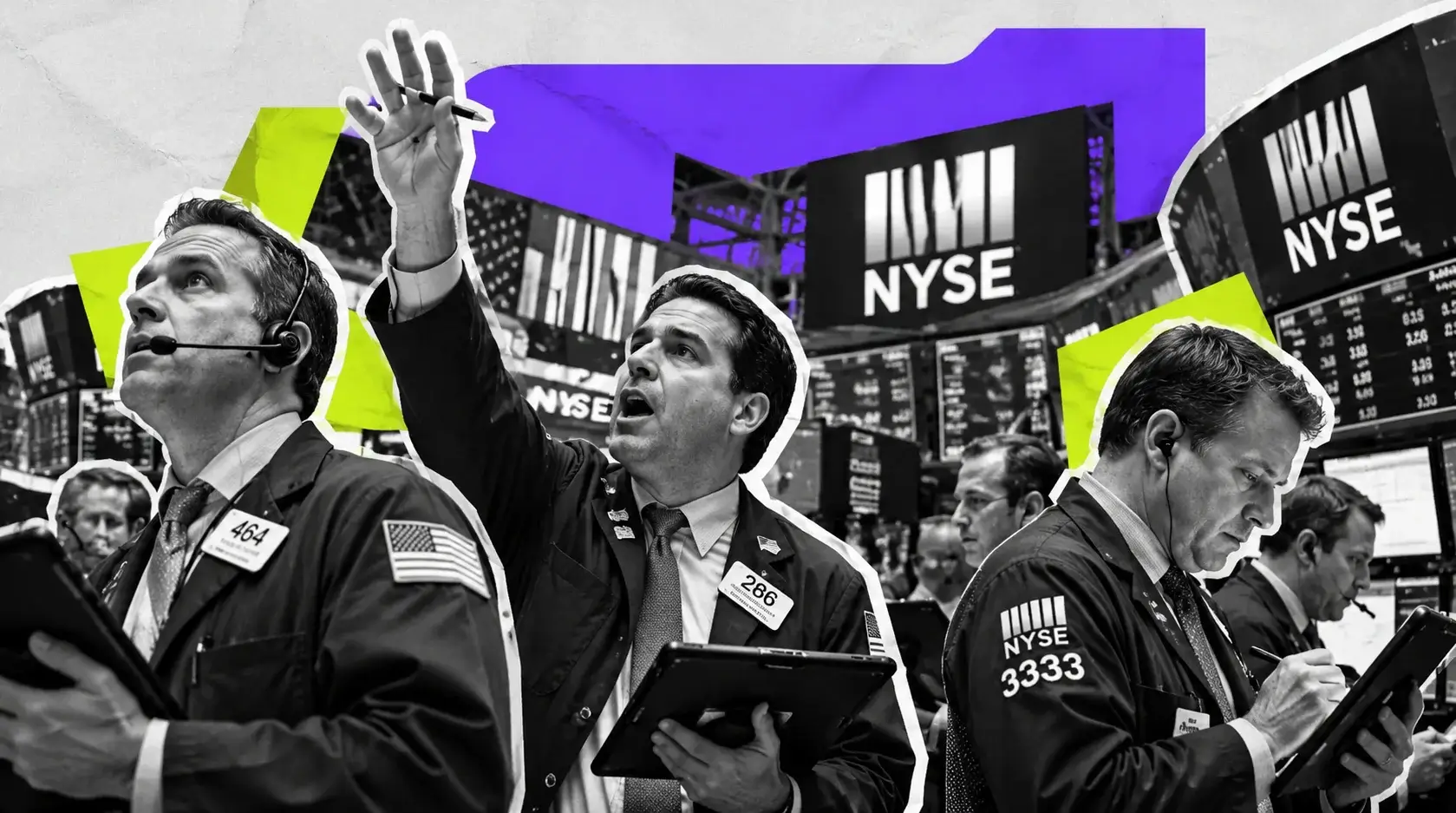
Tuesday’s session split Wall Street in two. By 12:10 p.m. ET the S&P 500 traded at 7,728.90, up 52.13 points or 0.68%, extending Monday’s 0.70% gain that closed the index at 7,676.77. The Nasdaq Composite did the heavy lifting with a 1.33% advance off Monday’s 26,169.38 close, pushing the tech benchmark into the 26,500 zone after it first cleared 26,344 with a 175-point gain in the morning. The Dow Jones Industrial Average went nowhere. Up 0.06% at midday, the blue-chip index hovered around 52,393 after closing Monday at 52,361.58, and it spent part of the morning underwater at 52,262, down 99 points, when Boeing’s guidance cut hit the tape.
That gap between a 1.33% Nasdaq and a flat Dow is the story of the day. Semiconductor stocks and AI hardware names carried the growth indexes, while a single heavyweight in aerospace sat on the price-weighted Dow. Boeing’s 10% plunge erased roughly the gains from a dozen other components, and with UPS, Coca-Cola and Visa all reporting into the same morning, the blue-chip average never found clean direction.
The Russell 2000 printed 2,792.54 in the first hour, up 6.12 points or 0.22%, a modest participation from small caps that kept pace with neither the Nasdaq’s surge nor the Dow’s stall. The CBOE Volatility Index slipped 1.63% to 18.09 in early trade, a reading that tells you traders were willing to buy chips aggressively but not ready to abandon hedges with a Federal Reserve decision due Wednesday at 2:00 p.m. ET and more than $10 trillion of combined market value reporting earnings across Wednesday and Thursday.
The benchmark 10-year Treasury yield held at 5.00%, up 1 basis point, the level that has hung over equity valuations all month. Every point the S&P 500 added on Tuesday came with long-end yields parked at a psychological ceiling, which makes the tech bid more striking. Investors paid up for chipmakers despite discount rates that would normally punish long-duration growth.
The Nasdaq remains just under 4% below its October 6 record close of 27,599.89, and technology was still the worst-performing S&P 500 sector for October heading into Tuesday, down 4% for the month. Two straight sessions of chip strength have repaired some damage, but the composite needs another 1,000-plus points to reclaim its peak. Monday’s rally snapped a run of two consecutive weekly declines for both the S&P 500 and the Nasdaq, and Tuesday’s follow-through gives bulls their first back-to-back gains of meaningful size in weeks.
Premarket to Lunch Hour: How Tuesday’s Session Was Built
The overnight tape started soft. Nasdaq-100 futures were down 0.4% in the early European hours, with S&P 500 futures off 0.1% and Dow futures flat, a mild giveback after Monday’s tech rally. By 5:37 a.m. ET the mood had turned, and futures on the Nasdaq-100 and S&P 500 were each up 0.07% with Dow futures ahead 0.14%. The swing came as earnings poured in and as Meta’s equity raise priced overnight with heavy demand.
Premarket action was dominated by earnings reactions. UPS rose 1.58% before the bell after beating expectations and raising full-year guidance. SoFi Technologies jumped more than 11% on a record quarter and a fresh 2027 outlook. Royal Caribbean climbed 6.14% after a beat-and-raise. Boeing actually traded higher in the early going, edging up 0.37% to $188.94 as investors digested a revenue beat. Coca-Cola initially gained in premarket trade before reversing. General Motors added 1.5% on its Nasdaq listing switch. PayPal slipped 1% on a revenue miss. Energy-systems maker Innio surged 13.77% on its own beat-and-raise.
At the 9:30 a.m. ET open, the S&P 500 gained 0.31%, the Dow edged up 0.04%, the Nasdaq rose 0.48% and the Russell 2000 advanced 0.38%. The Dow initially added 74 points. Chipmakers caught a bid immediately, and Broadcom rose more than 2% in the first minutes after a $63 billion financing package to fund chip purchases tied to Anthropic surfaced.
The session’s turning point arrived mid-morning. Boeing’s earnings call revealed that the company would fall short of its 500-jet 737 MAX delivery target for 2026, and the stock flipped from green to a 10% loss, its worst day since April 2025. That single move dragged the Dow negative by late morning while the Nasdaq accelerated.
The 10:00 a.m. ET consumer confidence print added a second leg. The Conference Board’s index jumped to 91.7 against an 81.0 forecast, and the upside surprise gave cyclical bulls a reason to stay in. By 11:07 a.m. ET the Nasdaq was up 1%, the Philadelphia Semiconductor Index had gained 2.37% to 11,346, the S&P 500 had added 0.53% and the Dow was up 0.08%. By noon, the chip index had extended to a 3% gain at 11,416.10, the Nasdaq to 1.33% and the S&P 500 to 0.68%.
The pattern was consistent all morning: each leg higher in the Nasdaq came from semiconductors, and each stall in the Dow traced back to Boeing.
The Philadelphia Semiconductor Index Snaps Back 3% to 11,416
Chips owned Tuesday. The Philadelphia Semiconductor Index advanced 3% to 11,416.10 intraday, building on Monday’s 2.82% gain, its biggest daily rise since September 21. That two-day run still leaves the benchmark down 12.2% for October, which tells you how deep the hole was before the AI trade found a floor.
Advanced Micro Devices led the group with a 5.43% gain. Broadcom added 3.89%, extending its Monday rise of 2.33%. Intel climbed 3.56%, Taiwan Semiconductor Manufacturing rose 3.03%, ASML gained 3%, Micron added 2.76%, Nvidia advanced 1.20% and Qualcomm tacked on 1.09%. All eight of the index’s top-weighted names traded higher in the late-morning snapshot. On Monday, 57 of 60 stocks in a broad semiconductor basket finished higher, the kind of near-unanimous move that signals sector-level buying rather than stock picking.
Hardware beyond pure chip designers caught the same bid. Dell Technologies ripped 7.7% and Super Micro Computer gained 6.85%, both server builders that sit directly downstream of GPU and accelerator supply. Memory and packaging suppliers overseas followed the lead: South Korea’s Kospi jumped more than 3.5% at the Tuesday open, with SK Hynix up 6.27% and Samsung Electronics up 4.46%.
Nvidia’s relative underperformance inside the rally deserves a look. A 1.20% gain for the sector’s largest name, against 5.43% for AMD and 3.89% for Broadcom, points to rotation within AI silicon toward custom-chip and alternative-accelerator stories. Broadcom’s leadership ties directly to the Anthropic financing, and AMD continues to trade as the higher-beta alternative GPU supplier whenever AI capital spending headlines turn positive.
Not every AI infrastructure name rode the wave. Neocloud operators such as CoreWeave and Iren slipped after Elon Musk posted that more than 200 neocloud firms could face a severe shake-out. The split is instructive. Investors are rewarding companies that sell the picks and shovels, chips, servers and memory, while discounting the leveraged middlemen that rent capacity on borrowed money.
The chip index’s month-to-date drawdown of 12.2% means Tuesday’s rally is repair work, not a breakout. The sector still has to clear the September highs before chartists can call the October slide finished, and Wednesday night’s Microsoft and Alphabet capital-spending commentary will decide whether the bounce extends or rolls over.
Anthropic’s S-1 Resets the AI Capital Map
The catalyst behind two days of chip buying is a filing, not an earnings report. Anthropic submitted its Form S-1 registration statement to the SEC on Monday, October 26, and plans to list on the Nasdaq under the ticker ANT. The filing did not include a share price or valuation, and the shares cannot trade until SEC review is complete, but the document put hard numbers on AI infrastructure demand that the market had only been able to estimate.
The headline figure is compute. Anthropic disclosed total committed spending on future compute and infrastructure of between $542 billion and $567 billion. Compute was the company’s single largest operating expense at $5.6 billion in the second quarter of 2026, and the S-1 shows a first operating profit of $974 million in that same quarter. For chip investors, those two numbers together answer the bubble question at least partially: one of the biggest buyers of AI capacity is spending at a scale of tens of billions per year and is already profitable at the operating line.
The supplier breakdown moved individual stocks. Google-designed tensor processing units account for roughly $400 billion of the lined-up capacity, mostly over seven years. SpaceX, through its AI subsidiary, agreed to supply up to $120.5 billion of Nvidia-powered compute through 2029, a commitment expected to run $3.1 billion per month at full capacity. SpaceX shares rose on the disclosure. A separate $44.9 billion infrastructure agreement with Microsoft runs through May 2033.
Broadcom sits at the center of the financing side. A $63 billion debt package from a group of major banks alongside Blackstone will fund the purchase of Broadcom-built technology for Anthropic, structured through a special-purpose vehicle similar to the $35 billion arrangement struck in June. That deal makes Broadcom both supplier and financial backstop to one customer, a concentration that cuts both ways, but on Tuesday the market chose to price the revenue visibility.
The broader read is that the AI build-out is shifting from cash-funded to capital-markets-funded. Hyperscalers paid for the first wave out of free cash flow. The second wave is being financed through IPOs, equity raises, special-purpose debt and private credit. That makes chip demand more sensitive to credit conditions and the 5.00% 10-year yield, but it also explains why semiconductors rallied while the neoclouds lagged: the end buyers are raising money at scale, and the money is flowing to silicon.
Meta Sells $25 Billion of Stock at $625 and the Market Shrugs
Meta Platforms priced one of the largest equity raises in corporate history overnight, and the stock barely flinched. The company sold 40 million Class A shares at $625 each for $25 billion, upsized from an initial $22.5 billion, with demand running five times the amount offered. Alongside the common stock, Meta priced 250 million depositary shares tied to a 6.50% Series A Mandatory Convertible Preferred at $50 each, raising $12.5 billion in net proceeds. The preferred will list on the Nasdaq under METAM and converts into common shares around August 15, 2029.
The structure matters for dilution math. Meta sold the common shares through forward agreements, so it does not receive the $25 billion immediately and can settle on dates of its choosing up to November 19, 2027. Underwriters hold 30-day options on another $3.75 billion of common stock and 37.5 million additional depositary shares, which would lift preferred proceeds to $14.3 billion. On top of the $37.5 billion priced this week, Meta plans an at-the-market program of up to $60 billion beginning early next year, bringing the full package to $97.5 billion. Nvidia committed $3 billion to the offering.
Meta shares traded in a narrow band Tuesday, slipping between 0.4% and 0.9% during the morning and sitting a hair above the $625 offer price. It was the only decliner among the largest megacap tech names on the day. A five-times-oversubscribed book at a price within 1% of the market is a clean result for an issuer that a year ago was still buying back stock. The company paused its repurchase program earlier this year and has leaned on debt markets as well, including a $25 billion bond sale in the spring, as 2026 capital-spending guidance climbed to a $125 billion to $145 billion range.
For the broader tape, Meta’s raise landed as a confidence signal rather than a warning. Institutional investors were willing to commit tens of billions of fresh capital to AI infrastructure at a time when the sector was down double digits for the month. That demand helped underwrite the semiconductor rally: every dollar Meta raises is ultimately headed to chip, server, power and networking suppliers.
The risk sits on the other side of the ledger. Meta now joins Alphabet, which priced an $85 billion equity raise earlier this year, in funding AI through dilution. If Microsoft, Alphabet and Amazon raise capital-spending guidance again this week, investors will start asking how many more raises of this size the market can absorb.
Boeing Gets Smoked: 10% Drop to an 18-Month Low
Boeing was the day’s heaviest anchor. The stock fell 10% to the $171 area, down $17 from Monday’s level, its steepest one-day drop since April 2025 and its lowest price in 18 months. The move was a reversal. Shares had traded up 0.37% at $188.94 in the opening minutes on a revenue beat before management’s call laid out the production delay.
The numbers in the third-quarter release were mixed. Revenue rose 4% to $24.19 billion, ahead of the $23.84 billion consensus. The company posted a net loss of $116 million, or 26 cents per share, compared with a $5.34 billion loss, or $7.14 per share, a year earlier. The adjusted loss of 34 cents per share was wider than the 21-cent loss expected. Operating cash flow came in at $1.5 billion with free cash flow of $0.5 billion, and total backlog reached a record $745 billion, including more than 6,300 commercial airplanes.
None of that mattered once management addressed the 737 MAX ramp. Boeing delivered 124 of the jets in the quarter and 161 commercial airplanes overall, one more than a year earlier. Chief Executive Kelly Ortberg said stabilizing production at 47 aircraft per month will take into early 2027, months behind the summer target, which means the company will fall short of the 500-jet 737 delivery goal for 2026. Dreamliner deliveries will land at the low end of guidance. The next step to 52 jets per month is now targeted for the second half of 2027.
Cash flow guidance did the real damage. Boeing pointed to $3 billion of free cash flow in 2027 and $6 billion in 2028, figures that fell short of expectations and push the balance-sheet repair further out. Slower deliveries delay customer payments, and Boeing’s recovery thesis has always run through delivery cadence.
There were positives buried in the release. The 737-7 earned amended type certification from the FAA, the 737-10 followed in October, and the Navy selected Boeing to build its F/A-XX next-generation fighter. Defense sales lifted the quarter. But a stock that had recovered on the promise of a clean production ramp just got told the ramp is two quarters late.
Boeing’s weight on the price-weighted Dow explains why the blue-chip index lagged the S&P 500 by more than 60 basis points at midday.
UPS Raises the Bar to $92.6 Billion
United Parcel Service delivered the opposite of Boeing: a clean beat, a higher outlook and a stock that climbed 2% into midday after a 1.58% premarket gain. As an economic barometer that touches nearly every corner of the U.S. goods economy, UPS gave the cyclical side of the market a reason to hold its ground.
The third-quarter release showed consolidated revenue up 6.7% to $22.9 billion, with growth across all segments. Non-GAAP adjusted diluted EPS came in at $1.69, while GAAP EPS was $1.37 after a net charge of $279 million, or 32 cents per share, that included $130 million of after-tax transformation costs and a $182 million goodwill impairment in Supply Chain Solutions, partly offset by a $33 million gain on the sale of MD-11 assets. Consolidated operating margin was 7.6% on a GAAP basis and 9.0% adjusted, with adjusted operating profit of $2.1 billion.
Guidance did the work. UPS raised its full-year 2026 consolidated revenue outlook to $92.6 billion from $91.2 billion, lifted adjusted operating profit to $8.75 billion from $8.65 billion, moved adjusted diluted EPS guidance to $7.28 from $7.22 and raised its adjusted free cash flow target to $6.1 billion. Fourth-quarter revenue is projected at $25.7 billion. This is the second consecutive quarter in which UPS has raised the full-year number after reaffirming in April.
Chief Executive Carol Tomé told investors that U.S. consumers remain resilient and holiday demand looks strong, a view that matters more than usual this year. Diesel prices and broader energy costs have stayed elevated through the fall, and the company still managed to expand adjusted margins while carrying those costs. UPS completed its Amazon volume glide-down and network reconfiguration earlier in the year, so the current growth is coming from premium products and network efficiency rather than from a single anchor customer.
The read-through for the broader market is straightforward. A shipper raising its revenue outlook by $1.4 billion with the peak season still ahead undercuts the bear case that high fuel costs and sticky inflation are choking off goods demand. It also gave industrials a counterweight to Boeing inside the sector: the Industrial Select Sector SPDR ETF was up 0.26% in the morning, among the S&P 500’s leaders, even as the sector’s largest aerospace name collapsed.
SoFi Rips 15% as the 2027 Outlook Lands at $0.90 EPS
SoFi Technologies posted the biggest move among large-cap fintechs on Tuesday. The stock surged 11.74% to $16.16 in early trade and extended to a 15.55% gain by late morning, recovering ground lost after its July report, when the shares fell to $15.29 on unchanged profit guidance.
The third-quarter results were records across the board. Adjusted net revenue rose 44% to $1.4 billion. Adjusted EBITDA climbed 70% to $470 million. Net income reached $241 million, with adjusted net income of $243 million and adjusted EPS of $0.18. Membership grew 35% to 17.1 million, and products grew 44% to 26.7 million, extending the trend of members taking on more than one product.
The guidance is what ripped the stock. SoFi raised its 2026 outlook to $5.04 billion of adjusted net revenue and $1.66 billion of adjusted EBITDA, up from a prior revenue range of $4.75 billion to $4.85 billion and EBITDA of $1.6 billion. It also introduced a first look at 2027, calling for $6.4 billion of adjusted net revenue, $2.24 billion of adjusted EBITDA and $0.90 of EPS. Against a full-year 2026 EPS target that sat at $0.60 in July, the 2027 number implies a 50% jump in per-share earnings in a single year.
That profit trajectory answers the specific complaint that hit the stock in July, when revenue guidance rose but EPS guidance did not. This time, management moved both lines and put a number on next year.
PayPal offered the contrast. The payments company reported third-quarter net revenue up 2% to $8.6 billion, which missed expectations, and the shares slipped 1% in premarket trading. Underneath the top line, the numbers were better: non-GAAP EPS rose 8% to $1.45, non-GAAP operating margin expanded 16 basis points to 18.8%, and transaction margin dollars excluding interest on customer balances grew 3% to $3.7 billion. PayPal also raised full-year non-GAAP guidance for transaction margin dollars and EPS.
The two reports frame the fintech divide. Investors are paying for growth in members and products at SoFi and treating PayPal’s 2% revenue growth as a turnaround still in progress, even with margins improving. Financials overall have lagged in October, and SoFi’s surge stood out against a sector that had been under pressure.
Royal Caribbean, Coca-Cola and Hilton Split the Consumer Story
Three consumer-facing reports told three different stories on Tuesday, and the stock reactions sorted them neatly.
Royal Caribbean was the clear winner, jumping 7.67% to $302.26. The third-quarter release showed GAAP EPS of $6.45 and adjusted EPS of $6.57, against a $6.36 consensus, with revenue of $5.59 billion, up 9% year over year. Strong close-in bookings and timing-related cost savings drove the beat. The company lifted full-year adjusted EPS guidance to a $17.85 to $17.95 range from $17.73 to $17.87, even after absorbing higher fuel costs at current pump prices and adverse currency moves. Management said 2027 bookings are pacing ahead of historical levels at higher rates, and the company is already above its return-on-invested-capital target for its multi-year plan. JetBlue added a travel echo with a 20% surge, despite a larger-than-expected quarterly loss, on guidance for further margin expansion in the fourth quarter.
Coca-Cola was the beat-and-raise that still sold off. The stock fell as much as 1% even though the third-quarter report cleared every headline bar. Comparable EPS of $0.91 beat the $0.88 estimate, revenue rose 7% to $13.38 billion against a $12.92 billion forecast, and operating margin widened to 33.4% from 32.0%. Unit case volume grew 5%, led by India, China, Mexico and Brazil, and Coca-Cola Zero Sugar volume surged 16%. The company raised 2026 guidance for the third straight quarter, now calling for at least 11% comparable EPS growth, at least 5% organic revenue growth and at least $13.0 billion of free cash flow.
The problem was North America. Unit case volume in the home market was flat, as Trademark Coca-Cola growth was offset by declines in water, sports drinks, coffee and tea, and North American price/mix slowed to 1% from 4% in the second quarter. Management flagged weakness in restaurant traffic. With the stock up 32% year to date and a market value of $398 billion, a flat U.S. volume print was enough to trigger profit-taking.
Hilton was the loser of the group, sliding on a revenue miss and a soft fourth-quarter outlook. The hotel operator guided to fourth-quarter diluted EPS of $2.25 to $2.31 and system-wide RevPAR growth of only 3.0% to 3.5%, while holding net unit growth at 6.0% to 7.0% for the year and planning $3.5 billion of capital returns. Consumers are still spending on cruises; hotels and soft drinks at home are softer.
GM Jumps the Fence to Nasdaq
General Motors made the morning’s most unusual corporate announcement, and the stock surged on it. The automaker said it will transfer its common stock listing from the New York Stock Exchange to the Nasdaq Global Select Market, with the shares trading on the NYSE through the close on November 16 and on Nasdaq from November 17, keeping the GM ticker. The Form 8-K shows the board authorized the move on October 26, and Nasdaq has already approved the listing.
The motive is index inclusion. A Nasdaq listing makes GM eligible for the Nasdaq-100, and the November 17 start date lines up with the index’s annual reconstitution in December. Funds tracking the Nasdaq-100 buy shares of companies when they join the index, and the passive demand from a potential inclusion is the reason GM stock rose 1.5% in premarket trading and kept climbing after the open. Chief Financial Officer Paul Jacobson framed the switch as a fit for the company’s technology-driven strategy.
The symbolism runs deep. GM first listed on the NYSE in 1911 and returned there in its November 2010 post-bankruptcy IPO, which raised $20 billion and was a record at the time. Moving to Nasdaq puts GM on the same exchange as Tesla, the most valuable carmaker in the world and a Nasdaq-100 member, along with Rivian and Lucid, while crosstown rival Ford stays on the NYSE.
GM is not alone. Hilton Worldwide announced last week that it will also move its listing from the NYSE to Nasdaq, making two large-cap defections in a matter of days. The listing battle between the exchanges has turned on index eligibility, fee structures and investor-relations services, and the Nasdaq-100 inclusion carrot has become the deciding factor for companies with large market values outside technology.
The fundamentals behind the stock also support the move. GM recently reported stronger quarterly earnings, launched a new $20 billion share repurchase authorization and raised its automotive free cash flow guidance. Its shares have more than doubled since 2024, driven heavily by buybacks that have shrunk the share count. A potential Nasdaq-100 inclusion layered on top of an active buyback adds a second source of steady demand for the stock into year-end.
For the broader market, the GM switch is a small structural shift with a measurable effect: one more large non-tech name entering the orbit of the most heavily indexed growth benchmark.
Read More
-
Yen Stalls at 160 Despite a 3% JGB and Tokyo Core CPI at 2.0% — Intervention Sits at 164, Friday's Payrolls Decide
02.09.2026 · TradingNEWS ArchiveEnergy
-
AMD ($560.68) Rebounds 10% From Its October Low on the Meta Helios Win — November 3 Report Holds the Key to $649
27.10.2026 · TradingNEWS ArchiveStocks
-
Ethereum ($2,312) Lags Bitcoin and AI Stocks as BitMine Nears Its 5% Cap — Break of $2,295 Opens $2,200
27.10.2026 · TradingNEWS ArchiveCrypto
-
Brent ($113.88) Trades a $2.35 Range as Houthi Strikes Meet Saudi-Iran Diplomacy — Break of $117 Unlocks $120
27.10.2026 · TradingNEWS ArchiveCommodities
-
QQQ ETF ($706.22) Slides 7.4% Below Its High as the Market Reprices the AI Capex Bill — $686.57 Target if $700 Breaks
22.10.2026 · TradingNEWS ArchiveMarkets
-
GBP/USD (1.3310) Can’t Cash In on 5.43% Gilt Yields as Budget Risk Meets a Firm Dollar — Break of 1.3274 Opens 1.3200
27.10.2026 · TradingNEWS ArchiveForex
Consumer Confidence Snaps Back to 91.7
The morning’s macro data delivered a genuine upside surprise. The Conference Board’s Consumer Confidence Index rose 7.5 points to 91.7 in October, the highest reading since June and far above the 81.0 consensus. September was revised up to 84.2 from 81.9, but even the revised figure marked the weakest reading since April 2014, below the pandemic low. October’s jump was the first increase in four months, and all five components of the index improved.
The Present Situation Index, which tracks consumers’ views of current business and labor market conditions, rose 8.6 points to 120.4, well ahead of the 107.9 forecast. The Expectations Index climbed to 72.6 from 65.7, beating the 62.0 estimate, but it stays below the 80 threshold that historically signals recession risk within a year. On business conditions, 17.7% of respondents expected improvement, up from 16.5% in September, while 20.7% expected conditions to worsen, down from 25.2%.
Gasoline drove most of the rebound. The national average price for a gallon of regular stood at $4.27 on Tuesday, down from $4.48 a month earlier but still far above the $3.05 average a year ago. Write-in responses, collected between October 1 and October 21, stayed broadly pessimistic, with frequent references to the cost of energy, goods and services. Confidence improved across political affiliations but far more among Republicans, a split that matters with midterm elections a week away.
The global picture was weaker. A 30-country consumer confidence gauge released the same day fell 1.1 points to 47.3, its second decline in three months, with the expectations sub-index down 1.4 points to 55.3.
For equities, the U.S. print helped in two ways. It removed some of the recession fear that built through September’s collapse in sentiment, supporting cyclicals and consumer discretionary names. It also lined up with what UPS and Royal Caribbean said on their calls about resilient demand. The catch is inflation. The Fed’s preferred price gauge, the personal consumption expenditures index, rose 3.4% year over year in August, and stronger consumer sentiment gives policymakers less reason to soften their stance this week.
Yields at 5.00%, Brent Under $114 and a Fed Coin Flip
The macro backdrop under Tuesday’s rally is restrictive. The 10-year Treasury yield sat at 5.00%, and the long end of the curve has repeatedly tested multi-decade highs this month, with the 30-year yield touching 19-year highs earlier in the year. Equity bulls are buying growth with a risk-free rate at a level that would have been unthinkable during most of the last bull market.
The Federal Open Market Committee began its two-day meeting Tuesday, with the decision due Wednesday at 2:00 p.m. ET and Chair Kevin Warsh’s press conference at 2:30 p.m. ET. There is no Summary of Economic Projections at this meeting. The Fed raised its target range by 25 basis points in September to 3.75%-4.00%, and the October call is close to even. Prediction-market pricing showed 53% odds of a hold and 46% for another quarter-point hike, while a December hike carried 70% odds. Pricing for any rate cut in 2026 had collapsed to near zero. Earlier in October, Fed commentary pushed the probability of an October hold to 68% from 46%, and yields fell to a three-week low before climbing back to 5.00%.
Oil was the tailwind. Brent crude dropped below $114 a barrel as investors bet on de-escalation in the Middle East, after the December contract had traded at $116.10 earlier in the day and Brent had spiked 3.5% to $116.93 last Friday. Lower crude helped the confidence print and the inflation outlook, but it hit the energy sector, which lagged with the Energy Select Sector SPDR down 0.80% in the morning. Real estate fell 0.67% and consumer staples slipped 0.54% as rate-sensitive and defensive sectors gave up ground to technology.
Precious metals cooled. Gold futures fell 0.29% to $4,026.60 an ounce, holding just above the $4,000 line, and silver futures dropped 1.88% to $53.32. Bitcoin slipped 0.3% to $79,500, failing to join the risk-on move in equities.
The setup going into Wednesday is binary in a way that rarely aligns. A hold with a hawkish tilt would validate the current 5.00% 10-year and leave chip valuations exposed. A surprise hike would test the rally directly. Either way, the decision lands hours before Microsoft and Alphabet report, which compresses two major catalysts into a single evening.
Breadth Check: A Rally Running on Narrow Fuel
The internals under this two-day rally are thinner than the headline numbers suggest. Monday’s gains came on 16.7 billion shares of composite volume, below the 20-session average of 17.2 billion. Advancers beat decliners by 1.36 to 1 on the NYSE but only 1.09 to 1 on the Nasdaq, a near-even split for an index that rose 0.82%. The Nasdaq logged 82 new 52-week highs against 349 new lows, a lopsided ratio that shows how many individual stocks remain in downtrends even as the composite bounces.
Sector participation tells the same story. Technology led all 11 S&P 500 sectors with a 1.5% gain on Monday, and nine of 11 sectors finished higher. On Tuesday morning, only technology and industrials led, with tech up 2% by midday while energy, real estate and staples fell. The S&P 500 outperformed its equal-weight version on both days, a reversal of the recent trend in which the average stock had pulled ahead of the cap-weighted index as chip stocks slid. Over the past month, the equal-weight index had been beating the megacap-heavy benchmark after one of the sharpest leadership reversals in decades. Two days of semiconductor strength have flipped that relationship back, at least temporarily.
The Dow’s split held through the morning. On Monday, 16 of 30 components finished higher and 14 lower, a coin-flip distribution behind a 146-point gain, and the index had been up 405 points at its intraday high before fading. On Tuesday, Boeing alone absorbed enough of the index’s price weight to cancel out gains in UPS and other components.
Small caps added some confirmation without leading. The Russell 2000’s 0.22% early gain and 0.38% opening pop lagged the Nasdaq by a wide margin, which means the rally is not yet pulling in the rate-sensitive, domestically focused end of the market. With the 10-year at 5.00%, small caps carrying floating-rate debt have little reason to outperform.
None of this invalidates the move. Bear-market bounces and early-stage recoveries both begin with narrow leadership in the sector that fell hardest, and semiconductors were down 12% this month. What turns a bounce into a trend is widening participation, and that has not shown up yet. A Nasdaq new-high list that stays below 100 while the composite climbs would leave the rally dependent on a handful of chip names and three earnings reports.
$10 Trillion of Earnings and a Fed Decision in 48 Hours: Session Verdict
The next 48 hours decide whether Tuesday’s chip rally holds. Microsoft and Alphabet report after the close on Wednesday, October 28, hours after the Fed decision, and Amazon follows after the close on Thursday, October 29. Together the three carry more than $10 trillion of market value. Intel, Visa, Mastercard, Eli Lilly, Merck, Caterpillar and Starbucks also report this week, part of a slate of 547 companies worth $2 billion or more. Apple reports the following week.
Expectations are set high. Microsoft is projected to post fiscal first-quarter revenue of $90.75 billion, up 17% year over year, with adjusted EPS up 14% to $4.72, and Azure growth will be measured against the company’s own 45% forecast. Alphabet’s consensus calls for third-quarter revenue of $127.83 billion, up 25%, with adjusted EPS rising only 3% to $2.97, a gap that reflects capital spending guided at $195 billion to $205 billion for 2026. Amazon is expected to report revenue of $202.20 billion, up 12%, and adjusted EPS of $1.98, with 2026 capital spending near $220 billion. Combined backlog across the three cloud platforms is approaching $1.7 trillion.
That backlog is the connection to Tuesday’s tape. Anthropic’s S-1 showed $542 billion to $567 billion of compute commitments, much of it flowing through Google, Microsoft and Amazon infrastructure. Meta raised $37.5 billion of equity to fund its own build-out. Broadcom secured $63 billion to finance chips for a single customer. If the cloud reports confirm accelerating revenue against those commitments, the semiconductor rally has room to extend toward September’s highs. If capital spending rises again without matching revenue, chips will give back the gains as fast as they made them.
Tuesday’s session verdict through midday is mixed with a bullish tilt. The S&P 500 at 7,728.90 and the Nasdaq up 1.33% show real buying power in semiconductors, with the Philadelphia Semiconductor Index up 3% to 11,416 and AMD, Broadcom and Intel each up more than 3.5%. Earnings outside tech mostly delivered, with UPS, SoFi and Royal Caribbean beating and raising, and consumer confidence jumping to 91.7. Against that, the Dow is flat because Boeing’s 10% plunge exposed real production risk, Coca-Cola flagged a stalled U.S. consumer, breadth remains thin with 349 Nasdaq new lows on Monday, and the 10-year sits at 5.00% ahead of a Fed decision that markets price as close to a coin flip. This is a leadership rally in one sector, funded by a wave of AI capital raising, running into the two biggest event risks of the month. Bulls hold the tape into Wednesday, but they hold it on narrow ground, and the session is best read as constructive for semiconductors and neutral for the broader market until the Fed and the cloud giants report.