Natural Gas Futures Price Forecast: Qatar LNG Shutdown and Hormuz Closure Drive 85% Surge
Dutch TTF explodes to EUR 59.62, UK gas hits three-year highs at 165p/therm, Henry Hub climbs 5.4% to $3.12, and 19% of global LNG supply goes offline | That's TradingNEWS
Natural Gas Futures Price Forecast: European Gas Explodes 85% as Qatar LNG Shutdown and Hormuz Closure Create the Worst Supply Shock Since 2022
Dutch TTF at EUR 59.62, Henry Hub at $3.15, and Goldman Sees 130% Upside If Hormuz Stays Closed
European natural gas is in full crisis mode. Dutch TTF futures for the April 2026 contract — the benchmark for European gas pricing — surged 34% on Tuesday alone to approximately EUR 59.62 per megawatt-hour, extending the total gain since Friday's close to more than 85%. UK natural gas hit 165 pence per therm, its highest level in three years, last seen in the aftermath of Russia's invasion of Ukraine. The Northeast Asia LNG benchmark, the Japan-Korea Marker (JKM), reached a one-year high around EUR 43 ($49.83) per MWh. In the United States, Henry Hub futures (XNG/USD) climbed 5.40% to $3.122, a far more modest move but one with significant implications for domestic supply balances heading into the summer cooling season.
The catalyst behind this eruption is not speculative — it is physical supply being removed from the global market in real time. QatarEnergy declared force majeure on Monday and suspended all liquefied natural gas production following Iranian drone strikes on Ras Laffan Industrial City and Mesaieed Industrial City. Qatar accounts for roughly 20% of global LNG export capacity. The simultaneous shutdown of both facilities represents one of the largest supply shocks the gas market has experienced since Russia weaponized its pipeline flows in 2022. This is not a reduction in capacity utilization or a temporary maintenance shutdown. This is the complete cessation of output from the world's largest LNG exporter.
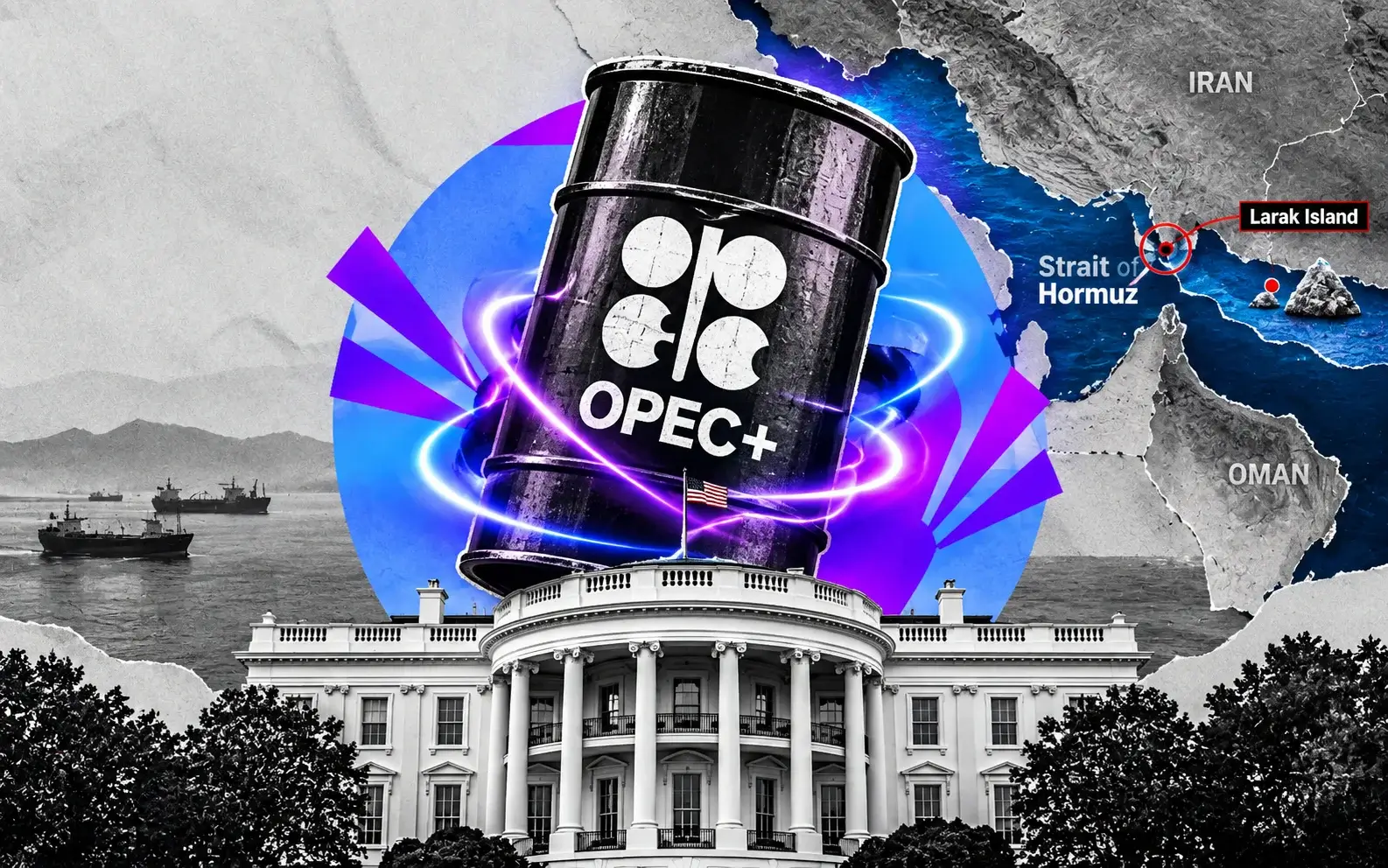
Compounding the production halt, the Strait of Hormuz — through which approximately 20% of global LNG trade transits — has been functionally closed. A senior Iranian Revolutionary Guard official declared the waterway shut and warned that any vessel attempting passage would be attacked. The U.S. Central Command disputes the characterization, but the distinction is irrelevant: insurers have pulled war-risk coverage, carriers are refusing to transit, and tanker traffic through the strait has effectively stopped. The physical market does not care about diplomatic semantics. It cares about whether molecules are moving, and right now, they are not.
Goldman Sachs Raises TTF Forecast and Warns of 130% Price Surge
Goldman Sachs moved quickly to reprice the European gas outlook. Analysts including Samantha Dart and Frederik Witzemann raised their April TTF forecast to EUR 55 per MWh, up from EUR 36 previously — a 53% upward revision in a single note. The average second-quarter forecast was lifted to EUR 45 per MWh from EUR 36. These are already above pre-crisis consensus by a wide margin, and TTF has already blown through both numbers, trading near EUR 60 on Tuesday.
The more alarming projection is Goldman's scenario analysis for a prolonged disruption. A one-month interruption of natural gas flows through the Strait of Hormuz could drive TTF and JKM prices toward EUR 74 per MWh ($85.80) — the level that triggered significant demand destruction during the 2022 European energy crisis. A hypothetical disruption lasting more than two months would likely push European gas prices above EUR 100 per MWh ($35 per mmBtu), a level at which industrial demand begins to shut down and the macro consequences become severe.
For context, European gas prices peaked at EUR 345 per MWh ($400) in August 2022 when Russia cut pipeline supply. Nobody is projecting that extreme yet, but the trajectory is pointed in that direction if Qatar stays offline and Hormuz remains closed for weeks rather than days. The market is pricing a one-to-two-week disruption. If reality proves longer, the repricing has only just begun.
Qatar's 20% of Global LNG Exports: Gone Until Further Notice
The scale of Qatar's production shutdown cannot be overstated. Ras Laffan and Mesaieed together represent the backbone of the country's LNG export infrastructure. QatarEnergy's force majeure declaration means buyers tied to long-term contracts — the foundation of global LNG trade — may now be forced to compete on the spot market for alternative cargoes from the United States and Australia. That competition is already intensifying.
Goldman Sachs estimates that the Qatari pause reduces near-term global LNG supply by approximately 19%. That figure assumes no additional disruption to other Gulf producers. If the conflict spreads — and the drone strike on Saudi Arabia's largest refinery suggests it already is — the supply deficit widens further.
QatarEnergy also halted production of aluminum, methanol, and urea at its industrial facilities. The urea shutdown has direct implications for global fertilizer markets and, by extension, food prices. The methanol halt affects petrochemical supply chains across Asia. The aluminum shutdown impacts industrial production in India and Southeast Asia. The ripple effects of Qatar's force majeure extend far beyond natural gas.
Europe's Storage Deficit: The Wrong Time for a Supply Shock
Europe entered this crisis in a weaker position than 2022. Storage levels remain below those recorded at the same time last year, leaving the continent more exposed to a prolonged disruption. The 2022 crisis arrived in February with European storage near seasonal lows but still within historical norms. The current crisis arrives in March with storage already depleted from a winter that saw higher-than-expected gas usage for electricity generation.
Approximately 25% of Europe's total gas supply comes from LNG, according to Stifel energy analyst Chris Wheaton. With roughly 20% of global LNG production sitting behind the Strait of Hormuz, a prolonged disruption could trigger a supply squeeze on the scale of 2022. Wheaton was direct: "We are much more concerned about European gas prices than we are about oil prices."
Europe's increased reliance on LNG since the reduction of Russian pipeline flows has paradoxically heightened its exposure to maritime tensions and regional conflicts. The continent traded dependence on Russian pipeline gas for dependence on seaborne LNG — and seaborne LNG transits through chokepoints that are now under active military threat. Even if Qatari production resumes quickly, fierce competition for available cargoes could keep TTF elevated for weeks, embedding a structural risk premium into forward contracts that was not present 72 hours ago.
Patrick O'Donnell, chief investment strategist at Omnis Investments, warned that the LNG disruption has "more negative implications for the European economy and the reindustrialization that the market has been hoping that we get to see." Goldman Sachs analysts led by Sven Jari Stehn estimated that a sustained 10% rise in energy prices over four quarters would cut 0.2% off GDP in both the UK and the euro area. Switzerland, which relies more on nuclear and renewables, would be flat. Norway — Europe's largest remaining gas supplier — would see a 0.1% GDP boost and its stock market darling Equinor hit a 52-week high on Tuesday, closing up over 8% on Monday before adding another 2% the following session.
Read More
-
Yen Stalls at 160 Despite a 3% JGB and Tokyo Core CPI at 2.0% — Intervention Sits at 164, Friday's Payrolls Decide
02.09.2026 · TradingNEWS ArchiveEnergy
-
Microsoft Rebounds From $491 Low as $678B Backlog and Positive Free Cash Flow Shield It From 5.15% Yields
24.09.2026 · TradingNEWS ArchiveStocks
-
XRP Slides to $1.50 After $1.66 Peak as Escrow Supply Meets $20M Daily ETF Bid, With $1.70 in Reach
24.09.2026 · TradingNEWS ArchiveCrypto
-
Brent Retakes $105 From $98 Low as Houthis Hold Bab al-Mandab and Hormuz Runs at Half Capacity, WTI at $93.96
24.09.2026 · TradingNEWS ArchiveCommodities
-
Nasdaq Falls to 26,804, S&P 500 Drops to 7,688, Dow Sheds 191 Points as Oracle Tumbles 7% on Project Jupiter Notice
24.09.2026 · TradingNEWS ArchiveMarkets
-
Euro Sinks to 1.1380 on 125–150bp ECB-Fed Rate Gap as RSI Hits Oversold 25.47
24.09.2026 · TradingNEWS ArchiveForex
Asia's LNG Dependence: India, Singapore, and China Face Direct Exposure
The supply shock is not limited to Europe. Asia's major LNG importers face severe exposure to Middle Eastern disruption. Invesco estimates that nearly 58% of India's LNG imports originate from the Middle East, accounting for close to 2% of the country's primary energy consumption. Around 27% of Singapore's LNG imports come from the region, representing 2.2% of primary energy use. Other Asia-Pacific nations source more than 37% of their LNG from the Middle East, comprising almost 3% of primary energy consumption. China's exposure is significant at 26.6% of total LNG imports.
India's industrial gas supply has already been slashed as a direct consequence of Qatar's shutdown. Asian refiners are evaluating whether to cut crude processing rates rather than absorb the cost of sourcing alternative energy. The JKM benchmark's move to a one-year high reflects the competitive scramble for available non-Gulf cargoes from the United States and Australia — markets where liquefaction facilities are already operating at elevated capacity.
BBH global head of markets strategy Elias Haddad identified Japan, India, South Africa, Turkey, Hungary, and Malaysia as the economies most vulnerable to energy disruption shocks due to their heavy reliance on imported oil and gas combined with limited fiscal space. Norway, Canada, and Mexico sit at the opposite end of the vulnerability spectrum as net energy exporters.
The implication is a potential replay of the 2022 dynamic where Europe and Asia competed for the same limited LNG cargoes, driving prices to levels that destroyed industrial demand and tipped vulnerable economies toward recession. The difference this time is that the disruption is geographically broader (Hormuz affects both oil and gas) and the triggering event (active war) is less likely to resolve quickly than the sanctions-driven 2022 crisis.
U.S. Henry Hub: Modest Gains Mask a Dangerous Setup
Henry Hub's 5.4% gain to $3.122 looks tame compared to TTF's 85% explosion, but the domestic implications are far from benign. The U.S. benefits from structural supply advantages — abundant shale production and growing LNG export capacity — that insulate it from the worst of the global price shock. Goldman Sachs sees "limited upside risk" to U.S. natural gas prices under most scenarios.
But there is a catch. Heading into the spring shoulder season, U.S. gas storage carries a small deficit to the five-year average. Under normal conditions — milder weather, lower demand, increased production — that deficit would be filled quickly through a strong storage rebuild ahead of summer cooling season. Those assumptions depend on U.S. LNG export volumes remaining at current levels. If European and Asian buyers, desperate for alternative supply, pull more American gas into the export market, the domestic storage rebuild slows or stalls.
The scenario gets dangerous if summer temperatures run above average while export demand simultaneously spikes. The U.S. would face the uncomfortable combination of elevated cooling-driven domestic consumption and heightened LNG export pull — precisely the setup that produces sharp domestic price increases and feeds into broader inflation readings. If the conflict extends into summer and storage enters the winter 2026-2027 heating season at a deficit, Henry Hub could be trading materially higher by Q4.
Technically, the trend on Henry Hub remains down, but Tuesday's price action tested the 50-day moving average at $3.125 and the swing top at $3.15. A brief push to $3.188 occurred on buy-stop activation rather than conviction buying. If bulls can establish a sustained close above the 50-day MA, the next targets sit at a pair of 50% retracement levels between $3.345 and $3.430. Below current levels, support at $2.90-$3.00 represents the floor established during the recent downtrend.
The Stagflation Threat: Natural Gas as the Transmission Mechanism
The macro consequences of sustained elevated gas prices are severe and asymmetric. For net energy importers — which includes most of Europe, Japan, India, South Korea, and large parts of Southeast Asia — higher gas prices simultaneously raise production costs (inflationary) and reduce disposable income and industrial output (deflationary for growth). The result is stagflation: the one macro outcome that central banks are least equipped to manage.
Goldman Sachs estimates that a protracted conflict leading to further disruption in energy production and shipping raises the risk of stagflation and could add to fiscal strains across vulnerable economies. The Bank of England's March rate-cut odds have already collapsed from 75% to 28% in three trading days as UK gas prices doubled. The ECB faces a similar dilemma: cut rates to support weakening growth, or hold to prevent gas-driven inflation from becoming embedded in wage expectations.
The Federal Reserve is less directly affected — the U.S. is a net energy exporter — but the second-order effects matter. Higher global gas prices support U.S. LNG export revenues but also lift domestic energy costs. The ISM Prices Paid index exploded to 70.5 on Tuesday, far above the 59.5 consensus. If natural gas contributes to sustained input-cost inflation, the Fed's rate-cut timeline gets pushed further into the future.
Natural Gas Futures Price Verdict: Buy European Gas Exposure, Hold U.S. Henry Hub — The Supply Shock Has Legs
European natural gas (TTF) is a strong buy at current levels with a near-term target of EUR 74 per MWh and a scenario target of EUR 100+ if Hormuz stays closed beyond two months. The conviction behind this call is very high.
The fundamental setup is as bullish as it gets for gas prices: the world's largest LNG exporter has declared force majeure and shut all production, the primary shipping route for Gulf LNG is functionally closed, European storage sits below year-ago levels, and Goldman Sachs has already published a 130% upside scenario. The supply that has been removed from the market cannot be replaced quickly. U.S. and Australian LNG facilities are already running near capacity. There is no spare global LNG supply to fill a 19% hole in world exports.
For exposure: European gas utilities and producers benefit directly. Equinor hit a 52-week high and has further upside as the largest non-Russian gas supplier to Europe. U.S. LNG exporters like Cheniere Energy (LNG) benefit from the export premium as desperate European and Asian buyers pay whatever it takes for American cargoes.
U.S. Henry Hub (XNG/USD) is a hold with bullish bias at $3.122. The domestic supply buffer limits the upside under most scenarios, but a sustained conflict that extends into summer creates the conditions for a breakout above $3.43 and a potential run toward $4.00. The 50-day moving average at $3.125 is the immediate technical pivot — a sustained close above that level shifts the short-term trend from bearish to bullish.
The key variable is duration. If Qatar restarts production within one to two weeks and Hormuz reopens, gas prices will retrace sharply — potentially 30-40% from current levels. That is the downside risk and it should be managed with tight stops. But the weight of evidence — Trump's acknowledgment of a multi-week war timeline, Iran's escalatory posture, the physical destruction of Qatari infrastructure, and the insurance market's refusal to cover Hormuz transit — all point to a disruption lasting weeks, not days.
Until Qatar restarts, until Hormuz reopens, and until European storage begins rebuilding, natural gas prices have a structural floor well above pre-crisis levels. The 2022 playbook is rhyming, and anyone who was underweight energy going into that crisis remembers the cost. This time, the warning signs are flashing even brighter.