Oil Price Forecast: WTI (CL=F) Cracks $100, Brent (BZ=F) Tops $111 as UAE Exits OPEC, Hormuz Shutdown Drives Q2 Surge
Crude rallies 4% as UAE quits OPEC May 1 after 59 years; Citi targets $130 Brent | That's TradingNEWS
Key Points
- WTI (CL=F) jumps 4.09% to $100.31, Brent (BZ=F) climbs 3.26% to $111.76 as UAE quits OPEC May 1 after 59 years
- U.S. gas hits four-year high at $4.18, up $1.19 since Feb 28; BP profit doubles to $3.2B on trading desk surge
- Citigroup raises Q2 Brent target to $110, sees $130 if Hormuz stays shut; bullish above $108 Brent, $98 WTI
The energy complex has been jolted into one of the most consequential single-session moves of the second quarter, with West Texas Intermediate crude (CL=F) breaching $100 per barrel for the first time in weeks and Brent crude (BZ=F) climbing back above $111 as the United Arab Emirates announced its formal departure from OPEC effective May 1 — a structural shock to the cartel that has coordinated global oil supply for nearly six decades. WTI's June contract last printed $100.31, gaining 4.09% on the session, while Brent for June delivery sits at $111.76, up 3.26%, with the front-month July contract piercing above $105 before settling near $104 after the UAE news rippled through positioning models. The session's intraday high on Brent above $112 marked a fresh wartime peak, and the contract is now more than 40% above the pre-conflict baseline of roughly $73 per barrel that prevailed before the U.S.-Israeli war on Iran began on February 28. WTI is now sitting on a 50%-plus appreciation from pre-war levels, and the price action confirms what the International Energy Agency has labeled the largest energy security threat in modern history. The setup converges three independent shocks — the UAE's OPEC exit, the continued Strait of Hormuz shutdown, and a hawkish Federal Reserve heading into Wednesday's decision — into a single bullish complex that traders are repricing in real time.
The UAE OPEC Exit: A Structural Fracture in the Cartel After 59 Years
The single most consequential headline of Tuesday's session was the UAE's formal announcement that it will leave OPEC on May 1, ending 59 years of membership in the organization the country joined in 1967, just seven years after the cartel's founding. The UAE was the third-largest producer in OPEC in February, sitting behind only Saudi Arabia and Iraq in production volume, and the decision marks the most significant departure from the cartel in modern history — eclipsing Qatar's 2019 exit and Indonesia's 2016 suspension in strategic weight. UAE Energy Minister Suhail Al Mazrouei told CNBC the timing of the exit was deliberately chosen to minimize market disruption, framing it as a national-interest decision following a comprehensive review of production policy and capacity. "Our exit at this time is the right time for it, because it will have a minimum impact on the price and it will have a minimum impact on our friends at OPEC and OPEC+," Al Mazrouei stated.
The strategic backdrop is impossible to ignore. The UAE has been the target of weeks of missile and drone attacks from fellow OPEC member Iran, and the Iranian closure of the Strait of Hormuz has severely constrained the UAE's ability to export oil — directly threatening the foundation of its export economy. The country's stated production ambition is 5 million barrels per day of capacity by 2027, and OPEC quota commitments have been a binding constraint on that target. By exiting the cartel, the UAE gains complete operational freedom to ramp output without coordinating with the Saudi-led production-management framework that has defined OPEC's market influence for decades. Al Mazrouei was explicit that the decision was not a rebuke of Saudi-led production cuts, framing the move as a pure national-interest call rather than a fracture in OPEC relations: "This has nothing to do with any of our brothers or friends within the group. We've been working together for years and years. We have the highest respect for the Saudis for leading OPEC."
For the remaining cartel, the strategic implications cut deep. Rystad Energy's head of geopolitical analysis Jorge León flagged that alongside Saudi Arabia, the UAE was one of the few OPEC members with meaningful spare capacity — the very mechanism through which the cartel exerts price influence. With the UAE gone, OPEC's effective market-management capability narrows materially, and the dependence on Saudi Arabia as the swing producer becomes more acute than ever. Analyst commentary across multiple desks has framed this as a potential death knell for the cartel's coordinated supply role, raising legitimate questions about whether OPEC can continue to function as a unified market manager rather than a loose alliance of price-watchers. The market's initial reaction was telling: Brent dipped briefly on the prospect of UAE production unbound from quotas, then recovered as traders processed the longer-term implication that a weaker cartel means less reliable price-management on the upside as well.
The Strait of Hormuz: The Bottleneck That Keeps Breaking the Tape
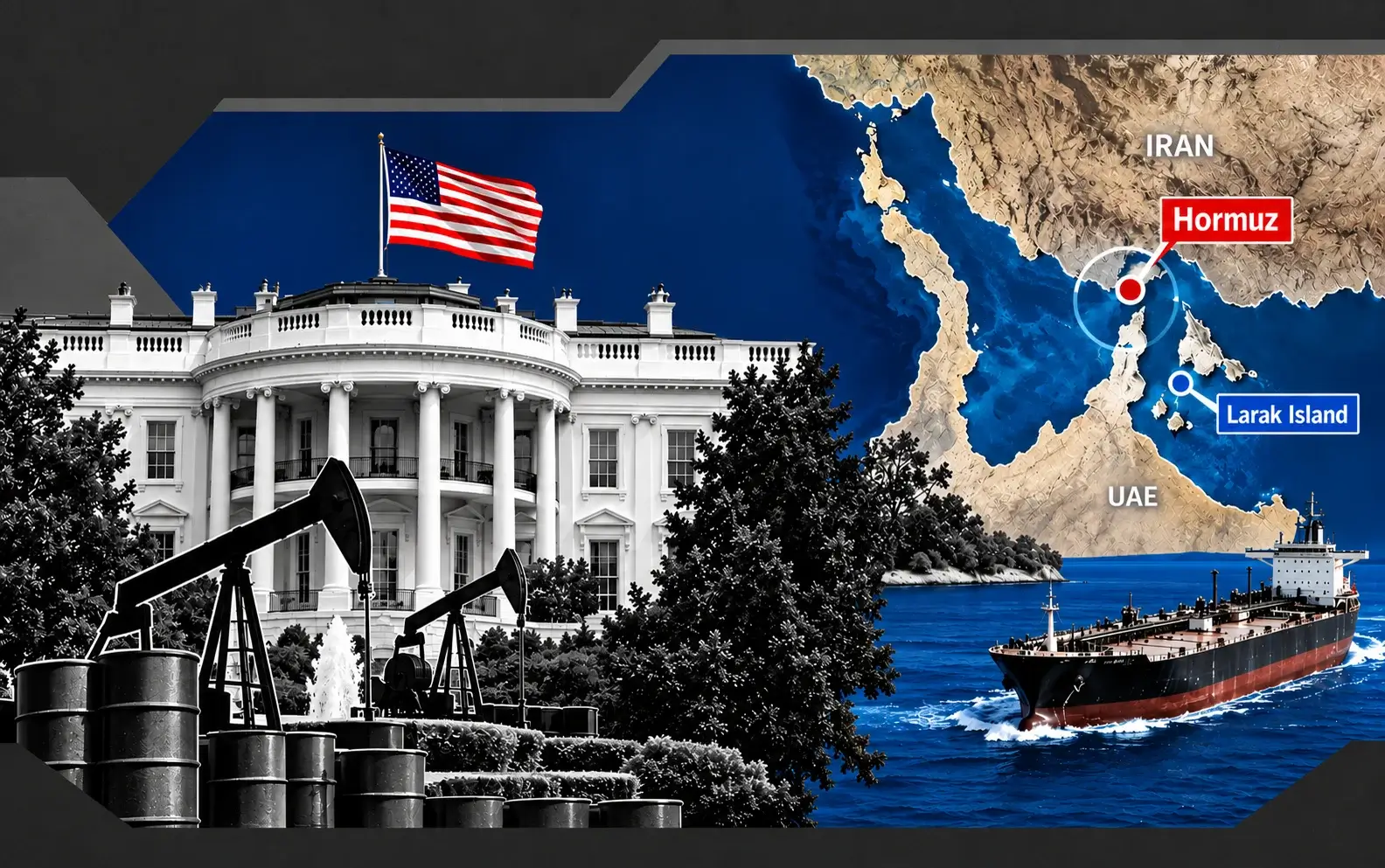
The Strait of Hormuz remains the single most consequential physical chokepoint in the global oil trade, and the disruption is now grinding into its second month with no resolution in sight. The Strait normally carries approximately one-fifth of the world's oil supply and a comparable share of liquid natural gas exports, making it the most consequential maritime route for energy flow on the planet. Iranian closure of the Strait following the U.S.-Israeli strikes on February 28 has effectively cut that flow, and roughly 25 commercial vessels were redirected away from Iranian ports over the weekend as negotiations between Washington and Tehran broke down once again.
The U.S.-Iran negotiations are now stalled. President Trump cancelled the planned dispatch of envoy Steve Witkoff and Jared Kushner to Pakistan over the weekend, with negotiations pivoting to phone-based discussions. Iranian Foreign Ministry spokesperson Esmaeil Baqaei confirmed no meetings are currently scheduled between Tehran and Washington. Iran's offer to reopen the Strait of Hormuz contingent on the U.S. lifting its naval blockade and ending the war has been discussed by Trump and his national-security team, but the Iranian linkage to postponed nuclear concessions is reportedly the sticking point that has prevented progress. White House press secretary Karoline Leavitt confirmed that the administration's red lines on Iran remain clear, and that the President may address the situation directly soon.
The longer the Strait remains closed, the more punishing the upside risk to oil prices becomes. Citigroup has raised its Q2 Brent forecast to $110 per barrel from $95, and warned that if Strait flows remain disrupted through the end of June, Brent could average $130 per barrel in Q2 — a level that would represent a near-doubling from pre-war prices. Goldman Sachs has also lifted its estimates. The math is straightforward: the Strait is a binary chokepoint, and the longer it stays closed, the more cumulative supply destruction works through the global inventory chain, making a sudden de-escalation a smaller and smaller relief on prices because the rebuild of physical inventories takes weeks rather than days.
Demand Destruction Warning Signs: The IEA's Asia Read
The supply shock has been disrupting up to 13 million barrels per day of physical flow, and the consumption side of the equation is now starting to show stress. The International Energy Agency has warned that high prices could force reduced demand through either affordability constraints or policy intervention, particularly in price-sensitive Asian economies that import the bulk of their crude requirements. Asia is the marginal demand engine for the global oil market, and the early signs of demand destruction — including Indian and Chinese refiners trimming throughput in response to elevated input costs — are starting to filter into trader positioning models.
The dynamic creates a bull-bear paradox: the longer the Strait stays closed, the higher prices climb, but the higher prices climb, the faster demand destruction kicks in, eventually capping the move. That self-correcting mechanism is what prevents oil from running uncontrolled into a $150-plus environment, but it does not arrive instantly. The lag between price increase and demand response can run weeks to months, meaning the near-term tape can keep grinding higher even as the eventual demand correction is forming. Traders running directional length need to model both the supply shock and the demand-destruction response simultaneously, because neither variable alone captures the full setup.
U.S. Gasoline at a Four-Year High: $4.18 and the Pressure on the Consumer
The U.S. gasoline tape is one of the cleanest reads on how the oil shock is hitting consumers, and the numbers are not pretty. The national average price for a gallon of regular unleaded gasoline reached $4.18 on Tuesday per AAA — the highest level since April 2022, shortly after Russia's invasion of Ukraine triggered the previous oil-price spike. Tuesday's intraday jump of 1.6% was the largest single-day percentage increase in more than a month, and gasoline has now climbed $1.19 per gallon since the war began on February 28 — a 28% increase in less than two months that is materially squeezing consumer discretionary spending budgets.
Diesel prices have moved even faster, sitting at $5.46 per gallon on Tuesday — a 45% increase since the start of the conflict. The diesel surge matters because diesel underpins the freight and logistics layer of the U.S. economy, and rising diesel costs feed directly into goods inflation through transportation passthrough. Crude oil accounts for more than half of the price paid at the pump per the U.S. Energy Information Administration, but the refining margin spread has also widened materially during the war as refiners capture the volatility premium between input costs and pump prices. That dynamic is what drives the relative outperformance of refining-heavy operators versus pure-play upstream producers in the current tape.
BP's Profit Surge: How Big Oil Is Capitalizing on the Volatility
The corporate-earnings translation of the oil shock arrived Tuesday in BP's first-quarter results, and the numbers were eye-popping. BP's underlying replacement cost profit — its preferred profit metric — surged more than 130% to $3.2 billion (£2.4 billion), comfortably above the analyst consensus of $2.67 billion compiled by LSEG. The number compares to $1.38 billion in the same period last year and $1.54 billion in Q4 2025. The single biggest driver was the oil-trading division, where profits in the customers and products segment surged to $2.5 billion versus just $103 million a year ago — a roughly 24x year-over-year jump that reflects how much BP's trading desk has captured from the volatility regime. BP itself described the trading contribution as "exceptional," and the structure of the volatility — wild swings between $96 and $119 on Brent over the past several weeks — has widened bid-ask spreads and created the conditions for high-velocity trading profits.
BP's share price rose 3% on Tuesday and is up roughly 20% since the Iran war began. Year-to-date, BP has rallied more than 32%, placing it second only to TotalEnergies among the top five oil supermajors in 2026 stock performance. The new CEO Meg O'Neill, who took the helm on April 1 from outgoing chief Murray Auchincloss, framed the operating environment as "conflict and complexity" and emphasized the company's role in keeping oil, gas, and refined products flowing during the disruption. Analyst commentary from Citi flagged O'Neill's "clear emphasis on financial de-leverage and decreasing the company's cost of debt." BP's net debt sits at $25.3 billion at end of Q1, up from $22.18 billion at end of 2025, with management targeting a reduction to $14 billion to $18 billion by end of 2027.
The forward setup carries some caution. BP has guided that Q2 upstream production will be lower than Q1, citing seasonal maintenance and Middle East disruptions. The company reaffirmed 2026 capex at $13 billion to $13.5 billion, with divestment proceeds expected at $9 billion to $10 billion through the year. Peel Hunt's Charles Hall flagged the cautious tone on Q2: "There are other things going on and obviously it's a pretty uncertain world at the moment." Susannah Streeter of Wealth Club captured the dual-edged read: BP's trading division "clearly thrived in an environment of wild swings, leading to high velocity trading," but production was "not immune to the damage and destruction wreaked on facilities across the Gulf."
The Windfall Tax Backlash: Political Pressure Builds on Big Oil
The political layer is impossible to ignore. UK Chancellor Rachel Reeves told the Commons that energy companies' profits represent "exactly why we extended the Energy Profits Levy to make sure that windfall profits could be taxed appropriately." The levy was originally introduced in 2022 in response to soaring profits following the Russian invasion of Ukraine, and Labour has extended its life to March 2030. Critically, the levy applies only to profits made from extracting oil and gas in the UK — meaning the bulk of the supermajors' overseas earnings escape direct windfall taxation.
The campaign-group reaction has been pointed. Friends of the Earth's Mike Childs flagged that "fossil fuel giants are quids-in when global instability drastically inflates fuel prices" — but ordinary households pay the price through pump-fuel inflation and bill increases. The End Fuel Poverty Coalition's Simon Francis described BP's profits as "astronomical" and called for expanded windfall taxes despite industry opposition. The UK energy price cap currently protects most household dual-fuel bills at £1,641 annually for direct-debit customers, but the cap is estimated to rise by approximately £200 when revised on July 1, reflecting the wholesale gas-and-oil cost passthrough. The political pressure on supermajors will likely intensify if oil stays elevated through Q3, and any expansion of the windfall tax framework would dent the upstream-earnings tailwind that has driven the recent share-price rally.
BP's Investor Rebellion: The Climate-Governance Layer
The BP narrative is more complicated than the headline profit beat suggests. The company's annual general meeting last week saw a meaningful shareholder revolt, with management failing to secure majority support for two highly anticipated motions — one that would have permitted online-only AGMs and another that would have retired two company-specific climate disclosure obligations. The result was weaker-than-typical support for BP Chair Albert Manifold and robust backing for an investor motion calling on the company to justify its capital discipline on oil-and-gas investments.
The investor-rebellion dynamic matters because it signals that institutional capital is no longer willing to give BP a free pass on either climate transparency or capex allocation, even as the company posts record profits from the oil-price surge. The tension between near-term oil-price tailwinds and long-term energy-transition pressure is now showing up directly in shareholder voting patterns, and the path forward for BP requires balancing the immediate windfall against the structural questions about capital deployment in a post-Hormuz world.
Brent (BZ=F) Technical Map: Where the Levels Sit
The technical structure on Brent is well-defined. The June contract sits at $111.76, having pierced $112 at the intraday high before consolidating slightly lower. The 2026 high to date sits at $119.50 from March 9, and the path to retest that peak runs through $115 as the next resistance node. A decisive break above $119 opens the door to $125 and ultimately the $130 Citigroup average-case target for Q2 if the Hormuz disruption continues through end-of-June. On the downside, $108 has acted as the consolidation floor over the past week, and a break below $108 would invalidate the most recent leg higher and open the path to $105 and ultimately $100.
The front-month July contract printed above $105 on Tuesday before settling near $104 after the UAE news rippled through. The spread between June and July contracts captures the immediate physical-supply pressure, and the contango-backwardation structure of the curve is a real-time signal of how traders are pricing the persistence of the Hormuz disruption. Backwardation deepens when traders expect tighter supply in the near term, and the current curve structure remains in firm backwardation — supportive of continued buying pressure on the front-end.
WTI (CL=F) Technical Setup: $100 Is the Bull Trigger
The WTI tape is equally well-defined. The June contract at $100.31 has reclaimed the psychological $100 level for the first time since March 9, and a sustained close above $100 confirms the breakout from the $96 to $99 consolidation that defined the past three weeks. The 23.6% Fibonacci retracement of the recent move sits at $105, and a break above that level opens the path to $108 and ultimately the prior peak. The 50-period and 20-period simple moving averages converge near $98, providing the immediate downside support.
The key variable for WTI is whether the contract can hold above $100 on a daily closing basis. A failure to confirm above $100 with rising volume would suggest the breakout is a false signal, and the path of least resistance would shift back toward $95 — the 38.2% Fibonacci retracement and the trade-around level for active accounts. Below $95, the next major support sits at $88, the 50-day SMA and the 50% Fibonacci retracement, with $80 as the structural floor below that. The bullish bias remains intact above $100, but the level needs daily-close confirmation to validate the next leg toward $105 and $110.
Read More
-
Yen Stalls at 160 Despite a 3% JGB and Tokyo Core CPI at 2.0% — Intervention Sits at 164, Friday's Payrolls Decide
02.09.2026 · TradingNEWS ArchiveEnergy
-
CHAT Fund Holds $96.37 as Korean Memory and Chip Exposure Drive a 109.73% Year — Break of $98.02 Opens $105.20
18.09.2026 · TradingNEWS ArchiveStocks
-
First-Generation XRPR and XRPI Ride XRP's Rebound to $1.386 as Spot Funds Post First Outflow — Break of $1.40 Opens $1.54
18.09.2026 · TradingNEWS ArchiveCrypto
-
NG Holds $2.9255 as Storage Surplus Narrows From 5.5% to 3.7% in 3 Weeks — Break of $3.00 Opens $3.15
18.09.2026 · TradingNEWS ArchiveCommodities
-
Dollar Surges to 157.90 as BoJ's Divided Hike Fails to Lift the Yen — Break of 158.87 Opens 159
18.09.2026 · TradingNEWS ArchiveForex
Oil (CL=F) Punches Above $100 as UAE Quits OPEC, Brent (BZ=F) Tops $111 and U.S. Gasoline Hits a Four-Year Peak
The energy complex has been jolted into one of the most consequential single-session moves of the second quarter, with West Texas Intermediate crude (CL=F) breaching $100 per barrel for the first time in weeks and Brent crude (BZ=F) climbing back above $111 as the United Arab Emirates announced its formal departure from OPEC effective May 1 — a structural shock to the cartel that has coordinated global oil supply for nearly six decades. WTI's June contract last printed $100.31, gaining 4.09% on the session, while Brent for June delivery sits at $111.76, up 3.26%, with the front-month July contract piercing above $105 before settling near $104 after the UAE news rippled through positioning models. The session's intraday high on Brent above $112 marked a fresh wartime peak, and the contract is now more than 40% above the pre-conflict baseline of roughly $73 per barrel that prevailed before the U.S.-Israeli war on Iran began on February 28. WTI is now sitting on a 50%-plus appreciation from pre-war levels, and the price action confirms what the International Energy Agency has labeled the largest energy security threat in modern history. The setup converges three independent shocks — the UAE's OPEC exit, the continued Strait of Hormuz shutdown, and a hawkish Federal Reserve heading into Wednesday's decision — into a single bullish complex that traders are repricing in real time.
The UAE OPEC Exit: A Structural Fracture in the Cartel After 59 Years
The single most consequential headline of Tuesday's session was the UAE's formal announcement that it will leave OPEC on May 1, ending 59 years of membership in the organization the country joined in 1967, just seven years after the cartel's founding. The UAE was the third-largest producer in OPEC in February, sitting behind only Saudi Arabia and Iraq in production volume, and the decision marks the most significant departure from the cartel in modern history — eclipsing Qatar's 2019 exit and Indonesia's 2016 suspension in strategic weight. UAE Energy Minister Suhail Al Mazrouei told CNBC the timing of the exit was deliberately chosen to minimize market disruption, framing it as a national-interest decision following a comprehensive review of production policy and capacity. "Our exit at this time is the right time for it, because it will have a minimum impact on the price and it will have a minimum impact on our friends at OPEC and OPEC+," Al Mazrouei stated.
The strategic backdrop is impossible to ignore. The UAE has been the target of weeks of missile and drone attacks from fellow OPEC member Iran, and the Iranian closure of the Strait of Hormuz has severely constrained the UAE's ability to export oil — directly threatening the foundation of its export economy. The country's stated production ambition is 5 million barrels per day of capacity by 2027, and OPEC quota commitments have been a binding constraint on that target. By exiting the cartel, the UAE gains complete operational freedom to ramp output without coordinating with the Saudi-led production-management framework that has defined OPEC's market influence for decades. Al Mazrouei was explicit that the decision was not a rebuke of Saudi-led production cuts, framing the move as a pure national-interest call rather than a fracture in OPEC relations: "This has nothing to do with any of our brothers or friends within the group. We've been working together for years and years. We have the highest respect for the Saudis for leading OPEC."
For the remaining cartel, the strategic implications cut deep. Rystad Energy's head of geopolitical analysis Jorge León flagged that alongside Saudi Arabia, the UAE was one of the few OPEC members with meaningful spare capacity — the very mechanism through which the cartel exerts price influence. With the UAE gone, OPEC's effective market-management capability narrows materially, and the dependence on Saudi Arabia as the swing producer becomes more acute than ever. Analyst commentary across multiple desks has framed this as a potential death knell for the cartel's coordinated supply role, raising legitimate questions about whether OPEC can continue to function as a unified market manager rather than a loose alliance of price-watchers. The market's initial reaction was telling: Brent dipped briefly on the prospect of UAE production unbound from quotas, then recovered as traders processed the longer-term implication that a weaker cartel means less reliable price-management on the upside as well.
The Strait of Hormuz: The Bottleneck That Keeps Breaking the Tape
The Strait of Hormuz remains the single most consequential physical chokepoint in the global oil trade, and the disruption is now grinding into its second month with no resolution in sight. The Strait normally carries approximately one-fifth of the world's oil supply and a comparable share of liquid natural gas exports, making it the most consequential maritime route for energy flow on the planet. Iranian closure of the Strait following the U.S.-Israeli strikes on February 28 has effectively cut that flow, and roughly 25 commercial vessels were redirected away from Iranian ports over the weekend as negotiations between Washington and Tehran broke down once again.
The U.S.-Iran negotiations are now stalled. President Trump cancelled the planned dispatch of envoy Steve Witkoff and Jared Kushner to Pakistan over the weekend, with negotiations pivoting to phone-based discussions. Iranian Foreign Ministry spokesperson Esmaeil Baqaei confirmed no meetings are currently scheduled between Tehran and Washington. Iran's offer to reopen the Strait of Hormuz contingent on the U.S. lifting its naval blockade and ending the war has been discussed by Trump and his national-security team, but the Iranian linkage to postponed nuclear concessions is reportedly the sticking point that has prevented progress. White House press secretary Karoline Leavitt confirmed that the administration's red lines on Iran remain clear, and that the President may address the situation directly soon.
The longer the Strait remains closed, the more punishing the upside risk to oil prices becomes. Citigroup has raised its Q2 Brent forecast to $110 per barrel from $95, and warned that if Strait flows remain disrupted through the end of June, Brent could average $130 per barrel in Q2 — a level that would represent a near-doubling from pre-war prices. Goldman Sachs has also lifted its estimates. The math is straightforward: the Strait is a binary chokepoint, and the longer it stays closed, the more cumulative supply destruction works through the global inventory chain, making a sudden de-escalation a smaller and smaller relief on prices because the rebuild of physical inventories takes weeks rather than days.
Demand Destruction Warning Signs: The IEA's Asia Read
The supply shock has been disrupting up to 13 million barrels per day of physical flow, and the consumption side of the equation is now starting to show stress. The International Energy Agency has warned that high prices could force reduced demand through either affordability constraints or policy intervention, particularly in price-sensitive Asian economies that import the bulk of their crude requirements. Asia is the marginal demand engine for the global oil market, and the early signs of demand destruction — including Indian and Chinese refiners trimming throughput in response to elevated input costs — are starting to filter into trader positioning models.
The dynamic creates a bull-bear paradox: the longer the Strait stays closed, the higher prices climb, but the higher prices climb, the faster demand destruction kicks in, eventually capping the move. That self-correcting mechanism is what prevents oil from running uncontrolled into a $150-plus environment, but it does not arrive instantly. The lag between price increase and demand response can run weeks to months, meaning the near-term tape can keep grinding higher even as the eventual demand correction is forming. Traders running directional length need to model both the supply shock and the demand-destruction response simultaneously, because neither variable alone captures the full setup.
U.S. Gasoline at a Four-Year High: $4.18 and the Pressure on the Consumer
The U.S. gasoline tape is one of the cleanest reads on how the oil shock is hitting consumers, and the numbers are not pretty. The national average price for a gallon of regular unleaded gasoline reached $4.18 on Tuesday per AAA — the highest level since April 2022, shortly after Russia's invasion of Ukraine triggered the previous oil-price spike. Tuesday's intraday jump of 1.6% was the largest single-day percentage increase in more than a month, and gasoline has now climbed $1.19 per gallon since the war began on February 28 — a 28% increase in less than two months that is materially squeezing consumer discretionary spending budgets.
Diesel prices have moved even faster, sitting at $5.46 per gallon on Tuesday — a 45% increase since the start of the conflict. The diesel surge matters because diesel underpins the freight and logistics layer of the U.S. economy, and rising diesel costs feed directly into goods inflation through transportation passthrough. Crude oil accounts for more than half of the price paid at the pump per the U.S. Energy Information Administration, but the refining margin spread has also widened materially during the war as refiners capture the volatility premium between input costs and pump prices. That dynamic is what drives the relative outperformance of refining-heavy operators versus pure-play upstream producers in the current tape.
BP's Profit Surge: How Big Oil Is Capitalizing on the Volatility
The corporate-earnings translation of the oil shock arrived Tuesday in BP's first-quarter results, and the numbers were eye-popping. BP's underlying replacement cost profit — its preferred profit metric — surged more than 130% to $3.2 billion (£2.4 billion), comfortably above the analyst consensus of $2.67 billion compiled by LSEG. The number compares to $1.38 billion in the same period last year and $1.54 billion in Q4 2025. The single biggest driver was the oil-trading division, where profits in the customers and products segment surged to $2.5 billion versus just $103 million a year ago — a roughly 24x year-over-year jump that reflects how much BP's trading desk has captured from the volatility regime. BP itself described the trading contribution as "exceptional," and the structure of the volatility — wild swings between $96 and $119 on Brent over the past several weeks — has widened bid-ask spreads and created the conditions for high-velocity trading profits.
BP's share price rose 3% on Tuesday and is up roughly 20% since the Iran war began. Year-to-date, BP has rallied more than 32%, placing it second only to TotalEnergies among the top five oil supermajors in 2026 stock performance. The new CEO Meg O'Neill, who took the helm on April 1 from outgoing chief Murray Auchincloss, framed the operating environment as "conflict and complexity" and emphasized the company's role in keeping oil, gas, and refined products flowing during the disruption. Analyst commentary from Citi flagged O'Neill's "clear emphasis on financial de-leverage and decreasing the company's cost of debt." BP's net debt sits at $25.3 billion at end of Q1, up from $22.18 billion at end of 2025, with management targeting a reduction to $14 billion to $18 billion by end of 2027.
The forward setup carries some caution. BP has guided that Q2 upstream production will be lower than Q1, citing seasonal maintenance and Middle East disruptions. The company reaffirmed 2026 capex at $13 billion to $13.5 billion, with divestment proceeds expected at $9 billion to $10 billion through the year. Peel Hunt's Charles Hall flagged the cautious tone on Q2: "There are other things going on and obviously it's a pretty uncertain world at the moment." Susannah Streeter of Wealth Club captured the dual-edged read: BP's trading division "clearly thrived in an environment of wild swings, leading to high velocity trading," but production was "not immune to the damage and destruction wreaked on facilities across the Gulf."
The Windfall Tax Backlash: Political Pressure Builds on Big Oil
The political layer is impossible to ignore. UK Chancellor Rachel Reeves told the Commons that energy companies' profits represent "exactly why we extended the Energy Profits Levy to make sure that windfall profits could be taxed appropriately." The levy was originally introduced in 2022 in response to soaring profits following the Russian invasion of Ukraine, and Labour has extended its life to March 2030. Critically, the levy applies only to profits made from extracting oil and gas in the UK — meaning the bulk of the supermajors' overseas earnings escape direct windfall taxation.
The campaign-group reaction has been pointed. Friends of the Earth's Mike Childs flagged that "fossil fuel giants are quids-in when global instability drastically inflates fuel prices" — but ordinary households pay the price through pump-fuel inflation and bill increases. The End Fuel Poverty Coalition's Simon Francis described BP's profits as "astronomical" and called for expanded windfall taxes despite industry opposition. The UK energy price cap currently protects most household dual-fuel bills at £1,641 annually for direct-debit customers, but the cap is estimated to rise by approximately £200 when revised on July 1, reflecting the wholesale gas-and-oil cost passthrough. The political pressure on supermajors will likely intensify if oil stays elevated through Q3, and any expansion of the windfall tax framework would dent the upstream-earnings tailwind that has driven the recent share-price rally.
BP's Investor Rebellion: The Climate-Governance Layer
The BP narrative is more complicated than the headline profit beat suggests. The company's annual general meeting last week saw a meaningful shareholder revolt, with management failing to secure majority support for two highly anticipated motions — one that would have permitted online-only AGMs and another that would have retired two company-specific climate disclosure obligations. The result was weaker-than-typical support for BP Chair Albert Manifold and robust backing for an investor motion calling on the company to justify its capital discipline on oil-and-gas investments.
The investor-rebellion dynamic matters because it signals that institutional capital is no longer willing to give BP a free pass on either climate transparency or capex allocation, even as the company posts record profits from the oil-price surge. The tension between near-term oil-price tailwinds and long-term energy-transition pressure is now showing up directly in shareholder voting patterns, and the path forward for BP requires balancing the immediate windfall against the structural questions about capital deployment in a post-Hormuz world.
Brent (BZ=F) Technical Map: Where the Levels Sit
The technical structure on Brent is well-defined. The June contract sits at $111.76, having pierced $112 at the intraday high before consolidating slightly lower. The 2026 high to date sits at $119.50 from March 9, and the path to retest that peak runs through $115 as the next resistance node. A decisive break above $119 opens the door to $125 and ultimately the $130 Citigroup average-case target for Q2 if the Hormuz disruption continues through end-of-June. On the downside, $108 has acted as the consolidation floor over the past week, and a break below $108 would invalidate the most recent leg higher and open the path to $105 and ultimately $100.
The front-month July contract printed above $105 on Tuesday before settling near $104 after the UAE news rippled through. The spread between June and July contracts captures the immediate physical-supply pressure, and the contango-backwardation structure of the curve is a real-time signal of how traders are pricing the persistence of the Hormuz disruption. Backwardation deepens when traders expect tighter supply in the near term, and the current curve structure remains in firm backwardation — supportive of continued buying pressure on the front-end.
WTI (CL=F) Technical Setup: $100 Is the Bull Trigger
The WTI tape is equally well-defined. The June contract at $100.31 has reclaimed the psychological $100 level for the first time since March 9, and a sustained close above $100 confirms the breakout from the $96 to $99 consolidation that defined the past three weeks. The 23.6% Fibonacci retracement of the recent move sits at $105, and a break above that level opens the path to $108 and ultimately the prior peak. The 50-period and 20-period simple moving averages converge near $98, providing the immediate downside support.
The key variable for WTI is whether the contract can hold above $100 on a daily closing basis. A failure to confirm above $100 with rising volume would suggest the breakout is a false signal, and the path of least resistance would shift back toward $95 — the 38.2% Fibonacci retracement and the trade-around level for active accounts. Below $95, the next major support sits at $88, the 50-day SMA and the 50% Fibonacci retracement, with $80 as the structural floor below that. The bullish bias remains intact above $100, but the level needs daily-close confirmation to validate the next leg toward $105 and $110.