
Nvidia Rips 33% to $166.44 as Huang Returns and Adds $990B in a Day; $186.40 Next
Holding $160 and clearing $172 puts NVDA back on track for $186.40 | That's TradingNEWS
Key Points
- Nvidia NVDA jumped 32.6% to $166.44 after the board unanimously reinstated Jensen Huang as CEO.
- Q3 FY27 revenue hit $115.8B, up 103%, with Data Center at $107.6B and a $130B Q4 guide.
- An SEC civil probe and a Megaspeed criminal case keep NVDA below its $186.40 pre-scandal level.
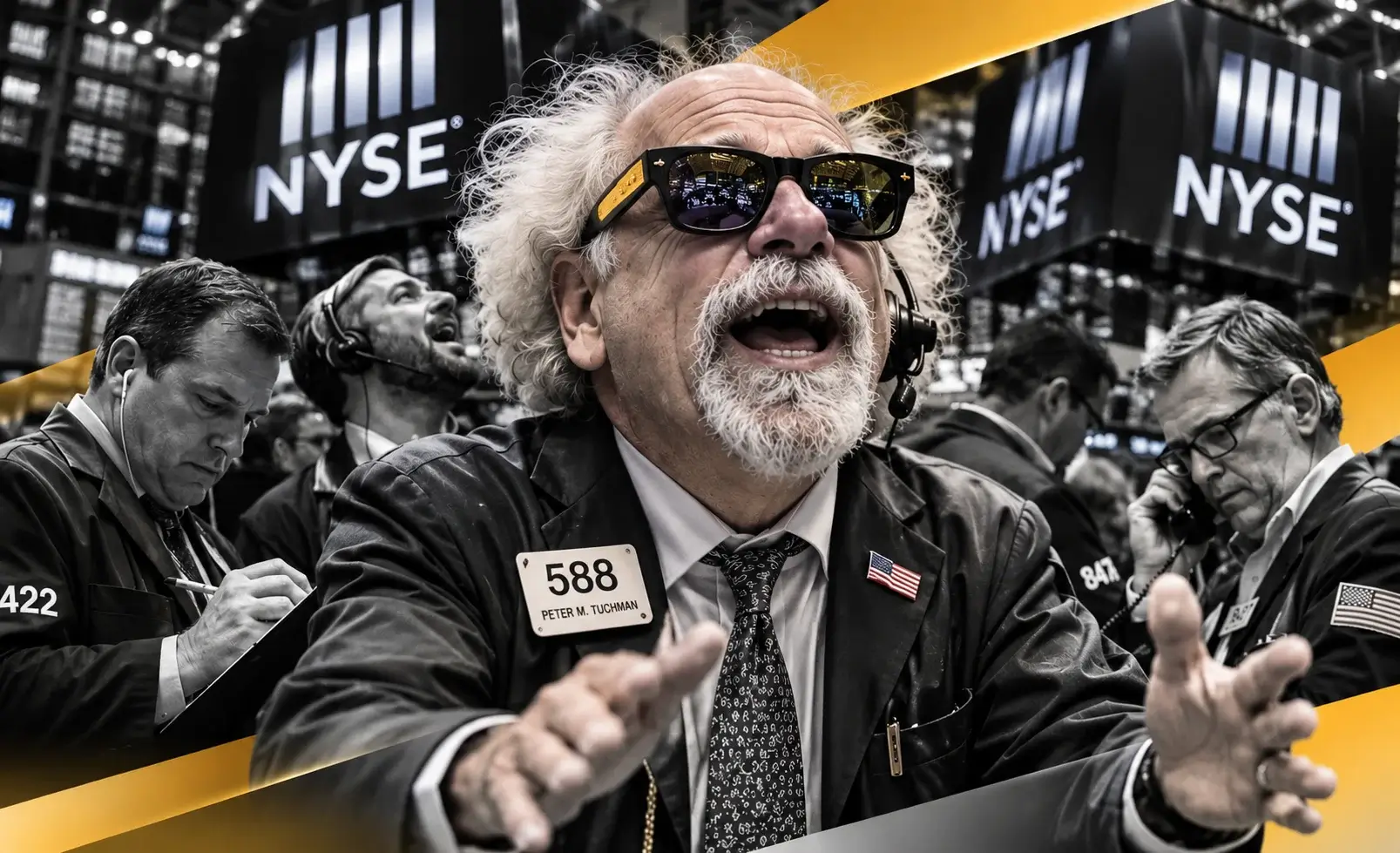
Nvidia had the biggest single-day gain in market value of any company on record on Monday. NVDA traded at $166.44, up 32.6% from Friday's $125.53 close, after the board unanimously reinstated Jensen Huang as president, chief executive officer and director, effective immediately. At its peak the stock was up 37%, its best intraday gain since March 2000, and briefly traded above $170. The move added between $888 billion and $1 trillion to Nvidia's market value, depending on the timestamp. That is nearly double the previous one-day record, the $450 billion Microsoft added on July 30.
The reversal came six days after the board said it wouldn't do this. On November 12, Nvidia announced that Huang had resigned and named CFO Colette Kress interim CEO. On November 17, at the start of the company's third-quarter earnings call, newly appointed board chair Harvey C. Jones said the board had unanimously accepted the resignation and did not intend to reinstate Huang. On Monday, after a series of meetings with Huang and input from senior levels of the U.S. government, the same board voted unanimously to bring him back.
The rebound followed one of the worst stretches in Nvidia's history. The stock fell 14% on Friday and nearly 23% last week, its biggest weekly drop since 2008. It had fallen seven sessions in a row. From its record close of $239.24 to Friday's $125.53, Nvidia lost 47.5% of its value, about $2 trillion in market capitalization. Its valuation fell to $3.03 trillion at Friday's close, then rose above $4.1 trillion on Monday morning.
The thesis for this forecast is that Monday repaired the leadership premium, not the governance discount. Nvidia's business never broke. Third-quarter fiscal 2027 revenue grew 103% to $115.8 billion, and the company guided fourth-quarter revenue to $130 billion. What broke was confidence that the founder who built the AI franchise would stay to run it. Huang's return fixes that. It doesn't close the SEC's civil investigation, the criminal export-control case involving Singapore-based Megaspeed, or the board's own independent review.
NVDA needs to hold $160 to confirm Monday's rebound and clear $172, the session's intraday high, to show buyers are still in control. Above that, the upside target is $186.40, the level the stock traded at before the Huang scandal broke. Getting there would mean the market has fully priced the founder back in.
The Record Session: $990 Billion Added and the Best Intraday Move Since March 2000
Monday's numbers have no precedent among megacap stocks. In the premarket, Nvidia traded up 9% as the broad chip complex bounced from last week's rout, before Huang's return was confirmed. When the 8-K hit at 9:11 a.m. ET, the stock jumped. It was up 27% before the open, and once cash trading started, NVDA kept climbing. By 10:00 a.m. ET it was up 34.2%. At the intraday peak it was up as much as 37%, and the stock traded above $170.
With about 24.1 billion shares outstanding, each dollar on Nvidia's share price is worth about $24 billion in market value. The $40.91 gain to $166.44 adds roughly $986 billion, close to the $990 billion figure cited for the day. At 9:38 a.m. ET, Nvidia's market value had gone from $3.03 trillion at Friday's close to more than $4.1 trillion. In one session the company recovered about half of the $2 trillion lost since its early-September peak.
The percentage gain matters too. Monday's move ranks among Nvidia's three biggest one-day percentage gains since 1999 and is on track to be the second-largest in the company's history. Any close above $153.13 puts it among the 10 biggest one-day moves. After Nvidia's 10 biggest previous one-day gains, the stock was higher a year later eight times.
History also has a warning. On March 13, 2000, Nvidia jumped 27% in one session. The next day it fell 26%, its fourth-worst day on record. One huge up day doesn't settle anything, and a stock that moves 33% in a session can give back a large share of that just as fast when the forced buying stops. Tuesday's session will show whether Monday's move was a repricing or a short squeeze.
The rest of the market moved with it. A basket of Magnificent Seven stocks rose 7.97%. The S&P 500 gained 4.94% and the Nasdaq Composite 6.71%, both on track for their best day since April 2025. Nasdaq-100 futures were briefly halted in the premarket after jumping more than 7%. A single company's leadership decision moved the entire U.S. equity market, which shows how much of the market's value now depends on Nvidia.
From $239.24 to $125.53: How the Huang Scandal Erased $2 Trillion
The drawdown before Monday was one of the fastest declines ever for a company of Nvidia's size. The stock set a record close of $239.24 at its early-September peak, when Nvidia was the world's most valuable company. By Friday, November 20, it had closed at $125.53, a 47.5% drop. The President said publicly that the stock was down 50% from its recent high and urged the board to take Huang back.
The scandal moved quickly. Before November 12, reports surfaced tying Huang to a woman U.S. intelligence officials say was recruited by China's spy agency, Alice Huang, the former CEO of Singapore-based Megaspeed. On November 12, Nvidia's board announced Huang had resigned after disclosing personal behavior inconsistent with the company's code of conduct. Kress became interim CEO, and Jones became the board's first-ever chair. Huang later said he had made serious mistakes in his personal life and created problems for the board that he deeply regretted.
The regulatory pressure grew fast. On November 17, reports said the SEC had opened a civil investigation into whether Nvidia's disclosures misled investors. The Commerce and Justice Departments confirmed that a 2024 export-control probe into Megaspeed had become a criminal investigation. Treasury Secretary Scott Bessent asked publicly whether Nvidia's culture had pushed illicit chip sales to China to lift revenue and earnings, and said Washington needed answers from the board and outside counsel within 10 days. California Attorney General Rob Bonta said his office was looking into the matter.
The earnings call on November 17 couldn't stop the slide. Interim CEO Kress raised the growth outlook and reported $115.8 billion of quarterly revenue, but Jones opened the call by ruling out Huang's return, and the stock kept falling. Earlier that day, Huang had said he would be honored to return if the board agreed. The market sided with Huang. Over the next three sessions, Nvidia fell sharply, culminating in Friday's 14% drop.
The damage spread across the market. The Nasdaq Composite fell 10% last week and erased its 2026 gains. The S&P 500 dropped into a correction after seven straight declines, its longest losing streak since February 2020. The Philadelphia Semiconductor Index posted one of its longest losing streaks since 2008. U.S. equities lost $8 trillion from the October peak. Nvidia's leadership crisis had turned into a market-wide crisis.
The Board's Reversal: Unanimous Vote, Government Input and Trump's Lobbying
The reinstatement filing explains the board's reasoning. According to the 8-K filed with the SEC, the board voted unanimously after a series of discussions and meetings with Huang, after which it was satisfied with his candor and his ability to lead Nvidia. The board said it received input from senior levels of the U.S. government, and based on that input, it was confident Huang's reinstatement posed no national security risk.
That government input was the deciding factor. Huang's resignation had been driven largely by national-security concerns about his links to Megaspeed and alleged Chinese intelligence activity. If the government had considered him a security risk, the board couldn't have brought him back. The board's statement that senior officials had effectively cleared him removed the main obstacle. The President personally lobbied the board to reinstate Huang and praised the decision publicly once it was announced.
Jones remains board chair and said the board believes Huang is the right person to lead Nvidia and that his reinstatement is in the best interests of stockholders, employees, partners and customers. Kress goes back to her role as CFO. The leadership structure before November 12, with Huang as CEO and no independent chair, has been replaced with a split structure. Huang runs the company, and Jones chairs the board. That separation is a governance improvement that came out of the crisis.
The speed of the reversal raises its own questions. A board that said six days earlier it wouldn't reinstate Huang, then did, invites criticism that it bowed to political and shareholder pressure. On the other hand, the board's job is to act in shareholders' interests, and a 47.5% drop in the stock along with a market-wide crisis was strong evidence that shareholders wanted Huang back. The government's assurance gave the board a defensible reason to reverse.
For investors, the reversal changes Nvidia's near-term risk profile. The question of whether Nvidia has a leader is settled. The question of whether that leader will face regulatory or legal consequences from the ongoing investigations is not. Monday's rally priced the first question. The second will play out over months.
The Governance Overhang: SEC Probe, Megaspeed Case and a New Compliance Structure
The reinstatement doesn't end the investigations, and the 8-K says so. An independent-director committee is still investigating reports that Huang was targeted by a foreign intelligence effort. The board said that investigation will run to its conclusion, and Huang said he supports it and will cooperate fully. Its findings could still damage Huang or the company, depending on what it uncovers.
The board added new oversight. It created a National Security and Export Control Committee of independent directors to oversee trade compliance and national security risk. It is also searching for a Chief Compliance Officer who will report to the Nominating and Corporate Governance Committee. Those additions are meant to reassure regulators and investors that Nvidia is taking its export-control exposure seriously. Nvidia said it will keep cooperating with all government investigations and inquiries.
The outside investigations are more serious. The SEC's civil probe is looking at whether Nvidia's disclosures misled investors, in part. That matters because Nvidia previously denied that Huang had an unusual relationship with Alice Huang. It also removed a line from its international sales disclosures that had shown revenue from Singapore. If the SEC finds those disclosures were misleading, Nvidia could face penalties, and investors could pursue securities-fraud lawsuits. Nvidia has been here before: in May 2022 it paid $5.5 million to settle SEC charges over cryptomining disclosures.
The criminal investigation into Megaspeed is the most serious open question. The Commerce and Justice Departments confirmed that the 2024 export-control probe into the Singapore company has become a criminal case. If that investigation shows Nvidia chips reached China through Megaspeed in violation of export controls, and that Nvidia knew or should have known, penalties could be severe. The Treasury Secretary's public question about whether Nvidia pushed illicit sales to lift earnings shows how seriously Washington is treating it.
For the stock, the overhang is a cap on valuation. Even after Monday's rally, Nvidia trades $19.96 below its $186.40 pre-scandal level and 30% below its $239.24 record. That gap reflects the risk of a large penalty, a restatement, or further revelations from the investigations. As each one resolves without serious findings, the gap should narrow. A damaging finding would reopen the drawdown. The governance discount is the main thing standing between Nvidia's current price and its pre-scandal level.
Q3 Fiscal 2027: Revenue Up 103% to $115.8 Billion, Data Center at $107.6 Billion
Nvidia's business kept performing through the scandal. For the third quarter of fiscal 2027, which ended October 25, 2026, the company reported revenue of $115.8 billion, up 20% from the previous quarter and up 103% from $57.0 billion a year earlier. Revenue came in 7% above the midpoint of the company's prior outlook. Over the first nine months of fiscal 2027, revenue totaled $293.7 billion, nearly double the $147.8 billion from the same period a year earlier.
Data Center revenue reached $107.6 billion, up 21% sequentially and 110% year over year, and made up 93% of total sales. Within Data Center, Hyperscale revenue was $60.1 billion, up 23% sequentially and 71% from a year earlier. AI Clouds, Industrial and Enterprise revenue was $47.5 billion, up 18% sequentially and 195% year over year. The faster growth in that second category shows Nvidia's customer base widening beyond the big hyperscalers to neoclouds, sovereign AI programs and enterprise buyers.
Margins held near record levels. GAAP gross margin was 74.8%, compared with 75.0% in the second quarter and 73.4% a year earlier. Non-GAAP gross margin was 74.9%. Starting in fiscal 2027, Nvidia includes stock-based compensation in its non-GAAP metrics, so the two measures are now close. Margins near 75% on more than $100 billion of quarterly revenue are extraordinary and reflect the pricing power that comes with near-monopoly AI accelerator market share.
Earnings were huge. GAAP diluted earnings per share were $2.70, and non-GAAP EPS was $2.68. GAAP net income reached $65.3 billion in the quarter, more than many S&P 500 companies earn in a year. Nvidia returned $28.1 billion to shareholders through buybacks and dividends. At the current share price, the company's quarterly cash return alone is worth 0.7% of its market value.
The product cycle supports growth into 2027. Nvidia said Vera Rubin NVL72, which it calls the most versatile and advanced computing platform ever built, has shipped. Vera Rubin is the successor to the Blackwell generation and is expected to lead Data Center growth through fiscal 2028. A product transition that ships on schedule while the company is in a leadership crisis shows how deep Nvidia's engineering and supply chain run.
Q4 Guide: $130 Billion, a 71.5% Margin Midpoint and No China
Nvidia's fourth-quarter outlook projects continued strong growth with some caveats. The company expects revenue of $130.0 billion, plus or minus 3%, for the quarter ending in January 2027. That would be a 12% sequential increase from the third quarter's $115.8 billion. The fourth quarter includes an extra week, which adds a calendar boost to the comparison. Adjusted for the extra week, underlying sequential growth is somewhat lower than 12%.
The guide assumes no Data Center compute revenue from China. That reflects Nvidia's confirmation that it isn't shipping Hopper data-center products, including H200 processors, to China, along with the export-control scrutiny tied to the Megaspeed investigation. Excluding China from the outlook means any future resumption of approved China sales would be pure upside. It also means current numbers carry no China risk, because China revenue is already at zero in the forecast.
Gross margin is guided lower. The fourth-quarter gross margin midpoint is 71.5%, down from 74.8% in the third quarter. At the revenue midpoint, that lower margin means about $4.3 billion less gross profit than Q3's margin applied to the same sales. The drop likely reflects the early ramp of Vera Rubin, which carries lower margins in its first production quarters, along with higher component costs. New product ramps typically pressure margins before yields and pricing settle.
The margin guide got lost in the leadership turmoil on November 17, but it matters for valuation. A 71.5% gross margin is still exceptional, but a 3.3-point drop shows Nvidia's margins aren't fixed. If Vera Rubin margins recover to 74%-plus as production matures in fiscal 2028, the Q4 dip will look temporary. If competition from custom silicon and AMD forces pricing concessions, margins could settle lower.
Customer concentration is the other risk in the guide. Three direct customers accounted for 36% of third-quarter revenue. Those customers are almost certainly among the largest hyperscalers, whose capex plans drive Nvidia's results. A pullback in AI spending by any of those three would hit Nvidia's revenue directly. Monday's rally in Oracle, up 12% after securing full funding for its OpenAI contract, and in data-center developers like Applied Digital, up 25%, suggests hyperscaler demand is holding up.
China and Export Controls: Zero Revenue Assumed, Hopper Shipments Halted
China is no longer part of Nvidia's numbers, and that changes how investors should read the China risk. Nvidia confirmed it isn't shipping Hopper data-center products, including H200 processors, to China, and it formed a national security committee in response to the Megaspeed allegations. The fourth-quarter outlook assumes no Data Center compute revenue from China. A market that once contributed a meaningful share of Nvidia's sales now contributes nothing to its guidance.
Regulation is tightening around Nvidia's China exposure. The Commerce Department announced new rules to block remote access to advanced AI chips and servers, closing a loophole that may have let Chinese companies reach advanced Nvidia chips through overseas data centers. Lawmakers have asked for answers about Nvidia's role in alleged chip smuggling and efforts to evade export controls. Huang agreed to appear before Congress to answer questions about the national security issues around the company.
Singapore is the focus. Nvidia had earlier reported revenue from Singapore in its international sales disclosures, then dropped that line. Megaspeed is based in Singapore. The SEC is examining whether Nvidia's disclosures accurately described where its chips ended up. If Singapore revenue partly reflected chips that were later diverted to China, that would raise questions about both disclosure accuracy and export-control compliance.
For the stock, China is now mostly a legal risk, not a revenue risk. Because the guide assumes no China Data Center revenue, a full loss of the Chinese market is already in the numbers. The remaining risk is that investigations find past China sales violated export controls, which could lead to penalties, restrictions on future sales, or both. A resolution clearing Nvidia of knowing violations would remove a major overhang. A finding of willful violations could lead to penalties large enough to hurt earnings.
Read More
-
Yen Stalls at 160 Despite a 3% JGB and Tokyo Core CPI at 2.0% — Intervention Sits at 164, Friday's Payrolls Decide
02.09.2026 · TradingNEWS ArchiveEnergy
-
Applied Digital Rips 26% to $14.44 Off $11.31 Low as Backlog Tops $41B; $20 Target in Play
23.11.2026 · TradingNEWS ArchiveStocks
-
XRP-USD Rips 8% to $0.9873 After Tagging $1.01 as Shorts Burn; $1.08 Recovery Target
23.11.2026 · TradingNEWS ArchiveCrypto
-
WTI Sinks 4% to $80.10 and Brent 3.4% to $89.42 as Gulf Barrels Return; $86.50 and $96 Targets
23.11.2026 · TradingNEWS ArchiveCommodities
-
Stock Market Today: Nvidia NVDA +32% on Huang Return Lifts S&P 500 SPX, Nasdaq IXIC, Dow DJI; 7,550 Next
23.11.2026 · TradingNEWS ArchiveMarkets
-
GBP/USD Slides to One-Year Low at 1.3021 as UK Services PMI Hits 52.0; 1.3225 Recovery Target
23.11.2026 · TradingNEWS ArchiveForex
There is also upside. If U.S.-China relations improve, or if Commerce approves specific chip sales to China under new licensing rules, Nvidia could book China revenue on top of guidance. The company has said it would "absolutely" participate in approved China business. With China at zero in the guide, any approved revenue would raise estimates. That optionality is small relative to Nvidia's $130 billion quarterly run rate, but it's real.
Valuation: $4.1 Trillion at 15 Times Run-Rate Earnings
Nvidia's valuation looks modest after the drawdown, even after Monday's rally. At $166.44 and about 24.1 billion shares outstanding, Nvidia's market value is about $4.01 trillion. That's down from the peak but up from $3.03 trillion at Friday's close. Third-quarter GAAP EPS of $2.70, annualized, gives a run-rate of $10.80 per share. At $166.44, NVDA trades at 15.4 times that annualized earnings rate.
For a company growing revenue 103% a year with 75% gross margins, a 15-times earnings multiple is very low. The S&P 500 as a whole trades at a higher multiple of forward earnings. Nvidia's discount reflects two things: the governance overhang from the investigations, and doubt about whether AI spending can keep growing at current rates. If the business slowed to 30% growth, a 15-times multiple would still look cheap. The market is pricing a much sharper slowdown or a serious legal hit.
Forward numbers make the valuation even lower. The fourth-quarter guide of $130 billion, annualized, is a $520 billion revenue run rate. At a 71.5% gross margin and Nvidia's operating structure, that run rate supports annual net income well above $250 billion. Against a $4.01 trillion market value, that's a forward earnings multiple in the mid-teens. If fiscal 2028 brings further growth from Vera Rubin, the forward multiple on next year's earnings could fall to near 12 times.
The gap to the record shows how much repricing has happened. At the $239.24 record close, Nvidia was worth about $5.77 trillion. At $166.44, it's worth $4.01 trillion. The $1.76 trillion difference reflects the combined effect of the governance scandal and the broader AI selloff. Closing that gap would need both the investigations to clear and AI enthusiasm to recover. The $186.40 pre-scandal level, which would value Nvidia at $4.49 trillion, is a more realistic near-term target.
Buybacks support the valuation. Nvidia returned $28.1 billion to shareholders in the third quarter. At that pace, the company could buy back more than $100 billion of stock a year, about 2.5% of its market value at current prices. With the stock down sharply from its high, buybacks retire more shares per dollar spent, which raises earnings per share for remaining holders. Aggressive buybacks during the drawdown would support the stock.
Sector Spillover: SOX Up 15%, Micron Up 21%, TSMC Up 16%
Nvidia's rebound lifted the whole semiconductor sector. The Philadelphia Semiconductor Index rose 15% on Monday, and the VanEck Semiconductor ETF (SMH) climbed 15.4% to $461.76, on pace for its best day in more than a year. Memory names did even better, with some up more than 20%. The chip sector had been in one of its worst stretches since 2008, and Monday's move was a full reversal.
Individual names showed how much leverage the group has to Nvidia. Micron (MU) rose 21%, Taiwan Semiconductor (TSM) gained 16%, and Intel (INTC) added 15%. AMD rose 9%, and Broadcom (AVGO) was up 3%. Arm Holdings (ARM) rose 16% after CEO Rene Haas confirmed his commitment to the company through 2033. Each of those companies either supplies Nvidia, competes with it, or depends on the same AI spending that drives Nvidia's results.
The AI infrastructure chain beyond chips also rallied. Neocloud operators CoreWeave (CRWV) and Nebius (NBIS) each rose as much as 30%. Data-center developer Applied Digital (APLD) jumped 25% on a new hyperscaler lease. Server and networking makers Dell (DELL), Hewlett Packard Enterprise (HPE), Vertiv (VRT) and Eaton (ETN) gained, as did optical suppliers Lumentum (LITE), Coherent (COHR) and Applied Optoelectronics (AAOI). Oracle (ORCL) rose 12% after saying it had secured full funding for its OpenAI contract.
The breadth of the rally confirms Nvidia's place at the center of the AI economy. When Nvidia had no CEO, the entire AI supply chain lost value because investors doubted Nvidia's ability to keep driving the product roadmap that the rest of the sector depends on. With Huang back, that roadmap is restored, and the whole sector recovered. Nvidia isn't just one company in the AI trade. It sets the direction for the trade.
Not everything in the AI sector rose. Anthropic (ANT), the AI model developer that went public last Thursday in the largest IPO on record, fell 1.7% to below $88 on Monday. The split shows how the market sees the AI value chain right now: companies that sell computing capacity and hardware, like Nvidia, are rewarded, while companies that buy that capacity on long-term contracts, like Anthropic, aren't. Nvidia sits at the most profitable point in that chain.
Competition and Concentration: AMD, Custom Silicon and Three Customers at 36%
Nvidia's dominance in AI accelerators faces competition that the governance crisis didn't change but that investors will watch more closely now. AMD is the main merchant competitor with its Instinct GPU line, and its 9% gain on Monday reflects its position as the second-largest supplier of AI accelerators. AMD's products have gained share at the margin with customers looking for an alternative to Nvidia's pricing.
Custom silicon is the bigger long-term threat. Broadcom designs custom AI chips, often called ASICs, for hyperscalers that want to cut their dependence on Nvidia. The largest cloud providers have all developed in-house AI chips designed with partners like Broadcom and Marvell. Those custom chips can be cheaper for specific workloads, and they let hyperscalers keep more of the value of their AI infrastructure. Broadcom's modest 3% gain on Monday, compared with Nvidia's 33%, suggests the market sees Nvidia's general-purpose GPUs as more valuable than custom silicon right now.
Customer concentration amplifies both the opportunity and the risk. Three direct customers made up 36% of Nvidia's third-quarter revenue. Those are almost certainly among the largest hyperscalers, which are also the most active developers of custom silicon. If any of them shifted a large share of its AI spending from Nvidia GPUs to its own chips, Nvidia's revenue would take a noticeable hit. So far, hyperscaler demand for Nvidia has kept growing even as they build custom chips, because total AI spending is growing faster than any shift between suppliers.
Nvidia's advantage rests on its software ecosystem and its pace of product releases. The CUDA software platform, which developers have used for more than 15 years, creates high switching costs. The annual product cycle, from Hopper to Blackwell to Vera Rubin, keeps Nvidia ahead on performance. Huang personally drove that roadmap, which is why his departure hit the stock so hard and his return lifted it so much. The market's view is that Nvidia's competitive edge is tied to Huang's leadership.
For the forecast, competition caps the upside more than it threatens the downside. Nvidia's 93% Data Center revenue share and 75% margins leave room for some share loss and margin compression while still delivering strong results. The Q4 margin guide of 71.5% shows that pressure. The risk to watch is whether margins stay in the low 70s or keep falling toward the 60s as AMD and custom silicon gain ground.
Technical Picture and Macro: $160 Floor, $172 Pivot, Fed Hike at 92%
NVDA's chart after Monday shows a sharp reversal from a capitulation low. The stock closed Friday at $125.53, its lowest level in months, after a 14% drop on heavy volume. Monday's gap up took out every resistance level in the $130 to $165 range in one session. The intraday high near $172 marks the top of Monday's move. At $166.44, the stock is holding most of its gain, which is a constructive sign after a gap of this size.
The first resistance is the $170 to $172 zone, Monday's intraday high. A close above $172 would mean buyers kept control through the full session and would open the path toward $180. Above that, the upside target is $186.40, the pre-scandal level that marks where the stock traded before the Huang crisis began. Beyond $186.40, the next major levels are $200 and the $239.24 record close.
Support starts at $160, a round number and a level the stock held through most of Monday's session. A pullback that holds $160 would confirm the rebound. Below that, $153.13 is the level that keeps Monday among Nvidia's 10 biggest one-day gains. A drop below $150 would mean a large share of Monday's gain has been given back, and it would raise the risk of a March 2000-style reversal. Friday's $125.53 close is the floor. A return there would mean the reinstatement failed to restore confidence.
Macro conditions add a headwind. The Fed is priced 92% for a December 9 rate hike, and the 10-year Treasury yield rose to 4.936% on Monday. Higher rates weigh on growth-stock valuations by raising the discount rate on future earnings. Wednesday's October PCE inflation report at 8:30 a.m. ET is the next macro catalyst. A soft reading would support growth stocks, while a hot one would pressure valuations. The dollar index sits at a 19-month high of 104.30, which weighs on Nvidia's international revenue when translated back into dollars.
Event risk is high this week. Thanksgiving closes U.S. markets Thursday, and Friday is a half-day session with thin liquidity. Any new development in the investigations, whether an SEC filing, a Congressional appearance or a court document in the Megaspeed case, could move the stock sharply in quiet holiday trading. The independent committee's review and the Treasury Secretary's 10-day window for answers from the board both carry headline risk into early December.
Nvidia Stock Price Forecast: $172 Trigger, $186.40 Upside Target, $160 Floor
The forecast map for NVDA is set by Monday's record reversal and the issues it left open. The immediate trigger is $172, Monday's intraday high. A close above $172 in the coming sessions would confirm the rebound has staying power and open the path toward $180. The upside target is $186.40, the level Nvidia traded at before the Huang scandal broke. Reaching it would mean the market has fully priced Huang's return and restored the leadership premium.
Getting to $186.40 needs a few things to line up. First, the independent board committee needs to make progress without new damaging findings. Second, the AI sector rally needs to hold, with the semiconductor index keeping most of Monday's 15% gain and hyperscaler demand signals staying strong. Third, the macro backdrop has to cooperate, with Wednesday's PCE data coming in soft enough to cap Treasury yields. Nvidia's fundamentals, $115.8 billion of quarterly revenue and a $130 billion guide, support the target. The open question is whether the investigations allow it.
On the downside, the first support is $160, followed by $153.13 and $150. Holding $160 on any pullback keeps the rebound intact. A drop below $150 would mean Monday's move is fading and raise the risk of the kind of reversal that followed the March 13, 2000, rally. The floor is Friday's $125.53 close. A return to that level would need a major negative development in the investigations or a broad collapse in AI spending sentiment.
The calendar sets the timing. Tuesday's session will show whether Monday's gains hold. Wednesday at 8:30 a.m. ET brings October PCE data. Thursday's Thanksgiving closure and Friday's half day thin liquidity. The Fed decides December 9. The Treasury Secretary's 10-day window for answers runs into early December. Further out, Nvidia's fourth-quarter results in late February will test whether the $130 billion guide holds and whether the 71.5% margin dip is temporary.
The verdict on November 23 is a strongly bullish, record-setting session that repaired Nvidia's leadership premium but not its governance discount. Nvidia rose 32.6% to $166.44 after the board unanimously reinstated Jensen Huang, adding up to $990 billion of market value, the biggest one-day gain for any company on record. The business never broke: Q3 fiscal 2027 revenue grew 103% to $115.8 billion, Data Center revenue reached $107.6 billion, gross margin held near 75%, and the Q4 guide calls for $130 billion. At 15.4 times run-rate earnings, the valuation discounts serious risk from the SEC civil probe, the criminal Megaspeed case and the board's independent review. A close above $172 opens the path to $186.40. Losing $160 puts Monday's gains at risk and points back toward $150.