Oil Price Forecast: Brent (BZ=F) at $84, WTI (CL=F) at $78 — Goldman Raises Q2 Target by $10
Up 20% in six days from $72.50 — 21 million barrels daily through Hormuz at risk, Wizz Air takes a $58M hit, China suspends diesel exports, and the only thing standing between $84 and $90 is Iran's deteriorating military capacity | That's TraidngNEWS
Brent Crude (BZ=F) at $84 and WTI (CL=F) at $78 — Iran Strikes U.S. Oil Tanker, Qatar Declares Force Majeure, Goldman Raises Q2 Forecast to $76 Brent, and the Strait of Hormuz Paralysis That Changes Every Supply Model on the Planet
Brent crude (BZ=F) is trading at $84 per barrel Thursday, up 3.3% on the session after Iran's Tasnim news agency confirmed Iranian forces struck a U.S.-registered oil tanker in the northern Persian Gulf with a missile — the single most market-moving headline of the week in energy markets. WTI (CL=F) at $78 has advanced more than 20% since the conflict's outbreak on Saturday, when Brent was trading at $72.50 before the U.S.-Israeli military campaign against Iran began. That $11.50 per barrel advance in six days is not a speculative spike — it is a physical supply disruption premium being priced into the forward curve in real time as the Strait of Hormuz remains paralyzed, Qatar has declared force majeure on LNG exports, and China has ordered its largest refiners to immediately suspend diesel and gasoline exports in response to crude supply disruption.
The Goldman Sachs revised forecast, released Thursday, is the institutional anchor for where Brent (BZ=F) goes from here: Q2 2026 average raised by $10 to $76 per barrel versus the prior $66 estimate, and WTI (CL=F) Q2 raised by $9 to $71 versus the prior $62. Goldman's framing — "mixed signals" with some relief from a potential gradual recovery in Strait of Hormuz flows but renewed concerns as evidence of production cuts grows — is the most analytically honest assessment of the current situation. The firm sees Brent trading in the $80s through March while the market processes the supply disruption. That $80s range has already been breached to the upside at $84 — suggesting Goldman's base case is conservative and the actual March average could land above $80 if Hormuz remains constrained through the month.
The Qatar Force Majeure — LNG Production Suspended, One Month to Normal Volumes, Europe's Energy Crisis Accelerates
Qatar suspending activity at its LNG facilities Monday and declaring force majeure on gas exports Wednesday is the energy market's second shock running simultaneously with the oil tanker strikes — and for European markets specifically, it may be more consequential than the oil price move. Qatar is the Gulf's largest LNG producer and a critical supplier to European energy markets that spent 2022-2024 rebuilding LNG dependency after the Russia-Ukraine pipeline disruption. Force majeure frees Qatar from contractual delivery obligations — meaning European utilities cannot legally compel supply resumption under existing contracts and must source replacement volumes at spot market prices that are already surging. Reuters sources indicate a return to normal Qatar LNG production volumes could take at least one month. European natural gas futures climbed 2% Thursday on that timeline confirmation, with UK gas up almost 1% simultaneously.
The layered supply disruption is the factor that separates this energy shock from prior geopolitical oil spikes that resolved in days: WTI (CL=F) is simultaneously facing Hormuz tanker route paralysis, Qatar LNG force majeure removing the primary European gas supply backstop, China suspending diesel and gasoline exports to conserve domestic fuel supply, and Azerbaijan temporarily closing airspace near Iran after a drone strike in the southern Nakhchivan area — all occurring within 72 hours of each other. Each individual disruption would be manageable. All four simultaneously create a supply compression that no strategic reserve release or demand destruction mechanism can offset in the near term.
The Hormuz Paralysis and Shipping Rate Explosion — Bloomberg's Iran Navigation Report Versus On-Ground Tanker Strike Reality
The Strait of Hormuz situation is producing directly contradictory signals Thursday that the market is struggling to price coherently. Bloomberg, citing military sources, reported that Iran will respect conditions of free navigation in the Strait — a statement that, if accurate, would represent the most significant de-escalation signal since the conflict began Saturday. Simultaneously, additional ships are being reported hit by drones near the Strait, and freight rates on key global routes have experienced what industry analysts describe as "unprecedented increases." Dubai International Airport — the world's busiest travel hub — doubled takeoffs Wednesday from near-standstill levels, but traffic remains far below normal with global aviation disruption expected to persist.
The shipping rate explosion is the physical market's verdict on the Bloomberg report: if Iran were genuinely committed to respecting free navigation, freight rates would be compressing rather than surging. Carriers rerouting away from Hormuz are adding significant distance, extra fuel loads, and additional refueling stops — cost increases that transmit directly into trade inflation for every commodity, manufactured good, and energy product that normally transits the strait. Approximately 21 million barrels of oil per day — roughly 21% of global petroleum consumption — normally moves through Hormuz. Even a 20-30% reduction in Hormuz throughput creates a global oil supply deficit that Brent at $84 is only partially pricing in depending on how long the disruption persists.
Read More
-
Yen Stalls at 160 Despite a 3% JGB and Tokyo Core CPI at 2.0% — Intervention Sits at 164, Friday's Payrolls Decide
02.09.2026 · TradingNEWS ArchiveEnergy
-
META ($660.00) Swings 12.1% From After-Hours High as Capex Floor Rises to $135B — $600 Target if $648.74 Breaks
22.10.2026 · TradingNEWS ArchiveStocks
-
XRP-USD ($1.325) Holds Up as Crypto Sells Off, With ETF Buyers 18% Underwater — $1.04 Target if $1.26 Breaks
22.10.2026 · TradingNEWS ArchiveCrypto
-
Brent ($111.99) Hits 5-Month High as Attacks Target Saudi Bypass Routes — $120 Target if $112.68 Breaks
22.10.2026 · TradingNEWS ArchiveCommodities
-
S&P 500 7,757, Nasdaq 26,703, Dow 52,856 Face AI Selloff as META, TSLA, LRCX Slide
22.10.2026 · TradingNEWS ArchiveMarkets
-
SPOT ($571.42) Rallies as €735M Free Cash Flow Contrasts With Meta’s Capex Burn — $686.68 52-Week High in Sight
22.10.2026 · TradingNEWS ArchiveForex
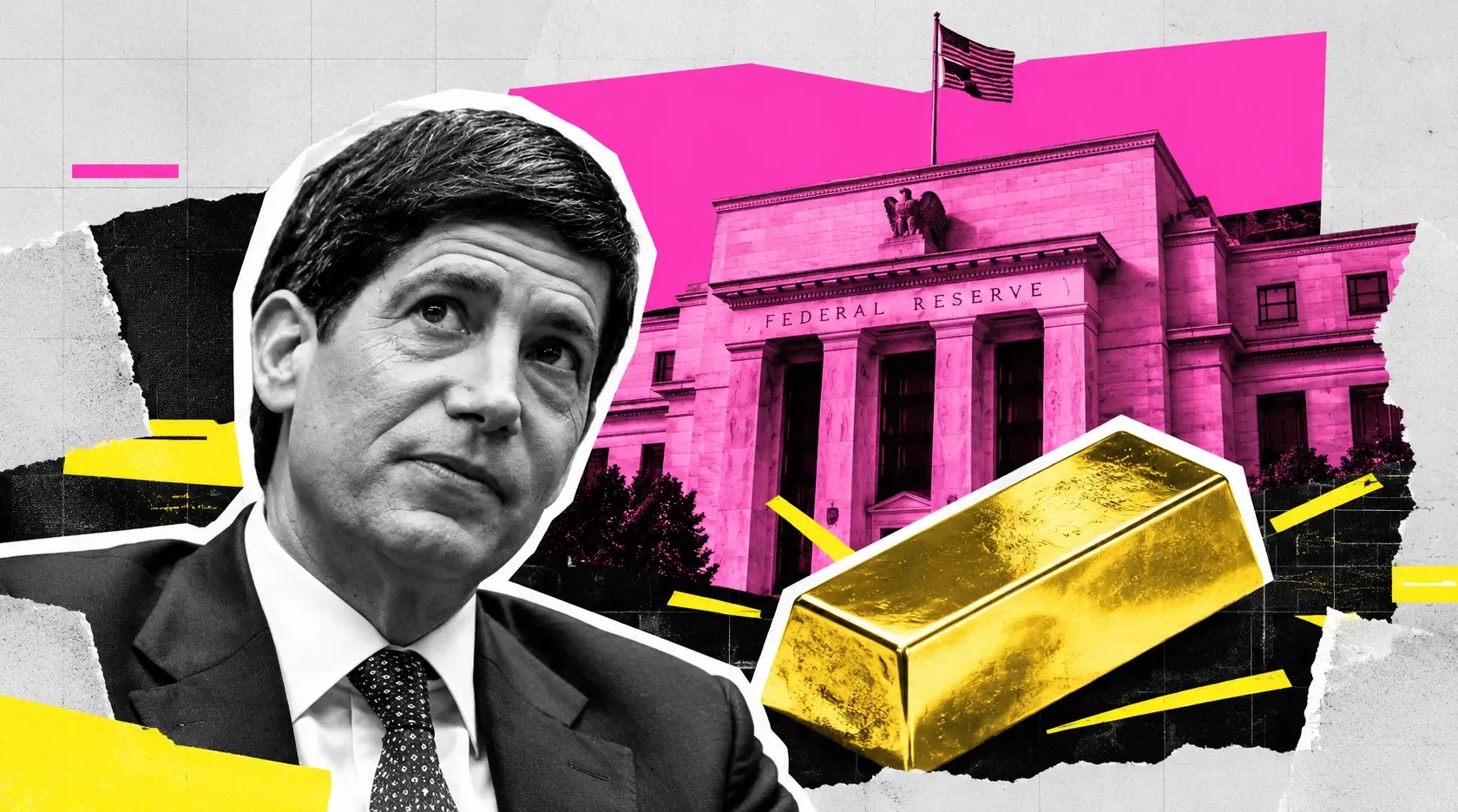
Kevin Warsh, 3.5%-3.75% Fed Funds Rate, and Why Oil at $84 May Not Stop the Rate Cuts Coming in 2026
The Federal Reserve dimension of the oil (WTI CL=F) price surge is the most counterintuitive element of the current market structure. A $10+ per barrel oil spike would, under a standard Fed reaction function, trigger pause language on rate cuts as energy-driven inflation threatens to push CPI back above 2%. Minneapolis Fed President Neel Kashkari said Tuesday he needs to see more data before making rate judgments. New York Fed President John Williams said he wants to see "how persistent this is." The bond market already moved: the 10-year Treasury yield jumped to a three-week high of 4.131%, extending the weekly rise to nearly 17 basis points. The two-year yield gained more than 18 basis points week-to-date to 3.564%. June rate cut probability collapsed from 46% one week ago to 34% Thursday per CME FedWatch. Fed funds futures now price just 40 basis points of total easing through year-end — less than two cuts.
But Kevin Warsh, Trump's official Fed chair nominee with nomination formally sent to the Senate Wednesday, operates from a fundamentally different inflation framework that makes oil price sensitivity almost irrelevant to his rate decision calculus. Warsh told Barron's that the Fed's "core theory of inflation is mistaken" — the institution's approach of fine-tuning supply and demand assessments to project price pressures has been proven wrong by the post-COVID inflation surge. His framework: "inflation comes about when the government spends too much and prints too much." Modest oil fluctuations don't register meaningfully in a monetary inflation theory. Warsh already stated rates should be below the current 3.5%-3.75% federal funds rate, Trump has been explicit that he chose Warsh specifically because of shared desire for lower rates, and Trump has called for rates at 1% or lower.
Powell's term expires May 15. If Warsh takes office in May or June — which is the expected timeline — he will almost certainly drive rate cuts regardless of Brent (BZ=F) sitting at $84. A $10 per barrel sustained oil increase adds at most 0.1 percentage points to core inflation per PGIM Fixed Income's Daleep Singh — not enough in Warsh's monetary theory framework to justify holding rates above where he believes the neutral rate sits. The practical implication for oil markets: lower rates under Warsh would stimulate demand and weaken the dollar simultaneously, creating a medium-term oil demand tailwind that partially offsets any supply normalization-driven price retreat.
The Airline Sector at the Epicenter — Wizz Air's $58 Million Hit, Jet Fuel at Singapore All-Time Highs, and the Route Rerouting Cost Explosion
The airline sector is absorbing the most direct and quantifiable damage from WTI (CL=F) at $78 and jet fuel prices hitting all-time highs in Singapore per S&P Global Platts. Wizz Air disclosed a $58 million profit impact from the conflict — sufficient to push full-year net profit below its prior guidance range of €25 million profit to €25 million loss. The airline's London-listed shares fell as much as 6% on the disclosure before partially recovering. Wizz Air CEO confirmed the financial hit should be limited to the fiscal year ending this month and announced capacity is being shifted toward European routes to minimize Middle East exposure.
The aviation disruption picture is geographically comprehensive: most Middle East airspace remains closed due to missile risk, Azerbaijan temporarily closed airspace near Iran after the Nakhchivan drone strike, and Dubai International — the world's busiest airport by international passengers — processed roughly double its Monday near-standstill volume on Wednesday but remains far below normal operations. Qatar Airways is running limited relief flights from Muscat, Oman to six European destinations including London, Berlin, and Rome. Over 17,500 Americans have been repatriated to the U.S. since February 28. An Emirates spokesperson confirmed more than 100 flights should depart Dubai Thursday and Friday — a recovery from near-zero but a fraction of normal daily operations.
The airline sector's route rerouting cost is the underappreciated secondary oil demand driver: carriers rerouting away from Middle East airspace are burning 10-20% more fuel per long-haul flight depending on the alternative routing, creating incremental jet fuel demand even as passenger volumes remain suppressed. Higher fuel consumption per flight combined with all-time high Singapore jet fuel prices is the structural profit compression that Kenny Ng at China Everbright Securities International correctly identified as "primarily short-term in nature" — with sustainability entirely dependent on conflict duration.
China Suspends Diesel and Gasoline Exports — The World's Largest Oil Importer Conserving Domestic Supply
China's National Development and Reform Commission directing the country's biggest oil refiners to immediately halt diesel and gasoline exports is a supply shock operating in the opposite direction from what WTI (CL=F) bulls typically want to see — it removes Chinese refined product supply from global markets while simultaneously signaling that Beijing expects crude supply disruption to be sustained rather than temporary. China's refining complex processes roughly 14-15 million barrels per day of crude — the world's largest refinery throughput concentration. When the NDRC calls refinery executives and orders an immediate export suspension, it is operating from intelligence about supply chain vulnerability that precedes public market data.
The practical impact: Asian energy markets lose Chinese diesel and gasoline supply exactly when the region most needs it due to disrupted Middle East flows. South Korean chip industry concerns about semiconductor manufacturing material supply disruptions — raised by ruling party lawmaker Kim Young-bae after meetings with Samsung Electronics and industry groups — add a dimension to the Iran conflict's economic impact that extends well beyond traditional energy cost inflation. South Korea supplies two-thirds of global memory chips. Higher energy costs for Samsung and SK Hynix — which rebounded 11.27% and 10.84% respectively Thursday after Wednesday's historic collapse — compress margins in an industry that runs energy-intensive semiconductor fabrication processes continuously.
Lebanon Bonds at Six-Year Highs, the Hezbollah Weakening Trade, and the Geopolitical Premium Structure That Keeps Brent Bid
Brent (BZ=F) at $84 is not purely a supply disruption price — it contains a geopolitical premium that reflects the market's assessment of conflict duration and escalation probability. That premium has a specific secondary market indicator: Lebanon's defaulted sovereign bonds scaling six-year highs, trading between 30.5 and 31.5 cents on the dollar, returning investors nearly 33% year-to-date and representing the best-performing emerging market debt instrument of 2026 despite the country being in active conflict proximity.
The logic is structurally coherent: a weakened Hezbollah — Iran's primary regional proxy — improves Lebanon's long-term governance outlook and reduces the probability of armed conflict recurring after the current engagement ends. Bruno Gennari at KNG Securities: "Weaker Iran/Hezbollah makes it easier to move on with disarmament and improves governability." Lebanon defaulted on $31 billion in outstanding international bonds in March 2020 during a financial crisis that destroyed its banking sector and cost the Lebanese pound 99% of its value. The bond rally is the market pricing in post-conflict reconstruction probability — and the same dynamic explains why oil is not trading at $100+ despite Hormuz paralysis. Traders are simultaneously buying the disruption premium and pricing in eventual de-escalation probability, producing $84 rather than triple digits.
Stephen Innes at SPI Asset Management identified the critical intelligence signal: "Iran's conventional military capacity is deteriorating quickly after huge naval losses and sustained airstrikes on missile-launching capabilities." If Iranian conventional military capability is genuinely degrading at the pace military intelligence suggests, the duration of Hormuz disruption at current intensity may be measured in weeks rather than months — which is precisely what Goldman Sachs' Q2 2026 average forecast of $76 Brent implies: significant disruption premium in March ($80s) followed by gradual normalization as Iranian military capacity diminishes through Q2.
Oil (WTI CL=F, Brent BZ=F) is a Hold at current levels with a cautious bullish bias toward $85-$90 Brent over a 2-4 week horizon, transitioning to a Sell above $90 on any escalation spike. The supply disruption is real and quantified — Hormuz paralysis, Qatar LNG force majeure, China export suspension, shipping rate explosion. Goldman's Q2 Brent target of $76 represents the 90-day mean reversion base case as Iranian military capability degrades. The $84 Thursday price already embeds significant premium above Goldman's Q2 forecast, suggesting the risk-reward at current levels is less attractive than it was when Brent was at $72.50 last Friday. Warsh's rate-cutting framework removes the Fed hawkishness headwind that would normally cap commodity prices during an inflationary oil spike, providing a medium-term demand support that makes the sell-off from conflict resolution shallower than prior geopolitical oil spikes. Stop on long positions: confirmed Hormuz reopening with verified tanker traffic normalization and Brent closing below $78.