Oil Price Forecast - Oil Prices Rebound as G7 Maritime Ban, WTI at $60, Brent at $63
Crude benchmarks climb with WTI (CL=F) at $60.08 and Brent (BZ=F) at $63.75, lifted by structural shifts in pricing and sanctions | That's TradingNEWS
Global Oil (WTI CL=F & Brent BZ=F) — Supply Risks Intensify as G7 Eyes Maritime Ban and Platts Redefines Pricing
Oil Prices Rebound Amid Structural Upheaval
Crude markets are showing renewed volatility as WTI (CL=F) trades near $60.08 (+0.69%) and Brent (BZ=F) hovers at $63.75 (+0.77%). Gains remain fragile after a turbulent week marked by structural changes in global pricing and logistics. The OPEC basket climbed to $63.24, while Louisiana Light and Bonny Light saw mixed movement — the latter dropping 2.84% to $78.62. Natural gas (NG=F) rose sharply to $5.289 (+4.46%), suggesting a shift in speculative capital across the energy complex.
Platts Redraws the Benchmark Map
Starting Dec 15, Platts will exclude all Russian-linked feedstock from its European benchmark assessments. This effectively erases barrels derived from Russian crude from the diesel and fuel price-setting process. The new rule requires an “implicit guarantee” that no Russian molecules are in the supply chain. The practical result is an artificial tightening of paper supply — benchmark-eligible volumes shrink, even though real-world flows continue via shadow networks. For European refiners, that means higher compliance premiums and greater price fragmentation between compliant and non-compliant barrels.
G7–EU Maritime Ban: Sanctions Enter New Phase
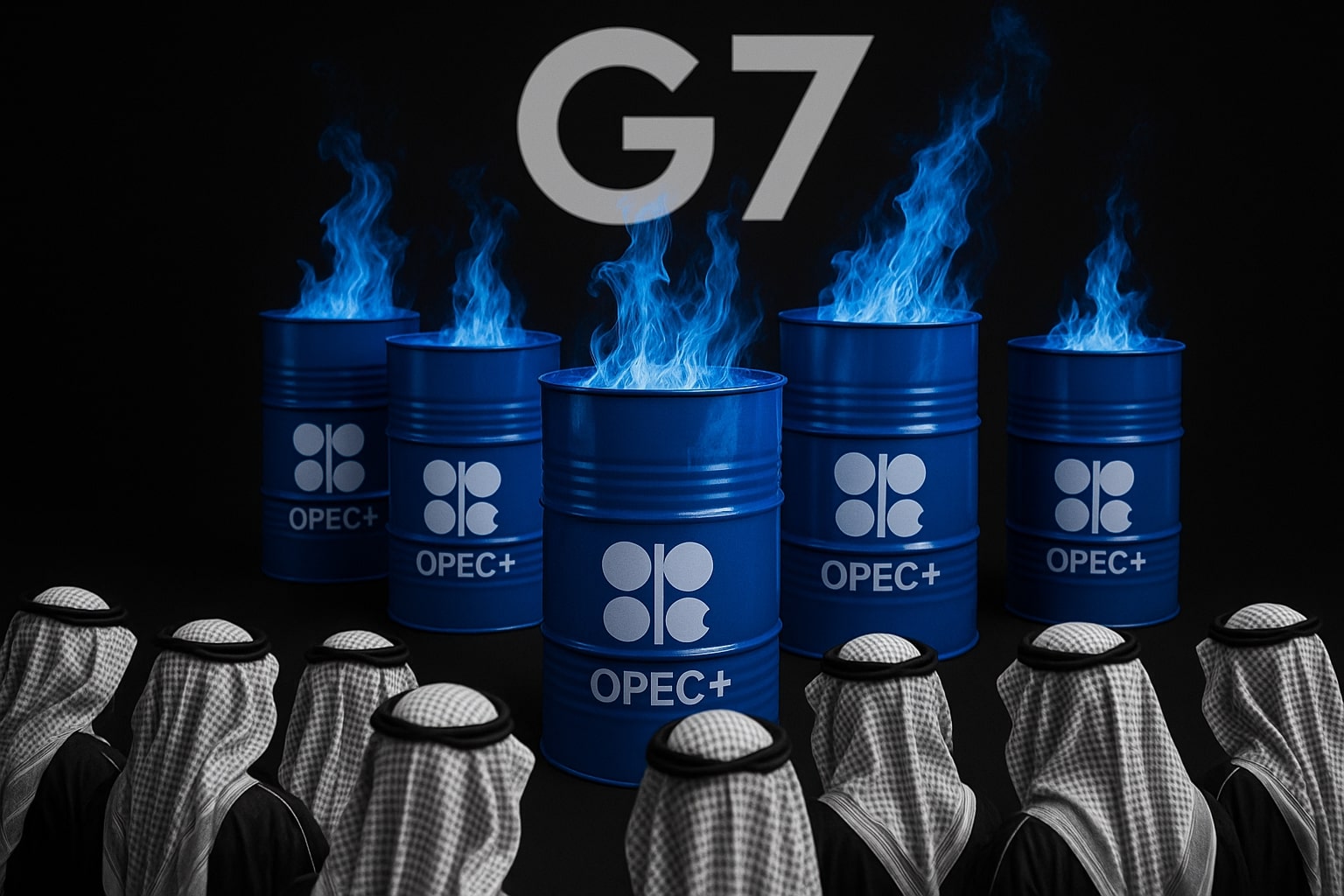
The G7 and European Union are preparing to replace the Russian oil price cap ($47.6 per barrel) with a full ban on maritime services for Russian crude. Roughly one-third of Russia’s exports currently rely on Western-flagged or insured vessels, primarily from Greece, Cyprus, and Malta. If enacted in early 2026, this would push even more trade into Russia’s “shadow fleet” — over 900 tankers operating without Western insurance and under opaque ownership. Sanctions would raise transport and insurance costs, reducing Russian margins and cutting effective export volumes.
OPEC+ Holds Output as Market Faces Dual Shocks
OPEC+ is maintaining current production levels after cumulative cuts exceeding 3.2 million bpd throughout 2025. The decision follows mounting uncertainty over supply chains and demand elasticity. U.S. rig activity rose modestly — up 6 to 413 rigs, though still 69 below 2024 — underscoring restrained shale recovery. With U.S. crude output near 13.8 million bpd, inventories remain broadly stable; yet, the restrained capital discipline across shale producers limits meaningful expansion through 2026.
Geopolitical Flashpoints and Freight Premiums
Attacks on Russian Black Sea ports and renewed tension in the Strait of Hormuz have kept freight premiums elevated. Tanker rates surged 467% year-on-year, particularly for Aframax and Suezmax segments. Simultaneously, U.S.–Venezuela friction threatens heavy crude availability, tightening blends like Mars US ($70.36, −1.35%). Each new flashpoint magnifies the pricing power of compliant OPEC exporters, especially Saudi Arabia and the UAE, whose spare capacity remains the world’s stabilizing buffer.
Read More
-
Yen Stalls at 160 Despite a 3% JGB and Tokyo Core CPI at 2.0% — Intervention Sits at 164, Friday's Payrolls Decide
02.09.2026 · TradingNEWS ArchiveEnergy
-
SPY Stalls Below Its Record As A 4.63% Earnings Yield Loses To A 4.74% Treasury
03.09.2026 · TradingNEWS ArchiveStocks
-
Bitwise Holds 286.8M XRP At A $480M Cost And $393M Of Value — The Category Bought Every Dip And Is Still Underwater
03.09.2026 · TradingNEWS ArchiveCrypto
-
Natural Gas Stalls Under $3 As Record 111.5 Bcf/d Production Absorbs Every Bullish Signal
03.09.2026 · TradingNEWS ArchiveCommodities
-
Dow 53,461, S&P 500 7,702 And Nasdaq 26,392 Climb On Waller's Dovish Turn — HOOD Explodes 14.9%
03.09.2026 · TradingNEWS ArchiveMarkets
-
Yen Rips Four Yen In A Session As Japan Takes Control Of The Dollar — Brent At $97.62 Could Not Stop It
03.09.2026 · TradingNEWS ArchiveForex
Demand Outlook and Macro Policy
Macroeconomic conditions remain pivotal. The anticipated Federal Reserve rate cut in Q1 2026 supports a rebound in risk appetite and energy demand. Still, China’s oil demand lags projections and may stay subdued until mid-2026. India’s import growth partially offsets that weakness, particularly in Russian and Middle-Eastern barrels. Meanwhile, Europe’s winter demand stays soft due to high inventories and mild weather, keeping total OECD consumption below pre-pandemic averages.
Technical Structure and Market Sentiment
Technically, WTI faces resistance at $62.80 and support around $58.50. Brent’s short-term resistance sits near $65.20, with $61.80 as key support. Momentum indicators show improving bias — RSI 54, ADX 31 — suggesting moderate bullish recovery but capped upside. The near-term trading corridor likely remains $58–$68, with volatility amplified by headlines on sanctions or OPEC+ decisions.
Long-Term Strategic Repricing
Platts’ exclusion of Russian feedstock fundamentally shifts European benchmarks toward tighter spreads. Combined with a possible maritime ban, the effective cost base for compliant diesel and jet fuel in Europe could rise 5–8% over the next two quarters. For Russia, deeper discounts (now $20–$25 below Brent) will erode revenues despite steady volumes.
Outlook & Rating: Moderate Buy (Short-Term Bullish Bias)
Oil’s current structure remains supply-driven, not demand-led. The market’s equilibrium price floor has risen; WTI likely holds above $58, and Brent consolidates between $63–$70 through early 2026. Structural tightening from sanctions, shipping constraints, and OPEC+ caution outweighs near-term demand weakness.
Verdict: Buy dips, target $68 WTI / $72 Brent by Q1 2026.
Macro risk remains high, but momentum and tightening benchmarks justify a short-term bullish stance.