Oil Price Forecast: WTI at $58.35 and Brent at $62.24 Test the Lower Range
With WTI near $58 and Brent around $62, markets weigh Venezuela and Russia tanker risks, weak rigs, tight diesel stocks and a looming 2026 oversupply before the next big move | That's TradingNEWS
Oil Prices (WTI CL=F, Brent BZ=F) Near the Bottom of a Brutal Year
From Five-Year Lows to a 6% Rebound in WTI and Brent
Front-month WTI crude CL=F trades around $58.35, marginally lower by 0.05%, while Brent BZ=F sits near $62.24, down about 0.22%. Murban trades close to $62.80, U.S. Louisiana Light is around $60.88 with a daily gain of 2.49%, Mars US changes hands near $70.06 with a 1.30% decline, and Bonny Light still commands a premium near $78.62. Refined products confirm a softer but important undercurrent, with gasoline near $1.747 per gallon and up modestly on the day, while U.S. natural gas weakens to about $4.242, down almost 3.8%. Since December 16, both WTI and Brent have recovered roughly 6% from levels described as almost five-year lows, but that bounce only brings WTI back to the high $50s and Brent to the low $60s, leaving both benchmarks deep in negative territory for the year. Brent is on track for about a 16% annual decline in 2025, while WTI is heading for roughly an 18% drop, the steepest annual falls since the 2020 COVID shock. This happens against a macro backdrop where U.S. GDP has posted its fastest growth pace in two years in the third quarter, driven by strong consumer spending and a recovery in exports, yet crude continues to be priced as if demand is fragile and the forward supply wave will dominate.
Diesel Tightness Exposes the Real Fragility Behind CL=F and BZ=F
The real stress point in the current oil complex is diesel, not the headline levels of CL=F and BZ=F. In the United States, distillate supply is running near 4.0 million barrels per day, close to the upper end of the post-pandemic range, while commercial distillate stocks hover around 110–115 million barrels into late December, clearly below normal early-winter levels. That leaves very little safety margin just as seasonal logistics demand peaks. Europe is more exposed, having lost Russian diesel flows and become structurally dependent on long-haul cargoes from the U.S. Gulf Coast, the Middle East, and India. Gasoil stocks in the Amsterdam–Rotterdam–Antwerp hub have struggled to rebuild to comfortable levels and December freight activity consistently erodes whatever buffer exists. Paper and physical markets are diverging, with European diesel cracks softening in November on mild weather and weak industry, while prompt physical premiums remain firm in several hubs. That combination signals that futures curves are reflecting macro narratives, whereas physical pricing is capturing a system that is tight and operating with minimal slack.
Christmas Logistics Lock In Non-Elastic Diesel Demand
The late-December window concentrates this stress. Freight intensity, parcel shipping, food distribution, and cold-chain logistics all peak precisely when distillate inventories are already being drawn seasonally. Diesel demand in this period is effectively non-elastic, because delivery contracts, retail restocking schedules, and reputational risk force networks to run at full capacity regardless of fuel costs. U.S. Gulf Coast refiners are often pushed above 90% utilization into late fourth quarter, optimizing yields toward distillates even when gasoline margins lag, which further reduces operational flexibility. Any disruption from weather, unplanned outages, or pipeline issues then bites harder because the system has little room to maneuver. Electrification has not removed this peak exposure, since cold weather degrades battery range, charging networks become congested under holiday stress, and payload limits matter when volumes surge, so even fleets with electric trucks still lean heavily on diesel during the Christmas period. In practice, the system defaults back to oil precisely when it is under the harshest test.
Middle East Shipping Risks and Tanker Attacks Feed the Brent Risk Premium
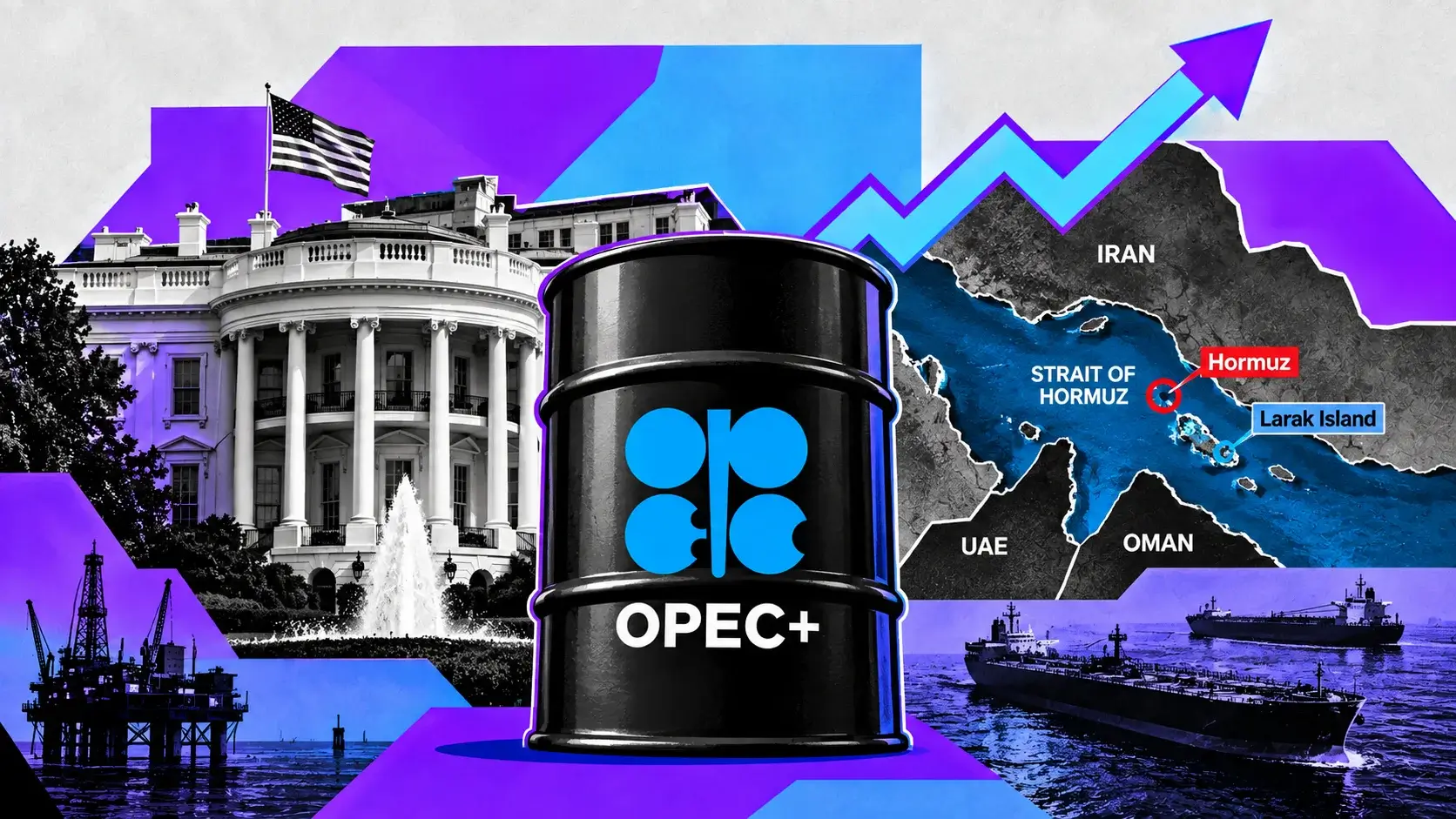
Beyond product tightness, BZ=F carries an embedded risk premium from shipping routes and tanker exposure. Reports of increased naval activity around key Middle Eastern maritime corridors used for oil and gas transit have already driven Brent higher by more than 2% on some sessions, as traders price the possibility of even limited disruption to flows through strategic choke points. At the same time, targeted actions elsewhere are constraining logistics, including tougher U.S. enforcement around Venezuelan oil tankers and seizures of vessels, Ukrainian drone strikes on at least 28 Russian refineries over three months, attacks on at least six tankers in the Baltic Sea, and new U.S. and EU sanctions on Russian oil companies, infrastructure, and shipping. Tanker analytics show crude stored on ships stationary for at least seven days falling about 7% week-on-week to roughly 107.15 million barrels, confirming that the floating storage buffer is shrinking. As that cushion diminishes, market sensitivity to further incidents rises and relatively small events can have outsized impact on freight costs, arrival schedules, and effective supply.
OPEC+, IEA and the 2026 Surplus Narrative Press Down on CL=F and BZ=F
Against that geopolitical and physical stress backdrop, the forward supply narrative is decisively heavy. The IEA projects a potential 4.0 million barrels per day global surplus in 2026 based on current project pipelines, efficiency gains, and expected demand trends. OPEC+ has been unwinding the 2.2 million barrels per day production cut implemented in early 2024, having already restored about 1.0 million barrels per day, with roughly 1.2 million barrels per day still available to bring back. In November, OPEC crude output was essentially stable, slipping only 10,000 barrels per day to around 29.09 million barrels per day, while the group agreed to a 137,000 barrels per day production increase in December followed by a pause in Q1 2026 to avoid amplifying the expected surplus. Outside OPEC, the United States continues to operate near record highs, with crude production around 13.843 million barrels per day, just below the recent 13.862 million barrels per day peak from early November, and the EIA has raised its 2025 output forecast to 13.59 million barrels per day from 13.53 million. OPEC’s own balances have flipped from an estimated third-quarter deficit of 400,000 barrels per day to a surplus of about 500,000 barrels per day as U.S. production beat expectations and OPEC quietly increased flows, reinforcing the bearish structural view even as spot conditions stay tight.
Inventory Patterns Show Tightness, Not a Classic Glut
Inventory data underline that the system today is not yet in a deep surplus. U.S. commercial crude stocks sit around 4.0% below their five-year seasonal average, gasoline inventories are only about 0.4% under the seasonal norm, and distillate stocks are roughly 5.7% below the five-year seasonal average. Those levels are consistent with a market that is tight but manageable, not one drowning in oversupply. The IEA surplus story is mainly about forward balance, not current stock levels. At the same time, the U.S. is exporting around 1.1–1.3 million barrels per day of distillate, acting as Europe’s marginal diesel supplier, and those cargoes keep loading through the holiday period. Any disruption in export chains, whether from fog in the Houston Ship Channel, Atlantic storms, or congestion in European ports, hits precisely when Europe has the least flexibility and the smallest inventory buffer. The result is that stress first shows up in local price spikes and delivery delays long before it appears in headline CL=F or BZ=F settlements.
Refinery Utilization, Exports and the Barrel-Level Picture
Refiners sit at the center of this tension between paper and physical markets. Distillate-heavy configurations, especially in the U.S. Gulf Coast, are effectively forced into high utilization through December in order to supply both domestic logistics and transatlantic diesel flows. Running above 90% utilization shrinks maintenance windows and operational slack and increases the sensitivity of the entire supply chain to any outage. At the same time, Baker Hughes rig data show the active U.S. oil rig count rising modestly to 409 from a 4.25-year low of 406 while still far below the 627 rigs operating in late 2022, which illustrates that the U.S. is sustaining record-high production with a leaner rig fleet. For now, efficiency gains and productivity improvements are offsetting the lower rig count, but this also means there is limited spare capacity in drilling if demand or prices rise sharply. The barrel-level picture is therefore one of high refinery utilization, constrained diesel inventories, steady crude draws relative to seasonal norms, and export commitments that lock in significant volumes irrespective of short-term price noise.
Macro Sentiment and Liquidity: Why $58–$62 Oil Misleads Casual Observers
Macro sentiment and market microstructure are amplifying the disconnect between fundamentals and quoted prices. U.S. growth running at the fastest pace in two years, driven by strong consumption and improved exports, would normally justify firmer pricing for WTI CL=F and Brent BZ=F, yet markets remain focused on the 2026 surplus and on the drag from higher interest rates and tighter financial conditions. Investors scarred by the 2020 demand collapse remain quick to price aggressive downside scenarios. End-of-year liquidity is thin, with fewer active participants in crude futures just as physical markets hit maximum stress around Christmas. That dynamic ensures that early warning signs emerge in regional spot premiums, freight rates, and logistics delays rather than in front-month futures. Observers who only look at WTI near $58.35 and Brent around $62.24 see a cheap, calm market; the underlying system is more fragile than those levels suggest.
Read More
-
Yen Stalls at 160 Despite a 3% JGB and Tokyo Core CPI at 2.0% — Intervention Sits at 164, Friday's Payrolls Decide
02.09.2026 · TradingNEWS ArchiveEnergy
-
VOO ETF at $705 as Record $13B Weekly Inflows Absorb the Rate Shock — $700 Floor Guards the Path to a New High
28.09.2026 · TradingNEWS ArchiveStocks
-
XRPR and XRPI Ride XRP's $1.50 Test as Bitwise Takes 78% of a $75.59M Week — October 1 Escrow and Bitget Hack Supply Cap the Upside
28.09.2026 · TradingNEWS ArchiveCrypto
-
Henry Hub ($3.11) Pulls Back From 13-Week High as 112.8 Bcf/d Output Meets Record LNG Pull — $3.10 Pivot Guards the Path to $3.529
28.09.2026 · TradingNEWS ArchiveCommodities
-
Dollar-Yen Trapped Between Carry and Intervention — 159.03 High Marks Where Tokyo Pushed Back Last Week
28.09.2026 · TradingNEWS ArchiveForex
Balancing Bullish and Bearish Forces for CL=F and BZ=F
Putting the data together, the short-term and medium-term forces on CL=F and BZ=F pull in opposite directions. Supportive elements include the sharp annual declines of about 18% for WTI and 16% for Brent, the fact that both benchmarks are trading near multi-year lows even as U.S. GDP accelerates, distillate inventories sit significantly below seasonal norms, Europe remains structurally short diesel after losing Russian supply, and shipping and geopolitical risks from Venezuela, Russia, Ukraine, and the Middle East keep the system vulnerable to disruption. On the restraining side, the IEA’s projected 4.0 million barrels per day surplus in 2026, the remaining 1.2 million barrels per day of OPEC+ cuts that can still be restored, U.S. crude output near record highs with upward-revised forecasts, and OPEC’s own shift from a deficit to a surplus in its Q3 balance all argue against a sustained, steep rally. The recent 6% bounce off the mid-December lows has already taken some of the extreme oversold pressure out of the market without resolving the structural bearish narrative.
Trading Stance on Oil, WTI CL=F and Brent BZ=F: Cautious Buy with a Bullish Bias
At current levels near $58.35 for WTI CL=F and $62.24 for Brent BZ=F, the evidence points more toward a floor-building zone than toward a fresh collapse. Distillate markets are tight, inventories are below five-year seasonal averages, geopolitical and shipping risks are persistent, and diesel-driven logistics demand is non-elastic through the holiday period. At the same time, the forward surplus story into 2026 appears already heavily priced into the strip after a year in which both crude benchmarks have fallen by mid-teens to high-teens percentages. On that basis, fresh aggressive short positioning at these levels is not justified by the balance of data. The more rational stance is a cautious buy or accumulation bias in Oil, WTI CL=F, and Brent BZ=F on weakness, with clear risk limits anchored around the mid-$50s in WTI, while acknowledging that any sustained move higher will be constrained by the credible prospect of future surplus and OPEC+ spare capacity.