Oil Price Forecast: Brent Rockets Past $102, WTI (CL=F) Clears $93 as Hormuz Standoff Overpowers Trump Ceasefire
Brent jumps 3.63% to $102.05, WTI rallies 4.26% as Iran seizes two ships; gasoline up 4.17%, heating oil surges 5.55% | That's TradingNEWS
Key Points
- Brent (BZ=F) Tops $102.05 — Crude jumps 3.63% as Iran's Revolutionary Guard seizes two container ships in the Strait of Hormuz.
- WTI (CL=F) Clears $93.41 — U.S. benchmark rallies 4.17% or $3.74; one-year gain now stands at 48.95% vs. $67.90 level.
- Trump Extends Iran Ceasefire Indefinitely — U.S. naval blockade of Iranian ports remains fully in force; Iran refuses to reopen Hormuz.
Crude prices are once again proving that diplomacy and deliverability operate on entirely different timelines. Brent crude (BZ=F, @LCO.1) cleared $100 for the second time this month and was last trading at $102.05 on the ICE tape with a 3.59%-3.63% single-session gain of $3.54-$3.57, while West Texas Intermediate (CL=F, @CL.1) stormed higher by 4.17%-4.26% to settle near $93.41, an advance of $3.74-$3.82 on the day. Fortune's live oil board printed Brent at $101.14 per barrel, a $4.82 jump from Tuesday's $96.32 print that works out to a 5.00% daily move. The reference frame is worth grounding: crude sat at $67.90 per barrel exactly one year ago, which means the current price represents a 48.95% year-over-year advance even as it trades 10.31% below the $112.77 level from one month ago. Murban crude led the regional complex, ripping 4.88% to $101.00 on a $4.70 daily gain, while the OPEC Basket dropped 1.87% to $97.74 and the Indian Basket added 2.63% to $103.10. The broader energy ecosystem moved in lockstep: gasoline (RB=F) climbed 4.17% to $3.344 per gallon, heating oil (HO=F) surged 5.55% to $3.936, natural gas (NG=F) added 1.63% to $2.741, and WTI Midland rose 2.64% to $95.25. The dispersion across these contracts tells the real story — refined products are outperforming crude on the session, which indicates the supply-chain stress is transmitting downstream into products rather than staying contained in the crude market. That's a bearish signal for end-consumer energy costs even if the crude itself consolidates near current levels in the next several sessions.
The Ceasefire That Failed to Calm the Tape — How Hormuz Vessel Seizures Undid Trump's Move
The proximate catalyst for Wednesday's reversal was not the ceasefire extension itself but what happened immediately afterward. President Donald Trump announced late Tuesday that the U.S.-Iran truce would extend indefinitely, with the U.S. continuing to blockade Iranian ports until Tehran presents a "unified proposal." Brent initially dipped to $97.60 per barrel in Asian trading on the ceasefire news, a typical relief-rally pattern. Then the wire services lit up: Iran's Revolutionary Guard claimed it had seized two container ships attempting to cross the Strait of Hormuz "without authorization" according to Tasnim news agency, and the crude complex reversed violently higher. Brent briefly tagged $100 before oscillating through the $100.66-$102.05 band for the rest of the session. The pattern is instructive — the market was clearly long-positioned for de-escalation into the announcement, and when the physical reality in the Strait contradicted the diplomatic signal, the unwind was abrupt. Vice President JD Vance canceled his Islamabad trip after Iran declined to participate in talks, Iran has not formally accepted the extension, and the naval blockade of Iranian ports remains fully in force. Russ Mould of AJ Bell framed the market read cleanly: above $100 per barrel is "alarm bell territory" and even with prices slightly retracing, the tape "still tells a story of distress in global energy markets." That's the honest read — this is not a market that has priced resolution; it's a market stuck between two binary outcomes with asymmetric downside if the next escalation materializes.
The $430 Million Well-Timed Short Bet — The Fourth Suspicious Oil Trade of the Iran War
One of the most remarkable data points across the entire Iran-war trading cycle emerged Tuesday evening in ways that demand explicit attention. Between 7:54 p.m. and 7:56 p.m. GMT — exactly 15 minutes before Trump's Truth Social post at 8:10 p.m. announcing the indefinite ceasefire extension — anonymous traders dumped 4,260 lots of selling into the Brent market worth a combined $430 million at prevailing futures prices. The trades executed during post-settlement hours, when trading volumes are normally extremely thin, and prices nudged from $100.91 to $100.66 on the flow before Trump's announcement drove Brent to an intraday low of $96.83 in the minute that followed. This is the fourth time this specific pattern has played out during the Iran conflict, and the cumulative size is striking: on March 23, $500 million in short positioning hit 15 minutes before Trump delayed attacks on Iranian power infrastructure; on April 7, $950 million in bets went through hours before the original two-week ceasefire announcement; on April 17, $760 million landed 20 minutes before Iran's foreign minister posted on social media about Hormuz reopening to commercial shipping. April's well-timed short positioning alone totals approximately $2.1 billion. The U.S. is actively investigating these trades as of April 15, and the sequencing implies that someone with either extraordinary market intuition or privileged information access has been systematically front-running major policy pivots throughout the conflict. The ICE spokesperson declined comment. Whether the investigation produces enforcement action remains unresolved, but the pattern itself is now part of how the crude market trades — sophisticated participants are watching for pre-announcement flow anomalies as a leading indicator of imminent diplomatic shifts.
Hormuz Is Now Functionally Closed — The 20% of Global Supply Trapped Behind the Standoff
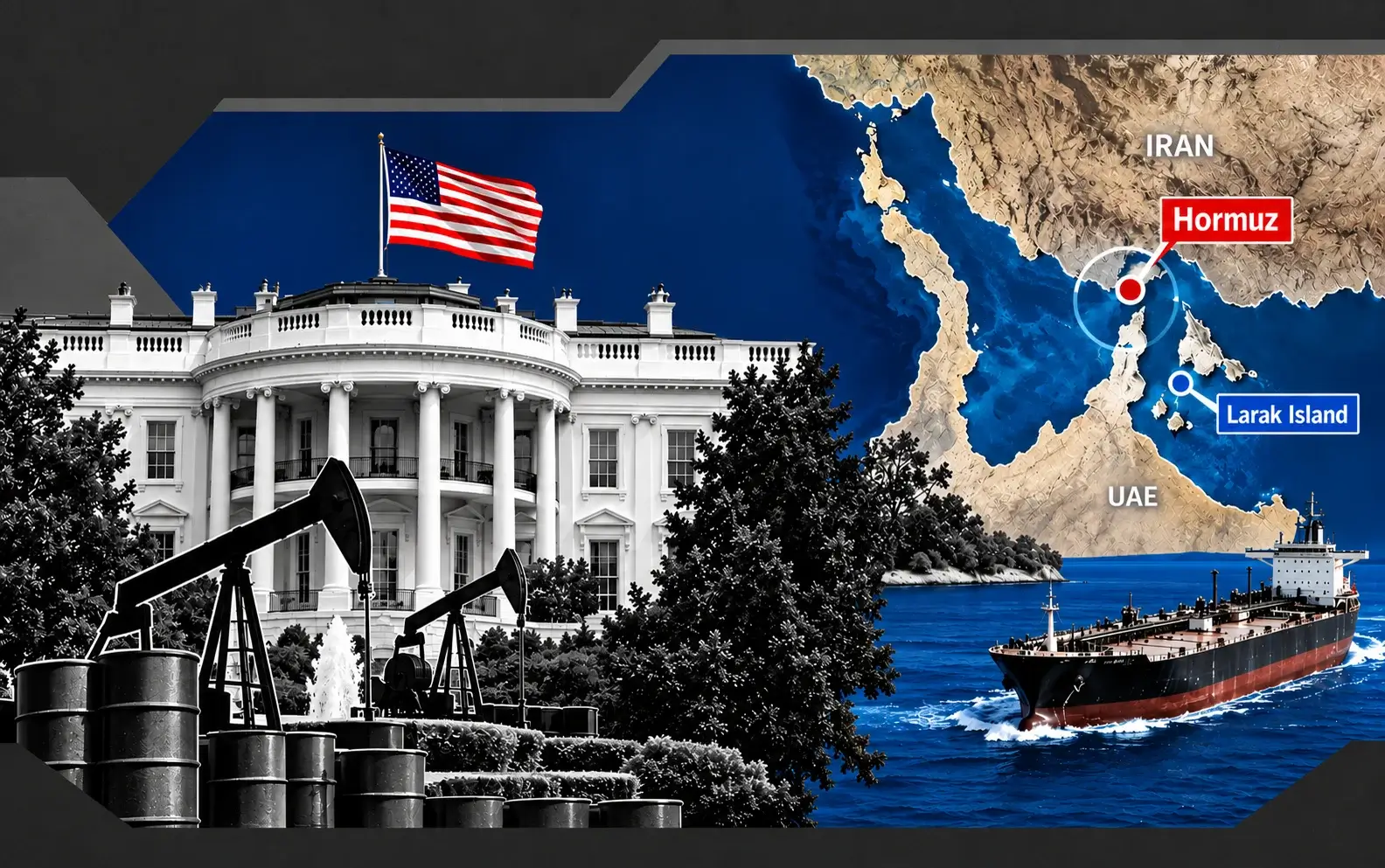
The Strait of Hormuz normally carries roughly one-fifth of global oil flows, and right now the chokepoint is functionally closed to commercial shipping. Iran has refused to reopen the waterway as long as the U.S. naval blockade of Iranian ports remains active, and the U.S. has refused to lift the blockade as long as Tehran declines to negotiate seriously. The result is a physical impasse that no amount of diplomatic language can dissolve. The International Energy Agency declared earlier this week that Hormuz has lost its status as a "reliable energy route," a formal assessment that marks a substantive reframing of how global energy security planners treat the chokepoint. More than 30 nations led by the UK and France are assembling a military push to reopen the Strait — a response scale that signals the international community no longer believes diplomatic mechanisms alone will restore flows. Tanker tests through the zone continue periodically, but the broader traffic remains paralyzed. Global oil inventories are drifting toward record lows as a direct consequence, and the IEA's inventory tracking indicates that the strategic buffers are thinning at pace that can't continue indefinitely without a physical resolution. The market pricing at $102 Brent reflects perhaps 60%-70% of the full geopolitical risk premium that would emerge if the Hormuz disruption extends through the summer driving season — meaning the upside skew from here is real if the standoff drags and the downside is bounded by how quickly any physical reopening actually unlocks flows.
The Refined Products Cascade — Gasoline at $3.34, Jet Fuel Pressure, and the Airline Flight Cuts
The stress is bleeding downstream into refined products at an accelerating pace. Gasoline futures rose 4.17% to $3.344 per gallon and heating oil jumped 5.55% to $3.936, outpacing crude on a percentage basis and confirming that refiners are struggling to pass through input costs fast enough to keep margins whole. Retail gas prices at the U.S. pump recently dipped below $4 per gallon but the "rockets and feathers" pattern — prices rising sharply on oil spikes and declining only gradually on oil retreats — means consumers are unlikely to see meaningful relief at the pump even if crude consolidates. The jet fuel dimension is where the damage is most visible. Lufthansa just announced cancellations of 20,000 summer flights due to surging fuel costs, the latest European carrier to cut capacity in response to energy input shocks. Air Canada has scrapped key U.S. routes. Long-haul flight fares across Europe are soaring as the Iran war directly hits aviation cost structures. The mechanism is simple and unforgiving: jet fuel represents roughly 30%-plus of airline operating costs, and every $10 move higher in crude compresses full-year airline EPS across the sector. The Strategic Petroleum Reserve remains a tool of last resort but was not designed to absorb prolonged supply disruptions of this scale — it can provide immediate support for consumers and ensure critical sectors like emergency services and public transportation keep operating, but it is not a permanent fix. Trump is reportedly weighing an extension of the Jones Act waiver to ease fuel prices on East Coast and Gulf Coast logistics, a policy lever that would relieve some domestic pricing pressure but would not address the underlying Hormuz supply issue.
The Supply-Side Pressure Points — Inventory Drawdowns, Druzhba Restart, and Kazakh Suspension
Beneath the geopolitical headlines sits a set of supply-side dynamics that independently support higher crude pricing regardless of how the Iran situation resolves. U.S. crude oil and oil product inventories have been falling sharply — the Reuters/EIA data shows inventories "crashing down" through the latest reporting window, which removes one of the typical circuit-breakers on upside price acceleration. Global inventories are drifting toward record lows simultaneously. Norway is pumping near capacity with its spare output buffer essentially gone, meaning there's no slack in the European supply side to offset Hormuz disruption. The Druzhba pipeline restart today between Russia and Germany restores Russian crude flows into Europe after the January damage, which modestly adds to supply — but that relief is partially offset by Russia's planned May 1 suspension of Kazakh oil flows through Druzhba, citing technical constraints. Kazakh flows via Druzhba into Germany had been averaging 43,000 barrels per day in 2025, up 44% from the prior year, so losing that incremental supply matters on the margin. China's oil giants are beginning to sell crude as refinery cuts deepen, a pattern that normally relieves pricing pressure globally but is being offset by rising Chinese buying activity set to return after recent stockpile drawdowns. Iran's covert oil trade persists despite the U.S. blockade — an additional 500,000-1,000,000 barrels per day in grey-market volumes that is partially substituting for sanctioned flows but not fully closing the physical gap. U.S. crude oil exports are set to hit a record high, which paradoxically is supportive for global prices because it tightens the domestic supply-demand balance even as it provides external flows.
OPEC Politics and Indian Demand — The Shifting Balance of Global Consumption
The OPEC Basket traded at $97.74 on Wednesday, actually declining 1.87% on the session even as Brent and WTI rallied — a dispersion that reflects OPEC's internal pricing mechanics and member-country sales strategies rather than broad geopolitical stress. The Indian Basket printed at $103.10 for a 2.63% gain, reflecting India's specific exposure to Middle East supply routes and premium pricing for Asian delivery versus Atlantic Basin delivery. India's crude imports have sunk despite record Russian oil buying — a pattern that shows the country is actively diversifying sources but hasn't found replacement volumes adequate to fully offset disruptions. Pakistan is paying a record premium for fuel imports, reflecting its particularly vulnerable position in the current supply architecture and providing part of the context for Islamabad's aggressive diplomatic push for U.S.-Iran de-escalation. Kuwait has declared force majeure following the U.S. seizure of Iranian vessels, a legal posture that signals the disruption is being classified as operationally unmanageable rather than merely inconvenient. The world's biggest physical oil trader — likely a reference to Vitol, Trafigura, or Glencore — has publicly warned of months of price volatility ahead, a rare instance of a major physical player calling the market openly rather than simply positioning around the outlook.
The Front-Month Futures Architecture — Contango, Backwardation, and What the Curve Is Signaling
The futures curve structure is worth examining because it reveals positioning that spot prices alone don't capture. The June 2026 ICE Brent contract settled at $102.05, up $3.57 or 3.63%, after trading as high as the $103 area intraday. Front-month positioning has tilted decisively toward backwardation — where nearer-dated contracts trade at premiums to further-dated ones — which mechanically signals that the market is pricing immediate supply scarcity rather than longer-duration oversupply concerns. Backwardation historically correlates with bull-market positioning and with periods when physical buyers are willing to pay up for prompt delivery rather than waiting for deferred barrels. The structural implication: commodity trading advisors and systematic futures funds that position on curve shape are likely adding long exposure, which reinforces the bid under the market independently of directional news flow. Any meaningful shift back to contango — futures trading above spot in a term structure — would be one of the first signals that the current stress episode is resolving, and traders should watch the front-month-vs-second-month spread closely for that transition.
The Technical Setup — $97.60 Support, $102-$105 Resistance, and the Path to $110
Mapping the levels that define the current trade produces a clean framework. Immediate support on Brent (BZ=F) stacks at $100 (the psychological line and the intraday pivot during Wednesday's session), $99.20 (where Brent traded at 1200 GMT on Wednesday following the Tuesday close), $97.60 (the Asian session low following the ceasefire news), $96.83 (the post-announcement Tuesday low), and $96.32 (Tuesday morning print). On the upside, resistance clusters at $102.05 (current session high), $103 (intraday resistance tested and rejected Wednesday), $105 (next significant technical barrier from prior price structure), $110 (a meaningful psychological level from earlier in the Iran war cycle), and ultimately the $112.77 level printed one month ago. WTI (CL=F) support sits at $91.81 (earlier Wednesday low), $91 (the prior consolidation zone), $90, and $89.07 (referenced in recent Asian trading levels). WTI resistance stacks at $93.41 (current), $95.25 (WTI Midland reference), $97, and ultimately $100. The technical setup favors continuation higher as long as Brent holds $97.60 and WTI holds $89 on any retracement — a break below those levels would signal that the Iran situation is genuinely resolving and that the entire risk premium is unwinding. Neither level has been seriously tested yet, which is itself a signal that the market remains positioned for further stress rather than rapid normalization.
Read More
-
Yen Stalls at 160 Despite a 3% JGB and Tokyo Core CPI at 2.0% — Intervention Sits at 164, Friday's Payrolls Decide
02.09.2026 · TradingNEWS ArchiveEnergy
-
CHAT Fund Holds $96.37 as Korean Memory and Chip Exposure Drive a 109.73% Year — Break of $98.02 Opens $105.20
18.09.2026 · TradingNEWS ArchiveStocks
-
First-Generation XRPR and XRPI Ride XRP's Rebound to $1.386 as Spot Funds Post First Outflow — Break of $1.40 Opens $1.54
18.09.2026 · TradingNEWS ArchiveCrypto
-
NG Holds $2.9255 as Storage Surplus Narrows From 5.5% to 3.7% in 3 Weeks — Break of $3.00 Opens $3.15
18.09.2026 · TradingNEWS ArchiveCommodities
-
Dollar Surges to 157.90 as BoJ's Divided Hike Fails to Lift the Yen — Break of 158.87 Opens 159
18.09.2026 · TradingNEWS ArchiveForex
The Energy Stock Read-Through — Upstream Majors as the Cleanest Play
The crude pricing environment is creating clear winners and losers across the energy equity complex. Upstream integrated majors with Permian and Gulf of Mexico weighting — Exxon Mobil (XOM), Chevron (CVX), ConocoPhillips (COP), Occidental Petroleum (OXY) — capture the full benefit of elevated crude pricing with minimal exposure to Hormuz-specific operational risk. Refiners face a more complicated picture because crack spreads can compress if crude outruns product pricing, though the current dynamic where refined products are outperforming crude is actually supportive of refining margins short-term. Halliburton's CEO recently described U.S. oil in the "early innings of a rebound," a framing that aligns with the broader sentiment among service-sector operators watching capex decisions get pulled forward rather than deferred. Russia's Japex announced plans to quadruple oil and gas production with U.S. expansion aspirations, which confirms the global producer response is asymmetric — Western majors are positioned to capitalize on the disruption while sanctioned-state producers face structural ceilings on how much they can actually deliver to market. The airline trade works in exactly the opposite direction: Lufthansa's 20,000 flight cuts, Air Canada's U.S. route scrapping, and the broader jet fuel cost pressure argue for explicit underweights across the commercial aviation sector.
Global Inventory Stress and the Strategic Petroleum Reserve Calculus
The inventory picture sitting underneath current pricing is arguably the single most important indicator most traders are underweighting. Global oil inventories are drifting toward record lows, removing the traditional buffer that has historically capped oil price spikes during geopolitical events. The U.S. Strategic Petroleum Reserve remains available as an emergency tool — designed to provide immediate support during disasters including sanctions, storm damage, or war — but releases from the SPR are politically fraught and provide only temporary relief rather than structural supply solutions. The SPR's primary purpose is to safeguard energy security for critical industries, emergency services, public transportation, and strategic functions; it is not designed to subsidize consumer pricing during prolonged conflicts. Trump's consideration of a Jones Act waiver extension is the more likely near-term policy lever because it operates at the logistics layer rather than the supply layer — easing domestic transportation constraints rather than releasing physical barrels. The SPR release option remains in reserve, and any announcement of a meaningful release would likely produce a short-term $3-$5 downside move in Brent as positioning unwinds, providing a high-probability short-term fade trade for participants watching for that policy signal. Until such a release is announced, the inventory trajectory argues unambiguously for higher rather than lower crude pricing.
The Houthi, Red Sea, and Broader Regional Risk Expansion
The risk perimeter beyond Hormuz is expanding in ways worth tracking explicitly. The Houthis have threatened to block Red Sea oil exports as the Iran war escalates — a second-chokepoint risk that would compound Hormuz disruption if it materialized. Sanctioned Iranian VLCC tankers are crossing what had been effective blockade lines, testing U.S. naval enforcement capabilities. Ukraine's strike on the Novokuibyshevsk refinery halted oil processing, which remains part of the broader Russian-supply disruption that continues to pressure European pricing. Iran's covert oil trade is persisting despite the blockade, which complicates the enforcement picture. The multi-dimensional nature of the current stress — Hormuz physical blockade plus Russian supply constraints plus Ukrainian infrastructure strikes plus Houthi threats to Red Sea flows — means crude pricing reflects a genuinely stacked risk premium rather than a single-factor geopolitical event. Any resolution of one dimension does not fully unwind the pricing, because the remaining risk factors independently support elevated levels. This is substantively different from prior single-event geopolitical spikes where resolution of the specific trigger produced rapid pricing normalization.
The Trade Verdict on Oil — Position Architecture Across Every Time Horizon
The trade recommendation structure lays out cleanly by time horizon with specific entry zones, exit targets, and risk parameters. Near-term across the next three to seven sessions: buy Brent (BZ=F) on any retrace toward $98-$100 with stops below $96.80, targeting $105 on the first exit and $110 on the second. Buy WTI (CL=F) on pullbacks to $90-$91 with stops below $89, targeting $97 and $100 as primary exit levels. The probability distribution favors continuation higher into month-end given the Hormuz physical reality. Medium-term across one to three months: overweight the integrated oil majors complex — XOM, CVX, COP, OXY — on any equity weakness triggered by broader market volatility. These names offer the cleanest risk-adjusted exposure to sustained crude elevation because they benefit from higher realized pricing without carrying direct Hormuz operational exposure. Avoid refiners selectively (watch crack-spread dynamics closely), underweight commercial airlines aggressively given the jet fuel cost transmission, and consider selective long exposure to oilfield services operators (HAL, SLB, BKR) as drilling activity responds to sustained price elevation. Long-term across six to twelve months: the bias remains bullish but with position sizing that respects reversal risk. A genuine U.S.-Iran diplomatic breakthrough that restores Hormuz flows produces a $15-$25 per barrel downside move in Brent within weeks, so long positions should carry defined stops and profit-taking discipline rather than pure buy-and-hold exposure. Risks to respect across all horizons: SPR release announcements trigger short-term $3-$5 downside moves, a clean ceasefire with verifiable proposal produces $10-$15 downside unwinds, global recession fears could compress demand expectations meaningfully if U.S. jobless claims deteriorate, and any surprise inventory build reported through the EIA weekly data would temporarily pressure the tape. The operative trade is to respect the elevated volatility regime that physical oil traders have publicly warned about, size positions accordingly, and treat the $97.60 Brent and $89 WTI levels as the technical stops that define whether the current bullish thesis remains intact. Until those levels break decisively, the path of least resistance on crude is higher, and the upside asymmetry against controlled downside risk makes the setup attractive for disciplined long exposure through the remainder of April and into the May 1 Kazakh supply suspension event.