S&P 500 Climbs to 7,629, Nasdaq Adds 207 Points, Dow Rips 510 as Oil Breaks $100 and LITE Drops 10%
Crude’s $6.54 collapse and a 55.5 ISM print drove a Dow-led rebound that recovered 89% of Friday’s loss | That's TradingNEWS
Key Points
- The Dow jumped 510 points to 52,280, recovering 89% of Friday’s 572-point loss, while the Nasdaq won back 28%.
- WTI crude fell $6.54, or 6.28%, to $97.58 as Iran and Qatar held a third day of Hormuz talks in Doha.
- Lumentum dropped 10% and Marvell 4% on a $115 billion all-stock deal valued at $1,132 per Lumentum share.
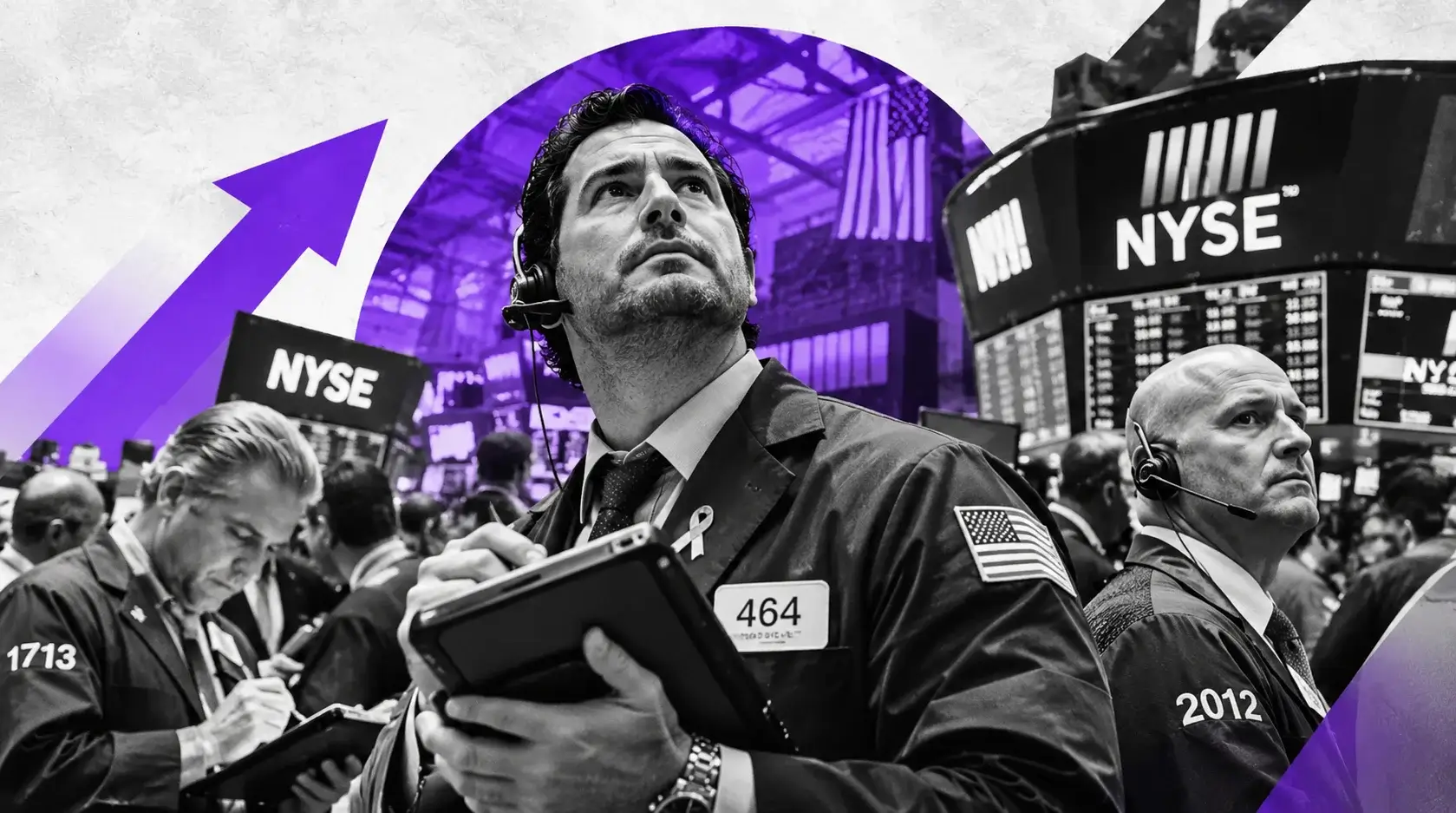
The first hour of November trading delivered a bounce, but not an even one. The Dow Jones Industrial Average traded at 52,280.49 shortly after 10:00 a.m. ET, up 510.18 points or 0.99%. The S&P 500 sat at 7,629.17, up 49.10 points or 0.65%. The Nasdaq Composite changed hands at 25,644.58, up 207.58 points or 0.82%, and the Russell 2000 added 13.72 points, or 0.49%, to 2,825.56. The order of those gains is the story of the morning. The blue-chip index carried the tape, the S&P 500 followed, and the tech-heavy Nasdaq, which took the worst of Friday’s beating, recovered the smallest share of its losses.
Run the recovery math against Friday’s close. The Dow dropped 572.25 points on Friday and has already won back 89% of that in one hour. The S&P 500 lost 140.32 points on Friday and has recovered 35%. The Nasdaq shed 747.73 points on Friday and has clawed back just 28%. Money is coming back to the market, but it is coming back to industrials, financials and defensives faster than to the AI complex that caused the damage.
The premarket built in layers. Futures opened Sunday at 6:00 p.m. ET with S&P 500 contracts up 0.2% and Dow futures up 103 points. By 5:38 a.m. ET, Nasdaq 100 futures were up 0.84%, the S&P 500 contract was up 0.51% and Dow futures were up 0.55%. The bid thinned around 8:00 a.m., when S&P 500 futures were only 0.33% higher, then firmed again as crude kept sliding. At 9:10 a.m., S&P 500 futures stood at 7,652.50, up 0.51%, Dow futures at 52,244, up 326 points, Nasdaq 100 futures at 28,771.75, up 0.83%, and Russell 2000 futures at 2,842.20, up 0.74%.
The ETF tape matched the futures. The SPDR S&P 500 ETF traded at $759.31 before the bell, up 0.48%. The Invesco QQQ Trust traded at $696.59, up 0.88%, and the SPDR Dow Jones Industrial Average ETF traded at $519.34, up 0.43%.
At the 9:30 a.m. bell, the S&P 500 rose 0.5%, the Nasdaq climbed 0.7% and the Dow added 405 points, or 0.8%. Within 40 minutes the Dow had stretched the gain past 500 points, while the Nasdaq held a narrow range between 0.7% and 0.8%. That gap is the single most useful read on the morning: buyers are paying up for cyclicals tied to cheaper oil faster than they are paying up for the AI names that broke on Friday.
Friday’s Damage and October’s Scorecard: The Hole This Bounce Is Climbing Out Of
The context for Monday’s bid is the worst single session for the Nasdaq since June 5. On Friday, October 30, the Nasdaq Composite fell 747.73 points, or 2.86%, to 25,437.00, its lowest close in at least three months. The S&P 500 dropped 140.32 points, or 1.82%, to 7,580.07. The Dow lost 572.25 points, or 1.09%, to 51,770.31, and the Russell 2000 gave up 1.66%. The Nasdaq 100 took the hardest hit, falling 3.46%. At its intraday low, the Nasdaq 100 sat 10% below its October 6 record, technically in correction, before closing 9.1% below that peak.
The weekly numbers were less dramatic but more persistent. The S&P 500 fell 0.58% for the week, the Nasdaq dropped 2% and the Dow slid 0.85%. That was the third straight weekly decline for both the S&P 500 and the Nasdaq, the longest losing streak since March. The Russell 2000 was the outlier, finishing the week up 1.29% despite Friday’s drop, an early sign that the selling was concentrated in mega-cap technology rather than spread across the market.
October as a whole drew a sharp line between the AI trade and everything else. The Nasdaq lost 5.3% for the month, its steepest monthly decline since March 2025. The S&P 500 fell 0.9%. The Dow gained 1.7%, carried by a rotation into healthcare and other defensive groups. The Nasdaq 100 alone lost more than $2.5 trillion in market value during the month, and AI-linked stocks shed a combined $5 trillion from their peaks.
Index levels show where the market stands against its highs. The S&P 500 set an all-time high of 7,844.67 in October. Friday’s close left it 3.4% below that mark, and Monday’s 7,629 print trims the gap to 2.7%. The Nasdaq Composite ended Friday 8% below its recent high. The Philadelphia Semiconductor Index fell more than 7% in Friday’s session alone. Volatility moved up but never panicked: the VIX closed Friday at 19.42, well short of the 25 to 30 range that marks real stress.
History offers mixed guidance on a drop this size. Across 54 prior cases since 2007 in which the Nasdaq fell 2.9% over a 20-session stretch, the index was higher 20 sessions later in 36 of them, a 67% hit rate, with a median gain of 3.9%. That is a supportive base rate, not a guarantee, and it says nothing about the specific trigger this time: a collapse in confidence that AI capital spending will earn its return.
Monday’s 207-point Nasdaq gain covers a fraction of Friday’s 748-point loss. Until the index reclaims 26,000, which would require another 1.4% from the morning’s level, the bounce remains a relief rally inside a correction.
Crude Oil Rolls Over: WTI Breaks $100, Brent Slides to $106 as Doha Talks Enter Day Three
Crude oil is doing more work for this tape than any earnings report. December WTI futures traded at $97.58 before the open, down $6.54 or 6.28% from Friday’s $104.12 settlement, and held below $98 through the first hour. Brent fell to the $106 handle after trading at $108.30 earlier in the session, down 4.49% at that point, from a Friday settlement above $113. The move erased a large slice of October’s rally, during which crude gained 15% and Brent finished the month at its highest level in six months.
The trigger is diplomacy, not demand. Iranian and Qatari officials held a third straight day of talks in Doha on a proposal to end the U.S.-Israeli war with Iran and reopen the Strait of Hormuz. Tehran has said Hormuz could reopen within 48 hours if Washington meets its conditions: sanctions relief, restored oil waivers, a reduced U.S. military presence in the region and recognition of new shipping routes. A draft proposal is circulating and a follow-up meeting is possible. The White House signaled patience over the weekend, with the president saying he preferred to give diplomacy more time before any renewed strikes, and the secretary of state saying the administration wants to resolve the conflict through negotiation.
The risk has not left the water. At least 10 attacks on shipping have been reported across the Gulf region since October 31, including a tanker hit by two projectiles in the northern Gulf off Saudi Arabia. Iran’s foreign minister said Sunday the talks had not yet produced an agreement, and no direct meeting between Iranian and U.S. officials is scheduled. The market is pricing the probability of a deal, not the deal itself, and that makes the $97 WTI level fragile.
Supply policy is static for now. OPEC+ left its December output targets unchanged and meets again on November 29. Official forecasts frame the gap between today’s price and where analysts expect crude to settle. The U.S. Energy Information Administration’s October outlook projects Brent averaging $105 in the fourth quarter of 2026 and $83.74 in 2027. At $106, Brent sits on top of the agency’s fourth-quarter estimate; a signed Hormuz agreement would argue for a fast move toward the 2027 path.
For equities, the transmission runs through inflation and rates. Oil and Treasury yields moved in tight correlation for most of 2026, a relationship that broke down in October when AI fears took over. A sustained break below $100 WTI pulls input costs lower across manufacturing, airlines, chemicals and consumer goods, and it relieves pressure on a Federal Reserve that held its benchmark rate at 3.75% to 4.00% on October 28 with two voters dissenting in favor of a hike. Cheaper oil gives the market a way to rally without needing the AI trade to lead, which is exactly the pattern the Dow’s outperformance shows.
Energy Stocks Roll Over as Crude Gets Smoked: Exxon, Chevron, Cheniere and APA Trade Lower
The flip side of a 6% oil drop showed up instantly in energy equities. ExxonMobil fell 1.2% before the open and Chevron slid by a similar margin as crude broke below $100. Cheniere Energy, the largest U.S. LNG exporter, dropped 2.81% as investors weighed the possibility that a Middle East settlement would ease the global gas premium that has supported LNG pricing since the conflict began. APA traded at $51.65 in the premarket, down 2.22% from its $52.82 close. Refiners also dipped as the market priced lower crack-spread volatility if Gulf shipping normalizes.
The sector sell-off stands out against how strong energy had been. Energy and financial stocks were on pace for solid October gains even as the Nasdaq slumped, because the oil rally fed directly into upstream cash flows. Monday’s reversal is the first real test of how much of that move was war premium. With WTI down $6.54 in one session, investors are trimming positions built on the assumption that Hormuz disruptions would last into 2027.
Two energy names report after today’s close and will give the sector a direct read. Diamondback Energy, carrying a $59.39 billion market cap, is expected to post earnings of $5.46 per share on $4.68 billion in revenue. Williams Companies, a $90.94 billion pipeline operator, is expected to report $0.54 per share on $3 billion in revenue. Diamondback’s capital spending guidance matters more than its third-quarter print. If management signals production growth at $100 crude, the market will treat that as a hedge against a peace deal; if the company holds spending flat, it confirms that producers never trusted the war premium.
The inflation channel is what ties energy to the rest of the tape. Manufacturing input costs have run hot all year because of crude. The Institute for Supply Management’s prices index sat above 70 for eight straight months through September and registered 77.9 that month, close to the 78.3 reading in March when the Iran war began. Every $10 drop in crude feeds through to lower prices paid with a lag of one to two months, which is why today’s oil move and today’s manufacturing data have to be read together.
The setup for energy bulls is a binary one. A failed round of talks or another tanker strike sends crude back above $104 and these stocks snap back. A signed agreement that reopens Hormuz within the 48-hour window Tehran described would push WTI toward the low $90s, and energy equities would have more downside to price. For now, the sector is the clearest loser of the session, and its weakness is helping fund the rotation into industrials and consumer names that benefit from cheaper fuel.
Read More
-
Yen Stalls at 160 Despite a 3% JGB and Tokyo Core CPI at 2.0% — Intervention Sits at 164, Friday's Payrolls Decide
02.09.2026 · TradingNEWS ArchiveEnergy
-
Nvidia ($206.86) Trades at 13.1x FY2028 EPS as Hyperscaler Capex Heads Toward $1T — Path to $221.75 Opens Before Nov. 17
02.11.2026 · TradingNEWS ArchiveStocks
-
XRP-USD ($1.2566) Coils in a 2-Cent Range as $293M of Unfreezable Stolen XRP Moves — Path to $1.366 Opens Above $1.28
02.11.2026 · TradingNEWS ArchiveCrypto
-
WTI ($97) Breaks $100 as Brent ($106) Gives Back $7 of War Premium — Range Holds Between $93 and $104
02.11.2026 · TradingNEWS ArchiveCommodities
-
IVV ETF ($775.65) Holds $881B in Assets as AI Cash Flow Drain Splits Megacaps — Range $765 to $782
28.10.2026 · TradingNEWS ArchiveMarkets
-
GBP/USD (1.3423) Presses 200-Day Resistance as UK CPI at 3.5% Locks in First BoE Hike Since 2023 — Path to 1.3550 Opens Above 1.3475
02.11.2026 · TradingNEWS ArchiveForex
Treasury Yields and the VIX: 10-Year at 4.906%, Curve Flattens, Volatility Drops Below 19
The bond market is reacting to cheaper oil more cautiously than equities. The 10-year Treasury yield fell 2 basis points to 4.906% early Monday, and the 30-year yield eased 3 basis points to 5.273%. The 2-year yield moved the other way, rising 2 basis points to 4.598%. That leaves the 2-year to 10-year spread at 31 basis points and the 2-year to 30-year spread at 68 basis points, both narrower than Friday’s close.
The divergence at the short end says something specific. Long-dated Treasurys are pricing lower inflation from a potential oil collapse, which pulls term premium down. The 2-year, which tracks Federal Reserve expectations most closely, is not buying the idea that cheaper crude will push the central bank toward cuts. With the policy rate at 3.75% to 4.00% and two officials having dissented in favor of a hike on October 28, short-rate traders see no reason to price easing until inflation data confirm the oil effect.
Inflation remains elevated enough to justify that caution. The consumer price index rose 3.4% from a year earlier in August, including a 0.4% gain that month alone. Manufacturing prices paid hit 77.9 in September. A 4.9% 10-year yield with 3.4% inflation leaves real yields positive but not restrictive by historical standards, and that is part of why equity valuations have room to hold.
Treasurys rallied on Friday as equities sold off, a classic flight to safety that pushed yields lower into the weekend. Monday’s move is an extension of that rally at the long end rather than a fresh driver. The calendar adds pressure later in the week. On Wednesday, the Treasury will announce its planned auction sizes for notes and bonds in its quarterly refunding. The midterm results on Tuesday will feed directly into those expectations, because a shift in congressional control changes the outlook for fiscal policy, borrowing and deficit financing.
Volatility is retreating with the bounce. The VIX traded at 18.67 shortly after 10:00 a.m., down 0.75 points or 3.86% from Friday’s 19.42 close. Ahead of the open, it sat at 19.08. A VIX in the high teens heading into a midterm election, an Apple earnings report and a jobs report is a measured reading. Options traders are pricing the election as routine, and the volatility surface shows no event premium large enough to suggest positioning for a shock.
Midterm years historically carry more volatility than other years, with median annualized readings near 16% against 13% in non-election years since 1970. The current VIX level is consistent with that elevated baseline, not a departure from it. If Apple disappoints after the close, the VIX is likely to retest 20; if the election and earnings both pass cleanly, the path toward 16 opens up by Friday.
ISM Manufacturing Prints 55.5: Factory Growth Accelerates as Prices Paid Falls to 75.2
The 10:00 a.m. data gave bulls a second leg to stand on. The ISM Manufacturing PMI for October registered 55.5, up a full point from 54.5 in September and above the 54.6 to 54.7 consensus range. The reading marks a tenth straight month of expansion in U.S. factory activity, extending the longest growth streak since 2022.
The internals were stronger than the headline. Production jumped to 59.0 from 56.7. New orders rose to 55.5 from 55.3, ahead of the 54.9 forecast. Inventories climbed 2.8 points to 51.4 and returned to expansion from 48.6. Supplier deliveries ticked up to 59.1 from 59.0, which still signals slow delivery times tied to supply-chain strain. The backlog of orders index eased to 54.6 from 56.4, and employment slipped to 52.4 from 52.7, but held above the 52 consensus estimate.
The inflation reading is the part that matters for rates and the oil story. The prices index fell 2.7 points to 75.2 from 77.9, below the 77.5 forecast. That is still the 25th straight month of rising raw-material prices, and 53.1% of respondents reported paying more in October, down from 58.6% in September. No industry reported paying lower prices. Five of the six largest manufacturing industries reported price increases: machinery, computer and electronic products, chemical products, transportation equipment, and food, beverage and tobacco products.
Put the two numbers together and the October survey says demand is accelerating while cost pressure is easing at the margin. That combination is exactly what equities want. Production at 59.0 confirms factories are running hard, and a 2.7-point drop in prices paid before Monday’s oil collapse even registers suggests November could show a larger decline if WTI holds under $100. Any prices reading above 52.8 has historically matched rising producer prices for intermediate materials, so the inflation pipeline remains open, but its pressure is falling.
Global factory data lined up with the U.S. print. The eurozone manufacturing PMI came in at 52.7 for October, slightly below September’s four-year high of 52.9 but above the 52.4 forecast. South Korea was the weak spot, with its PMI dropping to 51.3 from 53.9, the softest reading since February, as new export orders slowed and automotive demand eased.
For the session, ISM gives the Dow’s lead a fundamental basis. Industrial and materials names respond directly to a 55.5 reading with a 59.0 production index. The data also complicates the bear case on the broader economy built around Friday’s tech sell-off: whatever is happening to AI valuations, the physical economy is expanding at its fastest pace in months.
Marvell Bets $115 Billion on Lumentum, and the Market Sells Both Stocks
The biggest corporate headline of the morning produced the strangest price action. Marvell Technology announced a definitive agreement to acquire Lumentum in an all-stock deal that gives Lumentum an implied enterprise value of $115 billion. Lumentum holders will receive a fixed 4.500 Marvell shares for each Lumentum share, a ratio the companies valued at $1,132 per share and a 23.9% premium to the unaffected closing prices on October 28, the last session before deal speculation began. Marvell holders will own 67% of the combined company and Lumentum holders 33% on a fully diluted basis. Both boards approved the deal unanimously, and the transaction is expected to close in the first half of 2028.
The strategic case is built on AI optics. The companies put the combined addressable market at $550 billion, project more than $1 billion in annual run-rate cost synergies and expect the deal to add to Marvell’s non-GAAP earnings per share in the first year after closing. It is the largest merger between two publicly traded companies on record and Marvell’s biggest purchase since its $10 billion takeover of Inphi in 2021. Marvell grew annual revenue from $3 billion in fiscal 2021 to $8.2 billion in fiscal 2026.
Lumentum reported first-quarter fiscal 2027 results alongside the deal: adjusted earnings of $4.57 per share on revenue of $1.26 billion, ahead of estimates. Second-quarter guidance calls for revenue of $1.575 billion to $1.625 billion, adjusted earnings of $5.90 to $6.20 per share and an adjusted operating margin of 45% to 46%.
The tape rejected the deal anyway. Lumentum traded at $861.40 early in the premarket, up 2.5%, and Marvell at $197.80, up 0.7%. Both reversed. Lumentum slid to $788.51, down 6%, then extended losses to 10%, while Marvell dropped more than 4%. The problem is the deal currency. At $197.80, 4.5 Marvell shares were worth $890, already 21% below the $1,132 headline value. As Marvell kept falling, the stock consideration shrank to $866, and Lumentum traded 8% below even that figure at $796.53.
That spread is the market’s verdict on three risks at once: doubts about Marvell stock as currency after a 120% year-to-date run, an antitrust review of an AI hardware combination of this size, and an 18-month path to closing. Lumentum had already fallen 8.57% on Friday in the semiconductor rout and is still up more than 100% this year.
Peers moved the other way. Coherent jumped 3.77% and traded as much as 6% higher before the open, with investors betting the deal crystallizes value for the remaining independent optical player. Coherent reports earnings Wednesday. Ciena gained 5.1% in the premarket on the same logic.
Intel’s 28.6% Crash and the AI Capex Hangover: Where the Bid Came Back and Where It Didn’t
Friday’s sell-off had a clear epicenter, and it has not healed. Intel fell 28.6% on Friday to close at $65.76 from $92.07, its worst single-day decline since 1974. The company guided fourth-quarter revenue to $15 billion to $16 billion against expectations of $17.1 billion, a $1.6 billion shortfall at the midpoint, and adjusted earnings of $0.25 per share against estimates of $0.43. Management blamed a sluggish PC market, high memory prices and an extended outage at a fabrication plant, and said the slowdown should last at least through the first half of 2027. Third-quarter revenue rose 21% to $16.5 billion, but the guide wiped out the beat. Intel’s October decline reached 45%, the worst in the S&P 500 for the month.
There was no bounce on Monday. Intel traded at $64.74 before the open, down another 1.55%, after a downgrade to neutral with a reset target.
The rest of the AI trade suffered collateral damage on Friday. AMD fell 8.6%, Arista Networks lost 8.34%, and the Philadelphia Semiconductor Index dropped more than 7%. The selling came on top of a punishing earnings week for mega-cap tech. Alphabet fell 13% after missing on both revenue and profit, with management acknowledging that AI is cutting into search monetization. Amazon dropped 5.6% after a double miss, with trailing 12-month free cash flow falling to negative $42.4 billion even as Amazon Web Services grew 39%. The common thread is capital spending running ahead of cash generation.
Monday’s bid showed up selectively. Memory names led the rebound: Micron, SanDisk and Western Digital each climbed 2% before the open as traders moved back into AI hardware tied to direct demand. Optical networking caught a sympathy bid from the Marvell deal through Coherent and Ciena. CrowdStrike gained 3.4% on an upgrade to buy, pulling Palo Alto Networks up 2% in sympathy. Rivian rose 3.8% on an upgrade that framed its sell-off as an entry point ahead of the R2 midsize SUV ramp.
The difference between those winners and Intel says where conviction sits. Investors are willing to buy AI exposure with clear near-term revenue: memory, optics, cybersecurity. They are not yet willing to buy companies where AI spending has outrun earnings visibility. AMD reports Tuesday and becomes the next test of whether chipmakers can restore that confidence.
The Nasdaq’s 0.82% gain is the right size for this mood. It is enough to show buyers are back, not enough to reverse a 5.3% monthly loss. Until a mega-cap earnings report changes the capital spending story, the AI trade will rally in pockets rather than as a block.
SpaceX Targets the Wireless Market: EchoStar Rips, T-Mobile Gets Hit
A telecom shake-up added a second deal-driven theme to the session. SpaceX is in talks to acquire EchoStar’s Boost Mobile wireless service or secure access to the network infrastructure Boost leases from AT&T and T-Mobile, according to reports published Monday. SpaceX has also held talks with EchoStar on launching its own branded wireless service through a partnership. The goal is a hybrid satellite-terrestrial mobile network through Starlink Mobile, combining the company’s satellite constellation with ground-based capacity to challenge Verizon, AT&T and T-Mobile in a U.S. wireless market valued at $235 billion.
The reports said Verizon, AT&T and T-Mobile had rejected earlier requests from SpaceX to use their networks, which is why Boost became the target. Telecom stocks have been under pressure since SpaceX struck an $8 billion spectrum deal, as investors began pricing a satellite-powered fourth competitor into a sector that had settled into a three-player structure.
EchoStar ripped 6.31% before the open and traded at $102.50 in the premarket, giving the company a market value of $28.19 billion. The move prices a high probability that SpaceX either buys Boost outright or pays for network access on terms that make the asset more valuable than EchoStar’s stand-alone wireless business.
T-Mobile took the hit on the other side. The stock fell 3.16% to $151.50 before the open, reversing part of Friday’s 6.21% gain. T-Mobile is down 20.21% over six months as the competitive threat from SpaceX has grown. A satellite entrant does not need to match incumbent coverage to pressure pricing; it needs to offer a credible alternative in rural markets and backup connectivity, where incumbents charge premium rates.
SpaceX shares rose 1.33% to $136.51 in early trading and extended the gain to 2.8% before the bell. The stock went public at $135 on June 12 and hit a record $225.64 on June 16, which leaves it 40% below that peak even after Monday’s move. The wireless plan represents a new revenue line beyond launch services and Starlink broadband, and it gives investors a growth story that does not rely on the AI capital spending cycle that sank the Nasdaq on Friday.
The broader read is that the tape is rewarding companies with a defined deal path today. EchoStar, Coherent and Ciena are all trading on specific transactions or sympathy plays, while the incumbent targets of disruption, T-Mobile on wireless and Lumentum on deal terms, are bleeding.
Earnings Before the Bell: IDEXX Snaps Higher, Estée Lauder Raises, Check Point Gets Smoked
The morning earnings slate produced clear winners and clear losers, and the reactions were outsized in both directions.
IDEXX Laboratories delivered the biggest large-cap beat. The veterinary diagnostics company reported third-quarter revenue of $1.214 billion, up 10% on both a reported and organic basis, against a $1.19 billion consensus. Earnings came in at $4.01 per diluted share, up 18% as reported and 22% on a comparable basis, against estimates of $3.71. Companion Animal Group revenue grew 11%, helped by a strong quarter of diagnostic imaging installations, and recurring diagnostics revenue grew 11%. The company raised its 2026 revenue guidance to $4.741 billion to $4.767 billion, up $32 million at the midpoint. IDEXX traded 8.47% higher at 9:00 a.m. ET, on a market value of $43.42 billion. The rally is a sharp turn for a stock that had fallen 7% since its prior report on worries that veterinary visit declines would drag on testing volume.
Estée Lauder confirmed its turnaround. The beauty company earned an adjusted $0.72 per share on revenue of $3.72 billion for its fiscal first quarter, well above the $0.52 consensus and the $3.65 billion revenue estimate, and raised its annual sales and profit forecasts on demand for premium skincare and fragrance ahead of the holiday season. The prior fiscal 2027 outlook called for $3.10 to $3.35 per share. Shares rose 2.53% to $111.99 in the premarket and briefly climbed 3.5%, pushing the stock past its post-earnings high of $109.35 from the prior quarter.
Tempus AI rose 3.16% to $74.50 after its third-quarter report. EVgo jumped 44% to $1.82 on a buyout proposal, and Inovio Pharmaceuticals rocketed 239% to $2.04 on 52.2 million shares of premarket volume.
The losers paid heavily for small disappointments. Check Point Software dropped 6.3% after third-quarter revenue missed estimates, a harsh reaction in a cybersecurity group that was otherwise bid on Monday. Axsome Therapeutics fell 5.14% despite beating third-quarter estimates, as investors focused on a slower-than-expected commercial rollout of its central nervous system therapy Auvelity and several price targets were cut.
The pattern across all of them is consistent with how the market treated mega-cap tech last week. Investors are not rewarding beats in isolation. They are rewarding raised guidance, as IDEXX and Estée Lauder delivered, and punishing anything that weakens the forward picture, even when the reported quarter is clean, as Axsome found out. That standard will apply in full to the two reports due after today’s close.
Apple and Palantir After the Close: The Two Prints That Set Tuesday’s Open
Two reports after the 4:00 p.m. bell will decide whether Monday’s bounce survives into election day.
Apple reports fiscal fourth-quarter results with consensus calling for earnings of $2.00 per share on revenue of $113.46 billion, against $1.85 per share and $102.46 billion a year earlier. That implies revenue growth of 10.7% and earnings growth of 8.1%. It is the first earnings call under CEO John Ternus, who took over from Tim Cook on September 1. The iPhone 18 Pro is in the numbers, but the new iPhone Duo went up for preorder October 16 and on sale October 23, after the quarter closed, so its contribution will come through guidance and management commentary. The stock slipped 1% to 1.2% in the premarket on a $5.03 trillion market value.
Apple’s role in this market has changed. On the 46 days in 2026 when the Philadelphia Semiconductor Index fell 2% or more, Apple rose on 30 of them, two out of every three. From 1994 through 2025, it rose on one in six of those days. Apple’s correlation with the chip index turned negative in July and hit a record low in September. The company that stayed out of the AI spending race has become the market’s hedge against it. Strong results and upbeat guidance would stabilize the Nasdaq because Apple carries the heaviest index weight with the least AI capital spending risk. A weak guide would remove the one mega-cap that has held up through the October rout.
Palantir reports third-quarter results with management’s own guidance calling for revenue of $2.160 billion to $2.164 billion and adjusted operating income of $1.292 billion to $1.296 billion. Full-year 2026 revenue guidance stands at $8.150 billion to $8.158 billion, with adjusted free cash flow of $4.5 billion to $4.7 billion. Second-quarter revenue rose 93% to $1.94 billion, with U.S. commercial revenue up 149%. The stock rose 1.3% in the premarket to $184.56, on a market value of $442.43 billion. Consensus for the quarter sits at $0.41 to $0.42 per share, above the company’s own implied guide, which means Palantir has to beat its forecast, not just meet it.
The rest of the week stacks more AI tests on top. AMD, Qualcomm, Arm Holdings, Super Micro Computer and IonQ all report, along with Uber, McDonald’s, Pfizer, Amgen, ConocoPhillips and Block. ON Semiconductor, Roku, Lattice Semiconductor, Vertex Pharmaceuticals, Realty Income and Marriott report today. Third-quarter S&P 500 earnings were on pace for 31.6% growth as of October 30, a strong backdrop that the market has largely ignored while debating AI returns.
Midterm Elections and Friday’s Payrolls: 93% House Odds, 71% Senate Odds and a 65,000 Jobs Bar
Tuesday’s midterm elections are the biggest political event on the calendar, and the market has already priced most of the outcome. All 435 House seats and 35 Senate seats are on the ballot, 33 regular races plus special elections in Ohio and Florida. Republicans hold 218 House seats and 53 Senate seats. Democrats need a net gain of three House seats and four Senate seats for control.
Prediction-market pricing as of November 1 put Democratic odds of winning the House at 93.3% and the Senate at 71%. Broader contracts priced a Democratic sweep of both chambers in the high 60s to low 70s and a Republican sweep in single digits. Investor surveys show 96% expect a Democratic House. The Senate is where the uncertainty sits, with key races in Texas, Michigan, Maine, Ohio, Iowa, South Carolina and Kansas likely to decide control.
The market math centers on divided government. A Democratic Congress with a Republican president limits major legislation in either direction, which historically reduces policy risk premiums. A Democratic sweep raises the probability of tighter scrutiny on three sectors that drew bipartisan criticism during the campaign: pharmaceuticals, housing and AI data centers. Those are the groups most exposed to election-night repricing. Spending proposals from the incoming majority would also feed directly into Treasury supply expectations ahead of Wednesday’s refunding announcement.
The historical pattern after midterms is supportive. Since 1974, the S&P 500 has been higher three months after a midterm election in 11 of 13 cycles, with an average gain of 5.7%. Six months after, it has been higher in all 13 cycles, with an average gain of 12.4%. The mechanism is the removal of uncertainty, not the result itself. Options pricing confirms traders see the vote as routine: no event premium is visible in the VIX at 18.67.
Friday brings the second macro test of the week. The October jobs report lands at 8:30 a.m. ET on November 6, with consensus calling for a gain of 65,000 payrolls after September’s 29,000. Unemployment stood at 4.2% in September. A print near 65,000 confirms a low-hire labor market that keeps wage pressure contained, which fits the ISM employment index easing to 52.4. A miss below 30,000 would revive growth fears that today’s 55.5 ISM reading pushed aside. A blowout above 120,000 would push the 2-year yield higher and strengthen the case for the officials who voted for a hike in October.
The sequence matters. Apple and Palantir tonight, the vote count Tuesday night, AMD on Tuesday, refunding on Wednesday and payrolls on Friday give the market five separate chances to confirm or reject Monday’s bounce.
Gold, Silver, Bitcoin and Global Markets: Metals Rebound, Crypto Shrugs Off a $6.4 Billion Hack
Precious metals joined the relief bid after a brutal week. Gold futures traded at $3,954.60 before the U.S. open, up $55.70 or 1.43%, after breaking below $4,000 last week for the first time in a year during a wave of forced liquidations. Silver futures climbed 1.85% to $50.19 an ounce. Gold’s rebound with stocks, rather than against them, says the metal’s sell-off last week was driven by margin calls and deleveraging rather than a change in the safe-haven case. A reclaim of $4,000 would confirm the washout is complete.
Crypto is absorbing the largest theft in its history with less damage than expected. Binance suffered a $6.4 billion exploit late last week, attributed by the FBI to North Korean hackers. Net withdrawals from the exchange reached $4.7 billion by Monday morning in London, less than 4% of the $128 billion in assets held on the platform. Binance restored withdrawals on Sunday after a freeze, worked with stablecoin issuers to lock almost half of the stolen funds, and said it had secured 95% of the total needed to cover losses in full. Bitcoin traded at $77,813 before the U.S. open, down 0.14%, after dropping to $76,000 when the hack first hit. The token is holding the $76,000 to $78,000 range, which keeps the crypto-equity complex stable heading into the election.
Asian markets set a mixed tone overnight. South Korea’s Kospi jumped 2.2% to 5,859.08, rebounding from an October in which it lost more than 16%. Japan’s Nikkei 225 slipped 0.3% to 63,081.86 after a 7% monthly decline, and Australia’s S&P/ASX 200 fell 0.6% to 8,856.50. The Hang Seng rose 98 points to 23,393, and the Shanghai Composite added 39 points to 3,638 after China’s central bank injected 541 billion yuan through overnight repo operations and called a meeting with regulators and major banks on expanding a relending program for share buybacks. The CSI 300 had just logged its worst month in more than a decade.
In Europe, Germany’s DAX rose 93 points to 25,912, supported by a eurozone manufacturing PMI of 52.7 that beat the 52.4 forecast. The global picture lines up with the U.S. session: a broad relief bounce led by markets that fell hardest in October, with cheaper oil and policy support doing more work than any change in the AI outlook.
The cross-asset read is consistent. Stocks up, long bonds up, oil down, gold up and the VIX down all point to falling inflation risk rather than a surge in growth expectations.
Session Verdict: Bullish Bounce on Cheap Oil, With the AI Trade Still on Probation
The first hour of November trading is bullish on the scoreboard and conditional underneath it. The Dow’s 510-point gain to 52,280 recovered 89% of Friday’s loss. The S&P 500’s 0.65% move to 7,629 recovered 35% of Friday’s drop and trimmed the distance from its 7,844.67 record to 2.7%. The Nasdaq’s 0.82% gain to 25,644 recovered just 28% of a 748-point Friday collapse and leaves the index 1.4% below the 26,000 level that would signal real repair. The Russell 2000’s 0.49% gain shows participation, but not the small-cap surge that marks a full risk-on reset.
The engine is crude oil. WTI’s 6% drop below $100 and Brent’s slide to $106 on Doha diplomacy pulled the 10-year yield down to 4.906%, sent the VIX to 18.67 and gave cyclicals and industrials a reason to lead. The October ISM print at 55.5, with production at 59.0 and prices paid down to 75.2, added fundamental support to that rotation. Energy is the session’s clear loser, with Exxon, Chevron, Cheniere and APA all trading lower.
The AI complex is not leading the rebound. Intel is still falling after its worst day since 1974. Marvell and Lumentum both sold off on a record $115 billion deal because the market does not trust the stock currency. The buying in tech is narrow: memory, optical peers, cybersecurity and specific deal stories like EchoStar, not a broad repricing of the mega-caps that broke on Friday.
Breadth tells the same story. Leadership is coming from a mix of sectors that benefit from cheaper energy and steady manufacturing demand, and from names with defined catalysts like IDEXX’s raised guidance and Estée Lauder’s beat. That is broader participation than Friday’s narrow AI liquidation, but it is not a market voting with confidence on the growth story that drove the S&P 500 to its October highs.
The verdict for the session so far is bullish, built on oil relief and manufacturing data rather than on technology leadership. The bounce becomes durable only if three things hold in sequence: Apple’s guidance tonight protects the Nasdaq’s largest weight, the midterm count delivers the divided Congress already priced at 93% House and 71% Senate odds without a surprise, and Friday’s payrolls land near the 65,000 consensus. If Apple misses or crude snaps back above $104 on a failed Doha round, Monday’s 510-point Dow gain becomes the high of a relief rally inside a correction. If all three pass, the midterm-year pattern of gains in all 13 cycles since 1974 over the following six months has a clean runway to start working by the end of the week.