
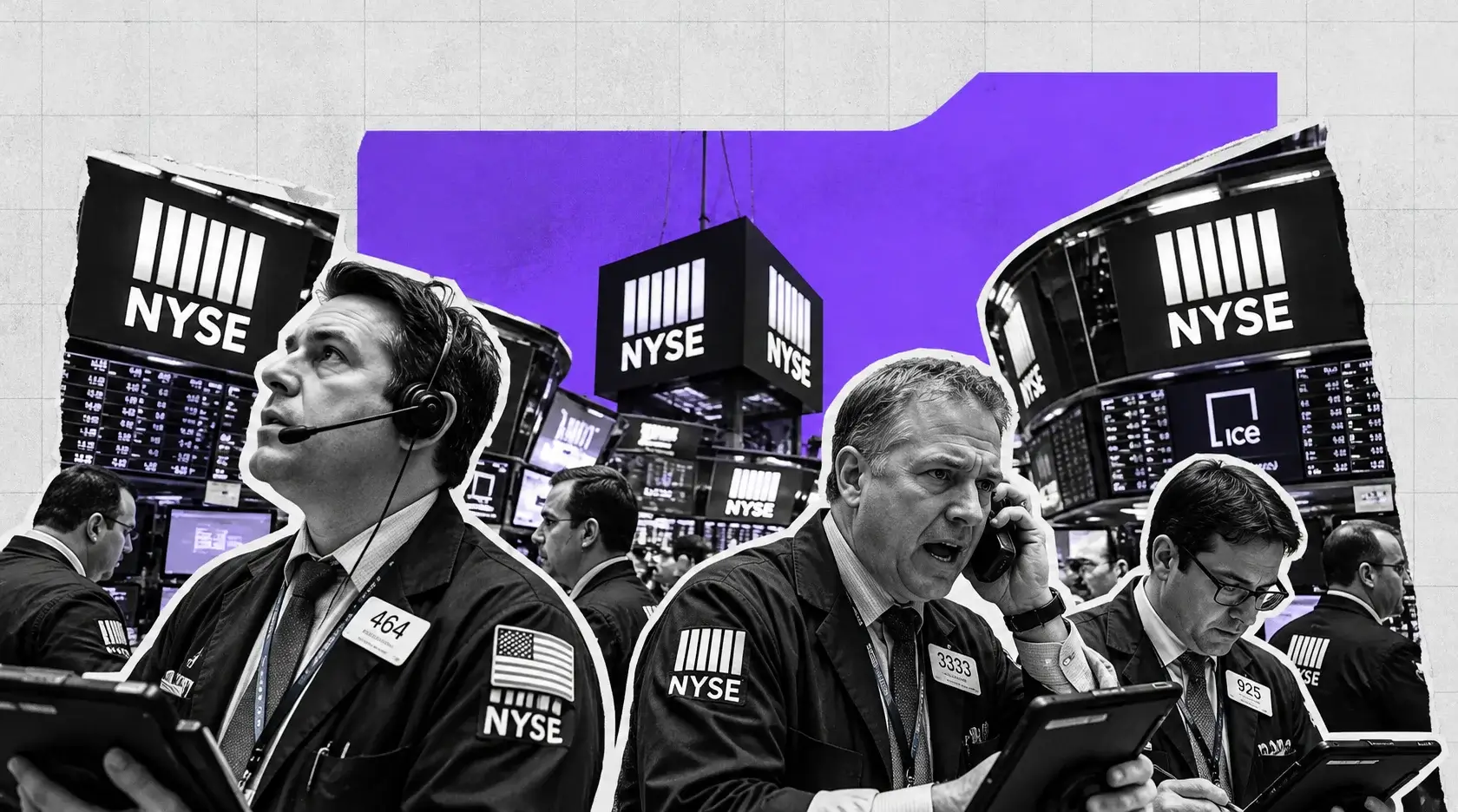
S&P 500 Climbs to 7,724, Nasdaq Jumps to 26,575, Dow Flips Green as Cleveland-Cliffs CLF Soars 15%
Chipmakers rallied 2.3% and Amazon added $131B in market value as buyers reclaimed last week’s AI losses | That's TradingNEWS
Key Points
- The Nasdaq rose 1.67% to 26,575.38, recovering 76% of Friday’s 2.14% drop as AI and chip stocks rebounded.
- Cleveland-Cliffs jumped 15% to $13.94 after third-quarter adjusted EBITDA of $612 million beat guidance.
- The 10-year Treasury yield climbed 3 basis points to 5.13%, capping the rebound in rate-sensitive tech.
The Nasdaq Composite (IXIC) climbed 435.34 points, or 1.67%, to 26,575.38 by 11:26 a.m. ET on Monday, October 19, 2026, clawing back 76% of Friday’s 2.14% collapse in a single morning. The S&P 500 (SPX) added 64.76 points, or 0.85%, to 7,724.20 and printed 7,727.81 two minutes later. The Dow Jones Industrial Average (DJI) lagged at 52,104.93, up 102.52 points or 0.20%, after spending the first half hour of trade in the red. The Russell 2000 gained 12.60 points, or 0.46%, to 2,733.97.
The spread between those four numbers is the story. A 1.67% Nasdaq move against a 0.20% Dow move is a 147-basis-point gap in favor of growth, and almost all of it traces back to the same cluster of names that got smoked last week: chipmakers, hyperscalers, neocloud operators and the data-center builders that lease them capacity. The Invesco QQQ Trust was up 1.90% at $723.27 by 11:28 a.m. ET, and a gauge of the largest semiconductor stocks rose 2.3% inside the first hour.
The CBOE Volatility Index (VIX) fell 2.27 points, or 11.36%, to 17.72, unwinding more than half of Friday’s 21.45% spike to 19.99. That tells you what kind of rally this is. Fear is being sold, puts are being monetized, and the dealer hedging that amplified Friday’s afternoon flush is running in reverse.
What the tape is not doing is broadening out. The Russell 2000 trails the Nasdaq by 121 basis points, the Dow is held back by its defensive and energy weight, and Friday’s leadership groups in energy, utilities and consumer staples are on the wrong side of the ledger. Monday is a repair job in the specific stocks that broke, not a fresh risk-on wave across the whole market.
The macro backdrop did not improve over the weekend either. The 10-year Treasury yield rose 3 basis points to 5.13%. Headline CPI is running at 3.7%. The Federal Reserve hiked in September for the first time since 2023 and meets again next week. West Texas Intermediate December crude sits at $97.62 per barrel even after a $1.40 drop.
Monday’s bounce is real in price and thin in conviction. The next 72 hours of earnings, with Netflix and SpaceX on Tuesday and Tesla and Meta on Wednesday, will decide whether the 4.5% weekly Nasdaq drawdown was a reset or the first leg of something larger. Until those prints land, every point the Nasdaq adds is a bet placed on numbers nobody has seen yet, and the sellers who drove last week’s flush have not gone anywhere. They have simply stepped back while the shorts cover.
Friday’s Wreckage: The Nasdaq’s Worst Week Since June
The rebound only makes sense against what came before it. On Friday, October 16, the Nasdaq Composite lost 2.14% to close at 26,140.03, the S&P 500 dropped 1.09% to 7,659.44 and erased its October gain, and the Dow shed 175.28 points, or 0.34%, to 52,002.41. Both the S&P 500 and the Nasdaq finished below their 50-day moving averages, a combination that had not shown up in weeks.
The weekly math was worse. The Nasdaq fell 4.5%, snapping a month-long winning streak with its worst five sessions since late June, while the S&P 500 gave up 1.95%. The Dow went the other way and rose 0.7% for the week. A 520-basis-point divergence between the tech-heavy benchmark and the blue chips tells you exactly where the money went.
Internals were ugly. The Nasdaq Composite logged 49 new 52-week highs against 263 new lows on Friday, while the S&P 500, carried by energy and defensives, posted 19 new highs and one new low. QQQ traded its heaviest volume since the early-June tech wreck. Energy, utilities and consumer staples led the session, and information technology, communication services and consumer discretionary finished at the bottom.
The single-stock damage concentrated in AI infrastructure and high-multiple software. CoreWeave dropped 11.91% to $61.39 on 95.4 million shares, triple its 32.3 million three-month average. Nebius fell 12.18% to $165.47, Applied Digital lost 11.48% to $18.05 and IREN shed 11.19% to $26.99. Cerebras dropped 10.52% to $127.21, and Super Micro Computer fell 9.86%. On the software side, Twilio, Okta, JFrog and DigitalOcean each lost between 9.85% and 10.82%.
The common thread was financing. The market is questioning how much debt the AI build-out can carry when the 10-year yield sits above 5% and the Fed is in hiking mode. CoreWeave’s credit spread blew out to 1,200 basis points last week, which turned a valuation debate into a solvency debate for the most levered names in the chain.
The one clean piece of macro news got buried. September industrial production rose 0.7% against a 0.4% consensus, with manufacturing output up 0.3%. Oil carried the opposite message, with WTI up 2.6% to $99.02 and Brent up 3.72% to $109.86 on Friday, lifting energy shares and dragging inflation expectations higher with them.
Monday opened against that backdrop: the S&P 500 down 152 points over five sessions, the Nasdaq down more than 1,200 points, and a crowded AI trade that had just been forcibly de-grossed. A market that oversold tends to snap back on the first quiet morning, and Monday’s opening hour delivered exactly that.
Premarket to Opening Bell: Futures Split, Dow Lagged
The bid showed up overnight. By 11:30 p.m. ET Sunday, S&P 500 futures were up 0.8%, Nasdaq futures were up more than 1%, and Dow futures were up 0.5%. Traders noted the date: Monday marked the 39th anniversary of the October 19, 1987 crash, when the Dow and S&P 500 each lost more than 20% in a single session. Nobody got a repeat.
By the European morning the split had hardened. Nasdaq 100 futures gained 1.19%, or 336 points, S&P 500 futures rose 0.55%, and Dow futures sat flat at plus 0.03%. At 7:51 a.m. ET the S&P contract held a 0.5% gain. By 9:05 a.m. ET the Dow contract had rolled over to a 139-point loss, or 0.27%, at 52,075, while Nasdaq futures were up 360.50 points, or 1.23%, at 29,752 and S&P futures were up 0.43% at 7,737.25.
The final read five minutes before the bell had S&P 500 futures at 7,742.25, up 0.49%, Dow futures at 52,109, down 105 points or 0.20%, Nasdaq futures at 29,779.25, up 387.75 points or 1.32%, and Russell 2000 futures at 2,750.20, up 0.54%. The VIX had already dropped 8.10% to 18.37. SPY traded at $767.14, up 0.51%, and QQQ at $719.25, up 1.33%.
Single-stock premarket action set the tone. Intel climbed 4% after an upgrade to Neutral from Underweight. CoreWeave rebounded 6.12% on an upgrade to Buy, Cleveland-Cliffs surged 12.39% on its third-quarter beat, and Applied Digital gained 8.53%. Disc Medicine (IRON) ripped 17.89% ahead of a Monday webcast on topline results from its 183-patient Phase 3 APOLLO trial of bitopertin in erythropoietic protoporphyria. OpenWorld (OPNW) jumped 20.68% on a non-binding term sheet for up to $1 billion in tokenized financing. On the downside, Mattel slipped 2.91% on a leadership change and Stellantis lost 2.52% on weak third-quarter shipments.
Overseas offered no help. European markets traded lower in early dealing, and Asia was mixed, with Australia’s ASX 200, South Korea’s Kospi and China’s CSI 300 higher while India’s Nifty 50 and Japan’s Nikkei 225 fell.
The most revealing premarket data point was the rotation itself. Among October’s 100 strongest S&P 500 performers through Friday, 91% of those with a premarket quote were lower, while 77% of October’s worst performers were higher. That is a mean-reversion trade, not a fundamental re-rating.
At 9:30 a.m. ET the cash market opened with the S&P 500 up 0.57%, the Dow down 0.08% and the Nasdaq up 1.09%. The split in the futures carried straight into the cash open.
Intraday Structure: Dow Flips Green, Nasdaq Presses Session Highs
The first 30 minutes did not deliver a clean rip. At 10:04 a.m. ET the Nasdaq was up 1% and the S&P 500 up 0.5%, but the Dow was still down 0.2%. The early pattern matched the futures exactly: tech up, everything else sold to fund it. Energy names that led Friday rolled over with crude, and staples and utilities bled as rotation capital rushed back into semiconductors.
The turn came between 10:00 and 10:35 a.m. ET, as the chip gauge extended to a 2.3% gain and the Nasdaq 100 pushed to a 1.4% advance. A late-morning snapshot had the Nasdaq 100 at 29,514.32, up 326.77 points or 1.12%, before it accelerated again. By 11:26 a.m. ET the Dow had flipped green at 52,104.93, and two minutes later it printed 52,120.32, up 117.91 points or 0.23%. At that same moment the Nasdaq Composite hit 26,592.62, up 452.59 points or 1.73%, and the S&P 500 printed 7,727.81, up 68.37 points or 0.89%.
The recovery math frames where the tape stands. Friday’s 1.09% loss cost the S&P 500 84.4 points from Thursday’s 7,743.8 close. Monday’s 64.76-point gain at 11:26 a.m. recovers 77% of that, yet the index still sits 19.6 points below Thursday’s close and has retraced only 43% of the full 152-point weekly loss. The Nasdaq closed Thursday at 26,711.6, so the 26,575 print leaves it 136 points short, with 35% of last week’s drawdown retraced.
Those two levels, 7,744 on the S&P 500 and 26,711 on the Nasdaq, are the first real tests. Holding above them into the close would erase Friday entirely and put the 50-day moving averages back in play from below. Failing there would leave Monday as a lower high inside a developing downtrend.
Volume tells a mixed story at this stage. Intel had traded 42.8 million shares by 11:26 a.m. ET, 40% of its 107 million three-month average with 69% of the session still ahead. That pace runs above normal without being a blowout. Nvidia’s 38 million shares stood at 32% of its 118.5 million average, a normal pace. The real surges sat in the catalyst names. Cleveland-Cliffs had already traded 34.66 million shares, 1.8 times its 18.85 million daily average, and CoreWeave’s 41.7 million shares had already cleared its full-day average of 32.3 million.
Heavy volume in catalyst stocks plus ordinary volume in index heavyweights fits short covering and tactical re-entry. It does not look like large asset managers rebuilding full AI exposure ahead of earnings. The VIX at 17.72 shows traders paying less for protection, not adding risk with size.
Chips Lead: Intel’s Upgrade and Nvidia’s 2% Snapback
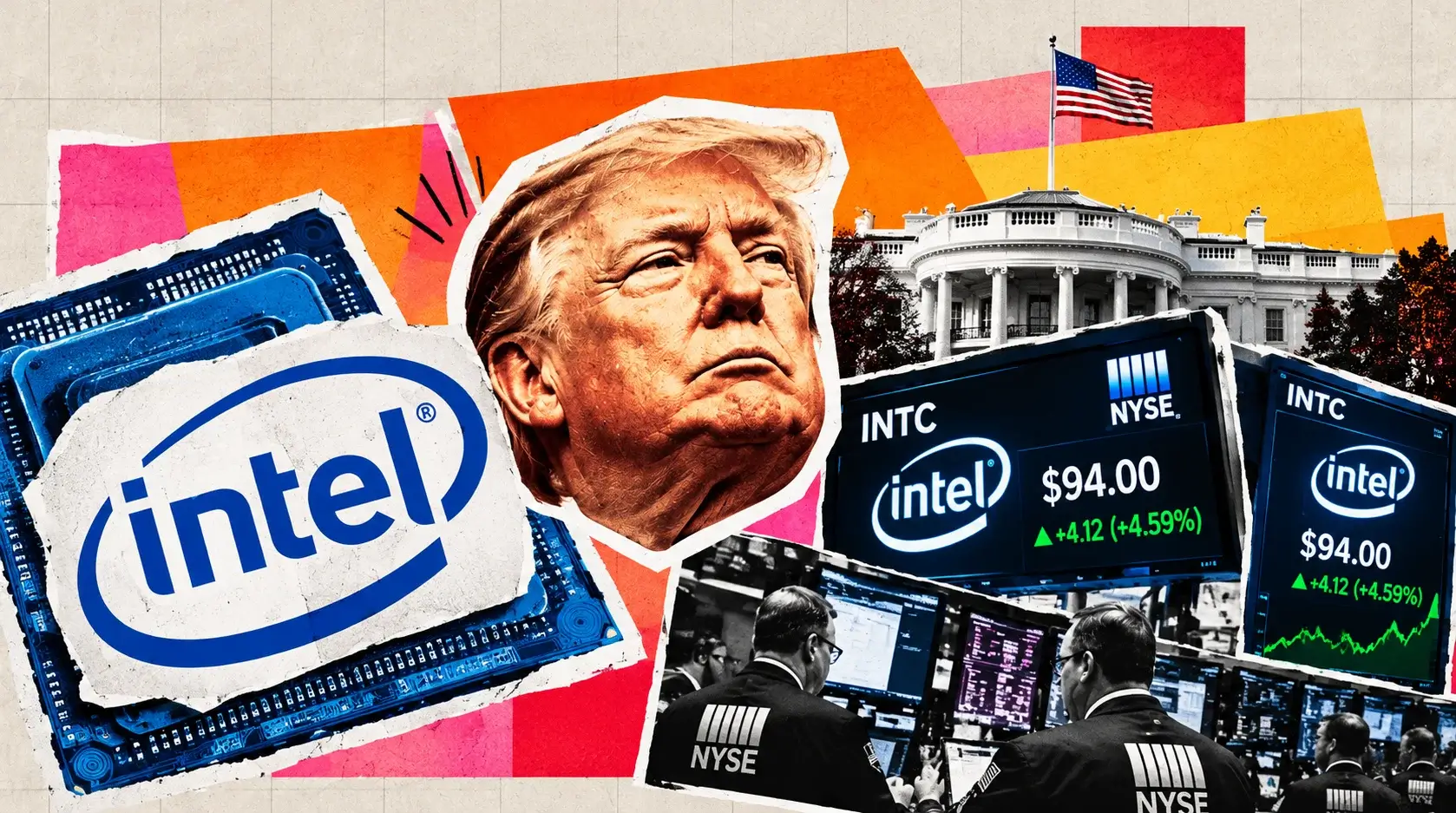
Intel (INTC) was the most active stock in the market by late morning. It rose $5.29, or 5.89%, to $95.14 on 42.8 million shares after an upgrade to Neutral from Underweight with an unchanged $85 price target. The stock is already trading 12% above the target of the desk that just upgraded it, which says more about positioning than fundamentals. Intel’s short base and thin institutional ownership left it primed for a squeeze the moment one of the most bearish views on the Street softened.
The scale of Intel’s run puts Monday in context. Shares are up 135.83% over the past 52 weeks inside a range of $32.89 to $142.35, and at $95.14 the stock sits 33% below its peak with a $502.92 billion market cap. A 5.89% move in a half-trillion-dollar company adds $28 billion in value before lunch.
Nvidia (NVDA) rose $4.32, or 2.02%, to $218.45 on 38 million shares by 11:26 a.m. ET. At a $5.275 trillion market cap, that move alone adds $105 billion. The stock trades at 27.08 times trailing earnings and 10% below its 52-week high of $243.37. Nvidia’s CEO set the stage on Thursday by saying he was optimistic about CoreWeave and that its cost of capital is actually decreasing, a direct answer to the credit stress hitting the neocloud layer where Nvidia is both supplier and equity holder.
AMD traded higher alongside Nvidia, and Micron recovered after last week’s drawdown in memory names. Super Micro Computer (SMCI) bounced $1.45, or 4.60%, to $33.08, retracing part of Friday’s 9.86% loss. At 9.72 times trailing earnings, SMCI trades at a third of Nvidia’s multiple and sits 42.53% lower than a year ago.
The 2.3% move in the chip gauge carries outsized weight because semiconductors were the epicenter of last week’s sell-off. Three pressures hit them at once: debt-financed customers such as CoreWeave, Nebius and Applied Digital saw their bonds and equity crushed; a 10-year yield above 5% raised the hurdle rate on every data-center project; and hotter-than-expected inflation revived Fed hike risk. Monday’s rebound addresses none of those directly. It reflects positioning, with too many funds too underweight chips heading into an earnings week that includes Lam Research and Texas Instruments.
Lam Research will show whether wafer-fab equipment orders held up through the September quarter, and Texas Instruments will provide the analog and industrial read. If either guides down, Monday’s 2.3% move evaporates. If both hold, the chip trade gets a fundamental floor for the first time since the sell-off began.
Amazon’s $12 Move Carries the Megacap Complex
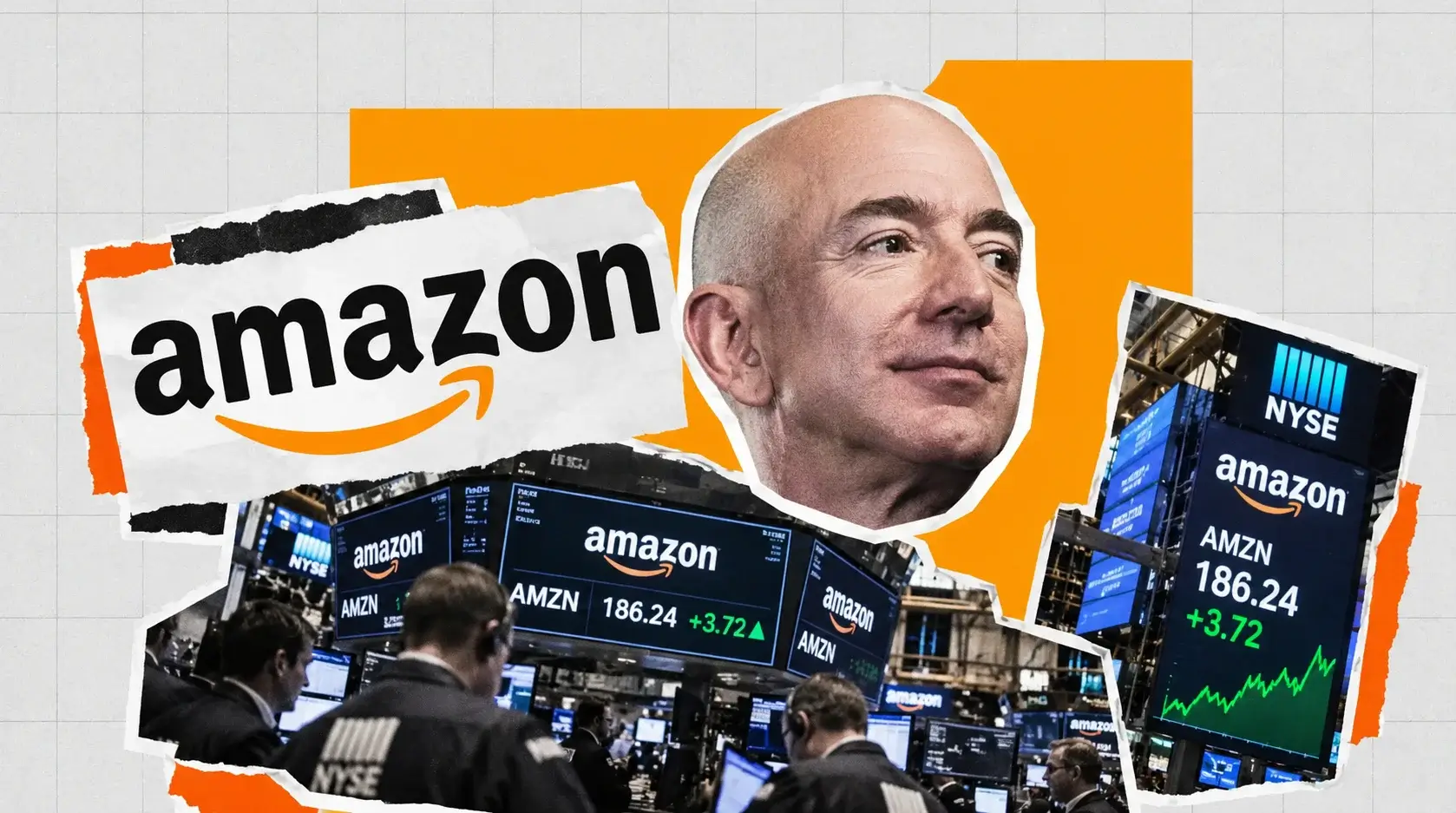
Amazon (AMZN) delivered the largest single-stock point contribution to the Nasdaq. It rose $12.11, or 4.85%, to $262.11 on 21.2 million shares, lifting its market cap to $2.827 trillion, a $131 billion gain in one morning. Shares closed Friday at $250 after losing 4.7% during the week and had fallen 12% from their August 3 level. Monday’s move pushed the stock back above its 50-day moving average near $257.
The catalyst was a top-pick designation and a price-target increase to $350 from $335, implying 34% upside from $262.11. The detail behind the call explains the force of the reaction. AWS growth forecasts were raised to 47% for 2027 and 42% for 2028 from 41% and 37%, following Nvidia’s disclosure that it expects AWS to buy and deploy 2 million of its GPUs over those two years. AWS operating margins are now modeled at 42% in 2027 and 44% in 2028, supporting $16.50 in Amazon earnings per share for 2028. The $350 target equals 21 times that estimate, with a $220 bear case and a $410 bull case.
The second-quarter numbers explain why the market believes the AWS story. AWS generated $42.2 billion in revenue, up 37% year over year, with $16.6 billion in operating income. Amazon as a whole produced $200.6 billion in sales and $27.5 billion in operating income, so AWS is 21% of revenue and 60% of operating profit. Amazon also disclosed it is funding a 960-megawatt nuclear project in Indiana, another sign the power bottleneck for AI data centers is being solved with balance-sheet cash rather than borrowed money. That separates Amazon from the levered neocloud names. The company reports third-quarter results on October 29 against guidance for net sales of $197 billion to $202 billion.
The rest of the megacap complex split along a clear line. Tesla (TSLA) rose $13.14, or 3.71%, to $367.86, a $1.453 trillion valuation at 328.58 times trailing earnings, ahead of Wednesday’s report. Apple (AAPL) slipped $0.54, or 0.16%, to $342.92 and sits essentially flat at a $5.005 trillion market cap. Meta Platforms (META) fell 1.46% to $698.97, dragging communication services down 0.47%. Netflix (NFLX) dropped $0.93, or 1.33%, to $69.60 the day before its report.
That dispersion is informative. The market is paying up for AI exposure backed by visible cash generation, such as AWS and Nvidia’s order book. It is fading Meta and Netflix, where advertising and subscriber trends will be judged on the print and the AI spending question cuts against margins rather than for revenue.
CoreWeave and the Neocloud Credit Question
CoreWeave (CRWV) is the stock that defines this market. It entered Monday off an 11.91% Friday collapse to $61.39 and a weekly loss of more than 25%. Premarket, it jumped 6.12% after an upgrade to Buy from Neutral with the price target lifted to $139 from $106. By 11:26 a.m. ET it was up only $1.69, or 2.74%, at $63.08, having handed back more than half of the premarket gain.
That fade is the most important intraday signal in the AI complex. Chips held their gains and CoreWeave’s bid faded. Investors will buy the suppliers and the cash-rich hyperscalers, but they are still not sure they want the levered middle layer: the companies borrowing to buy Nvidia GPUs and rent them out.
The bull case rests on contracted demand. CoreWeave exited the second quarter with a revenue backlog of $104 billion, commitments customers have already signed rather than data centers built on spec in hope of finding tenants. The bear case is the cost of carrying that backlog. CoreWeave’s credit spread widened to 1,200 basis points last week, a level that prices meaningful default risk, and with the 10-year Treasury at 5.13% that implies borrowing costs well into the teens for any new debt. The stock trades at $63.08 against a 52-week range of $59.51 to $141.79, which leaves it 6% above its low, 56% below its high and valued at $34.79 billion. The new $139 target sits 120% above the current price, a gap that shows how wide the range of outcomes has become.
The rest of the neocloud and AI-infrastructure group rebounded harder than CoreWeave did. Applied Digital (APLD) led with a $1.77 gain, or 9.78%, to $19.82, and TeraWulf (WULF) followed with a 6.17% climb to $12.40. IREN added $1.46, or 5.41%, to $28.45, while Nebius (NBIS) rose $7.29, or 4.41%, to $172.76, recovering a third of Friday’s $22.94 loss. Cipher Digital (CIFR) lagged the group with a 3.34% gain to $9.28. Those bounces come off a brutal base, with APLD down 49.72%, IREN down 54.42% and CIFR down 54.90% over the past 52 weeks.
The broader financing climate offers both a headwind and a tailwind. JPMorgan Chase said it has invested $5 billion in equity in companies tied to U.S. economic and national security, including energy infrastructure and AI-adjacent manufacturing, and that it has financed $230 billion through its Security and Resiliency Initiative in the first year of a $1.5 trillion, 10-year commitment. Bank capital is still flowing toward data-center power and supply chains. Public credit markets are the ones demanding a 1,200-basis-point premium, and that gap will not close on one green Monday.
Rotation in Reverse: Energy, Staples and October’s Winners Get Sold
The flip side of the AI bounce is the liquidation of last week’s safe havens. Friday’s tape rewarded energy without discrimination. Crescent Energy (CRGY) rose 10.07% to $13.77, Matador Resources (MTDR) gained 6.97% to $57.52 and Antero Resources (AR) added 6.06% to $38.65. Large caps joined in, with EOG Resources up 4.23% to $158.01, Diamondback Energy up 4.27% to $203.95, Targa Resources up 4.37% to $294.90 and Kinder Morgan up 4.20% to $34.20 on 16.9 million shares. Northrop Grumman rose 4.05% to $519.86 as defense joined the bid.
Monday reversed that wholesale. Targa Resources traded down 1.03% and Kinder Morgan fell 1.92% as WTI dropped $1.40 to $97.62 and Brent slid 1.47% to $108.20. Energy was the obvious funding source. Many of these names had run hard, with Targa up 95.38% over 52 weeks, Ovintiv up 91.15% and APA up 118.54%, so taking profits in them to rebuy beaten-down semiconductors was the path of least resistance.
The rotation reached defensives as well. Procter & Gamble (PG) fell 0.83% to $158.03 ahead of its earnings this week. Utilities weakened across the board, and NRG Energy sank 3.63% amid broad pressure on the sector and caution ahead of its November 5 report. The technology sector fund XLK rose 1.58%, while communication services fell 0.47%, held back by Meta.
The statistic that captures the session came before the open: 91% of October’s 100 strongest S&P 500 performers with a premarket quote traded lower, while 77% of the month’s worst performers traded higher. That is a pure positioning unwind. Funds that hid in energy, staples and utilities during last week’s AI flush are rotating back toward the benchmark weights they abandoned.
The question is whether that rotation lasts beyond a day or two. The arguments for energy have not changed. Iran’s seaborne crude exports fell from 230,000 barrels per day to zero in September and stayed there into October. Ten attacks on commercial vessels were reported in and near the Strait of Hormuz last week, making October the busiest month for shipping attacks there since March. Brent above $108 is not a price that disappears because of a sanctions waiver on Russia.
Any rebound that requires selling the sector with the strongest earnings momentum to buy the sector with the most financing risk carries a short shelf life unless earnings validate it. Energy longs are trimming, not capitulating, and the 52-week returns in those names show how much profit cushion they still have to defend.
Read More
-
Yen Stalls at 160 Despite a 3% JGB and Tokyo Core CPI at 2.0% — Intervention Sits at 164, Friday's Payrolls Decide
02.09.2026 · TradingNEWS ArchiveEnergy
-
Amazon ($262.11) Rebounds From $250 on AWS Acceleration and a 24.8x Forward Multiple — $284 Then $300 on an October 29 Beat
19.10.2026 · TradingNEWS ArchiveStocks
-
XRP-USD Pinned Near the $1.28 200-Day Average as Escrow Supply Outpaces ETF Demand — $1.15 Below $1.25, $1.50 Above $1.38
19.10.2026 · TradingNEWS ArchiveCrypto
-
Brent ($108.20) Retreats From $110 as Diesel Deal Meets $2.78 WTI Backwardation — Dips Toward $105 Bought, $113 Above $110
19.10.2026 · TradingNEWS ArchiveCommodities
-
QQQ Tests Its $715 Floor as a $4.18B Exodus Meets Burry’s Nasdaq-100 Puts — Upside to $746
16.10.2026 · TradingNEWS ArchiveMarkets
-
Pound ($1.3319) Outperforms the Euro as BoE Hike Pricing Narrows the Fed Gap — Buy Dips Toward 1.3240, Target 1.3450
19.10.2026 · TradingNEWS ArchiveForex
The economic calendar adds pressure. Tuesday brings September housing starts at 8:30 a.m. ET and pending home sales at 10:00 a.m. ET. Wednesday has no major releases. Thursday delivers initial jobless claims for the week ending October 17 at 8:30 a.m. ET, September leading indicators at 10:00 a.m. ET and the Kansas City Fed manufacturing survey at 11:00 a.m. ET. Friday wraps the week with the October S&P flash manufacturing and services PMIs at 9:45 a.m. ET and the final University of Michigan consumer survey at 10:00 a.m. ET.
The market treats this week as a referendum on growth. Futures diverged sharply Monday morning, with the Nasdaq up more than 1% and the Dow lower, because these reports shape ad spending, EV demand and chip orders across the supply chain. In cap-weighted indexes, a guidance surprise from Meta or Tesla can swing the entire Nasdaq.
Monday’s 1.67% Nasdaq gain is an advance payment. Traders are buying ahead of the reports. If Netflix and Tesla disappoint, that payment gets refunded quickly.
Session Verdict: Bullish Price Action, Unproven Conviction
The session verdict through late morning is bullish on price and mixed on quality. The Nasdaq Composite up 1.67% at 26,575.38, the S&P 500 up 0.85% at 7,724.20 and the Dow up 0.20% at 52,104.93 all point higher. The VIX down 11.36% at 17.72 confirms fear is draining from the tape. Intel up 5.89%, Amazon up 4.85% and Nvidia up 2.02% show that leadership has returned to the stocks that broke last week.
The quality check is weaker. The Russell 2000 is up 0.46%, a third of the Nasdaq’s gain. Energy, utilities and staples are being sold to fund the bounce rather than joined by fresh money. CoreWeave gave back more than half its premarket gain, which shows the levered AI layer still cannot hold a bid. The 10-year yield rose to 5.13% during the rally, a direct contradiction of the “rates are easing” argument that would justify a durable return to long-duration tech.
The levels are clear. The S&P 500 needs to close above Thursday’s 7,744 to erase Friday’s damage, and the Nasdaq needs 26,711. Closing above both would turn Monday into a genuine reversal and put the 50-day averages back within reach. Closing below them, especially with a late fade in chips, would leave the market in a lower-high pattern heading into the most important 48 hours of the earnings season.
The one fundamental winner of the morning, Cleveland-Cliffs on a $612 million EBITDA quarter, came from steel, not AI. The AI trade’s own fundamental test starts after Tuesday’s close.
Monday’s tape is a short-covering rally with a strong headline, real participation in megacap tech and chips, and no confirmation from credit, rates or small caps. The bias stays bullish into the close as long as the S&P 500 holds 7,700 and the VIX stays under 18. The bias turns cautious if the 10-year pushes toward 5.20% or if Netflix and SpaceX miss on Tuesday night. Mixed-to-bullish is the verdict: buyers own the morning, but earnings will decide who owns the week.