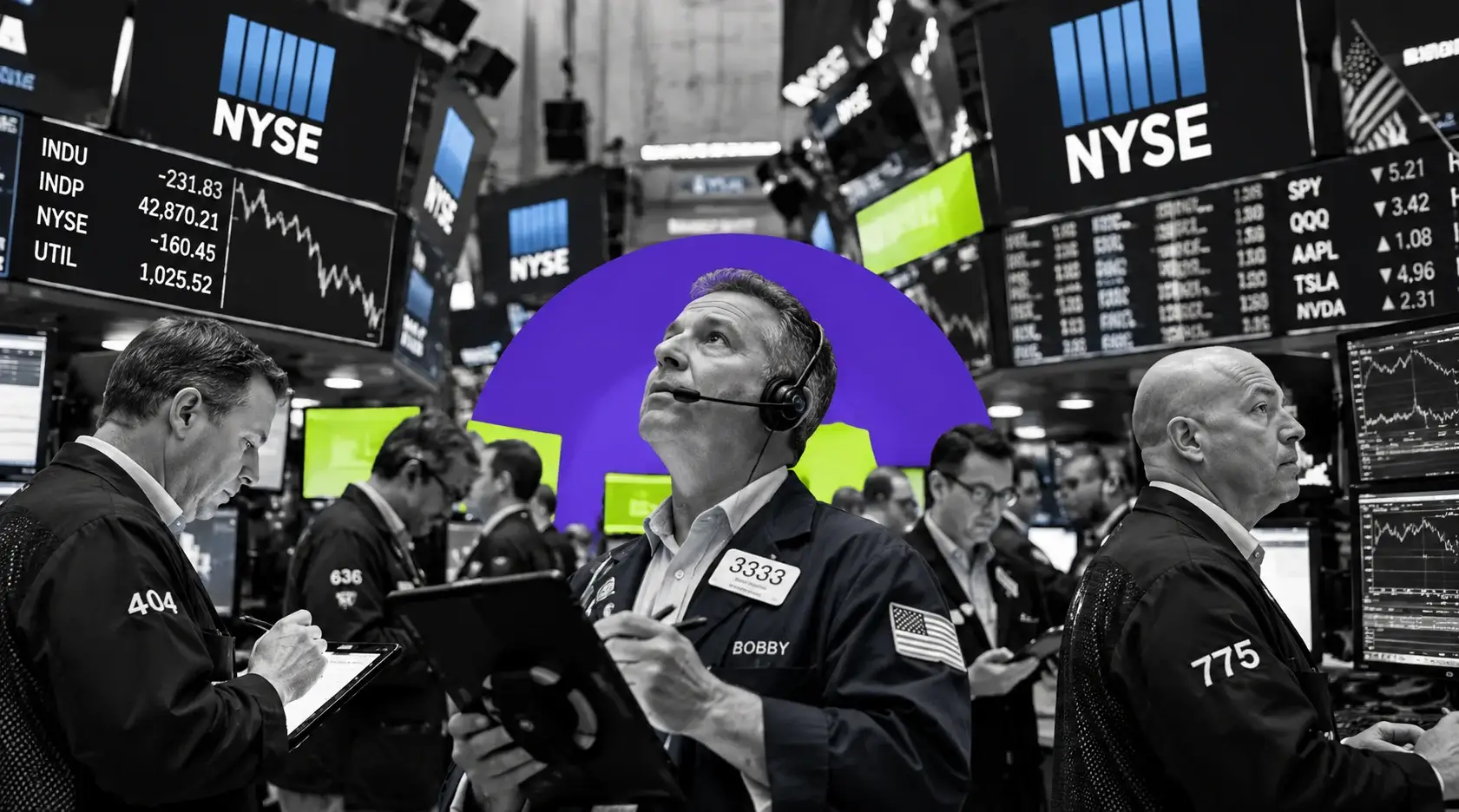
S&P 500 Gains 0.22%, Nasdaq Tops 27,000, Dow Up 0.40% on MSFT Launch and AKAM Deal
Microsoft added $124 billion in market value, and Akamai held a 6.5% gain after fading from a $129.16 peak | That's TradingNEWS
Key Points
- Microsoft climbed 3.35% to $514.59 on its Copilot super-app launch, adding $124 billion in market value.
- Akamai rose 6.51% to $117.60 on an $11.6 billion AI cloud deal, fading from a $129.16 morning peak.
- The 10-year Treasury yield traded between 5.169% and 5.209%, pinned near its highest level since July 2007.
By 11:34 a.m. ET on Friday, September 25, the S&P 500 (SPX) stood at 7,720.84, up 16.71 points or 0.22%. The Nasdaq Composite (IXIC) traded at 27,002.63, up 63.26 points or 0.23%, back above the 27,000 line it surrendered in Wednesday's rout. The Dow Jones Industrial Average (DJI) posted the largest point gain of the three, adding 206.28 points, or 0.40%, to 51,556.26. That move puts the blue-chip index on course to end a three-session losing streak that dragged it from 51,863.69 at Tuesday's close to 51,349.98 on Thursday, a slide of 513.71 points.
The Russell 2000 refused to follow. The small-cap benchmark sat at 2,833.64, down 1.93 points, or 0.07%, after dipping to 2,829.46 in the first hour. That divergence is the whole story of the session in one line: the stocks that can fund themselves internally are being bought, and the stocks that live on borrowed money are not.
The weekly scorecard still leans positive for the growth-heavy benchmarks. Against last Friday's close of 7,650.50, the S&P 500 is up 0.9% for the week. The Nasdaq, which finished last week at 26,522.55, is up 1.8%. The Dow is the laggard, still 126.38 points below its prior Friday close of 51,682.64, which leaves it needing another quarter-percent push into the bell just to finish the week flat.
Both large-cap gauges also remain below the highs set earlier in the week. The Nasdaq's record close on Tuesday came in at 27,244, which puts Friday's late-morning level 0.9% under the peak. The S&P 500 closed Tuesday at 7,764, and Friday's print sits 0.6% below that mark. The Monday-Tuesday surge, when the Nasdaq and S&P 500 posted their best session since early August, was erased in a single Wednesday session in which the S&P 500 dropped 0.75% to 7,706.03 and the Nasdaq shed 1.13% to 26,936.04. Thursday went nowhere: the S&P 500 slipped 0.02% to 7,704.13 while the Nasdaq added 0.01%.
Friday's bounce is real on the screen, but the source of it is narrow. Microsoft alone accounts for an outsized share of the S&P 500's 16.71-point advance, and a cluster of AI-hardware names supplies most of the rest. The CBOE Volatility Index (VIX) eased to 15.42, down 1.6%, yet the fear gauge is still on track for its biggest weekly climb in more than a year. When the index is green, the VIX is falling, and the small caps are still red, the market is telling you that the bid is selective rather than broad. The rest of this session analysis follows that thread through bonds, oil, the Fed, the data, and the tape underneath the headline numbers.
From Firm Futures to a 10:30 Wobble to a Late-Morning Push
The session was built in three distinct stages, and each one carried a different message.
Overnight, index futures were firm but cautious. At 4:17 a.m. ET, S&P 500 futures traded at 7,781.25, up 0.18%, while Nasdaq-100 futures stood at 30,901.50, up 0.44%. Dow futures were up 74 points at 51,791, and Russell 2000 futures added 0.16% to 2,861.50. The overnight lift came from crude, which slid under $93.50 on WTI after Thursday's report that U.S. and Iranian negotiators in New York were weighing a phased arrangement to reopen the Strait of Hormuz. Asia gave mixed cues: Japan's Nikkei rose 1%, Hong Kong's Hang Seng fell more than 1%, and markets in mainland China, South Korea, and Taiwan were shut for a holiday.
The open was flat. By 10:12 a.m. ET, the S&P 500 was at 7,706.37, up 2.24 points or 0.03%. The Nasdaq was at 26,964.37, up 0.09%, and the Dow was ahead by 81.08 points, or 0.16%, at 51,431.06. The Russell 2000 opened with a 0.10% gain at 2,838.55. Nothing about that first half-hour suggested conviction.
Then came the wobble. Around 10:30 a.m. ET, the S&P 500 had surrendered its gain entirely and sat at 7,704.25, up just 0.12 points. The Nasdaq flipped red, trading at 26,921.38, down 18 points or 0.07%. The Russell 2000 dropped to 2,829.46, down 0.22%, and the VIX ticked up to 15.80. The trigger was the bond market: the 10-year Treasury yield pushed back to 5.209% at that stage, up 4.6 basis points, and the 30-year yield touched 5.508%.
The recovery came in the following half-hour. By 11:03 a.m. ET, the S&P 500 had ripped to 7,723.01, up 0.25%, the Nasdaq had reclaimed 27,014.56, up 0.28%, and the Dow was up 183.05 points at 51,533.03. Microsoft extending toward $516.50 and a second wave of buying in AI hardware did the lifting. By 11:34 a.m. ET, the S&P 500 had settled at 7,720.84 and the Dow had stretched its gain to 206.28 points.
Two features of the intraday path matter for the afternoon. First, every dip lined up with a yield spike, and every rally lined up with Microsoft and chip-equipment buying. Second, the Russell 2000 never recovered its opening gain. Small caps went from +0.10% to −0.22% and back only to −0.07%. A market that can rally its largest stocks but not its smallest ones on a day when oil is falling is a market still being governed by the cost of money.
The 10-Year at 5.2%: The Bond Market Is Still Writing the Script
No asset explains this week better than the 10-year Treasury note. On Thursday, its yield touched 5.225% intraday, the highest level since July 2007, before settling at 5.196%, up 8.17 basis points on the day. The 30-year bond yield hit 5.502% intraday, its highest since June 2004, and closed at 5.4816%. The 2-year note yield, the most sensitive to Fed policy, finished at 4.92%.
On Friday, the long end has traded in a tight but elevated range. The 10-year yield held near 5.169% early in the European session, climbed to 5.209% after the U.S. open, and traded at 5.177% at other points in the morning. The 30-year oscillated between 5.465% and 5.508%. The 5-year sat near 5.03% to 5.05%, above the 5% line it first crossed on Wednesday for the first time since 2007. The 3-month bill yielded 4.19%. The spread between the 10-year and 2-year notes widened to 31 basis points, a bear steepening in which long-term yields climb faster than short-term ones.
That steepening is the key detail. When long yields rise faster than short yields, the market is demanding more compensation for duration itself, not simply pricing more Fed hikes. The supply picture explains part of it. Wednesday's $70 billion 5-year note auction drew weak demand and pushed the 5-year yield through 5%. Thursday's $44 billion 7-year sale met mediocre interest. The Treasury Department bought back $4.078 billion of 20-year and 30-year bonds on Thursday out of $10.468 billion offered, under a program with a $6 billion ceiling, and the purchases did not stop the climb.
The 10-year yield is on track for a sixth consecutive weekly increase, its longest streak since November 2024. The global backdrop is no help. Japan's 10-year government bond yield rose 8 basis points on Thursday to 3.062%, its highest since August 1996, and the 30-year JGB climbed to 4.147%. Europe's STOXX 600 fell 0.55% Thursday as euro-area yields jumped on strong purchasing managers' data.
For equities, the arithmetic is unforgiving. With the 10-year at 5.18%, the S&P 500 at 7,720 has to justify its valuation against a risk-free rate that has not been this high in 19 years. Rate desks are openly discussing 6% on the 10-year as the next threshold that could force liquidation across risk assets. Friday's stock rally did not come from falling yields; it came in spite of yields that barely moved. That is the difference between a relief bounce and a regime change, and it is why the Russell 2000 stayed red while the Dow climbed.
Fed Funds at 3.75%–4.00%, and the Market Now Prices a 70% Chance of October
The Federal Reserve raised its benchmark rate by 25 basis points on September 16 to a target range of 3.75% to 4.00%, its first increase since July 2023. The vote was 12-0. The September Summary of Economic Projections showed a median federal funds rate of 4.1% at the end of both 2026 and 2027, which implies at least one more quarter-point hike this year. Sixteen of 19 policymakers projected at least one additional hike in 2026. The median forecast put PCE inflation at 3.7% for 2026, falling to 2.3% in 2027, with real GDP growth of 2.3% this year and 2.4% next year.
Chair Kevin Warsh, who took office in May, declined to commit to a preset path at his press conference, and stocks sold off hard in the final half-hour of that session. Since then, the message from the committee has hardened. This week, Governor Michael Barr, Philadelphia Fed President Anna Paulson, and New York Fed President John Williams all signaled that further rate increases will likely be needed to bring inflation down. Chicago Fed President Austan Goolsbee argued that the energy shock should be treated as a source of persistent inflation rather than a temporary supply disruption.
Futures markets have responded. The probability of another quarter-point hike at the Fed's October meeting jumped to 70% this week, up from 50% before the week's data and commentary. A move to 4.00%–4.25% next month would put the policy rate within striking distance of the 5.2% 10-year yield and leave the curve positively sloped by less than 100 basis points.
The Fed's stance also changes the math for the index's biggest names differently than for the rest of the market. Microsoft, Nvidia, Alphabet, and Meta generate cash that exceeds their capital needs even at elevated spending levels, so a higher policy rate raises their discount rate but does not threaten their funding. Regional banks, homebuilders, small-cap industrials, and unprofitable growth stocks face a direct hit through borrowing costs. Friday's split between a 0.40% Dow gain and a 0.07% Russell 2000 loss maps cleanly onto that divide.
One more piece of context: the Fed spent 2024 and 2025 cutting. It delivered three cuts starting in September 2024 to reach 4.25%–4.50%, then three more cuts from September 2025 to reach 3.50%–3.75%, before reversing course last week. A central bank that was easing twelve months ago and is now openly discussing consecutive hikes is the single biggest reason the 10-year yield has climbed for six straight weeks. Until the October meeting is resolved, every hawkish speech will hit the long end and, through it, the small caps.
Brent at $105, WTI at $94: Hormuz Headlines Cap the Oil Spike, for Now
Crude oil supplied Friday's relief, but only at the margin. WTI futures for November delivery traded at $94.09 per barrel at 11:34 a.m. ET, down $0.52, or 0.55%, after dipping to $92.90 earlier in the session. On Thursday, WTI had climbed 2.7% to settle at $94.61. Brent crude, the international benchmark, traded at $105.35 to $105.52 on Friday, down more than 1%, after closing above $106 on Thursday on a gain of more than 3%. On Wednesday, Brent had settled at $103.08 after a 3.9% jump.
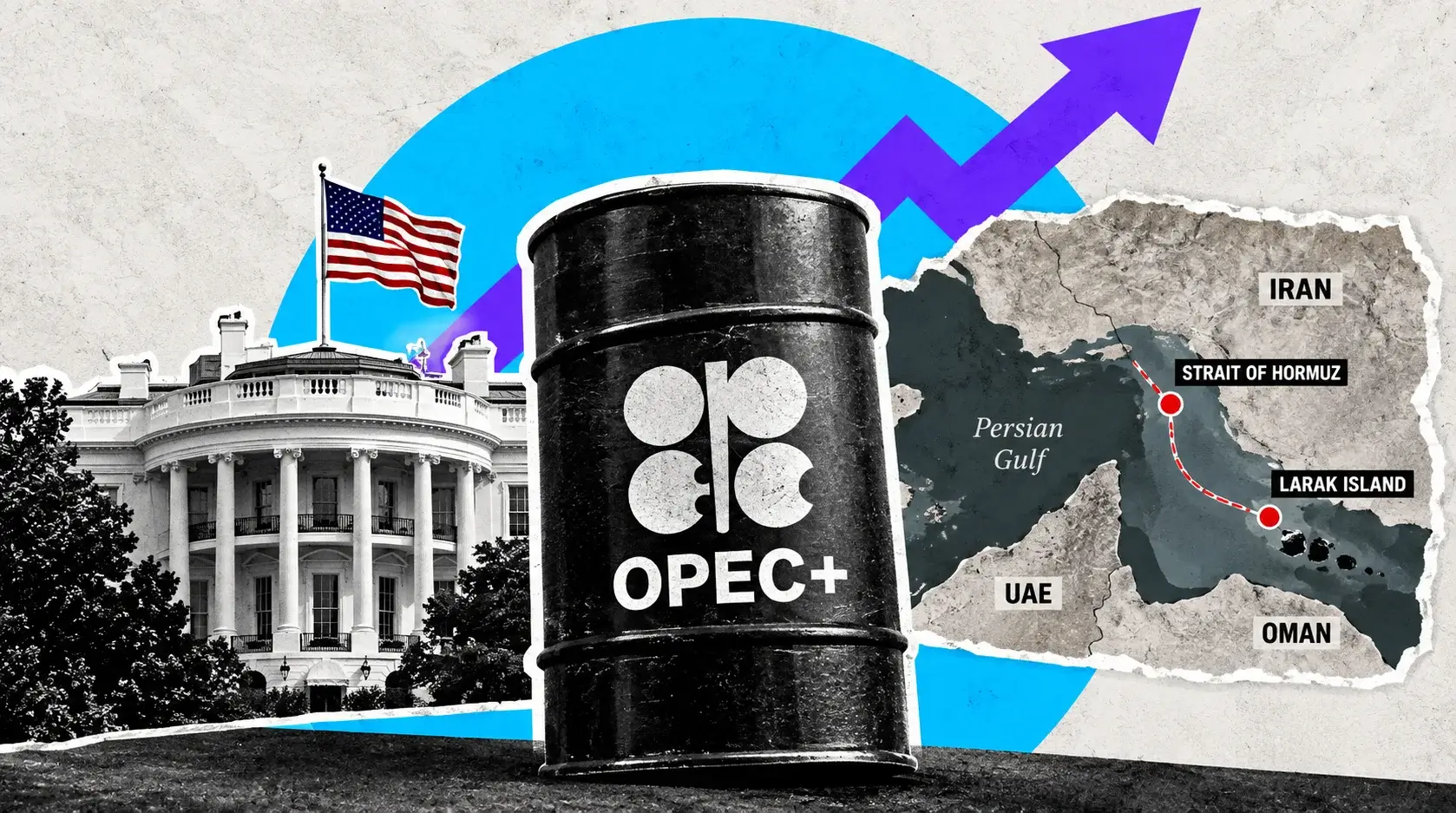
The source of the easing is a single report: U.S. and Iranian negotiators in New York are considering a phased arrangement under which Iran would reopen the Strait of Hormuz and the United States would lift its economic blockade on Tehran. That headline pulled stocks off their lows on Thursday and carried crude lower into Friday. There has been no confirmation from either government of a signed framework, and the conflict remains active. A Houthi missile attack on Saudi Arabia earlier in the week had already sent crude up 3% to a one-week high before the negotiation reports trimmed the move.
The energy shock is showing up everywhere. U.S. gasoline prices are approaching $4.50 per gallon on average. Asia is on track to import 23.96 million barrels per day of crude in September, up from 23.38 million bpd in August and the most since February, which shows how aggressively importers are stockpiling. President Trump has publicly backed a potential diesel export ban ahead of November's midterm elections, a proposal the oil industry warns would worsen the global fuel crisis.
For equities, the oil price is the transmission belt between geopolitics and yields. Each $1 move in Brent feeds directly into inflation expectations, which feed into Fed hike odds, which feed into the long end of the curve. That is why Friday's 1% drop in Brent bought the stock market only a 0.22% gain in the S&P 500 and no gain at all in the Russell 2000. The market is treating the Hormuz report as a possibility, not a resolution.
Natural gas futures fell harder than crude, sliding 5.25% to $3.124 per million British thermal units. Energy equities traded lower alongside crude: Devon Energy dropped 2.66% to $47.60. Earlier in the week, energy was the only sector consistently holding gains, rising 1.1% on Wednesday while ten of eleven S&P 500 sectors fell. Friday's reversal in the sector reflects the same Hormuz headline cutting in the opposite direction.
Durable Goods Flat at $338.6 Billion, but Core Capex Jumped 1.6%
The Census Bureau's advance report on durable goods for August, released at 8:30 a.m. ET, showed new orders for manufactured durable goods essentially unchanged at $338.6 billion, down $0.1 billion from July. The consensus forecast had called for a decline of 0.3% to 0.4%, so the headline beat expectations. July's gain was revised to 0.9% from the originally reported 1.1%.
Transportation equipment dragged on the total, falling 0.6% to $114.1 billion, its third decline in four months. Nondefense aircraft and parts dropped 4.3%, and motor vehicles and parts slipped 0.6%. Fabricated metal products fell 1.3%. On the other side, defense aircraft and parts rose 5.9%, computers and related products gained 1.5%, primary metals advanced 1.2%, electrical equipment rose 1.1%, and machinery climbed 1.1%.
Excluding transportation, orders rose 0.3%, below the 0.6% consensus and down from July's 0.7% gain. The number that matters for the bond market was the core capital goods figure: orders for nondefense capital goods excluding aircraft, the proxy for business investment plans, jumped 1.6%. The forecast had called for a 0.5% increase. July's figure had been 0.6%.
That print explains why Friday's yield relief was so thin. A 1.6% jump in core capital goods orders is a sign that business investment, much of it tied to data centers, servers, and electrical infrastructure for AI, is accelerating rather than slowing under higher rates. The Fed's own statement on September 16 described capital investment as strong. For a central bank looking for evidence that tighter policy is biting, this report offers none. Computers and electrical equipment led the gains, which lines up with the equity tape: Dell, Jabil, Flex, and Bloom Energy were among Friday's strongest large-cap performers.
The data also undercuts the argument that the economy is rolling over. Durable goods orders have now risen in four of the past six months on a headline basis, and the core capital goods line has risen in consecutive months. Unfilled orders for durable goods had climbed in 24 of the previous 25 months through July, reaching $1,599.9 billion. An order book that deep supports production and hiring into 2027, which is exactly what keeps the Fed leaning toward another hike.
For stocks, the report reinforces the split. AI infrastructure spenders and suppliers get validation. Rate-sensitive sectors get a longer wait for relief.
Consumer Sentiment at 48.1 and Year-Ahead Inflation Expectations at 4.6%
The University of Michigan's Surveys of Consumers delivered its final September reading at 10:00 a.m. ET, and the headline index edged up to 48.1 from the preliminary reading of 47.8. That is still one of the weakest readings in the survey's history. The preliminary figure had been the second-lowest on record, down 7.5% from August's 51.7 and 13.2% lower than a year earlier. Sentiment remains 16% below its February level, before the start of the Iran conflict.
The inflation expectations components carry more weight for markets than the headline. Year-ahead inflation expectations stood at 4.6%, the highest since June and well above the 4.0% level economists had expected in the preliminary release. Five-year expectations rose to 3.4% after holding at 3.3% for three straight months. For a Fed that raised rates specifically to prevent an energy shock from becoming embedded in expectations, a 4.6% year-ahead reading is a direct argument for October action.
Beneath the headline, the survey showed views of current and year-ahead personal finances deteriorating by 10% this month, with concerns about high prices intensifying. The short-term outlook for business conditions fell sharply on renewed worries that elevated fuel prices and trade disputes would weigh on the economy. Buying conditions for durable goods improved modestly, but the reason was defensive: consumers are purchasing now to avoid higher prices later. Pulling demand forward because of inflation fears is the behavior that turns a supply shock into a persistent price problem.
The partisan breakdown showed confidence falling across the political spectrum, with Republican sentiment down 20% from January and Democratic sentiment down 13%.
The contrast between the Michigan survey and the durable goods data is stark. Businesses are ordering equipment at an accelerating pace, and households are the gloomiest they have been in years. That gap maps onto the stock market. The companies selling to corporations building AI capacity, from Dell to Jabil to Microsoft, rallied Friday. Consumer-facing names struggled: Nike traded at $35.74, down 0.68%, within $0.39 of its 52-week low of $35.35 and down 48% over the past year, after a downgrade to underperform on expectations of sales declines through fiscal 2027. Costco, despite beating estimates, barely moved.
With gasoline near $4.50 and year-ahead inflation expectations at 4.6%, the consumer is absorbing the energy shock directly. The corporate sector is spending through it. The index can rise on the second fact, but the Fed is watching the first.
Microsoft Rips 3.35% to $514.59 and Adds $124 Billion on the Copilot Super App
Microsoft (MSFT) was the single biggest contributor to Friday's index gain. The stock traded at $514.59 at 11:34 a.m. ET, up $16.66 or 3.35%, after peaking near $516.50 in the morning. Volume reached 16.47 million shares before noon, more than half the stock's three-month daily average of 32.32 million. With 7.43 billion shares outstanding, the move added $124 billion in market value, lifting Microsoft's market capitalization to $3.821 trillion.
The catalyst was product, not macro. Microsoft unveiled a sweeping redesign of its Copilot AI platform, consolidating chat, Office productivity tools, natural-language code generation, and an always-on autonomous agent called Autopilot into a single enterprise application. The company also announced larger volume discounts on Copilot enterprise subscriptions effective in October, timed to push adoption across its Microsoft 365 installed base. Copilot passed 30 million paid seats in the fiscal fourth quarter.
The launch lands on top of a fundamental story that has been rebuilding since July. Microsoft reported fiscal fourth-quarter revenue of $90.01 billion, up 17.7% year over year and ahead of the $87.62 billion consensus. Earnings per share rose to $4.74 from $3.65. Trailing-twelve-month revenue stands at $331.84 billion with net income of $133.75 billion, a net margin above 40%. Azure growth has accelerated into the mid-40% range. A buy-rating upgrade on Wednesday had already pushed the stock 2% higher at that session's open before the yield spike reversed it.
The capital intensity is the counterweight. Capital expenditures are projected to exceed $50 billion in the first quarter of fiscal 2027 and $175 billion for calendar 2026, and quarterly free cash flow fell 23.2% as a result. Microsoft also warned IT administrators on September 23 that a Windows 11 security update was breaking Always On VPN connections across enterprise environments.
Even after Friday's jump, Microsoft sits 7% below its 52-week high of $553.72, set on October 28, 2025, and the stock is down 2.65% over the past twelve months. Its 52-week low of $349.20 came on June 25, 2026, which means the shares have rallied 47% off that bottom. The trailing price-to-earnings ratio is 27.9.
For the index, Microsoft's move is the clearest example of the day's thesis. A company with $133.75 billion in annual profit does not need the bond market's permission to fund its AI buildout, and investors are paying for that independence. A 3.35% move in a $3.8 trillion stock does more for the S&P 500 than a 3% rally across the entire Russell 2000.
Read More
-
Yen Stalls at 160 Despite a 3% JGB and Tokyo Core CPI at 2.0% — Intervention Sits at 164, Friday's Payrolls Decide
02.09.2026 · TradingNEWS ArchiveEnergy
-
Bloom Energy Stock Rebounds 14% From Its $251 Low After Oracle Confirms the Project Jupiter Contract — $300 Test
25.09.2026 · TradingNEWS ArchiveStocks
-
Ethereum ($2,670) Slips 0.84% as 5.2% Yields Cap the Rally — $3,000 Test vs. $2,540 Breakout Line
25.09.2026 · TradingNEWS ArchiveCrypto
-
Brent Holds $105 While WTI Heads for a 7% Weekly Loss as a 3M-Barrel Build and a Diesel Ban Threat Split the Market
25.09.2026 · TradingNEWS ArchiveCommodities
-
Nasdaq Falls to 26,804, S&P 500 Drops to 7,688, Dow Sheds 191 Points as Oracle Tumbles 7% on Project Jupiter Notice
24.09.2026 · TradingNEWS ArchiveMarkets
-
Sterling Slides to 1.3216 as a Divided Bank of England Trails the Fed — 1.3424 Upside vs. 1.3000 Risk
25.09.2026 · TradingNEWS ArchiveForex
Akamai Rides an $11.6 Billion AI Cloud Deal, Then the Bid Fades
Akamai Technologies (AKAM) produced the day's most dramatic chart. After the close on Thursday, the company announced a seven-year, $11.6 billion cloud infrastructure commitment from Anthropic to support distributed CPU and AI workloads, with an option to expand the relationship by up to $9 billion. As part of the agreement, Akamai issued Anthropic a warrant to buy up to 7.7 million shares, 5% of outstanding stock, at an exercise price of $111.33, with vesting tied to contract milestones over the seven-year term.
The stock closed Thursday at $110.41, below the warrant strike. It jumped 20% in after-hours trading and more than 21% in the premarket session. By 9:18 a.m. ET, shares had reached $129.16, up 17%. Then the bid faded hard. By 11:34 a.m. ET, Akamai traded at $117.60, up $7.18 or 6.51%, having given back $11.56 from the morning peak. Volume hit 19.94 million shares before noon, 5.6 times the stock's three-month daily average of 3.57 million. Market capitalization stood at $16.9 billion.
The fade reflects the cost side of the contract. Akamai flagged a material increase in near-term capital expenditures to build the capacity, with related spending of $5.5 billion attached to the deal. To support the buildout, the company signed hardware supply and procurement agreements with Lenovo and Jabil to pre-purchase memory and server components. Management reiterated full-year revenue guidance, which means the deal adds cost now and revenue later.
The scale is transformative relative to Akamai's size. Annual revenue runs at $4.21 billion with a 57.5% gross margin and a 29.2% EBITDA margin. Spread evenly, the $11.6 billion contract equals $1.66 billion per year, 39% of current annual revenue. The committed value equals 69% of Akamai's market capitalization, and the capex requirement equals one-third of it. Total debt-to-equity sits at 1.97, and the trailing P/E is 43.
The market is repricing Akamai from a content delivery and web security vendor into a distributed AI cloud provider, and the intraday path shows investors arguing over what that transition costs. The delivery segment, once the company's core, has been declining as large content providers bring capabilities in-house. The Anthropic contract gives Akamai a growth engine to replace it.
The read-through was immediate. Jabil (JBL), named as a hardware partner, gained 4.37% to $324.28. Fastly (FSLY), a smaller content delivery rival, fell 4.76% to $25.41, a sign that traders see the AI workload business consolidating around the largest distributed networks.
AI Hardware Snaps Higher: Dell, Qualcomm, ON, Tower, and MaxLinear Lead
Beyond Microsoft and Akamai, the strongest pocket of Friday's tape was AI hardware and the component suppliers behind it. The durable goods report's 1.5% gain in computer orders and 1.1% gain in electrical equipment orders showed up directly in these names.
Dell Technologies (DELL) climbed 4.76% to $561.52, adding $25.49 per share and lifting its market capitalization to $357 billion. The stock is up 310% over the past year and sits 6% below its 52-week high of $595.51. Qualcomm (QCOM) rose 4.42% to $202.84, a $216.6 billion company trading at 23 times trailing earnings, after extending its long-term patent license agreement with Apple, which secures licensing revenue as Apple moves to in-house iPhone modems. ON Semiconductor (ON) gained 5.04% to $76.84.
The smaller semiconductor names moved harder. MaxLinear (MXL) jumped 8.02% to $92.15; the stock is up 430% over twelve months. Tower Semiconductor (TSEM) rose 6.54% to $231.50, up 217% on the year. Veeco Instruments (VECO) added 4.73% to $47.60, and Penguin Solutions (PENG) gained 4.52% to $55.48. Arm Holdings (ARM) rose 4.92% to $321.40 in early trading after dropping 7.88% on Thursday. Super Micro Computer (SMCI) climbed 3.79% to $43.08 on 23.77 million shares.
Contract manufacturers joined in. Flex (FLEX) gained 4.26% to $117.19, and Jabil added 4.37%. Bloom Energy (BE), which supplies on-site fuel cell power to data centers, rose 6.62% to $284.30, an $83.7 billion company carrying a trailing P/E above 310. Bloom is up 279% over twelve months.
The megacap chipmakers did not lead. Nvidia (NVDA) traded at $224.51, down $0.07, on 30.78 million shares; with a $5.421 trillion market cap, it sits 5% below its 52-week high of $236.54. Advanced Micro Devices (AMD) gained 1.06% to $635.96, and Micron (MU) added 0.92% to $1,090.47. Intel (INTC) was the most active stock in the market at 38.81 million shares but fell 2.79% to $123.84, giving back most of Thursday's 3.91% gain. Intel is up 259% over twelve months and sits 13% below its 52-week high of $142.35. Sandisk traded at $1,762.32, up 0.50%.
The pattern is specific. Money is flowing to the companies that assemble, power, and connect AI servers, where the durable goods data shows orders accelerating. The largest chip designers, which already carry trillion-dollar valuations, are consolidating. That rotation within AI is healthy for breadth inside the theme, but it does not extend to the broader market.
Cybersecurity Gets Smoked While Datadog Rips 5.7%
Software split sharply on Friday, and cybersecurity took the worst of it.
Zscaler (ZS) was the largest-cap stock on the day's losers list, falling 8.55% to $196.28, a loss of $18.36 per share that cut its market value to $32.0 billion. The company announced after Thursday's close that Ross Tackett would become Chief Revenue Officer effective October 1, 2026. Shares fell 4% in extended trading on the leadership change and then doubled that decline in the regular session. A change at the head of the sales organization raises execution questions in a market where enterprise security budgets are under pressure. Zscaler is down 27% over the past twelve months and trades 42% below its 52-week high of $336.99.
The selling spread across the group. Palo Alto Networks (PANW) dropped 3.94% to $374.57 in the morning, and Fortinet (FTNT) fell 2.82% to $173.64. Gen Digital, which fell 12.05% on Thursday, stayed under pressure. BlackBerry (BB), which reported earnings this week, slid 5.33% to $8.27 on 13.98 million shares.
Communications software also rolled over. Twilio (TWLO) fell 6.43% to $280.39, down $19.27 per share, though the stock remains up 193% over twelve months. Wix.com (WIX) lost 4.22% to $74.26 and is down 56% on the year.
The contrast came from observability. Datadog (DDOG) jumped 5.73% to $271.64, adding $14.72 per share and lifting its market capitalization to $97.5 billion. The stock sits 7% below its 52-week high of $292.72 and has gained 85% over the past year. Gartner (IT) rose 4.09% to $186.66, and Synopsys (SNPS) gained more than 3% in premarket trading after an upgrade to buy on expectations that its new business model makes it a high-growth AI beneficiary.
The dividing line inside software follows the same logic as the rest of the tape. Companies that sit inside the AI infrastructure stack, monitoring workloads, designing chips, or selling the platform itself, are being bought. Companies selling point products into enterprise budgets that are being redirected toward AI are being sold. Two weeks ago, software rallied broadly when chip stocks sold off on calls for a pause in frontier AI development; Zscaler jumped 14.9% in that session. Friday reversed that rotation. When capital spending on AI accelerates, as Friday's 1.6% jump in core capital goods orders indicates, the budget has to come from somewhere, and standalone security vendors are feeling it first.
Bitcoin at $83,727 Drags Miners and Crypto Equities Lower
The crypto complex was the most consistently weak group on the board. Bitcoin traded at $83,727.77 at 11:34 a.m. ET, down $678.66 or 0.80%, after touching $84,393.84 overnight. A week ago, the token had surged past $80,000 in a session that sent Coinbase up 11% and Robinhood up 8%, but it has struggled to build on that level with the 10-year yield above 5.1%.
The equities tied to bitcoin fell far harder than the token itself. Hyperliquid Strategies (PURR) dropped 8.77% to $12.85 on 12.26 million shares. Securitize (SECZ) fell 9.56% to $14.95. Among miners, IREN (IREN) slid 5.57% to $43.58 on 14.32 million shares, Bitdeer Technologies (BTDR) lost 5.51% to $11.48, MARA Holdings (MARA) fell 5.30% to $12.23, CleanSpark (CLSK) dropped 5.08% to $13.53, Hut 8 (HUT) lost 4.68% to $96.79, Riot Platforms (RIOT) slid 4.56% to $22.41, and TeraWulf (WULF) fell 4.13% to $15.62.
Exchanges and stablecoin names followed. Circle Internet Group (CRCL) dropped 4.59% to $88.74, down 27% over twelve months. Bullish (BLSH) lost 4.67% to $37.83. Bitmine Immersion Technologies (BMNR) slipped 2.14% to $27.43 on 12.77 million shares.
The leverage in these moves is the point. A 0.8% dip in bitcoin produced 4% to 10% losses across miners and treasury companies. Many of these firms have pivoted part of their capacity toward AI hosting, which should theoretically link them to the day's strongest theme. Friday's tape shows that connection is not yet being priced: AI hardware names rallied 4% to 8% while miners with AI hosting ambitions fell 4% to 6%. Investors are treating them as crypto proxies first.
Rates explain the rest. Bitcoin and crypto equities trade as long-duration risk assets, and they have historically struggled when real yields climb. With the 10-year at 5.18% and the market pricing a 70% chance of another Fed hike in October, the opportunity cost of holding a non-yielding asset has jumped. Crypto legislation has also added volatility; bitcoin and related stocks fell earlier this month ahead of the Senate's vote on the Clarity Act.
Gold offers the counterpoint. Gold futures traded at $4,310.70 at 11:34 a.m. ET, up $12.70 or 0.30%, after touching $4,328.37 earlier. Silver rose 1.57% to $65.01. Precious metals are holding up despite 2007-level yields, while bitcoin is not, which shows where defensive money is going as the energy shock and the bond rout collide.
Costco, Nike, Humana, Meta: The Earnings and Company-News Tape Beyond AI
Outside the AI trade, company news produced a mixed picture that reinforced the consumer-versus-corporate split.
Costco Wholesale (COST) reported fiscal fourth-quarter revenue of $95.72 billion after Thursday's close, up 11.1% and ahead of the $94.86 billion to $94.89 billion consensus. Adjusted earnings came in at $6.60 per share against a $6.53 estimate; reported EPS of $6.75 included $184 million in tariff refunds, which added $0.15 per share. Net income rose to $2.93 billion from $2.61 billion. Operating cash flow for fiscal 2026 reached $15.83 billion, up 19%. The stock barely moved. Membership growth has slowed for eight straight quarters, and Costco plans to lift capital spending to $7.5 billion in fiscal 2027 from $6.4 billion to open 33 warehouses, including five relocations, on a base of 939 locations. Shares are down 5% over the past year.
Nike (NKE) traded at $35.74, down 0.68% on 17.21 million shares, after a downgrade to underperform on expectations of sales declines from the second quarter through the rest of fiscal 2027. The stock is down 48% over twelve months.
Scholastic fell more than 10% in premarket trading after posting a fiscal first-quarter adjusted loss of $3.63 per share, wider than the $2.52 loss a year earlier, on revenue of $216.8 million, down 4%.
Health care insurers found buyers. Humana (HUM) jumped 5.69% to $401.95, adding $21.63 per share, and sits 6% below its 52-week high of $428.88. People Incorporated (PPLI) gained 8.91% to $39.13 on reports that MGM Resorts is considering a bid; MGM fell 10.99% on Thursday on the same report. Atlas Energy Solutions (AESI) surged 19.8% to $13.16 after two subsidiaries signed cost reimbursement agreements. Almonty Industries (ALM) rose 10.08% to $13.65 after a new buy-rated initiation with a $25 target. PayPal (PYPL) gained 4.16% to $54.79, trading at 9.9 times earnings.
The losers outside tech were concentrated in speculative and consumer names. GameStop (GME) fell 6.79% to $23.32. CoreCivic (CXW) dropped 6.62% to $32.09. Mosaic (MOS) lost 4.05% to $22.73.
Among the megacaps, Meta Platforms (META) gave back 2.95% to $754.68 after surging 4.50% to $777.59 on Thursday following its Connect product event. Tesla (TSLA) slid 1.84% to $371.00 on 26.71 million shares, with a market cap of $1.465 trillion; the stock is down 14% over twelve months. Amazon (AMZN) was flat at $249.19. Oracle traded at $138.20, down 0.96%, after falling 3.47% Thursday on its force majeure notice for a New Mexico data center project developed by a unit of Blue Owl Capital.
Narrow Leadership, Red Small Caps, and a VIX Still Headed for Its Biggest Weekly Jump in a Year
Strip away the index levels and Friday's session is defined by how few stocks are doing the work.
The S&P 500's 0.22% gain rests on Microsoft's $124 billion market-value increase, Dell's $357 billion capitalization moving 4.76%, and Qualcomm's $216.6 billion company adding 4.42%. Nvidia, the largest stock in the market at $5.421 trillion, contributed nothing. Meta, Tesla, and Intel subtracted. The equal-weighted experience of the market is flatter than the cap-weighted headline suggests.
The small-cap benchmark confirms it. The Russell 2000 at 2,833.64, down 0.07%, is the only major index in the red. Small caps carry more floating-rate debt, more reliance on bank lending, and less pricing power than large caps, and they have borne the brunt of the six-week climb in the 10-year yield. On Wednesday, the 10-year's jump to 5.135% coincided with the Russell 2000 and Nasdaq sinking hardest. Decliners outnumbered advancers on the S&P 500 by 1.9 to 1 that day, and the Nasdaq logged 41 new 52-week highs against 186 new lows. The S&P 500 printed 14 new highs and 33 new lows.
Sector leadership over the week has followed the same line. On Wednesday, utilities fell 1.9% and consumer discretionary lost 1.5%, the two worst sectors, while energy was the only sector up meaningfully. Utilities, which trade as bond proxies, have been crushed by the move in long yields. Consumer discretionary has been hit by $4.50 gasoline. On Friday, technology and communication-equipment names led, energy lagged with crude, and rate-sensitive groups stayed heavy.
Sentiment among individual investors has turned. Bearish readings in the most recent weekly survey of individual investors climbed to 53%, up 14 percentage points in a week and the highest level of pessimism since May of last year. The VIX at 15.42 looks calm in absolute terms, but it rose 6.83% on Wednesday alone to 15.80 and is on track for its biggest weekly increase in more than a year.
The U.S. Dollar Index traded at 100.70 to 100.85, down 0.17% to 0.31%, a small concession as crude eased. A softer dollar usually supports multinational earnings and commodities, and gold's rise to $4,310.70 reflects that.
The picture is consistent: a handful of cash-rich AI beneficiaries are absorbing inflows, while the rest of the market treads water under 5.2% yields. That structure can hold the index up for a session. It is a thin foundation for a sustained advance.
Session Verdict: Mixed, With a Mega-Cap Bid Masking a Bond Market Still in Control
Friday's session earns a mixed verdict with a modest bullish tilt at the index level and a cautious read underneath it. By 11:34 a.m. ET, the S&P 500 (SPX) was up 0.22% at 7,720.84, the Nasdaq Composite (IXIC) was up 0.23% at 27,002.63, and the Dow Jones Industrial Average (DJI) was up 206.28 points, or 0.40%, at 51,556.26. The S&P 500 is on pace for a 0.9% weekly gain and the Nasdaq for a 1.8% gain, while the Dow is still 126 points short of finishing the week flat. The Russell 2000 slipped 0.07% to 2,833.64.
The drivers were company-specific. Microsoft added $124 billion in value on its Copilot super-app launch. Akamai surged on its $11.6 billion, seven-year Anthropic contract before fading from $129.16 to $117.60. Dell, Qualcomm, ON Semiconductor, Tower, MaxLinear, Jabil, Flex, and Bloom Energy carried the AI hardware bid, backed by a 1.6% jump in core capital goods orders. Zscaler fell 8.55%, cybersecurity broadly sold off, and crypto miners dropped 4% to 6% as bitcoin slipped to $83,727.
The macro backdrop did not improve enough to call this a turn. The 10-year Treasury yield traded between 5.169% and 5.209%, within reach of Thursday's 5.225% peak, the highest since July 2007, and on track for a sixth straight weekly rise. The 30-year yield held between 5.465% and 5.508%. Brent crude eased to $105 on the Hormuz negotiation report, but WTI at $94.09 is still elevated and gasoline sits near $4.50. Year-ahead inflation expectations at 4.6%, a Fed funds range of 3.75% to 4.00%, hawkish remarks from Williams, Barr, and Paulson, and a 70% market-implied probability of an October hike leave the long end of the curve with no reason to rally.What decides next week is whether the Hormuz framework becomes an agreement. A confirmed reopening would pull Brent toward $100, take pressure off inflation expectations, and give the 10-year room to retreat from 5.2%, which is the condition small caps need to join the rally. A collapse in talks would send crude back above $106, push the 10-year toward Thursday's 5.225% high, and test whether Microsoft and the AI hardware group can hold the index up alone. Friday's tape shows they can carry the index for a morning. It does not show they can carry it through a 10-year yield heading toward 6%, and until the bond market blinks, the session's gains belong to a narrow set of mega-caps rather than to the market as a whole.