SPOT ($571.42) Rallies as €735M Free Cash Flow Contrasts With Meta’s Capex Burn — $686.68 52-Week High in Sight
Revenue rose 16% to €4.97B and subscribers beat guidance at 306M| That's TradingNEWS
Key Points
- Spotify jumps 8.8% to $571.42, gapping above Wednesday’s $530.75 high as the Nasdaq falls 2.06%.
- Q3 gross margin hits a record 33.0%, up 136 basis points, with premium gross margin at 34.5%.
- Q4 operating income guidance of €820 million implies 22% sequential growth from Q3’s €672 million.
GBP/USD is trading at 1.3365 on Thursday afternoon, down 29 pips, or 0.22%, from Wednesday’s close of 1.3394. The pair tested 1.3407 early in the European session, a four-week high and the strongest level since September, before slipping as the dollar recovered from a three-week low. The dollar index fell to 101.45 in Asian trading before climbing back to 101.85. Even after Thursday’s pullback, sterling is up 1.26% over the past month and 0.6% over 12 months.
The argument of this forecast is that sterling has become the strongest major currency in Europe because the Bank of England is about to join the global hiking cycle. UK inflation jumped to 3.5% in September, above forecasts and well above the Bank’s own July projection of 3.0%. Core and services inflation both beat expectations. The Bank of England held Bank Rate at 3.75% in September on a 6–3 vote, with three members already voting to hike. A move at the November 5 meeting is now the market’s base case, and that would be the Bank’s first hike since 2023.
The contrast with the euro is sharp. EUR/USD fell 0.33% to 1.1195 on Thursday as French 10-year yields broke 5% and the French-German spread widened past 160 basis points. Sterling outperformed the euro on the day, and EUR/GBP fell to 0.8376. A central bank preparing to tighten into rising inflation supports its currency. A currency union with a sovereign spread crisis does not.
The cap on sterling comes from the bond market and Westminster. The UK 10-year gilt yield trades at 5.38%, after touching 5.53% on October 8, its highest since July 2007. The 30-year gilt hit 6.036% on October 7, its highest since January 1998. The Autumn Budget lands on Wednesday, October 28, the same day as the Fed decision. A budget that fails to reassure the gilt market could reverse sterling’s gains as quickly as the inflation data built them.
The levels are clear. Resistance sits at 1.3394–1.3408, this week’s highs. A break above 1.3408 opens 1.3500 and the 90-day high of 1.3649. Support sits at 1.3309, Monday’s close, then 1.3196–1.3138, the mid-October lows. The pair is trading in the upper half of its October range, and the next two weeks of event risk will decide whether it breaks out or rolls back.
UK CPI Hits 3.5% in September, Its Highest Since October 2025
The inflation data is the main support for sterling. The Office for National Statistics reported Wednesday that UK consumer prices rose 3.5% year over year in September, up from 3.1% in August and above the 3.4% consensus. That is the highest reading since October 2025. Prices rose 0.4% month over month, against a 0.3% forecast, after a 0.5% gain in August. The Bank of England’s July forecasts had pointed to 3.0% for September.
The underlying measures matter more for the Bank. Core inflation, which excludes food, energy, alcohol and tobacco, rose to 2.8% from 2.6%, against a 2.7% forecast. Services inflation, the measure the Monetary Policy Committee watches most closely for domestic price pressure, climbed to 3.7% from 3.4%, above the 3.6% forecast. Both measures beat expectations and moved in the wrong direction for a central bank trying to bring inflation back to 2%.
Energy is the main driver. Energy inflation jumped to 17.9% in September from 13.8% in August, as diesel and fuel prices surged during the U.S.-Iran war. Food inflation held at 1.3%, a sign that the price pressure is concentrated in energy rather than spreading broadly through household goods. But services inflation climbing to 3.7% suggests energy costs are starting to feed into wider pricing.
The Bank’s own projections point higher. In September, Bank staff projected that inflation would rise to around 3¾% in the fourth quarter of 2026 and slightly above 4% in early 2027. An expected increase in the household energy price cap, based on energy futures as of mid-September, is set to add 0.6 percentage points to CPI over the coming quarters. September’s 3.5% print, already above the Bank’s earlier path, confirms the upward trend.
For sterling, the inflation data shifts the rate outlook in the pound’s favor. Higher inflation pushes the Bank toward tighter policy, which raises UK yields relative to other countries and attracts capital into sterling assets. GBP/USD rose 0.16% to 1.3394 on Wednesday as the CPI data hit, extending a rally that had already started on strong labor market data. The next CPI release, for October, is due November 18, after the Bank’s decision.
The Bank of England at 3.75%: A 6–3 Vote in September and a November 5 Decision in Play
The Bank of England has been the outlier among major central banks in 2026. While the Fed hiked to 3.75%–4.00% and the ECB raised its deposit rate twice to 2.50%, the Bank held Bank Rate at 3.75%. At its meeting ending September 16, the Monetary Policy Committee voted 6–3 to hold, with three members voting to raise rates. The vote split showed a committee already close to tightening.
The September minutes laid out the debate. Members who voted to hold argued that policy was already restrictive, with Bank Rate materially above estimates of neutral, and that existing conditions would continue to push inflation down. Members who voted to hike argued that upside risks to inflation had grown. Catherine Mann, who had voted to increase rates in July, pointed to rising upside risks since then. With inflation now at 3.5% and core and services inflation accelerating, the arguments for holding have weakened.
The next decision comes November 5 at 12:00 UK time, with the minutes published the same day. A 25-basis-point hike would take Bank Rate to 4.00%, matching the top of the Fed’s range. It would be the Bank’s first increase since 2023. September’s strong labor market data and the CPI beat have pushed the market toward pricing a hike as the most likely outcome.
The Bank’s balance sheet adds to the tightening. The September decision also covered the reduction of the Bank’s gilt holdings through quantitative tightening, which is set to continue running down the stock of bonds bought for monetary policy purposes. Active gilt sales and maturing bonds add supply to a market that is already under pressure, which keeps long-term yields elevated.
For GBP/USD, the Bank’s shift matters through the rate differential. The Fed’s range sits at 3.75%–4.00%, with markets pricing a 90% chance of a December hike to 4.00%–4.25%. If the Bank of England hikes in November, Bank Rate would match the Fed’s current upper bound. A Bank that matches the Fed hike for hike narrows the gap that has supported the dollar all year. That is the core bullish argument for sterling.
Gilts at 5.38% and the 30-Year Above 6%: The Bond Market Risk Behind Sterling
The gilt market is sterling’s main vulnerability. The UK 10-year gilt yield traded at 5.38% on Thursday, after easing to 5.36% on Wednesday. It touched 5.53% on October 8, its highest level since July 2007. Before the March 2026 Spring Forecast, the 10-year yielded 4.40%, so it has risen nearly 100 basis points in seven months. The 30-year gilt reached 6.036% on October 7, its highest since January 1998, and traded at 5.89% on October 20.
UK yields are high compared with peers. At 5.38%, the 10-year gilt yields 34 basis points more than the 5.036% U.S. 10-year Treasury, 199 basis points more than Germany’s 3.39% 10-year Bund and 30 basis points more than France’s 5.08% 10-year OAT. Gilts used to trade at a discount to Treasuries. They now trade at a premium, a change that reflects higher inflation, larger borrowing and a neutral-rate differential that has moved against the UK.
High yields cut both ways for sterling. When yields rise because the Bank is expected to hike, sterling usually strengthens, because investors earn more holding UK assets. When yields rise because of fiscal worries, sterling usually weakens, because investors demand a premium to hold UK debt and pull money out of the country. September and October have seen both forces at work. The October 8 peak came during a global bond selloff on fiscal fears, while Wednesday’s sterling rally came on inflation-driven hike expectations.
The 2022 episode hangs over the market. The September 2022 mini-budget sent gilt yields soaring and sterling to record lows against the dollar. Since then, investors have watched UK budgets more closely than budgets in most other countries. The 30-year gilt’s move to its highest since 1998 shows how sensitive long-term UK borrowing costs remain to fiscal credibility.
For the forecast, gilt yields are the key signal. If the 10-year falls back below 5.25% after the budget, it would show the market is reassured, and sterling would likely rally on hike expectations. If it pushes back toward the 5.53% October high or beyond, toward 5.9% on a budget that fails to deliver promised tax increases, sterling would likely fall as fiscal fears outweigh the rate story.
The October 28 Autumn Budget: Fiscal Headroom, Tax Rises and the Gilt Market’s Test
The Autumn Budget lands Wednesday, October 28, and the Office for Budget Responsibility publishes its economic and fiscal outlook the same day. It is the single biggest risk event for sterling over the next week. The budget arrives with inflation rising, gilt yields near multi-decade highs and borrowing costs eating into the government’s room to meet its fiscal rules.
The fiscal arithmetic is tight. The government’s headroom against its fiscal rules stood at £22 billion in November 2025. Higher gilt yields since March have raised debt-servicing costs and cut into that margin. Higher energy prices are pushing up inflation-linked spending. Public borrowing data released this week came in above expectations. A budget that shows shrinking headroom or higher borrowing would put pressure on gilts.
Several large investors have bought gilts ahead of the budget, betting that the government will prioritize fiscal discipline. That positioning helped pull the 10-year yield down to 5.36% on Wednesday from 5.44% a day earlier. If the budget meets expectations, much of that may already be priced in. If it delivers more tax increases or spending restraint than expected, gilts could rally further, and sterling would benefit from both lower fiscal risk and continued hike expectations.
The downside scenario is clear. If the budget fails to deliver the tax increases needed to meet the fiscal rules, or if political pressure forces the Chancellor to back away from the rules, gilt yields could rise further, potentially toward 5.9% on the 10-year. In that case, sterling would come under heavy pressure. The 2022 precedent shows how quickly a fiscal shock can hit the pound.
The timing amplifies the risk. The budget lands on the same day as the Fed’s decision, so sterling traders face two major events within hours. A hawkish Fed and a weak budget would hit sterling from both sides. A credible budget and a cautious Fed would give sterling room to break above 1.3408. The pair will likely stay range-bound until both events are out.
Rate Differentials: Bank Rate at 3.75% Against the Fed’s 3.75%–4.00% and the ECB’s 2.50%
The policy-rate gap is unusually narrow. Bank Rate sits at 3.75%, the bottom of the Fed’s 3.75%–4.00% range and 25 basis points below its top. That is a much smaller gap than the 150 basis points between the Fed’s upper bound and the ECB’s 2.50% deposit rate. Sterling earns nearly as much as the dollar on a short-term rate basis, which limits the dollar’s carry advantage against the pound.
The path of rates matters more than the level. Markets price a 90% chance of a Fed hike by December, which would take the Fed’s range to 4.00%–4.25%. If the Bank of England hikes in November to 4.00% and the Fed hikes in December, the gap stays at 25 basis points. If the Bank hikes and the Fed holds, the gap closes completely at the top of the Fed’s range. If the Bank holds and the Fed hikes, the gap widens to 50 basis points, which would favor the dollar.
Long-term rates favor sterling. The 10-year gilt yields 5.38%, 34 basis points above the 5.036% U.S. 10-year Treasury. That positive spread for gilts is unusual and reflects both higher UK inflation and the fiscal premium. Investors buying gilts earn more than Treasury buyers at the 10-year point, which supports demand for sterling from bond investors, as long as fiscal fears stay contained.
The euro comparison sharpens sterling’s appeal. Against the ECB’s 2.50% deposit rate, Bank Rate offers a 125-basis-point premium. Against Germany’s 3.39% 10-year Bund, the gilt offers 199 basis points. For investors choosing between European currencies, sterling offers much higher yields with a central bank moving toward hikes. The euro offers lower yields with a sovereign spread crisis in France. That explains why EUR/GBP fell on Thursday.
For the forecast, the rate differentials support sterling against the dollar at current levels and strongly support it against the euro. A Bank of England hike on November 5 would lock in that advantage. A surprise hold would undercut the bullish case and send GBP/USD back toward its October lows.
Sterling Versus the Euro: EUR/GBP Falls to 0.8376 as France’s Bond Crisis Deepens
The cross shows where sterling’s strength comes from. With EUR/USD at 1.1195 and GBP/USD at 1.3365, EUR/GBP trades at 0.8376, down from 0.8387 earlier on Thursday. Sterling gained against the euro even as both currencies fell against the dollar. On the day, the euro lost 0.33% against the dollar while sterling lost 0.22%.
France drives the euro’s weakness. The French 10-year OAT yield crossed 5% for the first time since 2002 and reached 5.10%. The spread over German Bunds widened past 160 basis points, its widest since November 2011, with intraday prints near 170. Belgium’s spread hit 104 basis points and Italy’s 120. A sovereign credit-rating review on France is due Friday, October 23. Sterling doesn’t carry that kind of currency-union risk.
The policy contrast adds to the gap. The ECB meets October 29, with markets leaning toward a hold at 2.50%. The Bank of England meets November 5, with markets leaning toward a hike to 4.00%. A hiking Bank of England and a holding ECB would widen the policy gap between the UK and the eurozone to 150 basis points. That supports EUR/GBP falling further.
The UK has its own fiscal risk, but it sits differently. UK gilt yields at 5.38% are higher than French yields at 5.08%. But the UK is a single sovereign with its own central bank and currency. Markets can price UK fiscal risk through gilt yields and sterling directly. France’s risk sits inside a monetary union where the ECB’s backstop comes with conditions, which adds a layer of uncertainty that weighs on the whole euro.
For GBP/USD traders, the euro cross is a signal of sterling’s underlying strength. When EUR/GBP falls, sterling has demand that is independent of the dollar. That demand would likely support GBP/USD on a dollar-weak day. Thursday’s dollar bounce capped GBP/USD at 1.3407, but the euro cross shows the pound held up better than its European peer.
Read More
-
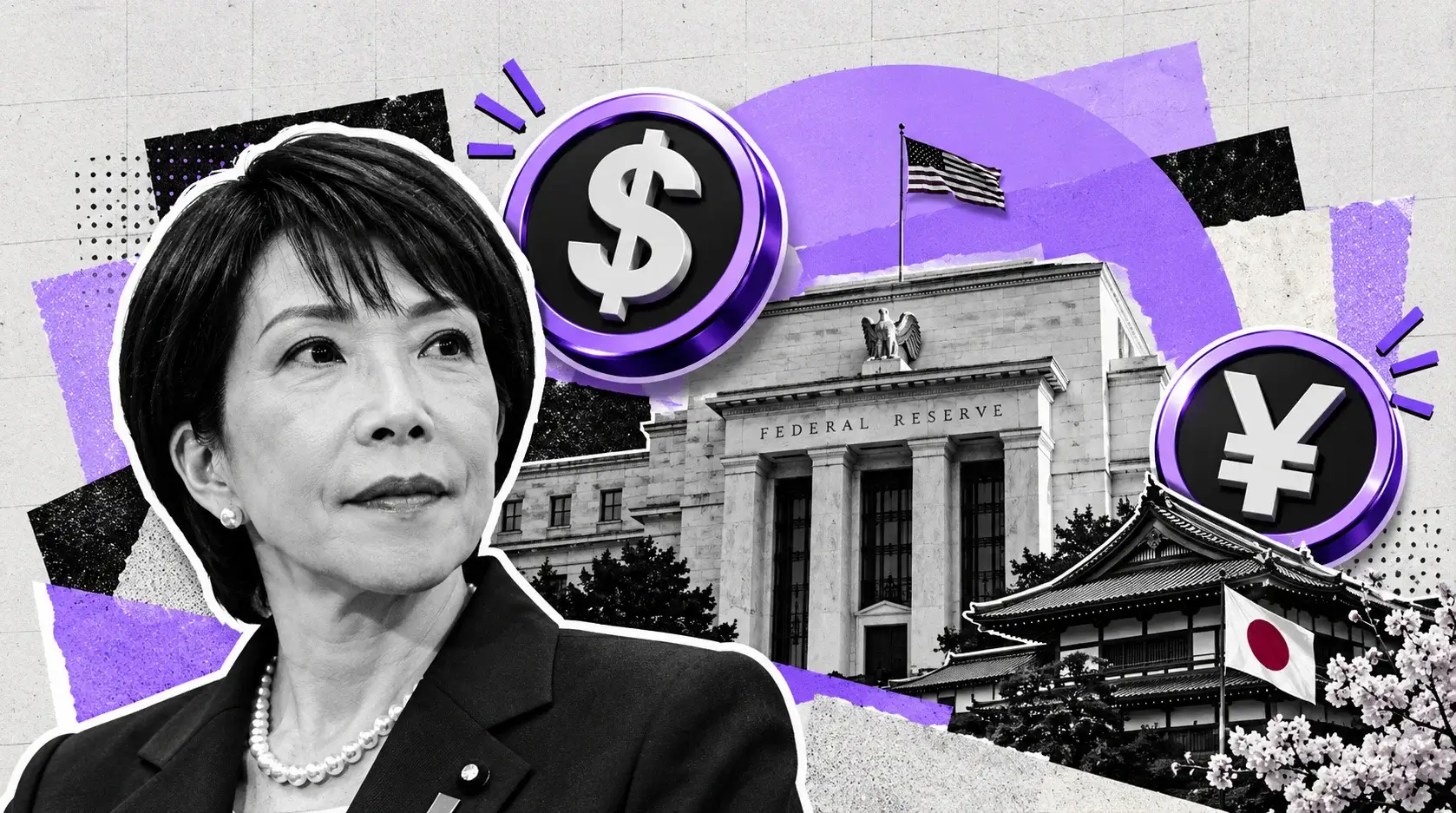
Yen Stalls at 160 Despite a 3% JGB and Tokyo Core CPI at 2.0% — Intervention Sits at 164, Friday's Payrolls Decide
02.09.2026 · TradingNEWS ArchiveEnergy
-
META ($660.00) Swings 12.1% From After-Hours High as Capex Floor Rises to $135B — $600 Target if $648.74 Breaks
22.10.2026 · TradingNEWS ArchiveStocks
-
XRP-USD ($1.325) Holds Up as Crypto Sells Off, With ETF Buyers 18% Underwater — $1.04 Target if $1.26 Breaks
22.10.2026 · TradingNEWS ArchiveCrypto
-
Brent ($111.99) Hits 5-Month High as Attacks Target Saudi Bypass Routes — $120 Target if $112.68 Breaks
22.10.2026 · TradingNEWS ArchiveCommodities
-
S&P 500 7,757, Nasdaq 26,703, Dow 52,856 Face AI Selloff as META, TSLA, LRCX Slide
22.10.2026 · TradingNEWS ArchiveMarkets
-
GBP/USD (1.3365) Outperforms the Euro as a November BoE Hike to 4.00% Comes Into Focus — 1.3649 Upside if 1.3408 Breaks
22.10.2026 · TradingNEWS ArchiveForex
The Dollar Side: DXY Rebounds From 101.45 to 101.85 as Treasuries Rally
The dollar’s recovery explains Thursday’s pullback in GBP/USD. The dollar index fell to 101.45 in Asian trading, a three-week low, as U.S. Treasury yields slid and the AI-led equity selloff pushed money into bonds. That dip lifted GBP/USD to 1.3407. The index then climbed back to 101.85, and GBP/USD fell to 1.3365.
U.S. yields are falling for haven reasons. The 10-year Treasury yield dropped 11.3 basis points to 5.036%, a one-month low. The 5-year fell 10.6 basis points to 4.864%. Investors bought Treasuries as the Nasdaq fell 2.06% and the S&P 500 1.08% on worries about AI capital spending. Lower long-term yields usually weaken the dollar, but the haven bid for the dollar itself during a risk-off move offsets that.
The Fed outlook supports the dollar. Markets price a 16% chance of a hike at the October 27–28 meeting and 90% by December. Brent at $111.99 keeps inflation pressure on the Fed. As long as the Fed stays on a hiking path, the dollar has a policy floor, even when long-term yields fall.
The dollar’s broader trend has turned sideways. The index came off 17-month highs at the start of October and has been consolidating since, holding support near 101.50 for more than a week. That consolidation is what allowed GBP/USD to rise from its October 14 intraday low of 1.3138 to Thursday’s 1.3407 high. A break below 101.45 would give sterling room to push higher. A bounce back above 102 would push GBP/USD toward its October lows.
For the forecast, the dollar’s direction depends on the Fed and on risk appetite. A dovish Fed hold next week, combined with a stabilizing equity market, would weaken the dollar and lift GBP/USD. A hawkish Fed or a deeper equity selloff would strengthen the dollar and cap sterling. Thursday’s tape shows that even with UK inflation supporting the pound, the dollar’s haven bid during risk-off sessions can push GBP/USD lower.
Oil at $111.99: Energy Inflation at 17.9% and the Cost to UK Growth
Oil drives both sterling’s support and its risk. Brent rose $3.17, or 2.91%, to $111.99 on Thursday after a Houthi drone strike near Saudi Aramco’s Shaybah field. UK energy inflation already hit 17.9% in September, up from 13.8% in August. Higher oil feeds straight into the UK’s headline inflation, which pushes the Bank toward hikes. That is supportive for sterling in the short run.
The cost shows up in growth. The UK imports a large share of its energy, and every $10 increase in Brent widens the trade deficit and squeezes household budgets. The expected increase in the household energy price cap will add 0.6 percentage points to inflation over the coming quarters. Higher energy bills cut real incomes and consumer spending, and services make up most of the UK economy.
UK activity data has been mixed. September’s labor market data came in stronger than expected, supporting hike expectations and lifting sterling to 1.335. But slowing consumer spending is a risk, as higher energy costs and rising mortgage rates on the back of high gilt yields hit households. If upcoming retail sales or business surveys show a sharp slowdown, the Bank may hesitate on a November hike.
The Bank faces a classic stagflation dilemma. Energy-driven inflation argues for higher rates to keep inflation expectations anchored. Energy-driven demand weakness argues for caution. In September, three members chose to hike and six to hold. With inflation now at 3.5% and services inflation accelerating, the balance has shifted toward hiking. But a sharp drop in activity could pull it back.
For GBP/USD, oil is a two-sided risk. Higher oil supports a Bank of England hike and therefore sterling. But very high oil would hurt UK growth enough to undercut that support and raise fiscal risks ahead of the budget. Brent between $105 and $113 keeps the hike case intact. A spike toward $120 would increase stagflation fears and could weigh on sterling.
Technical Picture: 1.3394–1.3408 Resistance, 1.3309 Support and the 1.3138 October Low
The chart shows a recovery that is testing resistance. GBP/USD rose from an October 14 intraday low of 1.3138 to Thursday’s 1.3407 high, a 269-pip rally in seven sessions. The daily closes trace the climb: 1.3231 on October 14, 1.3272 on October 15, 1.3330 on October 16, 1.3309 on October 19, 1.3373 on October 20 and 1.3394 on October 21. Tuesday’s session high of 1.3408 and Thursday’s 1.3407 form a double top for now.
Resistance sits at 1.3394–1.3408. That zone capped the pair on Tuesday, Wednesday and Thursday. A daily close above 1.3408 would confirm a breakout from the October range and open 1.3500, followed by the 90-day high of 1.3649. Above that, the 1.40 level sits as the high end of longer-term forecasts.
Support is layered below. The first level is 1.3366, Wednesday’s low. Then comes 1.3309, Monday’s close and the start of this week’s rally. Below that, 1.3272 and 1.3231 mark the mid-October closes, and 1.3196 is the 30-day low in daily fixing terms. The October 14 intraday low of 1.3138 is the key support for the month.
The moving averages show a neutral setup. GBP/USD trades near its 8-day, 21-day, 50-day and 100-day exponential moving averages, a sign that the pair has been range-bound over several timeframes. The 90-day average stands at 1.3415, just above the current price. The pair is close to the middle of its longer-term range, with the breakout or breakdown still to come.
For traders, the setup favors buying dips toward 1.3309 rather than chasing the pair at resistance. A break above 1.3408 after the budget and Fed decisions would justify adding exposure toward 1.3500. A daily close below 1.3309 would signal that the rally has failed and open 1.3196–1.3138.
Key Dates: Budget and Fed on October 28, Bank of England on November 5, October CPI on November 18
The calendar is crowded. October 28 brings both the UK Autumn Budget and the Fed’s rate decision. The budget will show whether the government can reassure the gilt market about its fiscal plans. The Fed will show whether it’s leaning toward a December hike or a pause. The combination will likely produce the biggest GBP/USD move of the month.
October 29 brings the ECB’s decision. While not directly tied to GBP/USD, the ECB outcome affects EUR/GBP and broader European currency flows. A dovish ECB would strengthen sterling against the euro and could spill over into GBP/USD support.
November 5 brings the Bank of England’s decision at 12:00 UK time, along with the minutes. A hike to 4.00% is the market’s base case after the September CPI data. A hike with hawkish guidance would likely push GBP/USD through 1.3408 toward 1.3500. A hold would be a sharp surprise and could send the pair toward 1.3200. The vote split, after September’s 6–3, will show how committed the committee is to further tightening.
Data in between matters too. UK retail sales and business surveys will show whether the economy is strong enough to absorb a hike. U.S. data, including next week’s personal consumption expenditures report, will shape the Fed outlook. The October UK CPI release on November 18 will show whether inflation is still rising after the Bank’s decision.
For positioning, the sequence argues for caution until October 28. The budget and Fed decisions could each move GBP/USD 100 pips or more. Holding large positions through both events is a high-risk trade. The clearer setup comes after the budget, when the fiscal risk is either priced or removed and the Bank’s November decision becomes the main focus.
GBP/USD Forecast Scenarios: 1.3309–1.3408 Base Range, 1.3500–1.3649 Upside, 1.3138 Downside
The base case is a range between 1.3309 and 1.3408 into the October 28 budget and Fed decisions. September’s 3.5% CPI and a likely November hike support the low end. Budget risk, gilt yields near 5.4% and the dollar’s haven bid cap the upside. Expect the pair to stay inside that 99-pip range until the budget is out, with volatility on any leaks or comments from the Treasury.
The bull case needs a credible budget and a hawkish Bank of England. If the budget delivers the tax increases and spending discipline needed to meet the fiscal rules, gilt yields should fall below 5.25%, removing the fiscal premium. Combined with a November hike, that would push GBP/USD through 1.3408 toward 1.3500 and the 90-day high of 1.3649, a 284-pip rally from the current level. A dovish Fed would add further support.
The bear case is a budget failure. If the budget misses on tax increases or loosens the fiscal rules, gilt yields could rise toward 5.9% on the 10-year, and the 30-year could push past its 6.036% October high. That would bring back memories of 2022 and hit sterling hard. In that case, GBP/USD would likely break 1.3309 and test 1.3196 and the October 14 low of 1.3138, a 227-pip decline. A Bank of England hold on November 5 would add to the pressure.
The risk-reward is roughly balanced but leans bullish. The inflation data and the Bank’s shift toward hiking give sterling a solid rate story. The budget risk is real but is partly priced in after investors bought gilts this week. The euro’s weakness adds a supportive cross-flow. The biggest downside risk is a fiscal shock, which would likely play out quickly if it came.
For positioning, buying dips toward 1.3309–1.3330 with risk below 1.3266 offers a reasonable entry ahead of the budget. A break above 1.3408 after the budget would confirm the bull case. A daily close below 1.3309 would invalidate it and shift the focus to 1.3138.
GBP/USD Verdict: Mildly Bullish Above 1.3309 as a November Hike Outweighs Budget Risk
The near-term verdict on GBP/USD is mildly bullish. The pair trades at 1.3365, down 0.22% on Thursday after testing a four-week high of 1.3407. Sterling has risen 1.26% over the past month, and the pullback came from a dollar bounce rather than sterling weakness. Sterling outperformed the euro on the day as EUR/GBP fell to 0.8376.
The rate story supports the pound. UK CPI rose to 3.5% in September, above forecasts and the Bank’s own projection, with core inflation at 2.8% and services at 3.7%. The Bank of England held at 3.75% in September on a 6–3 vote with three members already voting to hike. A November 5 hike to 4.00% would match the Fed’s upper bound and keep the rate differential tight. Against the ECB’s 2.50%, sterling offers a 125-basis-point premium.
The fiscal story caps the pound. The 10-year gilt yields 5.38% after hitting 5.53% on October 8, its highest since 2007. The 30-year gilt hit 6.036% on October 7, its highest since 1998. The Autumn Budget on October 28 is the key test of whether the government can reassure investors. A credible budget would remove the fiscal premium. A weak one could push yields toward 5.9% and sterling sharply lower.
The forecast sets a base range of 1.3309 to 1.3408, an upside target of 1.3500 and then 1.3649 on a daily close above 1.3408, and a downside target of 1.3138 if 1.3309 breaks. The deciding inputs are the budget and Fed on October 28 and the Bank of England on November 5. Until the budget is out, dips toward 1.3309 are buying opportunities, and a credible fiscal plan followed by a November hike would give sterling its clearest path to 1.3500 since the summer.