Stocks Pull Back Before Alphabet and Tesla Earnings: S&P 500 (SPX) at 7,509, Nasdaq (IXIC) Futures Off 0.77%, Dow (DJI) Flat as Oil Climbs Above $92
The S&P 500 eased from Tuesday's 0.89% chip-led gain to 7,509.20 as futures pointed lower ahead of the first Magnificent Seven earnings | That's TradingNEWS
Key Points
- S&P 500 (SPX) closed Tuesday at 7,509.20, up 0.89%, before Wednesday futures slipped 0.31%; Nasdaq-100 futures led the pullback down 0.77%.
- Alphabet (GOOGL), Tesla (TSLA), and IBM report after the close — the first Mag 7 prints of the season and a referendum on AI capex.
- Supermicro (SMCI) surged 7% pre-market on a record $60B backlog; Dell (DELL) rose 6% on the AI-server read-through.
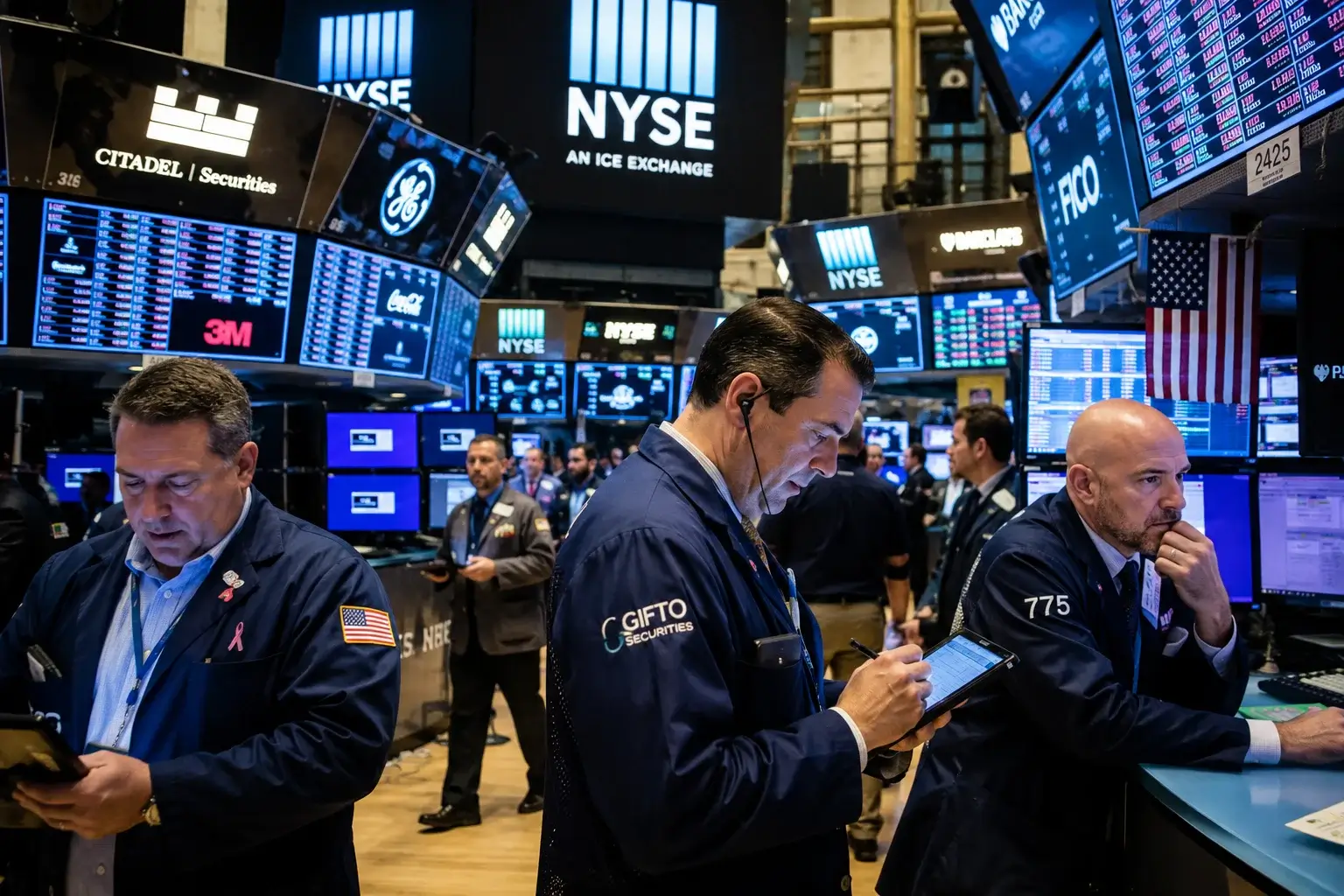
Stocks came into Wednesday on the back foot, unwinding a chunk of Tuesday's semiconductor-driven advance as traders positioned for the first real read on Big Tech's second quarter. The S&P 500 (SPX) closed the prior session at 7,509.20, up 0.89%, and futures pointed lower into Wednesday's open, with S&P contracts off roughly 0.3% near 7,522.50 and Nasdaq-100 futures leading the retreat down 0.77% at 29,090. Dow futures were close to unchanged, slipping about 0.06%, a split that tells you exactly where the anxiety sits: in the megacap growth complex, not the cyclicals.
The catalyst everyone is trading around lands after the bell. Alphabet (GOOGL) and Tesla (TSLA) report second-quarter results, the first two members of the Magnificent Seven to open their books this season, and the market is treating both as a referendum on the AI capital-spending trade that has carried indexes for the better part of two years. The question isn't whether the numbers beat — the bar assumes that. It's whether Google's advertising and cloud monetization can keep pace with the capital being poured into data centers, and whether Tesla can frame its ballooning automation spend as investment rather than cash incineration.
Underneath the index-level caution, the tape is anything but quiet. Oil is grinding higher on a widening Middle East conflict, fresh tariffs took effect overnight, and the rate-futures market has quietly flipped its bias as energy-driven inflation creeps back into the conversation. Gold pushed up 1.1% to 4,121.20 as the safe-haven bid returned, and the VIX ticked up 2.11% to 17.41 — hardly a panic reading, but a clear signal that hedging demand is building into the earnings print.
For a market that snapped a three-day skid on Tuesday, Wednesday is shaping up as a coiled-spring session: light on scheduled macro, heavy on event risk that won't resolve until roughly 4:05 p.m. Eastern. Positioning suggests traders are reluctant to press bets in either direction ahead of two reports that can independently move a percent of index weight. The setup rewards patience, and the desks that spent Tuesday chasing chips are the ones most exposed if the after-close prints disappoint. This is the kind of tape where the open barely matters and the last hour matters enormously.
The Tuesday Rally That Built the Ledge: Chips Do the Heavy Lifting
To understand Wednesday's hesitation, start with the session that preceded it. Tuesday was a broad, chip-powered advance that reversed the prior week's semiconductor rout and pulled all three benchmarks green. The Nasdaq Composite (IXIC) did the bulk of the work, climbing 329.13 points, or 1.29%, to 25,837.21, while the S&P 500 added 0.89% and the Dow Jones Industrial Average (DJI) tacked on 384 points, or 0.74%, to close near 52,223.
The breadth of the move told the story. This wasn't a narrow megacap grind higher — it was a sector rotation back into the exact names that had been dumped days earlier. Chip manufacturers extended a rebound that started overseas, tracking a rally in Asian tech and reinforced by strong export figures out of Taiwan and South Korea that reignited optimism about end demand. When the semiconductors that had been the market's punching bag suddenly become its engine inside 48 hours, you get the kind of violent mean reversion that defined Tuesday's tape.
The Dow's internals leaned industrial and defensive, a useful contrast to the growth-led Nasdaq. The blue-chip index's biggest contributors were 3M, up 7.6%, UnitedHealth, up 3.39%, and Caterpillar, up 2.91% — a mix of margins, healthcare recovery, and cyclical capex exposure. On the other side of the ledger, Boeing shed 2.25%, Sherwin-Williams gave back 1.87%, and Alphabet slid 1.64% ahead of its own report, a pre-earnings de-risking that looks prescient given Wednesday's mood.
That Alphabet weakness on an up day matters. It signals that fast money was trimming exposure to the very names about to report, unwilling to hold full risk into a binary event after a strong run. The rally happened around the earnings-sensitive megacaps, not through them.
What Tuesday established was a market that wants to rally but keeps running into its own event calendar. The chip rebound proved the appetite for risk is intact when a catalyst shows up. The refusal to extend that bid into Wednesday's open proved the appetite is conditional. Buyers showed up for semiconductors on hard export data; they won't commit to the broad tape until they see whether the AI spending thesis holds up under earnings scrutiny. Tuesday was the ledge. Wednesday is the market deciding whether to step off it or wait for a rope.
Semiconductors: Anatomy of a 48-Hour Round Trip
The chip complex has become the market's mood ring, and its swings this week have been extreme even by its own standards. The rebound that carried Tuesday saw the heaviest hitters in memory and equipment post double-digit and high-single-digit gains. Micron and Sandisk each surged more than 12%, while Applied Materials and Marvell both climbed over 8% — moves that erased a meaningful slice of the prior week's drawdown in a single session.
Nvidia (NVDA), the sector's bellwether and the stock most tightly wound to the entire AI narrative, added 1.97%, a comparatively measured gain that reflects its already-massive weight and the market's tendency to rotate the froth into the higher-beta names around it. The most dramatic move belonged to Nebius (NBIS), the AI-infrastructure play that rocketed 18.78%, a reminder that when sentiment flips in this corner, the second-tier names move in multiples of the leaders.
The fundamental spark was tangible: export data from Taiwan and South Korea, the two nodes that anchor the global chip supply chain, came in strong enough to quiet the demand-destruction fears that had driven the previous week's selling. When the hard shipment numbers contradict the bearish thesis, the shorts covering into a thin tape amplify the bounce. That's the mechanical reality behind moves of this size.
The problem is durability. Monday's session had already shown chip momentum fading — the sector trimmed gains as the day wore on, and the Nasdaq slipped just below flat. That volatility around a single sector, on consecutive days, is the market's way of admitting it has no conviction on where AI-related hardware demand settles. The tape is trading headlines, not trend.
Wednesday's pre-market drift lower in the Nasdaq-100 suggests some of Tuesday's chip enthusiasm is already leaking out ahead of the earnings that could confirm or crush the spending thesis. Semiconductors don't exist in a vacuum here — they are a leveraged bet on hyperscaler capital expenditure, and the two reports after Wednesday's close speak directly to that spending. If Alphabet signals restraint on data-center buildout, the chip names that ripped on Tuesday become the most vulnerable on Thursday. The round trip could extend in either direction, and the desks that added semiconductor risk into Tuesday's strength are the ones sweating the after-close prints most.
The Alphabet Print: Where Ad Dollars Meet Capex Reality
Alphabet's second-quarter report is the single most consequential event on Wednesday's calendar, and the market's framing is unusually specific. This isn't a broad earnings question — it's a return-on-investment interrogation. Investors want proof that the surging capital being committed to AI infrastructure is translating into monetizable products, not just depreciation on a balance sheet.
The setup is loaded. Alphabet shares slipped 1.64% on Tuesday even as the broader Nasdaq ripped higher, a clear tell that positioning had turned cautious into the print. The stock going down on an up day, while its megacap peers rallied, means the smart money was reducing exposure rather than pressing a bet. That de-risking cuts both ways: it lowers the bar for a relief rally if the numbers clear, but it also signals that the people closest to the setup weren't willing to hold full size.
The core tension lives in two line items. Advertising remains the profit engine, and the search business needs to demonstrate it isn't being eroded by AI-driven competition for query volume. Cloud is the growth story, and the market wants acceleration that justifies the infrastructure spend. Against both sits the capital expenditure number, which has climbed to levels that make even bullish analysts flinch. The equation the market is solving is simple to state and hard to satisfy: is AI monetization scaling fast enough to outrun AI investment?
If Google's cloud revenue accelerates and management frames capex as demand-driven rather than speculative, the print becomes a green light for the entire hyperscaler complex and, by extension, the chip names that feed it. If the spending outpaces the monetization narrative, the read-through hits everything from semiconductors to the AI-server makers to the broader Nasdaq multiple.
This is why the whole tape is treating one company's report as a systemic event. Alphabet is the first hyperscaler to show its hand this quarter, and its capex commentary sets the template for how the market prices the AI trade for the rest of earnings season. A market trading at these valuations needs the spending to be productive. Wednesday after the close, Alphabet either validates that or it doesn't, and there is no hedge that fully neutralizes a report with this much index weight riding on it. The stock's Tuesday weakness suggests traders already know the stakes.
Tesla's Cash Question: Deliveries Up, Capex Climbing, Robotaxi Burning
Tesla's second-quarter report shares the after-close spotlight, and the market's lens on it is entirely different from Alphabet's. Where Google faces a monetization test, Tesla faces a cash test. The delivery numbers came in strong, giving the top line a lift, but the story that moves the stock isn't the cars sold last quarter — it's the money being consumed by the bets on autonomy and robotics.
Capital expenditure is the number that matters. Tesla is vaulting into its next automation phase, and the Optimus humanoid program alongside the robotaxi ambitions require substantial and sustained cash outlays. The market is willing to fund a growth story; it is far less patient with a company burning capital on projects whose revenue timelines remain undefined. The delivery beat provides cover, but the guidance on spending is what determines whether the stock rallies or breaks.
This is the classic Tesla setup: a bull case built on optionality — full self-driving, the robotaxi network, humanoid robots at scale — colliding with a bear case built on the here-and-now cash flow those bets consume. Every quarter the market re-underwrites how much future it's willing to pay for today, and the answer swings violently with the tone of the capex commentary and the delivery trajectory.
The complication this quarter is macro. Rising oil prices, a hardening tariff regime, and a rate-futures market that's tilting toward tighter policy all pressure the exact high-multiple, long-duration growth profile Tesla embodies. When the discount rate the market applies to distant cash flows creeps higher, the stocks that live entirely on future promise are the most exposed. Tesla reporting into a session where oil is climbing and rate-hike odds are rising is not a friendly backdrop for optionality.
The read-through extends beyond the ticker. Tesla is a proxy for retail risk appetite and for the market's willingness to fund moonshots. A strong report that frames automation spend as the path to margin expansion keeps the speculative bid alive. A report that reads as unchecked cash burn against a tightening macro can drain enthusiasm from the entire high-beta cohort that has ridden this year's advance. Two megacaps, two distinct fears — monetization for one, cash discipline for the other — both resolving in the same after-hours window, is why Wednesday's regular session feels like a holding pattern.
Pre-Market Movers: The AI-Server Complex Steals the Early Tape
While the index-level action stayed cautious, individual names delivered the real fireworks in pre-market trading, and the AI-hardware supply chain owned the leaderboard. Supermicro (SMCI) surged roughly 7% before the open after the AI-server maker reported a record backlog and raised its gross-margin outlook, with the order book swelling toward a reported $60 billion. That backlog figure is the number that matters — it's tangible evidence of the data-center buildout showing up as booked revenue rather than analyst projection.
Dell Technologies (DELL) rode the same wave, climbing about 6% in early trade as the read-through from the server demand story lifted the broader enterprise-hardware complex. When one AI-infrastructure name prints a record backlog, the market immediately re-rates its peers on the assumption that the demand is industry-wide rather than company-specific. Dell's move is a direct beneficiary of that logic.
The strength wasn't confined to servers. Rocket Lab (RKLB) added better than 5% in pre-market, extending momentum in the space and defense-adjacent names that have quietly become a growth theme of their own. The breadth of the early gainers — servers, enterprise hardware, space — suggests the risk appetite that drove Tuesday's chip rally hasn't evaporated so much as rotated into names with hard order-book catalysts.
That distinction is important for reading Wednesday's session. The index futures are red, but the strongest individual stories are the ones with concrete, backlog-driven news. The market is discriminating: it's punishing the megacap complex on earnings uncertainty while rewarding the smaller names that can point to booked demand. This is a stock-picker's tape hiding underneath a nervous index.
Supermicro's record backlog also functions as a preview of sorts for the Alphabet capex question. If a server maker is seeing order books swell to record levels, that spending has to be coming from somewhere — and the hyperscalers reporting later this season are the obvious source. The bullish read is that SMCI's backlog is physical proof the AI buildout is accelerating, not peaking. The bearish read is that all that spending still has to prove its return, which loops right back to the Alphabet print.
The pre-market leaderboard, in other words, isn't just noise around the open. It's the supply chain telling you demand is real, even as the market frets over whether that demand is profitable. Those two facts will collide after the close.
The IBM Overhang: A Warning the Market Hasn't Forgotten
Not every earnings story on Wednesday carries a tailwind. IBM (IBM) is scheduled to report second-quarter results after the close, and it arrives at the podium carrying fresh scar tissue. A pre-earnings warning last week triggered a brutal drop in the stock, resetting expectations lower and turning what might have been a routine print into a credibility test.
The dynamic around a post-warning report is distinct. When a company pre-announces trouble, the initial shock gets priced immediately — hence last week's crash — but the actual report then has to clear a bar that's been reset in real time. The market has already punished the stock; the question now is whether the full results confirm the warning was appropriately scoped or reveal that the problems run deeper than the initial guidance suggested. A report that merely matches the lowered bar can produce a relief bounce; one that shows further deterioration extends the damage.
IBM's setup is a useful counterweight to the AI-infrastructure euphoria animating the SMCI and Dell trades. For every name riding the data-center buildout, there's an established tech franchise fighting to prove its transformation story is on track. IBM's mix of consulting, software, and infrastructure sits partly inside the AI narrative and partly outside it, and the market wants clarity on which side is winning. The pre-earnings warning suggested at least part of the business hit a rough patch.
The broader lesson embedded in the IBM story is about the earnings bar itself. This is a season where beating estimates isn't sufficient — the run-up in prices has raised the hurdle to the point where even solid results can disappoint. IBM's warning was the market getting ahead of that risk in one name. The question hanging over the rest of the reporting cohort is how many other companies are quietly in the same position, with expectations that have outrun the fundamentals.
For Wednesday specifically, IBM adds a third distinct earnings narrative to the after-close window, alongside Alphabet's monetization test and Tesla's cash test. Three reports, three different flavors of risk, all landing in the same tight timeframe. The market's caution into the open looks less like indecision and more like rational hesitation in front of a genuinely loaded evening. The tape isn't waiting on one number — it's waiting on a cluster of them that together will reprice the AI and enterprise-tech trades.
Oil Climbs as the Iran Conflict Widens Into Its Eleventh Night
The geopolitical backdrop hardened again overnight, and crude is the transmission mechanism carrying that stress into equities. Oil prices continued to rise as the US launched its eleventh consecutive night of airstrikes against Iran, with Brent crude climbing above $92 a barrel after the benchmark had already touched near $90 earlier in the week. The escalation shows no sign of de-escalating, and the market is now pricing a sustained conflict rather than a contained flare-up.
The scale of the commitment came into sharper focus when the Defense Secretary disclosed to Congress that the US has spent $37.5 billion on the war to date. That figure reframes the conflict from a series of headline strikes into a material, ongoing fiscal and geopolitical commitment — the kind that keeps a risk premium embedded in crude indefinitely. When the spending runs into the tens of billions and the strikes are counted in consecutive nights, the oil market stops treating the situation as a spike and starts treating it as a regime.
For equities, rising crude is a two-edged problem. It lifts energy-sector earnings and the stocks levered to them, providing a pocket of strength. But it simultaneously feeds directly into the inflation channel, raising input costs across transportation, manufacturing, and consumer goods, and complicating the disinflation narrative that the rate-cut bulls had been leaning on. Oil above $92 is precisely the kind of print that forces the rates market to reconsider its assumptions, which is exactly what's happening this week.
The safe-haven flows tell the same story from a different angle. Gold pushed up 1.1% to 4,121.20 as capital rotated toward defensive stores of value, and the VIX ticked higher, both consistent with a market building hedges against a widening conflict. When gold rallies alongside oil while equity futures soften, the message is that geopolitical risk is being repriced across every asset class simultaneously.
The oil story also loops back to the earnings setup. Tesla and other high-multiple growth names are most sensitive to the inflation-and-rates read-through that rising crude produces. A conflict that keeps oil elevated pressures the discount rate applied to long-duration growth stocks at the exact moment those stocks are reporting. The Middle East isn't a sideshow to Wednesday's earnings drama — it's the macro weather system those reports have to fly through, and it's turned notably rougher over the past several sessions.
Read More
-
Yen Stalls at 160 Despite a 3% JGB and Tokyo Core CPI at 2.0% — Intervention Sits at 164, Friday's Payrolls Decide
02.09.2026 · TradingNEWS ArchiveEnergy
-
T-Rex 2X Inverse MSTR ($4.39) Rips 10.44% as Strategy Pauses Bitcoin Buys for a 2nd Week — $4.63 Close Opens $5.27
15.09.2026 · TradingNEWS ArchiveStocks
-
XRPR ($10.59) and XRPI ($7.04) Open at Highs and Close at Lows After Senate Kills CLARITY Act
15.09.2026 · TradingNEWS ArchiveCrypto
-
NG ($2.908) Holds Above $2.80 Low as LNG Feedgas Hits 18.8 Bcf and TTF Trades 9.2x Henry Hub
15.09.2026 · TradingNEWS ArchiveCommodities
-
USD/JPY (155.09) Faces 275bp Policy Gap as BOJ Prepares 31-Year-High Rate — Close Below 154 Opens 153.40
15.09.2026 · TradingNEWS ArchiveForex
The Tariff Wall Goes Up: Canada, Brazil, and a Friday Deadline
Trade policy delivered its own escalation this week, and the sequence is aggressive. A new 25% tariff targeting Brazil took effect on Wednesday, following the 50% tariff slapped on most Canadian goods earlier in the week — a duty that senior officials framed as retaliation for alleged trade discrimination against US products. The cadence of new levies, landing days apart on major trading partners, signals a decisive shift toward a more confrontational posture.
The bigger structural event looms Friday. The temporary 10% global tariff is set to expire, and the administration appears ready to replace it not with a rollback but with more permanent duties. The market read is that the reprieve traders had been hoping for isn't coming — instead, the baseline tariff regime is being hardwired into the cost structure of imported goods. Among the specific measures under consideration is a 100% tariff on imported generic drugs, a move that would ripple through healthcare supply chains and pharmaceutical pricing.
The trade representative added to the tension, hinting in public comments that additional action could be imminent and that more countries could find themselves in the crosshairs. That open-ended threat is arguably as market-relevant as any single tariff, because it prevents companies from pricing in a stable trade environment. When the next levy could hit any partner at any time, corporate planning and supply-chain decisions freeze, and that uncertainty carries a cost independent of the tariffs actually imposed.
For equities, the tariff wall compounds the inflation problem that oil is already creating. Import duties raise the landed cost of goods, and those costs eventually reach consumers or compress corporate margins — neither outcome friendly to a market priced for disinflation and rate relief. The generic-drug tariff in particular targets a category where the US relies heavily on imports, meaning the pass-through to prices could be swift.
The timing sharpens the effect. A hardening tariff regime arriving in the same week as an oil spike and a pivotal earnings slate creates a layered risk environment where each factor amplifies the others. Rising input costs from crude, rising import costs from tariffs, and earnings reports that have to be delivered against that dual headwind — it's a demanding backdrop for any company trying to guide optimistically. The Friday deadline turns the back half of the week into a policy event as much as an earnings event, and the market is unlikely to fully commit until it sees what replaces the expiring global duty.
The Fed Recalibration: Rate-Hike Odds Creep Back Into the Frame
The most under-appreciated shift this week is happening in the rates market, and it runs directly counter to the easing narrative that dominated earlier in the year. Fed funds futures now imply roughly a 24% chance of a rate hike at the July meeting, with the probability of at least a quarter-point increase by September sitting near 69%. Read that again: the market is pricing hikes, not cuts, a meaningful repricing driven by the inflation impulse from oil and tariffs.
This is the macro pivot that ties the whole week together. For months the bull case leaned on the assumption that the next Fed move would be lower, providing a tailwind for equity multiples and long-duration growth. Rising crude above $92 and a hardening tariff regime have forced the futures market to confront the possibility that inflation reaccelerates, and a central bank facing reaccelerating inflation doesn't cut — it holds or tightens. The 69% September figure is the market taking that scenario seriously.
The implications cascade through every corner of the equity market. Higher-for-longer or higher-from-here rates raise the discount rate applied to future cash flows, which disproportionately hurts the high-multiple growth names — the exact cohort, from megacap tech to Tesla, reporting this week. A rate market tilting hawkish into a megacap earnings slate is a headwind layered directly on top of the company-specific risks each report carries.
It also reframes the earnings bar. Strategists have already warned that companies face an unusually high hurdle after the market's strong run, meaning even solid results may not satisfy investors. Add a hawkish rate backdrop, and the margin for error compresses further. A company that beats but guides cautiously on costs — costs now inflating from both oil and tariffs — could get punished in a way that wouldn't have happened when the market assumed cuts were coming.
The gold rally to 4,121.20 fits this picture too. Gold rising while rate-hike odds climb might seem contradictory, but it reflects a market hedging against a stagflationary tail — sticky inflation forcing tighter policy into a slowing economy. That's the uncomfortable scenario the cross-asset moves are collectively sketching. The rates market has quietly become the most important story nobody's leading with, and it's the lens through which every earnings report this week will be judged. When the discount rate is rising, the future has to look that much brighter to justify today's price.
Earnings Season Scorecard: A 88% Beat Rate That Still Isn't Enough
The paradox defining this reporting season is that the results have been strong and the market still isn't satisfied. Nearly 88% of the S&P 500 companies that have reported second-quarter results have topped profit estimates — a beat rate well above historical norms that would, in a normal cycle, fuel a broad advance. Instead, the tape is nervous, and the disconnect reveals everything about where valuations sit.
The explanation is the bar. After the market's powerful run, the price already embeds an expectation of beats, so clearing estimates no longer functions as a positive catalyst — it functions as the minimum required to avoid a selloff. Strategists have flagged this dynamic directly: companies now face an unusually high hurdle, and even solid results may fall short of what's needed to justify current multiples. When 88% of reporters beat and the index still can't sustain a rally, the beats are being treated as priced-in rather than earned.
That framing changes how Wednesday's megacap reports will be received. Alphabet and Tesla beating on the headline numbers is close to assumed — the market has essentially pre-spent those beats. What matters is the guidance, the capex commentary, and the forward narrative, because that's the only remaining source of upside surprise. A company can beat every line and still sell off if the outlook disappoints, which is precisely the trap a high beat rate creates.
The IBM warning last week is the cautionary tale embedded in this scorecard. It's evidence that beneath the aggregate beat rate, individual franchises are hitting real trouble, and the market is quick to punish any name that breaks the pattern. The 88% figure is an average, and averages hide the tails. The reports that miss, or that beat but guide down, are getting disproportionate scrutiny in an environment where perfection is the baseline.
This is the emotional core of Wednesday's caution. The market has watched a strong earnings season fail to produce durable gains, which teaches traders that good numbers aren't a reason to add risk into a print. Better to wait, see the guidance, and react — hence the holding pattern into the open and the reluctance to press bets before the after-close reports. A season this strong producing a tape this tense is the clearest signal available that the market is priced for a lot to go right, and increasingly worried about the macro forces — oil, tariffs, rates — that could make things go wrong.
Cross-Asset Tells: Gold Bid, Vol Firm, and a Split Beneath the Surface
The story the equity indexes tell is incomplete without the cross-asset picture, and this week the other markets are flashing a coherent warning. Gold's 1.1% climb to 4,121.20 is the headline safe-haven move, and it's happening for the right reasons — a widening Middle East conflict, sticky inflation from rising oil, and a rate market tilting hawkish all converge to make hard assets attractive. When gold rallies on both geopolitical fear and inflation hedging simultaneously, it carries more signal than a move driven by either factor alone.
The VIX at 17.41, up 2.11%, rounds out the defensive posture. That's not a level that screams crisis — readings in the mid-teens are consistent with a functioning, orderly market — but the direction matters more than the absolute number here. Volatility ticking up into a megacap earnings slate tells you demand for downside protection is building, and traders are paying up to hedge the after-close event risk. A market that felt safe wouldn't be bidding vol ahead of the print.
The index internals reveal a split that the headline futures numbers obscure. Dow futures were nearly flat, down just 0.06%, while Nasdaq-100 futures dropped 0.77% — a clear preference for the industrial and defensive cyclicals over the earnings-exposed growth complex. Russell 2000 futures slipped about 0.30%, sitting between the two, which suggests the small-cap trade isn't the story either way today. The money isn't fleeing equities wholesale; it's rotating away from the megacap names about to report and toward the parts of the market with less binary event risk.
That rotation is the tell to watch. On Tuesday, the rotation ran into semiconductors and growth. On Wednesday, it's running the other direction, into the Dow's industrials and defensives, as traders de-risk ahead of the print. The speed of these rotations — reversing inside a single session — is itself a signal of a market with low conviction, trading around events rather than trend.
Put the pieces together and the cross-asset canvas describes a market bracing rather than panicking. Gold up, vol up, growth futures down, cyclicals holding, oil climbing, rate-hike odds rising. Each individual move is modest; collectively they sketch a defensive crouch into a genuinely uncertain evening. The equity indexes may look calm at the surface, but the plumbing underneath is repositioning for risk. When every asset class is quietly hedging the same event, the event tends to matter — and Wednesday's after-close slate is that event.
Levels and the Setup Into Thursday: Resistance Above, Event Risk After the Bell
The S&P 500 at 7,509.20 sits just below the resistance zone traders have been eyeing, and the technical picture reinforces the fundamental hesitation. The index is approaching levels where prior advances have stalled, and it's arriving there with the fuel gauge reading uncertain — a strong beat rate that isn't sparking rallies, a macro backdrop turning hostile, and the single largest earnings catalyst of the week still ahead. That's a demanding spot from which to break higher.
The near-term map is straightforward. On the upside, a clean push through resistance requires a catalyst, and the only one large enough on the immediate horizon is a pair of megacap reports that clear the bar and, more importantly, guide constructively on the AI spending question. If Alphabet frames its capex as demand-driven and its cloud monetization accelerates, and Tesla can present its automation burn as investment rather than waste, the market has the ingredients for a resistance break Thursday. Absent that, the index likely chops beneath the ledge.
On the downside, the risks are stacked. A disappointing capex read from Alphabet hits the entire hyperscaler and semiconductor complex, unwinding Tuesday's chip rally and pressuring the Nasdaq's heaviest weights. A cash-burn narrative from Tesla drains the speculative bid. An IBM report confirming deeper trouble adds a third negative catalyst. Any one of these can move index-level weight; a cluster of disappointments after the close sets up a rough Thursday open. The oil, tariff, and rate headwinds mean there's no macro cushion to absorb an earnings miss.
The positioning tells you traders understand this. The defensive rotation into Dow cyclicals, the bid in gold, the uptick in vol, and the reluctance to extend Tuesday's rally into Wednesday's open all describe a market unwilling to commit before the event resolves. That's rational. When the risk is binary and the timing is known, waiting is the trade.
The sequence to watch is compact: the regular session likely stays range-bound and event-driven, with the after-close reports from Alphabet, Tesla, and IBM landing around 4 p.m. Eastern, followed by a guidance-driven repricing that sets Thursday's tone. The Friday tariff deadline then adds a policy catalyst to close the week. For now, the market is coiled beneath resistance, hedged for downside, and waiting on numbers that will either validate the AI trade for another quarter or force a reckoning with valuations that have priced in a great deal of good news. Wednesday's open is a placeholder. The evening is the event.