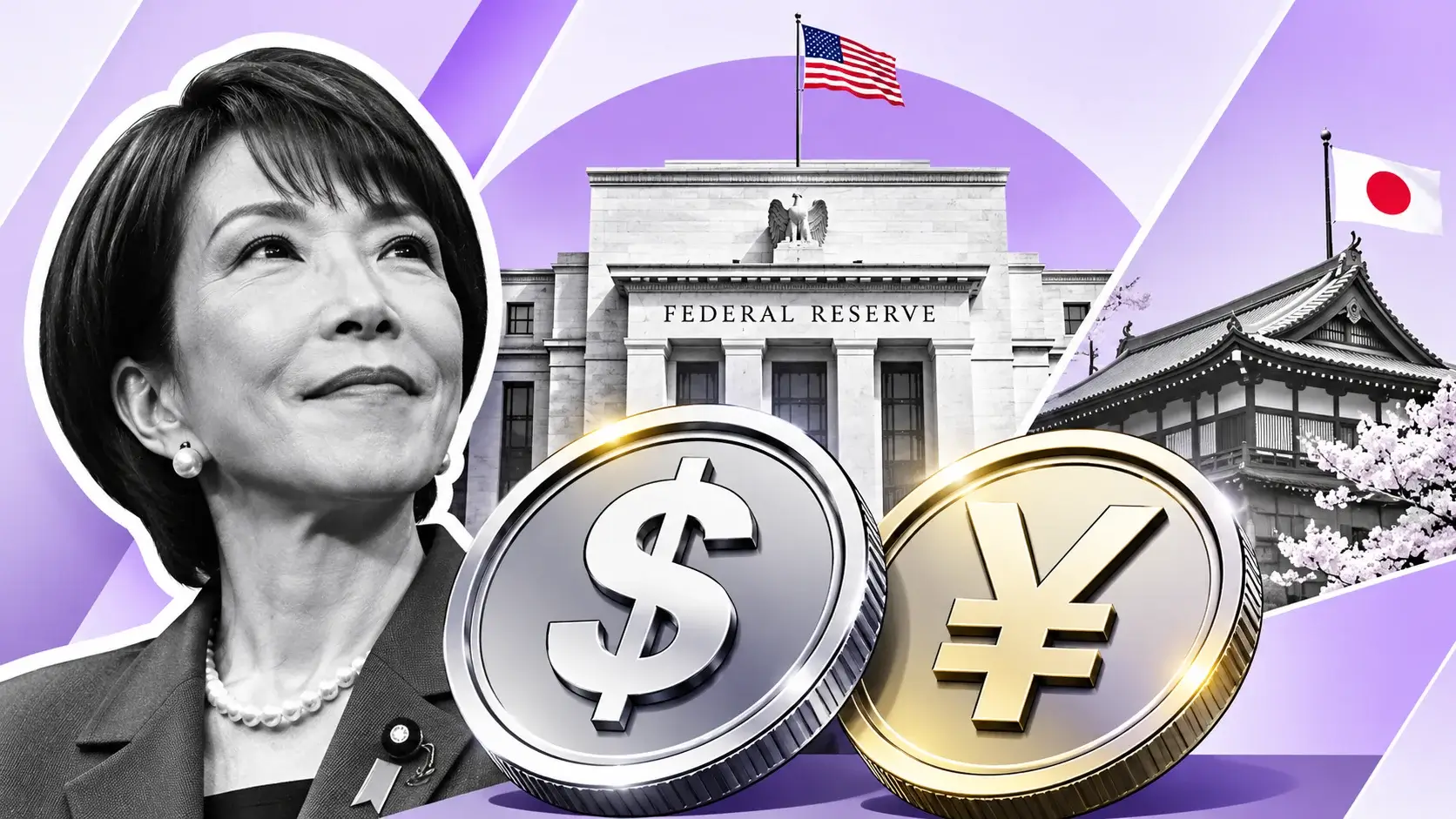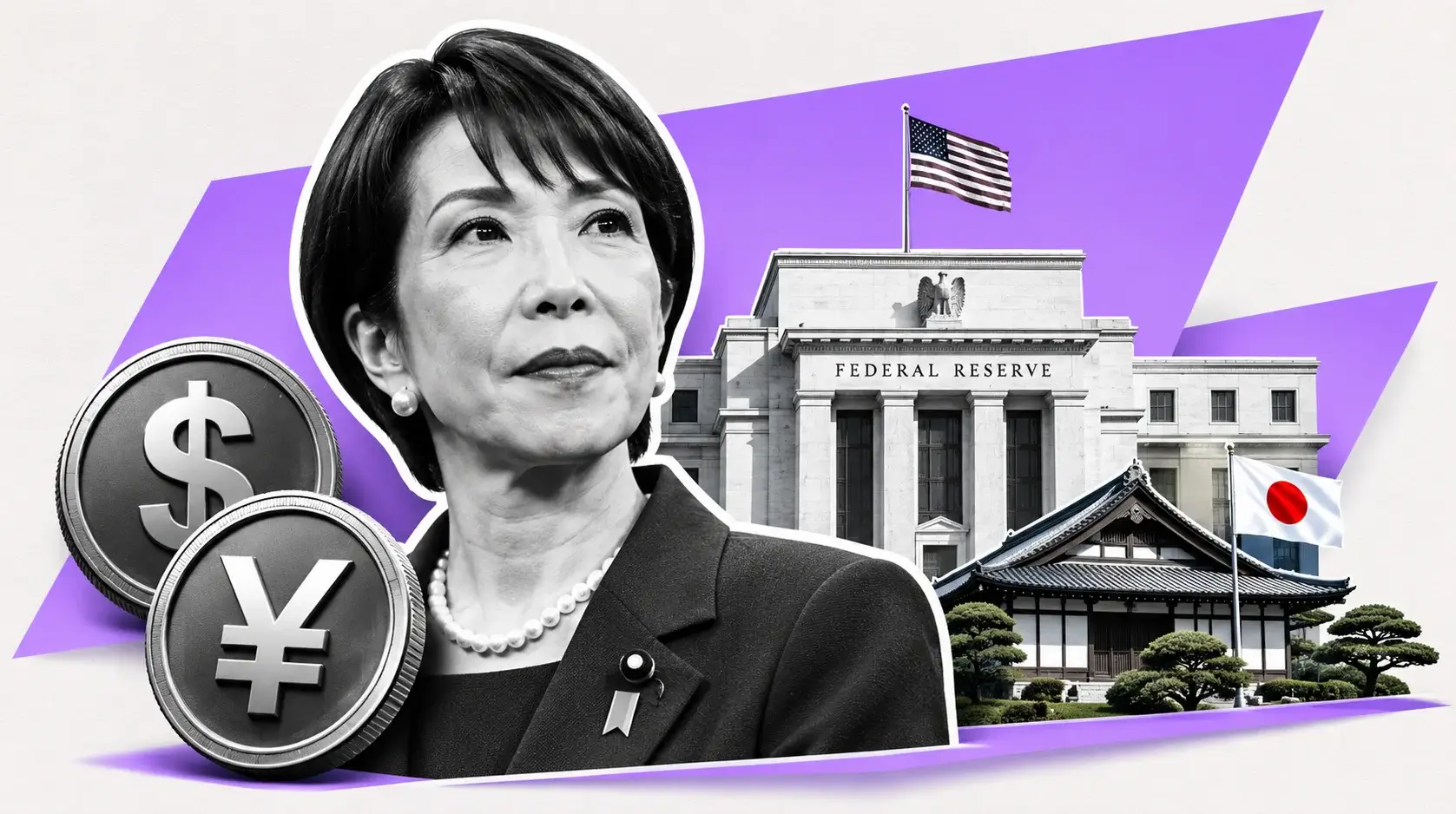
USDJPY (158.12) Reverses From a Three-Week High as Yields Fall and Tokyo Guards 160 — Break Below 157.40 Opens 156.82
The BoJ held at 1.25% by an 8 to 1 vote and declared underlying inflation consistent with its 2% target | That's TradingNEWS
Key Points
- USD/JPY fell 0.36% to 158.12 after touching 157.39 as the Democratic sweep pushed the 10-year yield to 4.92%.
- The Bank of Japan held at 1.25% and signaled a December hike, now priced at 80%.
- Japan has spent more than ¥27 trillion on yen intervention in 2026, a record by a wide margin.
The dollar’s slide after the U.S. midterm elections reached the yen, but not cleanly. USD/JPY opened Wednesday at 158.47, a fraction below Tuesday’s close of 158.69, which marked a near three-week high. As early vote counts confirmed a Democratic sweep of the House and Senate, the pair broke below 158.00 during the Asian session and fell to a session low of 157.39. The Dollar Index slumped to a one-month low at 101.41, and the 10-year Treasury yield dropped as low as 4.89%.
The yen couldn’t hold the move. By the European session, USD/JPY had recovered back above 158.00 and was trading at 158.12, down 0.36% on the day, after giving back almost half the ground the yen took on the election news. The daily range ran from 157.39 to 158.60, a span of 121 pips. Against the dollar, the euro rose 0.6% and the Swiss franc gained 0.6%, while the yen lagged with a gain of 0.36% to 0.4%.
That underperformance is the story. The Democratic victory triggered a safe-haven bid as investors priced AI regulation risk and slower growth, and the yen and franc both gained. But the franc outran the yen by a wide margin, and EUR/USD hit 1.1272, its highest since October 6. The yen’s limited gain reflects the persistent interest rate gap that still favors the dollar.
The broader context shows a pair stuck in a range. USD/JPY traded between 156.975 on October 30 and 158.74 on November 3 over the past week, and between 156.07 and 158.95 over the past 30 days, with an average of 157.97. The 52-week range runs from 152.64 on February 12 to 163.86 on July 29, the near 40-year low for the yen that triggered coordinated U.S.-Japan intervention.
The year shows how weak the yen remains. USD/JPY traded at 154.22 a year ago and has risen 2.9% since. The 2026 average stands at 158.43, compared with 149.67 for 2025. Tokyo spent more than ¥27 trillion defending the currency this year, a record by a wide margin.
The forecast runs from one thesis. The Democratic sweep pushed U.S. yields lower, the Bank of Japan signaled a December hike after declaring its 2% inflation goal met, and Tokyo’s intervention threat caps the pair below 160. Those three forces argue for lower USD/JPY. The 78% odds of a Fed hike in December and the 215 basis-point 10-year yield gap argue against a collapse. The bias is bearish below 158.60, with a first target at 156.82 and a floor at 156.07.
The Dollar Leg: Democratic Sweep Pulls the 10-Year Yield to 4.92%
The dollar dropped broadly on Wednesday and was on pace for its biggest daily percentage decline in three weeks after Democrats seized control of both chambers of Congress. The Dollar Index fell to a one-month low of 101.41 before trading at 101.51, down 0.32%. The 10-year Treasury yield dropped nearly 3 basis points to 4.921% after touching 4.89% overnight.
The mechanism runs through fiscal policy and growth. A Democratic Congress will oppose Trump’s plans to cut taxes and increase government spending, which means lower Treasury issuance and less fiscal stimulus. Markets expect Democrats to regulate the AI sector and slow data-center construction. That outlook pushed investors into Treasuries, lowering yields and the dollar and boosting the yen and franc.
The growth angle matters for the Fed. A slowdown in growth could dampen the dollar’s appeal and reduce the need for interest rate hikes. Markets still price a 78% chance of a 25 basis-point hike at the December 8 to 9 meeting, after the Fed raised rates to a 3.75% to 4.00% range in September. If the election reduces the Fed’s need to tighten, the rate support under the dollar weakens.
Some strategists see the reaction as limited. Investors increasingly appear to view the election outcome as a constraint on future policy rather than a fundamental challenge to the broader U.S. growth story. Even with a Democratic sweep, it’s difficult to pass federal legislation given Trump’s veto power. Most analysts expected a modest, short-lived reaction in the dollar rather than a lasting trend.
The case for a deeper dollar decline rests on the energy channel and capital flows. Japan and the euro area, as net importers of energy commodities, benefit from lower oil prices. Brent fell 2.8% to $100.71 on Wednesday, extending an eight-session slide of 13%. A shift of capital to Europe and Asia as American exceptionalism fades would support the yen.
The competing forces keep the dollar in a range. Political uncertainty and lower Treasury yields weigh on one side; restrictive monetary policy and potential improvements in fiscal credibility support the other. The post-election selloff looks more like a significant correction than the start of a confirmed bearish reversal.
For USD/JPY, the dollar leg sets the direction. The pair’s 0.36% decline is smaller than the dollar’s broad fall because yen-specific factors limited the gain. If U.S. yields break below 4.89%, USD/JPY tests 157.39 again. If they rebound above 5.00%, the pair returns to 158.60.
The Bank of Japan Holds at 1.25% and Declares Victory on Inflation
The Bank of Japan’s October decision reshaped the yen outlook. On October 30, the policy board held the overnight call rate at 1.25% by an 8 to 1 vote, with board member Hajime Takata dissenting in favor of a hike to 1.50%. The central bank raised rates to 1.25% in September, the highest level since 1995, and held off on a back-to-back move to scrutinize the effects of past increases on lending conditions.
The language was hawkish. The BoJ declared that underlying CPI inflation is at a level generally consistent with its 2% target, a shift from July’s language that inflation was “approaching” 2%. That change marks the central bank’s declaration of victory in a nearly 14-year battle to hit its inflation goal. The board raised its fiscal 2027 core inflation median to 2.6% and stated that it “will continue to raise the policy interest rate.”
Governor Kazuo Ueda reinforced the signal. At his press conference, he said policymakers will judge the need for a rate hike at each meeting, including the next one, and stressed the importance of achieving inflation stably and sustainably. He warned that the bank must be vigilant to the risk of inflation overshooting the target, signaling scope for further increases.
The BoJ also accelerated the pace of its exchange-traded fund sales to roughly ¥860 billion, or $5.5 billion, a year, another step in unwinding years of extraordinary stimulus.
The yen’s reaction was muted. Japan’s currency rose as much as 0.4% to 157.15 per dollar on October 30, then pared most of that advance after Ueda offered few fresh clues on timing. The yen still recorded a monthly loss for October.
The policy rate now sits within the range of 1.1% to 2.5% that BoJ staff estimate as Japan’s neutral rate, the level that neither cools nor overheats the economy. With bank lending growth still strong, the central bank views financial conditions as accommodative, which signals room for further hikes before the policy rate reaches neutral.
The December decision is the focus. Analysts polled by Reuters expect the BoJ to raise rates to 1.5% in December and stick to a quarterly pace of increases. The next policy decision is December 18, with no BoJ meeting scheduled for November. The board will publish its Summary of Opinions from the October meeting late on November 9 GMT, which will show how many members beyond Takata lean toward a December hike.
December Hike Odds: 80% Priced, Which Limits the Yen’s Upside From the Signal
Markets have priced the BoJ’s December move heavily. Financial markets currently price an 80% chance of a 25 basis-point hike in December. Pricing swung around the October decision: odds stood at 77.3% before the meeting, dipped to 68.4% immediately after the hold and then recovered as Ueda’s press conference sounded hawkish.
That high pricing is a constraint. A December hike would narrow the rate gap and support the yen, but with the market already at 80%, the incremental impact of a confirmed hike is limited unless the BoJ signals a faster path in 2027. A hike from 1.25% to 1.50% is largely in the price at 158.12.
Both central banks are expected to move in December. The market has priced more than a 70% probability of rate hikes by both the BoJ and the Fed in December. If both hike by 25 basis points, the policy rate gap stays unchanged. The Fed meets December 8 to 9, nine days before the BoJ’s December 18 decision, so the sequence matters: a Fed hike followed by a BoJ hike leaves the differential flat, while a Fed pause followed by a BoJ hike narrows it by 25 basis points.
The October FOMC statement left room for a December pause. The Fed said that accumulating more information will allow it to determine the appropriate policy stance, leaving open the possibility that a December hike could be postponed depending on upcoming data. Wednesday’s election result adds to the case for a pause by raising growth risks.
The scenario that drives USD/JPY lower is a Fed pause plus a BoJ hike. That would cut the policy gap from 275 basis points to 250, the narrowest since the BoJ started tightening. Every 25 basis points of narrowing reduces the carry advantage that has kept the dollar elevated against the yen.
The scenario that drives USD/JPY higher is a BoJ delay. If the Summary of Opinions shows only Takata pushing for a hike, December odds could fall toward 60%, and a hold until January would leave the yen exposed. Some analysts say the BoJ will scrutinize upcoming data and market moves in deciding whether to raise rates in December or hold until January.
With pricing at 80%, the risk is asymmetric toward disappointment. A December hike confirms what’s priced; a delay would surprise. That argues for limited yen upside from the BoJ signal alone, which is why Tokyo’s intervention threat and U.S. yields matter more for direction.
The Rate Gap: 275 Basis Points on Policy, 215 on 10-Year Yields
The interest rate gap between the U.S. and Japan remains the single biggest force keeping the yen weak. The Fed’s policy range of 3.75% to 4.00% sits 275 basis points above the BoJ’s 1.25% rate at the upper bound. That gap is what makes the yen carry trade work: investors borrow in yen at low rates and invest in higher-yielding dollar assets, collecting the spread.
The 10-year gap tells the same story. The U.S. 10-year Treasury yield stands at 4.92%, while Japan’s 10-year government bond yield held at 2.77% on November 3, putting the spread at roughly 215 basis points. Despite the pullback in USD/JPY, the persistently wide rate gap remains an important constraint on the lower-yielding yen.
The 10-year spread has narrowed sharply from its widest levels. Japanese yields surged through 2026 on BoJ normalization and concerns about Prime Minister Sanae Takaichi’s fiscal spending plans. The 10-year JGB yield climbed to 3.055% in late September, its highest since August 1996, then rose above 3.1% in early October. Over the past month, it has fallen 33 basis points to 2.77%, its lowest level in nearly three months.
The JGB pullback is working against the yen. When Japanese yields fall faster than U.S. yields, the gap widens and the yen weakens. The JGB decline was driven by weakness in AI-related equities, which pushed investors into safe-haven bonds globally. Japan’s 10-year yield dropped 2.3% to 2.776% on October 30 after the BoJ held rates.
The midterm result should weigh on both yields. A Democratic Congress reduces prospects for U.S. fiscal stimulus and sends the 10-year Treasury yield lower, which would also weigh on the 10-year JGB yield. The initial response of Japanese yields may be to turn lower. After markets digest the U.S. result, concerns over Japanese fiscal policy are likely to limit further declines in the 10-year JGB.
MUFG forecasts a November range of 2.650% to 3.000% for the 10-year JGB yield and 3.700% to 4.100% for the 30-year. If U.S. yields fall toward 4.80% while JGBs hold near 2.77%, the 10-year gap narrows to roughly 200 basis points, a level consistent with USD/JPY in the 156 range.
The rate gap is narrowing, but slowly. That explains why the yen gains on bad U.S. news but doesn’t break out. A sustained move below 156 requires the gap to close toward 200 basis points on the 10-year and toward 250 on policy rates.
Intervention: ¥27 Trillion Spent in 2026 and Tokyo’s Line in the Sand
Japan’s Ministry of Finance has defended the yen more aggressively this year than at any time in history. Tokyo’s cumulative foreign-exchange intervention in 2026 has exceeded ¥27 trillion, surpassing the previous annual record of roughly ¥15 trillion set in 2024. The spending came in two waves.
The first wave came in the spring. After the yen passed ¥160 per dollar, Japan spent a record ¥11.73 trillion between April 28 and May 27. That included a single-day record of ¥6.28 trillion, or $40 billion, on April 30.
The second wave was historic. After USD/JPY hit 163.99, a near 40-year low for the yen, Japan intervened on July 30 and then again with the U.S. during New York trading hours on July 31. It was the first coordinated U.S.-Japan currency intervention since 2011, when the countries acted together after the earthquake in eastern Japan. The yen jumped more than 3% to 157.8 within an hour of the coordinated action.
The size was enormous. Japan’s Ministry of Finance said authorities spent ¥15.4 trillion, roughly $96.5 billion, on foreign-exchange intervention between July 30 and August 26. Earlier Bank of Japan data suggested the July 30 intervention alone could have been as large as ¥9.6 trillion, above the previous single-day record. The detailed daily breakdown is expected to be released in early November.
The intervention worked. USD/JPY fell from around 163 to below 158 after the July 30 action, and the yen strengthened to roughly 155.20 per dollar by August 3, a gain of 5% over three sessions. The pair hasn’t returned to 160 since.
Tokyo keeps the threat alive. Finance Minister Satsuki Katayama warned speculators on October 15 that she was prepared to act again and stressed that the stance of Washington and Tokyo hadn’t changed since July. She repeated the warning on October 27 and twice over the weekend. On Sunday, November 1, she said the joint FX statement with the U.S. remains in effect and noted that Prime Minister Takaichi has said yen undervaluation is problematic. On Monday, November 2, she said Tokyo would act against disorderly or excessively speculative moves and has been coordinating frequently with the U.S.
Read More
-
Yen Stalls at 160 Despite a 3% JGB and Tokyo Core CPI at 2.0% — Intervention Sits at 164, Friday's Payrolls Decide
02.09.2026 · TradingNEWS ArchiveEnergy
-
IVV ETF ($771) Gains 1.8% as Yields, Oil and the Dollar Fall Together — Close Above $785.03 Marks a New High
04.11.2026 · TradingNEWS ArchiveStocks
-
XRPR ($10.71) and XRPI ($6.98) Rally as XRP Clears Its Week-Long Range — XRP Close Above $1.34 Opens $12.17 and $7.93
04.11.2026 · TradingNEWS ArchiveCrypto
-
NG=F ($2.92) Bounces Off $2.80 as Record Shorts Meet a 20.8 Bcf/d LNG Pull — Close Above $3.07 Opens $3.25
04.11.2026 · TradingNEWS ArchiveCommodities
-
GBPUSD Breaks 1.35 as a BoE Hike to 4.00% Would Lift UK Rates Above the Fed’s 3.875% Midpoint — Path to 1.3600 Opens
04.11.2026 · TradingNEWS ArchiveForex
Katayama gives no specific level, but the market has drawn its own line. Tokyo intervened when the yen passed 160 in April and at 164 in July. Traders remain wary of renewed action by Japanese authorities, which curbs appetite for fresh yen short positions. That caps USD/JPY’s upside near 160 and makes any move above 159 increasingly risky for dollar buyers.
Positioning: Hedge Funds Trim Yen Shorts as the Carry Trade Gets Riskier
Speculators have been reducing their bets against the yen. Hedge funds reportedly trimmed their short yen positions further in the latest CFTC positioning data. That’s a meaningful shift for a currency that has been one of the most popular funding sources for global carry trades.
The carry trade has lost some of its appeal. With the BoJ declaring its inflation target met and signaling more hikes, the cost of borrowing in yen is rising. The 10-year yield spread has narrowed from levels above 250 basis points earlier in the year to roughly 215 basis points. Each narrowing step reduces the spread carry traders collect.
The intervention risk adds a second layer of danger. Carry traders who short the yen face the possibility that Tokyo, now with explicit U.S. backing, intervenes and drives USD/JPY down 3% to 5% in hours. The July 30 to 31 action showed how fast losses can mount: the yen jumped more than 3% in an hour and 5% over three sessions. A carry trade that earns 2% to 3% a year in interest can lose that in a single session.
The positioning cut means less fuel for a yen squeeze. When speculators hold large yen shorts, any shock can trigger forced buying of the currency as positions close, amplifying a rally. With shorts already reduced, the next yen rally may be slower and more measured than the July spike.
The midterm reaction showed that dynamic. The yen gained 0.36% to 0.4% against the dollar on Wednesday, well below the franc’s 0.6% gain. Safe-haven demand lifted both, but the yen didn’t get the additional boost of a short squeeze because speculative shorts had already been pared.
The pair’s recent range also reflects lighter positioning. USD/JPY has traded between 156.07 and 158.95 for 30 days, a range of less than 2%, compared with the 5% swing during the July intervention. Lower volatility reduces the appeal of directional bets on either side.
The positioning picture supports a gradual decline in USD/JPY rather than a crash. With carry traders reducing exposure and Tokyo defending the top of the range, the path of least resistance is lower, but without the explosive move that heavy short positioning would produce.
Japan’s Domestic Picture: Takaichi’s Fiscal Push, Nikkei at 63,081.86 and Energy Relief
Japan’s domestic politics add a fiscal risk to the yen. Prime Minister Sanae Takaichi’s spending plans have been a driver of higher JGB yields throughout 2026, as markets worry about government borrowing. Concerns over the Japanese fiscal stance are expected to drive the 10-year JGB yield in November once the market digests the U.S. midterm results.
That fiscal risk cuts both ways for the yen. Higher JGB yields narrow the rate gap with the U.S., which supports the yen. But fiscal concerns can also undermine confidence in Japanese assets, which weighs on the currency. In 2026, the yen weakened even as JGB yields rose, suggesting the fiscal worry has outweighed the yield support.
Japanese equities have been strong. The Nikkei 225 closed at 63,081.86 on Monday, November 2, before Tokyo markets closed Tuesday for the Culture Day holiday. A weak yen generally supports Japan’s large exporters by boosting the value of overseas earnings, which helps the Nikkei. Intervention risk and rising JGB yields complicate that support and keep pressure on the BoJ’s policy path.
Energy prices are a direct yen factor. Japan imports nearly all its oil and LNG, which makes the trade balance sensitive to commodity prices. Brent fell 2.8% to $100.71 on Wednesday after an eight-session slide from $115.81 on October 26. Lower oil reduces Japan’s import bill, which reduces the yen selling needed to pay for energy. As a net energy importer, Japan stands to benefit from falling oil prices.
The Iran war shaped this year’s yen weakness. The conflict pushed Brent above $120 at its peak and disrupted Qatari LNG flows through the Strait of Hormuz. Japan, among the most energy-import-dependent major economies, paid more for fuel, widening its trade deficit and adding to yen pressure. A U.S.-Iran settlement under Qatari mediation would lower energy prices and support the yen.
Japan’s inflation picture supports BoJ tightening. Underlying CPI inflation is at a level the central bank calls generally consistent with its 2% target, and the fiscal 2027 core inflation median stands at 2.6%. A weak yen raises import prices, adding to inflation pressure that the BoJ must counter with higher rates.
The domestic picture is mixed for the yen. Fiscal concerns and strong equities favor yen weakness; falling energy prices and BoJ tightening favor yen strength. Lower oil is the newest factor, and it argues for gradual yen gains.
Safe-Haven Demand: Why the Franc Outran the Yen on Election Day
Safe-haven flows were the immediate driver on Wednesday, but the yen captured less of them than the Swiss franc. The dollar fell 0.54% to 0.8162 francs and only 0.38% against the yen, to 158.09. The franc was the standout performer of the session.
The difference reflects carry economics. The Swiss National Bank’s policy rate is lower than the BoJ’s, so investors fleeing the dollar into francs give up less yield than they might seem to. But the yen’s yield disadvantage against the dollar is larger and more actively traded, which means yen buyers face more resistance from carry positions that remain in place.
Intervention dynamics also play a role. Japanese authorities intervene to stop yen weakness, not yen strength. A yen rally on safe-haven flows faces no official resistance, but it also lacks the kind of structural support that would push it through 157. When the yen weakens, Tokyo steps in; when it strengthens, the market finds sellers among exporters and carry traders.
The election-day pattern showed a risk-off spike followed by a recovery. Global stocks recovered on Wednesday from lows hit overnight, and as risk appetite returned, the yen’s safe-haven bid faded. USD/JPY moved from 157.39 back above 158.00 as S&P 500 futures rose more than 1% and the VIX fell 12% to 18.31.
The yen’s safe-haven status depends on the type of shock. In a market crash or financial crisis, the yen typically rallies hard as carry trades unwind. In a political shock that resolves quickly, as the midterm result did when markets became relieved that Trump would not contest the outcome, the yen’s gains fade.
The AI regulation angle could change that. If Democratic oversight triggers a sustained correction in AI-related stocks, the yen would benefit from risk-off flows. AI equity weakness has already been a key driver of the decline in Japan’s 10-year yield. A deeper correction in Nvidia, CoreWeave and the data-center complex would push investors toward safe havens and support the yen more durably.
For the forecast, safe-haven demand is a tailwind but not the main driver. The rate gap, BoJ policy and intervention risk will set the direction, with risk-off episodes providing occasional boosts to the yen.
The Technical Map: 158.60 Resistance, 157.40 Trigger, 156.82 Target
USD/JPY trades at 158.12 after a session range of 157.39 to 158.60. The pair touched a near three-week high on November 3 at 158.74 before reversing on the election results. That high sits just below the 30-day peak at 158.95.
The resistance stack is clear. 158.60 is Wednesday’s session high and the first resistance. Above it, 158.74 marks the November 3 high and 158.95 the 30-day high. The 160.00 level is the line where Tokyo intervened in April and the first major threshold where intervention risk becomes acute. Above 160, the July high at 163.86 to 163.99 marks the level that triggered coordinated U.S.-Japan action.
Support is equally defined. 157.40 is Wednesday’s session low area and the confirmation trigger for further declines. A break below 157.40 would confirm bearish momentum with a downside target at 156.82. Below that, 156.07 is the 30-day low and the floor of the recent range. The October 30 low at 156.975 also acts as support. Below 156, the early-August post-intervention low at 155.20 comes into play.
The range dynamics favor the downside. USD/JPY has spent a month trading between 156.07 and 158.95, and it’s currently in the upper half of that range after a failed push above 158.74. Upper-range failures in a sideways market often lead to tests of the lower end. The election reversal from a three-week high is a classic failed-breakout pattern.
The daily momentum turned on Wednesday. The pair reversed sharply lower from local highs amid dollar weakness and renewed safe-haven demand for the yen. Short-term forecasts point to a target at 156.82 for the session if the pair breaks below 157.40. Some analysts expect USD/JPY to trade in a range centered on the upper 156 level for the time being, given the BoJ hold and December hike expectations.
The risk-reward favors sellers. From 158.12, the distance to 156.82 is 130 pips, a 0.8% decline, and to 156.07 is 205 pips, a 1.3% decline. The distance to 158.60 is 48 pips, a 0.3% gain, and to 158.95 is 83 pips. A stop above 158.95 limits risk while targeting the lower end of the range.
The level that matters most is 158.60 on a closing basis. Below it, the bearish setup holds. A close above 158.95 would invalidate the failed breakout and put 160 back in play, where Tokyo’s intervention threat would cap further gains.
The Catalyst Calendar: NFP Friday, BoJ Opinions November 9 and U.S. CPI November 10
USD/JPY faces a dense calendar over the next two weeks. Friday’s U.S. October jobs report is the first test after the election. Consensus calls for nonfarm payrolls of 65,000 and unemployment at 4.2%. Wednesday’s ADP report showed private payrolls up 86,000, beating the 69,000 forecast. A strong jobs number would lift Fed hike odds above 78% and push USD/JPY back toward 158.60. A weak number would reinforce the post-election growth concerns and send the pair toward 157.40.
The BoJ’s Summary of Opinions from the October meeting lands late on November 9 GMT. The document will show how many board members beyond Takata lean toward a December hike. A hawkish summary would push December pricing above 80% and support the yen. A dovish summary would lower December odds and lift USD/JPY.
U.S. October CPI on November 10 is the next major data point. September PCE inflation came in at 3.6%, and a hot CPI print would solidify the Fed’s December hike. A soft print would raise the odds of a pause, which would narrow the rate gap and support the yen.
Japan’s Ministry of Finance is expected to release the daily breakdown of its July 30 to August 26 intervention in early November. The data will confirm how much Tokyo spent on July 30, potentially a new single-day record above ¥9.6 trillion. A large number would remind traders of Tokyo’s firepower and reinforce the 160 ceiling.
Katayama’s comments are a continuous catalyst. Any escalation in her language, particularly a reference to specific levels or the phrase “decisive action,” would signal intervention readiness and push USD/JPY lower. A softening of her rhetoric would let the pair drift higher.
The Fed’s December 8 to 9 meeting and the BoJ’s December 18 decision cap the period. The sequence matters: a Fed hike followed by a BoJ hike leaves the rate gap flat; a Fed pause followed by a BoJ hike narrows it by 25 basis points. The second scenario would push USD/JPY toward 155.
Geopolitics affect the yen through energy prices. Qatar-led mediation between the U.S. and Iran has pushed Brent down 13% in eight sessions. A settlement that lowers oil further would ease Japan’s import bill and support the yen. A breakdown would revive energy-driven yen weakness.
USD/JPY Price Forecast: Bearish Below 158.60, 156.82 Target, 156.07 Floor
USD/JPY fell 0.36% to 158.12 on Wednesday after touching 157.39 as the Democratic sweep of Congress pushed the 10-year Treasury yield to 4.92% and the Dollar Index to a one-month low of 101.41. The pair recovered half its losses as risk appetite returned, and the yen lagged the franc as the rate gap limited safe-haven demand.
The bear case is building on three fronts. U.S. yields are falling as a Democratic Congress removes the prospect of fiscal stimulus and raises growth risks from AI regulation. The BoJ declared its 2% inflation target met, voted 8 to 1 to hold at 1.25% with one member pushing for a hike, and signaled a December move that markets price at 80%. Tokyo has spent more than ¥27 trillion defending the yen this year, coordinated with Washington in July for the first time since 2011, and repeated its intervention warnings four times since mid-October. Falling oil prices ease Japan’s import bill.
The bull case for the dollar remains real. The Fed’s policy rate sits 275 basis points above the BoJ’s, and markets price a 78% chance of another Fed hike in December. The 10-year yield gap stands at 215 basis points after Japanese yields fell 33 basis points from their October peak. Takaichi’s fiscal spending plans weigh on confidence in Japanese assets. Most analysts see the election reaction as short-lived.
The forecast sets clear levels. The near-term bias is bearish below 158.60 on a closing basis. A break below 157.40 confirms the move and targets 156.82, a 0.8% decline from 158.12. Below that, 156.07 is the floor of the 30-day range. A close below 156.07 would open the early-August low of 155.20. Resistance sits at 158.60, 158.74 and 158.95. A close above 158.95 invalidates the setup and puts 160 back in play, where Tokyo’s intervention threat caps further gains.
The catalysts line up over two weeks: Friday’s jobs report, the BoJ’s Summary of Opinions on November 9, U.S. CPI on November 10, and the central bank decisions on December 9 and December 18.
The verdict: bearish with a 156.82 target. Falling U.S. yields, a BoJ that has declared victory on inflation and a finance ministry that has already spent a record ¥27 trillion defending its currency leave little room for the dollar to climb, while the 160 intervention line limits any upside. Hold below 158.60 through Friday’s payrolls, and the path to 156.82 opens before the BoJ’s Summary of Opinions, with a Fed pause in December the trigger that could carry USD/JPY through 156.07 toward 155.