
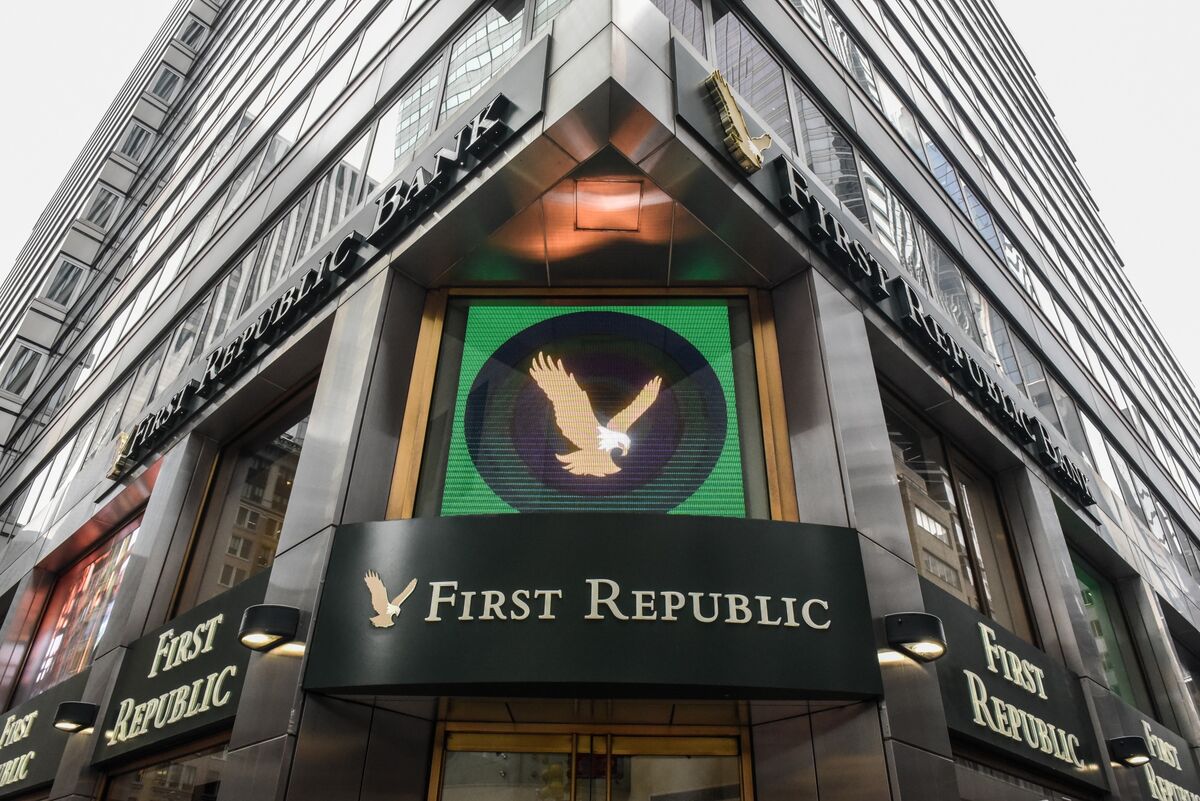
US Regional Banking Sector in Turmoil: The Aftermath of First Republic Bank Failure
Investors Scrutinize Stability of Regional Banks as Volatile Trading Continues
The banking sector in the United States has been facing a tumultuous time, as the recent failure of First Republic Bank has sparked renewed concern over the stability of regional banks. This has led to volatile trading in the shares of various regional banks, including PacWest Bancorp and Western Alliance Bancorp, which have experienced fluctuations in their stock prices. The KBW Regional Banking Index has lost 8% in the first two days of trading this week, reaching its lowest level since 2020.
Hovde Group analyst Ben Gerlinger believes that Western Alliance's current and estimated future return metrics warrant a substantial multiple expansion from its current levels. However, investors are now focusing more on the negatives as bank stocks are trading based on deteriorating sentiment rather than deteriorating fundamentals, according to Christopher McGratty, an analyst at Keefe, Bruyette & Woods. Despite the bank failures, Bank of America Corp. analysts believe that none of the banks within their coverage universe experienced anywhere close to the stress of the failed banks. However, a persistent sell-off in stocks has the potential to affect deposit customer behavior and worsen the profitability challenges faced by certain banks.
The sell-off in regional banks poses challenges, with investors worried that this situation is not going to calm down anytime soon. The immediate banking consequence of suppressing bond yields has loaded up many banks, including First Republic, with low-yielding securities that are now worth much less than par, according to Jim Grant, author of Grant's Interest Rate Observer. The Federal Reserve's interest-rate decision and press conference on Wednesday has become even more important as confidence levels in banking have been shaken.
First Republic Bank was acquired by JPMorgan Chase & Co on Monday in a government-led deal, making it the fourth US lender to collapse this year. The bank's failure means that other so-called troubled regional banks should probably continue to sleep with one eye open, according to Jake Dollarhide, CEO of Longbow Asset Management. The bank crisis may well be far from over as investors remain concerned about the stability of the sector.
In conclusion, the banking sector in the United States is currently facing a challenging time as investors remain concerned about the stability of regional banks. The recent failure of First Republic Bank has sparked renewed concern, leading to volatile trading in the shares of various regional banks. Despite the bank failures, Bank of America Corp. analysts believe that none of the banks within their coverage universe experienced anywhere close to the stress of the failed banks. However, a persistent sell-off in stocks has the potential to affect deposit customer behavior and worsen the profitability challenges faced by certain banks. The Federal Reserve's interest-rate decision and press conference on Wednesday has become even more important as confidence levels in banking have been shaken.
Read More
-
Yen Stalls at 160 Despite a 3% JGB and Tokyo Core CPI at 2.0% — Intervention Sits at 164, Friday's Payrolls Decide
02.09.2026 · TradingNEWS ArchiveEnergy
-
Dell Rebounds to $565.86 as a $95 Billion AI Backlog Meets 22x Forward Earnings — $595 High in Sight
25.09.2026 · TradingNEWS ArchiveStocks
-
XRP-USD ($1.53) Outperforms as ETF Inflows Return, but August Buyers Guard $1.60 — $1.70 Upside vs. $1.25 Floor
25.09.2026 · TradingNEWS ArchiveCrypto
-
Brent Holds $105 While WTI Heads for a 7% Weekly Loss as a 3M-Barrel Build and a Diesel Ban Threat Split the Market
25.09.2026 · TradingNEWS ArchiveCommodities
-
S&P 500 Gains 0.22%, Nasdaq Tops 27,000, Dow Up 0.40% on MSFT Launch and AKAM Deal
25.09.2026 · TradingNEWS ArchiveMarkets
-
Sterling Slides to 1.3216 as a Divided Bank of England Trails the Fed — 1.3424 Upside vs. 1.3000 Risk
25.09.2026 · TradingNEWS ArchiveForex