Dollar-Yen at 158 Presses Toward 160 as a 363 bp Carry Gap Meets Katayama-Bessent Intervention Risk — 159 in Sight
The yen weakened past 158 after a government representative urged the BoJ to tread carefully | That's TradingNEWS
Key Points
- USD/JPY trades at 158.33, up 0.6%, after the BoJ Summary of Opinions cut bets on an October hike.
- The U.S. 2-year Treasury yields 4.879%, 363 basis points above the BoJ's 1.25% policy rate.
- Japan intervened at 161.96 in July 2024, and markets treat 160 as the line where action becomes likely.
USD/JPY is trading at 158.33, up 0.6% from Wednesday's 157.39 close. The yen weakened past 158 per dollar in Tokyo trading after the Bank of Japan released its Summary of Opinions from the Sept. 17 to 18 meeting at 8:50 a.m. local time. The dollar first rose to 157.87 on the release, then extended gains through the European session as the broader dollar rally pushed EUR/USD below 1.1300.
The move came despite a hawkish document. Most opinions in the summary favored following September's rate increase with further hikes, and some policymakers said the BoJ needs to accelerate the pace of tightening or move rates closer to its goal soon. But the summary also showed a government representative urging the central bank to tread carefully on further increases. Investors read that as political resistance to an October hike and cut bets on a back-to-back move. The yen fell on the news.
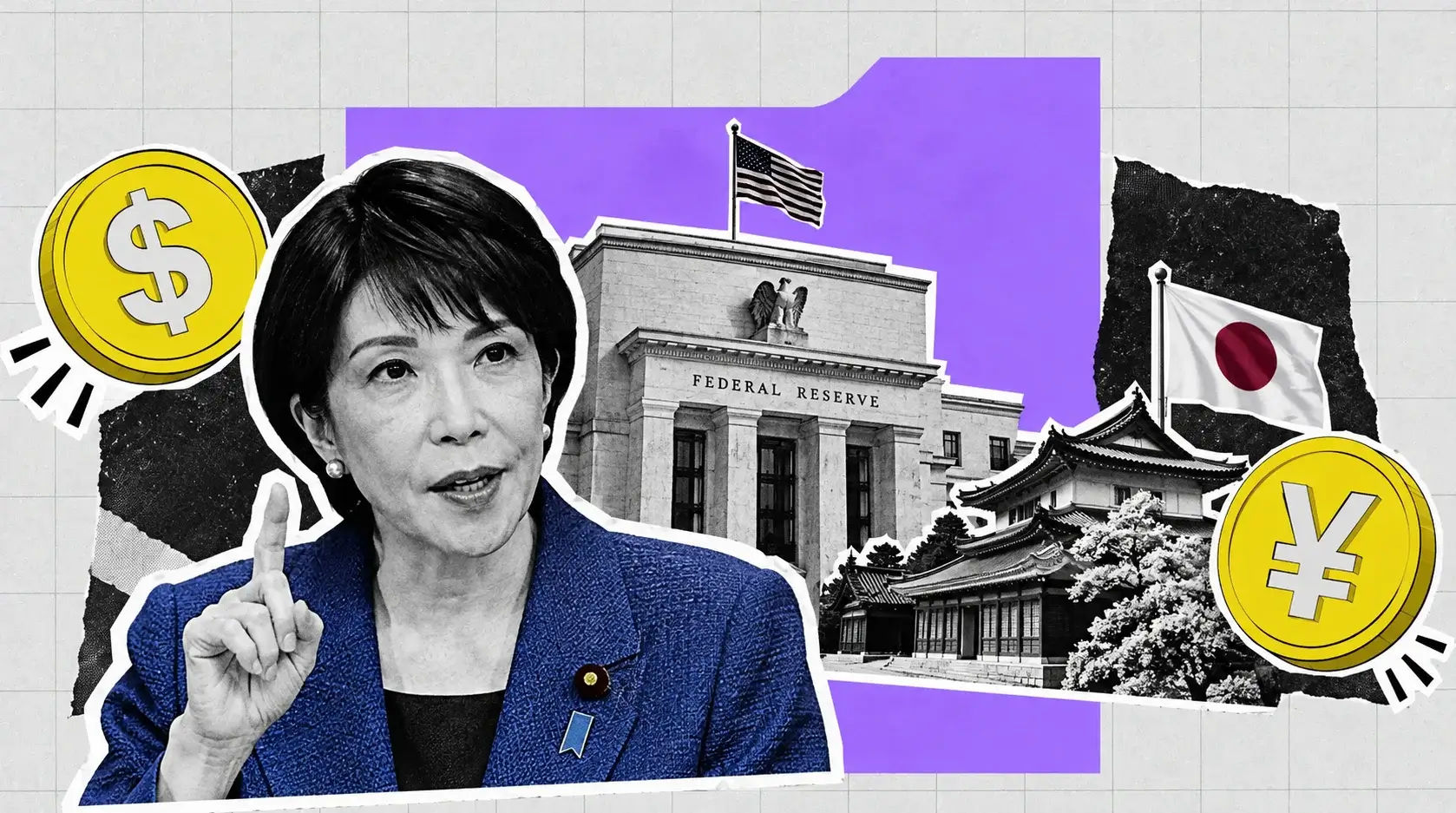
The thesis for this forecast is that USD/JPY is trapped between a powerful carry incentive pushing it higher and an intervention ceiling at 160 capping it. On the upside, the U.S. 2-year Treasury yields 4.879% against a BoJ policy rate of 1.25%, a gap of 363 basis points that rewards investors for borrowing yen and buying dollars. The U.S. 10-year yield touched 5.34% this morning, its highest since 2002. On the downside, Finance Minister Satsuki Katayama has coordinated with U.S. Treasury Secretary Scott Bessent, and President Trump raised concerns about the yen directly with Prime Minister Sanae Takaichi. Japan last intervened when USD/JPY reached 161.96 in July 2024.
The September performance shows the tug of war. USD/JPY fell 1.5% in September, after touching 153.42 on Sept. 14, the yen's strongest level in months, on bets on BoJ tightening. The pair then reversed as U.S. yields surged, reaching 159.04 on Sept. 24, the weakest yen level since Sept. 2. On Sept. 25, the yen jumped as much as 1% to 157.95 after Katayama's latest warning. The pair has now climbed back to 158.33.
The near-term range is defined. Support sits at 157.87, the post-summary low, and 157.39, Wednesday's close. Resistance is at 158.84, the high of the past week, then 159.04, and the 160 threshold where intervention risk rises sharply. A $1.57 billion option expiry at 158.25 is likely to pull the pair toward that level into the New York cut.
The BoJ at 1.25%: Highest Since 1995, Two Dissents
The Bank of Japan's September decision is the backdrop for the current move. The BoJ raised its policy rate by 25 basis points to 1.25% on Sept. 18, the highest level since 1995. The decision was widely expected; all 52 economists surveyed before the meeting predicted the hike. The new rate took effect on Sept. 24. The complementary lending facility rate was set at 1.5%.
The vote was 7-2. Two dovish board members, Toichiro Asada and Ayano Sato, dissented and voted to hold. The summary included opinions, likely from them, warning of lackluster consumption and subdued growth in services inflation as reasons to stand pat. Two dissents on a widely expected hike signaled that the board is not unified on the pace of tightening.
The yen weakened after the September hike rather than strengthening. Markets had fully priced the increase, and the two dissents suggested the next move could be slower. When a central bank signals a slower pace of tightening, it reduces the expected interest-rate premium on its currency, which weakens it. That dynamic has repeated with today's summary.
The September move was the latest in a sequence. The BoJ raised rates in June, three months before September's increase. A board member said at the September meeting that the interval between rate hikes would be "shorter than before" because economic conditions were "more resilient than expected." That suggests the BoJ is moving toward quarterly hikes or faster, rather than the slower pace of 2024 and 2025.
The BoJ is under more pressure to tighten than other central banks. Its policy rate of 1.25% remains near the bottom of the estimated 1.1% to 2.5% range for Japan's nominal neutral rate, the level that neither stimulates nor restrains growth. Members said the neutral rate could move higher depending on overseas developments and should be reassessed after each hike rather than assumed. With the Fed hiking and global yields surging, the case for the BoJ to move closer to neutral has strengthened.
The next Monetary Policy Meeting is Oct. 29 and 30, accompanied by a new Outlook for Economic Activity and Prices report. That meeting falls one day after the Fed's Oct. 27 to 28 meeting. The sequence matters for USD/JPY: a Fed hike followed by a BoJ hold would push the pair higher, while a Fed hold followed by a BoJ hike would push it lower.
The Summary of Opinions: Hawkish Board, Cautious Government
The Summary of Opinions released Thursday shows a board more hawkish than the September statement suggested. Most opinions cited the need to follow September's hike with further increases in borrowing costs as inflationary pressure builds. One member said: "If signs of an upward deviation in prices are observed, the Bank will need to accelerate the pace of rate hikes." Several opinions indicated that underlying inflation had reached or was close to the BoJ's 2% target.
The board sees a shift in the phase of policy. Members described the move from lifting inflation toward 2% to stabilizing it around 2%. That shift changes the logic of policy. In the first phase, the BoJ was trying to escape deflation and could tolerate a low policy rate. In the second phase, the BoJ is trying to prevent inflation from overshooting, which requires rates closer to neutral. The board cited the economy being largely on track, the Middle East, AI demand and exchange rates as factors to watch.
One member noted that while the BoJ does not need to take hasty action, it should raise rates to prevent excessive and persistent price rises, with underlying inflation seen reaching 2% before long. That is a measured but clearly hawkish stance. A member who is already projecting inflation at target is likely to support further increases at upcoming meetings.
The government's position cut against the board's hawkishness. A Cabinet Office representative urged the BoJ to "fulfill its accountability" for the rate hike and "examine carefully the cumulative effects of past policy interest rate hikes." Markets read that as the government signaling that policy normalization is close to complete and further hikes may be unnecessary. That political resistance is what pushed the yen weaker.
The tension between the BoJ and the government is central to the yen outlook. Prime Minister Takaichi has historically favored accommodative monetary policy, and the "Takaichi trade" of selling the yen on expectations of loose policy has been a persistent theme. The BoJ is legally independent, but government pressure can slow the pace of tightening, particularly before major political events.
For USD/JPY, the summary shifts the timing of the next hike. Many analysts now expect the next move in October or December. The market reduced its odds of an October hike after the release. If the BoJ waits until December, the yen loses one of its main sources of support for the next two months, which favors a higher USD/JPY.
The Tankan: Large Manufacturers at 24, an Eight-Year High
The BoJ's quarterly Tankan survey released Thursday supports the case for further tightening, even though it slightly missed expectations. The large manufacturers' sentiment index rose to 24, up from 22 in the previous survey but below the 25 forecast. It was the sixth consecutive quarterly increase and marked an eight-year high in business confidence.
The steady improvement shows the Japanese economy has absorbed higher rates without strain. The large manufacturers index was at 17 in the first quarter of 2026, its highest since the fourth quarter of 2021. It has since risen to 24. Business conditions are improving even as the BoJ has raised rates twice this year and the Iran conflict has pushed up energy import costs.
The Tankan's inflation expectations data was less hawkish. The survey showed few signs that inflation expectations were rising in a way that would warrant immediate rate hikes. That further reduced expectations for an October move. The BoJ watches business inflation expectations closely, since they influence price-setting and wage decisions. Stable expectations give the BoJ room to move at a measured pace.
Japanese equity markets reflect the strong business backdrop. The Nikkei 225 jumped 3.1% to 68,840 Thursday, driven by chip and AI stocks after Micron's results. Japanese exporters benefit from a weak yen, which raises the yen value of their overseas earnings. A USD/JPY rate near 158 is a significant tailwind for Japanese corporate profits and supports equity valuations.
The bond market tells a more cautious story. Japan's 30-year government bond yield rose 5 basis points to 4.20% Thursday, part of a global long-end selloff. Steepening in Japan's yield curve reflects concerns over government debt, inflation and the BoJ's continued reduction of its bond holdings. Rising Japanese long-term yields can eventually attract domestic investors back from foreign bonds, which would support the yen, but that effect has been slow to materialize.
For the forecast, the Tankan reinforces the medium-term case for BoJ tightening. Business confidence at an eight-year high gives the BoJ cover to keep raising rates. Combined with the hawkish summary, it points to at least one more hike in 2026. The timing remains the key variable for USD/JPY.
The Carry Gap: 363 Basis Points at the 2-Year
The interest rate differential between the U.S. and Japan is the fundamental driver of USD/JPY. The U.S. 2-year Treasury yield closed Wednesday at 4.879%. The BoJ policy rate is 1.25%. That gap of 363 basis points means an investor who borrows in yen and invests in short-term U.S. debt earns 3.63 percentage points per year before currency moves. That carry trade has been one of the most popular in global markets for years.
The long-end gap is also wide. The U.S. 10-year Treasury yield touched 5.34% Thursday, its highest since 2002, after rising 87.1 basis points in the third quarter, the sharpest quarterly increase since 1994. The U.S. 30-year yield reached 5.67%. Japan's 30-year yield is 4.20%. The U.S. long end yields roughly 150 basis points more than Japan's.
The Fed is widening the gap. It raised rates on Sept. 16 for the first time since 2023, and markets price at least three more hikes by mid-2027. Fed funds futures put a 63% probability on a hold at the Oct. 27 to 28 meeting, with a December hike close to the base case. Every Fed hike widens the carry gap unless the BoJ matches it.
The BoJ is narrowing the gap more slowly. It has raised rates twice in 2026, in June and September, for a total of 50 basis points. The Fed's single hike in September offset half of that. For the carry gap to narrow meaningfully, the BoJ would need to hike faster than the Fed, which the government's caution makes less likely in the near term.
U.S. economic data supports the Fed's path. Initial jobless claims came in at 197,000 Thursday, below the 200,000 forecast. Continuing claims fell to 1.701 million. U.S. third-quarter GDP is tracking near 4%. The August PCE inflation report was softer than expected, with headline at 3.4% and core at 3.0%, but Fed officials continue to signal more tightening. Minneapolis Fed President Neel Kashkari said overnight that inflation remains "still too high."
For USD/JPY, the carry gap is the reason the pair keeps climbing despite intervention threats. As long as the gap exceeds 350 basis points at the 2-year, the incentive to hold dollars over yen remains strong. The gap would need to narrow to roughly 250 to 300 basis points to remove most of the upward pressure on the pair, which would require either a Fed pause and a BoJ hike, or a sharp drop in U.S. yields.
The 160 Line: Katayama, Bessent and Trump
Intervention risk is the cap on USD/JPY. Finance Minister Katayama has repeatedly warned that Japan is prepared to take "bold" action against disorderly currency moves, language that historically refers to intervention. Japan's authorities have not named a trigger level, framing their concern around the speed and volatility of yen moves rather than a specific rate. But the market treats 160 as the threshold where intervention becomes likely.
The U.S. involvement is new. Katayama held a phone call with Treasury Secretary Bessent on Friday, Sept. 25, during which the two officials reiterated concerns that the yen was undervalued and agreed to deepen cooperation. Katayama said Japan and the U.S. would remain in close communication to maintain currency market stability. Bessent has separately signaled support for a stronger yen. Katayama also said President Trump had raised concerns about the yen during a meeting with Prime Minister Takaichi.
White House involvement changes the calculation. In past interventions, Japan acted alone, and U.S. tolerance was uncertain. With the Treasury Secretary and the President publicly concerned about yen weakness, any Japanese intervention would have explicit U.S. support. That makes intervention more credible and potentially more effective. The yen's 1% gain on Friday, Sept. 25, showed the market takes the coordination seriously.
The legal basis is in place. A Japan-U.S. joint statement on foreign exchange signed in September 2025 included intervention as a possible tool against excessive volatility. Katayama has said Japan has a "free hand" in dealing with excessive yen moves under that statement. Tokyo and Washington previously agreed to continue coordinating to keep yen moves controlled.
The history of intervention shows its limits. In July 2024, Japan intervened when USD/JPY reached 161.96, a 38-year low for the yen. The intervention, followed 20 days later by a BoJ rate hike, drove the pair from 159 to 140 over roughly three months, a gain of nearly 15% for the yen by Sept. 16, 2024. By early January 2025, the pair had nearly erased that entire move. Intervention can produce sharp, immediate effects, but it rarely changes the long-term trend unless fundamentals shift.
In 2026, USD/JPY crossed 160 in late March as surging oil prices linked to the Middle East conflict weakened the yen. Authorities stepped up verbal warnings, and the pair reversed. It reached a six-month high of 163.87 on July 29 before falling back. Each approach to 160 and above has drawn warnings, and the pattern suggests authorities will defend that zone again.
Read More
-
Yen Stalls at 160 Despite a 3% JGB and Tokyo Core CPI at 2.0% — Intervention Sits at 164, Friday's Payrolls Decide
02.09.2026 · TradingNEWS ArchiveEnergy
-
QQQ ETF ($739) Fades From an Early Tech Rally as a 77.9 ISM Prices Index Meets Micron's $61.5B Guide — $760 Record Test Ahead
01.10.2026 · TradingNEWS ArchiveStocks
-
XRPR and XRPI Follow XRP's $1.49 Test as Spot Funds Hold 1.16B XRP and a 1 Billion Token Escrow Release Lands — $1.70 in Play
01.10.2026 · TradingNEWS ArchiveCrypto
-
November NG Slips Below $3 as Decade-High Storage Meets Capped LNG Exports — $2.75 in Sight
01.10.2026 · TradingNEWS ArchiveCommodities
-
Pound at 1.3230 Tests 1.3200 as 6.03% 30-Year Gilts and a 6-3 BoE Hold Meet a 5.34% Treasury Yield — 1.3150 in Sight
01.10.2026 · TradingNEWS ArchiveForex
September: From 153.42 to 159.04 and Back to 157.39
USD/JPY's September path explains the current setup. The pair began September near 159.7, fell sharply in the first half of the month, bottomed at 153.42 on Sept. 14, and then rallied back to 159.04 by Sept. 24. It closed the month at 157.39, down 1.5% for September.
The early-September decline was driven by BoJ expectations. Markets priced the September hike and speculated on a faster tightening cycle. The yen touched multi-month highs on those bets. A drop to 153.42 represented a gain of roughly 4% for the yen from the start of the month.
The reversal came from U.S. yields and the Fed. The Fed hiked on Sept. 16, and the BoJ hiked on Sept. 18 with two dissents. U.S. yields surged in the second half of the month, with the 10-year rising to new 52-week highs. The yen gave back all of its early gains, and USD/JPY climbed 3.7% from the Sept. 14 low to the Sept. 24 high of 159.04.
The final week brought intervention warnings. On Friday, Sept. 25, the yen posted its strongest daily gain in more than two weeks, strengthening as much as 0.6% to 157.95, after Katayama's warning. On Monday, Sept. 28, the yen weakened back toward 158 as the stronger dollar and elevated Treasury yields weighed. On Tuesday, the yen steadied near 157 on renewed verbal intervention. On Wednesday, the pair closed at 157.39.
The year-over-year picture shows the yen's longer-term weakness. USD/JPY is up 7.0% from a year ago. The six-month average is 159.33, above the current price, which means the pair is trading below its recent average despite Thursday's gain. The yen strengthened slightly in September, ending a streak of persistent weakness.
For the forecast, September established a range between 153.42 and 159.04. The current price of 158.33 is near the top of that range. A break above 159.04 would put USD/JPY back into the zone where intervention risk is acute. A drop below 156 would suggest the BoJ narrative is gaining ground.
Positioning: Speculators Long the Yen by 71,982 Contracts
Speculative positioning in the yen is unusual. Speculators held a net long of 71,982 contracts in Japanese yen futures as of Sept. 25. That makes the yen the only major currency where speculators are positioned for gains against the dollar. Speculators are net short the euro by 52,334 contracts, the British pound by 82,568 and the Swiss franc by 26,752.
The yen long reflects bets on BoJ tightening and intervention. Speculators built the position during the early-September rally to 153.42, when BoJ hike expectations were rising. They maintained it through the late-September reversal, likely expecting intervention to cap USD/JPY near 160. With USD/JPY now at 158.33, many of those long yen positions are losing money.
The positioning creates a short-term risk for the yen. If USD/JPY continues to climb toward 159 and 160 without intervention, speculators holding yen longs may be forced to exit. Closing yen longs requires selling yen, which would push USD/JPY higher. That dynamic could accelerate a move toward 160.
It also creates a risk for the dollar. If Japan intervenes or the BoJ signals an October hike, speculators already long the yen would see their positions rewarded, and others would likely join. Intervention combined with an existing speculative yen long could drive a sharp decline in USD/JPY, potentially 3 to 5 yen in a few sessions.
FX options positioning will affect the pair Thursday. USD/JPY option expiries at the 10:00 New York cut include $1.57 billion at 158.25, $1.48 billion at 154.00 and $1.38 billion at 161.00. The 158.25 expiry is closest to the current price and is likely to act as a magnet into the cut, keeping USD/JPY near 158.25 through the New York morning.
The yen carry trade adds another dimension. Many global investors borrow in yen to fund investments in higher-yielding assets. When the yen strengthens sharply, those trades unwind, forcing investors to buy back yen and sell other assets. The August 2024 carry trade unwind triggered a global equity selloff. A sharp intervention-driven yen rally now could trigger a similar, if smaller, unwind.
The Energy Shock and Japan's Trade Balance
Energy prices are a structural headwind for the yen. Japan imports nearly all of its oil and natural gas, and the Iran conflict has pushed energy costs sharply higher. Brent crude rose 2.2% to $100.15 Thursday after China suspended fuel exports. European TTF gas is at €74.06 per megawatt-hour, and Asian LNG prices reached a four-year high of $29.56 per MMBtu in September.
High energy import costs weaken the yen through the trade balance. When Japan pays more for imported energy, it sells more yen to buy dollars, which pushes USD/JPY higher. The yen came under pressure in late March from surging oil prices linked to the Middle East conflict, as higher import costs threatened Japan's economic recovery. That pattern has continued throughout 2026.
LNG is particularly important for Japan. Japan is one of the world's largest LNG importers, and Qatar has been a significant supplier. QatarEnergy declared force majeure on March 4 after Iranian drone attacks, forcing Asian buyers to compete for spot cargoes. Asian buyers import more than 80% of Qatari gas. Higher spot LNG prices directly increase Japan's import bill.
Japan has some insulation. Japan holds long-term LNG contracts with suppliers in Australia, Malaysia, the U.S. and elsewhere, which provide price stability compared with spot markets. Japan has also restarted some nuclear reactors, reducing gas demand for power. But the overall energy shock has still raised import costs significantly.
The energy shock also affects BoJ policy. Higher energy prices push up inflation, which supports the case for rate hikes. But energy-driven inflation also squeezes household incomes and consumption, which argues for caution. The dovish dissents at the September meeting cited lackluster consumption as a reason to hold. The BoJ faces the same dilemma as other central banks: tighten to fight inflation, or hold to protect growth.
For the forecast, energy is a persistent upward force on USD/JPY. Brent above $100 and elevated LNG prices keep Japan's trade balance under pressure and support the dollar. A ceasefire in the Iran conflict that lowered energy prices would be one of the most bullish developments for the yen.
Technical Map: 157.39 Support, 159.04 Resistance, 160 Ceiling
USD/JPY's chart shows the pair in the upper half of its September range, testing resistance. The pair is trading at 158.33, above its 21-day exponential moving average by 0.76% and above its 50-day EMA by 0.51%. It is near its 8-day and 100-day EMAs. The short-term trend has turned higher since the Sept. 14 low of 153.42, with the pair up roughly 3.2% from that level.
The immediate support is 157.87, the post-summary low, followed by 157.39, Wednesday's close. Below that, 157.28 is the low of the past week. A daily close below 157.28 would suggest the rally from the September low is losing momentum. The next support is 156.00, followed by 155.00 and the 154.00 option strike. The Sept. 14 low of 153.42 is the major support.
On the upside, 158.84 is the high of the past week and the first resistance. Above that, 159.04 is the Sept. 24 high, the weakest yen level since early September. A daily close above 159.04 would put USD/JPY in the zone where intervention risk becomes acute. The 160.00 level is the psychological threshold. The 161.00 option strike and the 161.96 level where Japan intervened in July 2024 sit above that.
The pair rarely holds above 160 for long. In late March 2026, USD/JPY crossed 160, and authorities stepped up verbal warnings. The pair briefly reached 163.87 on July 29 before falling back. Each extended move above 160 has been met with official resistance.
Momentum is neutral to positive. The short-term moving averages are turning higher, and the pair is above its key EMAs. Momentum indicators are not overbought, which leaves room for further gains toward 159 before resistance intensifies.
The trading setup reflects the asymmetry. Long positions near 157.40 to 157.90 with a stop below 156.80 target 159.00 to 159.50. Short positions near 159.50 to 160.00 with a stop above 161.00 target 157.00, positioning for intervention or BoJ resistance. The risk on longs above 159.50 rises sharply because intervention can produce a 3 to 5 yen drop in a single session.
Catalysts: Payrolls Friday, Fed Oct. 27-28, BoJ Oct. 29-30
The next four weeks hold a sequence of events that will determine whether USD/JPY breaks 160 or reverses.
Friday's U.S. nonfarm payrolls report is the first major catalyst. Strong hiring with wage growth of 4% or more would push U.S. yields higher and widen the carry gap, likely sending USD/JPY toward 159 and testing 160. A soft report would ease yields and narrow the gap, pulling the pair back toward 157. The ISM manufacturing index at 10:00 a.m. ET Thursday comes first. Five Fed officials speak Thursday.
Intervention warnings are an ongoing catalyst. Any statement from Katayama or other Japanese officials could move the pair 50 to 100 pips. Actual intervention would move it far more. Watch for phrases like "bold action," "excessive volatility" or "all options on the table," which have historically preceded intervention.
U.S. CPI and PPI reports in mid-October will shape expectations for the Fed's Oct. 27 to 28 meeting. A hot CPI would increase hike odds and push USD/JPY higher. A soft print would reduce them.
Japanese data in October will shape BoJ expectations. Tokyo CPI for October, released late in the month, provides an early read on inflation. Wage data and household spending figures will inform the BoJ's assessment of consumption, which the dovish board members cited as a concern.
The Fed meeting on Oct. 27 to 28 comes first. A hike would widen the carry gap and push USD/JPY higher. A hold would give the yen some relief.
The BoJ meeting on Oct. 29 to 30 comes one day later, with a new Outlook for Economic Activity and Prices report. A BoJ hike would narrow the carry gap and likely send USD/JPY lower, potentially sharply if combined with a Fed hold. A BoJ hold, particularly after a Fed hike, would push USD/JPY toward 160 and possibly above.
The sequence creates four possible combinations for late October. A Fed hold and BoJ hike would be the most bearish for USD/JPY, potentially sending it toward 154. A Fed hike and BoJ hold would be the most bullish, potentially pushing it through 160 and triggering intervention.
Scenarios and Targets: 159.50 Base Case, 154 Downside
The base case, with a 50% probability, is a grind higher to 159.50 by late October, capped below 160. In this scenario, U.S. payrolls come in near expectations, the 10-year Treasury yield stays between 5.20% and 5.35%, and the carry gap remains near 360 basis points. Intervention warnings intensify as the pair approaches 160, but no actual intervention occurs. The BoJ signals a December hike rather than October. USD/JPY rises to 159.50, a gain of 0.7% from 158.33, and stalls below 160 as intervention risk and option positioning at 160 and 161 cap further gains.
The bearish case for USD/JPY, with a 30% probability, involves intervention or a BoJ surprise. USD/JPY breaks above 160 on strong U.S. data, triggering Japanese intervention with U.S. support. Alternatively, the BoJ hikes at its Oct. 29 to 30 meeting while the Fed holds. Speculators already long the yen add to positions. USD/JPY falls to 154.00, a decline of 2.7%, near the $1.48 billion option strike. A combination of intervention and a BoJ hike could push the pair toward the September low of 153.42.
The bullish case for USD/JPY, with a 20% probability, requires a strong dollar without intervention. A hot payrolls report and hot CPI push the 10-year Treasury yield above 5.45%. The Fed hikes in October while the BoJ holds. Japanese authorities continue to warn but don't act. USD/JPY breaks through 160 and reaches 161.00 to 161.96, a gain of 1.7% to 2.3%, testing the level where Japan intervened in July 2024.
The risk-reward is asymmetric. From 158.33, the base-case target of 159.50 offers 117 pips of upside, while the bearish case of 154.00 carries 433 pips of downside. The bullish case offers 267 to 363 pips. The upside is limited by intervention risk, while the downside can be sudden and large if Japan acts.
That asymmetry argues for caution on new long positions above 159. Tactical longs near 157.40 to 157.90 targeting 159.00 to 159.50 offer favorable risk-reward. Above 159.50, the risk of a sharp intervention-driven reversal outweighs the potential upside.
Verdict: Neutral-to-Bullish Below 159.50, Intervention Caps 160
USD/JPY enters October pulled in opposite directions by two powerful forces. The carry gap favors the dollar: the U.S. 2-year Treasury yields 4.879% against the BoJ's 1.25%, a 363-basis-point differential. The U.S. 10-year touched 5.34%, its highest since 2002. The Fed is hiking, with three more increases priced. Energy prices are pressuring Japan's trade balance, with Brent back above $100. The BoJ's Summary of Opinions, while hawkish, showed government resistance that reduced October hike bets and weakened the yen.
The intervention ceiling favors the yen. Finance Minister Katayama has coordinated with Treasury Secretary Bessent, and President Trump raised yen concerns with Prime Minister Takaichi. The market treats 160 as the line where intervention becomes likely, and Japan intervened at 161.96 in July 2024. Speculators are already long the yen by 71,982 contracts. The BoJ board is more hawkish than the September vote suggested, with members open to accelerating hikes. The Tankan shows business confidence at an eight-year high.
The result is a range with an asymmetric risk profile. USD/JPY at 158.33 sits near the top of its September range between 153.42 and 159.04. The path of least resistance is modestly higher toward 159.50, but the upside is capped near 160 by intervention risk, while the downside can be sharp if Japan acts or the BoJ surprises.
The verdict is neutral-to-bullish below 159.50. The base-case target is 159.50 by late October, a gain of 0.7%, with a 50% probability. The bearish case of 154.00 requires intervention or a BoJ October hike. The bullish case of 161.00 to 161.96 requires a strong dollar without official resistance. Tactical longs at 157.40 to 157.90 with a stop below 156.80 target 159.00 to 159.50. Above 159.50, the trade shifts to selling into intervention risk, with a stop above 161.00 targeting 157.00. The Oct. 27 to 28 Fed meeting and Oct. 29 to 30 BoJ meeting, one day apart, will decide whether the carry gap or the intervention threat wins.