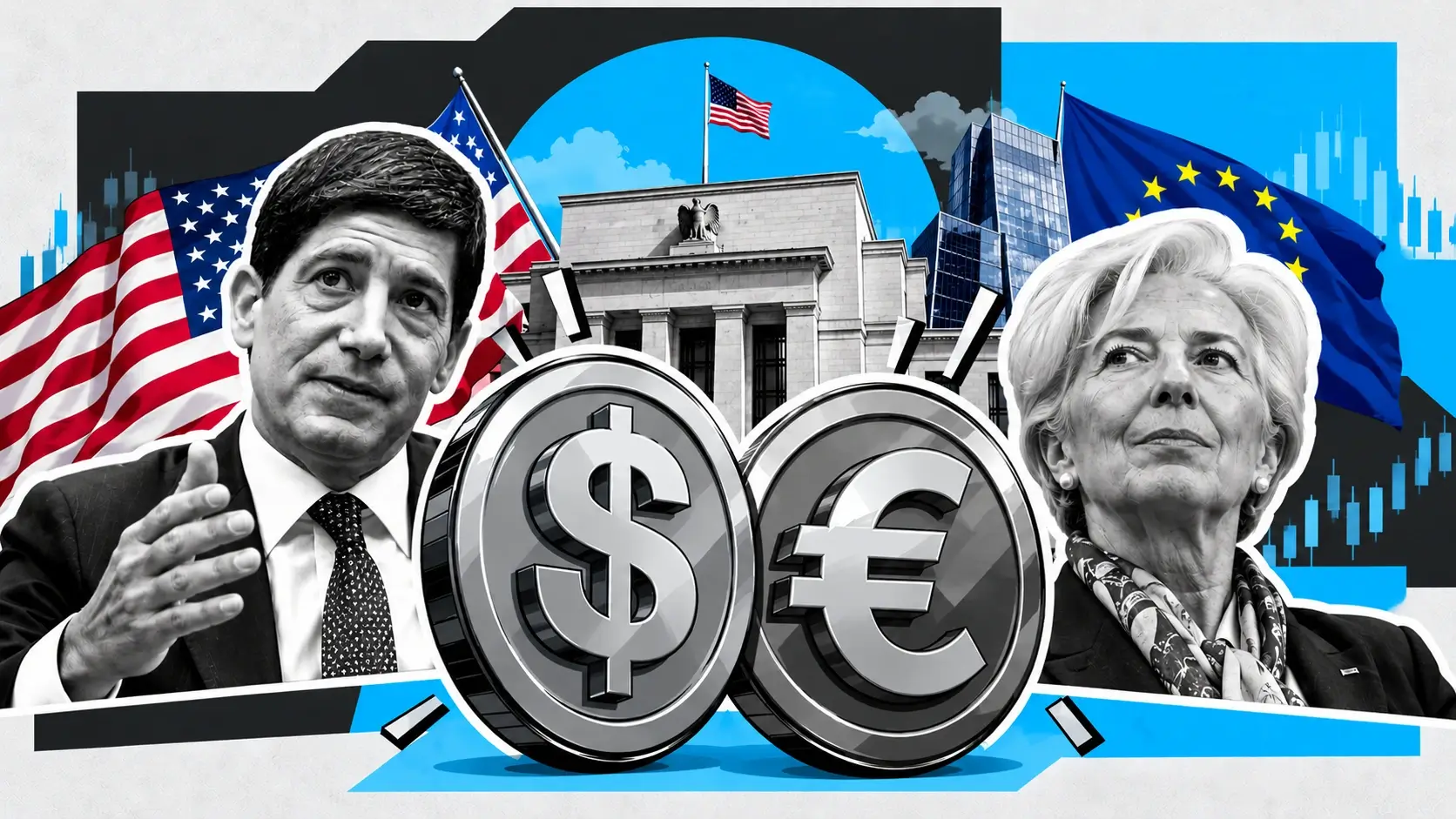
GBPUSD (1.3270) Turns Higher as BoE Hike Odds Hit 85% and Fed Bets Fade — 1.3345 in Reach
UK first-half growth led the G7 while October Fed hike odds fell to 37% from 47% after the PCE data | That's TradingNEWS
Key Points
- GBP/USD hit 1.32055 on Tuesday, its lowest since June, then rebounded to 1.3270 in Wednesday's European session.
- UK Q2 GDP was revised up to 0.5% from 0.4%, putting first-half growth at the top of the G7.
- Markets price an 80% to 85% chance of a November BoE hike after a 6–3 vote to hold at 3.75% in September.
The pound enters the final hours of the third quarter with the macro momentum shifting toward it for the first time in weeks. GBP/USD dropped to 1.32055 on Tuesday, its lowest level since June, then rebounded to 1.3270 in Wednesday's European session after revised figures from the Office for National Statistics showed the UK economy grew 0.5% in the second quarter, above the 0.4% first estimate and ahead of expectations for no revision. At 8:30 a.m. ET, the U.S. personal consumption expenditures report then showed core inflation at 3.0% against a 3.3% forecast, cutting the probability of an October Fed hike to 37% from 47% before the data.
Those two data points hit the pair from both sides. Stronger UK growth supports Bank of England hike expectations, and softer U.S. inflation undercuts Fed hike expectations. Money markets price an 80% to 85% probability of a quarter-point Bank of England hike on November 5, with four increases priced by mid-2027. The Fed's October odds now sit less than half that level.
The monthly damage is still heavy. GBP/USD has lost 2.40% over the past month and 1.87% over 12 months. The pair traded at 1.3538 on September 8, 1.3395 on September 18 and 1.3344 on September 22, before sliding below 1.3250 after the Fed hiked on September 16 to a 3.75%–4.00% range. The pound's average over the past six months sits at 1.3428, so the current level runs 1.2% below that average.
The pound's 2026 low stands at 1.3164, set on June 25. Tuesday's 1.32055 low came within 0.3% of that level.
The thesis for this forecast is direct. GBP/USD fell in September because the Fed hiked while the Bank of England held, widening the policy gap in the dollar's favor. That gap is now closing from both ends. A Bank of England that has three members already voting for a hike, an economy growing faster than any other G7 member in the first half, and a U.S. inflation print that pushed Fed hike odds below 40% set up a rebound toward 1.3345 and 1.3400 in October. The UK budget on October 28 and gilt yields at 19-year highs cap how far the rally can run. A daily close below 1.3205 would open a retest of the 1.3164 yearly low.
The Session Map: 1.3395 to 1.32055 in Eight Sessions, Then a Bounce
The price action over the past two weeks shows how quickly the Fed decision flipped the pair.
Before the Fed, sterling traded firmly. GBP/USD held 1.3395 on September 18, 1.33885 on September 19 and 1.3395 on September 20. It slipped to 1.33676 on September 21 and printed the weekly high of 1.3344 on September 22.
The Fed's September 16 hike took time to work through, and then the selling accelerated. GBP/USD dropped to 1.32406 on September 23, a single-day fall of 0.8%, and to 1.32197 on September 24. It stabilized at 1.3245 on September 25, when the daily fix came in at 1.3252, then traded at 1.32505 on September 26 and 1.32335 on September 27.
Monday brought a brief rally. Sterling edged up to 1.326 as investors priced a more hawkish Bank of England stance amid renewed inflation pressure, while oil prices rose after President Trump rejected an Iranian proposal to reopen the Strait of Hormuz.
Tuesday broke the floor. GBP/USD fell to 1.32055, the lowest since June, in the largest 24-hour move of the past week, a 0.174% decline. Investors favored the dollar amid rising expectations of a Fed hike as soon as October, while the Bank of England was not expected to move until November. Elevated oil prices and stalled talks over reopening the Strait of Hormuz reinforced expectations of further Fed tightening and boosted safe-haven demand for the dollar.
Wednesday reversed part of the move. GBP/USD rebounded after Tuesday's modest decline and traded near 1.3270 in the European session, supported by the upward revision to UK second-quarter growth released at 7:00 a.m. London time. The U.S. data at 8:30 a.m. ET then weakened the dollar broadly, with the 2-year Treasury yield falling more than 6 basis points to 4.827%.
The levels for the week are clear. Support sits at 1.32055, Tuesday's low, then at the 1.3164 low from June 25. Resistance sits at 1.3300, then at 1.3344, the September 22 high, and at 1.3400, where the pair traded before the Fed decision.
UK GDP Revised Up to 0.5%: The G7's Fastest First Half
Wednesday's revised UK growth data delivered a clear positive surprise for sterling.
The Office for National Statistics said gross domestic product grew 0.5% in the three months through June, up from the first estimate of 0.4%. Economists had expected the figure to remain unrevised. The quarter followed a 0.6% expansion in the first quarter. GDP in the second quarter stood 2.0% above its level in the fourth quarter of 2024, revised up from 1.9%. The upgrade places the UK's first-half growth at the top of the G7.
The international comparison makes the point. In the second quarter, GDP grew 0.8% in Canada, 0.4% in the United States and Japan, 0.3% in Germany and 0.2% in Italy, while France recorded no growth. The UK's 0.5% beat every G7 peer except Canada, and its combined first-half growth of 1.1% led the group.
Services drove the revision. Services output grew 0.6% in the quarter, led by professional, scientific and technical activities, which rose 2.3%. Scientific research and development jumped 6.7%, advertising and market research climbed 5.4%, and legal activities advanced 3.3%. Information and communication output grew 2.5%, supported by a 3.6% increase in computer programming and consultancy. Overall services output ran 1.7% above its level a year earlier.
Business investment showed the biggest revision. The ONS raised second-quarter business investment growth to 5.2% year over year from 0.8% in the earlier estimate, with a quarterly gain of 1.8%. The first quarter's quarterly figure was revised to 3.0% from 1.7%. Corporate capital spending is expanding strongly, which supports productivity and long-term growth.
Household finances improved. Real household disposable income per head rose 1.0% in the second quarter, recovering from a 0.8% decline in the first. Real GDP per head grew 0.5% and stood 1.2% above its year-earlier level. Nominal GDP rose 0.8% in the quarter and 3.8% from a year earlier.
The data has limits. The second quarter ended in June, before the jump in energy prices and borrowing costs in the summer. The ONS revised 2025 growth down to 1.2% from 1.3%. Second-half growth faces the energy shock and a 3.75% Bank Rate.
For GBP/USD, the revision strengthens the case for a Bank of England hike.
The Bank of England at 3.75%: Three Votes for a Hike and a November Decision
The Bank of England's policy stance is the most important driver of sterling's outlook, and the committee is moving toward tightening.
The Monetary Policy Committee held Bank Rate at 3.75% on September 17 in a 6–3 vote, with three members voting to raise rates to 4.00%. That was the sixth hold of 2026. Bank Rate has stood at 3.75% since December 18, 2025. The next decision comes on November 5, alongside a new Monetary Policy Report, and the final decision of 2026 follows on December 17.
The minority vote matters. Three of nine members already want a hike, so the committee needs only two more votes to move. Governor Andrew Bailey said that higher global energy costs have so far had a limited effect on UK price and wage setting, but that the longer the volatility persists, the bigger its impact on inflation and the more likely the Bank will need to raise rates to bring inflation back to its 2% target.
The inflation outlook supports a hike. UK CPI inflation rose to 3.1% in August. The Bank expects inflation to reach 3.75% in the fourth quarter of 2026 and slightly above 4% in the first quarter of 2027, based on energy prices in mid-September. Before the conflict in the Middle East, the Bank expected inflation to fall to 2% from April 2026.
Energy prices drove that revision. By September 14, Brent crude had reached $106 a barrel and UK wholesale gas prices 207 pence per therm, up 36% and 78% respectively since the July Monetary Policy Report.
The Bank also set out a new approach to shrinking its balance sheet. The Asset Purchase Facility has fallen from a peak of £895 billion to £489 billion. The committee will reduce its holdings by an average of £46 billion a year through September 2034, combining £20 billion of annual active sales with maturing gilts.
Market pricing reflects the hawkish tilt. Money markets assign an 80% to 85% probability to a quarter-point hike on November 5, with four increases priced by mid-2027. The SONIA curve implies Bank Rate at 4.39% in March 2027 and 4.80% in September 2027. For GBP/USD, that path sits well above what markets now expect from the Fed after today's PCE data.
The Fed Side: Core PCE at 3.0% Cuts October Hike Odds to 37%
The dollar side of GBP/USD moved sharply on Wednesday, and the shift works in the pound's favor.
The Federal Reserve raised rates on September 16 by 25 basis points to a 3.75%–4.00% range, its first hike since 2023. That decision triggered the pound's slide from 1.3395 to the 1.32 area, as the Fed's upper bound moved 25 basis points above the Bank of England's 3.75% Bank Rate.
After the hike, markets expected more. At one point in September, traders priced more than an 80% chance of another Fed hike in October. Before Wednesday's data, rate futures showed a 47% probability for October and a 91% probability of a hike by December.
The August PCE report changed that. Core PCE rose 0.2% on the month for a 3.0% annual rate, well below the 3.3% forecast. Headline PCE came in at 3.4% against a 3.7% forecast. October hike odds fell to 37%, and the next fully priced increase moved out to December. The 2-year Treasury yield dropped more than 6 basis points to 4.827%, and the 10-year fell almost 4 basis points to 5.217%.
The comparison with the Bank of England is stark. Markets now price a 37% chance of a Fed hike on October 28 to 29 and an 80% to 85% chance of a Bank of England hike on November 5. If both play out as priced, the Fed holds in October while the Bank of England raises Bank Rate to 4.00%, erasing the 25-basis-point gap that opened on September 16.
New York Fed President John Williams set up the shift on Tuesday by saying there was no urgency to hike in October. The composition of the PCE report helps. Core PCE's 0.2% monthly gain annualizes to 2.4%, and much of the headline pressure comes from energy, which rose 2.3% on the month.
The labor market offers a counterweight. ADP reported 90,000 private jobs added in September against a 68,000 consensus. Friday's payrolls report becomes the key test. A figure near 90,000 with steady wages locks in lower Fed hike odds and supports GBP/USD toward 1.3345. A figure above 150,000 would revive October hike bets and push the pair back toward 1.3205.
The Rate Gap Is Flipping: 25 Basis Points Today, Sterling's Favor by November
The interest rate differential between the United States and the UK drives GBP/USD over any horizon longer than a few sessions, and that differential is on the verge of reversing.
At the policy level, the Fed's upper bound of 4.00% sits 25 basis points above the Bank of England's 3.75% Bank Rate. That gap opened on September 16 and coincided with sterling's slide below 1.3300.
Expected paths now point the other way. The SONIA curve implies Bank Rate at 4.39% in March 2027 and 4.80% in September 2027. U.S. rate futures priced a 91% chance of a Fed hike by December before Wednesday's data, implying 4.25% at the top of the range. Even with one more Fed hike, the Bank of England's expected path climbs faster and higher.
Long-term yields already favor gilts. The UK 10-year gilt yield rose to 5.42% on September 29, after peaking at 5.44%, its highest since July 2007. The U.S. 10-year Treasury yield traded at 5.217% after the PCE release. Gilts yield 20 basis points or more above Treasuries at the 10-year point, which in normal conditions attracts capital into sterling.
The catch is why gilt yields are high. Part of the premium reflects expected Bank of England hikes, which supports the pound. Part reflects fiscal risk and a term premium tied to heavy government borrowing, which does not. When yields rise on fiscal fears, the pound can fall alongside gilts rather than rise.
That distinction matters for the forecast. In the September 28 session, sterling gained as markets priced more Bank of England hikes. On Tuesday, sterling fell as the dollar strengthened on Fed expectations. Both moves were rate-driven, and the relative pace of central bank tightening set the direction each time.
The cross-currency picture confirms that sterling has held its ground better than some peers. The euro fell to 1.1312 on Tuesday, its weakest since May 2025, after the ECB signaled a measured pace of hikes with its deposit rate at 2.50%. EUR/GBP traded near 0.8579 based on the ECB's September 28 reference rate. Sterling's higher expected rate path gives it an edge over the euro.
For GBP/USD, a Bank of England hike on November 5 combined with a Fed hold in October would shift the policy gap back in sterling's favor for the first time since the September Fed decision.
Gilts at 5.42% and the October 28 Budget: The Fiscal Ceiling on Sterling
The biggest risk to a sterling rally is fiscal, and it arrives in four weeks.
Chancellor John Healey delivers his first budget on October 28. Healey took over from Rachel Reeves on July 20, 2026, when Andy Burnham became prime minister. Burnham said he would seek flexibility within the fiscal rules, and the 30-year gilt yield rose to 5.75% in response.
The gilt market has pressed on UK borrowing costs all quarter. On September 1, a renewed global bond selloff pushed the 30-year gilt yield to 5.89% intraday, its highest since early 1998, before it closed at 5.85%. The 10-year gilt hit 5.21% that day. On September 29, the 10-year yield rose to 5.42%, after peaking at 5.44%, its highest since July 2007.
The Debt Management Office felt the pressure directly. The government sold £4.25 billion of 4.875% bonds maturing in July 2036 at an average yield of 5.383%, its highest 10-year borrowing cost since 1999. Britain also sold 30-year bonds at 5.8168%, the most expensive since the Debt Management Office was founded in 1998.
Higher yields shrink the government's fiscal room. Estimates show Healey's headroom against the current budget rule falling from £26 billion at the time of the spring forecast to £13.8 billion before any new spending commitments. Government borrowing rose to 5.2% of GDP in the second quarter from 4.2% in the first, and central government borrowing climbed to £38.50 billion from £28.30 billion. Tax rises at the October 28 budget are now widely expected. Healey stressed the need for fiscal discipline in a major speech this week, citing the rising cost of servicing UK debt.
The budget creates a two-sided risk for the pound. A credible package of tax increases and spending restraint that stabilizes gilt yields would remove a key risk premium and support sterling. A package that relies on loose fiscal rules or fails to reassure the gilt market could push yields higher on fiscal fears, which historically weakens the pound.
The UK current account deficit adds pressure. It fell to 2.8% of GDP in the second quarter from 2.9%, a small improvement, but the UK still relies on foreign capital to fund its deficits. For the forecast, the budget caps any sterling rally until October 28.
Read More
-
Yen Stalls at 160 Despite a 3% JGB and Tokyo Core CPI at 2.0% — Intervention Sits at 164, Friday's Payrolls Decide
02.09.2026 · TradingNEWS ArchiveEnergy
-
MU ($1,076) Faces the $56.64B Guidance Test at 6.8x Forward Earnings — $1,255 Record in Reach
30.09.2026 · TradingNEWS ArchiveStocks
-
XRP-USD ($1.51) Faces the 1B XRP Escrow Test With $1.79B in ETF Inflows — $1.66 in Reach Above $1.60
30.09.2026 · TradingNEWS ArchiveCrypto
-
Brent ($103.60) Heads for 14% Monthly Gain as Diesel Squeeze Beats the SPR — $110 in Reach Above $105
30.09.2026 · TradingNEWS ArchiveCommodities
-
S&P 500, Nasdaq and Dow Rally as Core PCE Drops to 3.0%, MRNA Slides 6.56% and Micron Looms
30.09.2026 · TradingNEWS ArchiveMarkets
-
EURUSD (1.1350) Oversold at RSI 24 After 2.5% September Slide — 1.1450 in Reach Above 1.1400
30.09.2026 · TradingNEWS ArchiveForex
Energy Prices and Sterling: Why Oil Hits the Pound Harder Than the Dollar
Energy prices have been a central driver of sterling this year, and the UK's position as an energy importer makes the pound vulnerable to oil and gas spikes.
The Iran war, now in its seventh month, has kept energy prices high. November WTI crude traded at $91.31 a barrel on Wednesday, up 2.16%, and Brent traded at $103.60. Brent is headed for a monthly gain of around 14%, its biggest since July. Projectiles struck three vessels in the Strait of Hormuz on Tuesday. President Trump denied reports that he would ease sanctions on Iran.
The UK imports more of its energy than the United States, so a price spike weighs on UK growth and sterling more than on the dollar. Higher energy costs drain the trade balance, squeeze household incomes and raise business costs. The United States, as a net energy exporter, benefits from higher prices through its producers.
Gas matters as much as oil for the UK. UK wholesale gas prices reached 207 pence per therm by September 14, up 78% since the July Monetary Policy Report. European gas prices hit their highest level since 2022 earlier in September. The UK grid operator warned of tight power margins this week.
The inflation link creates a paradox for sterling. Higher energy prices push UK inflation up, which raises Bank of England hike expectations and supports the pound through higher rates. They also weaken growth and the trade balance, which hurts the pound through the economic channel. September's price action suggests the growth channel dominated when oil spiked, since sterling fell alongside rising oil and stalled Hormuz talks.
Consumer pressure is building. UK consumer borrowing jumped to £2.5 billion in August, a sign that households are leaning on credit cards as energy and borrowing costs rise. Retail diesel prices across Europe surged 40% to a record €2.226 a liter.
Supply relief is arriving slowly. Saudi Arabia resumed exports through its East-West pipeline at half capacity and restarted Red Sea loadings. Middle East exports have recovered to 98% of pre-war levels on a 10-day average. The United States is releasing up to 40 million more barrels from its Strategic Petroleum Reserve.
For the forecast, a drop in energy prices would be the single most bullish development for sterling. A ceasefire that reopens Hormuz would lower UK inflation, improve the trade balance and reduce the dollar's safe-haven appeal in one move.
Cross-Currency Context: Sterling Beats the Euro, Lags the Yen
Sterling's performance against other currencies helps separate pound-specific factors from broad dollar strength.
Against the euro, sterling has held up well. EUR/GBP traded near 0.8579 based on the ECB's September 28 reference rate. The euro fell to 1.1312 against the dollar on Tuesday, its weakest since May 2025, after ECB President Christine Lagarde signaled a measured policy response to the inflation surge. The ECB's deposit rate stands at 2.50%, 125 basis points below Bank Rate. The Bank of England's hawkish tilt and the UK's stronger growth give sterling an advantage over the euro, which faces French political risk and weaker eurozone growth of 0.9% this year.
Against the yen, sterling has lagged. GBP/JPY traded near 208.13. The dollar fell 1.5% against the yen in September, as safe-haven demand for the yen rose during the Gulf conflict. USD/JPY traded near 156.40 on Wednesday after touching 158.00 recently.
Against the Swiss franc, the dollar reached a 16.5-month high at 0.8358 francs overnight, showing that the dollar's safe-haven bid has overpowered the franc during this conflict.
The commodity currencies suffered more than sterling. The Australian dollar fell below 70 cents for the first time since early August.
The pattern shows that sterling's September decline came mostly from broad dollar strength rather than UK-specific weakness. GBP/USD fell 2.40% over the month, almost identical to EUR/USD's 2.39% decline. The pound did not fall faster than the euro despite the UK's fiscal worries, which suggests the market views UK risks as offset by Bank of England hawkishness.
The dollar index frames the move. The index started September below 99 and climbed to 101.40 by Tuesday. That 2.5% dollar rally accounts for the entire decline in GBP/USD this month. When the dollar index reverses, sterling should benefit directly.
For the forecast, the cross-currency picture supports a GBP/USD rebound driven by dollar weakness. With the pound stable against the euro and the Bank of England tilting hawkish, a softer dollar after today's PCE data should translate directly into GBP/USD gains.
Technical Picture: 1.32055 Floor, 1.3345 Pivot, 1.3400 Overhead
The GBP/USD chart shows a clear downtrend from the September highs, now testing a key support zone.
The first support is Tuesday's low of 1.32055, the weakest level since June. Buyers defended that level and pushed the pair back to 1.3270 on Wednesday. Below that, the 2026 low of 1.3164 from June 25 marks the major floor. A daily close below 1.32055 would open a test of 1.3164, a 0.8% decline from 1.3270. A break below 1.3164 would target 1.3000, a 2.0% decline.
The first resistance sits at 1.3300, a round number. Above that, the September 22 high of 1.3344 marks the level where the post-Fed decline began. Reclaiming 1.3344 requires a 0.6% gain from 1.3270. Above 1.3344, the 1.3400 level where the pair traded before the Fed decision stands 1.0% above the current price. The six-month average of 1.3428 sits just above that.
The pair's 2026 range provides context. GBP/USD traded as high as 1.3654 in late August, based on the dollar's weakest level against sterling on August 24. It traded at 1.3538 on September 8. From the August high, the pair has lost 2.8%.
The recent pattern shows exhaustion. After falling from 1.3395 to 1.32197 in four sessions, the pair spent four sessions consolidating between 1.3220 and 1.3260 before Tuesday's break to 1.32055. That break failed to extend, and Wednesday's rebound to 1.3270 put the pair back inside its consolidation range. Failed breakdowns often precede rallies as short sellers cover.
The daily fix of 1.3252 on September 25 aligns with the middle of the consolidation zone.
For traders, the risk-reward favors longs from the 1.3205 to 1.3270 zone. A stop below 1.32055 limits downside to 0.5% from 1.3270, while the first target at 1.3344 offers 0.6% and the second at 1.3400 offers 1.0%. A break above 1.3400 would open 1.3450.
Positioning and Seasonality: Quarter-End Flows Into a Busy October
Positioning and the calendar add two more factors to the sterling outlook.
Quarter-end rebalancing can move currency markets. Wednesday is the last trading day of the third quarter. Portfolio managers who hold U.S. assets hedge their currency exposure and rebalance those hedges at quarter-end. After a quarter in which the dollar rose for a third straight quarter, some rebalancing flows tend to favor non-dollar currencies, including sterling.
Market pricing for the Bank of England has moved hard in one direction. Pricing moved from a 67% chance of a November hike on September 22 to an 80% to 85% chance by September 28 and 29. When pricing becomes that one-sided, the risk shifts toward disappointment. If upcoming UK data softens, markets could scale back hike bets and weigh on the pound.
The October calendar is packed with catalysts. Friday brings the U.S. September payrolls report. The Fed meets on October 28 to 29. The UK budget arrives on October 28. The Bank of England meets on November 5, and U.S. September CPI and PPI data arrive before the Fed decision. UK September CPI arrives in mid-October and will show whether inflation is rising toward the Bank's 3.75% fourth-quarter projection.
The budget and the Fed decision landing on the same day, October 28, create a volatility event. A credible budget that stabilizes gilts combined with a Fed hold would be the most bullish combination for sterling. A loose budget that sends gilt yields higher combined with a Fed hike would be the most bearish.
Political risk in the UK has calmed since July, when the leadership change to Andy Burnham and the removal of Rachel Reeves as chancellor pushed 30-year yields to 5.75%. The market's focus has shifted from politics to fiscal arithmetic. The October budget is the test of whether the new government can calm the gilt market.
For the forecast, the October calendar favors a sterling recovery in the first half of the month, driven by lower U.S. rate expectations, followed by higher volatility into October 28. Traders who expect a rebound should target the 1.3345 to 1.3400 zone before the budget and reassess after it.
The Risk Ledger: Hot Payrolls, a Loose Budget, Energy and a Softer MPC
Four specific risks could push GBP/USD below 1.32055 and invalidate the rebound forecast.
The first is Friday's U.S. payrolls report. ADP reported 90,000 private jobs added in September, above the 68,000 consensus, with gross pay up 4.7% year over year. If official payrolls come in above 150,000 with accelerating wages, October Fed hike odds would climb back toward or above 47%. That would restore the dollar's rate advantage and push GBP/USD back toward 1.3205 and 1.3164.
The second risk is the October 28 budget. Gilt yields already sit at 5.42% on the 10-year and hit 5.89% on the 30-year in September. Fiscal headroom has shrunk to £13.8 billion. If the budget fails to reassure bond investors, gilt yields could rise on fiscal fears rather than rate expectations. When gilts sell off on fiscal concerns, sterling tends to fall with them, as UK markets showed during past fiscal scares.
The third risk is energy. Brent above $103 and UK wholesale gas at 207 pence per therm already weigh on UK growth. A move in Brent toward $110 would widen the UK's energy import bill, push inflation higher in a way that hurts growth, and boost the dollar's safe-haven appeal. Energy spikes have consistently coincided with sterling weakness this year.
The fourth risk is a softer Bank of England. Markets price an 80% to 85% chance of a November hike. If UK September CPI comes in below expectations or second-half growth weakens sharply, the committee's six-member majority could hold again. Removing the November hike from pricing would widen the policy gap with the Fed and hit the pound.
A fifth, smaller risk is the dollar index. At 101.40, the index has momentum. A break above 102 would signal broad dollar strength that no UK-specific factor could offset.
Each risk carries a clear trigger. U.S. payrolls above 150,000, a 10-year gilt yield above 5.50% after the budget, Brent above $110, or UK September CPI below 3.1% would each shift the balance toward a retest of 1.3164.
GBP/USD Forecast and Verdict: Bullish Above 1.32055, Targets 1.3345 and 1.3400
The verdict on GBP/USD is bullish for a rebound, with the October 28 budget as the key ceiling. The pair trades near 1.3270 after bouncing from 1.32055, its lowest since June, as UK second-quarter GDP was revised up to 0.5% and U.S. core PCE came in at 3.0% against a 3.3% forecast.
The bullish case rests on the rate gap closing from both sides. The Bank of England held Bank Rate at 3.75% on September 17 with three of nine members voting for a hike, and markets price an 80% to 85% chance of a quarter-point increase on November 5. After Wednesday's PCE data, markets price only a 37% chance of a Fed hike in October. UK inflation at 3.1% is projected to reach 3.75% in the fourth quarter and slightly above 4% in early 2027. The UK economy led the G7 in the first half, with business investment up 5.2% year over year in the second quarter.
The near-term target is 1.3345, the September 22 high and a 0.6% gain. A daily close above 1.3345 opens 1.3400, a 1.0% gain and the level before the Fed's September hike. A move through 1.3400 would target 1.3450 and the six-month average of 1.3428.
The invalidation level is a daily close below 1.32055. A break there would target the 2026 low of 1.3164 and signal that dollar strength has further to run.
The risks are specific. Friday's U.S. payrolls could revive Fed hike bets. The October 28 budget could push gilt yields higher on fiscal fears, with the 10-year already at 5.42% and headroom down to £13.8 billion. Brent above $103 weighs on UK growth more than on the United States. A softer UK inflation print could remove November hike pricing.
The balance of evidence favors a sterling recovery in the first weeks of October, with the Bank of England on course to raise rates while the Fed's next move slips toward December. As long as 1.32055 holds, the forecast calls for GBP/USD to reclaim 1.3345 and test 1.3400 ahead of the budget, with the October 28 fiscal package deciding whether the pound can push beyond that level into November.