Dow 52,155, S&P 500 7,424, Nasdaq 25,115 — Yields at 4.737% Kill the Amazon Gap
Amazon added 13.6% after AWS revenue jumped 36.7% to $42.2 billion and capex guidance rose to $220 billion | That's TradingNEWS
Key Points
- Amazon beat with EPS of $5.75 versus $1.82 expected and AWS up 37% to $42.2 billion.
- Apple fell 9.8%, cutting market cap to $4.4 trillion from $5 trillion days earlier.
- The 10-year Treasury hit 4.737% and the 30-year 5.263%, erasing a 1.21% futures gap.
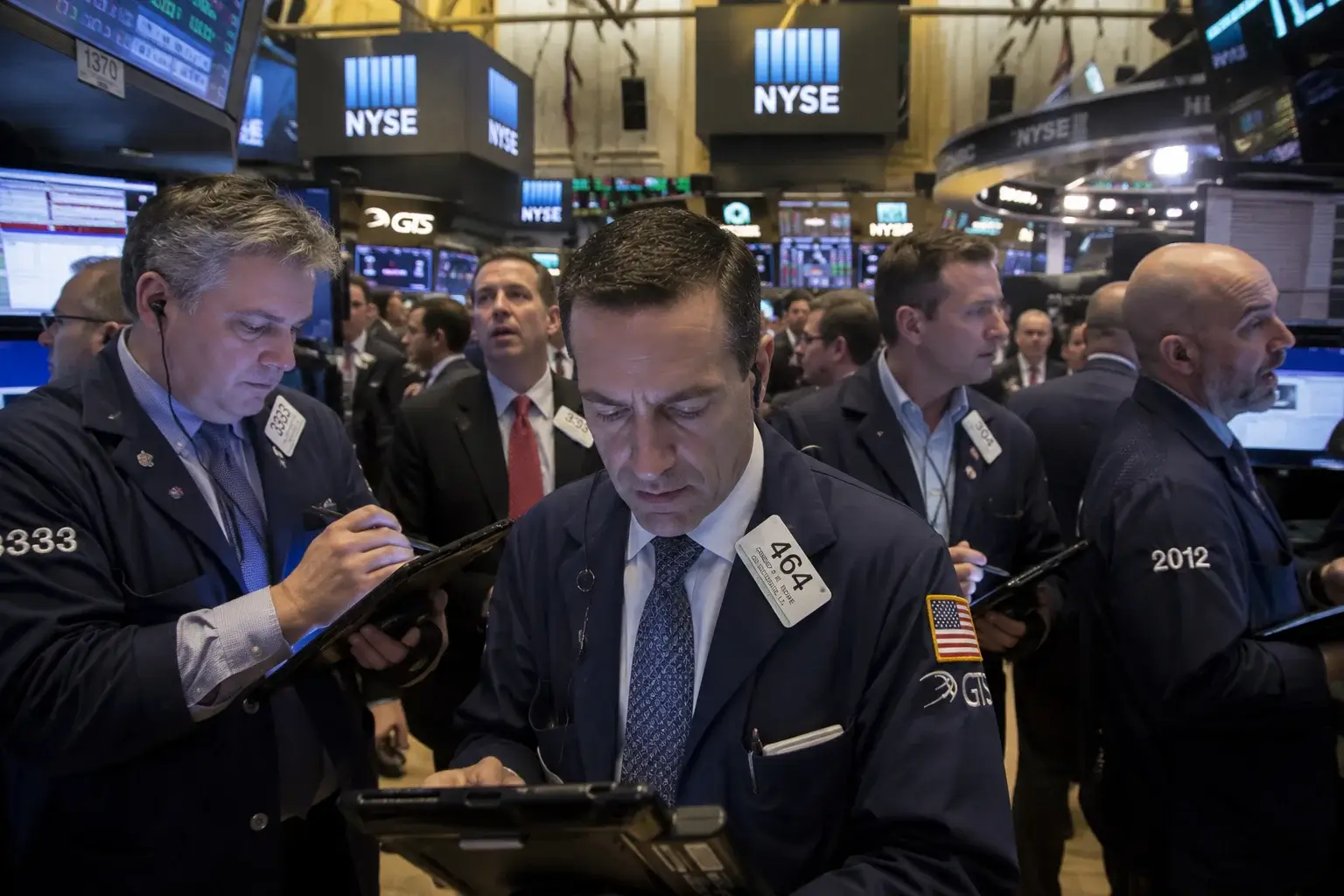
Stocks opened Friday with a bid that looked like conviction and spent the first two hours giving it all back. Nasdaq futures were up 342.50 points, or 1.21%, at 28,580 before the bell. Dow futures ran 319 points higher at 52,699. S&P 500 futures added 34.25 points to 7,507. By mid-morning the whole thing had bled out. The Dow sat at 52,155, down 52.35 points or 0.10%. The S&P 500 traded 7,424, off 13.04 points or 0.18%. The Nasdaq Composite held 25,115, lower by 6.78 points. The Russell 2000 took the real damage at 2,903, down 42.73 points or 1.45%.
That reversal is the session. Thursday delivered a monster tape — the Dow surged 613.92 points, or 1.2%, to 52,208.06, the S&P 500 climbed 1.7% to 7,437.64, and the Nasdaq Composite finished 2.8% higher at 25,122.18, snapping a six-day losing streak. Microsoft ripped 16% on Azure and added roughly $450 billion in market value in a single session. Amazon then dropped a quarter after the close that beat on every line that mattered. The setup for Friday was continuation.
It didn't happen, because the bond market got in the way. The 10-year Treasury note reached 4.737% intraday, its highest level since January 2025, while the 30-year hovered near 5.22%, ground it hasn't touched since 2007. Long-end yields at those levels do specific damage to the exact cohort that was supposed to lead the bounce — small caps, unprofitable growth, anything discounted off a distant terminal value. The Russell's 1.45% loss against a flat Nasdaq is the tell.
Breadth split hard along earnings lines. Amazon ran 13.6% intraday. Apple got smoked for 9.8%. Monolithic Power Systems jumped 15%. Coinbase dropped 10.5%. GoDaddy fell 23%. Consumer discretionary was the one sector genuinely working, with XLY up 2.54% on Amazon's index weight alone, while XLE slipped 0.51% despite crude firming and the uranium complex fell 2.28%. SPY was down 0.23%. VXX added 2.11% as hedges went back on into the weekend.
This is the final trading day of a month that broke the AI trade's momentum, sent the Nasdaq into correction Wednesday, and forced three Fed presidents into open dissent. A tape that closes flat after a 1.2% futures gap is telling you positioning is exhausted, not that the news was bad.
AWS at 37% Reset the Entire Capex Argument
Amazon delivered the number six weeks of selling said was impossible. AWS sales expanded 37% year over year, blowing past expectations for 31% growth and marking the unit's fastest expansion since 2021. In dollars, AWS generated $42.2 billion in the quarter, up 36.7%, against forecasts near $40.5 billion. Management framed the sequential move bluntly: over $4.6 billion added quarter over quarter, roughly 80% more than the largest increase the segment had ever posted.
The headline numbers were just as loud. Net sales rose 20% year over year to $200.61 billion against a $196.47 billion estimate. Operating income climbed 43% to $27.5 billion. EPS of $5.75 crushed the $1.82 consensus, helped by a $53.4 billion gain on the company's Anthropic stake that pushed net income to $62.65 billion. AWS operating income hit $16.62 billion. Backlog — contracted work not yet online — reached $496 billion. North American sales rose 16% to $116.2 billion with operating income of $9.1 billion against $7.5 billion a year ago. International climbed 15% to $42.2 billion with $1.7 billion of operating income versus $1.5 billion.
Then came the part that would have gotten the stock destroyed three weeks ago. Full-year 2026 capital expenditure guidance went from $200 billion to $220 billion. Twenty billion dollars of incremental spending, announced into a tape that had just punished Alphabet for exactly that. The stock gapped anyway, surging 11.51% to $262.60 premarket after closing Thursday at $235.50. Wedbush reiterated outperform and lifted its target to $310 from $293, calling it the cleanest beat among the hyperscalers.
Management also flagged AI and custom silicon each clearing $25 billion annualized run rates, and Amazon Business hitting a $60 billion annualized gross sales run rate across more than 11 million organizations, with 1.8 million customers added in the first half. Zoox picked up the first commercial exemption ever granted by federal highway regulators, clearing up to 2,500 steering-wheel-free robotaxis annually with paid rides starting in Las Vegas.
The one soft spot was the guide. Third-quarter revenue was set at $197 billion to $202 billion against a $204.1 billion consensus, with the shortfall pinned on shifting Prime Day into June. Strip both years' Prime Day timing and third-quarter growth runs nearly 400 basis points higher. Operating income guidance of $22.5 billion to $26.5 billion compares with $17.4 billion a year earlier. Amazon entered Friday up roughly 4% year to date, a laggard through a brutal month, and cleared a dense resistance band between $237 and $247 on the open.
Apple's Supply-Constrained Guide Cost It $600 Billion
Apple beat and got taken apart for it. Adjusted EPS came in at $1.91 against $1.89 estimated, with revenue of $109.42 billion versus $108.65 billion expected, driven by a 22% jump in iPhone sales. Diluted EPS of $2.02 rose 29% year over year on record June-quarter revenue up 16%. The stock slid more than 6% after hours, then got worse in the regular session, trading down 9.17% — the sharpest single-day drop in 16 months.
The segment detail explains the damage. Mac revenue hit $10.35 billion against $8.74 billion estimated, a genuine blowout. iPad came in at $6.19 billion versus $6.92 billion expected. Wearables landed at $7.88 billion against $7.82 billion. Services revenue of $30.74 billion missed the $31.22 billion estimate, and Greater China revenue of $18.8 billion missed as well. Gross margin printed 50.1%. Services and China are the two lines that carry Apple's multiple. Both broke in the same quarter.
The guide did the rest. Fiscal fourth-quarter revenue was guided to rise 9% to 11% through September, against Street estimates above 12% for what should be the debut quarter for the next iPhone. Management pinned it on component shortages and severe DRAM and NAND price inflation, with capacity constraints and rising input costs pressuring forward margins. Gross margin guidance came in below June's result on a smaller tariff-refund contribution. Tim Cook, closing out a fifteen-year run, described memory pricing as a hundred-year flood.
The valuation math turned violent fast. Apple fell toward the $300 handle, with market capitalization sliding back to $4.4 trillion — days after it had reclaimed the top of the global rankings above $5 trillion. The stock had gained roughly 25% in 2026 heading into the print, leaving no room for a soft guide. Friday's slide cut that year-to-date gain to 10.6%.
Technically, the damage is structural. The $312 to $320 zone that acted as support has flipped to resistance, the stock is trading below the 100-period EMA at $320, and RSI has collapsed to 20. The July breakout has been fully erased.
The irony is sharp. Apple was the megacap that never went on the capex binge, positioned by the buy side as the alternative trade to the spenders. This quarter it got billed for everyone else's spending through component prices it doesn't control, and it has already raised Mac and iPad prices with an iPhone increase widely expected before year-end.
The Long End Vetoed the Rally
Every equity move Friday ran into the same wall. The 10-year Treasury note yield jumped almost 7 basis points to 4.731%, with an intraday print at 4.737% — the highest since January 2025. The 2-year rose 6.6 basis points to 4.295%. The 30-year bond yield surged 5.6 basis points to 5.263%.
The move started Wednesday and never stopped. The 30-year jumped 10.5 basis points to 5.201% and touched 5.244%, its highest since July 2007, a 19-year mark. The benchmark 10-year climbed nearly 7 basis points to 4.671% while the 2-year traded 4 basis points lower at 4.236%. That curve shape carries the whole message: the front end priced a Fed staying put, the long end priced inflation the Fed isn't containing. A bear steepener following a hawkish-dissent hold is the bond market repricing central bank credibility, not the policy rate.
Long yields ripped in real time during the chair's press conference, the 30-year moving from around 5.1% to 5.21% and the 10-year from just above 4.61% to nearly 4.69%. He acknowledged the move and said he welcomed markets adjusting to data directly and unfiltered.
Transmission into the real economy is already live. The 30-year fixed mortgage rate rose to 6.58% last week, its highest in almost a year, with one daily tracker peaking above 6.8% before easing back just under it. Higher long yields tighten financial conditions regardless of what the funds rate does, and they compress equity multiples through the discount rate at the precise moment the market is being asked to underwrite $720 billion to $745 billion of combined hyperscaler capital projects for 2026.
Two forces are driving the long end. Crude is one — oil has rebounded hard on renewed hostilities, and energy feeds straight into breakevens. Fiscal supply is the other, with defense outlays rising into a widening conflict. Fresh U.S. strikes on Iranian targets in retaliation for attacks on American assets have pushed any near-term diplomatic resolution further out, and traders are now watching for the conflict to spread toward Egypt.
For equities the arithmetic is brutal. A 5.26% thirty-year and a 4.73% ten-year set a hurdle rate most of the 2026 momentum cohort cannot clear on current cash flows. Small caps got hit hardest Friday for exactly that reason. The Russell's 1.45% decline against a flat Nasdaq is the cleanest read on where the pressure lands when the discount rate moves and earnings don't.
A 9-3 Vote and the Most Hawkish Split Since 2016
The Fed handed markets a hold that read as anything but settled. The FOMC left the target range at 3.50% to 3.75%, a fifth consecutive meeting without a move, on a 9-3 vote. Cleveland's Beth Hammack, Minneapolis' Neel Kashkari and Dallas' Lorie Logan all dissented in favor of an immediate quarter-point increase — the most hawkish dissent the committee has produced since September 2016.
Logan was the most explicit, arguing rates should be modestly higher and that inflation does not appear on track back to 2%. Hammack and Kashkari both pointed at the risk of allowing above-target inflation to become entrenched after more than five years of overshoot. On Friday, dissenting officials reinforced the position publicly, saying they favor raising rates to pump the brakes on prices — comments that added directly to the yield move.
The chair's framing gave traders nothing to hold. He repeated that there is no soft inflation target, no implicit target, only 2%, and said the committee will not hesitate to act where necessary. He also declined to offer forward guidance, describing the current posture as watchful thinking rather than watchful waiting. The statement itself ran 166 words, roughly a third the length of the prior chair's final one. Fewer signals, deliberately.
Markets took that as postponement rather than patience. September hike odds sat around 63% after the meeting, down from near 80% beforehand on one read, with futures-based measures pointing back toward 80% by Thursday. The spread between those two figures is the honest state of the market: nobody knows, and the committee has stopped telling them. Roughly one-in-three odds of a surprise hike had been priced going into Wednesday.
The dissent count matters more than the level. Three regional presidents voting for a hike puts the question of whether three or four more join them in September squarely on the table, and it does so with the July and August CPI prints as the deciding inputs. The desk consensus reads a committee with vocal hawks and a majority siding with the chair on stability through at least September.
For equity risk, the practical outcome is a policy path with two tails and no center. A hike in September tightens into a market already carrying a corrected Nasdaq. A prolonged hold with 3.3% core inflation keeps the long end unanchored. Neither branch supports multiple expansion, which is why Friday's gap could not hold.
Korea's 17.91% Day and the Memory Complex Snapping Back
The single most extreme number on global screens Friday came out of Seoul. The Kospi closed up 17.91% at 6,595.45, the largest single-day gain in the index's history. The previous record was roughly 12% in October 2008, at the depth of the financial crisis. SK Hynix closed up 29.95% at 1,718,000 won, roughly $1,240, hitting its daily limit. Samsung Electronics rose 26.81% to 262,500 won. The Nikkei 225 added 4.03% to 64,362.02.
The move needs its context to make sense. The Kospi peaked at 9,385.59 on June 19 after roughly doubling in six months, then bottomed at 5,262.77 in late July — a 43.9% drawdown, deeper than the 31.1% pandemic crash. The index fell more than 17% across three sessions and triggered circuit breakers on July 28 and July 29, the first back-to-back halts in the exchange's history. July closed down 22.19%, the worst month since 1997.
The unwind was mechanical. Korean retail investors financed the first half of that rally with margin debt and single-stock leveraged ETFs, a product the exchange only launched in May 2026. Once prices turned, the positions liquidated themselves. Regulators are now probing whether foreign high-frequency traders amplified the swings after program trading nearly doubled following those ETF launches, and Seoul has pledged emergency intervention frameworks and curbs on retail leverage access.
Two headlines out of China supplied the original spark. Chinese memory maker CXMT raised $8.6 billion in a Shanghai listing and closed its debut up 466%, later extending to a 531% gain and a $487 billion market value that made it China's most valuable listed company. A day later, reports said China had begun mass-producing domestic deep ultraviolet lithography tools — the exact equipment Western export controls were built to withhold.
Friday's reversal came from the demand side of the ledger. Amazon's AWS acceleration and the $220 billion capex number told memory producers their order book holds through 2027 and beyond. Samsung and SK Hynix had both already posted strong quarters; the correction was positioning, not fundamentals. Korean semiconductor exports ran $44.8 billion in June. Buy-side sidecars triggered in both the Kospi and Kosdaq around 9:06 a.m. local, freezing program buy orders for five minutes.
Even after a record day, the Kospi sits far below its June high above 9,000. A 43.9% drawdown followed by a 17.91% bounce leaves the index roughly 30% off the peak. This is a violent mean reversion inside a broken uptrend, not a repaired one.
Semis Close the Worst Month in Two Decades
The American chip complex caught the Korean bid at the open. A chip-tracking ETF gained 3.3% in early U.S. trading, with Micron, SanDisk, SK Hynix ADRs, Nvidia, AMD and Intel all bid. Micron had already jumped 18% Thursday after Samsung's results confirmed the memory shortage is structural rather than cyclical, and it trades at $868 against a $1,255 high — still down 41% from that peak, with the $903 trendline the next test.
None of it repairs the month. The semiconductor sector is closing July with its worst monthly performance since 2002, and month-end fund flows drove Friday's technical recovery more than any change in conviction. The Philadelphia semiconductor index rallied more than 7% Thursday afternoon, but that came after a stretch in which it fell as much as 6% in a session on a fourth straight losing day, dragging the Nasdaq-100 to 9.7% below its record — just short of correction — before Wednesday pushed the Composite through the line.
The internal rotation tells the story better than the index level. The correlation between semis and hyperscalers collapsed to -31% this month, an all-time low, with semis trading in line with capital goods instead of software. That is the market re-rating chips as cyclical equipment suppliers rather than secular AI beneficiaries. Buy the semis and sell the hyperscalers ran for weeks, then reversed hard when Microsoft and Amazon proved the spending converts.
Individual damage was severe. Intel had been the sector's biggest surprise winner of 2026, up roughly 270% year to date entering July, before giving back 21% across seven trading sessions on reports its 18A foundry process won't reach profitable yields until late 2026 or 2027, and on losing data-center revenue leadership to AMD for the first time. Server CPU share slipped from 72.8% to 66.8% year over year.
The leverage flush ran through the fund complex as well. A $24 billion AI-focused hedge fund slumped 67% in July after dumping large positions in SK Hynix, SanDisk and Nebius into margin calls, offloading shares at significant markdowns. Hedge funds and other large investors have likely finished the deleveraging, and it happened faster than the sell-side expected.
Friday's individual standout was Monolithic Power Systems, up 15% and pushing its year-to-date gain to 67% after adjusted EPS of $6.50 beat the $5.87 estimate on revenue of $980.6 million against $902.5 million expected, with third-quarter revenue guided to $1.14 billion to $1.16 billion and a fresh $500 million buyback authorization.
Big Oil Printed $26 Billion and Nobody Cared
The two largest American oil companies reported windfall quarters Friday morning and the tape barely moved on either. Combined second-quarter profits topped $26 billion, up more than 300% year over year, on crude prices lifted by the U.S.-Iran conflict.
Exxon earned $14.5 billion in net income, more than doubling the year-ago figure and the highest haul since 2022 during the onset of the Russia-Ukraine war. That works out to roughly $160 million per day across the quarter. Adjusted earnings came in at $14.7 billion, or $3.52 per share, against reported EPS of $3.48. Cash flow from operating activities hit $23.6 billion with free cash flow of $17.2 billion, and shareholder distributions totaled $9.4 billion including $4.3 billion of buybacks. Upstream production was the highest in more than two decades excluding Middle East disruptions, with record Permian volumes tracking a planned 9% CAGR through 2030 and the fifth Guyana FPSO underway for a fourth-quarter startup.
It still counted as a miss. The Street wanted $3.60 to $3.63 per share on revenue near $97.7 billion, and scheduled maintenance costs ate into the bottom line. Shares fell 2% premarket. Exxon closed Thursday at $154.87 against a 52-week range of $105.52 to $176.41, up 26.3% year to date, and trades at 10.23x trailing EV/EBITDA against an industry average of 6.71x — a premium that leaves no room for an earnings shortfall.
Chevron delivered the cleaner print. Net income reached $12.0 billion, nearly quadrupling the $2.5 billion posted a year earlier, with adjusted EPS of $6.06 beating estimates. The stock added about 1% premarket. Chevron carries a 3.63% dividend yield on a payout ratio the market treats as covered, trades at 9.85x EV/EBITDA, and is up 21% over the past year against Exxon's 37.2%.
Sector positioning explains the muted reaction. XLE fell 0.51% on the session even with crude firming, because the market is treating these numbers as the peak of a war premium rather than a run rate. Energy earnings this good, delivered while gasoline sits back above $4 a gallon nationally, also invite political risk — lawmakers moved within hours to target the results in the affordability debate.
Crude itself held. West Texas Intermediate rose 0.77% to $84.23 and later traded near $85, while Brent gained 0.61% to $89.57 and pushed toward $90 as Strait of Hormuz traffic faltered again on renewed escalation.
The Punishment Tape: Roblox, GoDaddy, MasTec, Coinbase
For every Amazon there were three companies that guided badly and got dismantled. Roblox was the worst of them, tumbling 22.5% premarket. The quarter itself wasn't the problem — EPS of -$0.26 beat the -$0.34 estimate, though revenue of $1.5 billion missed the $1.557 billion consensus on bookings of $1.6 billion. The guide destroyed it. Third-quarter revenue was set at $1.41 billion to $1.49 billion against a $1.86 billion consensus, with bookings guided to decline 14% to 18% year over year, full-year guidance withdrawn entirely, and management conceding that the monetization softness observed in the second quarter persists. The stock closed Thursday near $48.65 and traded around $43 after hours.
GoDaddy was next, down 16.4% premarket and extending to a 23% decline intraday, pushing its year-to-date loss to roughly 38.3%. Full-year revenue guidance fell short, and the market is applying a generative-AI disruption discount to a business built on web hosting and site design. MasTec fell nearly 16% premarket and as much as 19.33% intraday after in-line second-quarter results that gave investors nothing to hold in an engineering and construction name priced for data-center buildout upside.
Coinbase slid 10.5% and traded as much as 15% lower after posting a third consecutive quarterly loss. The company lost $359.5 million, or $1.36 per share, against expectations for a 17-cent loss. Revenue of $1.22 billion fell 17% year over year and missed the $1.31 billion estimate, with crypto spot trading volume down 25%. Strategy dropped 8% after disclosing an $8.22 billion accounting loss from unrealized Bitcoin markdowns across its 846,000 BTC position.
Reddit fell 12% despite beating on both lines and guiding above expectations, because management described Google search referrals as choppy in the quarter. Search-referral dependence is now a standalone risk factor the market prices independently of results.
Moderna dropped more than 4% even after beating, losing $1.97 per share on revenue of $145 million against expectations for a $2.03 loss on $102.9 million, with full-year revenue guidance also above consensus. Alignment Healthcare fell 18% on a sizable EBITDA beat that came with a smaller-than-expected raise. Neurocrine Biosciences fell 9.52% on results ahead of expectations. Linde slipped 5.6%. Western Union had dropped 13.7% Thursday evening after cutting its 2026 profit forecast.
The pattern is consistent across the tape: beats are being sold, guides are being traded, and forward visibility is the only currency the market accepts right now.
Read More
-
Yen Stalls at 160 Despite a 3% JGB and Tokyo Core CPI at 2.0% — Intervention Sits at 164, Friday's Payrolls Decide
02.09.2026 · TradingNEWS ArchiveEnergy
-
Marvell Loses 7% As The Chip Complex Gets Smoked — Does A Two-Year Guidance Raise Survive An AI Slowdown?
14.09.2026 · TradingNEWS ArchiveStocks
-
XRP Pinned At $1.39 As Bitcoin Dominance Hits 58.9% — Can A 60-Vote Threshold Unlock The Institutional Bid?
14.09.2026 · TradingNEWS ArchiveCrypto
-
Crude Rips To 4-Month Highs As The Bypass Line Stays Dark — 10M Barrels A Day Still Shut In
14.09.2026 · TradingNEWS ArchiveCommodities
-
S&P 500 Slides 0.80%, Nasdaq Loses 1.03% And Dow Drops 0.54% As Chips Get Smoked And Oil Rips To $109
14.09.2026 · TradingNEWS ArchiveMarkets
-
Pound Loses 1.3500 With Gilt Yields At A 19-Year High — Why Rising UK Borrowing Costs Are Hurting Sterling
14.09.2026 · TradingNEWS ArchiveForex
Where the Bid Showed Up
The winners list was narrow, earnings-driven and heavily weighted toward anything selling into data-center demand. Amazon led the S&P 500 at 13.6%. Monolithic Power Systems ran 15% on a beat-and-raise with a fresh buyback, taking its year-to-date gain to 67% after closing Thursday at $1,316.18 and quoting near $1,450 in after-hours trade.
Newell Brands soared 17.5% premarket after beating second-quarter expectations — a household products maker leading the tape on the same day two megacap technology companies moved $600 billion of combined market value in opposite directions. IES Holdings jumped 28.07% on data-center demand strength. AXT surged on second-quarter results that topped expectations, driven by record indium phosphide revenue and demand from data centers and AI infrastructure, with meaningful gross margin improvement. DexCom rose 9.31% after beating second-quarter estimates and raising guidance.
Further down the cap structure the moves got extreme. Replimune ripped 94.35% after an upgrade following an FDA panel vote. Perella Weinberg gained 20.39% on an earnings beat. Focus Universal spiked 432.6% on heavy volume. On the other side of that speculative ledger, Karyopharm Therapeutics collapsed 68.6%.
Thursday's carryover names held some bid as well. TeraWulf closed up 18.1% at $17.82 after federal clearance for its acquisition of a Maryland power plant, and MARA Holdings jumped 17.4% as investors reassessed power assets for AI repurposing. American Airlines added 3.9% to $15.43.
Corporate action stayed active underneath the earnings noise. Berkshire Hathaway completed its acquisition of Taylor Morrison Home at $72.50 per share in cash on July 24, with the shares suspended from trading. Reformation finished marginally higher after its NYSE debut, a soft print for a new listing on a day the broad tape went nowhere.
The Roundhill Magnificent Seven ETF gained just 0.45% to $64.21, which captures the split precisely — Amazon's 13.6% and Microsoft's carryover strength were offset almost entirely by Apple's collapse. Another crack inside the megacap bloc, with the market sorting on whether spending produces a payoff rather than on how much spending gets announced.
Market internals had already improved before this week's damage. The percentage of S&P 500 components trading above their 200-day moving average rose to 73% earlier in the week, the highest since December 2024. That reading is the strongest argument that July's decline was concentrated in a single sector rather than broad-based, and it gives August something to build from if yields cooperate.
The Consumer Data Underneath the Tape
Friday's macro print landed better than expected and changed nothing about the yield path. Final July consumer sentiment came in at 55.2 against a 54.0 estimate and a 54.4 preliminary reading, up from 49.5 in June — an increase of almost 12% month over month and the second consecutive double-digit percentage gain. The current conditions index rose to 54.8 from 47.7. Expectations climbed to 55.4 from 50.7. Both remain below year-ago levels of 68.0 and 57.7 respectively, with the headline index 11% under last July's 61.7.
Inflation expectations held. The one-year measure sat at 4.2%, down from 4.6% in June but well above the 3.4% reading in February before the conflict began. Five-to-ten-year expectations stayed at 3.3% for a second month. Survey commentary was blunt about the ceiling: consumers do not feel they are thriving, gasoline prices remain below May highs, and continued shipping constraints in the Middle East make sustained improvement difficult.
Thursday's inflation data set the backdrop. The June PCE price index fell 0.1% month over month, putting the annual rate at 3.7%, down from 4.1% in May. Core PCE rose 0.1% for the month and 3.3% year over year. Both sit far above the 2% target. Gasoline and energy goods prices sank 9.2% in June, the largest monthly drop since August 2022 — and the entire reason the headline cooled. That decline covered a mid-June ceasefire window that has since collapsed, with fighting resumed and the national gasoline average back above $4 a gallon.
Household finances are where the strain shows. Consumer spending rose 0.3% in June in nominal terms and 0.4% adjusted for inflation, led by health care, motor vehicles, financial services and insurance, with services spending up $58.2 billion against $7.0 billion for goods. Income rose only 0.2%. The personal saving rate slipped to 2.7%, a nearly four-year low. Spending is outrunning income and the gap is coming out of savings.
Second-quarter GDP printed 1.5% headline with better underlying composition than the top line implies, following a first quarter that showed real trouble in personal consumption.
Strip out energy volatility and underlying inflation runs around 3%. That figure is what the three dissenting Fed presidents are voting on, and it is why a cooler June print bought equities nothing. Next week's labor market and manufacturing data carry the September decision.
Crude, Gold, Silver and a Crypto Complex Rolling Over
Commodities split along the war trade Friday. West Texas Intermediate rose 0.77% to $84.23 a barrel in early trading and pushed toward $85 as the session developed, while Brent gained 0.61% to $89.57 and traded up to $90. Prices had pulled back after reports that more tankers were crossing the Strait of Hormuz despite continued hostilities, then turned back higher as that traffic faltered again on renewed escalation.
Wednesday's move set the level. Brent gained 6.6% to $89.61 and WTI advanced 6.4% to $84.31 after the administration said the U.S. would hit Iran hard in retaliation for an attempted surprise attack on American forces. The market's own read on the ceiling is that a large volume of supply is waiting to hit the tape once the conflict resolves, which caps any dramatic spike even with the strait contested.
Precious metals got hit hard. Gold futures fell 1.21% to $4,110.10 an ounce, with GLD down 2.04%. Silver was worse — September futures opened at $59.26, up 0.4% from Thursday's close, then rolled over to $57.94 by 8:37 a.m. and traded down 1.71% to $58.01, with SLV off 3.31%. Silver has more than tripled over the past year and is up over 100% year to date, so a 3% down day inside that move is profit-taking rather than a trend break. Rising real yields and heavy investor interest elsewhere are pulling capital out of both metals at the same time industrial silver demand softens.
Crypto broke down independently of equities. Bitcoin fell 1.36% to $63,829.36 in early trading, dipped below $63,000, and traded down 3% to $62,478 by mid-morning after reaching $65,040 on Thursday. IBIT fell 3.41% and ETHA dropped 3.79%. The drivers are specific: uncertainty over a surprise Fed hike, delays advancing the U.S. Crypto Clarity Act, and the Coinbase and Strategy results confirming that institutional participation is thinning rather than building.
The XRP ETF complex illustrates the gap between headline flows and standing assets. U.S. spot funds have attracted $1.496 billion in inflows yet currently manage $989 million — a $507 million shortfall representing 33.9% of total net inflows. Money is coming in and leaving again rather than compounding, which is the same softening in institutional demand that Bitcoin's price action masked earlier in the week.
The Levels That Matter Into August
The S&P 500 enters August at 7,424 after a month that produced a Fed hold with three hawkish dissents, a Nasdaq correction, a 43.9% Korean drawdown and the worst semiconductor month since 2002. The index sits 121 points below Wednesday's low of 7,316.15 on the upside and roughly 14 points below Thursday's 7,437.64 close on the downside — a tight box that resolves on yields, not earnings.
The support structure is defined. Wednesday's close at 7,316.15 marked the low of the Fed selloff and is the first level that matters. Below it, the market has no reference until the June consolidation. On the upside, 7,437.64 is the immediate line, and reclaiming it puts the record high back in play. The Dow's equivalent levels are 51,594.14 from Wednesday's close and 52,208.06 from Thursday's. The Nasdaq Composite needs to hold 24,442.94 — the level that confirmed the correction — with 25,122.18 as the reclaim target.
The Russell 2000 at 2,903 is the honest gauge. Small caps fell 1.45% Friday while large-cap tech held flat, which prices the long-end move directly. If the 10-year holds above 4.73% and the 30-year above 5.26%, the Russell leads lower and breadth deteriorates from a starting point where 73% of S&P components sit above their 200-day average.
Three catalysts sit in the next two weeks. Labor market data and manufacturing reports arrive next week and feed straight into the September vote. July and August CPI are the inputs the committee majority explicitly said it wants before moving. And the Middle East conflict has a live escalation path toward Egypt that would put Brent through $90 and rebuild the energy contribution to headline inflation that June's 9.2% gasoline drop temporarily removed.
The earnings verdict from this week is already delivered. Cloud acceleration at 37% got paid. A supply-constrained guide at 9% to 11% got destroyed. $220 billion of announced capex was rewarded because it came with a $496 billion backlog attached. The market stopped asking how much these companies spend and started asking what the spending returns, and that shift is what separated Amazon's 13.6% from Apple's 9.8% on the same tape, in the same hour, on the same day.