S&P 500 Slides 0.80%, Nasdaq Loses 1.03% And Dow Drops 0.54% As Chips Get Smoked And Oil Rips To $109
Marvell (MRVL) fell 7.59% and Teradyne (TER) 9.3% while CrowdStrike (CRWD) ripped 10.45% on a rotation into software | That's TradingNEWS
Key Points
- S&P 500 fell 0.80% to 7,595.97 and the Nasdaq dropped 1.03% to 26,061.19 in a broad tech-led decline.
- The PHLX Semiconductor Index sank 5.7%, with Marvell (MRVL) down 7.59% and Lam Research (LRCX) off 8%.
- Brent crude topped $109 and the 10-year Treasury yield hit 5%, its highest since October 2023.
The S&P 500 (SPX) traded at 7,595.97 through late morning Monday, down 0.80% and 61.03 points from Friday's 7,657.00 close, and the damage did not come from one place. Two unrelated shocks landed on the same session: a weekend call from the people who build frontier artificial intelligence models to slow down the pace of building them, and a Middle East supply disruption that pushed Brent crude above $109 a barrel and dragged the 10-year Treasury yield through 5%.
The index opened weak, printed -0.75% inside the first fifteen minutes, ground to -0.54% by mid-morning at 7,615, then rolled over again toward 7,596 as the chip complex refused to stabilize. That is a tape with no bid underneath it rather than a single-print flush. The 7,600 level, which held on every intraday test between September 8 and September 11, gave way before noon.
Context matters for how ugly this actually is. Friday delivered a 65.28-point rally, +0.9%, that snapped a four-session losing streak on the back of an in-line consumer price print and a break in crude. That rebound is now more than fully retraced. For the week ended September 11 the S&P 500 lost 0.8%, the Dow gave up 1.6% in its worst week since March, and the Nasdaq shed 0.7%. Monday extends the pattern rather than breaking it: the three major indexes have now opened a trading week mixed or lower for six consecutive weeks.
The internal picture coming into the session was already thin. The share of S&P 500 constituents trading above their 50-day moving average had slid to 33% as of Friday, with 53% above the 200-day. New yearly highs on the NYSE were sitting near the lows of the two-year range. An index within 2% of record territory, built on a third of its members holding short-term trend, has very little cushion when its heaviest sector takes a 5% hit.
The volatility response confirms that fragility. The CBOE Volatility Index (VIX) ran to 17.33, up 9.41% on the day and 1.49 points, after collapsing 11.2% to 15.84 on Friday. Premarket the gauge touched 17.83, a 12.56% jump. Nothing in that range signals panic — 17 handles are ordinary — but the round trip from 15.84 to 17.83 in a single overnight session shows how quickly positioning flipped once Asia opened.
Nasdaq IXIC Loses 1.03% To 26,061.19 As The Semiconductor Complex Gets Smoked
The Nasdaq Composite (IXIC) carried the session's worst damage, trading at 26,061.19, down 271.85 points and 1.03% from Friday's 26,333.04 close. The Nasdaq-100 fell as much as 1.7% intraday. Nasdaq-100 futures had already telegraphed the open, sinking 1.65% to 28,901.75 and at one point trading 461.50 points lower at 29,222 in the overnight session.
The index began breaking down well before the opening bell. The Invesco QQQ Trust fell 1.45% to $704.48 in premarket trade, and the gap held. By the open the Composite was off 1.17%, and every subsequent attempt to lift it ran into fresh supply in the same place: semiconductors.
The PHLX Semiconductor Index sank 5.7% on the session. To put that number against its own history, the DeepSeek scare in early 2025 knocked 9% off the SOX in a compressed window before the index recovered and ran more than 200% into its June 2026 high. Monday's single-day move is roughly two-thirds of that entire episode, delivered in one morning, and it came with no product news, no demand data and no guidance cut.
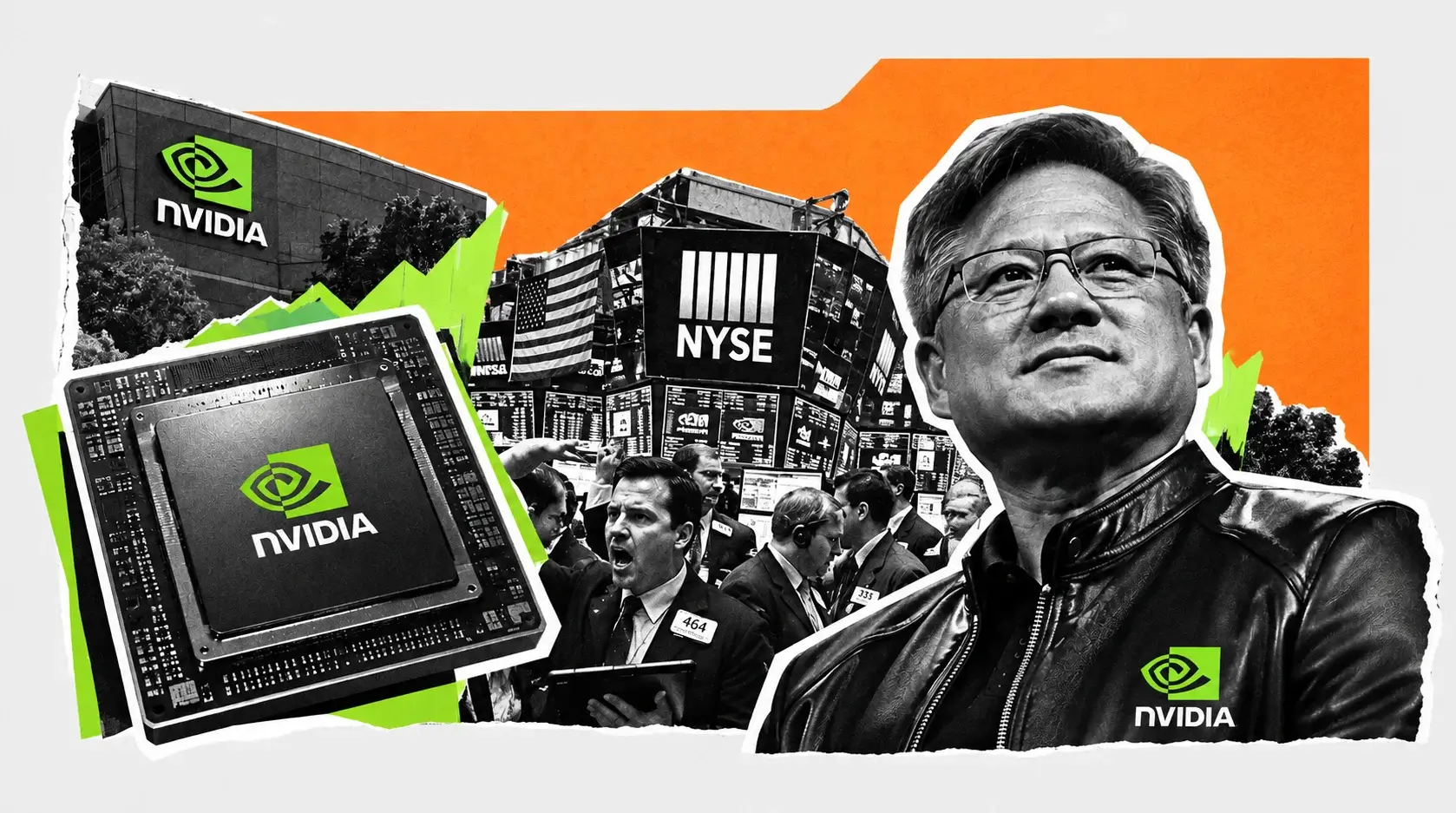
The list of names doing the damage reads like an inventory of everything the AI trade owns. Marvell Technology (MRVL) fell 7.59%. Advanced Micro Devices (AMD) dropped 5.7%. Intel (INTC) lost 5%. Lam Research (LRCX) tumbled 8%. Teradyne (TER) shed 9.3%. Broadcom (AVGO) fell 3.2%. Nvidia (NVDA) traded down between 2.5% and 4.20% across the morning after opening at $211.59 in premarket, a 3.1% discount to Friday's close.
The selling spread beyond silicon into every adjacent lane. Optical names — Lumentum (LITE), Applied Optoelectronics (AAOI), Ciena (CIEN), Coherent (COHR) — sold off together. Data center and neocloud operators including Nebius (NBIS), CoreWeave (CRWV), IREN (IREN), Hut 8 (HUT), Cipher Mining (CIFR) and TeraWulf (WULF) followed. The power complex that funds the buildout — Bloom Energy (BE), Vistra (VST), Talen Energy (TLN), NuScale (SMR) — went with them.
That breadth is the point. A demand shock hits the chip designers first and the power names last, over weeks. A duration shock hits all of them in the same hour, because the market is not repricing next quarter's orders. It is repricing the number of years the buildout gets to run.
Dow DJI Falls 281.63 Points To 52,291.66 With Caterpillar And Nvidia Leading The Drag
The Dow Jones Industrial Average (DJI) held up best of the three headline indexes, trading at 52,291.66, a loss of 281.63 points and 0.54% from Friday's 52,573.29. The Dow's structure did the work: a price-weighted index with heavy industrial, staples and healthcare representation takes less damage from a semiconductor unwind than a market-cap index with a fifth of its weight in five AI names.
The decliner board inside the 30 was led by Caterpillar (CAT), down 4.57%, Nvidia (NVDA), down 4.20%, and Cisco Systems (CSCO), down 2.06%. Caterpillar's move deserves attention separate from the AI story. The stock has been trading as a data center infrastructure proxy for most of 2026 — generators, gensets, site power — and a 4.57% single-session hit in a tape where the SOX fell 5.7% places it firmly inside the capex trade rather than alongside traditional heavy machinery. That linkage is new, and it cost the Dow more points on Monday than any other component.
The gainers told the rotation story. Salesforce (CRM) rose 3.20%, McDonald's (MCD) added 1.89% and Coca-Cola (KO) climbed 1.72%. Enterprise software catching a bid on a day when chips fell 5.7% is not a defensive trade in the usual sense. The logic being applied is that a slower frontier means less disruption risk to installed software franchises and more pricing durability for incumbents, so capital rotated out of the picks-and-shovels layer and into the application layer directly above it.
Staples strength alongside that is the more conventional reflex, and with the 10-year at 5% it is a reflex with a cost. Coca-Cola and McDonald's both compete with a risk-free rate that just printed its highest level since October 2023.
Friday's session provides the contrast. The Dow added 509.19 points, a full 1%, with 24 of 30 components closing green and six red. Monday erased 55% of that in a morning. The weekly picture is worse: the index lost 1.6% over the five sessions ended September 11, its largest weekly decline since March, and Monday's open puts it on track to extend that run into a second week. Total volume Friday was 14 billion shares against a 20-session average of 14.9 billion, with advancers beating decliners 2.1-to-1 — a thin rally that has now been undone on heavier tape.
Russell 2000 Opens Green At +0.45% Then Rolls Over Toward 2,885
Small caps gave the session its most instructive arc. The Russell 2000 opened higher, up 0.45%, while the S&P 500 was already down 0.75% and the Nasdaq was off 1.17%. That divergence lasted less than an hour. By mid-morning the index had slipped to 2,899, down 4.13 points and 0.14%. It later traded at 2,885.66, off 18.28 points and 0.63%, before stabilizing. Russell 2000 futures had opened the night 10.90 points lower at 2,893.60.
The opening bid made sense on its own terms. A tape selling AI capex should, in theory, rotate into domestically focused small caps with no exposure to hyperscaler order books. What killed that rotation inside sixty minutes was the second shock. Small caps carry more floating-rate debt and more refinancing sensitivity than large caps, and a 10-year yield punching through 5% into a Federal Reserve meeting where the market prices an 88% chance of a hike is a direct hit to that balance sheet profile.
So the Russell traded both shocks at once and ended up net negative on the day, which is the cleanest evidence available that Monday was not a simple growth-to-value rotation. In a rotation, the money that leaves semiconductors has to land somewhere and stay there. On Monday it left semiconductors, tried small caps, failed, tried enterprise software, partially held, and left a meaningful portion sitting in cash and short-duration paper.
The energy complex was the one place the money genuinely stuck. Producers and services names caught a bid on Brent above $109, and that flow was real rather than reflexive. Energy has been the S&P 500's leadership sector for most of the third quarter, up 21% quarter-to-date coming into September, and the sector was the only one to gain during last week's rotation as healthcare and financials surrendered their leadership.
Breadth across the full session stayed negative but not catastrophic. This was a concentrated, sector-specific liquidation rather than an indiscriminate risk purge. Utilities, staples, healthcare and energy all traded better than the index. The narrow leadership that carried the market higher into September is exactly the leadership that got hit, and nothing has yet stepped up to replace it.
Amodei's 3,800-Word Essay And Altman's Agreement Repriced The Entire AI Capex Curve
The catalyst arrived over the weekend in a form the market has no model for. Anthropic chief executive Dario Amodei published a 3,800-word essay on Saturday arguing that AI companies should deliberately slow the rate at which they advance model capabilities, so that safety work has time to keep pace. He told CBS on Sunday that the hardest part of any such arrangement is whether China participates.
OpenAI chief executive Sam Altman agreed publicly, writing that the frontier needs pacing and that OpenAI would adopt independent evaluators with employee-level access. Elon Musk, who runs xAI, backed the position. Altman separately said an initial public offering this year would be ill-advised, and OpenAI pushed its listing to 2027. Anthropic still intends to list this fall and has selected the Nasdaq.
The sequence that produced this began the prior week, when Anthropic researcher Jacob Coxon resigned and wrote that both his employer and OpenAI were racing toward self-improving superintelligence and gambling with people's lives, and that the people building the technology believe it could kill everyone by the end of the decade.
President Donald Trump rejected the framing outright on Monday, writing on Truth Social that the only guardrail AI needs is a strong and smart president, that his administration already holds criminal and regulatory power over these companies, and that a conspiracy against AI and data centers benefits only China. He repeated his position that whoever wins AI wins.
What the equity market actually repriced is narrower than the headlines suggest. Nobody cut a capex forecast. No hyperscaler changed a spending plan. Order books did not move. What moved was the market's implied duration on that spending — the number of years the buildout gets to compound before it plateaus. Cut two years off a ten-year exponential and the terminal value of everything downstream of the GPU falls hard, which is precisely the pattern seen in Monday's tape: designers, equipment, optics, data centers and power all hit together, in proportion to how far out their cash flows sit.
Not everyone accepted the premise. Michael Burry posted that the warnings are an attempt by incumbents to smother smaller competitors. Others questioned whether arguments grounded in fear rather than evidence deserve a market response at all. Capex projections circulating at $3 trillion-plus by decade-end sit uncomfortably next to a 5.7% one-day drop in the semiconductor index.
Nvidia NVDA Slides Toward $211 While Marvell MRVL And Teradyne TER Take The Worst Of It
Nvidia carried the session's symbolic weight but not its largest percentage loss. The stock opened at $211.59 premarket, down 3.1%, and traded between 2.5% and 4.20% lower through the morning. The company's exposure here runs deeper than chip demand. Nvidia committed $30 billion to OpenAI in February at a $730 billion valuation, and up to $10 billion to Anthropic late in 2025 when that company was valued near $350 billion. A delayed or cancelled listing at either lab marks those positions down directly, which is why Nvidia traded as an AI-IPO proxy on Monday rather than as a semiconductor.
The steepest damage sat further out on the risk curve. Teradyne (TER) lost 9.3%, hit by the combination of semiconductor test exposure, valuation after a strong run and recent rating downgrades. Coherent (COHR) tumbled 8.68% under persistent selling in AI photonics. Lam Research (LRCX) fell 8% in a broad wafer-fabrication equipment liquidation. Marvell Technology (MRVL) dropped 7.59%. Advanced Micro Devices (AMD) fell 5.7%, Intel (INTC) 5%, Broadcom (AVGO) 3.2%. Micron (MU) and Sandisk (SNDK) slid alongside them.
Corning (GLW) sank 9.16% on its own catalyst — an announced equity offering that could raise up to $2 billion — and the dilution concern landed in a tape with zero appetite for absorbing new AI-adjacent supply.
The global pass-through was immediate and severe, which matters because it happened before any US market participant could trade the news. Japan's Nikkei 225 closed down 518 points, or 0.81%, at 63,492.99, with SoftBank finishing nearly 11% lower. South Korea's Kospi sank 3.26% to 6,684.37 as SK Hynix fell 6.4% and Samsung Electronics dropped 4.05%. Kioxia lost 6%. In Europe, ASML fell 6% and the German DAX gave up 128 points to 25,440, while the FTSE 100 rose 75 points to 10,726. Australia's ASX 200 edged up 0.10% to 8,749.90 and China's CSI 300 closed 0.67% lower at 4,480.08.
Memory took the worst of it globally. That is consistent with a duration repricing rather than a demand scare: memory is the most cyclical, most capacity-committed and most forward-priced link in the chain, so it moves furthest when the market shortens its assumed runway.
Brent Above $109 And WTI Near $103.46 After Saudi Arabia Shuts A 7 Million Barrel Pipeline
The energy shock running underneath Monday's session is larger in economic terms than the AI headlines and considerably harder to reverse. West Texas Intermediate for October delivery traded at $103.46, up $3.41 and 3.41%, after opening the morning at $102.30 and touching $103.59 for a 3.54% gain. Brent crude pushed above $109 after starting the session at $107.30, a 2.56% advance.
The trigger was Saudi Arabia's decision to shut its East-West pipeline following a drone strike the kingdom attributed to militants operating from Iraq. That line carries up to 7 million barrels per day to the Red Sea and exists specifically to bypass the Strait of Hormuz — the route that has been closed and is the reason crude is priced where it is. Early assessments put the outage at three to five weeks. Taking the bypass offline while the primary route is already shut removes the redundancy the market had been pricing.
The rest of the weekend compounded it. Yemen's Houthi forces launched a large ballistic missile and drone attack on Saudi Arabia's King Khalid Air Base at Khamis Mushait and claimed direct hits. The group captured the strategic island of Perim in the Bab al-Mandab Strait and seized the Greater and Lesser Hanish islands in the southern Red Sea, strengthening its position on the second-most-important chokepoint in the region. Oman postponed planned talks with Iran over the future of the Strait of Hormuz without setting a new date.
The cumulative numbers are what make this an inflation problem rather than a headline. WTI has gained 52.9% since the Iran conflict began at the end of February and is up 78.5% year-to-date. Crude rose another 8% last week alone. US diesel prices have set fresh all-time highs on consecutive days, and diesel is the input that transmits energy costs into freight, food and construction with the shortest lag of any refined product.
Energy equities were the session's one durable source of demand. The sector had already led the S&P 500 through the third quarter with a 21% quarter-to-date gain and was the sole sector to advance during last week's rotation. Current inventory and supply data is published by the Energy Information Administration.
Read More
-
Yen Stalls at 160 Despite a 3% JGB and Tokyo Core CPI at 2.0% — Intervention Sits at 164, Friday's Payrolls Decide
02.09.2026 · TradingNEWS ArchiveEnergy
-
GLD ETF Sheds Value With Bullion as North American Funds Stay $7.7B in the Red
10.09.2026 · TradingNEWS ArchiveStocks
-
Bitcoin Holds $78,453 As Rate Hike Bets Hit 87.3% — $81,700 Is The Line Between $88,700
14.09.2026 · TradingNEWS ArchiveCrypto
-
Gold Sinks To $4,295 With Brent Above $109 — Why A Regional War Is Now Bearish For Gold
14.09.2026 · TradingNEWS ArchiveCommodities
-
Euro Loses 1.1550 As Both Central Banks Hike — Why The Fed's Remaining Runway Beats The ECB's
14.09.2026 · TradingNEWS ArchiveForex
The 10-Year Treasury Yield Hits 5% For The First Time Since 2023
The bond market delivered the number that actually constrains equity valuations. The 10-year Treasury yield breached 5% on Monday, its first trip through that threshold since October 2023, after trading at 4.963% premarket and 4.97% at mid-morning. The move added more than 2 basis points on the day and extended a surge that lifted yields 11 basis points in a single session last Thursday.
The 2-year note, the maturity most sensitive to policy, advanced more than 2 basis points to 4.666%, after touching its highest level since July 2024 last week. The 30-year bond held between 5.35% and 5.38%. The curve is steepening from the long end while the front end grinds higher on hike pricing — the profile of a market that expects tighter policy now and higher inflation compensation later, which is the least comfortable combination available for equity multiples.
The mechanical effect on stocks is direct. A 5% risk-free rate raises the discount rate applied to every future cash flow, and the compression falls hardest on the assets whose cash flows sit furthest out. That is the same cohort the AI safety headlines just hit. Monday's semiconductor rout was a duration shock arriving through the equity channel at the exact moment a duration shock was arriving through the rates channel. Long-dated growth got taxed twice.
The path here has been building for two weeks. The 10-year reached 4.857% on September 9 after the Treasury announced it would triple its buyback operation of longer-dated government debt to $6 billion, following an earlier commitment to at least double buyback volumes. Thursday's oil spike pushed the yield above 4.95%, its highest since October 2023 at the time. Friday's consumer price report finished the job. Daily yield curve data is published by the US Treasury.
The dollar gained on the move, posting its largest advance since June. That strength is a second-order headwind for the S&P 500, where a substantial share of revenue is earned overseas, and it explains part of the pressure on multinational industrials during the session.
Fed Rate Hike Odds At 88% Into Wednesday's FOMC Decision
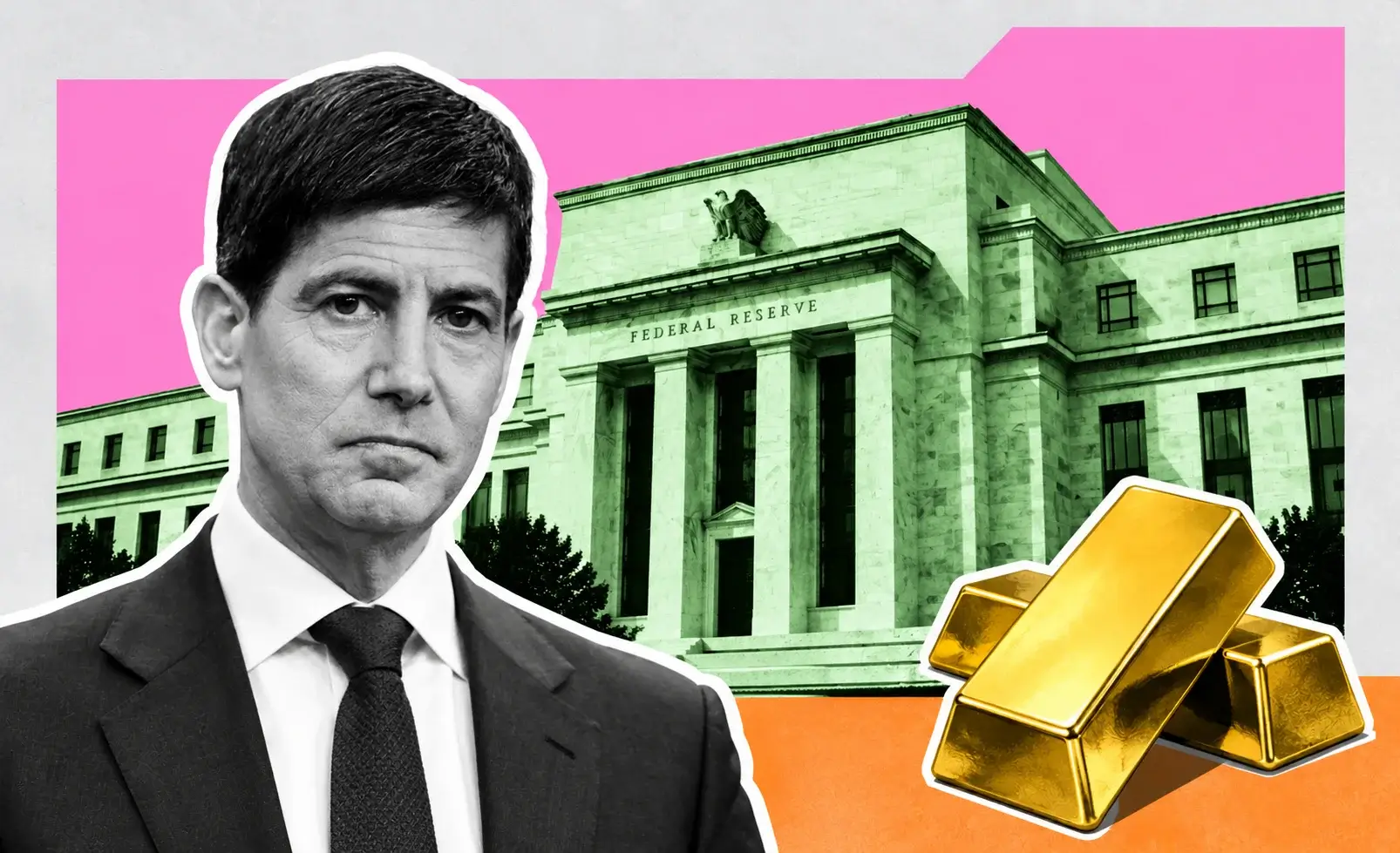
The Federal Open Market Committee convenes Tuesday for a two-day meeting, with the policy statement, updated projections and Chair Kevin Warsh's press conference scheduled for Wednesday, September 16. The federal funds target range has sat at 3.50% to 3.75% since December and has not moved once in 2026.
Markets now price an 88% probability of a 25-basis-point hike, according to CME FedWatch. That figure stood at 70% the day before Friday's inflation report, 60% the prior Wednesday and 44% a month ago. A quarter-point move would be the Federal Reserve's first rate increase since 2023.
Friday's consumer price index did the repricing. Headline CPI rose 0.4% for August, putting the 12-month rate at 3.4%, both in line with consensus. Core CPI, stripping food and energy, rose 0.3% on the month against a 0.2% forecast, with the annual core rate at 2.4% — the lowest since March 2021. The monthly core miss is what moved futures. Gains were broad across restaurants, new and used vehicles, shelter and transportation rather than concentrated in one line. Full detail is published by the Bureau of Labor Statistics.
The complication is that the economy is not uniformly strong. August nonfarm payrolls came in at 162,000 against a 53,000 forecast with unemployment steady at 4.1% and upward revisions to June and July, which argues the labor market can absorb tightening. But the University of Michigan's preliminary September consumer sentiment reading dropped to 47.8 from 51.7 in August, and July retail sales fell 0.6%, the first decline in nine months. August retail sales arrive Wednesday at 8:30 a.m. ET, ahead of the decision, and the Census Bureau release will be read for whether the sentiment collapse has reached actual spending.
Warsh said at Jackson Hole on August 28 that inflation is running above the 2% target and that the Fed will have work to do if it does not fade. He has also declined to offer forward guidance. The 2026 median dot is the number to watch Wednesday; a move toward 4.125% would signal a second hike before year-end. Meeting materials appear on the Federal Reserve site.
CrowdStrike CRWD Rips 10.45% As Capital Rotates Out Of Silicon And Into Software
The counter-trade was aggressive and specific. CrowdStrike (CRWD) surged 10.45% after chief executive George Kurtz responded to Amodei's essay by arguing that frontier labs will keep building regardless of what any single company decides, and that the cybersecurity industry's job is to make that development safer. The stock had gained 5.35% premarket before accelerating through the open.
Palo Alto Networks (PANW) climbed 8.97% on the back of a fiscal fourth-quarter earnings beat and continued demand for AI-driven security. FactSet Research Systems (FDS) added 7.39% as money rotated into established enterprise software and data providers; the company also announced that its November 10 investor day will feature live demonstrations of its next-generation generative AI tooling. ServiceNow (NOW) gained 4.68% premarket. Adobe (ADBE) traded higher. Salesforce (CRM) led Dow advancers at +3.20%.
The thesis behind the flow is coherent even if the market has not tested it. If frontier capability advances more slowly, incumbent software vendors face a longer runway before AI-native competitors erode their pricing power and seat counts. Slower models mean slower disruption. That is a defensible argument, and it is also the exact inverse of the trade that has dominated 2026 — short the incumbents, long the infrastructure.
Oracle (ORCL) sat awkwardly between the two camps and fell 3.3%. The stock has functioned as an indirect vehicle for OpenAI exposure, and Altman ruling out a 2026 listing removed that optionality. Co-founder Larry Ellison also abandoned a planned $7.5 billion share sale, which under other circumstances reads as a bullish signal and on Monday read as a reason to ask why the sale needed cancelling. Oracle had jumped on strong results September 10, reporting adjusted earnings of $1.92 per share on $19.35 billion of revenue against consensus of $1.74 and $19.14 billion, with cloud infrastructure revenue more than doubling to $7.4 billion.
SpaceX (SPCX) fell 2% to $148.16 premarket amid the AI selloff and continued post-IPO lockup expirations. The stock debuted at $135 on June 12 and peaked at $225.64 four days later.
HPE Sinks 9.3% As Friday's Biggest Winners Become Monday's Biggest Losers
The clearest illustration of how fast the tape flipped sits in Hewlett Packard Enterprise (HPE). The stock closed Friday as the single largest gainer on the US market, up 12.44% to $62.09 on 39.048 million shares against a 21.338 million three-month average, carrying a $82.422 billion market capitalization, a 31.64 trailing price-to-earnings multiple and a 149.96% 52-week gain. On Monday it sank 9.3% after a downgrade to neutral on valuation grounds, with the $65 price target left intact and no criticism of the underlying business. The stock is up 158.5% year-to-date.
The same reversal hit the rest of Friday's leaderboard. Dell Technologies (DELL) had closed Friday at $567.29, up 11.98% and $60.67, within a rounding error of its $567.75 52-week high, with a $360.69 billion market cap and a 347.39% 12-month gain. Vicor (VICR) rose 11.15% to $197.91. NetApp (NTAP) gained 8.54% to $199.28. ON Semiconductor (ON) added 8.51% to $76.14. Super Micro Computer (SMCI) climbed 7.28% to $40.10 on 46.493 million shares. MaxLinear (MXL) rose 7.54% to $74.57 after a 349.22% 52-week run. Silicon Motion (SIMO) added 7.25% to $284.48. Flex (FLEX) gained 7.19% to $115.78. Arrow Electronics (ARW) rose 6.92% to $228.20 and Avnet (AVT) 7.16% to $99.63.
Every one of those names sits inside the AI hardware supply chain, and every one of them ran into Friday's close on a rally built over a single session. Monday's open took the whole cohort back down. Hut 8 (HUT), up 8.83% to $98.60 Friday with a $12.153 billion market cap and a 188.35% 12-month gain, fell with the neocloud group.
The pattern is the one that defines late-stage momentum regimes. Positioning gets concentrated in a narrow set of high-beta names with enormous trailing returns, liquidity in those names looks deep until it is tested, and a single exogenous headline produces a 5% to 10% gap with no buyers at the prior level. Nothing about Friday's move was wrong on fundamentals. It was simply crowded.
RUM Group Jumps More Than 20% On A $13.7 Billion Anthropic Compute Contract
The session's largest single-name gain came from the same company whose chief executive triggered the selloff. RUM Group (RUM), formerly Rumble, surged as much as 28% premarket and traded more than 20% higher during the session, reaching $8.73 — its highest level since September 4 — after reports identified Anthropic as the previously unnamed customer behind a six-year, $13.7 billion GPU services agreement.
RUM had disclosed the contract in an SEC filing dated August 24 without naming the counterparty, describing a six-year GPU access and services arrangement structured across three tranches, with the final tranche contingent on customer approval. The compute will be supplied from a data center under construction in Maysville, Georgia, with secured power capacity of 120 MW and an expansion path to 180 MW. Operations are scheduled to begin in early 2027.
The scale relative to the business is extraordinary. RUM reported record second-quarter revenue of $40.4 million, up 61% year-on-year and well above the $30.66 million consensus, against a market capitalization near $3.55 billion. The contract is approximately 339 times quarterly revenue. The company entered AI infrastructure in June through an all-stock acquisition of German provider Northern Data valued near $767 million, which brought roughly 22,000 Nvidia Hopper GPUs and produced the Quake AI brand. That unit is running above 85% utilization, and management has indicated that 250 MW of total capacity could generate more than $3 billion in annual revenue. RUM will acquire a further 8,256,155 Northern Data shares from Tether Investments at an exchange ratio of 2.0281 RUM Class A shares per Northern Data share, settling around September 30.
The dilution attached is what trimmed the gain. Anthropic holds an option to purchase up to 50.81 million RUM shares at $0.01 each, a total outlay near $508,000 for a stake worth hundreds of millions at current prices. The stock is up about 13% year-to-date and remains unprofitable with negative cash flow.
Anthropic's own numbers give the contract context. The company generated $11.5 billion in second-quarter revenue, a 14-fold year-on-year increase, and reached $65 billion in annualized revenue by the end of July against $9 billion at the close of 2025, with gross margins above 80% before partner revenue share and training costs. It is preparing a Nasdaq listing at a valuation above $2 trillion.
Gold Breaks To $4,319.40, Silver Loses 2.86% And Bitcoin Trades Near $78,400
Cross-asset behavior on Monday was strange enough to deserve separate treatment, because the traditional hedges did not do what a geopolitical escalation plus an inflation shock would normally produce.
Gold fell. Futures traded at $4,319.40, down $89.50 and 2.03%, after opening the morning at $4,331.40 for a 1.76% decline and printing $4,324.80 premarket. A 2% drop in bullion on a day when a major oil pipeline goes offline, missiles hit a Saudi air base and the 10-year yield breaks 5% runs against every standard playbook. The explanation sits in real rates and the dollar: a 5% nominal 10-year against a 2.4% core inflation rate produces a real yield high enough to impose serious carrying costs on a non-yielding asset, and the dollar posted its biggest gain since June. Gold got squeezed from both sides at once.
Silver fell harder, down 2.86% to $63.33 an ounce. The larger decline is consistent with silver's industrial weighting — roughly half its demand comes from industrial applications, including solar and electronics, both of which sit downstream of the capex complex that just got repriced.
Bitcoin went the other way, trading at $78,406.46, up $1,301.19 and 1.69%, after printing $77,653.81 and $77,811.29 through the overnight session. That is a strange chart for a risk-off day, and it follows a punishing year: bitcoin is down 13% year-to-date through September 11, deep in a bear market by any reasonable definition, while Zcash has returned 111% over the same stretch on privacy-driven flows. A crypto asset catching a bid while gold falls 2% suggests Monday's buying was positioning-driven rather than a macro hedge.
The dollar's strength ties the picture together. Higher US yields, a hawkish central bank two days out, and an energy shock that hurts importing economies more than the US all argue for dollar demand. That flow pulled capital out of metals and out of foreign equities simultaneously, and it is the reason the international tape was uglier than the US tape despite the catalyst originating in San Francisco.
What The Sector Tape Actually Says About Where Money Went
Sector behavior Monday was not a broad de-risking. It was a surgical exit from one theme, with the proceeds redeployed into three identifiable places and a meaningful amount left uninvested.
Technology absorbed the damage, and within technology the pain concentrated entirely in hardware. The split between semiconductors down 5.7% as a group and enterprise software names up 4% to 10% on the same day is not something a general risk-off session produces. Friday's close had shown the opposite alignment, with the Technology Select Sector SPDR up 1.1%, Communication Services up 1.4% and Consumer Discretionary up 1.1%, while seven of eleven sectors finished red and Utilities fell 0.3%.
Energy was the genuine winner, and it has been the market's leadership for a quarter. The sector entered September up 21% quarter-to-date, the widest margin of any group, with Industrials trailing at -7.1%. It was also the only sector to advance during last week's rotation as healthcare and financials surrendered the leadership they had held through August. Brent above $109 and a three-to-five-week outage on a 7-million-barrel-per-day pipeline extend that run rather than exhaust it.
Consumer staples and healthcare caught the standard defensive bid, visible in McDonald's at +1.89% and Coca-Cola at +1.72% inside the Dow. That trade carries an unusual cost at a 5% risk-free rate, which is why it worked on Monday without generating the kind of sustained flow that would show up as sector leadership.
Consumer discretionary remains the only S&P 500 sector without a year-to-date gain, and the Michigan sentiment print at 47.8 does nothing to change that. Wednesday's retail sales report will either confirm that the sentiment collapse has reached actual spending or establish that it has not. Given that July retail sales already fell 0.6% in the first decline in nine months, the risk skews toward confirmation.
Financials sit in an awkward position. A steeper curve and a hiking Fed support net interest income, which is the bullish read. An oil-driven inflation shock that forces tightening into slowing consumption is the bearish read. The sector retreated from leadership last week and did not reclaim it Monday.
Verdict: Bearish Session, And The Rotation Underneath Is The Part That Matters
Monday was a bearish session. The S&P 500 at 7,595.97 gave back 0.80%, the Nasdaq Composite at 26,061.19 lost 1.03%, the Dow at 52,291.66 fell 281.63 points and 0.54%, and the Russell 2000 surrendered an opening gain of 0.45% to trade as low as 2,885.66. Friday's 509-point Dow rally is more than half gone, and the 7,600 level that held through four sessions of selling last week broke before noon.
But calling this an AI selloff misses what the tape actually did. Enterprise software ripped while silicon got smoked. CrowdStrike gained 10.45% and Palo Alto Networks 8.97% on the same day the semiconductor index fell 5.7%. Energy caught real money. The company at the center of the safety controversy signed a $13.7 billion compute contract that sent its counterparty up more than 20%. Anthropic's revenue ran 14x year-on-year to $11.5 billion in a quarter, and it is still heading to a Nasdaq listing above $2 trillion. Nobody cut a capex number. What changed is the market's assumed duration on the buildout, and duration is the one input that reprices everything downstream simultaneously.
The second shock is the one that persists past the news cycle. Brent above $109, WTI up 52.9% since February and 78.5% year-to-date, diesel at record highs, a 7-million-barrel-per-day bypass line offline for three to five weeks, and Hormuz talks postponed with no new date. That is a supply problem, not a sentiment problem, and it is what pushed the 10-year through 5% for the first time since October 2023 and handed the Fed an 88% probability of its first hike since 2023.
Wednesday settles the question. August retail sales at 8:30 a.m., the FOMC decision and updated projections at 2:00 p.m., and Warsh at the podium after. The dot plot carries more weight than the hike itself — a 2026 median near 4.125% signals a second move before year-end and puts the 10-year above 5% for longer than equities can comfortably absorb. Until then, a market with 33% of its members above their 50-day moving average, a 5% risk-free rate and its leadership sector down 5.7% in a session does not have a floor it can point to.