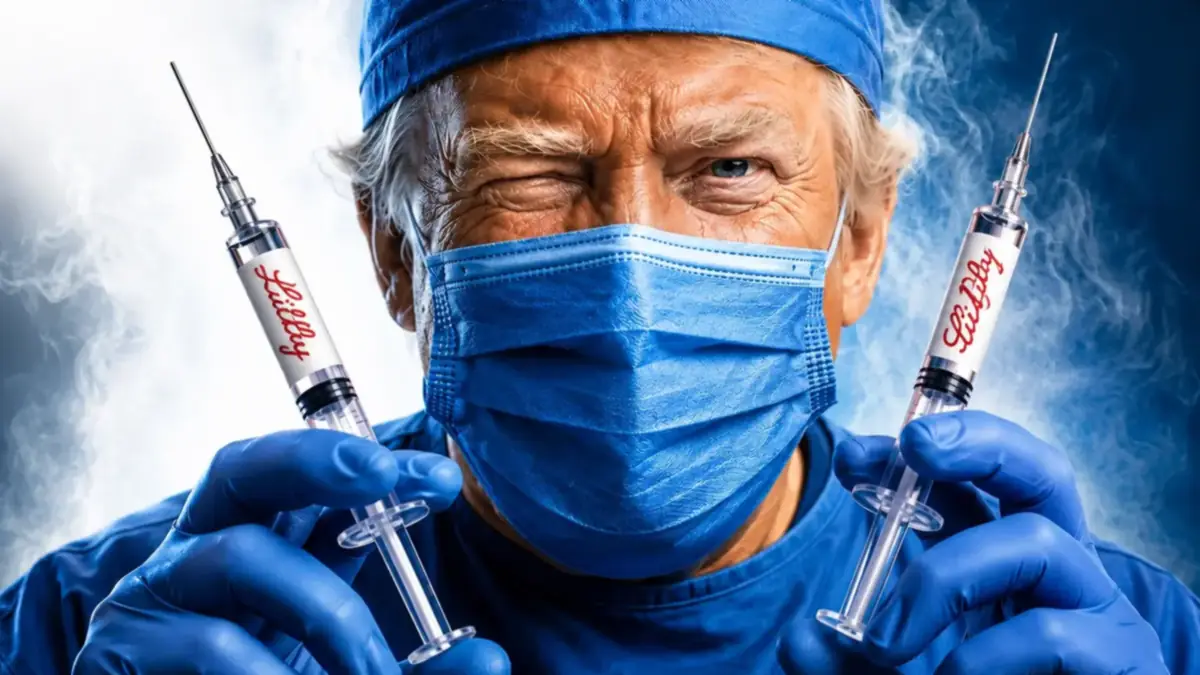
Eli Lilly Stock Price Forecast - LLY at $1,011 Targets $1,300 Price as Q1 Revenue Jumps 55.54% to $19.80B, EPS Hits $8.55
Eli Lilly extends its rally as Mounjaro revenue surges 125% to $8.66B and Zepbound climbs 80% to $4.16B in Q1 2026 | That's TradingNEWS
Key Points
- Eli Lilly trades at $1,010.95 up 2.26% with $959.32B market cap; price target $1,300, long-term $2,000 in play.
- Q1 2026 revenue jumped 55.54% to $19.80B, EPS hit $8.55, net income surged 168.07% to $7.40B on raised guidance.
- Mounjaro grew 125% to $8.66B, Zepbound 80% to $4.16B; Foundayo hit 7,335 Rx in 4 weeks since FDA approval.
The pharmaceutical behemoth has spent the last week reasserting itself as the single most consequential equity story in healthcare, and Tuesday's price action on Eli Lilly Stock (NYSE:LLY) confirms why the institutional bid is back with conviction. Shares are trading at $1,010.95, up $22.38 on the session for a 2.26% gain off Monday's $988.57 close, lifting market capitalization to roughly $959.32 billion and putting the stock back within striking distance of trillion-dollar territory after the company became the first healthcare name in history to cross that threshold in November 2025. The intraday range spans $984.60 to $1,021.58, the 52-week range runs from $623.78 to $1,133.95, and the trailing P/E sits at 35.92 with a forward P/E around 27.30 — premium multiples that the bears have been calling unsustainable for two years and that the bulls keep justifying through one operational beat after another. The story this week is no longer just about Mounjaro and Zepbound dominating the injectable space. It is about the launch of Foundayo (orforglipron) crossing 7,335 U.S. prescriptions in its first four weeks, Retatrutide dismantling the bariatric surgery ceiling with 29% mean weight loss, EBGLYSS posting 141% sales growth, JAYPIRCA running at 79% growth, and management lifting full-year 2026 revenue guidance by $2 billion to a $82 billion to $85 billion band. The trailing 12-month revenue growth has accelerated to 47.43% year-over-year, and Q1 2026 net income exploded 168.07% to $7.40 billion. Those are not pharma numbers. Those are mega-cap technology numbers wearing a lab coat.
The Q1 2026 Print Was a Genuine Operational Detonation
The April 30 earnings release was the kind of report that forces sell-side desks to throw out the model and rebuild from scratch. Eli Lilly posted Q1 2026 revenue of $19.80 billion, beating consensus by $1.99 billion and representing a year-over-year increase of 55.54%. Diluted EPS came in at $8.55, smashing the $6.79 consensus by $1.76 per share and growing 155.99% versus the prior year. Operating expense rose 23.88% to $6.44 billion — meaningful, but materially slower than the top-line growth, which is the entire operating-leverage thesis playing out in real time. Net profit margin expanded to 37.36%, a 72.40% improvement year-over-year that demonstrates the scale economics the bull case has been pricing in for the past 18 months. EBITDA reached $10.29 billion, up 78.44%. The effective tax rate held at 16.43%.
The cash flow profile is where the real durability of the story lives. Cash from operations swung to $5.33 billion, a 220.11% year-over-year improvement, while free cash flow hit $2.11 billion versus the prior year's deeply negative print — a 141.54% swing. Total assets climbed 30.41% to $116.58 billion, while total liabilities grew at a more controlled 16.09% to $85.38 billion. Total equity now stands at $31.20 billion with 891.74 million shares outstanding. The price-to-book is elevated at 28.31, but return on assets at 21.34% and return on capital at 33.72% are best-in-class figures across the entire pharma complex.
Mounjaro and Zepbound Are Still Doing the Heavy Lifting
The injectable GLP-1 franchise remains the engine room of the entire Eli Lilly Stock (NYSE:LLY) thesis. Mounjaro posted Q1 2026 revenue growth of 125% year-over-year to $8.66 billion, while Zepbound added 80% growth to $4.16 billion. Combined, those two drugs alone generated $12.82 billion in a single quarter — a number that exceeds the entire annual revenue of most large-cap pharmaceutical companies. Tirzepatide is still being prescribed 40% more often than Novo Nordisk's Semaglutide to new obesity patients as of December 2025, and that gap has not meaningfully compressed even after the launch of the Wegovy pill. The competitive moat is no longer about innovation alone. It is about the roughly 7 percentage point weight loss gap in obesity from the SURMOUNT-5 trial and the 5 percentage point gap in Type 2 Diabetes from the network meta-analysis, both achieved with comparable adverse event profiles.
The new-to-brand prescription data confirms what the bulls have been arguing for months. Tirzepatide maintained its leadership through March 2026 despite Novo Nordisk's oral launch advantage. The March-to-December market share decline in injectable Semaglutide was driven entirely by new oral channel expansion rather than any patient preference shift away from Tirzepatide. That distinction matters enormously for the durability of the Mounjaro and Zepbound revenue streams through the next two years. Novo's 2026 operating profit guidance points to a 4% to 12% decline, while Eli Lilly is guiding to 32% growth — a divergence that the equity market is already aggressively pricing.
Foundayo Launches Into a Market That Was Built for It
The April 1 FDA approval of Foundayo (orforglipron) marked the company's clean entry into the oral GLP-1 space, and the first four weeks of prescription data tell a story that the bears were not expecting. 7,335 U.S. prescriptions through the initial window is a meaningful base from which to scale, particularly when management has not yet begun a serious direct-to-consumer marketing campaign. The drug's structural advantages are real and difficult to replicate: it can be taken without food or water restrictions, the chemical manufacturing platform allows for global scale without biologic capacity constraints, and the cost structure permits aggressive pricing in emerging markets where injectable GLP-1s have struggled to reach patients.
The competitive picture against Novo Nordisk's Wegovy pill is being completely misread by the consensus narrative. Wegovy pill at launch is benefiting from massive deferred demand — the market has been waiting more than six years since Rybelsus approval for a safe oral obesity option — and Novo's existing brand recognition is providing a temporary tailwind. But Foundayo demonstrated approximately 10% weight loss in Type 2 Diabetes versus Wegovy pill, holds a cleaner cardiovascular outcomes trial profile, and has fewer drug absorption interactions. The "on-ramp" and "off-ramp" use case before and after injectable therapy is structurally biased toward whichever oral has the cleanest tolerability and pricing — and Eli Lilly disclosed approximately $1.5 billion in Orforglipron stockpile at the end of 2025, signaling that the company is prepared to push hard on supply when the marketing engine ramps up. Management projects Foundayo captures roughly 5% to 10% of the U.S. total prescription market share by 2030, with a much larger international maintenance market driving global revenue capture.
Retatrutide Is the Real Pipeline Story That Justifies the Premium
The single most underappreciated component of the Eli Lilly Stock (NYSE:LLY) thesis is Retatrutide — the once-weekly injectable triple agonist hitting GLP-1, GIP, and glucagon receptors simultaneously. The TRIUMPH-4 trial in obesity plus knee osteoarthritis delivered a mean weight loss of approximately 29% per protocol, which represents the first therapy in history to officially break the 25% bariatric surgery ceiling over 68 weeks. That is not an incremental improvement. That is a category-redefining breakthrough.
The market opportunity for Retatrutide is genuinely monopolistic. Class III Obesity (BMI greater than 40) represents roughly 20 million U.S. patients with no reliable pharmacological option to escape obesity. Tirzepatide plateaus at around 23% weight loss at week 72 in the BMI ≥40 cohort, leaving patients clinically obese with residual cardiometabolic risk. Retatrutide's glucagon agonism activates the "Energy Out" side of the metabolic equation — boosting resting metabolic rate and fat oxidation — in a way that no GLP-1, GIP, or amylin combination can replicate at acceptable tolerability. The nearest direct competitor, Novo-licensed UBT-251, has only recently initiated a global Phase 2 trial and is estimated to be roughly four years behind. That gives Retatrutide an effective monopoly in the premium triple-agonist space until approximately 2031.
Pre-GLP-1, the U.S. saw roughly 270,000 bariatric surgeries annually as a $5.6 billion market, despite only 1% of eligible patients undergoing the procedure due to insurance denials, surgery fear, and physician reluctance. Incretins dismantle each of those barriers. The Class III Obesity group accounted for roughly 35% of GLP-1 prescriptions in 2024 despite representing only 9% of the U.S. population, which signals enormous latent demand. Regulatory submissions for Retatrutide in obesity, sleep apnea, and osteoarthritis of the knee are all planned for 2026, with five more TRIUMPH readouts expected through the year. The wave of catalysts is structurally bullish.
EBGLYSS Is the Immunology Cash Cow That Nobody Talks About
Outside the metabolic franchise, EBGLYSS (lebrikizumab) is quietly building one of the cleanest dermatology growth stories in big pharma. Q1 2026 sales hit $145 million, up 141% year-over-year — and the company has not even completed the pediatric label expansion yet. The Phase 3 ADorable-1 study in pediatric patients ages 6 months to under 18 years with moderate-to-severe atopic dermatitis met both co-primary endpoints with statistical significance: 63% of patients on the drug achieved EASI-75 versus 22% on placebo, and 44% achieved IGA 0,1 versus 15% on placebo. The label expansion submission to global health authorities is the next catalyst, with long-term ADorable-2 data expected later in 2026.
The global atopic dermatitis drugs market is projected to reach $29.88 billion by 2030, and pediatric patients represent approximately 20% of the AD population versus 10% of adults — meaning the pending label expansion materially widens the addressable opportunity. The Phase 3 PREPARED-1 study in allergic rhinitis (completion October 2028) and the Phase 3 CONTRAST-NP study in chronic rhinosinusitis with nasal polyps (completion March 2028) extend EBGLYSS well beyond its initial AD indication, positioning the asset as a multi-indication immunology platform rather than a single-disease product.
JAYPIRCA Pushes the Oncology Story Forward
JAYPIRCA (pirtobrutinib) added another 79% revenue growth in Q1 2026 to $165 million, validating the company's oncology pipeline as a genuine third leg of the growth stool. The non-covalent reversible BTK inhibitor has cleared approval for relapsed/refractory CLL/SLL and r/r MCL after two lines of systemic therapy, and the Phase 3 BRUIN CLL-322 study delivered a statistically significant PFS improvement when JAYPIRCA was added to time-limited venetoclax plus rituximab. The planned label expansion submission targets second-line r/r CLL/SLL patients who are post-cBTKi and BTKi naive — a meaningful incremental market.
The strategic significance of JAYPIRCA runs deeper than the Q1 revenue print suggests. Dupixent loses exclusivity around 2031, which is expected to drive a $4 billion decline in EBGLYSS if competitive entrants ramp aggressively. Verzenio, currently a roughly $5 billion franchise, faces U.S. LOE around the same time. JAYPIRCA's continued growth and expanding label profile is precisely the kind of mid-decade margin protection the company needs to bridge the post-2030 patent cliff that the Street is starting to model.
OMVOH Adds Another Growth Vector in IBD
The inflammatory bowel disease franchise has its own emerging story. OMVOH (mirikizumab) is approved for moderately-to-severely active ulcerative colitis and Crohn's disease, and management is running combination studies pairing OMVOH with the IL-8 inhibitor eltrekibart for UC and with the oral α4β7 integrin inhibitor zotemtegrast for inflammatory bowel disease. The expansion into combination induction therapy keeps OMVOH relevant against the increasingly crowded IBD competitive landscape and provides yet another non-GLP-1 growth driver inside the broader portfolio.
The Capital Allocation Strategy Is Aggressive But Disciplined
Eli Lilly's balance sheet positioning supports the operational story. Cash and short-term investments climbed 63.95% year-over-year to $5.28 billion. The company has been deploying capital aggressively across acquisitions targeting post-2030 expansion: Ajax Therapeutics for myelofibrosis and polycythemia vera assets, Kelonia Therapeutics for multiple myeloma exposure, Orna Therapeutics for in vivo CAR-T development in autoimmune disorders, and Centessa Pharmaceuticals for the orexin receptor 2 agonist cleminorexton in sleep-wake disorders. Combined deal value exceeds $20 billion over the past year.
The capital deployment is genuinely forward-looking rather than defensive. Lilly is reinvesting GLP-1 windfall into multiple potential next-generation growth platforms before the current reward cycle peaks. The strategy differentiates the company from competitors like Merck during the PD-1 wave, where insufficient reinvestment ultimately compressed the long-term multiple. The risk is that none of these markets are remotely the size of obesity, meaning if execution falters in the metabolic trio, the diversification cushion is materially thinner than the headline acquisition value suggests.
Capacity, Manufacturing, and Supply Are Genuine Competitive Advantages
The structural moat protecting Eli Lilly Stock (NYSE:LLY) is increasingly about manufacturing capacity rather than just molecule innovation. The injectable GLP-1 supply constraints that hobbled both Lilly and Novo Nordisk through 2024 have eased, and the company's aggressive capital expenditure on fill-finish and API capacity is now structurally supporting the Mounjaro and Zepbound revenue trajectories. The transition to Foundayo's chemical small-molecule manufacturing further widens the moat — biologic injectable peptide production is capital-intensive and slow to scale, while traditional chemical manufacturing for orforglipron can be ramped quickly and outsourced to third-party CMOs without quality concerns.
That manufacturing asymmetry matters enormously for global penetration. International markets, particularly emerging markets where out-of-pocket payment dominates, simply cannot absorb injectable peptide GLP-1s at current cost structures. Foundayo's non-peptide profile allows pricing flexibility that opens roughly 2 billion incremental patients in the global addressable obesity market that injectables have never reached.
The 2030 Revenue Trajectory Justifies the Premium Multiple
The path to peak revenues for the metabolic trio is the single most important number in the Eli Lilly Stock (NYSE:LLY) thesis. Modeling work projects the trio of Tirzepatide, Orforglipron, and Retatrutide generating roughly $119 billion in 2030 sales, which would represent more than 70% of total Lilly revenue. The model assumes U.S. active GLP-1 penetration of approximately 35% for Diabesity and 25% for Obesity/Overweight by 2030, totaling around 30 million U.S. active users. Tirzepatide U.S. total prescription share declines from approximately 60% to 30% to 35% as oral options cannibalize and competitors arrive, but Orforglipron captures 5% to 10% of the U.S. TRx market and Retatrutide captures approximately 50% of the Class III Obesity TRx market.
Non-metabolic revenue is still expected to grow at a roughly 18% CAGR through 2030, driven by the immunology and oncology expansions. The combined growth profile supports a projected EPS CAGR of approximately 22.6% through 2030, which puts the forward PEG ratio at roughly 1.2x — meaningfully cheaper than any other high-growth big pharma firm despite the premium absolute multiple.
The Valuation Math Is More Defensible Than the Headline Suggests
The Seeking Alpha factor grade gives Eli Lilly an "F" on valuation, and at first glance the 35.92 trailing P/E and 27.30 forward P/E support the bearish case. But that framing is misleading when growth, profitability, and revisions are all firing simultaneously. Revenue growth of 47.43% trailing-12-month combined with 168.07% quarterly net income growth and consensus EPS revisions trending materially higher means the multiple is compressing in real time as earnings catch up. Wall Street rates the stock Buy with a score of 4.29, Seeking Alpha analysts at 3.70 Buy, while the quant model sits at Hold at 3.44 — which is precisely the kind of split rating that creates asymmetric upside when fundamentals continue to beat.
Sell-side price targets are clustering well above current spot. A $1,300 price target based on PEG analysis through 2030 implies roughly 30% upside from current levels, while a Motley Fool piece floated the prospect of Eli Lilly Stock (NYSE:LLY) reaching $2,000 if execution continues at the current pace and the obesity TAM expands as the bull case requires. Those longer-term targets are not unreasonable when measured against the trio's projected 2030 revenue and the operational leverage embedded in the gross margin profile.
The Technical Setup Confirms the Fundamental Story
The chart structure on Eli Lilly Stock (NYSE:LLY) is unambiguously bullish across the weekly time frame. Price has made a clean series of higher highs and higher lows from the August 2025 lows through the current spot near $1,011. The stock is trading above its 30-week exponential moving average, and the EMA itself is sloping higher — the textbook trend-following confirmation that institutional money managers respond to. The 52-week range of $623.78 to $1,133.95 captures how brutal the drawdown was earlier in the cycle and how decisive the recovery has been.
Momentum indicators are aligned with the bullish thesis. The Percentage Price Oscillator shows long-term momentum above the zero line, while short-term momentum is on the verge of flipping back to bullish as the PPO line prepares to cross above the signal line. The volume profile since the August 2025 low shows clear institutional accumulation — black up-volume bars consistently peaking above red down-volume bars, which is the signature of money managers buying into dips. Relative strength versus the S&P 500 has been trending higher since August 2025, confirming that LLY is outperforming the broader market and pulling capital from defensive rotation flows.
The risk-management level for the technical setup is a weekly close below the 30-week EMA. If that gives way, the bullish thesis on the chart needs to be reassessed, and a tactical exit or position reduction becomes warranted. Above current levels, the prior 52-week high at $1,133.95 is the immediate upside magnet, with the $1,300 PEG-based target representing the medium-term objective.
Read More
-
Yen Stalls at 160 Despite a 3% JGB and Tokyo Core CPI at 2.0% — Intervention Sits at 164, Friday's Payrolls Decide
02.09.2026 · TradingNEWS ArchiveEnergy
-
QQQ ETF ($706.22) Slides 7.4% Below Its High as the Market Reprices the AI Capex Bill — $686.57 Target if $700 Breaks
22.10.2026 · TradingNEWS ArchiveStocks
-
XRPI ($7.00) and XRPR ($10.74) Slide Toward 52-Week Lows as Spot XRP ETF Flows Stall at $708,510
22.10.2026 · TradingNEWS ArchiveCrypto
-
NG ($2.775) Decoupled From Europe’s €88 Gas Crisis as LNG Feedgas Hits 18.9 Bcf/d — $3.30 Upside on Cold Weather
22.10.2026 · TradingNEWS ArchiveCommodities
-
Dollar-Yen (157.35) Loses 157.65 as the Yen Rallies on Haven Demand — 155 Target if 156 Breaks
22.10.2026 · TradingNEWS ArchiveForex
The Risks That Genuinely Matter to the Thesis
The bull case requires honest acknowledgment of where it can break. The single largest pipeline risk is the possibility that Retatrutide receives a cardiac Black Box warning. Phase 2 and Phase 3 data have shown a dose-dependent resting heart rate increase of 5 to 10 beats per minute, peaking around week 24 before declining toward baseline. The mechanism — glucagon receptor agonism elevating cAMP in cardiac tissue — is a textbook arrhythmia trigger, even though Phase 2 data has not shown a clean dose-response signal for serious conduction defects. A Black Box would eliminate Retatrutide from first-line use and cap its revenue potential at probably under $3 billion annually, materially impairing the Class III Obesity monopoly thesis. The GIP receptor binding affinity being roughly 100 times stronger than glucagon binding provides some mitigation through the protective cardiovascular mechanisms associated with GIP, but the risk is real and the TRIUMPH-OUTCOMES readout is critical.
The second material risk is post-2030 patent cliff exposure. Semaglutide loses exclusivity in many key regions including the U.S. in 2031, which could materially slow class growth at the peak. Novo-UBT's triple G agonist enters the global market around the same time. Dupixent's LOE drives a roughly $4 billion EBGLYSS decline. Verzenio's U.S. LOE at approximately $5 billion revenue adds further pressure. The acquisition strategy is targeted at filling these gaps, but none of the acquired assets approach the magnitude of the metabolic trio.
The competitive picture beyond Novo Nordisk requires honest assessment. MariTide from Amgen launches in early 2028 with a monthly dosing advantage. Survodutide from Boehringer arrives in mid-to-late 2027. Roche's CT-388 and Viking Therapeutics' VK2735 have shown safety-to-efficacy profiles comparable to Tirzepatide in Phase 2. Structure Therapeutics' Aleniglipron could potentially challenge Orforglipron in oral maintenance. The competitive moat protecting the metabolic franchise depends on label expansion into HFpEF, MASH, MACE reduction, and CKD — all of which require massive 3-to-5-year cardiovascular outcomes trials that only Amgen, Pfizer, and Roche have the capital to run at scale.
Insider Activity and Institutional Positioning
The insider transactions and broader institutional positioning context for Eli Lilly Stock (NYSE:LLY) sits cleanly inside the broader healthcare allocation flows that have rotated back toward big-cap pharma over the past quarter. Short interest is a remarkably low 0.88%, which signals that the bear thesis simply does not have institutional conviction at current levels. The dividend yield at 0.68% is not the reason capital is rotating in — this is a pure growth allocation, with the dividend acting as a courtesy rather than a thesis driver. The full stock profile and capital allocation details can be referenced at https://www.tradingnews.com/Stocks/LLY/stock_profile.
The Verdict: Strong Buy on Eli Lilly Stock (NYSE:LLY) With $1,300 as the Medium-Term Target
The setup across Eli Lilly Stock (NYSE:LLY) is genuinely rare. Q1 2026 revenue growth of 55.54% combined with 168.07% net income growth and a guidance raise of $2 billion would justify a major re-rating in isolation. Adding the launch of Foundayo at 7,335 initial prescriptions, the breakthrough 29% weight loss data from Retatrutide dismantling the bariatric surgery ceiling, the 141% EBGLYSS growth, and the 79% JAYPIRCA growth produces the most diversified high-growth profile in pharma. Throw in 22.6% projected EPS CAGR through 2030, a 1.2x forward PEG ratio, an institutional accumulation signature on the chart, and a clean bullish technical setup with the 30-week EMA sloping higher — the math works decisively to the upside.
The call is a decisive Strong Buy on Eli Lilly Stock (NYSE:LLY) at current levels around $1,011, with $1,133.95 as the immediate upside target (the prior 52-week high), $1,300 as the medium-term price objective driven by PEG-based valuation through 2030, and the longer-term $2,000 scenario alive if execution continues at the current pace and obesity penetration expands beyond consensus assumptions. The risk-management level is a weekly close below the 30-week EMA — that single signal is the cleanest invalidation trigger for the bullish thesis. Dips into the $950 to $980 range should be aggressively bought rather than sold, as the institutional accumulation signature suggests every meaningful pullback is being absorbed by long-only mandates rotating into healthcare on the back of the AI capex unwind across mega-cap tech. The valuation looks expensive on a trailing P/E basis, but it is genuinely cheap relative to the growth trajectory, the pipeline catalyst density, the manufacturing moat, and the monopolistic positioning in Class III Obesity that Retatrutide locks in through approximately 2031. The premium is being paid for category leadership in the largest reward cycle in pharma history, and the operational execution continues to validate it quarter after quarter. Until the metabolic trio meaningfully disappoints or the technical structure breaks the 30-week EMA on a weekly close, Eli Lilly Stock (NYSE:LLY) remains the cleanest single-name expression of the obesity wave on the entire equity tape.